Amazon US Market Analysis: Portable Foldable Solar Chargers Category
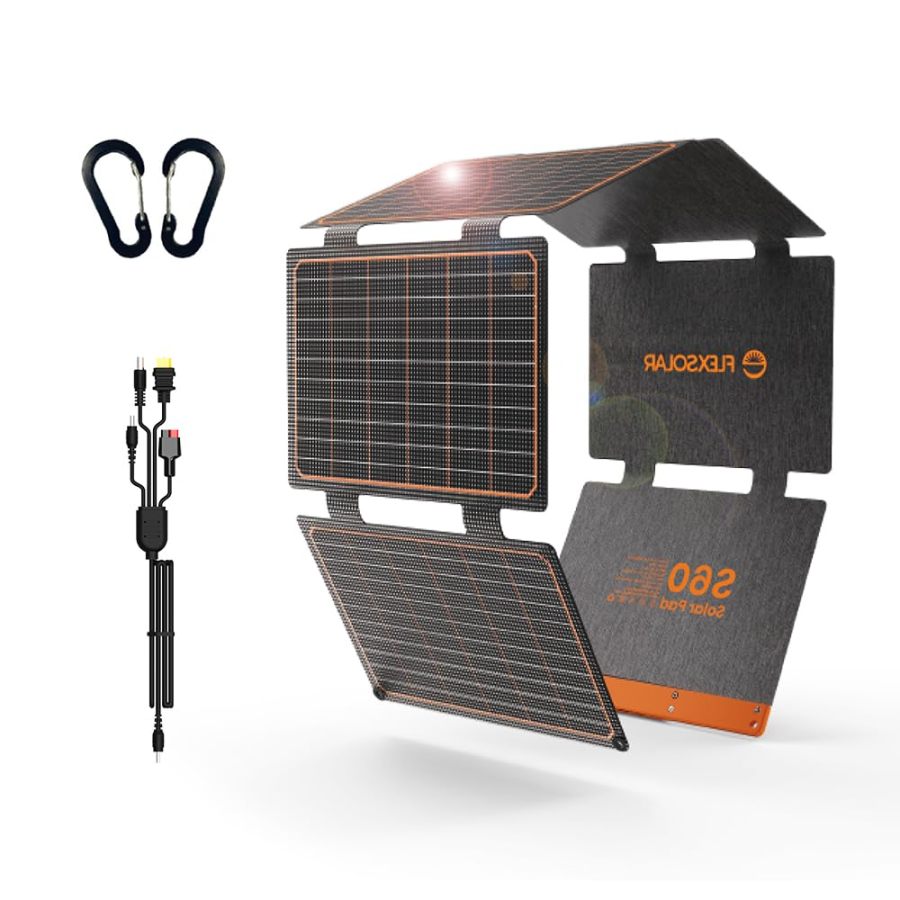
📊 Executive Summary
📈 Market Trends
Portability & efficiency are market fundamentals; users seek real performance & comprehensive reliability. The portable foldable solar charger market continues to grow, with products generally pursuing lightweight design, multi-port output, and high conversion efficiency. However, consumers are no longer satisfied with theoretical specs, shifting focus to actual charging performance, stability, and all-weather reliability in real outdoor environments, driving the industry toward a more pragmatic, user-experience-focused direction.
⚡ Major Pain Points
Inflated power ratings, unstable charging, and incomplete protection are critical flaws. Users are generally skeptical of claimed power output, with real-world tests often far below expectations and performance poor under non-ideal light. USB-C fast charge compatibility/stability, waterproofing flaws in junction boxes, and durability issues with key components (e.g., handles, fold points) severely impact user experience and product trust, becoming core triggers for negative reviews and returns.
💡 Selection Opportunities
Deeply address user pain points, win with 'authenticity.' Market opportunities lie in building a core competitive advantage around 'transparent real power, stable performance' by optimizing power management ICs and using high-quality cells to improve real-world performance in complex environments. Simultaneously, focus on user experience details: e.g., provide an 'All-Weather Anti-Overheat Long-Cable Charging Kit' to solve device heat dissipation and port waterproofing; develop an 'Integrated Adjustable Stand & Durable Mounting System' to improve usability; even explore a high-end 'Modular or Integrated Buffer Battery' product line for users with higher energy independence aspirations. These actions will help establish differentiation in a homogenized market and win consumer trust.
I. Analysis Overview
1.1 Introduction & Report Scope
This report analyzes the 'Solar Panels' category (Portable Foldable Solar Chargers) in the Amazon US market, focusing on target user personas, core needs, decision drivers, market communication, and potential opportunities.
1.2 Category Snapshot
Portable foldable solar panels are outdoor power solutions that convert solar energy into electricity and charge electronic devices such as phones, tablets, power banks, and even small power stations via USB or DC interfaces. These products commonly feature multi-panel folding designs to achieve ultimate portability and space efficiency, serving as crucial supplementary power tools for outdoor activities, emergency preparedness, and off-grid living. The following table illustrates the key characteristics of consumer behavior in this category.
| Dimension | Segment | Description |
|---|---|---|
| Need Driver Type | Emergency-driven / Planned Purchase | User purchases are typically driven by anticipated outdoor activities or travel needs (Planned Purchase) and unexpected power outages or disaster preparedness (Emergency-driven Purchase), seeking reliable off-grid power. |
| Purchase Frequency | Low Frequency / Seasonal | As durable goods, purchase frequency is generally low (once every few years), but peaks occur during outdoor seasons (e.g., spring/summer) or high-risk disaster periods. |
| Decision Complexity | Relatively Complex | Consumers invest moderate effort in comparing actual power output, charging speed, interface types, size/weight, durability, and brand reputation for a comprehensive evaluation. |
| Price Sensitivity | Medium to High | Price is a significant consideration, but users are willing to pay a reasonable premium for higher actual efficiency, stability, durability, and stronger brand reliability, especially in emergency scenarios. |
| Emotional Dependency | Medium | Primarily based on function and utility, but some users develop emotional attachment and dependency influenced by environmental values, outdoor lifestyles, or the pursuit of 'energy independence'. |
II. User Personas & Usage Scenarios
2.1 Outdoor Adventurer / Camping Enthusiast
🎯 Passionate about hiking, camping, backpacking, and other outdoor activities. Requires lightweight, reliable power to keep various electronic devices running, prioritizing battery life and convenience.
| Typical Usage Scenarios | Core Pain Points | Primary Purchase Drivers |
|---|---|---|
|
|
|
2.2 Emergency Prepper / Self-Sufficiency Advocate
🎯 Focuses on household emergency preparedness, seeking reliable power for essential electronics during blackouts or disasters. May also pursue eco-friendly energy solutions.
| Typical Usage Scenarios | Core Pain Points | Primary Purchase Drivers |
|---|---|---|
|
|
|
III. User Needs Hierarchy (KANO Model)
3.1 Basic Needs (Must-Haves)
- Basic Power Generation: Effectively converts solar energy to electricity and charges devices, ensuring basic power supply.
- Portable & Foldable: Compact when folded, easy to carry and store, convenient for outdoor travel or emergency storage.
- Multiple Output Interfaces: Includes common interfaces like USB-A and USB-C to meet mainstream electronic device charging needs.
- Durable & Water-Resistant: Product surface must be abrasion-resistant, dustproof, and splash-proof to withstand variable outdoor environments.
3.2 Performance Needs (Linear Satisfiers)
- Fast Charging Function: Supports mainstream fast-charge protocols like QC3.0 and PD, significantly reducing charging time for phones, tablets, etc.
- High Conversion Efficiency: Solar conversion efficiency of 23%-26% or higher increases power generation per unit area, reducing charging wait time.
- Broad Compatibility: Enhances universality by providing various DC adapters to fit more brands/models of power banks/power stations.
- Smart Recognition & Protection: Built-in smart IC automatically recognizes devices, optimizes charging current, and provides over-current, over-temperature, and short-circuit protection for safe charging.
- Usability on Cloudy Days: Provides stable, usable output under non-ideal lighting (e.g., cloudy or low-light) conditions, broadening usage scenarios.
3.3 Excitement Needs (Delighters)
- Ultimate Lightweight Design: Product weight meets or falls below the category average (e.g., 'water bottle weight'), significantly reducing carrying burden and enhancing travel experience.
- Integrated Stand/Hanging Design: Built-in adjustable stand or multiple hanging holes/hooks allow users to easily adjust panel angle for optimal sunlight capture.
- Real-Time Power Display/Status Indicator: Visually displays real-time power output, current, or charging status for clear user awareness and control.
- Pressure/Drop-Resistant Design: Product structure remains intact during outdoor jostling or accidental drops, increasing user confidence and product lifespan.
- Cable & Accessory Storage: Includes built-in storage pouch or straps for organizing and carrying charging cables and adapters, maintaining tidiness and preventing loss.
3.4 Unmet Needs & Opportunities
-
Insufficient Actual Output Power & Stability: Users commonly complain that actual output power is far below rated values and is easily affected by shadows or angles, causing charging interruptions or low efficiency.
User Reviews (VOC) I could only get a maximum of 23w (and that was holding the panel at a 90degree angle to the sun. // I was never able to get the USB charging at full wattage makes me skeptical about this product.
-
Poor USB-C PD Compatibility & Stability: Some users report unstable USB-C PD charging or failure to achieve expected fast-charge speeds for high-power devices, with occasional disconnections.
User Reviews (VOC) Usb-c charging unstable. // Due to USB-C being able to negotiate the voltage it wants to charge at it will pick a high voltage which gets very low amps and will be very unstable (it will constantly stop and start charging).
-
Insufficient Waterproofing for Junction Box/Ports: Although the main panel claims IP65/67 waterproofing, the junction box or output ports are explicitly labeled as non-waterproof, limiting reliability for all-weather outdoor use.
User Reviews (VOC) Note: The output control box is not waterproof, so avoid submerging it in water to extend its lifespan. // The charging port is located within a zipper pouch so its kind of protected, however its not designed for getting that wet.
-
Questionable Material/Structural Durability: Users report issues like rubber handles falling off, panel lamination peeling, or damage at fold points shortly after purchase, questioning long-term outdoor reliability.
User Reviews (VOC) Rubber handles fell apart right out of package // Developed a break after 2 days where the panel folds.
-
Lack of Built-in or Longer Output Cables: Included cables are often too short. Users report inability to place charging devices in the panel's shade, leading to device overheating or inconvenient setup.
User Reviews (VOC) The cord was a bit short, so I boosted the unit upwards using an old, yet stable, typing table. // I wish the included cable was just a foot or two longer.
-
No Built-in Energy Storage Function: Most products are pure generators without built-in batteries, unusable at night or without sunlight, requiring users to carry an extra power bank.
User Reviews (VOC) The 30W solar panel does not store electricity and requires connection to a device, power station, or solar generator. // There is no energy storage so you can only use it while it's in the sun.
IV. User Decision Drivers
4.1 Key Decision Factors
- Actual Charging Efficiency & Stability: Users are most concerned with the product's real-world power output and charging speed under actual outdoor conditions, and its stability under variable sunlight, rather than theoretical peak performance.
- Portability & Weight: As an outdoor product, extreme lightness and easy storage are core considerations, directly impacting user willingness to carry and overall outdoor experience.
- Multi-Device Compatibility: Whether it stably works with various phones, tablets, power banks, and small outdoor power stations is a key pre-purchase check, especially compatibility with USB-C PD devices.
- Durability & Reliability: Outdoor environments are variable; the product must be rugged and durable, able to withstand drops, impacts, rain, and wind to ensure it doesn't fail at critical moments.
4.2 Secondary Decision Factors
- Ease of Use: Whether setup, placement, and connection are simple, plug-and-play, and if there are smart status indicators to reduce operational barriers.
- Interface Types & Quantity: Whether it supports the latest USB-C PD fast charging and provides enough charging ports to meet simultaneous multi-device charging needs.
- Price: Given that core needs and performance expectations are met, whether the pricing is reasonable and offers good value is a key factor influencing the final purchase decision.
- Brand Reputation & After-Sales Service: Brand word-of-mouth, warranty policy, and customer service responsiveness are particularly important for outdoor durable goods and emergency equipment, affecting user trust.
- Additional Design Details: Features like built-in stands, convenient hanging holes, cable storage pouches, and anti-misoperation designs enhance the product's usability and convenience.
V. Selling Points & Competitive Landscape
5.1 Selling Point Analysis
5.1.1 Standard Features (Points of Parity)
- Portable & Foldable: Almost all products emphasize their compact, lightweight, easy-to-fold, and easy-to-carry features, suitable for outdoor travel.
- Multi-Port Output: Commonly provide USB-A, USB-C (often with PD fast charge), and DC outputs to meet different device charging needs.
- High Conversion Efficiency: Most products advertise 23%-26% monocrystalline silicon high conversion efficiency to attract user expectations for power generation performance.
- Durable & Waterproof: Claim use of ETFE lamination technology, IP65/67 waterproof ratings, and wear-resistant Oxford cloth materials to withstand harsh outdoor environments.
- Wide Compatibility: Emphasize compatibility with phones, tablets, power banks, and small outdoor power stations (e.g., Jackery, BLUETTI), achieved through various adapters.
5.1.2 Key Differentiators
- Smart Charging Protection: Built-in smart IC chip automatically recognizes devices, optimizes charging current, and provides over-current, over-temperature, and short-circuit protection for safe charging.
- Ultimate Lightweight Design: Some products highlight their extremely light weight, e.g., 'water bottle weight', 'smaller than iPad Mini', emphasizing appeal to backpackers.
- Multi-in-One DC Adapter Set: Include various size DC adapters, emphasizing plug-and-play compatibility with major market outdoor power stations, reducing need for additional purchases.
- Built-in Stand/Hanging Holes: Allow users to prop up or hang the panel for optimal sun angle, improving charging efficiency.
- Integrated Storage Design: Feature zippered storage pouches for convenient storage of cables and small accessories, keeping things tidy and preventing loss.
5.1.3 Unique Selling Propositions (USPs)
- Parallel Connection Technology: Some brands (e.g., Renogy) claim full parallel design, maintaining higher output even if part of the panel is shaded, enhancing reliability in harsh environments.
- International Design Award: ELECOM products winning the IF Design Gold Award emphasize authoritative recognition in design and innovation, elevating brand image.
- Superior Pressure Resistance: LUMOPAL claims ability to withstand high pressure (e.g., 176 lbs) when folded, highlighting extreme durability and boosting user confidence.
- Localized Brand Service: SunJack emphasizes US design and local customer service, providing consumers with greater trust and convenient after-sales support, addressing user concerns.
5.2 Competitive Landscape
5.2.1 Market Maturity
The portable foldable solar charger market has entered mid-growth stage, with products becoming homogenized in core functions (portability, multi-port, efficiency). However, user expectations for actual performance and experience continue to rise, creating new innovation and differentiation opportunities for products that can translate claimed high efficiency into real-world high performance and address detailed user pain points. Market competition is intensifying, and pure spec-stacking is no longer a winning strategy.
5.2.2 Innovation Trends
Future innovation trends may include: 1. Optimized Low-Light Power Generation Technology to improve actual output on cloudy days or in shade; 2. Integration of Small Buffer Batteries to provide more stable output and support emergency night-time power; 3. Modular or Series-Connectable Designs for flexible power expansion; 4. Structural & Material Breakthroughs to achieve extreme lightweight while significantly improving structural robustness and durability; 5. Smart IoT Integration for remote monitoring and optimized charging strategies. Meanwhile, improving user experience details (e.g., longer cables, better stand design) remains an important competitive direction.
VI. Marketing Claims vs. Reality Check
The table below analyzes the gap between common marketing claims and actual user experiences in this category:
| Dimension | Marketing Claim | User Reality | Verdict |
|---|---|---|---|
| Actual vs. Claimed Power Output | Claims of 30W/40W/60W or even 100W high power output, stating it can provide 15-20W even on cloudy days. | Users widely report actual output power is far below rated values (often 50%-70% of claims), with efficiency plummeting on cloudy days or under non-ideal light, sometimes insufficient to charge or even causing phone battery drain. | Typical use of lab-ideal or theoretical peak data to mislead consumers, failing to deliver on the core charging promise in real outdoor scenarios, severely damaging user trust and purchase expectations. |
| USB-C PD Fast Charging Stability | USB-C PD 30W/40W/45W fast charging, compatible with various mainstream devices. | Multiple users report unstable USB-C PD charging for some devices, prone to interruptions, or failure to achieve claimed fast-charge speeds, e.g., MacBooks or certain power banks failing to charge stably. | Sellers pile on fast-charge specs but fail to adequately solve the stable handshake and output issues of USB-C PD protocol under fluctuating solar power, causing this high-value selling point to underperform or even fail in real-world use. |
| Completeness of Waterproof Protection | IP65/67 or even IP68 waterproof and dustproof ratings, suitable for various harsh outdoor environments. | Although the main panel is waterproof, most product instructions note 'junction box/output ports are not waterproof,' meaning the product cannot be used continuously in rainy or damp conditions. | Marketing creates an illusion of comprehensive protection, but the vulnerability of core circuits and interfaces limits the product's practical application in all-weather outdoor scenarios, constituting a safety hazard and trust risk. |
Key Takeaway: The market exhibits widespread parameter inflation and scenario-based experience exaggeration, particularly regarding battery life, power output, and reliability of certain functions. There is a significant gap between marketing promises and actual performance.
VII. Supply-Demand Misalignment Analysis
The table below highlights mismatches between seller focus and buyer priorities:
| Dimension | Seller Behavior | User Focus | Verdict |
|---|---|---|---|
| Transparency of Actual Power Output | Sellers generally emphasize 'high conversion efficiency' and 'rated power,' but listings rarely provide real-world power output curves/test data under different lighting conditions/angles, nor uniformly explain power degradation. | Users strongly complain that actual power is far below expectations, with almost no charging on cloudy days or at non-optimal angles, expressing dissatisfaction and confusion over inflated power data. | Sellers lack transparency and honest commitment on the core performance metric users care most about, leading to failed user expectation management and causing a major source of negative reviews and trust crisis. |
| Cable Management & Device Heat Dissipation in Outdoor Use | Output cables provided by sellers are generally short, and they rarely mention solutions for placing charging devices (e.g., phones, power banks) in shaded areas outdoors to avoid overheating protection causing charging interruptions. | Users report charging cables are too short, phones overheat in direct sun causing charging to stop; desire longer cables or integrated designs to place devices safely in the shade. | Sellers overlook the key pain point of 'charging device heat dissipation' in outdoor charging scenarios, causing users to face device overheating risks and charging interruptions during actual use, impacting continuity. |
| Durability of Folding Mechanism & Attachments | Sellers generally emphasize 'portable folding' and 'durable & waterproof,' but material selection and structural design do not fully consider stress at fold points or long-term wear on handles, stands, etc. | Users report rubber handles easily fall off, panel damage at fold points, stands being unstable or prone to breakage, questioning long-term outdoor durability. | Sellers make technical compromises in balancing 'portability' and 'ruggedness,' failing to implement the 'durability' promise across all product details, causing key components to become weak points in product lifespan. |
| Usability & Stability of Integrated Stands | Some products lack integrated stands, or stand designs are rudimentary. Sellers do not provide effective angle adjustment solutions, mostly offering only hanging rings. | Users need more convenient, stable ways to adjust solar panel angle to optimize charging efficiency. Manual adjustment or finding supports is time-consuming, laborious, and ineffective. | Sellers fail to provide sufficiently convenient designs for the key operation (adjusting to optimal angle) that improves charging efficiency, increasing user operational burden and impacting overall experience. |
Key Takeaway: Sellers collectively remain silent or gloss over critical aspects of actual performance and user convenience details, while oversupplying generic features and theoretical specs, leading to a severe mismatch between supply focus and user demand.
VIII. Strategic Opportunities & Recommendations
8.1 "Real Power" Transparency & Optimization Solution
8.1.1 Target Audience & Pain Points
⚡️ Pain Points Addressed: Insufficient actual output power & stability; user dissatisfaction with inflated power ratings.
8.1.2 Action Plan
Adopt higher-grade monocrystalline silicon cells, optimize MPPT (Maximum Power Point Tracking) controller to maximize output under various lighting conditions. Provide third-party test reports on product pages showing real power curves under different scenarios (cloudy, midday, angled sun). Consider integrating a power meter to display real-time output.
| Tech Complexity | Medium |
| Cost Impact | Medium Impact |
| Trade-off Warning | Improving real output power may require higher-cost solar cells or more complex power management circuits, potentially slightly increasing product size/weight, but benefits far outweigh costs. |
| Price Band | Only viable above $39.99 (for product lines above 30W) |
8.1.3 Marketing Strategy
Emphasize 'Measured Performance, No More Inflated Specs.' Showcase product's stable, high efficiency in real environments through authoritative data and user test videos. Communicate 'We don't play number games, we deliver real power.'
8.2 All-Weather Anti-Overheat Long-Cable Charging Kit
8.2.1 Target Audience & Pain Points
⚡️ Pain Points Addressed: Insufficient cable length causing device overheating and charging interruptions; insufficient waterproofing for junction box/ports.
8.2.2 Action Plan
Include 2-3 meter long DC or USB output cables as standard, allowing users to place charging devices in the panel's shade. Apply IP67 or higher waterproofing to all output ports and junction boxes, ensuring the product truly adapts to all-weather outdoor use.
| Tech Complexity | Low |
| Cost Impact | Low Impact |
| Trade-off Warning | Longer cables add slight weight and storage volume, but impact can be minimized by optimizing cable material and storage design. |
| Price Band | Only viable above $29.99 (as standard or high-value accessory) |
8.2.3 Marketing Strategy
Highlight 'Cool Devices, Uninterrupted Charging' and 'Fearless of Rain, All-Weather Power.' Use comparison visuals showing temperature difference and charging efficiency for devices in shade vs. direct sun, emphasizing product safety and practicality.
8.3 Integrated Adjustable Stand & Durable Mounting System
8.3.1 Target Audience & Pain Points
⚡️ Pain Points Addressed: Lack of built-in adjustable stand, inconvenient mounting; poor stand stability, susceptible to wind.
8.3.2 Action Plan
Design a lightweight, multi-angle adjustable, yet sturdy integrated stand using wear-resistant materials to ensure stable support on uneven ground or in windy conditions. Add more reinforced hanging holes and provide high-quality metal carabiners for secure attachment to tents, backpacks, etc.
| Tech Complexity | Medium |
| Cost Impact | Medium Impact |
| Trade-off Warning | Integrated stand increases structural complexity and weight, potentially affecting extreme flatness when folded. Requires optimal balance between portability and functionality. |
| Price Band | Only viable above $24.99 |
8.3.3 Marketing Strategy
Emphasize 'Easy Placement, Efficient Sun Capture.' Use scenario images showing flexible deployment and stable support in various outdoor environments, highlighting the advantage of providing optimal charging angles on any terrain.
8.4 Modular or Integrated Buffer Battery Design
8.4.1 Target Audience & Pain Points
⚡️ Pain Points Addressed: No built-in energy storage, unusable at night/without sun; insufficient charging stability.
8.4.2 Action Plan
Develop models with small-capacity (5000-10000mAh) built-in buffer batteries, or offer modular battery expansion packs. The built-in battery can provide more stable power output and maintain charging during brief low-light periods. Optimize battery management system for safety and lifespan.
| Tech Complexity | High |
| Cost Impact | High Impact |
| Trade-off Warning | Integrated battery significantly increases product weight, volume, BOM cost, and introduces battery safety management issues. Modular design must solve connection stability, power loss, and universality. May sacrifice some portability. |
| Price Band | Only viable above $69.99 |
8.4.3 Marketing Strategy
Position as 'All-Weather Energy Hub,' emphasizing 'No More Interruptions, Constant Power.' Promote its ability to provide emergency power at night or on cloudy days, highlighting the safety and convenience it brings to outdoor activities and emergencies.