Amazon US Market Analysis: Precision Mini Electric Screwdriver Set Category
📊 Executive Summary
📈 Market Trends
Portability, Integration, and Intelligence are Mainstream Market Trends. The precision mini electric screwdriver set market has matured, with products becoming highly homogeneous. Consumer demand for tool portability, multi-function integration, and operational efficiency continues to drive competition among brands in appearance design, bit count, and charging convenience. Simultaneously, professional features like smart displays and finer torque control are gradually becoming mainstream.
⚡ Major Pain Points
Insufficient Electric Torque and Battery Reliability are Core Flaws. Users widely report that electric mode lacks power for slightly tight screws, requiring manual assistance. Additionally, inflated battery runtime claims, charging instability, and short-term failures are frequent complaints. Despite S2 steel claims, bit wear persists, and smooth grip designs lead to slipping during actual use, impacting the user experience.
💡 Selection Opportunities
Deepen Core Functionality, Solidify User Experience. Market opportunities lie in addressing the pain points of 'inflated specs' and 'lack of power' in electric torque, providing more 'effective' low-speed torque output. Simultaneously, by enhancing actual bit durability, optimizing grip anti-slip design, and ensuring battery runtime stability and reliability, differentiation can be established in a homogeneous market. Introducing smart displays to aid decision-making, rather than just for information display, represents a potential premium opportunity.
I. Analysis Overview
1.1 Introduction & Report Scope
This report analyzes the 'Screw Guns' category (Precision Mini Electric Screwdriver Sets) within the Amazon US market, focusing on target user personas, core needs, decision drivers, market communication, and potential opportunities.
1.2 Category Snapshot
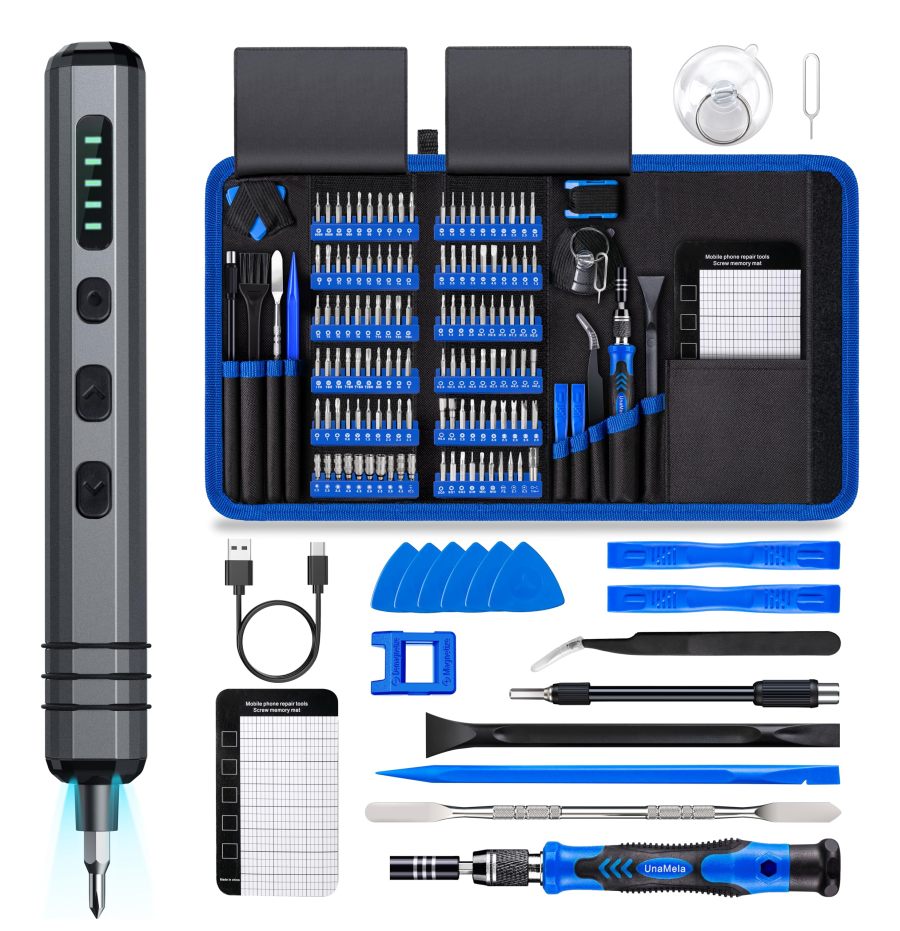
A precision mini electric screwdriver set is a power tool specifically designed for repairing or assembling electronic devices, small appliances, models, eyeglasses, and other delicate equipment. These tools are typically compact, equipped with a variety of precision bits, and feature functions like torque adjustment, LED illumination, and magnetic storage. Their purpose is to significantly enhance the efficiency and accuracy of fine work through automated operation while protecting fragile components, making them an ideal alternative to manual screwdrivers. The following table illustrates the key characteristics of consumer behavior in this category.
| Dimension | Segment | Description |
|---|---|---|
| Need Driver Type | Planned Purchase / Emergency-driven Purchase | User purchases typically stem from anticipated repair, assembly, or DIY plans, or from the need to address sudden electronic device failures, indicating a clear demand for efficient tools. |
| Purchase Frequency | Low Frequency / Seasonal | As durable tools, individual users' repurchase cycles are long. However, they often appear as gifts during holidays (e.g., Christmas, Father's Day), creating purchase peaks. |
| Decision Complexity | Medium | Consumers compare key parameters such as bit count, electric torque, battery life, storage design, brand, and price, but typically do not conduct deep professional research. |
| Price Sensitivity | Medium | Price is an important decision factor, but users are more inclined to pay a reasonable premium for products with comprehensive features, high quality, and a good user experience. |
| Emotional Dependency | Low to Medium | Primarily based on the tool's practical functions and efficiency gains. Some tech enthusiasts or DIY aficionados derive high emotional satisfaction from owning a 'cool' or 'professional' tool set. |
II. User Personas & Usage Scenarios
2.1 Tech Enthusiast / DIY Repair Expert
🎯 Possesses a basic understanding of electronic device structures, enthusiastic about repairing, upgrading, or assembling various precision electronics themselves. Pursues efficient, precise, and professional tool experiences.
| Typical Usage Scenarios | Core Pain Points | Primary Purchase Drivers |
|---|---|---|
|
|
|
2.2 Everyday Home Handyperson
🎯 Enjoys tackling various small-scale repairs and assembly tasks around the home. Seeks tools that are practical, convenient, and easy to use.
| Typical Usage Scenarios | Core Pain Points | Primary Purchase Drivers |
|---|---|---|
|
|
|
III. User Needs Hierarchy (KANO Model)
3.1 Basic Needs (Must-Haves)
- Diverse Bit Selection: The set should include mainstream Phillips, flathead, hex, Torx bits, and non-standard bits for special electronics to handle the vast majority of precision screws on the market.
- Adequate Power Supply: A single charge should support completing at least one medium-scale repair task, avoiding frequent charging or mid-task power loss.
- Forward/Reverse Function: As a basic function of an electric screwdriver, it must provide both clockwise (tighten) and counterclockwise (loosen) rotation modes with intuitive operation.
- Portable Storage: The screwdriver body and all bits should be compactly and orderly stored in a small case for easy storage, carrying, and loss prevention.
3.2 Performance Needs (Linear Satisfiers)
- Adjustable Torque: Offer at least 3-5 levels of electric torque adjustment, allowing users to select appropriate force based on screw size and material to prevent stripping or damaging delicate parts.
- LED Illumination: A bright LED work light at the screwdriver head provides clear lighting in dim or confined workspaces, enhancing operational precision.
- Magnetic Attachment: Bits should have sufficient magnetism to securely hold tiny screws, preventing loss or dropping, especially during precision work.
- Comfortable Grip: The handle design should be ergonomic, providing a comfortable grip and anti-slip texture to reduce hand fatigue during prolonged use.
- S2 Steel Bits: Bits made from S2 alloy steel ensure higher hardness, toughness, and wear resistance, extending tool lifespan.
3.3 Excitement Needs (Delighters)
- Smart Digital Display: An integrated OLED/LCD screen on the screwdriver body displays real-time information like current torque level, battery level, and rotation direction, enhancing the tech feel and operational transparency.
- Innovative Storage Mechanism: Unique designs like one-click pop-up, rotary access, or magnetic flip covers improve the convenience and enjoyment of accessing bits and tools, providing a sense of delight.
- Extended Length Bits: Inclusion of longer bits specifically for screws in deep holes or special positions unreachable by standard bits, expanding application scenarios.
- Included Accessory Tools: Beyond the screwdriver and bits, includes professional repair accessories like spudgers, tweezers, magnetic mats, or anti-static wrist straps, providing a more complete solution.
3.4 Unmet Needs & Opportunities
-
More Effective Low-Speed Electric Torque: Many users report that electric mode lacks sufficient power for very tight or initially stuck screws, still requiring manual assistance, which diminishes the convenience of an electric tool. Ideally, electric mode should handle most precision screws independently.
User Reviews (VOC) Not as powerful as you think but very good and you still use it as a normal screwdriver, just if things are toque down very bad be carful using the electric screwdriver might break // Customers report that the screwdriver lacks power for most jobs.
-
Battery Life & Charging Stability: Battery performance varies across products, with issues like rapid depletion, failure to charge, or complete failure within a short period (e.g., a few months), severely impacting user confidence and product reliability.
User Reviews (VOC) Worked Great...Until it Didn't. Possible fix provided... I was starting to drive a screw back in, and...nothing. Just a high pitched whine. I tried charging, still nothing. // I have had it for less then a week and I have had it to charge it 3 times with casual use.
-
Improved Grip & Anti-Slip Design: Some users note that smooth cylindrical designs can slip easily when greater manual torque assistance is needed, affecting the user experience and safety. Users expect improved grip friction while maintaining aesthetic appeal and portability.
User Reviews (VOC) My only complaint, it's not very ergonomic, but even more so, when trying to loosen or tighten high torque screws, it's very difficult to hold on to, it's very sleek and spins in your hands without a very tight grip, I imagine it would cause me a lot of fatigue if I used it all the time.
-
Enhanced Bit Durability in Practice: Despite widespread claims of 'S2 steel' bits, users still report bits wearing down or breaking, especially with frequent use or stubborn screws, failing to fully deliver on the 'durable' expectation.
User Reviews (VOC) Durability... while some finding the bits durable... others report them breaking apart during use.
-
Storage Case Detail Optimization: Some cases are prone to scratching, make bits difficult to remove, or cannot store the charging cable, hindering the overall smooth user experience.
User Reviews (VOC) The case scratches easily // The bits in the case are annoying to put back in due to them being stacked ontop of eachother.
IV. User Decision Drivers
4.1 Key Decision Factors
- Bit Diversity & Compatibility: Whether the set provides enough variety of bits (especially micro and non-standard types) to handle the user's various electronic device repair needs is the primary purchase decision factor.
- Torque Control & Precision: Whether the electric mode provides appropriate and controllable torque to avoid stripping or damaging delicate parts, particularly in the initial tightening/loosening stages, is crucial.
- Electric Function Convenience & Effectiveness: The core advantage of an electric screwdriver over manual tools is time and effort savings. Users care whether the electric mode is powerful and stable enough to effectively handle most driving/removal tasks, minimizing manual intervention.
- Battery Life & Charging Convenience: Whether the battery supports long continuous work, charging speed, and the use of a universal Type-C interface directly impact the continuity and convenience of use.
- Overall Build Quality & Bit Durability: The material feel, structural stability of the product body, and the quality performance of bits resisting wear or breakage are core standards for users to judge long-term value and reliability.
4.2 Secondary Decision Factors
- Storage Case Design & Portability: The case's material, opening mechanism, and bit fixation method-whether it facilitates organization, is easy to carry, and effectively prevents loss-are important considerations for enhancing the daily user experience.
- LED Lighting Effectiveness: The brightness, illumination range, and independent control of the built-in LED light aid in clear operation in dim environments, improving work efficiency and safety.
- Ergonomic Grip Feel: The handle's size, shape, and anti-slip treatment affect hand comfort during prolonged use, reducing fatigue.
- Additional Accessory Tools: Whether the kit includes spudgers, tweezers, magnetic mats, anti-static wrist straps, etc., providing more comprehensive repair assistance and adding product value.
- Brand Recognition & Design Aesthetics: For some tech enthusiasts or when purchased as a gift, a well-known brand, unique appearance, and tech feel can enhance the product's added value and appeal.
V. Selling Points & Competitive Landscape
5.1 Selling Point Analysis
5.1.1 Standard Features (Points of Parity)
- Precision Operation: Commonly emphasizes suitability for repairing/disassembling small electronics like phones, computers, watches, and delicate equipment, with clear positioning.
- Multi-Function Tool Set: Almost all products tout containing dozens or even hundreds of bits, emphasizing a one-stop solution for diverse user needs.
- Rechargeable / Cordless Design: Highlights built-in lithium batteries and USB-C charging for portability and convenience, free from cable constraints.
- LED Work Light: Most products feature a ring or front-facing LED light to illuminate the work area, assisting users in low-light conditions.
- Magnetic Bits / Storage: Magnetic connection between bits and driver head, or magnetic fixation in the storage case, to prevent screw and bit loss.
5.1.2 Key Differentiators
- Adjustable Torque Settings: Offers multiple torque selections (2-5 levels), emphasizing finer force control and protection for delicate components to prevent stripping.
- S2 Steel / CRV Steel Bits: Promotes bit materials as S2 alloy steel or CRV chrome-vanadium steel to highlight high hardness, wear resistance, and long life, differentiating from ordinary steel.
- Innovative Storage Design: Features like pop-up, rotary, drawer-style mechanisms, or metal shell designs enhance user convenience in accessing bits/tools and the product's perceived quality.
- Battery Capacity / Runtime: Specifically states battery capacity (e.g., 350mAh, 500mAh, 1500mAh, even 2000mAh) and the number of screws that can be driven per charge, emphasizing long work capability.
- Extra Accessory Tools: The kit additionally includes professional accessory tools like spudgers, tweezers, magnetic mats, anti-static wrist straps, providing a more comprehensive repair solution.
5.1.3 Unique Selling Propositions (USPs)
- Smart Digital Display: A few products feature an OLED/LCD screen displaying real-time torque level, battery, rotation direction, etc., providing a visual operation experience.
- Overheat Protection: Individual products mention motor overheat protection mechanisms, aiming to extend product life and ensure safety.
- Minimalist / Award-Winning Design: Some brands (e.g., Fanttik, HOTO) emphasize iF or Red Dot design awards, highlighting design aesthetics and brand reputation to attract appearance-conscious consumers.
5.2 Competitive Landscape
5.2.1 Market Maturity
The precision mini electric screwdriver set market has reached a medium maturity stage, with product features and forms becoming increasingly homogeneous. Most brands offer similar basic sets including the electric screwdriver body, diverse bits, Type-C charging, and LED light. Competition now centers on 'electric torque range and precision,' 'bit count and material,' 'battery runtime,' and 'the ingenuity and material of the storage case design.' Price competition remains fierce, but consumer demands for refined functionality, user experience, and reliability are gradually increasing.
5.2.2 Innovation Trends
Current category innovation trends primarily revolve around 'user experience intelligence' and 'democratizing professional features.' This is reflected in introducing smart digital displays for more intuitive torque and battery info; offering more torque levels for broader precision needs; and popularizing high-hardness bit materials like S2 steel. Additionally, the market is focusing on designing more ingenious and durable storage solutions (e.g., metal integrated pop-up, rotary structures) to enhance portability, loss prevention, and overall premium feel. Simultaneously, some products are beginning to integrate safety features like anti-static or overheat protection, previously more common in professional domains.
VI. Marketing Claims vs. Reality Check
The table below analyzes the gap between common marketing claims and actual user experiences in this category:
| Dimension | Marketing Claim | User Reality | Verdict |
|---|---|---|---|
| Electric Torque vs. Actual Power | Claims like 'strong torque,' '5 levels of stronger torque,' 'easily handles various tasks.' | Users widely report that electric mode lacks power for slightly tight screws (including some in precision electronics), still requiring manual assistance to loosen or tighten. | Sellers fail to effectively manage user expectations regarding the actual electric torque capabilities of mini electric screwdrivers. Given the physical constraints of motor and battery size, there is an upper limit to the electric torque. Expecting power comparable to larger electric tools represents a cognitive mismatch. |
| Bit Durability & Wear | Widely claims bits are made of 'S2 steel,' 'high hardness,' 'durable and reliable,' implying they are resistant to wear or breakage. | Despite S2 steel claims, user feedback still reports bits wearing down, deforming, or even breaking after some use, especially when dealing with stubborn screws. | 'S2 steel' is a quality material, but actual bit durability also depends on precise heat treatment processes and design. If user feedback consistently reports wear, it may indicate insufficient quality control in production, or sellers failing to clearly communicate the bit's load limits, leading to overuse. |
| Battery Runtime Stability | Claims like 'long-lasting runtime,' 'can drive 400-800 screws per charge,' 'fast charging,' ensuring long continuous operation. | User feedback indicates inconsistent battery performance, with some products experiencing rapid depletion, failure to charge, or complete failure within a short period (e.g., motor whining with no rotation). | Battery runtime data may be based on ideal lab conditions or minimal load testing, not aligning with real-world high-intensity usage scenarios. Widespread battery failure feedback suggests quality control issues or inflated specifications, severely impacting core product functionality and user trust. |
| Grip Feel & Anti-Slip | Emphasizes 'ergonomic design,' 'comfortable grip,' 'lightweight and portable.' | Some smooth cylindrical bodies easily slip when users need to apply greater manual torque assistance (especially when loosening tight screws), affecting operation precision and hand comfort. | Design prioritizes minimalist aesthetics and portability but overlooks the basic need for grip stability and safety in specific high-force application scenarios, creating a disconnect in user experience. |
Key Takeaway: The market exhibits widespread parameter inflation and scenario-based experience exaggeration, especially regarding electric torque and battery runtime. A significant disconnect exists between some marketing claims and actual user experience.
VII. Supply-Demand Misalignment Analysis
The table below highlights mismatches between seller focus and buyer priorities:
| Dimension | Seller Behavior | User Focus | Verdict |
|---|---|---|---|
| Electric Torque Power vs. Real-World Performance | Commonly emphasizes 'multiple torque levels' or 'high max torque' but rarely clearly defines under what loads it can operate fully electrically, avoiding discussion of limit scenarios. | Users complain the electric mode 'can't drive,' 'too weak,' 'requires manual help,' feeling marketing doesn't match reality, undermining the electric tool's advantage. | Sellers fail to accurately manage user expectations regarding the reasonable electric power of mini electric tools. Over-promotion leads to significant experience gaps when users engage the core functionality. |
| Bit Durability & Wear | Widely promotes 'S2 steel,' 'high hardness' as quality assurance, but few brands provide actual durability lifespan promises or spare bits. | Users frequently report 'bits wear easily,' 'strip/break after a few uses,' feeling the promoted 'high hardness' doesn't translate to actual 'durability.' | Sellers' bit material marketing stays at a conceptual level, failing to thoroughly address users' deep-seated concerns about bit fragility through actual quality control, design, or service commitments. |
| Product Grip Feel & Anti-Slip | Most products emphasize 'ergonomic,' 'lightweight and portable,' 'minimalist look,' but commonly use smooth cylindrical designs without effectively integrating anti-slip elements. | Users complain 'slippery feel,' 'can't grip when tightening,' 'hand tires easily during long use,' affecting operation stability and comfort. | While pursuing design aesthetics and portability, sellers overlook the basic functional need for grip stability in specific high-force application scenarios, creating a conflict between design and practicality. |
| Storage Case 'Gimmicks' vs. Practicality | Many products invest heavily in the storage case, emphasizing 'pop-up,' 'rotary,' 'magnetic flip cover' innovations as key selling points. | While users find the design 'cool,' they also complain the 'case scratches easily,' 'bits are hard to remove,' 'can't store the charging cable,' or even 'accidental popping,' feeling flashiness outweighs utility. | Sellers over-invest in 'form innovation' for the storage case but fail to adequately address users' deeper needs for 'easy access,' 'secure loss prevention,' and 'overall portability'-the core practical pain points. |
Key Takeaway: Sellers invest excessively in feature stacking and spec competition but fail to effectively address users' most critical core performance concerns (like real torque, bit durability, and grip stability), or overpromise in these areas, leading to a supply-demand mismatch.
VIII. Strategic Opportunities & Recommendations
8.1 Enhance Electric Torque Effectiveness & Reliability
8.1.1 Target Audience & Pain Points
⚡️ Pain Points Addressed: More effective low-speed electric torque; Electric torque vs. actual power mismatch.
8.1.2 Action Plan
Adopt higher-performance micro brushless motors and more precise multi-stage planetary gear sets to ensure smooth, powerful startup and driving of most precision screws even at 0.2-0.5 N.m torque levels, reducing the need for manual user intervention. Optimize clutch structure to ensure reliable transmission and prevent internal component damage during manual assistance.
| Tech Complexity | Medium |
| Cost Impact | Medium Impact |
| Trade-off Warning | Increasing electric torque may slightly enlarge the micro-motor size or increase battery drain, requiring a balance between portability and runtime. |
| Price Band | Only viable above $35.99 |
8.1.3 Marketing Strategy
Emphasize 'Effective Electric Torque, Say Goodbye to Manual Help.' Use real operation videos demonstrating the product's ability to easily tighten and loosen stubborn screws in various precision scenarios. Highlight the real value of 'Saving Time and Effort, Getting It Done in One Go.' Consider providing specific torque curve graphs rather than single peak data points.
8.2 Optimize Bit Material & Structure for Extreme Durability
8.2.1 Target Audience & Pain Points
⚡️ Pain Points Addressed: Enhanced bit durability in practice; Bit wear issues.
8.2.2 Action Plan
Strictly source high-quality S2 steel and implement precise vacuum heat treatment and surface hardening coating processes (e.g., titanium coating) to ensure bits maintain high hardness while possessing toughness, resisting wear and breakage. For commonly used sizes (e.g., PH000, T5), include extra spare bits in the set.
| Tech Complexity | Medium |
| Cost Impact | Medium Impact |
| Trade-off Warning | Higher-quality bit materials and more complex processing increase costs but have no significant physical side effects, providing a positive user experience improvement. |
| Price Band | Only viable above $29.99 |
8.2.3 Marketing Strategy
Highlight 'Premium Materials, Durability Beyond S2 Steel.' Provide third-party lab wear test reports or hardness certifications. Consider offering a '10-Year Bit Warranty' or 'Free Replacement for Common Bits' service to completely eliminate user durability concerns.
8.3 Optimize Grip Anti-Slip & Ergonomic Design
8.3.1 Target Audience & Pain Points
⚡️ Pain Points Addressed: Improved grip & anti-slip design; Smooth cylindrical body prone to slipping.
8.3.2 Action Plan
Add skin-friendly anti-slip silicone sleeves, fine embossed textures, or micro-faceted designs to the main gripping area of the screwdriver handle to significantly increase friction, ensuring a secure grip when manual torque assistance is needed. Also, consider designing a flat surface on the tool's tail to prevent rolling on work surfaces.
| Tech Complexity | Low |
| Cost Impact | Low Impact |
| Trade-off Warning | Adding anti-slip texture or silicone sections to the handle may slightly alter a pure metal aesthetic or add minimal weight, but the utility gain is significant, making the trade-off worthwhile. |
| Price Band | Only viable above $19.99 |
8.3.3 Marketing Strategy
Emphasize 'Secure Control, Say Goodbye to Slipping & Fatigue.' Use product detail close-ups and real-user hand grip photos to highlight stability and comfort during precision operations, making the enhanced user experience a core selling point.
8.4 Enhance Battery Runtime & Stability Assurance
8.4.1 Target Audience & Pain Points
⚡️ Pain Points Addressed: Longer battery life stability; Battery not lasting, not charging, or failing quickly.
8.4.2 Action Plan
Adopt high-energy-density lithium batteries certified by authoritative safety standards (UL/CE/FCC, etc.), increase battery capacity to at least 800-1000mAh, and optimize the Battery Management System (BMS) to prevent overcharge/discharge, improving cycle life and long-term stability. Clearly state battery safety certification information in product materials.
| Tech Complexity | Medium |
| Cost Impact | Medium Impact |
| Trade-off Warning | Sourcing higher-quality battery cells increases cost and may require slight adjustment to battery compartment size or add product weight, but user demand for reliability is extremely high. |
| Price Band | Only viable above $29.99 |
8.4.3 Marketing Strategy
Emphasize 'Enduring Power, Stable & Reliable, Say Goodbye to Battery Anxiety.' Provide third-party battery cycle life test reports or safety certifications. Consider offering a '3-Year Battery Warranty' service to eliminate user concerns about battery life and safety.