Amazon US Market Analysis: Flameless Fragrance Refills Category
📊 Executive Summary
📈 Market Trends
Consumer demand for home fragrance continues to evolve, seeking personalized, long-lasting, and safe olfactory experiences. Niche selling points like hotel-inspired scents, natural/harmless, and pet-friendly are increasingly attractive. However, market products generally suffer from a disconnect between over-marketing and actual experience, especially failing to meet high user expectations on core functions.
⚡ Major Pain Points
Insufficient scent concentration, exaggerated longevity claims, scent perception mismatch, and suspicions of product dilution are the category's core hard flaws. Numerous user reports of weak, fast-evaporating scents starkly contrast seller claims of 'long-lasting and potent' fragrance. Scent descriptions not matching reality, along with suspected product dilution, severely damage consumer trust and purchase intent.
💡 Selection Opportunities
The opportunity lies in deepening core functionality, returning to pragmatic marketing, and enhancing product transparency. Prioritize solving diffusion efficiency and true longevity issues through optimized formulas and high-quality reeds. Simultaneously, refine scent descriptions, provide ingredient transparency, and build trust through authoritative certifications. A pragmatic capacity-to-price strategy, combined with user-friendly packaging design, will help brands stand out in a competitive market.
I. Analysis Overview
1.1 Introduction & Report Scope
This report analyzes the 'Reed Diffuser Oils' category (flameless fragrance refills) within the Amazon US market, focusing on target user personas, core needs, decision drivers, market communication, and potential opportunities.
1.2 Category Snapshot
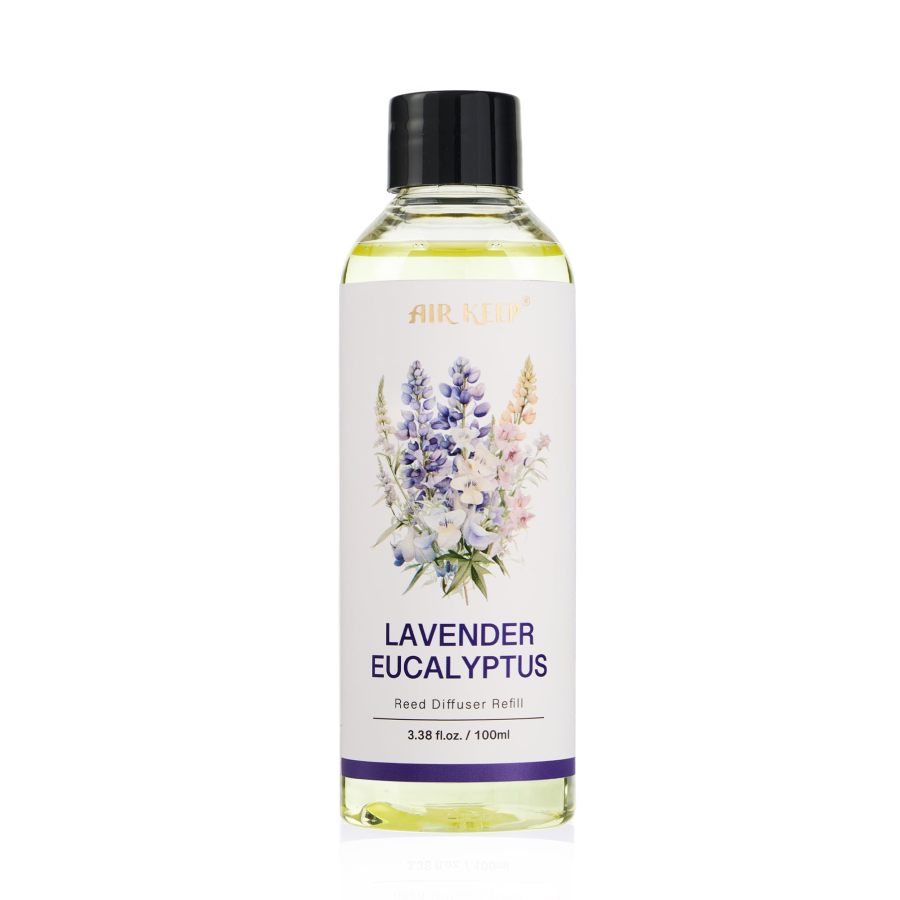
Reed diffuser oil refills are fragrance products used in reed diffusers, designed to continuously release fragrance into the air through the capillary action of the reeds, providing long-lasting scent for spaces such as homes and offices. As an alternative to traditional flame-based diffusers, they are favored for their safety and convenience. The core functions of the product are scent diffusion, longevity, and atmosphere creation. Common sub-types include single scents, blended scents, hotel scent replicas, and refills of different capacities. The following table illustrates the key characteristics of consumer behavior in this category.
| Dimension | Segment | Description |
|---|---|---|
| Need Driver Type | Planned Purchase / Gift-giving | User purchases primarily stem from the need to improve the home environment, create a specific atmosphere, or as a gift to express sentiment and enhance quality of life. Some users also purchase refills because the scent from their current product has dissipated. |
| Purchase Frequency | Medium Frequency | As consumables, they typically need to be refilled every 1-3 months (depending on product capacity and evaporation rate). It is not a high-frequency repurchase, but there is a continuous demand. |
| Decision Complexity | Medium | Consumers compare scent type, longevity, diffusion effectiveness, brand reputation, and price. Scent preference is highly subjective and easily influenced by personal taste, but users typically do not conduct deep research. |
| Price Sensitivity | Medium | Price is an important consideration, but users are willing to pay a reasonable premium for better scent quality, longevity, and brand experience, rather than simply pursuing the lowest price. |
| Emotional Dependency | High | Scent directly influences user mood, home atmosphere, and perception of quality of life, providing significant emotional value. It can bring feelings of relaxation, pleasure, comfort, or elevate a sense of style. |
II. User Personas & Usage Scenarios
2.1 Urban Professional Focused on Home Ambiance & Relaxation
🎯 Pursues a high-quality lifestyle, aiming to create a personalized, comfortable, and relaxing home or office environment through fragrance to relieve stress and enhance life quality.
| Typical Usage Scenarios | Core Pain Points | Primary Purchase Drivers |
|---|---|---|
|
|
|
2.2 Value-Seeking, Practical Daily User
🎯 Focuses on product effectiveness and cost-efficiency, aiming to effectively improve indoor air quality and mask odors with fragrance, without excessively increasing living expenses.
| Typical Usage Scenarios | Core Pain Points | Primary Purchase Drivers |
|---|---|---|
|
|
|
III. User Needs Hierarchy (KANO Model)
3.1 Basic Needs (Must-Haves)
- Effective scent diffusion: As the core function, the diffuser oil must effectively release fragrance; otherwise, it loses its fundamental value.
- Non-irritating/safe scent: The fragrance should not cause allergies, headaches, or respiratory discomfort. Ingredients must be harmless to humans, children, and pets.
- Intact, leak-proof packaging: The product must be well-sealed during transport and storage, with no leaks, ensuring it arrives intact and usable.
3.2 Performance Needs (Linear Satisfiers)
- Scent diffusion range: The fragrance should effectively cover the target space, whether a small bathroom or large living room, providing a perceptible scent presence.
- Scent longevity: The fragrance should last for an extended period, reducing the frequency of user refills or replacements.
- Scent matches description: The actual fragrance should match the listing description to avoid user disappointment from unmet expectations when buying blind.
- Easy refilling: The refill bottle should have a design that facilitates easy pouring without spills, simplifying the operation.
3.3 Excitement Needs (Delighters)
- Unique/premium scent profiles: Offering uncommon, tasteful scents or replicas of high-end hotel experiences, providing a unique sensory enjoyment.
- Multi-functional compatibility: The diffuser oil can be flexibly used with various devices (e.g., water-based diffusers, waterless diffusers, DIY projects), increasing product value.
- Includes high-quality reeds: The refill includes high-absorption, non-warping reeds, saving users the trouble of purchasing them separately.
- Precise scent intensity adjustment: Effectively and precisely adjusting scent intensity by adding or removing reeds to meet personalized needs.
3.4 Unmet Needs & Opportunities
-
Severely insufficient scent concentration: Most products in practice have a scent that is too weak, barely perceptible even in small spaces, failing to achieve effective diffusion.
User Reviews (VOC) Weak scent (to me). // No fragrance noted in the room // Not very strong.
-
Scent longevity doesn't match claims: Many products claim 90-150 days of long-lasting fragrance, but user feedback indicates it lasts only days or weeks, far below expectations.
User Reviews (VOC) Doesn't really have any smell😔 // It only worked the first two days. very light scent. after two days lost all smell completely, like water. // Evaporates quickly.
-
Suspicion of product dilution/watery oil: Some users report the fragrance oil is thin and watery, suspecting the product is diluted, affecting diffusion performance and quality perception.
User Reviews (VOC) Very watery but I suppose that evaporates better. // The oil seemed to have water in it // Customers report that the reed diffuser oil is mostly water, with one customer noting it pours like water.
-
Low scent fidelity/mismatch with expectation: Significant discrepancy exists between the scent described in the listing (e.g., jasmine, black cherry) and the actual smell users perceive, leading to disappointment.
User Reviews (VOC) Doesn't smell like jasmine?! // This scent doesn't smell like the back cherry I know. It's much sweeter, like a Coke Cherry scent. // Not what I was expecting.
-
Reed quality issues/poor oil absorption: Some included or separately sold reeds have poor oil absorption or don't absorb at all, preventing effective fragrance release.
User Reviews (VOC) the wood takes no scent so not suitable for home perfumes. // They soaked up the fragrance oil evenly and didn’t clog or splinter. However, the biggest downside is that they barely put off any scent into the room
IV. User Decision Drivers
4.1 Key Decision Factors
- Scent quality & personal preference: Whether the fragrance is pleasant, natural, non-irritating, and matches personal expectations for a specific scent is the primary consideration when purchasing a fragrance product.
- Actual diffusion effectiveness: Whether the fragrance can effectively diffuse and cover the target space is the core metric for measuring product functionality, directly impacting user judgment of product value.
- Longevity: How long the fragrance lasts directly relates to usage cost and maintenance frequency, a key factor in users' purchase and repurchase decisions.
- Safety: Whether the product ingredients are natural and harmless, and safe for children and pets, is a critical deal-breaker, especially for consumers with families.
4.2 Secondary Decision Factors
- Price-to-capacity value: Given core needs are met, the match between product capacity and price, along with long-term usage cost, influences the purchase decision.
- Accuracy of scent description: Whether the listing's concrete description of the scent helps users form accurate expectations, reducing blind-buy risk and increasing satisfaction.
- Brand reputation/hotel scent association: Brand recognition, user reviews, and the ability to replicate a luxury hotel scent experience can provide additional product appeal.
- Packaging design & gifting appeal: Whether the product appearance is aesthetically pleasing and suitable as a gift influences the buyer's willingness to purchase and the recipient's unboxing experience.
- Refilling convenience: Whether the refill is easy to pour and includes new reeds determines daily usage convenience.
V. Selling Points & Competitive Landscape
5.1 Selling Point Analysis
5.1.1 Standard Features (Points of Parity)
- Long-lasting fragrance: Most products claim to provide fragrance lasting 90-150 days, emphasizing longevity to reduce user hassle with frequent changes.
- Variety of scent options: The market offers a rich variety of scents like clean linen, lavender, ocean, vanilla, black cherry, etc., catering to different user preferences.
- Easy refill/replacement: Products are mostly sold as refills, convenient for topping up existing diffuser bottles, emphasizing economy, eco-friendliness, and ease of use.
- Gift appeal: Products are commonly positioned as ideal gifts for weddings, birthdays, housewarmings, etc., emphasizing sentiment and practicality.
- Multi-scenario applicability: Marketing highlights product suitability for various spaces like home, office, bedroom, bathroom, spa, emphasizing versatility.
5.1.2 Key Differentiators
- Hotel-inspired/luxury experience: Some brands emphasize their scents are inspired by high-end hotels, aiming to replicate a luxurious sensory experience and elevate product sophistication.
- Natural ingredients/no harmful substances: Emphasizing products are made from natural plant essential oils, free from alcohol, phthalates, etc., and are child and pet-friendly.
- Includes reeds: Some refills include high-quality fiber reeds, addressing the need for users to buy them separately and enhancing the out-of-the-box experience.
- Large capacity/high value: Offering refills of 200ml or more, emphasizing longer usage cycles and more economical choices.
- Multi-device compatibility: Marketing claims the product can be used with traditional reed diffusers, water-based diffusers, waterless diffusers, and even DIY crafts, increasing usage flexibility.
5.1.3 Unique Selling Propositions (USPs)
- Nano-tech/low-viscosity formula: A few products (e.g., OMXSAIR) claim to use a nano-enhanced low-viscosity formula aimed at reducing clogging and improving diffusion efficiency and longevity.
- Commercial-grade large space coverage: Very few products (e.g., OMXSAIR) claim coverage for commercial spaces up to 8000 sq ft, targeting high-end commercial or large residential users.
5.2 Competitive Landscape
5.2.1 Market Maturity
The reed diffuser oil category is in a highly mature stage of competition, with basic consensus formed around core sun protection and cooling functions. Most product selling points are converging, focusing on basic features like wide brims, UPF 50+, dual power supply, showing signs of homogenization. However, as the product combines electronic components, user expectations for performance (e.g., wind power, battery life, noise) and quality are higher, indicating the market still needs further maturation and standardization.
5.2.2 Innovation Trends
Current innovation trends in the category mainly focus on enhancing user experience and solving existing pain points. Examples include increasing product flexibility through 2-in-1 detachable designs; reinforcing the brim structure to address sagging caused by fan weight; and exploring lighter, quieter fan technology to improve wearing comfort. Additionally, adding integrated features like mosquito nets for specific scenarios reflects attention to niche needs. In the long term, more efficient and stable solar charging technology (beyond just direct drive) will be a core competitive point.
VI. Marketing Claims vs. Reality Check
The table below analyzes the gap between common marketing claims and actual user experiences in this category:
| Dimension | Marketing Claim | User Reality | Verdict |
|---|---|---|---|
| Scent longevity | Long-lasting fragrance for 90-150 days, enduringly fragrant. | Numerous user reports indicate the fragrance lasts only days or weeks, far below advertised promises, requiring frequent replacement or refilling. | A classic case of marketing using 'ideal state' or 'lab data' that is severely disconnected from the evaporation rates in actual home environments, misleading user expectations about product lifespan. |
| Scent intensity & diffusion range | Rich, potent fragrance that fills the entire room, strong and lasting. | Widespread user feedback reports the scent is 'very weak,' 'barely noticeable,' and imperceptible even in small rooms, failing to effectively cover the space. | Sellers excessively exaggerate diffusion capability, overlooking the physical limitations of reed diffusion and variations in different environments, leading to unmet user expectations of a 'room-filling' scent. |
| Ingredients/oil quality | Premium essential oils, highly concentrated, natural plant oils and organic solutions. | Multiple products are suspected by users of having 'thin, watery oil,' with some reporting it 'seems to have water' or the presence of an unknown film. | Suspicion of product adulteration or lax quality control directly undermines the brand promise of 'premium essential oils' and user trust, representing a critical flaw. |
| Perceived vs. actual capacity/size | Large 3.38oz (100ml) or 6.7oz (200ml) capacity, great value. | Users commonly feel the 'bottle is very small' upon receipt, creating a significant psychological gap with expectations potentially set by listing images or text, impacting value perception. | Marketing images fail to accurately convey the product's actual size, leading to psychological disappointment upon unboxing and a perception that the product is 'not worth the price.' |
Key Takeaway: The category exhibits a widespread tendency for parameter inflation and exaggeration of sensory experiences, particularly regarding scent concentration, longevity, and perceived capacity. There is a significant gap between marketing promises and actual user experience.
VII. Supply-Demand Misalignment Analysis
The table below highlights mismatches between seller focus and buyer priorities:
| Dimension | Seller Behavior | User Focus | Verdict |
|---|---|---|---|
| Scent concentration & diffusion | Commonly emphasize 'fills the space,' 'rich fragrance,' but fail to provide clear guidance on actual diffusion range or suitable room size, nor address diffusion efficiency technically. | 'Barely noticeable,' 'scent is very faint,' 'can only smell it up close.' Core need is unaddressed. | Sellers are collectively silent or over-promising on the most fundamental functional need, resulting in products failing to meet basic user expectations for 'effective fragrance,' constituting the biggest trust crisis. |
| Scent longevity | Commonly claim '90-150 days of long-lasting fragrance' but lack supporting real-world test data and fail to provide users with reasonable expectation management for different environments. | 'Gone in a few days,' 'evaporates too fast,' 'far from the advertisement.' Users are dissatisfied with frequent refilling. | Sellers are overly optimistic or intentionally exaggerating a key performance metric, failing to acknowledge the genuine user demand for 'longevity,' leading to a severe mismatch between user expectations and the reality of product lifespan. |
| Scent fidelity & subjective perception | Sellers often use abstract, literary descriptions for scents (e.g., 'April Breeze,' 'Ebony Rose') or directly associate them with luxury hotels, but lack detailed breakdowns of scent components or guidance on olfactory preferences. | 'Doesn't smell like jasmine,' 'smells like soapy water,' 'not the scent I expected.' High risk in blind buying. | Sellers fail to fully understand that scent is a highly subjective experience, lacking effective mechanisms to help users form accurate scent expectations. This results in extremely high risk for blind scent purchases, damaging user satisfaction. |
| Product capacity & value perception | Small-capacity product images create exaggerated visual effects, while large-capacity products claim longevity but deliver poor actual performance, leading to overall confusion in value perception. | 'Bottle is too small,' 'not worth the price,' 'waste of money.' | Sellers have failed to establish a unified and user-expected value proposition regarding the match between capacity and price, causing significant deviation in user judgment of product value. |
Key Takeaway: Sellers are generally obsessed with vague claims of 'long-lasting' and 'natural,' collectively neglecting users' core pain points regarding 'actual scent concentration,' 'longevity,' and 'scent fidelity,' leading to a severe supply-demand disconnect.
VIII. Strategic Opportunities & Recommendations
8.1 Enhance Core Diffusion Efficiency & True Longevity
8.1.1 Target Audience & Pain Points
⚡️ Pain Points Addressed: Severely insufficient scent concentration; scent longevity doesn't match claims.
8.1.2 Action Plan
Develop a more efficient diffusion solvent system, e.g., using low-volatility, high-solubility solvents. Partner with top fragrance suppliers to develop high-concentration, stable-release fragrance formulas. Provide denser, higher-absorption fiber reeds and increase their quantity.
| Tech Complexity | Medium |
| Cost Impact | Medium Impact |
| Trade-off Warning | Increasing fragrance concentration and using special solvents may slightly increase costs and require a more stable solvent system, but can significantly enhance user experience. |
| Price Band | Only viable above $14.99 |
8.1.3 Marketing Strategy
Emphasize 'Real Diffusion, Covers the Whole Room' and 'Long-Lasting Fragrance, Low Maintenance.' Provide third-party lab test data (e.g., room coverage tests, evaporation rate curves). Use comparison video demos to visually showcase product diffusion effectiveness in different spaces.
8.2 Refine Scent Descriptions & Expectation Management
8.2.1 Target Audience & Pain Points
⚡️ Pain Points Addressed: Low scent fidelity/mismatch with expectation; high subjectivity in scent perception.
8.2.2 Action Plan
Introduce professional perfumer scent analyses, using concrete language to describe top, middle, and base notes along with scent characteristics. Offer sample trial sizes or include a 'Scent Self-Assessment' guide in the listing to aid user selection.
| Tech Complexity | Low |
| Cost Impact | Low Impact |
| Trade-off Warning | None |
| Price Band | No Price Band Jump |
8.2.3 Marketing Strategy
Create a 'Scent Map' or 'Scent Profile Card' detailing each fragrance's characteristics, suitable scenarios, and emotional associations. Encourage users to share real scent experiences to build a scent community. Emphasize a 'Blind Buy Worry-Free, Dislike & Return' guarantee.
8.3 Strengthen Product Safety & Ingredient Transparency
8.3.1 Target Audience & Pain Points
⚡️ Pain Points Addressed: Lack of support for 'organic' claims; lack of transparency regarding natural ingredients.
8.3.2 Action Plan
Proactively seek certifications from authoritative bodies like IFRA, FDA (if applicable), and clearly display certification marks and numbers in listings. Provide a detailed ingredient list, including fragrance origin (natural/synthetic) and concentration.
| Tech Complexity | Medium |
| Cost Impact | Medium Impact |
| Trade-off Warning | Sourcing purer raw materials may increase costs but can enhance brand premium and user trust. |
| Price Band | Only viable above $12.99 |
8.3.3 Marketing Strategy
Highlight 'Safe Fragrance for the Whole Family.' Use charts to clearly display safety features like 'Phthalate-Free, Paraben-Free, Pet-Friendly.' Emphasize commitment to health and environmental responsibility through brand storytelling.
8.4 Optimize Capacity Perception & Packaging Design
8.4.1 Target Audience & Pain Points
⚡️ Pain Points Addressed: Gap between actual capacity and user expectation; inconvenient refilling operation.
8.4.2 Action Plan
Redesign bottle shape to better visually represent its capacity, or include in-listing images of the product held or compared to common objects for realistic size reference. Design refill bottles with a pour spout cap for easy, spill-free refilling.
| Tech Complexity | Low |
| Cost Impact | Low Impact |
| Trade-off Warning | None |
| Price Band | No Price Band Jump |
8.4.3 Marketing Strategy
Include in-listing images of the product held or compared to common objects for realistic size reference. Emphasize 'Thoughtful Design, Hassle-Free Refilling.'