Amazon US Market Analysis: Metal Headbands Category
📊 Executive Summary
📈 Market Trends
Intense Homogeneous Competition, High User Demands for Quality Details. The Amazon US metal headband market is mature, with products commonly marketed as lightweight, non-slip, and multi-scenario. However, users are no longer satisfied with basic functions; their attention to details like wearing comfort, coating durability, and hair type compatibility has significantly increased, providing a breakthrough point for market segmentation.
⚡ Major Pain Points
Coating Peeling and Wearing Discomfort Are Core Return Triggers. Numerous user reports highlight headband coating peeling, size misfit causing headaches or slippage, and wave teeth tangling hair. These issues severely impact user experience and trust in product quality, highlighting widespread quality control and design flaws in the current market.
💡 Selection Opportunities
Deeply Address User Pain Points, Break Through with Differentiated Quality and Comfort Experience. Market opportunities lie in developing a Super-Durable, Anti-Corrosion 'Zero-Peel' Headband to rebuild trust, launching an Ergonomic 'Weightless Wear' Adjustable Headband to enhance comfort, and segmenting with a Hair-Type Optimized 'Tangle-Free' Series. These strategies can effectively address existing pain points, achieve product premiumization, and capture market segments seeking higher quality and better experience.
I. Analysis Overview
1.1 Introduction & Report Scope
This report analyzes the 'Headbands' category (specifically metal headbands) in the Amazon US market, focusing on target User Personas, Core Pain Points, Decision Driver Analysis, market communication, and potential opportunities.
1.2 Category Snapshot
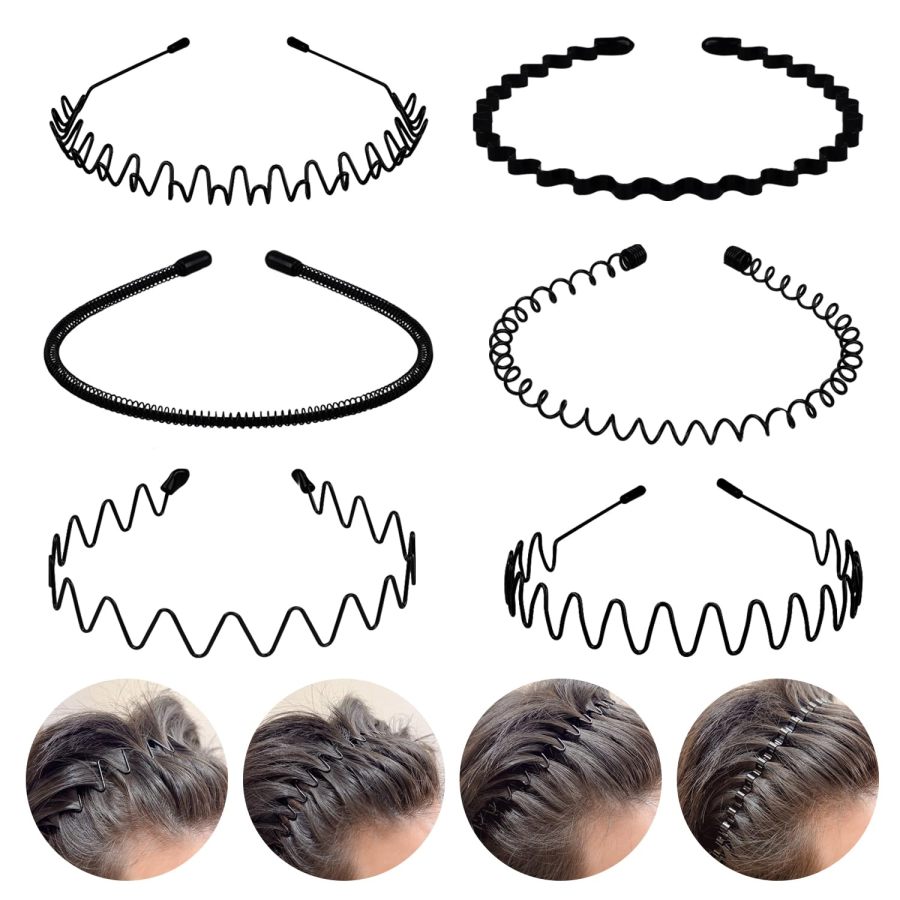
A metal headband is a hair accessory primarily made of metal, typically featuring wave, zigzag, or spring-like designs. This product category aims to securely hold hair in place during activities like exercise, daily washing, skincare, or styling, preventing hair from falling into the face. Key emphasized attributes include slip resistance, comfort, durability, and unisex appeal. The following table illustrates the key characteristics of consumer behavior in this category.
| Dimension | Segment | Description |
|---|---|---|
| Need Driver Type | Planned Purchase / Emergency-driven Purchase | User purchases are typically driven by planned needs to solve hair management problems or for specific scenarios (e.g., sports, washing). They may also be impulsive purchases due to low prices or immediate daily needs. |
| Purchase Frequency | Medium-Low Frequency | The product itself is somewhat durable. Users tend to buy multiple pieces at once or repurchase when the original product is damaged, lost, or when they want to try a new style. |
| Decision Complexity | Medium | Consumers compare factors like wearing comfort, hair-holding effectiveness, product durability, design/style, and price, but typically do not conduct in-depth research. |
| Price Sensitivity | Medium | Price is an important consideration. However, users are willing to pay a reasonable premium for significant improvements in comfort, more reliable holding power, or superior durability. |
| Emotional Dependency | Medium-Low | Primarily based on functionality and practicality. However, wearing comfort, a non-damaging experience, and the minimalist, stylish appearance can significantly enhance user satisfaction and self-image. |
II. User Personas & Usage Scenarios
2.1 Fitness & Sports Enthusiasts
🎯 Seeks headbands that prevent hair from obstructing vision or movement during exercise, while offering secure and comfortable wear.
| Typical Usage Scenarios | Core Pain Points | Primary Purchase Drivers |
|---|---|---|
|
|
|
2.2 Daily Hair Management & Hygiene Seekers
🎯 Wants a convenient and quick way to hold hair back during daily work, study, facial cleansing, or makeup application, while maintaining a neat and tidy appearance.
| Typical Usage Scenarios | Core Pain Points | Primary Purchase Drivers |
|---|---|---|
|
|
|
2.3 Men with Long Hair
🎯 Men with long or medium-length hair seeking a headband that effectively holds hair while exuding a masculine, non-feminine aesthetic.
| Typical Usage Scenarios | Core Pain Points | Primary Purchase Drivers |
|---|---|---|
|
|
|
III. User Needs Hierarchy (KANO Model)
3.1 Basic Needs (Must-Haves)
- Secure & Non-Slip Hold: The headband must effectively hold hair in place, preventing it from slipping or becoming messy during activity. This is the most fundamental functional need.
- No Hair Snagging: The headband design should not pull or tangle hair, causing pain or damage, which affects hair health and wearing experience.
- Basic Durability: Product material should be sturdy, not easily breaking or deforming, and able to withstand daily use and frequent bending.
- Affordable Price: As a daily small accessory, the price should be within an acceptable range for most consumers, reflecting reasonable value for money.
3.2 Performance Needs (Linear Satisfiers)
- Long-Term Wearing Comfort: Even after extended wear, it should not cause headaches, pressure behind the ears, or any discomfort, ensuring users can wear it without noticing.
- Long-Lasting, Non-Peeling Coating: Surface coating should be wear-resistant, sweat-resistant, and not prone to fading or peeling, maintaining the product's long-term aesthetics and sense of quality.
- Adapts to Different Head Shapes & Hair Volumes: Possesses a degree of elasticity and adjustability to fit different head sizes and various hair types (straight, curly, fine, thick).
- Lightweight Design: Feels almost weightless when worn, not adding burden to the head, enhancing overall comfort.
3.3 Excitement Needs (Delighters)
- Multi-Style Assortment: Multi-pack offering various wave/zigzag designs, satisfying different styling needs or daily rotation, adding fun to choice.
- Minimalist, Invisible Aesthetics: Simple, stylish design that blends well into the hairstyle, is not easily noticeable, or can easily create a subtle, stylish effect.
- Skin-Friendly, Hypoallergenic Material: Uses medical-grade stainless steel or safety-certified nickel-free coating, ensuring safe use even for users with sensitive skin.
- Water & Sweat-Resistant Properties: Especially suitable for sports; resistant to rust, easy to clean, maintains hygiene, and extends product lifespan.
3.4 Unmet Needs & Opportunities
-
Coating Easily Peels: Many users report that the black paint/coating on headbands peels off after a period of use, affecting aesthetics and experience.
User Reviews (VOC) Works as intended, keeps hair out of my face. Only complaint is that the paint/coating peels over time especially if you wear glasses. // Ending tips are not as shown in picture they are metal, color/paint is removed on 2nd day // You get what you pay for. The paint started to peel after one week of use. // If you have oily hair or a job where you sweat while wearing them the paint coat flakes off quickly.
-
Size Compatibility Issues: Some users find the headband too tight, causing pain, or too loose, easily slipping off, especially for different head shapes and hair volumes. One-size-fits-all design is not truly universal.
User Reviews (VOC) Customers have mixed opinions about the headband's size, with some finding it too big. // Not for thin hair. These are not for thinner hair. // Needs longer band. The bands aren't long enough. // Customers have mixed opinions about the headband's size, with some finding it too big for their head and too loose.
-
Pressure Behind Ears / Sides: Lack of sufficient padding or poor design at the headband ends causes discomfort, even headaches, behind the ears or on the sides of the head during prolonged wear.
User Reviews (VOC) Ouch. Alot come bent and hurts my head // Just oaky for me. They work okay but leave a huge indent in your hair. // Uncomfortable to wear. Fit very tightly. Causing painful spots near my ears // The Left & Right End's That End Close To Your Ear (When You Pull Hair Back Get Uncomfortable.
-
Easily Tangles Hair: Especially with wave or zigzag designs, hair easily gets caught and pulled during putting on or taking off, causing pain or hair damage.
User Reviews (VOC) Customers find the hairband difficult to remove, with one mentioning it gets stuck in curly hair. // They get tangled in my hair. // However they kept getting stuck in my hair. // Some of the patterns also got tangled up in hair really easily as well, wound up throwing away about half of them right off the bat.
-
Insufficient Hold for Fine, Thin Hair: Some headbands lack sufficient holding power for fine, thin hair, easily slipping off and failing to achieve the desired effect.
User Reviews (VOC) Not for thin hair. These are not for thinner hair. // Customers report that the hairband's plastic is too thin for thick hair. // Works pretty well. Since I have fine hair, it's more visible on top of my head. Would be great for thick hair. // If you have hair thats anything longer than a few inches these will probably not work for you.
IV. User Decision Drivers
4.1 Key Decision Factors
- Wearing Comfort: Whether prolonged wear causes headaches, pain behind the ears, or discomfort is the most critical factor for user purchase and retention. Directly addresses the pain points of 'Discomfort from Wear' and 'Pressure Behind Ears / Sides'.
- Hair-Holding Effectiveness: The ability to effectively and securely hold hair in place without slipping or becoming messy is the core functional value of a headband. Addresses the pain points of 'Headband Slippage' and 'Insufficient Hold for Fine, Thin Hair'.
- Product Durability: Whether the headband is prone to breaking, deforming, or if the coating lasts without peeling is a core consideration for product quality and lifespan. Addresses the pain point of 'Paint/Coating Peeling'.
- Size & Fit Compatibility: Whether it fits one's head shape and hair volume well, avoiding being too tight or too loose, directly impacts the wearing experience and holding effectiveness. Addresses the pain point of 'Size Compatibility Issues'.
4.2 Secondary Decision Factors
- Value for Money: Given that basic function and comfort are met, whether the product price is reasonable and if multi-packs offer good value influences the purchase decision.
- Appearance & Design: Whether the style is simple, fashionable, versatile, and aligns with personal aesthetics and usage occasions influences purchase preference.
- Ease of Use: Whether putting on and taking off is smooth, without hair snagging or pulling, affects the daily user experience. Addresses the pain points of 'Complex Use / Hair Snagging' and 'Easily Tangles Hair'.
- Versatility: Whether it can be used for multiple scenarios like sports, daily life, and washing, increasing the product's use value.
V. Selling Points & Competitive Landscape
5.1 Selling Point Analysis
5.1.1 Standard Features (Points of Parity)
- Metal Material: Emphasizes sturdiness, durability, and resistance to deformation, contrasting with plastic headbands.
- Non-Slip Design: Claims to ensure the headband stays securely in place through wave, zigzag, or spring structures.
- Unisex: Highlights that the product design is suitable for both male and female users, expanding the target market.
- Multi-Scenario Applicability: Covers various use scenarios like sports, face washing, makeup, daily commuting, and leisure, emphasizing practicality.
- Multi-Pack / Set: Sold in sets of 2, 6, or 15 pieces, offering value for money and variety.
- Elastic & Adjustable: Claims the headband is elastic and can be manually adjusted to fit different head circumferences.
5.1.2 Key Differentiators
- Ear Protection Sleeves: Adding plastic or rubber sleeves at the headband ends to reduce discomfort behind the ears and enhance wearing comfort.
- Multiple Wave/Zigzag Styles: Offers different densities or shapes of wave/zigzag designs to meet visual and functional holding needs.
- Lightweight: Emphasizes a weightless feel when worn, not adding burden to the head, improving the comfort experience.
- High-Quality Coating: Promotes a coating that resists peeling and rust, maintaining long-lasting product aesthetics (though user feedback often contradicts this).
5.1.3 Unique Selling Propositions (USPs)
- Nickel-Free Coating: Very few products mention a nickel-free coating, targeting users with sensitive skin to enhance product safety.
- Specific Hairstyle Optimization: Occasionally mentions suitability for specific hair types like thick, curly, or fine hair, but not widespread, lacking clear segmentation solutions.
5.2 Competitive Landscape
5.2.1 Market Maturity
Moderately Mature. The category concept is clear, and the market has a certain scale. However, product functions and designs are highly homogeneous, competing mainly through quantity, price, and broad promises of 'comfort/non-slip.' Widespread pain points in user experience indicate there is still room for quality and detail optimization in the market.
5.2.2 Innovation Trends
Current innovation mainly focuses on product assortment (multi-packs), materials (more robust, lightweight), and surface treatment (anti-peel coating) improvements. Future trends may move towards more refined user need matching (e.g., hair type customization), superior ergonomic design (e.g., zero pressure behind ears), and greater emphasis on eco-friendly and skin-safe materials. Additionally, some products are beginning to offer more personalized styles to cater to different consumer aesthetics.
VI. Marketing Claims vs. Reality Check
The table below analyzes the gap between common marketing claims and actual user experiences in this category:
| Dimension | Marketing Claim | User Reality | Verdict |
|---|---|---|---|
| Coating Durability | High-quality coating, rust-resistant, does not peel, for long-term use. | Numerous user reports indicate that the paint/coating on metal headbands peels off within days or weeks of use, revealing the base metal and even causing rust. | This is a typical case of exaggerated marketing, severely deviating from the product's long-term user experience, directly leading to user trust collapse and numerous negative reviews. |
| Size Universality | Highly elastic and adjustable, fits all head shapes and hair volumes, unisex. | Users commonly report that headbands do not fit specific head shapes (too large or too small) or hair volumes (too thick or too fine), causing tightness/headaches or looseness/slippage. It is not truly 'universal.' | Sellers overlook the physical limitations of ergonomics and hair type differences, using the term 'adjustable' to mask the limitations of a one-size-fits-all approach, leading to a severe mismatch between user expectations and actual experience. |
| Wearing Comfort | Smooth edges, protective end sleeves, pain-free comfort, weightless feel for long-term wear. | Many users report pressure or discomfort behind the ears or on the sides of the head, causing headaches; some wave/zigzag designs easily tangle hair. | There is an inherent conflict between the hardness of metal material and wearing comfort. Existing protective measures fail to effectively address all users' pain points, making marketing claims overly idealized. |
Key Takeaway: The market exhibits a widespread tendency for parameter inflation and experience exaggeration, particularly regarding coating durability and size universality. There is a significant disconnect between marketing claims and actual user experience.
VII. Supply-Demand Misalignment Analysis
The table below highlights mismatches between seller focus and buyer priorities:
| Dimension | Seller Behavior | User Focus | Verdict |
|---|---|---|---|
| Coating Durability | Sellers commonly claim 'high-quality coating doesn't peel,' 'rust-resistant,' but these are superficial, lacking specific process explanations or warranty commitments. | Users strongly complain about coating peeling, perceiving it as low product quality, affecting aesthetics and leaving black residue. This is a frequent reason for returns. | Sellers failed to deliver on promises regarding the most critical quality pain point, causing user trust to collapse. This reflects neglect of supply chain and quality control, as well as a strategic blind spot to users' core concerns. |
| Wearing Comfort (Precise Fit) | Sellers vaguely emphasize 'elastic and adjustable' and 'protective sleeve design' to ensure comfort, but lack refined design and description for different head circumferences, hair volumes, and sensitive areas (e.g., behind ears). | Users commonly report issues like being too tight (headaches), pressure behind ears, or being too loose (slippage), indicating that the so-called 'adjustability' fails to address discomfort arising from individual differences in actual experience. | Sellers oversimplify the complex user experience issue, failing to deeply understand and solve the subtle individual differences in wearing comfort, leading to the product's functionality being negated by negative experiences. |
| Hair Type Compatibility | Sellers commonly claim 'suitable for all hairstyles' but do not provide specific solutions or design details for fine/thin hair, thick hair, or easily tangled curly hair. | Some users explicitly state 'not suitable for fine/thin hair,' 'easily tangles hair,' while others feel 'suitable for thick hair,' indicating the product has applicability blind spots. | Sellers adopt a 'one-size-fits-all' marketing approach, ignoring the differentiated needs of different hair types for headband grip, tooth spacing, and material, limiting the product's penetration into specific market segments. |
Key Takeaway: Sellers overemphasize broad, catch-all selling points like 'multi-pack' and 'unisex,' while collectively remaining silent or glossing over the core pain points users care most about: coating durability, precise comfort, and hair type compatibility.
VIII. Strategic Opportunities & Recommendations
8.1 Super-Durable, Anti-Corrosion 'Zero-Peel' Metal Headband
8.1.1 Target Audience & Pain Points
⚡️ Pain Points Addressed: Coating easily peels; poor product durability; low perceived value.
8.1.2 Action Plan
Adopt PVD (Physical Vapor Deposition) or Electrophoretic (E-coating) processes for surface treatment to ensure super wear-resistant, sweat-resistant, and corrosion-resistant coating. Offer matte or satin finishes to enhance premium feel.
| Tech Complexity | Medium |
| Cost Impact | Medium Impact |
| Trade-off Warning | PVD/Electrophoretic coating costs are slightly higher but offer a massive improvement in user experience. No significant physical side effects; may slightly increase surface hardness but has minimal impact on wearing comfort. |
| Price Band | Only viable above $7.99 for 2-pack |
8.1.3 Marketing Strategy
Lead with '5-Year Worry-Free Guarantee, Say Goodbye to Peeling'; showcase product wear resistance through comparison test videos; emphasize 'Fearless of Sweat During Sports, Stays Like New for Daily Wear,' establishing a premium, durable image.
8.2 Ergonomic 'Weightless Wear' Adjustable Headband
8.2.1 Target Audience & Pain Points
⚡️ Pain Points Addressed: Size compatibility issues; pressure behind ears/sides; inconsistent wearing comfort.
8.2.2 Action Plan
Design a hinge or clasp structure allowing multi-step micro-adjustments for finer head circumference fit. Use medical-grade soft silicone pads or memory foam strips at contact points behind ears and on head sides to ensure zero pressure and no foreign object sensation during long wear. Consider offering two curvature options to suit different head shapes.
| Tech Complexity | Medium |
| Cost Impact | Medium Impact |
| Trade-off Warning | Added silicone pads or multi-segment adjustment structures may slightly increase product volume or complexity but can be balanced through structural optimization. |
| Price Band | Only viable above $9.99 for 2-pack |
8.2.3 Marketing Strategy
Emphasize 'Custom-Level Comfort, Weightless All-Day Wear'; showcase the ear comfort zone design through ergonomic diagrams; highlight 'Bid Farewell to Headaches and Indentations, Enjoy Boundless Freedom.'
8.3 Hair-Type Optimized 'Tangle-Free' Headband Series
8.3.1 Target Audience & Pain Points
⚡️ Pain Points Addressed: Easily tangles hair; insufficient hold for fine/thin hair; not suitable for fine/thin hair.
8.3.2 Action Plan
For fine/thin hair, use denser, smaller-wave micro-tooth structures to increase friction without snagging. For thick/curly hair, use wider-spaced, deeper-wave designs to provide strong support and reduce tangling. Listings must clearly label the applicable hair type.
| Tech Complexity | Low |
| Cost Impact | Low Impact |
| Trade-off Warning | Different wave/tooth spacing designs mainly affect molds, with minimal cost impact and no significant physical side effects. |
| Price Band | Only viable above $6.99 for 2-pack |
8.3.3 Marketing Strategy
Lead with 'Your Hair Type, Your Dedicated Headband'; showcase comparison images of models with different hair types wearing the product; emphasize 'No More Tangles, Perfect Fit, Confidently Showcase Your Hair.'