Amazon US Market Analysis: Non-woven Fabric Grow Bags Category
📊 Executive Summary
📈 Market Trends
Strong demand for portable container gardening, but market innovation is stagnant on basic functions. With urbanization, the number of gardening enthusiasts in limited spaces continues to grow, driving sustained demand for lightweight, breathable, and portable containers like non-woven grow bags. However, existing products mostly compete on homogeneity, lacking true innovations that solve user pain points, leading to a significant gap between consumer experience and expectations.
⚡ Major Pain Points
Overstated capacity, fragile handles, and inconsistent water retention are core weaknesses. Users commonly face the issue of actual product capacity not matching advertised claims, disrupting planting plans. Secondly, despite 'heavy-duty reinforcement' claims, frequent negative feedback about handles tearing under load undermines the product's convenience. Additionally, the strong drainage characteristic of non-woven fabric leads to excessively fast water loss in hot climates, increasing users' daily watering burden.
💡 Selection Opportunities
Deepen core function reliability and infuse human-centric innovation. Selection opportunities lie in: 1) Standardizing capacity and optimizing water retention performance to address information asymmetry and the frequent watering pain point; 2) Integrating support systems for tall plants to expand usage scenarios and enhance high-yield experiences; 3) Elevating product aesthetic design to meet the aesthetic needs of urban gardeners; 4) Improving the practicality of visual harvest windows to enhance the fun and efficiency of gardening. These opportunity points aim to provide more reliable, convenient, and valuable planting solutions, enabling differentiated competition and brand premium.
I. Analysis Overview
1.1 Introduction & Report Scope
This report analyzes the 'Grow Bags' category (non-woven fabric grow bags) within the Amazon US market, focusing on target user personas, core needs, decision drivers, market communication, and potential opportunities.
1.2 Category Snapshot
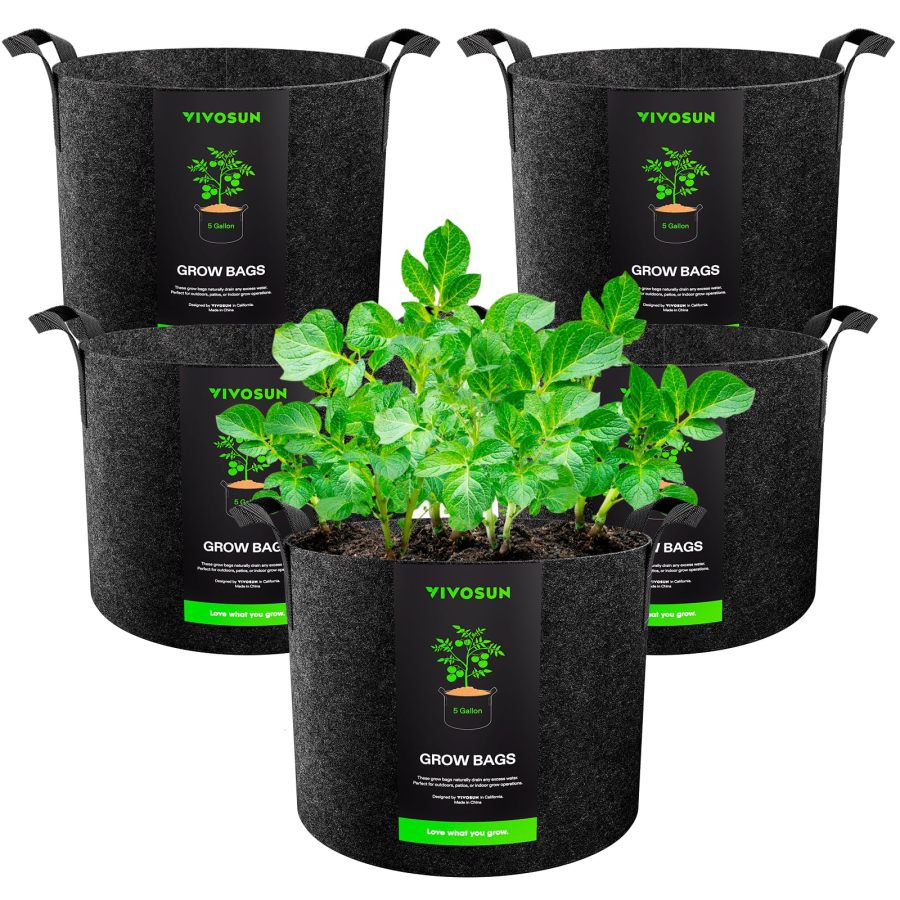
Non-woven fabric grow bags are flexible containers made from breathable non-woven fabric material, used for plant cultivation. Their core functions include promoting healthy root growth, excellent drainage and aeration, lightweight portability, and reusability. Common sub-types range from small seedling bags (e.g., 0.5 gallons) to large-capacity vegetable grow bags (e.g., 15 gallons), and even square partitioned raised beds. They are widely used in scenarios such as home gardening, balcony planting, and professional seedling cultivation. The following table illustrates the key characteristics of consumer behavior in this category.
| Dimension | Segment | Description |
|---|---|---|
| Need Driver Type | Planned Purchase / Emergency-driven Purchase | Gardeners often make planned purchases, but there is also an emergency-driven need due to old container damage or expanding planting areas, with clear expectations for planting outcomes. |
| Purchase Frequency | Low Frequency / Seasonal | Product durability supports reuse, but driven by seasonal planting or expansion needs, purchases typically occur once a year or every few years. |
| Decision Complexity | Medium | Functionality is relatively straightforward, but users compare material thickness, size/capacity, handle strength, and drainage effectiveness before making a comprehensive decision. |
| Price Sensitivity | Medium-High | Price is an important factor, especially for bulk purchases, but users accept a reasonable premium for the product's actual functionality, quality, and durability. |
| Emotional Dependency | Medium | Gardening itself involves emotional investment. Users' concern for plant health is a key driver in choosing planting containers, and they also seek the joy of cultivation. |
II. User Personas & Usage Scenarios
2.1 Urban Balcony Gardener
🎯 Lives in a city apartment, utilizes limited spaces like balconies or patios to grow vegetables, herbs, or ornamental plants, pursuing convenience and aesthetics.
| Typical Usage Scenarios | Core Pain Points | Primary Purchase Drivers |
|---|---|---|
|
|
|
2.2 Experienced Home Gardener
🎯 Possesses some gardening experience, potentially cultivating various plants in a yard or greenhouse, focusing on plant health, product durability, and value for money.
| Typical Usage Scenarios | Core Pain Points | Primary Purchase Drivers |
|---|---|---|
|
|
|
III. User Needs Hierarchy (KANO Model)
3.1 Basic Needs (Must-Haves)
- Sufficient Capacity: Can hold enough soil for healthy plant growth without restricting root development, especially for root crops; capacity must be accurate and reliable.
- Good Drainage: Prevents waterlogging and root rot, ensuring healthy root systems. This is a core advantage of the non-woven material, but excessive drainage should be avoided.
- Breathability: Ensures root respiration, prevents oxygen deprivation, promotes plant vitality, and aids in 'air-pruning' to optimize root structure.
- Sturdy & Durable: Material resists tearing or splitting, capable of lasting at least one growing season. This is fundamental for long-term use, with high demands on handle strength.
3.2 Performance Needs (Linear Satisfiers)
- Reinforced Handles: Facilitates moving grow bags filled with soil and plants; handles should not detach or break easily, improving safety and convenience during transport.
- Prevents Root Circling: Promotes healthy fibrous root structure through 'air-pruning,' enhancing plant vitality and yield, superior to traditional rigid pots.
- Reusable: Products are washable, easy to store, and usable across multiple growing seasons, lowering long-term investment and environmental costs, improving economic efficiency.
- Accurate Sizing: Actual capacity strictly matches product claims, avoiding purchase expectation gaps that affect planting plans and crop growth, building trust.
3.3 Excitement Needs (Delighters)
- Visual Observation Window: Allows observation of root or fruit (e.g., potatoes) growth without digging, adding fun and precision to harvesting, but must be clear and practical.
- Foldable for Storage: Easily folds during the off-season, saving significant storage space, especially suitable for small homes or seasonal gardeners.
- Multi-compartment Design: Allows planting multiple species in one container for easy management, creating a 'square-foot garden,' enhancing space efficiency and fun.
- Biodegradability: Eco-friendly material that can be transplanted directly into the soil with the bag, reducing plastic waste and transplant shock, aligning with sustainability.
3.4 Unmet Needs & Opportunities
-
Capacity Consistency: Many users report actual capacity is significantly smaller than advertised, limiting plant growth space or requiring purchase of more products.
User Reviews (VOC) Very sturdy grow bags HOWEVER they are not 5 gallon. More like 2-3. They're small. I can still do what I need to do, but just disappointing. // I'm not sure what size they sent me but they're definitely not 5 gallon sized... My tomato plants aren't going to fit in the ones that got sent to me.
-
Handle Strength: Some product handles still risk tearing when moving soil-filled bags, impacting user experience and product lifespan.
User Reviews (VOC) One bag actually ripped while I was carrying the plant. // I had one handle rip when I tried to move it after it was full of soil.
-
Water Retention vs. Drainage Balance: While breathable, non-woven fabric loses moisture too quickly in hot environments, requiring frequent watering and increasing maintenance burden.
User Reviews (VOC) Like others, I am finding that these bags do not hold moisture sufficiently. The soil gets extremely dry in a very short time after watering... // Water drains really fast and you have to supplement a lot.
-
Support for Tall Plants: For tall plants like tomatoes, soft grow bags struggle to provide a stable staking solution.
User Reviews (VOC) One problem is that traditional wire cages for tomatoes can't be pushed into the ground; the depth and density of the soil in these bags isn't adequately deep and firm to provide stability for wire cages.
-
Observation Window Practicality: Some users find visual observation windows 'useless' or 'gimmicky,' failing to deliver expected benefits (e.g., unclear view, soil leakage).
User Reviews (VOC) The plastic window was just silly. Every time we tried to look, all we saw was dirt. LOL // The 'trap door' is useless - every falls out as you would expect.
IV. User Decision Drivers
4.1 Key Decision Factors
- Plant Health: The ability to effectively drain and aerate, preventing root rot and circling, and promoting robust root growth is the primary consideration, directly impacting harvest and gardening enjoyment.
- Product Durability: Whether the material is sturdy, handles are secure, and the product can withstand outdoor conditions and multi-season use is key to the purchase decision and long-term experience.
- Actual Capacity: The true capacity of the grow bag to meet plant growth space requirements and its consistency with advertised claims form the basis for user planting planning.
- Portability: Whether the handle design is reasonable and sturdy enough for easy movement of soil-filled bags is crucial for adjusting sunlight exposure or seasonal management.
4.2 Secondary Decision Factors
- Value for Money: The balance between price and quantity/quality is a significant consideration, especially for gardeners needing bulk purchases, seeking good value.
- Easy Storage: Whether the product can be folded for compact storage when not in use is particularly important for urban balcony gardeners and seasonal storage.
- Additional Features: Features like observation windows, compartmentalization, or biodegradability must genuinely enhance the planting experience or solve specific problems, not be mere gimmicks.
- Aesthetics: Color and shape alignment with personal taste or garden environment, while not a core function, influences purchase intent and yard aesthetics.
V. Selling Points & Competitive Landscape
5.1 Selling Point Analysis
5.1.1 Standard Features (Points of Parity)
- Non-woven Fabric Material: Emphasizes breathability, drainage, prevention of root rot, promotion of healthy roots, and 'air-pruning' effect-the foundational functions of the category.
- Durable & Reusable: Promotes product usability across multiple growing seasons, highlighting economic and environmental benefits to attract users seeking long-term value.
- Built-in Handles: Highlights easy movement for adjusting plant position based on sunlight, weather, or season-a core design feature enhancing convenience.
- Suitable for Various Plants: Highlights the product's versatility for growing vegetables, fruits, flowers, etc., meeting diverse planting needs.
5.1.2 Key Differentiators
- Thickened Material: Explicitly states thickness (e.g., 300G/350G), emphasizing sturdiness and lifespan to build product trust and differentiation.
- Reinforced Handles: Uses technologies like X-shaped stitching, double-layered webbing to emphasize load-bearing capacity and tear resistance, addressing the moving pain point.
- Visual Observation Window: Features a transparent window or flap for easy observation of root crops (e.g., potatoes), adding interactivity.
- BPA-Free / Eco-friendly Material: Emphasizes material safety for food crops and environmental friendliness, aligning with health and sustainable consumption trends.
5.1.3 Unique Selling Propositions (USPs)
- Hinged Harvest Window: Adds a hinge design to the observation window to prevent soil spillage during harvest, maintaining cleanliness and convenience, enhancing the harvesting experience.
- Dual-Sided Observation Windows: Provides more comprehensive viewing angles, allowing users to check plant growth from different sides, improving monitoring efficiency.
- Multi-compartment Design: Divides the grow bag interior into multiple independent zones, enabling multi-variety planting in one bag, optimizing space use and management convenience.
5.2 Competitive Landscape
5.2.1 Market Maturity
This category market is in the mature stage. There are numerous major players, and core product functions (breathability, drainage, durability, portability) are highly homogenized, with intense price competition. Consumer awareness of products is high, and demand is stable. Innovation is primarily focused on minor refinements of existing functions and added-value enhancements, rather than fundamental technological breakthroughs. This means new entrants need to focus on detailed experience and precise marketing.
5.2.2 Innovation Trends
Current innovation trends mainly include: 1) User-centric design for enhanced experience, such as improvements to visual observation windows (hinged, dual-window), aiming to address user pain points in actual operation; 2) Functional integration, like multi-compartment grow bags, meeting the need for precise, multi-variety planting in one bag; 3) Emphasis on material upgrades and sustainability, using heavier-weight non-woven fabric or biodegradable materials to meet consumer expectations for product lifespan and eco-friendliness; 4) Deepening of segmented application scenarios, e.g., harvest windows designed specifically for potatoes, water retention optimization for specific climates.
VI. Marketing Claims vs. Reality Check
The table below analyzes the gap between common marketing claims and actual user experiences in this category:
| Dimension | Marketing Claim | User Reality | Verdict |
|---|---|---|---|
| Capacity Labeling | Claims standard capacities like 5-gallon, 10-gallon, meeting large-capacity planting needs. | Multiple users report actual capacity is far less than advertised (e.g., a 5-gallon bag holds only 2-3 gallons), with unreasonable dimensions (too wide, not deep enough). | Sellers commonly engage in significant overstatement of core capacity parameters, directly misleading consumers, leading to unmet post-purchase expectations and severely damaging product credibility. |
| Handle Strength | Heavy-duty reinforced handles for easy moving of soil and plants, sturdy and tear-resistant. | Despite claims of reinforced design, some users report handles still tear when moving soil-filled bags, even advising against using handles for transport. | Sellers overstate the load-bearing capacity of handles, failing to adequately consider real-world heavy-load conditions, resulting in a critical flaw in the product's core convenience feature. |
| Water Retention Capability | Excellent drainage and breathability promote healthy plant growth. | In hot, dry climates, excessive breathability leads to extremely rapid water loss, forcing users to water frequently, increasing maintenance burden. | 'Excellent drainage' is a double-edged sword. Sellers fail to provide water retention balance solutions or usage guidance for extreme climates, leading to degraded user experience in specific scenarios. |
Key Takeaway: The non-woven grow bag market is plagued by inflated capacity claims and functional gimmicks. A significant gap exists between seller marketing and actual user experience, undermining consumer trust.
VII. Supply-Demand Misalignment Analysis
The table below highlights mismatches between seller focus and buyer priorities:
| Dimension | Seller Behavior | User Focus | Verdict |
|---|---|---|---|
| Capacity Accuracy | Sellers frequently emphasize large capacity (e.g., 5-gallon, 10-gallon) in listings but lack authentic, precise size comparisons or capacity verification. | User reviews commonly complain about 'size too small,' 'doesn't match description,' believing sellers overstate capacity, affecting planting plans. | Sellers fail to provide trustworthy capacity information, creating information asymmetry, leading to serious user skepticism about basic product parameters. |
| Actual Handle Load-bearing Reliability | Sellers commonly market 'heavy-duty,' 'reinforced' handles, but few brands substantiate reliability with specific load data or multi-scenario testing. | Users frequently report handles tearing when moving soil-filled bags, causing plant toppling, expressing disappointment with 'heavy-duty' claims. | Sellers' marketing of this key safety and convenience feature remains superficial, failing to provide sufficient real-world performance assurance, creating a major user experience hazard. |
| Water Management Balance | Sellers commonly emphasize the 'excellent drainage and breathability' of non-woven fabric but rarely provide water retention data or watering advice for different climates. | Users in hot climates complain 'soil dries out too fast,' 'need to water daily,' increasing gardening maintenance burden. | Sellers fail to comprehensively consider the varying water retention needs across different regional climates, causing a conflict between product characteristics and the user-desired 'hassle-free' experience. |
Key Takeaway: Sellers generally oversupply information on generic benefits like 'breathability and drainage,' but collectively neglect or fail to effectively address user pain points regarding core experiences like 'capacity accuracy,' 'actual handle load-bearing,' and 'water retention balance.'
VIII. Strategic Opportunities & Recommendations
8.1 Precision-Capacity + Smart Water-Retention Grow Bags
8.1.1 Target Audience & Pain Points
⚡️ Pain Points Addressed: Inconsistent capacity and poor water retention/drainage balance leading to frequent watering.
8.1.2 Action Plan
Strictly adhere to standard capacity in manufacturing, ensuring actual dimensions match claims. Explore new non-woven composite materials to moderately improve water retention while maintaining breathability, or incorporate small amounts of biodegradable water-absorbing fibers. Provide clear watering frequency recommendations for different climate zones.
| Tech Complexity | Medium |
| Cost Impact | Medium Impact |
| Trade-off Warning | Optimizing water retention may slightly reduce ultimate breathability; finding the optimal balance through material composition is needed to avoid root suffocation. |
| Price Band | Only viable above $19.99 (5-pack of 5-gallon bags) |
8.1.3 Marketing Strategy
Emphasize 'True Capacity Promise, No More Overstating'; highlight 'Smart Water-Retention Tech, Reduce Watering Burden.' Build product trust and perceived value through comparative test data and user testimonials. Market by bundling with moisture meters or smart watering devices to form a solution.
8.2 Grow Bags with Integrated Support System for Tall Plants
8.2.1 Target Audience & Pain Points
⚡️ Pain Points Addressed: Lack of stable support for tall plants (e.g., tomatoes), leading to toppling or poor growth.
8.2.2 Action Plan
Design multiple reinforced grommets or concealed slots on the outer edge or base of the bag for easily securing detachable/foldable lightweight plant supports (e.g., bamboo stakes, metal rods, trellis netting). Include simple installation guides.
| Tech Complexity | Medium |
| Cost Impact | Medium Impact |
| Trade-off Warning | Integrated support structure may slightly increase product weight or packaging volume, which must be kept within acceptable limits. |
| Price Band | Only viable above $24.99 (5-pack of 5-gallon bags) |
8.2.3 Marketing Strategy
Highlight 'Designed for Tall Plants, Stable Support, Doubled Harvest'; use real photos showing thriving tomatoes, peppers, etc., emphasizing 'Anti-tip Design, Lets Your Crops Grow Securely.'
8.3 Aesthetic-Functional Integrated Grow Bags
8.3.1 Target Audience & Pain Points
⚡️ Pain Points Addressed: Monotonous appearance, incompatible with modern home/garden aesthetics, limiting choices for urban balcony gardeners.
8.3.2 Action Plan
Introduce more soft, natural, or fashionable colors (e.g., light gray, beige, forest green, terracotta) or simple geometric patterns. Consider adding detachable decorative belts or artistic brand logo treatments on the bag body.
| Tech Complexity | Low |
| Cost Impact | Low Impact |
| Trade-off Warning | No significant physical side effects; primarily involves design and dyeing processes, with controllable cost increase. |
| Price Band | Only viable above $17.99 (5-pack of 5-gallon bags) |
8.3.3 Marketing Strategy
Emphasize 'Gardening as Art, Accentuate Your Living Space'; use high-quality lifestyle imagery to showcase how the product integrates into modern balconies, patios, or indoor spaces, enhancing the decorative and fashionable appeal of gardening.
8.4 Upgraded Harvest Window with Soil-Proofing & Clear View
8.4.1 Target Audience & Pain Points
⚡️ Pain Points Addressed: Visual observation windows lack practicality-unclear view, soil leakage-failing to deliver expected value.
8.4.2 Action Plan
Redesign the harvest window using high-clarity, non-blurring, UV-resistant transparent material. The window should feature a sturdy hinged or roll-up design ensuring smooth operation and effective soil containment. Consider integrating a moisture indicator.
| Tech Complexity | Medium |
| Cost Impact | Medium Impact |
| Trade-off Warning | Hinges and clear materials may increase mold and assembly costs, requiring assurance of material durability and UV resistance to avoid yellowing. |
| Price Band | Only viable above $18.99 (2-pack of 7-gallon bags) |
8.4.3 Marketing Strategy
Highlight 'See Growth, Harvest Precisely-No More Blind Digging, Easy Harvesting'; use demonstration videos to clearly show how the harvest window effectively allows observation, prevents soil spillage, and facilitates convenient harvesting, emphasizing the fun and efficiency of 'smart gardening.'