Amazon US Market Analysis: Aquarium Thermometers Category
📊 Executive Summary
📈 Market Trends
Portability and simplicity are mainstream; digital external adhesive is the standard. The aquarium thermometer market has entered a mature stage dominated by LED digital externally-adhesive products. Consumers generally seek clutter-free, easy-to-read, and easy-to-install solutions. Brands compete fiercely on basic selling points like display clarity and energy-saving long battery life, but user expectations are upgrading towards smarter, more worry-free maintenance experiences.
⚡ Major Pain Points
Exaggerated accuracy and inconvenient maintenance are core weaknesses. Users commonly complain about significant deviations between sellers' claimed 'high accuracy' and actual measurements, leading to low product trust. Simultaneously, the adhesive design causing difficult battery replacement and easily damaged adhesive severely impacts long-term user experience, becoming a high-frequency complaint and return trigger.
💡 Selection Opportunities
Deepen real accuracy, innovate maintenance convenience. Market opportunities lie in providing 'high-accuracy, calibratable' products to rebuild user trust. Simultaneously, thoroughly solve the battery replacement dilemma through innovative designs like 'magnetic fixation' or 'drawer-style battery compartments'. Furthermore, developing reliable products with 'customizable high/low temperature alarms' can seize first-mover advantage in the entry-level smart market, providing users with a more reassuring maintenance experience.
I. Analysis Overview
1.1 Introduction & Report Scope
This report analyzes the 'Aquarium Thermometers' category within the Amazon US market, focusing on target user personas, core needs, decision factors, market communication, and potential opportunities.
1.2 Category Snapshot
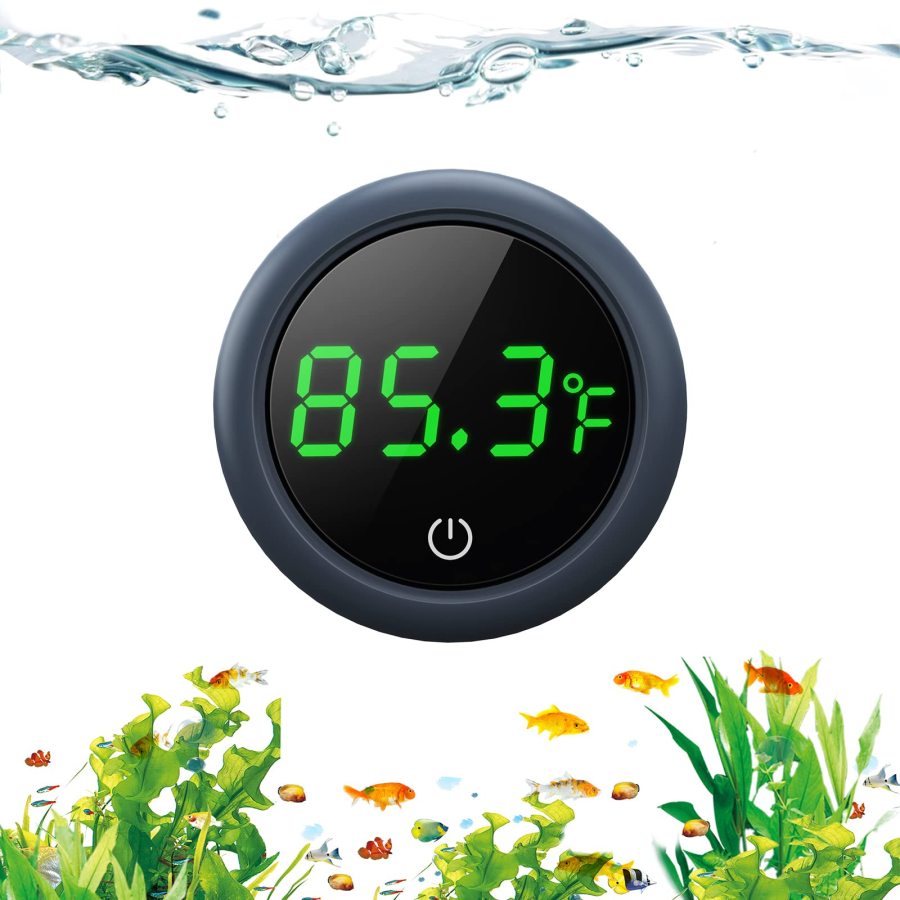
An aquarium thermometer is a digital display device used to monitor water temperature in an aquarium. It primarily features an external adhesive design, senses water temperature through the glass, displays readings on an LED screen, and is typically powered by an internal battery. Its core function is to provide and monitor a suitable temperature environment for fish, amphibians, reptiles, and aquatic plants, ensuring pet health while also considering aquarium aesthetics and ease of use. The following table illustrates the key characteristics of consumer behavior in this category.
| Dimension | Segment | Description |
|---|---|---|
| Need Driver Type | Planned Purchase/Emergency-driven Purchase | User purchases typically stem from setting up a new aquarium, replacing old equipment, or making an emergency purchase due to concerns about abnormal water temperature affecting pet health. |
| Purchase Frequency | Low Frequency | As a durable accessory for the aquarium, users typically do not repurchase frequently, unless they have multiple aquariums or the product is damaged. |
| Decision Complexity | Medium | Consumers compare factors like accuracy, display effectiveness, ease of installation, and battery life, but do not conduct in-depth research. |
| Price Sensitivity | Medium | Provided core functionality and accuracy are met, users are willing to pay a reasonable premium for products that enhance convenience and reliability. |
| Emotional Dependency | Medium | Primarily based on functional utility to ensure the health and survival of aquatic pets, with some emotional investment in the peace of mind and aesthetic appeal the product provides. |
II. User Personas & Usage Scenarios
2.1 Responsible Pet Enthusiast
🎯 Highly concerned about the health of aquatic pets, believes water temperature is a key factor for their survival, and is willing to invest in reliable monitoring equipment.
| Typical Usage Scenarios | Core Pain Points | Primary Purchase Drivers |
|---|---|---|
|
|
|
2.2 Modern Fish Keeper Seeking Simplicity & Aesthetics
🎯 Focuses on the overall visual appeal of the aquarium and home decor compatibility, preferring clutter-free, tech-savvy equipment while pursuing ultimate convenience in use.
| Typical Usage Scenarios | Core Pain Points | Primary Purchase Drivers |
|---|---|---|
|
|
|
III. User Needs Hierarchy (KANO Model)
3.1 Basic Needs (Must-Haves)
- Water Temperature Measurement: Ability to stably and continuously measure the temperature of the water inside the aquarium, providing basic monitoring functionality.
- Easy-to-Read Digital Display: Clear digital or LED display allowing users to easily and quickly view temperature information without effort.
- Simple Installation: No complex tools needed; can be installed quickly via adhesive, lowering the learning curve.
- Stable Basic Functionality: Product does not fail easily, maintains normal measurement and display functions, ensuring basic reliability.
3.2 Performance Needs (Linear Satisfiers)
- High-Accuracy Readings: Temperature error controlled within ±1°F or less, providing more trustworthy data to meet the precise requirements for pet survival.
- Fast Refresh Rate: Real-time or high-frequency (e.g., every 5 seconds) temperature updates, promptly reflecting water temperature changes for quick user adjustments.
- ℃/℉ Toggle Function: Provides both Fahrenheit and Celsius unit toggles, catering to different countries and user habits.
- Compact, Simple Appearance: Product has a small, unobtrusive volume, blending harmoniously with the aquarium environment without disrupting overall aesthetics.
- Long Battery Life: Battery can last 12-24 months, reducing replacement frequency, and supports user-replaceable batteries.
3.3 Excitement Needs (Delighters)
- High/Low Temperature Alarm: Automatically alerts the user with visual or auditory signals when water temperature exceeds preset safe ranges, enhancing pet safety.
- Motion-Sensing Activation: Automatically lights up the screen to display temperature when a user approaches, eliminating manual touch, improving interaction and viewing convenience.
- Temperature Calibration Function: Allows users to fine-tune the thermometer's readings based on actual conditions or reference standards, ensuring absolute accuracy.
- Anti-Mis-touch Design: Prevents accidental touches from switching temperature units or entering setup mode, disrupting the daily usage flow.
- Magnetic/Reusable Adhesive: Uses magnetic or other damage-free, reusable fixation methods, facilitating cleaning or battery replacement, maintaining long-term product aesthetics and functionality.
3.4 Unmet Needs & Opportunities
-
Battery Replacement Convenience: Users report that the adhesive design forces them to forcibly remove the product to change the battery, potentially damaging the adhesive and making reattachment difficult.
User Reviews (VOC) Nice Fish Aquarium Thermometer...In order to change the battery you have to remove the thermometer from the tank glass. It is stuck to the glass with a nice secure adhesive so you have to use a single edge razor blade to scrap it off. Now how do you reattach? // Trying to take off the compartment cover and pry the battery out while it's attached might be a bit tricky.
-
Compatibility with Thick Glass or Curved Tanks: Some products explicitly state they are not suitable for thick glass aquariums, or users report they don't work on large tanks, limiting application scope.
User Reviews (VOC) 𝐍𝐎𝐓 𝐬𝐮𝐢𝐭𝐚𝐛𝐥𝐞 𝐟𝐨𝐫 𝐭𝐡𝐢𝐜𝐤 𝐠𝐥𝐚𝐬𝐬 𝐭𝐚𝐧𝐤𝐬 // You just can't use it on large tanks but they are perfect for 10 gallon and under tanks.
-
Always-On Display Option: The touch-to-wake and auto-sleep modes designed for power saving are inconvenient for some users who prefer a continuously displayed temperature.
User Reviews (VOC) He said he would prefer that the display be on all the time but otherwise it was a good buy for him. // My only real complaint is that you have to press the power button to see the temperature. I'd love it if it stayed visible all the time, even if dimmed, and a USB-C rechargeable battery would take it from good to perfect.
-
External Measurement Accuracy Affected by Ambient Factors: Users worry that readings from externally-adhesive thermometers are affected by ambient temperature or glass thickness, not accurately reflecting the true water temperature.
User Reviews (VOC) It's accuracy cannot meet the standard of professional thermometer and is affected by various external factors such as ambient temperature.
IV. User Decision Drivers
4.1 Key Decision Factors
- Temperature Accuracy: The core value of an aquarium thermometer, directly impacting pet survival and health. Users have extremely high demands here, making it the primary purchase consideration.
- Display Clarity: Whether the digits are large and bright, allowing for quick, clear reading under different lighting conditions (day/night, strong/weak light), is key to the daily user experience.
- Ease of Installation: Whether the adhesive application is simple, and if it adheres firmly to the aquarium's external wall, avoiding complex setup or physical damage.
- Wireless & Safety: A design with no probes entering the water maintains tank cleanliness and aesthetics while avoiding risks of pets chewing wires or electric shock.
4.2 Secondary Decision Factors
- Battery Life & Replacement Convenience: Whether the battery lasts long and if replacement is convenient without compromising the product's secure attachment, directly impacting long-term user experience.
- Appearance Design & Size: Whether the product is compact and aesthetically pleasing, blending into the aquarium's overall style without appearing obtrusive or occupying too much space.
- Price & Value for Money: Provided core functionality and basic accuracy are met, users compare prices across different products seeking the best value.
- Brand Trust: Some users lean towards brands with a certain reputation or numerous positive reviews to reduce trial-and-error costs in selection and use.
V. Selling Points & Competitive Landscape
5.1 Selling Point Analysis
5.1.1 Standard Features (Points of Parity)
- LED HD Display: Most products emphasize LED screen display, featuring wide viewing angles, high saturation, and easy readability at night, enhancing visual experience.
- External Adhesive/Wireless Design: Universally claimed to be waterline-free, safe, and tidy, not occupying internal aquarium space, simplifying tank layout.
- High-Accuracy Measurement: Almost all products claim high accuracy, typically with an error range between ±0.9°F to ±1°F, serving as a core selling point.
- Easy Installation & Use: Adheres via backing adhesive, activates display with a touch to show temperature, offering simple and quick operation lowering the usage barrier.
- Long Battery Life/Energy Saving: Built-in battery lasts 12-24 months, with auto-sleep mode saving power, reducing replacement frequency.
- Compatibility with Multiple Water Types: Suitable for various aquatic environments like freshwater, tap water, saltwater, seawater, broadening application scope.
5.1.2 Key Differentiators
- Fast Refresh Rate: Some products emphasize 5-second refresh rates, providing more real-time water temperature monitoring for quicker user response.
- ℃/℉ Toggle Function: Allows users to switch between Fahrenheit and Celsius, adapting to user habits in different regions, increasing universality.
- User-Replaceable Battery Design: Emphasizes that users can replace the battery themselves, extending product lifespan rather than being disposable, lowering long-term costs.
- Multi-Pack Offering: Such as 2-packs or 4-packs, meeting user needs for multiple aquariums or backups, offering a more cost-effective solution.
5.1.3 Unique Selling Propositions (USPs)
- High/Low Temperature Alarm Function: Few products offer customizable high/low temperature thresholds, with flashing alerts when exceeded, enhancing safety.
- Motion-Sensing Activation Display: Very few products possess this; detects when someone approaches and automatically lights the screen to display temperature, improving interaction.
- Temperature Calibration Function: Allows users to manually calibrate the thermometer reading for more precise personalized measurement, enhancing user control.
- Includes Spare Battery/Adhesive: Provides an extra spare battery or adhesive in the packaging, increasing purchase value and addressing long-term maintenance concerns.
- USB Rechargeable Design: Very few products; eliminates coin batteries, though charging convenience may be limited by cable length and location.
5.2 Competitive Landscape
5.2.1 Market Maturity
Moderately Mature
5.2.2 Innovation Trends
The aquarium thermometer market has entered a stage where digital externally-adhesive models are mainstream. Product functionality is highly homogeneous, with most competition revolving around display clarity, installation simplicity, and battery life. Innovation trends are mainly reflected in more advanced user experience optimization, such as introducing intelligent features like high/low temperature alarms, motion-sensing screen activation, and temperature calibration to enhance safety and interactivity. Simultaneously, addressing existing product pain points regarding battery replacement convenience, adhesive durability, and compatibility will be the primary direction for future innovation.
VI. Marketing Claims vs. Reality Check
The table below analyzes the gap between common marketing claims and actual user experiences in this category:
| Dimension | Marketing Claim | User Reality | Verdict |
|---|---|---|---|
| Temperature Measurement Accuracy | High-precision sensor, measurement accuracy up to ±0.18°F or ±0.9°F, ensuring precise aquarium temperature. | Users commonly report deviations of 1-5°F from readings of internal probe thermometers, with some products failing outright or only displaying room temperature. | Typical number game, confusing display precision with actual measurement accuracy. Over-promising on core functionality leads to a severe drop in user trust and is a core reason for negative reviews. |
| Product Adhesion & Battery Replacement | Easy to install, long-lasting replaceable battery provides stable long-term use. | The prevalent use of strong adhesive backing makes the product difficult to remove or adjust once attached. Replacing the battery easily damages the adhesive, affecting product reusability. | Sellers face a design contradiction between convenient installation and long-term maintenance. Overemphasis on one-time convenience ignores user pain points regarding maintainability and aesthetics throughout the product lifecycle. |
| Product Water Resistance | Claims to be waterproof, or fails to clearly state it's not, implying durability in humid environments. | Some product listings are self-contradictory, first claiming 'Waterproof' then noting 'Not waterproof', or users report product failure immediately upon accidental water contact. | Contradictory or ambiguous advertising directly misleads consumer expectations regarding core product durability, bordering on fraudulent and easily triggering returns and negative reviews. |
Key Takeaway: The market exhibits widespread parameter inflation and a tendency to exaggerate scenario-based experiences, especially regarding temperature accuracy and adhesive stability. A significant gap exists between marketing rhetoric and actual user feedback.
VII. Supply-Demand Misalignment Analysis
The table below highlights mismatches between seller focus and buyer priorities:
| Dimension | Seller Behavior | User Focus | Verdict |
|---|---|---|---|
| Data Transparency on True Accuracy | Listings commonly claim 'high accuracy' but are vague about the limitations of the external measurement method and actual error ranges, sometimes with contradictory data. | Users strongly question accuracy, complaining about large deviations between readings and actual water temperature, urgently needing trustworthy real data. | Sellers avoid transparent communication on core functionality, causing a severe disconnect between consumer expectations and actual experience, seriously damaging brand credibility. |
| Integrated Design for Battery Replacement & Adhesion | Generally emphasize 'long battery life' and 'replaceable battery' but fail to provide convenient, damage-free replacement solutions in design, leading to high user maintenance costs. | Users commonly complain that 'changing the battery damages the adhesive' and 'it's hard to reattach', worrying about future maintenance hassle and aesthetic damage. | Sellers fail to deeply understand user pain points throughout the product lifecycle, bundling short-term installation convenience with long-term maintenance problems, causing user dissatisfaction. |
| Singularity of Display Mode | Most products use 'touch-to-wake, auto-sleep' mode, emphasizing energy saving and long battery life. | Some users explicitly state they 'want an always-on display' and find 'touching each time is troublesome', preferring to sacrifice some battery life for continuous display, especially in households with elderly. | Sellers, prioritizing energy saving, sacrifice some users' strong need for continuous, instant temperature monitoring, indicating a design misalignment with user preferences. |
Key Takeaway: Sellers generally compete on appearance and basic functions but lack effective responses to users' most critical pain points (actual accuracy, battery replacement convenience), leading to a supply-demand mismatch.
VIII. Strategic Opportunities & Recommendations
8.1 High-Accuracy, Calibratable External Thermometer
8.1.1 Target Audience & Pain Points
⚡️ Pain Points Addressed: Inaccurate temperature readings, low user trust; external measurement susceptible to interference.
8.1.2 Action Plan
Adopt more sensitive copper-nickel alloy probes or optimize sensing chips to narrow the error range to within ±0.5°F; add an accessible user calibration function allowing fine-tuning of readings via simple buttons or an app, enhancing user control.
| Tech Complexity | Medium |
| Cost Impact | Medium Impact |
| Trade-off Warning | No significant physical side effects, but requires more precise sensors and calibration chips, increasing R&D and production costs. |
| Price Band | Only viable above $14.99 |
8.1.3 Marketing Strategy
Emphasize 'Laboratory-grade precision, adjustable accuracy'; provide comparative test data or videos against professional internal probe thermometers, highlighting reliability; use language like 'Say goodbye to guesswork, protect with precision' in marketing.
8.2 Convenient Battery-Replaceable, Magnetic-Fixation Thermometer
8.2.1 Target Audience & Pain Points
⚡️ Pain Points Addressed: Inconvenient battery replacement, adhesive damage or residue; product position difficult to adjust.
8.2.2 Action Plan
Design a 'drawer-style' or 'rotating snap-fit' battery compartment ensuring battery replacement without removing the product body; adopt magnetic or reusable electrostatic adhesion fixation for mark-free detachment and reuse.
| Tech Complexity | Low |
| Cost Impact | Medium Impact |
| Trade-off Warning | Magnetic module may slightly increase product thickness, requiring balance with design aesthetics; the internal tank magnet needs consideration for its biological safety in water. |
| Price Band | Only viable above $12.99 |
8.2.3 Marketing Strategy
Highlight 'No removal for battery change, mark-free removable'; demonstrate the convenient battery replacement and reinstallation process via video, emphasize 'Lasting beauty, maintenance worry-free'; consider including spare magnetic pads.
8.3 High/Low Temperature Alarm & Customizable Threshold Thermometer
8.3.1 Target Audience & Pain Points
⚡️ Pain Points Addressed: Worry about not noticing sudden water temperature changes, lack of proactive warning mechanism; existing alarm functions are inflexible.
8.3.2 Action Plan
Add customizable high/low temperature threshold settings, providing intuitive buttons or a dial for adjustment; design prominent large-area visual alarms (e.g., screen flashing/color change), and consider adding an optional silent buzzer alarm.
| Tech Complexity | Medium |
| Cost Impact | Medium Impact |
| Trade-off Warning | Integrating alarm function may slightly increase PCB complexity but has no significant physical side effects; requires intuitive buttons for threshold setting, potentially adding minor interaction learning cost. |
| Price Band | Only viable above $16.99 |
8.3.3 Marketing Strategy
Emphasize 'Your smart temperature sentinel, guarding pet safety'; showcase the alarm function's role in preventing heater failure through scenario-based imagery, highlight 'Customizable safety thresholds, instant risk alerts', conveying peace of mind.
8.4 Always-On Display & Thick-Glass Compatible Thermometer
8.4.1 Target Audience & Pain Points
⚡️ Pain Points Addressed: Need to frequently touch to check temperature, not suitable for thick glass tanks.
8.4.2 Action Plan
Develop a low-power always-on display mode and optimize the external sensor to adapt to different glass thicknesses (e.g., 10mm+). Consider adding a USB-C charging interface. Allow users to toggle between always-on and touch-to-wake modes.
| Tech Complexity | High |
| Cost Impact | High Impact |
| Trade-off Warning | Always-on display significantly shortens battery life, requiring larger battery capacity (potentially increasing size and cost), or upgrading to USB power; thick glass compatibility requires more sensitive sensors and complex signal processing algorithms. |
| Price Band | Only viable above $24.99 |
8.4.3 Marketing Strategy
Highlight '24/7 visibility, unfazed by thickness limits'; emphasize its advantages in large or professional aquariums, proving penetration capability and display stability with test data; position USB-C charging as an eco-friendly and convenient selling point.