Amazon US Market Analysis: Yogurt Makers Category
📊 Executive Summary
📈 Market Trends
Health-conscious DIY and personalization drive the market. The yogurt maker market is maturing, with strong consumer interest in additive-free, probiotic-rich homemade yogurt, extending to diverse fermented foods like natto and rice wine. Professional demand for long-duration, precise fermentation (e.g., L. Reuteri) is pushing products towards smarter, higher-precision development, while users also focus more on energy efficiency and environmental friendliness.
⚡ Major Pain Points
Exaggerated temperature control and product unreliability are critical flaws. The current market is plagued by widespread issues like inaccurate temperature control, fermentation failure, and short-term product malfunctions, severely impacting user experience and trust. Additionally, basic defects like vague manuals and insufficient voltage compatibility are frequently criticized, leading to numerous negative reviews and returns.
💡 Selection Opportunities
Deepen precision temperature control and perfect user experience. Market opportunities lie in developing a High-End Professional Yogurt Maker with extreme temperature precision to meet professional needs for specific probiotics. Simultaneously, launching a Beginner-Friendly Multifunction Yogurt Maker can lower the usage barrier through comprehensive, multimedia guidance. Furthermore, offering long-lasting, globally compatible products backed by robust after-sales service can establish differentiated competitive advantages in quality and trust dimensions.
I. Analysis Overview
1.1 Introduction & Report Scope
This report analyzes the 'Yogurt Makers' category in the US Amazon market, focusing on target user personas, core needs, decision drivers, market communication, and potential opportunities.
1.2 Category Snapshot
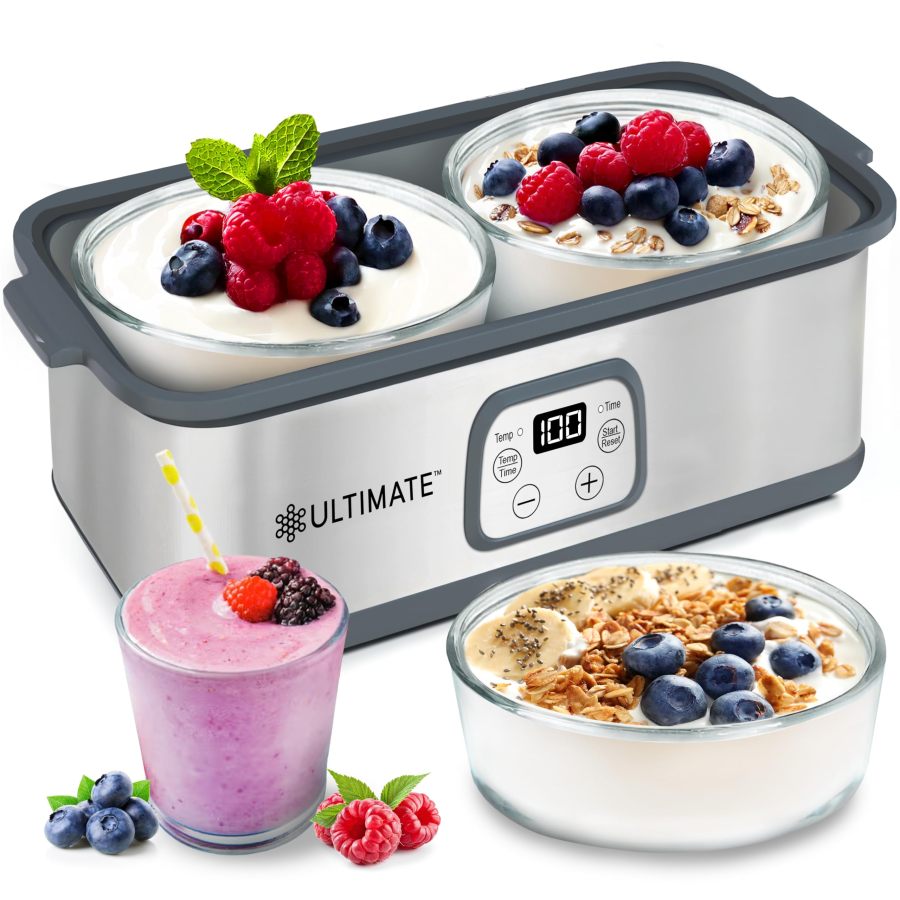
A yogurt maker is a small household appliance primarily used to ferment milk or other dairy products into yogurt. Market offerings include various types: traditional models, models with strainers for making Greek yogurt, and smart models designed for precise, long-duration fermentation required by specific probiotics (e.g., L. Reuteri). These devices aim to help consumers make additive-free, probiotic-rich fermented foods at home, catering to the growing demand for healthy eating and personalization. The following table illustrates the key characteristics of consumer behavior in this category.
| Dimension | Segment | Description |
|---|---|---|
| Need Driver Type | Planned Purchase/Health-Oriented | Users often purchase due to long-term health goals like gut health, weight management, and avoiding additives, with cost-saving also being a consideration. |
| Purchase Frequency | Low Frequency | Yogurt makers are durable small appliances with low purchase frequency, typically every few years, but high usage frequency once purchased. |
| Decision Complexity | Medium/Relatively Complex | Users need to compare temperature control accuracy, fermentation duration, capacity, materials, and multifunctionality, especially requiring in-depth research for specific probiotic yogurt. |
| Price Sensitivity | Medium | Price is an important factor. Users expect high performance and a good user experience at a reasonable price, with long-term cost savings. |
| Emotional Dependency | Medium-High | Purchase motivation is strongly driven by emotional factors like a healthy lifestyle, family food safety, the joy of DIY, and a sense of accomplishment. |
II. User Personas & Usage Scenarios
2.1 Health & Wellness Enthusiast
🎯 Actively focuses on gut health, weight management, and nutrition, seeking natural, additive-free food solutions, and enjoys experimenting with various probiotic fermented products.
| Typical Usage Scenarios | Core Pain Points | Primary Purchase Drivers |
|---|---|---|
|
|
|
2.2 Budget-Conscious Home Chef
🎯 Focuses on household expenses, aims to save costs by making daily ingredients at home, and prefers kitchen appliances that are simple to operate and maintain.
| Typical Usage Scenarios | Core Pain Points | Primary Purchase Drivers |
|---|---|---|
|
|
|
III. User Needs Hierarchy (KANO Model)
3.1 Basic Needs (Must-Haves)
- Basic Fermentation Function: Ability to consistently ferment milk into edible yogurt, avoiding failure or spoilage.
- Intuitive Operation: Simple and clear basic operation processes like starting and setting, requiring no complex learning.
- Food-Grade Safe Materials: Parts in contact with food (e.g., inner pot, containers, lids) must be BPA-Free and safe materials (e.g., stainless steel, glass).
3.2 Performance Needs (Linear Satisfiers)
- Precise Temperature Range: Providing adjustable temperature and time settings to meet the fermentation requirements of different yogurt types (e.g., Greek) or probiotics (e.g., L. Reuteri).
- Final Product Texture & Taste: The resulting yogurt has moderate thickness, smoothness, and acidity, meeting user expectations.
- Cleaning Convenience: All removable parts are easy to clean, preferably dishwasher-safe, reducing cleaning burden.
- Appropriate Capacity & Containers: Offering different capacity options (e.g., large jug or multiple small cups) to meet family or individual needs.
3.3 Excitement Needs (Delighters)
- Multifunction Expansion: Ability to make various fermented foods besides yogurt, such as natto, rice wine, soft cheese, fruit wine, for multi-purpose use.
- Smart Interactive Experience: LED display showing real-time temperature, countdown, automatic shutdown with audible alerts, enhancing convenience.
- Global Voltage Compatibility: Supports a wide voltage range (e.g., 110V-240V), convenient for use worldwide.
3.4 Unmet Needs & Opportunities
-
Temperature Control Precision & Stability: Multiple products are complained about for inaccurate or unstable temperature control, leading to fermentation failure or poor results, especially for probiotic yogurt requiring long-term constant temperature.
User Reviews (VOC) Customers report issues with the yogurt maker's temperature control, noting that it fails to maintain the proper temperature and that the settings are incorrect. // This yogurt unit temperature is way too high for L Reuteri yogurt making! My first batch was separated and gave me gas. ... At the 34 hour mark I checked temperature and it was 136 degrees Fahrenheit!!! Killed dead yogurt!
-
Manual Clarity & Practicality: Many users report that the manual content is vague, lacking detailed guidance (especially on temperature unit conversion, specific probiotic making methods), resulting in a steep learning curve.
User Reviews (VOC) Instructions are poorly written. You set it for the time and type and then it randomly cuts off. // The instructions could be better as I do not know if I need to adjust the setting on the inner lid and the temp must be in celsius.
-
Product Long-Term Reliability: Some users report the machine developing heating failures or electronic panel malfunctions after just a few uses, affecting product lifespan and user trust.
User Reviews (VOC) This product quit working after the 3rd use. It made about 10 batches and that's it. Now it does not heat. // Worked great first use then wouldn't turn on second use.
-
Container Detail Optimization: Some products have small jar designs that are inconvenient to clean, or large jar lids that don't seal well or are difficult to handle.
User Reviews (VOC) The lid of the glass jar does not stay on, and if you pick it up by the lid it could come off, dumping the jar all over the floor. // I wish the small jars were straight instead of curved so it would be easier to clean.
-
Voltage Compatibility & Safety: Some products are sold globally but only support 110V voltage, causing safety hazards or inability to use in 220V regions, along with inconvenient plug adapter issues.
User Reviews (VOC) Item is defective - when we checked upon delivery was ok, but when switched on for use after a week it exploded and smelled burned inside!! It turned out it's not designed for use in UAE - only in USA due to socket voltage difference // Not for the UK market. This is an American domestic voltage appliance.
IV. User Decision Drivers
4.1 Key Decision Factors
- Fermentation Success Rate: Users are most concerned about being able to consistently and successfully make yogurt, the primary prerequisite for purchase.
- Temperature Control Precision & Stability: Especially for users making specific probiotic yogurt, precise and constant temperature is key to fermentation success.
- Ease of Operation: Simple, intuitive setup and start process, reducing user learning and operational burden.
- Yogurt Taste & Texture: Whether the final product is thick, smooth, and moderately acidic directly impacts user experience and repurchase intent.
4.2 Secondary Decision Factors
- Capacity & Container Configuration: Whether it provides sufficient capacity or convenient portioning containers (e.g., glass jars, strainer) to meet family or individual needs.
- Ease of Cleaning: Whether the product design facilitates cleaning, reducing maintenance time and effort.
- Material Safety: Concern for safe materials like BPA-Free, food-grade stainless steel/glass.
- Multifunctionality: Ability to make various fermented foods, enhancing product value for money and fun factor.
- Price & Value for Money: Whether the price is reasonable and offers good value, provided core functions are met.
- Brand Reputation & After-Sales Service: Brand reputation, warranty policy, and customer service response speed.
V. Selling Points & Competitive Landscape
5.1 Selling Point Analysis
5.1.1 Standard Features (Points of Parity)
- Homemade Healthy Yogurt: Emphasizes being additive-free, rich in probiotics, healthier than store-bought, supporting gut health and weight management.
- Simple Operation: Promotes a convenient usage process, lowering user barriers to entry, often one-touch operation.
- Cost Savings: Highlights long-term use being more economical than buying commercial yogurt, reducing household food budget.
- Easy to Clean: Emphasizes easy disassembly and cleaning of parts, some dishwasher-safe, facilitating daily maintenance.
5.1.2 Key Differentiators
- Adjustable Temperature/Time: Provides more flexible fermentation conditions to meet personalized recipes and different probiotic needs.
- Greek Yogurt Function: Comes with a strainer for easy making of thick Greek yogurt, meeting specific texture preferences.
- Multifunctionality: Can make other fermented foods like natto, rice wine, soft cheese, fruit wine besides yogurt, enhancing product value.
- Large Capacity/Multiple Jars: Offers different capacities (e.g., 1-quart or 2-quart large jug) or multiple small jar options (e.g., 7-8 6-oz cups) to meet family or portioning needs.
- BPA-Free Materials: Emphasizes use of safe, non-toxic food-grade materials (e.g., 304 stainless steel, glass, BPA-Free PP) to ensure food safety.
5.1.3 Unique Selling Propositions (USPs)
- 36-48 Hour Long Fermentation: Specifically caters to the need for longer fermentation cycles to maximize probiotic count and activity for specific probiotics like L. Reuteri.
- Microcomputer Precise Temperature Control: Promises minimal temperature deviation (e.g., ±0.5°F/±1°C), providing a lab-grade fermentation environment, ensuring success and probiotic viability.
- Lifetime Warranty/Long-Term Warranty: Offers after-sales protection exceeding industry standards (e.g., lifetime or 3-5 year warranty), boosting consumer confidence and brand trust.
- Global Voltage Compatibility: Supports a wide voltage range (110V-240V), convenient for use worldwide, especially suitable for international travelers or expat families.
5.2 Competitive Landscape
5.2.1 Market Maturity
The yogurt maker market is currently in the mature stage. Consumers have widespread awareness of the basic functions and health benefits of homemade yogurt. Market competition is intense, with common product homogenization. However, precise temperature control and multifunctionality for high-end, specialized fermentation (e.g., L. Reuteri probiotic yogurt) are becoming new differentiation points, attracting more professional health enthusiasts.
5.2.2 Innovation Trends
Current innovation trends primarily revolve around improving temperature control precision and stability to meet the strict requirements for long-duration fermentation of specific probiotics like L. Reuteri. Next is expanding multifunctionality, enabling yogurt makers to produce various fermented foods like natto, rice wine, and soft cheese, enhancing practical value. Simultaneously, optimizing user interaction experience, such as providing more intuitive LCD displays, one-touch preset modes, and simplified operation flows, is also a key innovation direction. Additionally, some brands are beginning to build trust through extended warranties and emphasizing product durability as a competitive strategy beyond price wars.
VI. Marketing Claims vs. Reality Check
The table below analyzes the gap between common marketing claims and actual user experiences in this category:
| Dimension | Marketing Claim | User Reality | Verdict |
|---|---|---|---|
| Temperature Control Precision & Stability | Precise temperature control, maintains constant temperature, ensures probiotic viability, perfect for making L. Reuteri yogurt. | Multiple user feedback indicates the machine fails to maintain set temperature, actual temperature is too high (e.g., 136°F), leading to fermentation failure, burnt or moldy yogurt, severely inconsistent with claims. | This is a fatal flaw in the category's core function, directly violating the product's basic promise, leading to high-frequency returns and plummeting trust. |
| Global Voltage Compatibility | Universal global voltage (110V-240V compatible), convenient for international use. | Multiple products only support 110V voltage, causing short circuits, smoking, or even explosions, or simply failing to start in 220V countries, with no prominent warning on the page. | Sellers' disregard for electrical safety basics is unacceptable. Such false claims not only cause product loss but also pose serious safety hazards, crossing product compliance red lines. |
| Manual & Operation Guidance | User-friendly operation, one-touch setup, easy for beginners. | Users report manual content is vague, lacks detailed guidance, even contains errors (e.g., 'baking powder'), temperature unit confusion (Celsius/Fahrenheit), making it difficult to start and cumbersome to operate. | The advertised 'ease of use' fails in practice due to poor manual quality, increasing user learning costs and frustration-a classic user experience gap. |
Key Takeaway: The market suffers from widespread parameter inflation and false functional claims, especially regarding temperature control precision and global voltage compatibility, raising serious integrity concerns.
VII. Supply-Demand Misalignment Analysis
The table below highlights mismatches between seller focus and buyer priorities:
| Dimension | Seller Behavior | User Focus | Verdict |
|---|---|---|---|
| Core Temperature Control Precision | Sellers commonly advertise 'precise temperature control,' 'smart constant temperature,' but provide insufficient description of specific temperature deviation, stability test data, and performance guarantees under extreme conditions. | Users are most concerned about whether fermentation temperature can truly remain stable at the set value to ensure probiotic survival and yogurt success, not vague 'constant temperature.' | Sellers failed to deeply understand users' underlying need for 'precision,' leading to core selling points being superficial without substantive technical detail guarantees. |
| Product Long-Term Reliability | Users frequently encounter machine failures within a short period (no heating, electronic panel malfunction), expressing concerns about product lifespan and after-sales service, hoping for reliable guarantees. | Sellers overlooked users' deep-seated need for long-term value and after-sales protection in small appliances. Recurring short-term failure issues severely undermine user trust and brand loyalty. | |
| Balance Between Multifunctionality & Complex Operation | Many products advertise 'multifunction' (yogurt, natto, rice wine, etc.), attempting to add selling points through feature quantity, but often accompanied by complex settings or unclear instructions. | Users have expectations for multifunctionality but prioritize simple operation and clear guidance over many features with high operational barriers or even failure due to improper operation. | When adding functions, sellers failed to fully consider user learning costs and operational convenience, diluting functional advantages with complexity, resulting in ineffective competition. |
Key Takeaway: Sellers collectively remain silent or downplay critical issues like temperature control precision and product reliability, while overemphasizing generic selling points like 'multifunction stacking' and 'homemade health,' leading to a misalignment between supply focus and user concerns.
VIII. Strategic Opportunities & Recommendations
8.1 High-End Professional Probiotic Yogurt Maker
8.1.1 Target Audience & Pain Points
⚡️ Pain Points Addressed: Temperature control precision & stability; low fermentation success rate for making specific probiotic yogurt (e.g., L. Reuteri).
8.1.2 Action Plan
Adopt medical-grade temperature control chips and PID control algorithms to achieve ultra-high precision constant temperature of ±0.1°C, supporting up to 72-hour long fermentation; built-in preset programs and custom modes for precise cultivation of strains like L. Reuteri, SIBO; equipped with high-quality 304 stainless steel inner pot and glass portioning jars, and provide third-party lab temperature control accuracy certification.
| Tech Complexity | High |
| Cost Impact | High Impact |
| Trade-off Warning | Improving temperature control precision requires more expensive sensors and complex control algorithms, potentially increasing manufacturing costs and selling price, but with no significant physical side effects. |
| Price Band | Only viable above $89.99 |
8.1.3 Marketing Strategy
Emphasize 'Scientific-Grade Precision Fermentation, Awakening Peak Probiotic Vitality'; highlight collaboration with doctors or nutritionists; showcase data on probiotic survival rates during long fermentation; position as a 'Home Probiotic Lab,' satisfying users' pursuit of ultimate health and professionalism.
8.2 Beginner-Friendly All-Function Yogurt Maker
8.2.1 Target Audience & Pain Points
⚡️ Pain Points Addressed: Vague manuals, complex operation, high first-use failure rate.
8.2.2 Action Plan
Redesign user interface for clear button logic and intuitive display (supporting Fahrenheit); provide comprehensive multi-language beginner tutorials (video + graphic), covering all functions and common recipes; optimize internal structure for easy cleaning and container handling.
| Tech Complexity | Medium |
| Cost Impact | Low Impact |
| Trade-off Warning | Primarily involves software optimization and documentation creation, with minimal impact on hardware cost and physical form. |
| Price Band | Only viable above $39.99 |
8.2.3 Marketing Strategy
Promote 'Three Steps to Homemade Yogurt, Zero Failure for Beginners!'; showcase the easy, enjoyable making process via short videos; emphasize 'One Machine, Multiple Uses, Unlock Family Healthy Recipes Easily'; offer 24/7 online customer support to resolve initial user questions.
8.3 Long-Lasting, Durable, Multi-Voltage Compatible Yogurt Maker
8.3.1 Target Audience & Pain Points
⚡️ Pain Points Addressed: Poor product long-term reliability, insufficient voltage compatibility, lack of after-sales service.
8.3.2 Action Plan
Use high-quality wide-voltage (110-240V) power modules, clearly marked on product and packaging; select more durable, corrosion-resistant electronic components and body materials; provide at least a 3-year warranty and establish convenient online/offline after-sales service channels for quick issue resolution.
| Tech Complexity | Medium |
| Cost Impact | Medium Impact |
| Trade-off Warning | Using a wide-voltage power module slightly increases cost but has little impact on size/weight; improving component quality may slightly increase cost but significantly enhances durability. |
| Price Band | Only viable above $59.99 |
8.3.3 Marketing Strategy
Emphasize 'Globally Compatible, Travel Worry-Free' and '3-Year Warranty, Quality Promise'; showcase videos of the product undergoing rigorous durability tests; highlight brand confidence in product quality and responsible attitude towards consumers; clearly mark product voltage compatibility and target markets.