Amazon US Market Analysis: No Drill Curtain Rod Brackets Category
📊 Executive Summary
📈 Market Trends
Strong demand for no-drill solutions, but competition is highly homogenized. Consumer demand for damage-free, convenient curtain rod brackets is robust, but market products generally rely on self-adhesive solutions with converging functionalities. Innovation mostly involves local optimizations, lacking disruptive technology, leading to price wars and a user trust crisis. Aesthetically, transparent or black/white minimalist designs are mainstream. Market calls for higher weight capacity and broader wall compatibility are growing.
⚡ Major Pain Points
Adhesive overstatement and wall damage are fatal flaws. The biggest hard flaw of current products lies in self-adhesive weight capacity and post-removal wall damage issues, severely contradicting the core promise of 'no-drill and damage-free.' Users commonly report adhesive isn't long-lasting, heavy curtain support is inadequate, and removal often tears wall paint. Additionally, product compatibility with painted walls, drywall, and other rough surfaces is insufficient, limiting universality.
💡 Selection Opportunities
Conquer 'true damage-free' technology to capture the trust high ground. A significant market gap exists for truly strong adhesive technology that can firmly adhere to various walls and be removed without damage. Successful companies should invest R&D here, and develop no-drill solutions that reliably support heavy curtains, while offering products that precisely fit specific window structures. By solving core pain points and rebuilding user trust in the category, there is potential to achieve category leadership and break through the current low-price homogenized competition.
I. Analysis Overview
1.1 Introduction & Report Scope
This report analyzes the 'Rod Holders' category (No Drill Curtain Rod Brackets) in the Amazon US market, focusing on target user personas, core needs, decision factors, market communication, and potential opportunities.
1.2 Category Snapshot
No-drill curtain rod brackets, also known as damage-free curtain rod hooks, aim to provide curtain rod installation solutions without the need for drilling or nailing. These products are widely used in bedrooms, bathrooms, living rooms, and dormitories. They are primarily secured through innovative methods like self-adhesive, clip-on, or knock-in mechanisms to avoid damaging walls, meeting users' needs for convenient, damage-free home decor. The following table illustrates the key characteristics of consumer behavior in this category.
| Dimension | Segment | Description |
|---|---|---|
| Need Driver Type | Emergency-driven Purchase / Planned Purchase | User purchases typically stem from rental restrictions, unwillingness to damage walls, or temporary decoration needs, with clear expectations for an immediate, damage-free installation solution. |
| Purchase Frequency | Low Frequency | As a home accessory, purchase frequency is generally low, unless triggered by moving, redecorating, or product damage requiring replacement. |
| Decision Complexity | Medium | Consumers compare factors such as installation ease, weight capacity, wall surface compatibility, potential for leaving marks upon removal, and price. |
| Price Sensitivity | Medium | Users are price-sensitive, but willing to pay a reasonable premium for quality and experience if the product offers a truly damage-free, stable, and convenient solution. |
| Emotional Dependency | Low | Primarily based on practical function and installation convenience. However, 'keeping the wall intact' provides significant peace of mind and satisfaction, representing emotional value derived from functionality. |
II. User Personas & Usage Scenarios
2.1 Rental Apartment/Dormitory Residents
🎯 Focused on protecting their living environment, concerned about wall damage affecting security deposits, seeking a convenient, quick, and damage-free removable curtain installation solution.
| Typical Usage Scenarios | Core Pain Points | Primary Purchase Drivers |
|---|---|---|
|
|
|
2.2 Homeowners Focused on Home Aesthetics and Efficiency
🎯 Pursue stylish and personalized home decor, while desiring a simple, efficient installation process that does not damage newly decorated walls.
| Typical Usage Scenarios | Core Pain Points | Primary Purchase Drivers |
|---|---|---|
|
|
|
III. User Needs Hierarchy (KANO Model)
3.1 Basic Needs (Must-Haves)
- Easy to install: No complex tools required, can quickly and easily complete curtain rod installation, saving time and effort.
- Does not damage walls: Core demand: Avoid drilling or nailing, ensure the wall structure is not damaged, maintaining the wall's original condition.
- Stable weight capacity: Can firmly support the daily weight of the curtain rod and light-to-medium curtains, preventing falls and ensuring safety.
3.2 Performance Needs (Linear Satisfiers)
- Wide applicability: Compatible with various rod diameters and different wall materials (e.g., glass, tile, wood), reducing purchase confusion.
- Durability: Product material is sturdy, resistant to deformation, aging, or loss of holding power over extended use, extending product lifespan.
- Aesthetically invisible: Simple design, colors (e.g., transparent, black) blend with the home environment, not appearing obtrusive, enhancing overall aesthetics.
- Resistance to environmental interference: Maintains stable fixation despite humidity, temperature changes, or daily opening/closing of curtains, not easily loosening from moisture.
3.3 Excitement Needs (Delighters)
- Reusability: Product can be removed and reinstalled without damage, convenient for users to adjust layouts or move, offering eco-friendliness and cost savings.
- Multi-scenario extended application: Beyond curtains, can be flexibly used in various scenarios like bathrooms, closets, providing additional storage or partitioning functions, enhancing perceived value.
- Smart-assisted installation: Provides features like built-in levels, precise markings, or installation positioning aids to further simplify the process and improve accuracy.
3.4 Unmet Needs & Opportunities
-
Super strong adhesion with damage-free removal: Current self-adhesive products commonly suffer from adhesive strength diminishing over time or damaging the wall (peeling paint/drywall) upon removal, failing to truly achieve 'damage-free'.
User Reviews (VOC) Please Note: The adhesive is very strong, maybe ripped the paint and layers of dry wall off the wall when moved, please using a hair dryer to heat the adhesion a little will make removing it easier
-
Universal applicability to rough/painted walls/drywall: Most products perform well on smooth surfaces but are ineffective on non-smooth or painted walls, often requiring additional screws, contradicting the 'no-drill' core promise.
User Reviews (VOC) Note - This no drill curtain rod bracket fits only 5/8" diameter rods and is designed for smooth surfaces like tile, metal, wood, glass, marble, and stainless steel. For rough surfaces such as drywall, cement, painted walls, or wallpaper, please use screws instead
-
Reliable support for heavy curtains: Many products advertise high weight capacity but actually struggle to firmly support heavier curtains, or require installing many brackets, compromising aesthetics and convenience.
User Reviews (VOC) Load Bearing:Our no drill curtain rods can hold up to 16 lbs without drilling, more suitable for light curtains. For better load-bearing, you can also drill it with our screws and anchors that extrally equipped for drywall, cement, painted walls, wallpaper, which can hold up to 20 lbs.
-
Precise matching for specific installation environments: Some products are designed for blinds/window frames, but dimensional compatibility requirements are strict, often leading to returns due to poor fit after purchase.
User Reviews (VOC) Frequently Return Reason]Doesn't fit. Please check the size and shape of your blinds more carefully.
IV. User Decision Drivers
4.1 Key Decision Factors
- Installation simplicity: The primary consideration for users, expecting time and effort savings, no professional tools needed, and a seamless start-up, aligning with the core 'no-drill' value.
- No damage to walls: Especially a core pain point for renters, avoiding rental disputes or renovation hassles; it's the core value of 'no-drill' and a key purchase determinant.
- Actual weight capacity: Crucial for whether curtains can be hung stably; a key aspect of product utility, determining the type and weight of curtains users can hang, impacting purchase confidence.
- Adhesive reliability/fixation stability: Users' biggest concern, determining if the product can remain stable and not fall off long-term, avoiding the hassle and potential loss of reinstallation.
4.2 Secondary Decision Factors
- Compatible wall surface types: Users check if it's suitable for their specific wall (e.g., painted wall, drywall, tile), affecting the scope of the purchase decision.
- Removal leaves no trace: Although no-drill, whether removal damages the wall (e.g., peeling paint) is a key consideration, impacting the final 'damage-free' experience.
- Product material and aesthetics: Whether the appearance matches home decor style, if transparent or metal finishes meet expectations, affecting overall decorative effect.
- Rod diameter compatibility: Whether it fits the diameter of existing or intended curtain rods at home, determining the product's universality.
V. Selling Points & Competitive Landscape
5.1 Selling Point Analysis
5.1.1 Standard Features (Points of Parity)
- No-drill/Damage-free installation: No drilling or nailing required, avoids wall damage; the core selling point of the category, universally emphasized.
- Easy to install: Simple operation, claiming installation in seconds or minutes, emphasizing time and effort savings; a common promotional point.
- Suitable for light curtains: Commonly mentioned as having sufficient support for lightweight curtains, implying primary use cases but lacking specific definitions.
- Multi-scenario application: Can be used in various spaces like bedrooms, bathrooms, kitchens, dorms, emphasizing product versatility.
- Transparent/Black design: Common product colors, easy to blend into most home styles, pursuing an invisible or versatile effect.
5.1.2 Key Differentiators
- High weight capacity promise: Some products claim capacity of 20-30 lbs to attract users with higher weight requirements, but actual performance varies.
- Special adhesive technology: Such as using '3M tape' or 'nano acrylic gel', emphasizing adhesive strength, attempting to build trust and differentiation.
- Wall compatibility guidance: Distinguishing installation methods (adhesive or screws) for smooth vs. rough surfaces, offering hybrid solutions to broaden applicability.
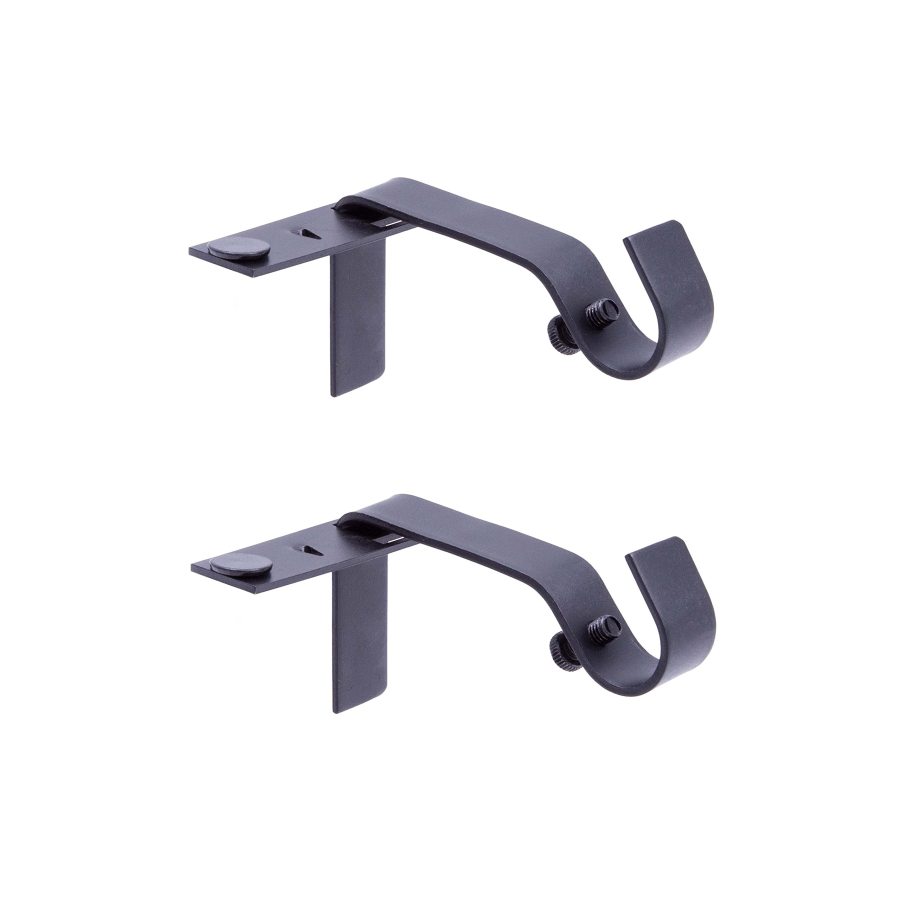
- Integration with blinds/window frames: Innovative design, can directly clip onto existing blind top rails or knock into wooden window frames, providing no-drill solutions for specific scenarios.
- Adjustable/closed-loop design: Some products offer rod diameter adjustment or locking mechanisms to prevent curtain rod wobbling or slipping, enhancing stability.
5.1.3 Unique Selling Propositions (USPs)
- TV show exposure: e.g., 'Shark Tank' featured product (Kwik-Hang), leveraging media endorsement to boost credibility, attract attention, creating a unique brand halo.
- Patented design: Emphasizing exclusive patented technology, like certain clip-on brackets, implying technical barriers and innovation, creating market differentiation.
- Made in USA: Emphasizing local manufacturing, potentially implying higher quality standards and consumer trust, appealing to some buyers' origin preferences.
5.2 Competitive Landscape
5.2.1 Market Maturity
The no-drill curtain rod bracket market has reached a medium-high level of maturity. The core selling point 'no-drill' is highly homogenized, product functions are stabilizing, and competition mainly revolves around weight capacity, adhesive longevity, and wall compatibility. Emerging brands attempt to seek breakthroughs through micro-innovations in specific segmented scenarios or installation methods.
5.2.2 Innovation Trends
Current innovation trends mainly focus on hybrid installation solutions (adhesive + screw holes) to adapt to more wall types, but this 'impure no-drill' approach does not fully solve user pain points. Simultaneously, transparent/invisible designs for aesthetics, and customized products for specific installation environments (e.g., blind top rails, window frames) are gradually increasing. Future breakthroughs lie in truly achieving 'super strong adhesion with damage-free removal' and 'reliable support for heavy curtains,' solving consumers' core trust crisis.
VI. Marketing Claims vs. Reality Check
The table below analyzes the gap between common marketing claims and actual user experiences in this category:
| Dimension | Marketing Claim | User Reality | Verdict |
|---|---|---|---|
| Damage-free removal | No-drill, leaves no trace upon removal, does not damage walls, renter-friendly. | Numerous user reports indicate that strong adhesives tear off wall paint layers or even drywall upon removal, causing actual damage. | Sellers overemphasize the initial convenience of 'no-drill' but neglect the long-term cost of 'damage-free removal,' creating a serious false promise on users' most sensitive pain point, constituting a trust crisis. |
| Weight capacity | Heavy-duty design, weight capacity up to 20-30 lbs, can support heavy curtains. | Users commonly report actual capacity is far lower than advertised; even light curtains are prone to falling, or require many brackets for barely adequate support. | Typical parameter inflation; sellers mislead consumers with ideal lab data rather than real home scenario data, failing to deliver on the core functional promise, rendering the product 'useless' in users' hands. |
| Wall compatibility and 'no-drill' logic | Universal no-drill bracket, suitable for all wall types. | Many products explicitly state adhesive is for smooth surfaces only; rough/painted walls still require screw fixation, contradicting the core 'no-drill' selling point. | Sellers attempt to broaden applicability through 'adhesive + screw' dual solutions but blur the purity of 'no-drill,' making users question its core advantage. Essentially, it uses traditional methods to compensate for no-drill shortcomings. |
Key Takeaway: The market is generally plagued by parameter inflation and severe distortion of core promises (no-drill, damage-free removal, high weight capacity), leading to a significant gap between user expectations and actual experience.
VII. Supply-Demand Misalignment Analysis
The table below highlights mismatches between seller focus and buyer priorities:
| Dimension | Seller Behavior | User Focus | Verdict |
|---|---|---|---|
| Long-term adhesive reliability | Sellers generally emphasize 'strong self-adhesive' and 'easy to install,' but avoid or are vague about adhesive longevity, resistance to environmental changes, and wall condition after removal. | Users are most concerned about how long the adhesive lasts without falling, whether it fails due to temperature/humidity changes, and if removal truly leaves no trace, but these pain points are not clearly addressed by sellers. | Sellers transfer core risks to users, failing to build genuine trust in the product's long-term stability and 'damage-free' promise, leading to reputational damage. |
| Heavy curtain weight capacity solutions | Most products simply claim high capacity (20-30 lbs) but lack real-world testing scenarios or shift responsibility by 'recommending using more brackets,' failing to provide truly reliable heavy curtain solutions. | Users have a strong need to hang heavy curtains, but most market products cannot meet it; even those claiming high capacity often fall, making users hesitant to try. | Sellers fail to deeply explore the technical challenges behind high weight capacity needs, staying at the promotional level, missing the opportunity to differentiate in the high-end market. |
| Practicality of built-in functions | Some products advertise 'can also be used as a bathroom towel rack, kitchen hook,' attempting to add value through multi-functionality, but product size, weight capacity, and design may not suit these auxiliary functions. | Users primarily buy to hang curtains; they are typically insensitive to additional functions. If these add-ons are poorly designed, they are seen as useless feature bloat. | Sellers engage in 'inward-looking' promotion on low-value functions, failing to provide truly differentiated and practical added value, diverting investment from solving core pain points. |
Key Takeaway: Sellers over-focus on 'initial installation convenience' and 'feature stacking,' but collectively neglect users' most critical core needs: 'long-term stability,' 'real weight capacity,' and 'damage-free removal,' leading to a severe supply-demand mismatch.
VIII. Strategic Opportunities & Recommendations
8.1 'True Damage-Free' Removable Strong Adhesive Bracket
8.1.1 Target Audience & Pain Points
⚡️ Pain Points Addressed: Super strong adhesion with damage-free removal, adhesive failure/product falling, security deposit deductions for wall damage.
8.1.2 Action Plan
Invest in R&D for new adhesive technology that can firmly adhere to various walls (including painted walls, wallpaper) for years and be easily removed without trace via specific physical or chemical methods (e.g., heating, twisting). Product design must ensure adhesive layer thickness and area support the claimed weight capacity.
| Tech Complexity | High |
| Cost Impact | High Impact |
| Trade-off Warning | A truly damage-free removable adhesive with extreme strength significantly increases manufacturing costs and R&D cycles. It may slightly increase product size to accommodate a thicker adhesive layer, but user value is immense. |
| Price Band | Only viable above $24.99 |
8.1.3 Marketing Strategy
Emphasize 'Tech innovation, worry-free and traceless'; showcase high-definition before/after removal video comparisons; provide authoritative third-party damage-free removal certification reports; offer a 'Full refund for wall damage' guarantee to build ultimate trust.
8.2 All-Wall Compatible Heavy-Duty No-Drill Bracket
8.2.1 Target Audience & Pain Points
⚡️ Pain Points Addressed: Universal applicability to rough/painted walls/drywall, reliable support for heavy curtains.
8.2.2 Action Plan
Develop adhesive technology that maintains strong adhesion and reliable weight capacity even on rough/painted walls. Simultaneously, optimize bracket structure, potentially using alloy steel skeleton combined with plastic housing to improve overall structural strength and anti-warping, ensuring stable support for 20-30 lbs heavy curtains (e.g., blackout curtains).
| Tech Complexity | Medium |
| Cost Impact | Medium Impact |
| Trade-off Warning | To adapt to rough walls, may require larger adhesive surface area or integrated micro-retractable physical clips, potentially increasing product size, but must still avoid drilling. |
| Price Band | Only viable above $18.99 |
8.2.3 Marketing Strategy
Promote 'No fear of walls, heavy load assured'; provide product installation demos and weight capacity test videos on various wall types (e.g., painted walls, wallpaper, drywall); clearly guide product weight capacity for different curtain types (light, medium, heavy).
8.3 Precision Fit Window Frame/Blinds Clip-On Bracket
8.3.1 Target Audience & Pain Points
⚡️ Pain Points Addressed: Precise matching for specific installation environments, limited light/view, narrow rod diameter compatibility.
8.3.2 Action Plan
Develop clip-on brackets with multi-segment adjustability or interchangeable accessories to precisely fit mainstream window frame depths (e.g., 1/2", 3/4") and blind top rail widths (e.g., 1.5-2"). Ensure clip tension is adjustable and stable, while allowing the curtain rod to extend outward to avoid blocking light.
| Tech Complexity | Low |
| Cost Impact | Low Impact |
| Trade-off Warning | Designing more precise clips or clamps may increase mold costs, but overall cost is controllable. Requires stricter dimensional control to avoid reduced universality. |
| Price Band | Only viable above $16.99 |
8.3.3 Marketing Strategy
Emphasize 'Tailor-made, perfect fit'; provide detailed size measurement guides and compatibility charts, even develop online AR tools to assist user judgment; highlight the product's seamless integration effect with window frames/blinds.
8.4 Multi-Function Tension Rod Integrated Bracket
8.4.1 Target Audience & Pain Points
⚡️ Pain Points Addressed: Limited installation environment, narrow rod diameter compatibility, restricted curtain movement.
8.4.2 Action Plan
Integrate the no-drill bracket with a high-quality tension rod (with built-in spring or friction lock mechanism) for a combined bracket-and-rod sales solution. The tension rod needs higher weight capacity and a wider adjustment range, while the bracket part offers an optimized no-drill solution. Consider adding anti-slip rubber or texture to the rod to prevent shifting when curtains are pulled.
| Tech Complexity | Medium |
| Cost Impact | Medium Impact |
| Trade-off Warning | Integrating a tension rod increases material costs and production process complexity, while ensuring weight capacity and stability in extended state are not compromised. May slightly increase product weight. |
| Price Band | Only viable above $21.99 |
8.4.3 Marketing Strategy
Promote 'All-in-one solution, ready to use'; emphasize its high-strength tension design adapts to various window sizes and curtain weights, with easy installation; highlight the value of an integrated solution for scenarios like bedrooms, bathrooms, closets.