Amazon US Market Analysis: Electric Engraving Pens Category
📊 Executive Summary
📈 Market Trends
Cordless portability is mainstream, user expectations are rising. The electric engraving pen market is highly competitive, with products generally emphasizing USB charging, multi-material compatibility, and beginner-friendliness. Consumer demand for tool portability, ease of use, and refined creation continues to grow, fueling a desire for more stable performance and better usage guidance.
⚡ Major Pain Points
Exaggerated battery life and insufficient power are critical flaws. Reviews commonly reflect that battery life does not match claims, depleting quickly on high brightness; tool power is insufficient for deep engraving on hard materials; accessory quality is poor and fixation is unstable, severely impacting user experience and product reputation.
💡 Selection Opportunities
Deepen quality details, deliver tangible user value. Opportunities lie in improving the true stability of battery life and accessory durability, and building differentiation through clear product positioning (e.g., hard-material adaptation models) and systematic beginner tutorials. Focusing on core functionality rather than blind feature stacking is key to achieving product premium and long-term growth.
I. Analysis Overview
1.1 Introduction & Report Scope
This report analyzes the 'Engraving Machines & Tools' category (specifically Electric Engraving Pens) within the Amazon US market, focusing on target User Personas, core needs, decision factors, market communication, and potential opportunities.
1.2 Category Snapshot
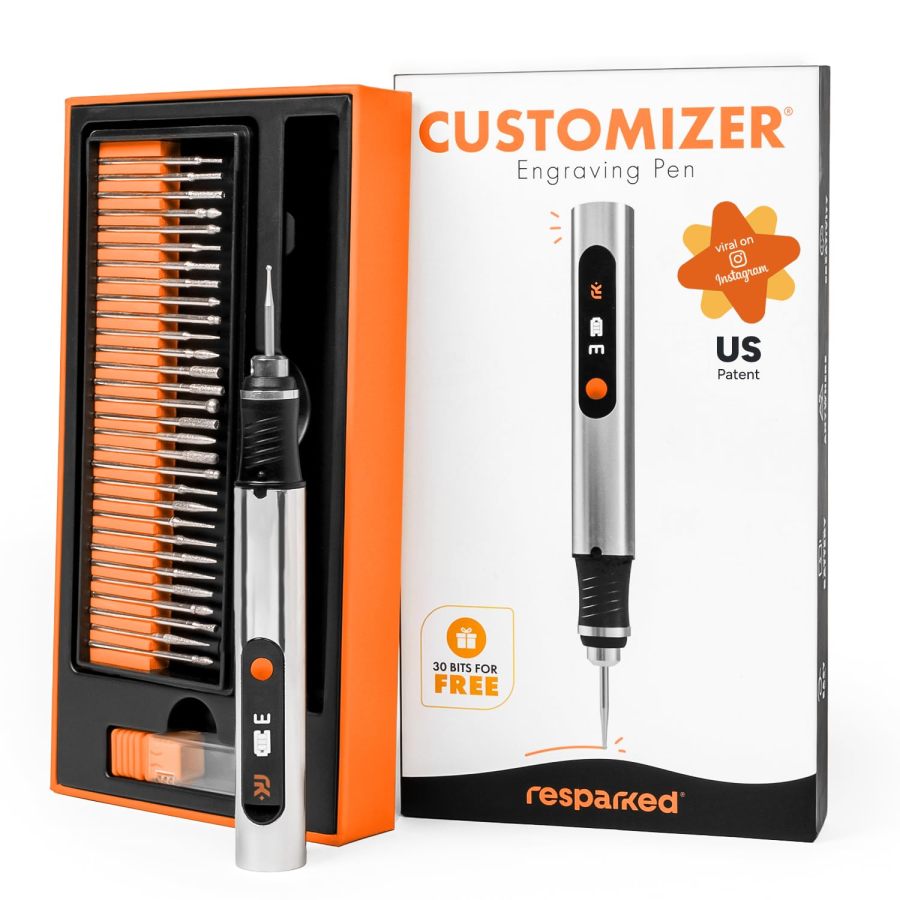
The electric engraving pen, a handheld mini power tool, is typically pen-shaped, cordless, and USB-rechargeable. It is primarily used for fine engraving, sanding, etching, drilling, and polishing on a variety of materials such as metal, glass, ceramic, wood, plastic, and resin. It is an ideal choice for crafts, personalized customization, and daily fine repairs. The following table illustrates the key characteristics of consumer behavior in this category.
| Dimension | Segment | Description |
|---|---|---|
| Need Driver Type | Planned Purchase / Impulsive Purchase / Emergency-driven Purchase | Purchases typically stem from a clear creative or repair need, but can also be impulsive purchases inspired by creative ideas, or emergency purchases to solve sudden minor problems. |
| Purchase Frequency | Low Frequency / Medium Frequency for Accessories | The purchase frequency for the main tool is low, but there is a medium-frequency repurchase demand for consumable accessories like drill bits and sanding heads. |
| Decision Complexity | Medium | Consumers compare product features, accessory count, battery life, and reviews, requiring a certain level of cognitive effort. |
| Price Sensitivity | Medium-High | Price is an important consideration; users tend to seek the best value for money between functionality and quality. |
| Emotional Dependency | Medium | The tool carries the user's personal expression and creative enjoyment, holding a certain emotional value, especially in the realms of gift customization and hobbies. |
II. User Personas & Usage Scenarios
2.1 DIY Enthusiast / Craft Creator
🎯 Loves expressing creativity through hands-on projects, personalizing items, or performing small repairs and finishing work, pursuing the uniqueness and refinement of their creations.
| Typical Usage Scenarios | Core Pain Points | Primary Purchase Drivers |
|---|---|---|
|
|
|
2.2 Daily Maintenance & Marking Needs User
🎯 Focuses on practicality, wanting to mark personal items for theft prevention, repair, or beautification to extend item lifespan and enhance security.
| Typical Usage Scenarios | Core Pain Points | Primary Purchase Drivers |
|---|---|---|
|
|
|
III. User Needs Hierarchy (KANO Model)
3.1 Basic Needs (Must-Haves)
- Cordless Portability: Free from power cord restrictions, compact and lightweight for use and transport anywhere.
- Ease of Operation & Control: Pen-like grip, simple intuitive button operation, suitable for beginners to start quickly.
- Multi-Material Compatibility: Capable of stable operation on various common materials like metal, glass, wood, plastic, and ceramic.
3.2 Performance Needs (Linear Satisfiers)
- Multi-Speed Adjustment: Offers at least 3 adjustable speed settings to match different material hardness and required precision.
- Battery Life & Charging Efficiency: Single charge provides extended use (at least 60 minutes) with fast charging to minimize downtime.
- Comprehensive Accessory Kit: Includes various types and sizes of drill bits, sanding heads, cutting discs, etc., to meet diverse needs like engraving, sanding, and drilling.
- Motor Power & Stability: Ensures sufficient torque and stable speed across different materials, minimizing stalling or excessive vibration.
3.3 Excitement Needs (Delighters)
- Smart Overload Protection: Automatically cuts power under excessive pressure or jamming to protect the tool and enhance safety.
- Front LED Lighting: Provides clear illumination on the work area, especially for fine engraving or in low-light conditions.
- Premium Materials & Ergonomics: Uses quality materials like aluminum alloy for a premium feel and a more comfortable, non-slip grip.
- Smart App Control / OLED Display: Enables finer speed control and function adjustment via a mobile app or OLED screen, enhancing tech appeal and convenience.
3.4 Unmet Needs & Opportunities
-
Accessory Quality & Durability: Users commonly report that included bits wear out or break easily, especially on hard materials.
User Reviews (VOC) the tips wear out on hard materials. // bits break immediately and the device is not strong enough. // Tools flimsy and cheap. // The screw that holds the bits is so small. When I went to insert the first bit, the screw fell out.
-
Battery Life Stability: Actual battery performance varies in use, with issues like rapid degradation and inability to fully charge, impacting user experience.
User Reviews (VOC) Low battery life. // it stops working after one charge. // the battery drains quickly. // only holds charge for 4 minutes.
-
Detailed Instructions/Tutorials: Many users indicate a lack of detailed guidance on different bit uses, operation techniques, and suitable materials, which is unfriendly to beginners.
User Reviews (VOC) I wish it had instructions on what some of the bits are for. // If this is intended as 'perfect for a beginner' there should be some sort of guide. // No instructions.
-
Engraving Depth on Hard Materials: Some users feedback that the tool lacks power, making it difficult to achieve sufficient engraving depth on metals, hard stones, etc.
User Reviews (VOC) doesn't engrave deeply enough. // barely makes a scratch on surfaces. // not powerful enough. // weak motor and insufficient capability to etch effectively.
-
Bit Fixation Stability: A few users report bits easily loosening during work or being difficult to change, posing safety risks.
User Reviews (VOC) the tip/stem likes to slide out and i can't seem to fully secure it. // The bit holder is poorly designed, very difficult to tighten with fingers... the bit dropped out.
IV. User Decision Drivers
4.1 Key Decision Factors
- Ease of Use & Grip Comfort: Users are most concerned about whether the product is as easy to hold and control as a pen, especially for prolonged or fine work.
- Portability & Cordless Operation: Being cordless and lightweight is a core driver for choosing this type of tool, enabling convenient use anywhere.
- Basic Engraving/Sanding Effectiveness: Whether the product can effectively and clearly mark or finish the target material is a key purchase determinant.
- Price & Value for Money: Within an acceptable price range, users want a product with comprehensive features and reliable quality.
4.2 Secondary Decision Factors
- Battery Life: Users expect the battery to last for extended work sessions, avoiding frequent charging that disrupts creative flow.
- Accessory Variety & Quality: A rich set of accessories increases product utility, but their durability and applicability are also closely watched.
- Overall Product Quality & Durability: Beyond core functions, users also care about build quality, materials, and long-term reliability.
- Practicality of Multi-Speed Adjustment: Users want multi-speed adjustment to genuinely offer operational flexibility and precision, not just be a marketing point.
- After-Sales Service & Warranty: As an electronic tool, users consider the product's warranty policy and support services when issues arise.
V. Selling Points & Competitive Landscape
5.1 Selling Point Analysis
5.1.1 Standard Features (Points of Parity)
- USB Cordless Charging: Most products emphasize USB charging and cordless portability, offering an unconstrained user experience.
- Multi-Material Compatibility: Commonly advertised as capable of engraving or sanding on various materials like metal, glass, wood, plastic, and ceramic.
- Easy Operation, Beginner-Friendly: Product design emphasizes ease of use, suitability for beginners, and lowering the learning curve.
- Comprehensive Accessory Kit: Most products include 30-60 pieces of accessories like drill bits and sanding heads to meet diverse needs.
5.1.2 Key Differentiators
- Multi-Speed Adjustment: Offers 3-5 speed settings to adapt to different precision levels and material hardness; some also support forward/reverse rotation.
- Smart Overload Protection: Built-in chip to prevent damage from improper operation, enhancing safety and tool lifespan.
- Lightweight & Ergonomic Design: Emphasizes pen-shaped design and comfortable grip, using materials like aluminum alloy to reduce fatigue during long use.
- Front LED Lighting: Some products provide LED lighting on the work area to assist with fine operations and use in dim light.
5.1.3 Unique Selling Propositions (USPs)
- App Smart Control / OLED Display: A few high-end models offer finer speed and direction control via a mobile app or OLED screen (e.g., AM ARROWMAX).
- Premium Starter Kit: Some products include extra templates, practice materials, and elegant storage boxes, emphasizing giftability and out-of-the-box readiness (e.g., Customizer).
- High Power / Brushless Motor: A few brands claim to use high-torque brushless motors for stronger power output to handle harder materials (e.g., xTool Selected).
5.2 Competitive Landscape
5.2.1 Market Maturity
The electric engraving pen market is moderately to highly mature. Most products show high homogeneity in core functions and appearance. Competition mainly centers on price, accessory count, and claims about 'ease of use' and 'portability'. There are numerous low-priced products, but quality and user experience vary widely.
5.2.2 Innovation Trends
The market is moving towards smart and professional directions. Emerging trends include introducing Bluetooth app control (e.g., AM ARROWMAX), providing OLED displays for enhanced user interaction, and increasing motor power and torque while maintaining compact portability to meet more professional fine processing needs. Additionally, providing more comprehensive beginner guidance and scenario-based solutions is becoming a direction for product innovation.
VI. Marketing Claims vs. Reality Check
The table below analyzes the gap between common marketing claims and actual user experiences in this category:
| Dimension | Marketing Claim | User Reality | Verdict |
|---|---|---|---|
| Battery Life & Stability | Long-lasting battery, all-day use, up to 90-200 minutes on high brightness. Fast USB charging is convenient and efficient. | Users commonly report actual battery life at high brightness is far below claims (often 20-45 minutes), and battery data within listings is often contradictory (e.g., conflict between Bullet Points and Specifications). Charging systems in some products are faulty (e.g., charging cables break easily, magnetic contacts are poor). | Typical misleading of consumers with ideal lab data or minimum brightness data. Fails to deliver on the core promise of extended creative or meeting scenarios, severely impacting user trust. Charging system flaws further undermine wireless convenience. |
| Power Output & Hard Material Engraving Capability | Powerful motor, suitable for 50+ surfaces like metal, glass, stone, easily engraving deep details. | Users commonly report the tool is underpowered, easily stalling under slight pressure, or unable to achieve deep or clear marks on metal, hard stone, thick plastic, being suitable only for soft materials or light surface treatment. | The mini pen-style design is limited by motor size and battery power, unable to match large engraving machines. Sellers overstate its hard material engraving capability, leading users to hit a physical ceiling when attempting difficult materials, creating an experience opposite to the marketing claims. |
| Accessory Quality & Bit Fixation | Equipped with 30-60 high-quality, multi-functional bits, meeting all creative needs, stable and durable. | Users commonly report included bit quality is poor, easily wearing out or breaking; for some products, the bit fixation screw is too small and easily lost, or the chuck design is flawed, causing bits to loosen easily, posing safety risks. | While sellers pile on accessory quantity, they neglect core quality and stability, leading to frequent replacement or safety issues during use, significantly impacting the overall user experience and product reliability. |
Key Takeaway: The market exhibits widespread parameter inflation and exaggeration of scenario-based experiences, especially regarding battery life, power output, and accessory compatibility.
VII. Supply-Demand Misalignment Analysis
The table below highlights mismatches between seller focus and buyer priorities:
| Dimension | Seller Behavior | User Focus | Verdict |
|---|---|---|---|
| Real Battery Life & Claim Consistency | Battery life data in listings is confusing, with contradictory data between Bullet Points and Specifications. Sellers generally avoid addressing the real shortcoming of high-brightness mode, lacking a unified, credible battery life standard. | Users strongly desire longer battery life. Rapid depletion on high brightness is a frequent complaint, and data contradictions cause confusion and concern. | Sellers generally fail to provide a clear, consistent battery life expectation, leading to a lack of trust on a key user concern, which is a core reason for negative reviews and returns. |
| Accessory Quality & Detailed Usage Guidance | Commonly emphasize 'rich accessory quantity' but rarely mention accessory material, hardness standards, and almost never provide detailed instructions on different bit uses and operation techniques. | Users complain about bits breaking easily and not knowing how to use all accessories. Beginners especially need detailed guidance; otherwise, accessory value is greatly diminished. | Sellers over-compete on accessory quantity but neglect their quality and user education, leading to wasted resources and failure to address actual user pain points. |
| Advanced Smart Features vs. Basic Reliability | Some brands invest in developing smart features like app control, OLED displays, magnetic charging, and use these as differentiation points. | Users perceive low value in these smart features, caring more about basic power, battery life, and durability. The smart features themselves may even have bugs. | Sellers attempt differentiation through advanced features, but if core basic pain points remain unsolved, this innovation investment may become 'self-indulgent' and fail to translate into effective market competitiveness. |
Key Takeaway: Sellers collectively remain silent or downplay core pain points like battery life, power output, and accessory durability, while oversupplying feature stacking and low-value details, leading to a supply-demand mismatch.
VIII. Strategic Opportunities & Recommendations
8.1 Core Power Optimization & Hard-Material Adaptation Model
8.1.1 Target Audience & Pain Points
⚡️ Pain Points Addressed: Insufficient power output; limited engraving depth on hard materials.
8.1.2 Action Plan
Adopt a higher voltage (e.g., 7.2V) or higher torque brushless motor, pair it with a higher capacity, high-discharge-rate LiPo battery, and optimize the heat dissipation structure. Provide industrial-grade diamond bits specifically for metals and hard stones. Clearly label its powerful performance and suitable material types on the packaging.
| Tech Complexity | Medium |
| Cost Impact | High Impact |
| Trade-off Warning | Higher power motor and stronger battery may slightly increase product thickness or weight, requiring a minor trade-off in portability. |
| Price Band | Only viable above $39.99 |
8.1.3 Marketing Strategy
Emphasize 'Hardcore Power, Penetrates Toughness'; showcase deep engraving effects on metal and glass through comparison experiment videos; highlight 'Professional-Grade Performance for Advanced Needs'.
8.2 High-Quality Durable Accessory Kit & Modular Design
8.2.1 Target Audience & Pain Points
⚡️ Pain Points Addressed: Poor accessory quality and durability; unstable bit fixation.
8.2.2 Action Plan
Provide modular, replaceable high-quality accessories, such as carbide or better diamond-coated bits, and include a quick-change chuck (instead of small screw fixation). Offer separately sold high-quality bit/consumable packs. Include detailed accessory usage instructions and maintenance guides.
| Tech Complexity | Low |
| Cost Impact | Medium Impact |
| Trade-off Warning | Higher-quality accessory costs increase slightly but improve user experience and repurchase rate. |
| Price Band | Only viable above $24.99 |
8.2.3 Marketing Strategy
Highlight 'Long-Lasting Durability, Stays Sharp'; promote 'Safe Quick-Change Chuck, No More Screw Hassles'; emphasize 'Officially Certified Accessories, Precise Fit, Better Results'.
8.3 Transparent & Consistent Real Battery Life
8.3.1 Target Audience & Pain Points
⚡️ Pain Points Addressed: Contradictory battery life claims, unstable battery performance.
8.3.2 Action Plan
Clearly label precise battery life charts for different speed modes in the listing, and back the data with third-party independent testing agency certification. Optimize the battery management system to ensure accurate power level display.
| Tech Complexity | Low |
| Cost Impact | Low Impact |
| Trade-off Warning | No significant physical side effects; primarily involves information transparency and quality control management. |
| Price Band | Only viable above $19.99 |
8.3.3 Marketing Strategy
Emphasize 'Real Battery Life, What You See Is What You Get'; provide clear data like 'XX minutes on high-intensity mode, XX hours on low-intensity mode'; reinforce credibility with customer testimonials and real-world test videos.
8.4 Beginner-Oriented Scenario-Based Tutorials & Community
8.4.1 Target Audience & Pain Points
⚡️ Pain Points Addressed: Lack of detailed instructions/tutorials; low accessory utilization.
8.4.2 Action Plan
Create a set of video tutorials covering basics from grip and safety to engraving techniques on various materials (wood, glass, metal). Provide detailed graphic instructions and usage scenario examples for each accessory. Consider creating an online community for users to share experiences and showcase work.
| Tech Complexity | Low |
| Cost Impact | Low Impact |
| Trade-off Warning | No physical side effects; primarily involves content development and platform building investment. |
| Price Band | Only viable above $14.99 |
8.4.3 Marketing Strategy
Highlight 'Zero-Basics Start, Everyone Can Be an Engraving Master'; promote 'Systematic Teaching, Unleashing Unlimited Creativity'; attract beginners through user work showcases and community interaction.