Amazon US Market Analysis: Collapsible Silicone Food Storage Containers Category
📊 Executive Summary
📈 Market Trends
Portability and Health Safety are Mainstream; Market is Highly Homogenized. The collapsible silicone food storage container market is mature. Consumers universally seek eco-friendly, BPA-free materials and basic functions like microwave, freezer, and dishwasher compatibility. Competition is fierce, with marketing claims for similar products highly convergent. Consumers now have widespread expectations for these basic features, making it difficult to achieve significant differentiation by relying on them alone.
⚡ Major Pain Points
A Chasm Exists Between Leak-proof Promises and Actual Experience; Inherent Silicone Material Flaws Await Solutions. User feedback centers on lid clasps breaking easily, seal rings detaching causing leaks, and insufficient stability of expanded containers when full. Additionally, silicone's tendency to absorb food odors and pigments, leaving residues after cleaning, severely impacts long-term user experience and product trust.
💡 Selection Opportunities
Deep Dive into Core Pain Points, Building Reliability and Innovation to Solve User Problems. Market opportunities lie in upgrading sealing systems to provide 'Worry-Free Leak-proof' guarantees; developing stain & odor-resistant silicone to eliminate odor/stain concerns; reinforcing container structural stability to ensure expanded boxes remain sturdy. Simultaneously, explore precision capacity sizing and multi-compartment liquid-sealing designs to meet more professional dietary management needs, thereby building brand advantage and premium pricing space through superior details.
I. Analysis Overview
1.1 Introduction & Report Scope
This report analyzes the 'Container Sets' category (collapsible silicone food storage containers) within the Amazon US market, focusing on target user personas, core needs, decision drivers, market communication, and potential opportunities.
1.2 Category Snapshot
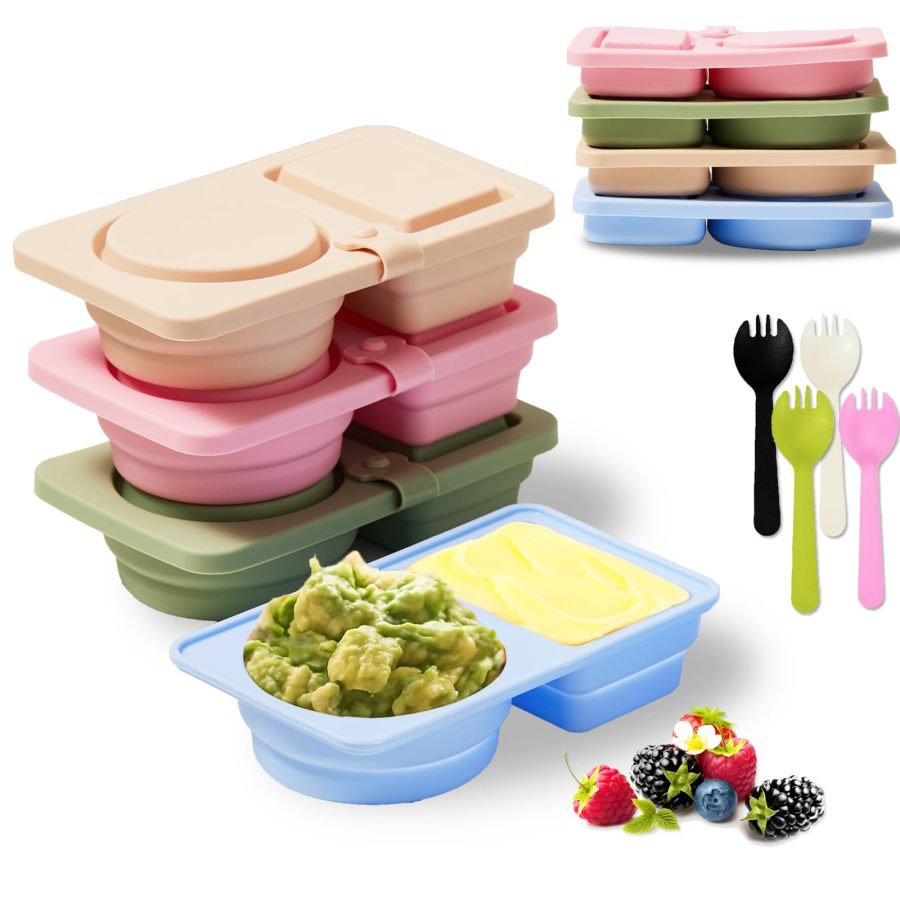
Collapsible silicone food storage containers are food-grade silicone containers featuring a retractable, foldable design for space-saving and portability. These products typically integrate features like leak-proof lids, microwave/freezer safety, and multi-compartment sections. They aim to provide a healthy, safe food preservation solution while maximizing space efficiency through their collapsible nature, adapting to various fast-paced lifestyle scenarios such as daily commuting, outdoor activities, and home organization. The following table illustrates the key characteristics of consumer behavior in this category.
| Dimension | Segment | Description |
|---|---|---|
| Need Driver Type | Planned Purchase / Emergency-driven Purchase | Purchases are typically driven by planned needs like daily meal prep or fitness meal planning, but can also be triggered by emergency scenarios such as leftover storage or outdoor activities. |
| Purchase Frequency | Low | As durable kitchen/on-the-go accessories, these products have a long lifecycle. Repurchase frequency is low unless items are damaged or upgraded. |
| Decision Complexity | Medium | Consumers compare factors like material safety, seal integrity, folding convenience, capacity, ease of cleaning, and price, but do not conduct deep research. |
| Price Sensitivity | Medium | Users are willing to pay a reasonable premium for healthy materials, good seals, and convenient design, but still expect overall value for money. |
| Emotional Dependency | Medium | Primarily driven by functionality and utility, but attributes like eco-friendliness, a tidy organization experience, and the self-satisfaction of healthy eating also provide emotional value. |
II. User Personas & Usage Scenarios
2.1 Office Lunch Aficionado
🎯 Focuses on healthy eating and quality of life, packs lunch daily, and seeks portable, safe, and easy-to-use foodware.
| Typical Usage Scenarios | Core Pain Points | Primary Purchase Drivers |
|---|---|---|
|
|
|
2.2 Active Lifestyle Explorer
🎯 Enjoys outdoor activities, camping, or long trips, requiring lightweight, durable, versatile, and easy-to-clean food containers.
| Typical Usage Scenarios | Core Pain Points | Primary Purchase Drivers |
|---|---|---|
|
|
|
III. User Needs Hierarchy (KANO Model)
3.1 Basic Needs (Must-Haves)
- Food-Grade Safe Material: Containers must use non-toxic, BPA-free food-grade silicone or other safe materials to ensure harmless contact with food, forming the foundation of user trust.
- Basic Storage Function: Must hold various solid or semi-solid foods, meeting fundamental carrying and preservation needs to prevent food spillage.
- Easy to Clean: Material should not be sticky or absorb grease, facilitating easy hand-washing or dishwasher use without retaining odors, ensuring hygienic reuse.
3.2 Performance Needs (Linear Satisfiers)
- Good Seal & Leak-proof: Lids must fit tightly to effectively prevent leaks and flavor transfer, protecting user belongings and food quality.
- Microwave/Freezer Safe: Allows direct heating or freezing of food, increasing convenience and reducing the hassle of transferring containers.
- Significant Space Saving: The collapsible design effectively compresses volume for easy storage and portability, delivering tangible space efficiency and solving storage pain points.
- Appropriate Capacity & Size Set: Offers multiple capacity options to suit different meal portions (snacks, single servings, family-sized), enhancing product applicability.
- Durable & Deformation-Resistant Structure: The silicone body and lid clasps should be long-lasting, resistant to breakage or unexpected deformation during use, extending product lifespan.
3.3 Excitement Needs (Delighters)
- Multi-Compartment Design: Internal dividers allow carrying multiple foods without mixing flavors, enhancing the dining experience and promoting balanced meals.
- Included Collapsible Utensils: Containers come with built-in, stowable forks/spoons, further boosting portability and integrated design, reducing prep work for outings.
- Unique Aesthetic Design: Vibrant colors or cute shapes (e.g., panda) add fun and personalization, lifting user mood, especially appealing to children.
- Magnetic Seal/One-Handed Open: Innovative magnetic sealing or easy-open mechanisms provide a smoother, barrier-free user experience, especially useful outdoors or when busy.
3.4 Unmet Needs & Opportunities
- Silicone Odor/Stain Absorption Hard to Remove: Over time, silicone easily absorbs strong food odors (e.g., curry, onion) or gets stained by dark sauces (e.g., ketchup), which are difficult to remove completely, affecting aesthetics and future use.
- Lid Clasp Easily Breaks/Seal Ring Falls Off: Plastic lid clasps are prone to breaking after repeated use, or silicone seal rings can age, loosen, or detach, compromising or even failing the seal-a common point in negative reviews.
- Insufficient Stability When Expanded: When fully expanded and filled with food (especially liquids), the container's base or walls may lack sufficient stability, risking accidental collapse and spillage during movement or handling.
-
Not Absolutely Leak-proof Between Multi-Compartments: Even lunch boxes with dividers often lack complete liquid sealing between sections, offering only physical barriers, allowing liquids to potentially seep through.
User Reviews (VOC) It leaked between the compartments, so my rice got soggy with sauce. // The lid doesn't really seal off each section, everything mixes if it tips over.
IV. User Decision Drivers
4.1 Key Decision Factors
- Seal & Leak-proof Performance: This is the top priority when carrying liquid-containing foods, directly impacting peace of mind. Leakage is a core cause of returns and negative reviews; reliability is paramount.
- Material Health & Safety: Clear safety certifications (food-grade silicone, BPA-free) are foundational for purchase. Any potential chemical risk is an immediate deal-breaker.
- Actual Space-Saving Effect: Whether the folded volume is sufficiently compact and truly solves storage and portability pain points is the core value proposition of collapsible containers.
- Durability & Damage Resistance: Consumers expect long-term use without the silicone body cracking easily or lid clasps loosening/breaking, avoiding frequent replacements.
4.2 Secondary Decision Factors
- Capacity & Partition Practicality: Whether suitable capacity combinations or logical divider designs are offered to meet specific dietary needs, enhancing meal management flexibility.
- Cleaning Convenience: Whether dishwasher-safe, if silicone surfaces rinse clean easily without retaining stains or odors, reducing user cleaning burden.
- Price Reasonableness: Whether the product price offers competitive value compared to similar market products, balancing core needs and performance.
- Brand Reputation & Reviews: Especially for new brands, users reference early reviews and sales volume to judge product quality and after-sales service, influencing purchase decisions.
V. Selling Points & Competitive Landscape
5.1 Selling Point Analysis
5.1.1 Standard Features (Points of Parity)
- Collapsible/Space-Saving: As the core category feature, all products emphasize storage and portability advantages, the primary selling point attracting user attention.
- Food-Grade Silicone/BPA Free: Highlights safe, non-toxic materials, a universally recognized health benefit and basic market entry requirement.
- Microwave/Dishwasher/Freezer Safe: Emphasizes versatility and ease of use, meeting daily needs for heating, cleaning, and freshness, simplifying routines.
- Good Seal/Leak-proof: Widely promoted to prevent spillage and keep food fresh, addressing the pain point of carrying meals.
5.1.2 Key Differentiators
- Multi-Size Sets: Offering combinations of 2, 3, or 4 different capacities meets family or varied meal portion needs, enhancing the value perception of the set.
- Multi-Compartment Design: Highlights food separation to prevent flavor mixing, suitable for bento boxes or diverse snack carrying, supporting balanced diets.
- Included Utensils (Fork/Spoon): Adds convenience of all-in-one carrying, reducing hassle of packing separate utensils, improving the integrated dining experience.
- Easy Clean/Non-Stick Interior: Emphasizes silicone's cleaning advantage, addressing user concerns about residual stains and odors, boosting reuse willingness.
5.1.3 Unique Selling Propositions (USPs)
- Magnetic Seal Design: Very few products feature magnetic lids, offering a novel one-handed opening experience and tighter seal, enabling differentiated innovation.
- Specific Shape Design (e.g., Panda): Containers shaped like pandas, primarily targeting the children's market or users seeking personalization, adding fun and emotional value.
5.2 Competitive Landscape
5.2.1 Market Maturity
The collapsible silicone food storage container market has reached maturity, with high homogenization in product features and marketing claims. Most products revolve around core attributes like 'collapsible, food-grade silicone, microwave-safe, leak-proof.' This means consumers have widespread awareness and expectations for these basic functions, but relying solely on them is insufficient for significant market differentiation. Competition has shifted from 'having the features' to 'how well they perform' and 'the quality of the details,' i.e., providing superior performance and refined experience in these standard features.
5.2.2 Innovation Trends
Innovation trends are gradually shifting from basic feature competition to enhancing user experience details and solving traditional pain points. For example, magnetic seals and integrated utensil storage reflect deeper exploration of portability and usability. Additionally, some brands are attempting to address inherent silicone issues like odor/stain absorption through material improvements or surface treatments. Future directions include smarter freshness technology (e.g., adjustable vents), more precise meal portioning solutions (e.g., absolute leak-proof compartments), and more personalized, aesthetically pleasing designs.
VI. Marketing Claims vs. Reality Check
The table below analyzes the gap between common marketing claims and actual user experiences in this category:
| Dimension | Marketing Claim | User Reality | Verdict |
|---|---|---|---|
| Seal & Leak-proof Performance | Leak-proof design, secure seal, safe for carrying soups or salad dressings, absolutely no leakage. | Users commonly report lid clasps breaking easily, seal rings loosening/falling off, or leakage risks under pressure, creating a significant gap from the advertised 'absolutely no leakage.' | Sellers commonly over-market leak-proof performance, failing to adequately consider the product's real-world pressure resistance and long-term durability, causing this core function to underperform for users and severely damaging trust. |
| Capacity & Use Case Match | Extra-large capacity, XXL size, perfectly meets family meal prep or outdoor large-quantity food storage needs. | Some users report actual capacity being much smaller than expected, or products labeled 'lunch box' being suitable only for snacks or children's meals, misaligned with adult meal needs, causing functional misdirection. | Sellers exhibit perceptual bias in capacity claims, failing to accurately match product capacity with user expected usage scenarios, leading to a mismatch between user experience and purchase intent, creating psychological disappointment. |
| Material Safety & Labeling | 100% food-grade silicone, BPA-free, safe and non-toxic. | Some products (e.g., B0B1W35P4Z) explicitly carry a California Proposition 65 warning, implying potential carcinogenic or reproductive toxicity chemicals, conflicting with the widespread 'safe and non-toxic' claim. | While most products emphasize safety, the chemical risks exposed by individual products severely damage consumer trust, constituting a fatal flaw. The industry requires more rigorous scrutiny and transparent disclosure of such sensitive information. |
Key Takeaway: The market exhibits widespread parameter inflation and scenario-based experience exaggeration, especially regarding battery life (not for this category but typical for electronics), capacity claims, and sealing performance.
VII. Supply-Demand Misalignment Analysis
The table below highlights mismatches between seller focus and buyer priorities:
| Dimension | Seller Behavior | User Focus | Verdict |
|---|---|---|---|
| Real Leak-proof Guarantee & Lid Durability | Sellers frequently emphasize 'leak-proof' but collectively ignore or downplay common negative feedback about lid clasps breaking or seal rings failing, offering no substantive solutions. | Users' core concern is leakage staining their bag, yet they frequently encounter lid damage and seal failure, eroding their confidence in the product's reliability. | Sellers focus on 'having' a leak-proof feature but neglect the deeper user need for 'consistently reliable leak-proofing' and 'long-term lid durability.' This is a key cause of trust crises and negative reviews. |
| Silicone Material's Stain/Odor Resistance | Sellers commonly emphasize 'easy to clean' but rarely mention silicone's inherent tendency to absorb strong food odors (e.g., curry, onion) and pigments (e.g., ketchup), nor provide effective cleaning guidance. | Users complain that odors from strong-flavored foods or stains from dark sauces are hard to remove, affecting the product's appearance and reuse experience, diminishing its value. | Sellers avoid addressing silicone's inherent weaknesses, failing to provide effective solutions or at least transparently acknowledge them with cleaning advice, missing an opportunity to differentiate through technological innovation. |
| Structural Stability When Expanded | Sellers widely emphasize 'collapsible for space saving' but pay insufficient attention to the container's structural stability when expanded and filled with liquids or delicate foods (e.g., sandwiches), nor provide design details to prevent accidental collapse. | Users report containers easily collapsing, tipping over when full, or deforming under pressure when handled, worrying about food spillage or damage. | Sellers overly emphasize the convenience of 'collapsed storage' but neglect the product's reliability in 'securely holding food' during its core usage scenario, indicating a design blind spot that impacts actual user experience. |
Key Takeaway: Sellers are overly optimistic or even evasive about core functions like 'leak-proof' and 'durability,' while oversupplying the basic selling point of 'collapsibility.' They neglect user concerns about inherent silicone material pain points (e.g., odor/stain absorption), leading to a supply-demand mismatch.
VIII. Strategic Opportunities & Recommendations
8.1 Upgraded Leak-proof Seal & High-Durability Lid
8.1.1 Target Audience & Pain Points
⚡️ Pain Points Addressed: Lid clasp easily breaks/seal ring falls off; compartments not absolutely leak-proof; poor seal and leak-proof performance.
8.1.2 Action Plan
Redesign lid clasps using reinforced high-strength PP material or embedded stainless steel pins for enhanced durability. Upgrade to dual-layer or reinforced silicone seal rings ensuring tighter fit with the lid body, preventing detachment. For multi-compartment products, develop independent liquid-sealing technology for each section to ensure true isolation.
| Tech Complexity | Medium |
| Cost Impact | Medium Impact |
| Trade-off Warning | A sturdier lid or multi-layer seal structure may slightly increase overall product weight or thickness, but significantly enhances user experience. |
| Price Band | Only viable above $18.99 |
8.1.3 Marketing Strategy
Highlight 'Military-Grade Seal Guarantee, a Drip-Free Promise of Peace of Mind'; reinforce trust via third-party testing certifications, stress-test videos (e.g., vigorous shaking without leaks); emphasize 'the portable lunch box for carrying soups/sauces' and explicitly offer a lid durability warranty.
8.2 Stain & Odor-Resistant 'Clean Silicone' Lunch Box
8.2.1 Target Audience & Pain Points
⚡️ Pain Points Addressed: Silicone absorbs odors/stains hard to remove; not easy to clean; impacts product lifespan.
8.2.2 Action Plan
Collaborate with material suppliers to develop new hydrophobic, oleophobic, and penetration-resistant silicone formulas, or apply food-grade surface treatment coatings to reduce absorption of food pigments and odors. Consider introducing darker-colored product lines to mitigate visual staining.
| Tech Complexity | High |
| Cost Impact | High Impact |
| Trade-off Warning | New silicone formulas or surface coatings may slightly increase manufacturing costs and potentially alter the silicone's feel or transparency. |
| Price Band | Only viable above $24.99 |
8.2.3 Marketing Strategy
Emphasize 'Innovative Clean Silicone Technology, Say Goodbye to Odor & Stain Worries'; demonstrate cleaning effectiveness through comparison tests after exposure to foods like curry/ketchup; educate users on proper cleaning methods and care habits, highlighting a 'Stays Like New' usage experience.
8.3 Reinforced Base/Wall Stabilized Collapsible Box
8.3.1 Target Audience & Pain Points
⚡️ Pain Points Addressed: Insufficient stability when expanded; prone to accidental collapse when full, affecting user confidence.
8.3.2 Action Plan
Embed foldable food-grade rigid plastic or metal frames within the silicone mold of the container base or sidewalls to provide additional support when expanded, ensuring stability even when full and preventing tipping or collapse. Optimize the folding mechanism for smooth operation and secure locking.
| Tech Complexity | Medium |
| Cost Impact | Medium Impact |
| Trade-off Warning | Embedding foldable rigid support strips in the container base or walls slightly increases product weight and material cost but significantly improves usage stability. |
| Price Band | Only viable above $16.99 |
8.3.3 Marketing Strategy
Highlight 'Reinforced Support Design, Worry-Free Food Holding'; showcase sturdiness via load-bearing test videos, physical comparisons (stability when filled with water); emphasize scenario-based advantages like 'Food Stays Steady Even on Bumpy Outdoor Trails.'
8.4 Precision Multi-Compartment Liquid-Sealed Bento Box
8.4.1 Target Audience & Pain Points
⚡️ Pain Points Addressed: Compartments not absolutely leak-proof; cannot simultaneously carry multiple liquid-containing foods; missing functional partitioning.
8.4.2 Action Plan
Invest in R&D for independent sealing technology for silicone dividers, ensuring each compartment is individually leak-proof. Consider introducing removable silicone dividers for users to adjust compartment sizes as needed. For compartment lids, incorporate micro-vent designs to facilitate microwave heating.
| Tech Complexity | High |
| Cost Impact | High Impact |
| Trade-off Warning | Achieving absolute liquid sealing for each compartment requires more complex mold design and precision manufacturing, potentially increasing product thickness or slightly affecting certain compartment capacities. |
| Price Band | Only viable above $22.99 |
8.4.3 Marketing Strategy
Emphasize 'Multi-Compartment Liquid-Seal Tech, End Cross-Flavoring & Mixing'; demonstrate卓越 isolation via compartmental liquid test videos; highlight the personalized, professional dietary management solution of 'One Box, Multiple Delights, Healthy Food Combinations Your Way.'