Amazon US Market Analysis: Under-Bed Storage Boxes with Wheels Category
📊 Executive Summary
📈 Market Trends
Portability and capacity are mainstream, user demands for quality details are increasing. The under-bed storage box market is highly competitive, with products commonly offering basic functions like large capacity, easy assembly, and wheels. Consumer demand for seamless integration and efficient space utilization continues to grow, while higher demands are placed on detailed experiences like product durability, wheel smoothness, and size compatibility.
⚡ Major Pain Points
Structural instability, size mismatch, and fragile components are major flaws. Users commonly report inflated load capacity claims, insufficient bottom support leading to easy deformation; discrepancies between actual size and listing descriptions causing compatibility issues; poor quality of key components like zippers and wheels, prone to damage or detachment, severely impacting user experience and product lifespan.
💡 Selection Opportunities
Deepen focus on quality details, enhance real user experience. Market opportunities lie in solving the consumer trust crisis regarding product structural stability (reinforce bottom support, upgrade frame material), size accuracy (provide multi-dimensional measurement guides, develop height-adjustable products), and core components (upgrade zippers, wear-resistant wheels). Additionally, building a differentiated advantage through moisture and odor control design can meet deeper quality needs in a homogenized market.
I. Analysis Overview
1.1 Introduction & Report Scope
This report analyzes the 'Under-Bed Storage' category (Under-Bed Storage Boxes with Wheels) within the Amazon US market, focusing on target user personas, core needs, decision drivers, market communication, and potential opportunities.
1.2 Category Snapshot
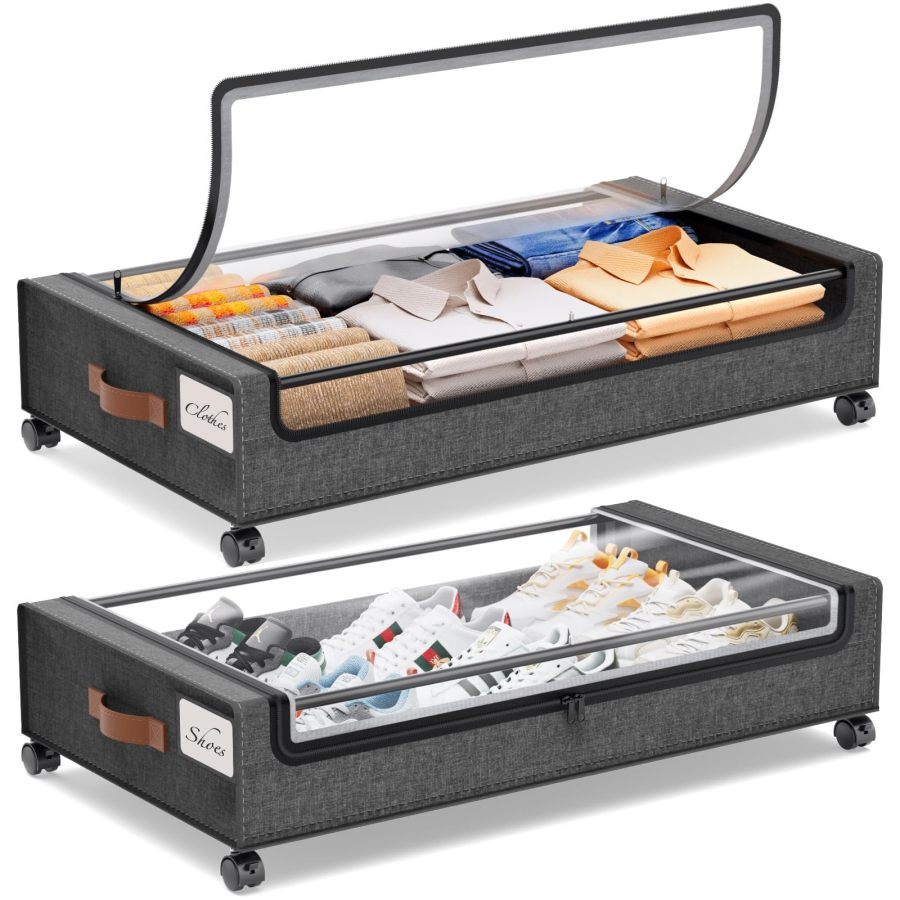
Under-bed storage boxes with wheels are a home storage solution designed to efficiently utilize the often-wasted space under beds. These products are typically designed to be flat and equipped with 360-degree swivel casters, allowing users to easily push and pull them for access. They are primarily used for storing seasonal clothing, shoes, bedding, toys, and books, helping to maintain a tidy and organized home environment while maximizing living space utilization. Market products are mainly divided into fabric/metal frame combination types and all-metal mesh types. The following table illustrates the key characteristics of consumer behavior in this category.
| Dimension | Segment | Description |
|---|---|---|
| Need Driver Type | Planned Purchase / Emergency-driven Purchase | User purchases typically stem from the need to solve limited home space, organize seasonal items, or meet temporary storage needs, with clear expectations for immediate and efficient space utilization. |
| Purchase Frequency | Low Frequency / Medium-Low Frequency | As a household durable good, purchase frequency is generally low, but repurchases may occur due to moving, space reorganization, or one-time purchases of multiple units for different rooms. |
| Decision Complexity | Medium | Consumers compare factors such as size, material, load capacity, wheel smoothness, dust protection, and price, requiring some research to evaluate different products. |
| Price Sensitivity | Medium-High | Price is an important consideration; users seek value for money while ensuring basic functionality and quality. They are willing to pay a reasonable premium for products offering significant value enhancement. |
| Emotional Dependency | Medium-Low | Primarily based on functional utility, but the sense of control, peace of mind, and visual pleasure derived from a tidy, efficient space also provide a certain level of emotional value. |
II. User Personas & Usage Scenarios
2.1 Savvy Space Planner
🎯 Lives in urban apartments or small homes, meticulously plans every inch of space, and pursues ultimate tidiness and efficiency in the home environment.
| Typical Usage Scenarios | Core Pain Points | Primary Purchase Drivers |
|---|---|---|
|
|
|
2.2 Seasonal Care Specialist
🎯 Focuses on the proper care of clothing and textiles, especially during seasonal changes, requiring professional storage solutions that are dustproof, moisture-resistant, and easy to categorize and manage.
| Typical Usage Scenarios | Core Pain Points | Primary Purchase Drivers |
|---|---|---|
|
|
|
III. User Needs Hierarchy (KANO Model)
3.1 Basic Needs (Must-Haves)
- Size Fits Under Bed: The product's height and width must fit most under-bed spaces, ensuring it can be smoothly pushed in and pulled out without getting stuck.
- Provides Basic Storage Capacity: As a storage product, it must be able to accommodate common items like daily clothing, shoes, or bedding, meeting basic storage needs.
- Provides Dust Protection: Should effectively isolate dust from under the bed, keeping the interior items clean and preventing clothes from getting dirty or creating allergens.
3.2 Performance Needs (Linear Satisfiers)
- Smooth, Easy-to-Push/Pull Wheels: Wheels need to swivel 360 degrees, sliding easily and quietly on both hard floors and carpets, facilitating frequent item access or under-bed cleaning.
- Capacity Matches Actual Needs: The product's actual capacity should be large enough to hold multiple garments, bedding, or shoes, avoiding being 'all style, no substance.'
- Simple Assembly Process: Users expect the product assembly to be simple and quick, preferably requiring no complex tools, saving time and effort, and avoiding frustration.
- Clear Visibility of Contents: A transparent lid or viewing window allows users to quickly identify interior items, reducing search time and improving efficiency.
- Sturdy Frame, Resists Deformation: The storage box frame should be sturdy enough to not bend or collapse easily, even when filled with heavy items like clothes or books, ensuring storage safety.
3.3 Excitement Needs (Delighters)
- Tool-Free, Quick Assembly: The product can be assembled in minimal time without any tools, providing a convenience experience that exceeds expectations, ready to use immediately.
- Height-Adjustable Design: The height of the storage box can be flexibly adjusted according to the actual clearance under the bed, adapting to more bed types, solving compatibility issues, and broadening applicability.
- Built-in Dividers for Partitioning: Providing movable or adjustable internal dividers, allowing users to perform detailed categorization and organization of different item types, improving internal space utilization.
- Stylish, Versatile Appearance: The product features a simple, modern design that easily blends into various home decor styles, enhancing overall bedroom aesthetics, rather than being just a functional item.
3.4 Unmet Needs & Opportunities
-
Zipper Quality and Smoothness: Many users report that zippers are not durable enough, prone to jamming, breaking, or stitching coming undone, severely impacting the user experience and dustproof effectiveness.
User Reviews (VOC) Customers have mixed experiences with the storage boxes' zippers, with some finding them good and easy to open, while others report that they are cheaply made and don't close properly.//Customers have mixed experiences with the storage containers' zippers, with some finding them good and easy to use, while others report them being weak and not very sturdy.
-
Actual Size vs. Description Mismatch: Some users complain that the product's actual size (especially height or capacity) is smaller than expected, preventing full utilization of under-bed space or inability to hold intended items.
User Reviews (VOC) They are smaller than I thought so I was a little worried that they wouldn't fit what I needed but they did fit two flannel sheet sets for a queen and close easily.//Customers have mixed opinions about the storage box's size, with some finding it good and compact, while others say it's smaller than expected and not worth the price.
-
Bottom Support & Overall Structural Stability: Some fabric storage boxes lack rigid bottom support, sagging and deforming easily under heavy loads, affecting push/pull smoothness and load capacity. Metal frame products also have some user feedback regarding instability.
User Reviews (VOC) The metal frame is extremely fragile and bends easily, losing its shape to hold clothes.//The bottom structure is not as advertised and definitely not sturdy.
-
Wheel Sturdiness and Durability: A few users mention wheels falling off easily or not rolling well on carpets, diminishing the value of the 'wheeled' core selling point.
User Reviews (VOC) My one critique is the wheels have the tendency to come off a little easily so I do suggest adding a little glue, but this could be because I'm constantly moving them around to grab new yarn.//Quick storage Easy to put together , wheels don't stay on but good storage.
-
Material Odor Issue: A few new product users mention plastic or fabric odors, affecting the initial use experience and the safety of stored clothing.
User Reviews (VOC) Good product, but...Easy to put together and looks durable. Some of the fabric looks like it will fray over time near the wheels. Also the plastic smell is a bit off putting.
IV. User Decision Drivers
4.1 Key Decision Factors
- Actual Storage Capacity: Whether it can hold the clothes, bedding, etc., the user plans to store is the primary purchase factor, directly impacting space utilization and practicality.
- Fit with Under-Bed Space: Whether the product height can slide under the bed with clearance, avoiding getting stuck or being unusable, is a core consideration directly affecting normal use.
- Wheel Smoothness and Ease of Use: Whether the wheels can be pushed and pulled easily and quietly on different surfaces (especially carpets) directly impacts daily use experience and convenience.
- Assembly Ease: Whether the product is easy to assemble, preferably tool-free or with simple steps, saving user time and effort, reducing post-purchase usage barriers.
- Dust & Moisture Protection Effectiveness: Whether the zipper or lid can effectively block dust and moisture, ensuring the cleanliness and integrity of stored items, especially for clothing and textiles.
4.2 Secondary Decision Factors
- Material Sturdiness and Durability: The sturdiness of the product frame, fabric, and zipper, and whether it can withstand long-term use and a certain weight of items, affecting product lifespan and value for money.
- Content Visibility: A transparent lid or window facilitates quick viewing of interior items, improving retrieval efficiency and saving time.
- Appearance Design and Color: Whether the product appearance is simple and aesthetically pleasing, and if the color coordinates with bedroom decor, enhancing overall home aesthetics.
- Load Capacity: The claimed load capacity range, and whether it can safely store heavy items without damage, affecting user trust in product reliability.
- Foldable Storage Function: Whether it can be folded when not in use, facilitating storage without taking up space, enhancing product flexibility and space management efficiency.
V. Selling Points & Competitive Landscape
5.1 Selling Point Analysis
5.1.1 Standard Features (Points of Parity)
- Large Capacity Storage: Commonly emphasizes the product has ample storage space, capable of holding various items like clothing, shoes, bedding, toys, meeting basic household storage needs.
- Wheeled Design: Highlights 360° swivel casters, emphasizing the convenience and effort-saving nature of pushing/pulling the product under the bed, some include locking functions.
- Easy to Install: Most products list simple, quick, time-saving assembly as a core selling point, some claim tool-free assembly to lower user barriers.
- Dust & Moisture Proof: Through transparent lids, zipper designs, or special materials, emphasizes effective protection of stored items, keeping them clean and dry, extending item lifespan.
- Sturdy, Durable Material: Often uses Oxford fabric combined with a metal frame, or an all-metal structure, claiming good load capacity and stability, enhancing product quality perception.
5.1.2 Key Differentiators
- Transparent Lid/Window & Label Design: Allows users to quickly view contents without opening, some provide label slots for easy categorization, improving retrieval efficiency.
- Foldable for Storage: Can be folded for storage when not in use, saving space, enhancing product flexibility and portability, suitable for small-space users.
- Multi-Angle Handles: In addition to the front, adds side or top handles for easy pulling and carrying from different angles, improving operational convenience.
- Wheel Locking Function: Some product wheels have locking devices, ensuring the storage box stays fixed in place, preventing accidental sliding, adding safety.
- Thickened Fabric Material: Such as 600D Oxford fabric or PU material, emphasizing better wear resistance and load capacity than ordinary fabric, enhancing perceived value.
5.1.3 Unique Selling Propositions (USPs)
- Tool-Free / 1-Minute Assembly: Very few products achieve true 1-minute, tool-free assembly, positioning it as an ultimate convenience selling point, providing an experience beyond expectations.
- Height-Adjustable Design: Unique bracket design allows users to adjust the storage box height to fit under-bed spaces of varying clearances, solving universality challenges.
- Internal Adjustable Dividers: Built-in removable or adjustable dividers, allowing users to personalize internal organization based on item size, improving internal utilization efficiency.
- All-Metal Mesh Design: Compared to fabric storage, offers better breathability and potentially stronger overall structural rigidity, suitable for special item storage.
5.2 Competitive Landscape
5.2.1 Market Maturity
The under-bed storage category market is relatively mature, with product functions generally becoming homogenized. Most sellers invest heavily in promoting basic functions like capacity, wheeled convenience, easy assembly, and dust protection. The competitive focus has shifted from 'having it' to 'how well it works,' 'how durable it is,' and 'value for money.' Consumers have higher demands for detailed product experiences, such as wheel quietness and smoothness, zipper quality, stability under load, etc.
5.2.2 Innovation Trends
Current innovation trends mainly revolve around optimizing user experience, such as simplifying the assembly process (tool-free), enhancing product adaptability (height-adjustable), improving internal organization efficiency (adjustable dividers), and pursuing higher durability and aesthetics in materials and design. Simultaneously, some products are beginning to attempt stronger load capacities and more refined dust/moisture protection designs to address core user pain points. In the future, we may see more modular, intelligent (e.g., built-in sensor lights), or more scenario-specific (e.g., children's rooms, pet supplies) customized products emerge.
VI. Marketing Claims vs. Reality Check
The table below analyzes the gap between common marketing claims and actual user experiences in this category:
| Dimension | Marketing Claim | User Reality | Verdict |
|---|---|---|---|
| Load Capacity & Structural Stability | Claims 'High load capacity 66-72 lbs,' 'Sturdy metal frame,' 'More robust than other fragile metal mesh,' 'Tough Build.' | Users commonly report products (especially fabric/frame types) are 'not sturdy,' 'easily deform,' 'lack bottom support,' 'metal frame is fragile and bends easily,' failing to maintain shape when loaded. | Sellers overstate their products' load capacity and structural strength. There is a physical paradox between the claims and the actual support capacity provided by material choice and structural design, severely misleading consumer expectations of durability. |
| Actual Size & Under-Bed Compatibility | Claims 'XXL Large Capacity,' '30.71 x 16.93 x 6.69 inches (with wheels),' 'Fits most under-bed spaces.' | Numerous users report 'smaller than imagined,' 'height mismatch prevents fitting under bed (even requiring wheel removal),' or 'contradictory size descriptions.' | Sellers lack rigor in size claims, potentially involving visual misrepresentation in images or unclear data, leading users to make incorrect judgments about product compatibility, causing inconvenience or returns. |
| Zipper & Wheel Durability | Claims 'Double zipper design, completely dustproof and moisture-proof,' '360° swivel silent wheels, glides easily.' | Users frequently complain about zippers being 'cheap and easily broken,' 'jamming and not smooth,' 'stitching coming undone'; wheels 'easily fall off,' 'don't roll well on carpets,' or 'aren't sturdy enough.' | Sellers have compromised on material costs for key components, leading to reliability issues with these core functions in actual use, contradicting the advertised 'worry-free experience.' |
Key Takeaway: This category market exhibits widespread parameter inflation and experience exaggeration, particularly regarding 'sturdiness' and 'size compatibility,' with a significant gap between marketing and actual experience.
VII. Supply-Demand Misalignment Analysis
The table below highlights mismatches between seller focus and buyer priorities:
| Dimension | Seller Behavior | User Focus | Verdict |
|---|---|---|---|
| Actual Structural Support & Load Capacity | Sellers commonly emphasize 'sturdy metal frame,' 'high load capacity' as core selling points, but are often vague about specific details of bottom support (e.g., whether it has a rigid base). | Users strongly complain about the bottom sagging, easy deformation under heavy loads, believing the product is unsuitable for heavy items, severely contradicting expectations of a metal frame. | Sellers strategically neglect the core strength of the structure, failing to deliver on marketing promises in product design, leading to a lack of user trust in the most concerning aspects of load capacity and stability. |
| Accurate Size Labeling & Compatibility Guidance | Listings often have vague or contradictory size information and generally lack detailed compatibility guidelines or suggestions for different bed heights (especially low-profile beds). | Users frequently report products 'taller/shorter than expected,' 'size mismatch prevents fitting under bed,' leading to poor post-purchase experience and returns. | Sellers fail to fully understand the user's rigid need for size accuracy. The lack of information communication causes serious compatibility issues, missing opportunities to enhance user satisfaction through precise service. |
| Quality Details of Zippers & Wheels | Sellers in listings typically mention the existence of zippers and wheels and their basic functions (e.g., dustproof, mobility), but rarely mention their specific material, brand, or durability testing standards. | Users consistently report zippers easily breaking/jamming, wheels falling off/not rolling well. These detail issues directly impact long-term use experience and dustproof effectiveness. | Sellers treat zippers and wheels as low-cost generic components, overlooking their quality requirements as high-frequency interaction parts, causing the product to fail in details and affecting overall reputation. |
Key Takeaway: Sellers generally over-promote on already-adequate selling points like 'easy assembly,' but collectively fall silent or gloss over user core pain points like 'structural sturdiness' and 'size accuracy,' leading to a misalignment between supply and demand focus.
VIII. Strategic Opportunities & Recommendations
8.1 Enhance Structural Stability & Heavy-Load Capacity
8.1.1 Target Audience & Pain Points
⚡️ Pain Points Addressed: Insufficient bottom support and overall structural stability, significant perceived gap in load capacity, easy deformation under heavy loads.
8.1.2 Action Plan
For fabric/metal frame types, mandate the inclusion of a removable, sufficiently thick PP rigid base plate to replace fabric bottoms or elastic straps. Increase the wall thickness of metal frame tubing and the sturdiness of connectors. Ensure the box does not sag or deform when filled with 60-70 lbs of items.
| Tech Complexity | Medium |
| Cost Impact | Medium Impact |
| Trade-off Warning | Adding a rigid base and sturdier frame will slightly increase product weight and volume but is crucial for enhancing load capacity and stability. |
| Price Band | Only viable above $35.99 |
8.1.3 Marketing Strategy
8.2 Precise Size Compatibility & Visual Buying Guide
8.2.1 Target Audience & Pain Points
⚡️ Pain Points Addressed: Actual size mismatch with description, under-bed height compatibility limitations, users struggle to determine fit.
8.2.2 Action Plan
In listing images and bullet points, clearly label the precise height, length, and width dimensions both with and without wheels, providing multi-angle actual measurement photos. Create a short instructional video on 'Three Steps to Measure Under-Bed Height' to guide correct purchasing. Consider developing a height-adjustable upgrade version (High Impact).
| Tech Complexity | Low |
| Cost Impact | Low Impact |
| Trade-off Warning | No significant physical side effects, primarily optimizing information presentation and user education. |
| Price Band | No additional cost |
8.2.3 Marketing Strategy
8.3 Upgrade to High-Quality Zippers & Quiet, Durable Wheels
8.3.1 Target Audience & Pain Points
⚡️ Pain Points Addressed: Poor zipper quality and smoothness, insufficient wheel sturdiness and durability.
8.3.2 Action Plan
Adopt high-strength two-way zippers from reputable brands or certified sources (e.g., YKK), ensuring smooth, non-jamming operation and secure stitching. Upgrade wheel material to quiet, wear-resistant TPR/rubber and optimize the connection structure to prevent easy detachment, ensuring 360-degree smooth sliding on both hard floors and carpets.
| Tech Complexity | Low |
| Cost Impact | Medium Impact |
| Trade-off Warning | Upgrading components may lead to a small BOM cost increase but significantly enhances user experience and product lifespan, with no negative physical impact. |
| Price Band | Only viable above $24.99 |
8.3.3 Marketing Strategy
8.4 Introduce Activated Charcoal/Desiccant to Enhance Moisture & Odor Control
8.4.1 Target Audience & Pain Points
⚡️ Pain Points Addressed: Material odor issues, lack of effective moisture and mildew prevention.
8.4.2 Action Plan
Include a free hanging activated charcoal pack or small desiccant pouch inside the product packaging, reminding users to replace periodically. Add anti-mold/anti-bacterial treatment to the fabric material and clearly label it in the listing. Ensure products are fully ventilated and quality-checked before shipping to avoid residual odors.
| Tech Complexity | Low |
| Cost Impact | Low Impact |
| Trade-off Warning | No significant physical side effects. Slightly increases packaging cost but enhances user value and product differentiation. |
| Price Band | Only viable above $19.99 |