Amazon US Market Analysis: Indoor Hydroponic Growing Systems Category
📊 Executive Summary
📈 Market Trends
Smart and Convenience Lead, Quality and Reliability Gain Focus. The indoor hydroponic system market is moving towards smart features and multi-functional integration, with growing consumer demand for advanced functions like APP control and environmental monitoring. Simultaneously, basic demands for actual growing results, device durability, and safety have become key factors influencing purchase decisions and brand reputation.
⚡ Major Pain Points
Short Device Lifespan and Over-Marketing Are Core Obstacles. Consumers widely criticize the short-term failure of core components like pumps and LED lights, severely impacting the growing experience. Furthermore, seller exaggeration regarding growth speed and the ability of small devices to grow large crops creates a significant gap with actual results, increasing user disappointment and raising safety concerns.
💡 Selection Opportunities
Return to Quality Fundamentals, Deepen Smart & Practical Features. Market opportunities lie in: 1. Strengthening core component durability and providing worry-free warranties to rebuild user trust; 2. Optimizing anti-algae design and water level monitoring to reduce daily maintenance burden; 3. Providing clear growing guides and space utilization plans to align with realistic user expectations; 4. Developing smart systems with integrated water quality monitoring to meet the professional needs of high-end users. By excelling in the foundational experience and delivering real value in smart features-not empty concepts-a brand can stand out in intense competition.
I. Analysis Overview
1.1 Introduction & Report Scope
This report analyzes the 'Planters' (Indoor Hydroponic Growing Systems) category in the US Amazon market, focusing on target user personas, core needs, decision drivers, market communication, and potential opportunities.
1.2 Category Snapshot
Indoor hydroponic growing systems (also known as smart gardens or indoor garden kits) are soil-free cultivation devices designed for home users. They typically integrate LED grow lights and automatic water circulation or self-watering functions, using nutrient solutions to cultivate herbs, vegetables, small fruits, and flowers indoors, aiming to provide a convenient, efficient, and year-round fresh-picking experience. Products in this category range from entry-level small desktop systems to multi-tiered, high-capacity systems, offering diverse forms and providing urban dwellers and gardening enthusiasts with a green solution. The following table illustrates the key characteristics of consumer behavior in this category.
| Dimension | Segment | Description |
|---|---|---|
| Need Driver Type | Planned Purchase / Emotion-Driven | User purchases typically stem from the pursuit of healthy ingredients, cultivating gardening interest, or as unique gifts, also driven by the emotional value of the lifestyle aesthetics and convenient experience the product provides. |
| Purchase Frequency | Low Frequency / Seasonal | These products are mostly durable home appliances, with low purchase frequency for personal use. However, demand as gifts significantly increases during holidays (e.g., Christmas, Mother's Day), with potential for upgrades or repurchases for family and friends. |
| Decision Complexity | Medium | Consumers compare different products' growing capacity, lighting functions, smart features, tank size, brand reputation, and price, requiring a certain level of information evaluation and feature trade-offs. |
| Price Sensitivity | Medium-High | Price is a significant consideration factor. The market ranges from entry-level products at tens of dollars to high-end products at hundreds of dollars. Consumers weigh features against value within their budget, with higher acceptance for premium pricing that solves key pain points. |
| Emotional Dependency | Medium-High | The product not only provides the functional value of fresh ingredients but also carries the joy of successful cultivation, the fun of parent-child interaction, indoor environment beautification, and the emotional expression of gift-givers, balancing functional and emotional benefits. |
II. User Personas & Usage Scenarios
2.1 Urban Health Enthusiast
🎯 Lives in a city apartment, values dietary health, craves fresh ingredients, but is limited by small kitchen space. Enjoys cooking.
| Typical Usage Scenarios | Core Pain Points | Primary Purchase Drivers |
|---|---|---|
|
|
|
2.2 Gardening Novice Enthusiast
🎯 Has a strong interest in gardening but lacks experience, or lives in a climate-restricted area, seeks a simple, foolproof indoor growing solution.
| Typical Usage Scenarios | Core Pain Points | Primary Purchase Drivers |
|---|---|---|
|
|
|
III. User Needs Hierarchy (KANO Model)
3.1 Basic Needs (Must-Haves)
- Easy Installation and Operation: Product assembly should be simple, control interface intuitive, allowing even first-time users to get started quickly and begin growing.
- Reliable Germination and Growth: Ensures planted seeds can germinate successfully and grow healthily, avoiding user frustration from failure, which is the core experience.
- Automatic Water Circulation/Watering: The system automatically manages water and nutrient circulation, reducing the burden of daily manual watering, achieving semi-automated care.
- Integrated Grow Light: The device must have a built-in LED light providing full-spectrum light for plants to compensate for insufficient indoor light, supporting year-round growth.
3.2 Performance Needs (Linear Satisfiers)
- Faster Growth Speed: Significantly shortens plant growth cycles compared to traditional soil methods, allowing users to see results and harvest faster.
- Adjustable Light Height and Modes: Grow light height and lighting modes (e.g., specific spectrums for veggies, flowers, or fruiting plants) are adjustable based on plant type and growth stage, preventing leaf burn and optimizing growth.
- Large Water Tank Capacity: Sufficient tank capacity reduces the need for frequent refills, supporting longer plant growth periods, suitable for busy users or short trips away.
- Quiet Operation: The pump or fan operates with minimal noise, not disturbing the peace and comfort of the home or office environment.
- Compact Design: Product has a small footprint, not occupying too much countertop, desk, or windowsill space, fitting urban small apartments or limited placement areas.
- High-Quality, Durable Materials: Product structure is stable, materials used (e.g., stainless steel, BPA-free plastic) are safe and durable, with long-lasting components, providing a lasting user experience.
3.3 Excitement Needs (Delighters)
- Smart APP/WiFi Control: Remote control of device on/off, setting adjustments via mobile app, receiving water/nutrient reminders, viewing real-time growth data, providing a more convenient, smart gardening experience.
- Multi-Pod/Modular Design: Offers more planting pods or supports modular expansion, allowing users to grow more varieties or larger quantities simultaneously, meeting diverse and high-yield needs.
- Environmental Monitoring and Display: Real-time display of temperature, humidity, and other environmental parameters, even providing pH/EC monitoring, allowing users to understand and control the growing environment more precisely, enhancing a sense of professionalism.
- Special Growing Technologies: Introduces innovative technologies like misting or specific spectrum optimization to enhance plant flavor, sweetness, or aroma, delivering unexpected delightful growing results.
- Stylish Aesthetic Design: Product appearance is modern and minimalist, seamlessly blending with various home decor styles, not just a growing tool but also a decorative piece enhancing indoor aesthetics.
3.4 Unmet Needs & Opportunities
-
Seed Germination Rate and Uniformity: User feedback indicates some seed pods fail to germinate or germinate unevenly, leading to unsatisfactory growing results, wasting time and effort.
User Reviews (VOC) 4 out of the 6 Pods haven't sprouted - how do I ask for replacements? // Not all seeds are equal though as some didn't germinate at all but no fault of the system.
-
Pump/Light Longevity and Stability: Multiple users report pump or LED lights failing after several months of use, severely impacting the continuous use experience and causing a trust crisis.
User Reviews (VOC) LED Light Panel stopped working after 6 months. // After 6 months the pump suddenly stopped. // The light on this unit stopped working. I did email back and forth with the manufacturer, and they promised me multiple times to send me a new unit. Unfortunately, they never sent the unit and went radio silent.
-
Algae Growth Control: Algae easily grows in the water tank or on sponges, affecting water quality and plant health, requiring frequent manual cleaning, increasing maintenance burden.
User Reviews (VOC) My major issue is no cover for the pods to prevent algae so I either use aerogarden labels or makeshift tinfoil ones which work well but it's more labor. // Had a some issues with algae on the sponges so I ended up having to restart a few.
-
Water Level Indicator Accuracy and Low-Water Alerts: Low-water indicators on some products are unclear or inaccurate, potentially leading to plant dehydration, or alarms trigger too frequently, reducing user convenience.
User Reviews (VOC) My only critique would be, there isn't a low water indicator light, you have to check the window. // I had a couple of false empty water alarms the first few days through the all and just had to readjust the sponge in the pump compartment.
-
Light Pole Support Stability: Users report the telescopic light pole cannot stay fixed after extension, causing uneven light exposure or plant burning, affecting healthy growth.
User Reviews (VOC) My grow light won't stay fully extended and burned the tops of the mint, dill, and parsley. // The first 2 extensions are fine but the third extension does not stay in place, so the light just slides down and won't work for plants once they grow tall.
IV. User Decision Drivers
4.1 Key Decision Factors
- Ease of Use and Setup Simplicity: Users care most about whether the product is easy to start using, including assembly, intuitive operation, and simple daily maintenance, which directly determines if gardening novices can successfully start and continue using it.
- Plant Growth Success Rate and Speed: The actual growing outcome-whether seeds germinate, plants grow healthily and quickly, and ultimately yield a harvest-is the core motivation and foundational experience for purchase.
- Product Price and Value for Money: Budget constraints are a key consideration, especially for first-time hydroponic users. High value-for-money lowers the entry barrier, while high price points require significant experience upgrades or functional advantages.
- Device Reliability and Longevity: The durability and long-term performance of core components like pumps and LED lights are a major user focus. Frequent failures severely impact user experience and brand trust.
- Size Compatibility and Space Footprint: Whether the product can easily fit into the home space, especially on kitchen countertops or windowsills, without taking up too much room, is a key factor in purchase decisions and satisfaction.
4.2 Secondary Decision Factors
- Pod Count and Planting Diversity: The number and variety of plants that can be grown simultaneously affect user perception of product practicality and richness, determining if diverse planting needs are met.
- Appearance Design and Material: The product's aesthetic appeal, ability to coordinate with home decor, and the feel and safety of materials (e.g., stainless steel, BPA-free plastic) influence emotional purchase decisions.
- Smart Features (APP/WiFi Control): Advanced smart features like remote control, data monitoring, and personalized growing plans attract consumers seeking tech appeal and convenient management, representing product premiumization.
- Water Tank Capacity and Refill Frequency: Larger tank capacity means fewer refills, offering more convenience, especially for busy individuals or during short absences.
- Operating Noise: The device's quiet performance, such as pump and fan noise, directly impacts home living comfort, especially when placed in bedrooms or offices.
V. Selling Points & Competitive Landscape
5.1 Selling Point Analysis
5.1.1 Standard Features (Points of Parity)
- Simple Setup and Use: Most products emphasize 'out-of-the-box ready' and 'beginner-friendly,' simplifying assembly and operation steps to lower the entry barrier.
- LED Grow Light with Auto Timer: Highlights full-spectrum light, simulated sunlight, and automatic on/off functions to promote fast, healthy plant growth and reduce manual intervention.
- Self-Watering/Water Circulation System: Promotes no need for frequent manual watering, using an internal pump for water and nutrient circulation, quiet operation, providing ample oxygen to roots.
- Year-Round Indoor Growing: Emphasizes enjoying fresh picking 'any season, any weather' at home, unrestricted by outdoor conditions, enabling continuous supply.
- Suitable for Various Plants: Promotes growing diverse plants like herbs, vegetables, fruits, and flowers, meeting different user needs for variety and harvest content.
- Compact Size for Desktop Placement: Emphasizes small product size, suitable for placement on kitchen counters, desks, or windowsills, not taking up much space, fitting urban small apartments.
5.1.2 Key Differentiators
- Pod Count and Capacity: Products offer varying planting pod counts from 5 to 66, catering to needs from personal small-scale to family medium/large-scale growing, suiting different household sizes.
- Smart APP/WiFi Control: Some brands offer mobile apps or WiFi connectivity for remote control of lights, pumps, and even environmental data monitoring, enhancing convenience and tech appeal.
- Specific Growth Modes: Features 'Vegetable Mode,' 'Flower/Fruit Mode,' etc., providing optimized light spectrums and cycles for different plant types, improving success rates.
- Large Water Tank Capacity: Offers large tank capacities like 4L, 5L, or even 30L, reducing user refill frequency, supporting longer unattended periods, suitable for busy users.
- Material and Design Style: Uses materials like stainless steel, ABS plastic, and various aesthetic designs (modern minimalist, tech-inspired) to enhance home decor appeal and product quality feel.
- Height-Adjustable Light Pole: Light pole can be adjusted in multiple segments based on plant height, preventing burning and ensuring even light exposure, adapting to different crop growth cycles.
5.1.3 Unique Selling Propositions (USPs)
- Tiered Independent Pumps & Zoned Growing: Some multi-tier systems from Ahopegarden offer independent water supply per tier, enabling zoned planting and care for different plants, improving efficiency and flexibility.
- Mist/Aeroponic Growing Technology: Lesujo products mention innovative misting technology, claiming 50% faster germination and maintaining optimal humidity, providing a unique growing environment.
- Real-Time Temperature/Humidity Monitoring: Ahopegarden and LetPot models integrate LCD screens or apps displaying real-time environmental data, offering more refined management for professional needs.
- Power Outage Memory Function: inBloom products mention automatic restoration of settings after a power outage, preventing disruption to the growing cycle, enhancing usage stability.
- Light-Blocking Water Tank Design: inBloom mentions a double-layer light-blocking shell, effectively inhibiting algae growth, reducing maintenance burden, improving water health.
5.2 Competitive Landscape
5.2.1 Market Maturity
The indoor hydroponic growing system category market has entered a mature stage with high consumer awareness. Numerous brands have emerged, and products show widespread homogenization in basic functions and design, with intense price competition. Leading brands like AeroGarden hold significant market share and user base, while many emerging brands seek breakthroughs through price advantages and localized functional innovations (e.g., smart features, large capacity).
5.2.2 Innovation Trends
Current innovation trends are evident in several areas: First, Smart Upgrades, using APP/WiFi control for remote management and more precise growing parameter adjustments. Second, Professionalized Functions, such as multi-spectrum LED lights, misting technology, integrated environmental sensors (temperature/humidity, potentially pH/EC in the future) to enhance growing results. Third, Modularity and Customization, offering different pod counts, stackable, expandable designs to meet personalized needs. Fourth, Aesthetic Design and Material Optimization, like stainless steel finishes and cleaner lines, allowing products to better integrate into modern home environments. Fifth, User Experience Optimization, such as quieter pumps, clearer water level indicators, and improved after-sales service and consumable supplies.
VI. Marketing Claims vs. Reality Check
The table below analyzes the gap between common marketing claims and actual user experiences in this category:
| Dimension | Marketing Claim | User Reality | Verdict |
|---|---|---|---|
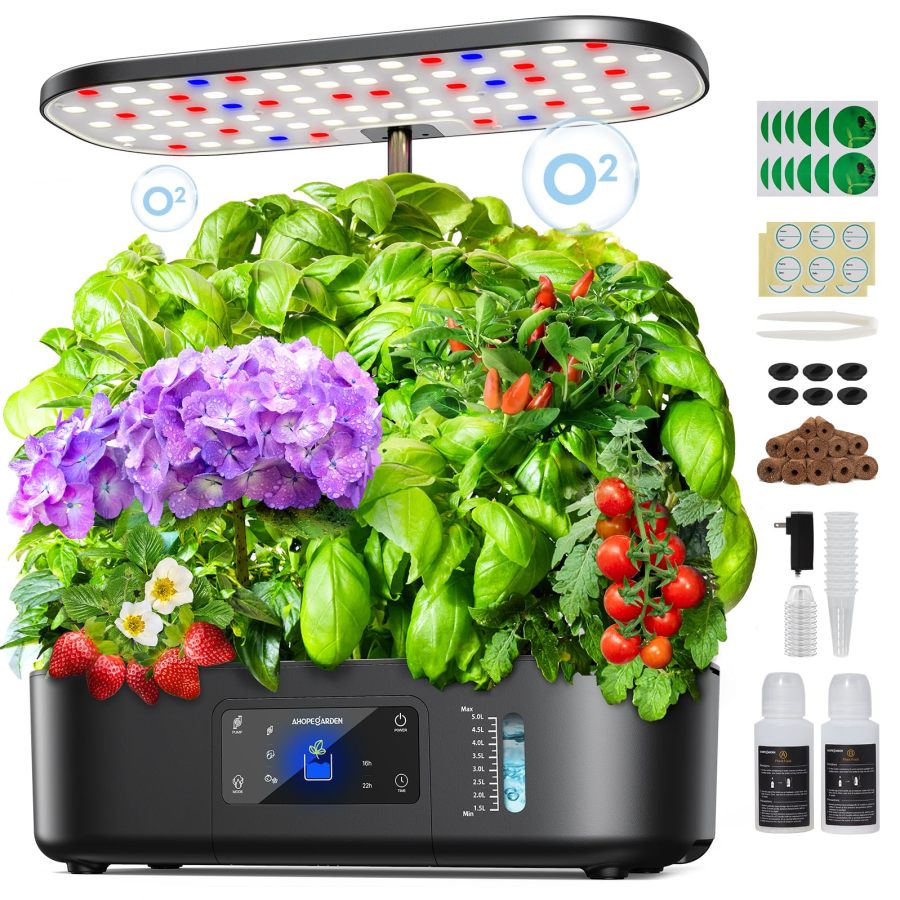
| Growth Speed vs. Actual Results | Claims 300%-500% faster than soil, 3-day germination, 2-week mini forest. | User feedback indicates uneven or failed seed germination, with significant variation in growth speed across crops. For example, B0DFC92VSG seller images show lush tomatoes, but small devices struggle to support them. | Sellers exaggerate overall growth efficiency using ideal scenarios or single-crop data, ignoring seed quality, user operation, and plant variation, leading to a gap between user expectations and reality. |
| Device Durability and Safety | High quality, long-lasting, quiet operation, energy efficient. | Multiple products (e.g., B08DLMRKHM, B0CFQNTGX6, B0C4LLFD59, B0BBN193BK) commonly experience pump or LED light failure within months. Lesujo (B0DY7C47LB) misters even had power cord burnouts, posing fire hazards. | Low reliability of core components severely contradicts 'durable' promises, even presenting electrical safety hazards-a fatal flaw. Sacrificing quality to reduce BOM costs severely damages brand reputation. |
| Growing Capacity and Crop Types | 12 Pods, 15 Pods, etc., large capacity, suitable for large fruits/vegetables like tomatoes, peppers. | User feedback indicates actual growing space is insufficient; large plants shade each other and compete for nutrients. B0DFC92VSG tomato images are accused of being photoshopped; users of B07CKVMXHR and B0BBN193BK mention large plants are unsuitable or require frequent pruning. | Sellers overstate the growing potential of small-sized devices, ignoring the physical space and light range limitations of plant growth, leading to inflated user expectations for actual yield. |
Key Takeaway: The market exhibits widespread parameter inflation and scenario-based experience exaggeration, especially regarding growth speed, large crop growing capability, and long-term device reliability.
VII. Supply-Demand Misalignment Analysis
The table below highlights mismatches between seller focus and buyer priorities:
| Dimension | Seller Behavior | User Focus | Verdict |
|---|---|---|---|
| True Device Lifespan and After-Sales Service | Sellers generally promote 'easy to use,' 'efficient,' 'healthy,' but rarely mention expected lifespan of core components or specific warranty promises, only responding reactively after product failure. | Users strongly complain about pumps and lights failing within short periods, and slow or ineffective after-sales service, perceiving products as not durable. | Sellers collectively avoid the consumer's most critical concern-product durability and long-term reliability-leading users to feel neglected on core value, a key driver of negative word-of-mouth. |
| Algae Growth and Cleaning Convenience | Some products promote light-blocking designs (e.g., B0BDRG7TDY), but most sellers remain silent on algae issues, failing to provide proactive solutions or preventive guidance. | Users frequently mention algae growth in reviews, affecting water quality, plant health, and increasing manual cleaning hassle, finding current design insufficient. | Sellers overlook the common, high-frequency issue of algae in hydroponic systems, failing to make prevention and cleaning convenience a core selling point, leading to compromised user experience and increased maintenance burden. |
| Smart Features vs. Basic Usability Balance | Some products overemphasize APP/WiFi control (e.g., LetPot series), often neglecting novice users' needs for basic function stability and intuitive operation, sometimes even complicating operation. | While interested in smart apps, users prioritize basic experiences like 'easy to set up' and 'no expertise needed.' If smart features introduce new complexity or instability, they create negative experiences. | In pursuing smart upgrades, sellers fail to adequately balance them with fundamental usability, potentially leading to feature bloat that increases user learning curves and operational friction. |
Key Takeaway: Sellers collectively remain silent or downplay core pain points like battery life and magnetic stability, while over-supplying feature-stacking and low-value details, resulting in a supply-demand mismatch.
VIII. Strategic Opportunities & Recommendations
8.1 Long-Lasting, Quiet Core Components, Strengthened Warranty System
8.1.1 Target Audience & Pain Points
⚡️ Pain Points Addressed: Pump/Light Longevity and Stability, Pump Noise.
8.1.2 Action Plan
Adopt ceramic-bearing quiet pumps and longer-life, high-efficiency LED chips; optimize internal structure for heat dissipation. Offer a non-human-damage warranty of 2+ years and emphasize it clearly in the Listing. Establish an official parts store for easy user replacement of wear parts.
| Tech Complexity | Medium |
| Cost Impact | Medium Impact |
| Trade-off Warning | Using higher-quality motors and LED chips may slightly increase unit cost but won't significantly impact product size or weight. |
| Price Band | Only viable above $49.99 |
8.1.3 Marketing Strategy
Lead with 'Quiet Quality, Lasting Companion'; use third-party certifications (e.g., CE/UL lifespan test reports) to prove durability; highlight 'Core Component Upgrade, Exceeding Industry Standards' trust promise.
8.2 Precise Water Level & Anti-Algae Design, Lower Maintenance Burden
8.2.1 Target Audience & Pain Points
⚡️ Pain Points Addressed: Algae Growth Control, Water Level Indicator Accuracy and Low-Water Alerts.
8.2.2 Action Plan
Design a clearer physical water level float less prone to root obstruction or integrate a precise electronic water level sensor. Include full-coverage opaque pod covers by default. Consider anti-microbial coating for tank interior surfaces and optimize tank structure for easy disassembly and cleaning, reducing dead spots.
| Tech Complexity | Low |
| Cost Impact | Low Impact |
| Trade-off Warning | Improving water level sensor or float design won't have significant physical side effects. Opaque pod covers or light-blocking tank design may slightly increase material cost but won't affect functionality. |
| Price Band | Only viable above $29.99 |
8.2.3 Marketing Strategy
Emphasize 'Smart Water Care, Farewell to Algae Worries'; showcase clear water level window and full-coverage pod covers in product images; highlight the user benefit 'Clean & Carefree, Plants Grow Healthy.'
8.3 Practical Space Utilization, Guiding Users to Plant Wisely
8.3.1 Target Audience & Pain Points
⚡️ Pain Points Addressed: Limited Growing Capacity, Light Pole Support Stability, Marketing Exaggeration Regarding Product Size vs. Actual Capacity.
8.3.2 Action Plan
Provide adjustable or removable pod spacing components, allowing users to flexibly adjust density based on plant size. Optimize light pole telescopic structure for secure locking at multiple heights. Clearly label in the product Listing and user manual the suitable crop types and recommended quantities for different pod counts. Include a 'Space Optimization Growing Guide' advising on pruning, crop rotation, or skip-planting to avoid overcrowding.
| Tech Complexity | Low |
| Cost Impact | Low Impact |
| Trade-off Warning | Adjustable spacing might increase mold complexity but significantly improves user experience. Providing more detailed guidance has no physical side effects. |
| Price Band | Only viable above $35.99 |
8.3.3 Marketing Strategy
Lead with 'Small Space, Big Harvest: Smart Planning for Your Mini Farm'; show comparison images of different crops planted optimally; provide 'Expert Space Management Tips' to help users achieve higher yields.
8.4 APP-Integrated Water Quality Monitoring & Professional Growing Plans
8.4.1 Target Audience & Pain Points
⚡️ Pain Points Addressed: Lack of Comprehensive Plant Nutrition Guidance, Insufficient APP Data Quantification.
8.4.2 Action Plan
Integrate accurate pH and EC sensors, displaying real-time data and trends via the APP. Build a rich plant growth database and personalized nutrient solution ratio plans into the APP, automatically recommending adjustments based on monitored data. Consider incorporating AI image recognition to assist in diagnosing plant health issues.
| Tech Complexity | High |
| Cost Impact | High Impact |
| Trade-off Warning | Adding pH/EC sensors and related circuitry significantly increases BOM cost and system complexity, potentially slightly increasing size. Requires balancing cost with user willingness to pay. |
| Price Band | Only viable above $149.99 |
8.4.3 Marketing Strategy
Lead with 'Scientific Gardening, Control Every Growth Cycle'; emphasize 'Professional Water Quality Monitoring, Smart Nutrient Formulas'; use data charts and success cases to attract consumers with high-tech gardening needs.