Amazon US Market Analysis: Car Dent Removal Tools Category
📊 Executive Summary
📈 Market Trends
Strong demand for DIY repair, but market trust is concerning. The suction cup car dent repair tool market is active, with consumers eager for low-cost, convenient self-repair solutions. However, product homogenization is severe, and most sellers over-promote, leading to widespread user skepticism about actual results, creating an urgent need to build trust.
⚡ Major Pain Points
Insufficient core repair effectiveness and poor adhesion stability are critical flaws. Users care most about whether the product can effectively remove dents without damaging paint, but existing products commonly receive feedback of being ineffective on non-shallow, non-flat dents, with suction cups detaching easily and handles breaking. Additionally, the lack of clear usage guides and scope of application exacerbates user disappointment.
💡 Selection Opportunities
Return to product essence, manage user expectations, and implement moderate upgrades. Selection opportunities lie in: 1) Precisely defining the scope of application through transparent communication to manage user expectations. 2) Strengthening suction performance and structural durability to address users' most critical pain points. 3) For advanced users, consider integrating PDR auxiliary tools to provide a more professional solution. 4) Adjust marketing strategy to focus on core value, rather than over-emphasizing 'multi-functionality' which dilutes product efficacy.
I. Analysis Overview
1.1 Introduction & Report Scope
This report analyzes the 'Dent Removal Tools' category (specifically, car dent removal tools) within the Amazon US market, focusing on target User Personas, core needs, decision drivers, market communication, and potential opportunities.
1.2 Category Snapshot
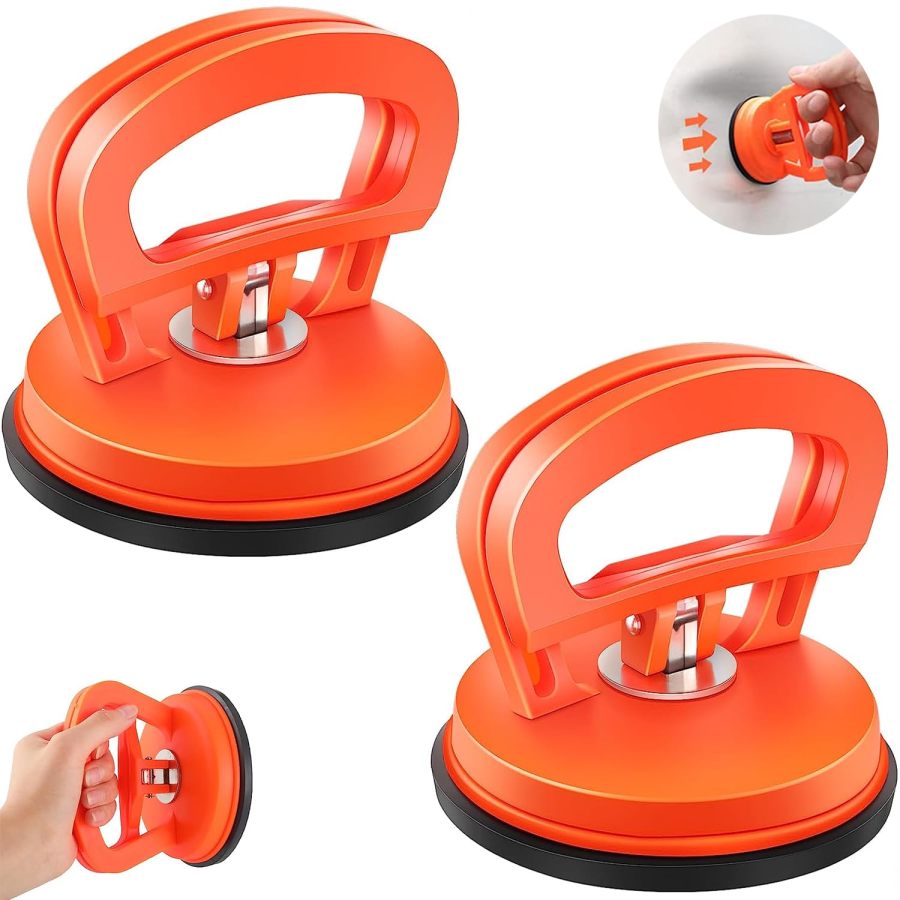
Car dent removal tools (or suction cup dent pullers) primarily use the suction force of cups to repair minor dents on vehicle surfaces via the principle of physical stretching. These tools are sold as DIY kits, typically including suction cups of various sizes, aiming to provide an economical and convenient solution. Their versatility also allows for use in moving glass, tiles, or repairing appliance dents, broadening their application scenarios. The following table illustrates the key characteristics of consumer behavior in this category.
| Dimension | Segment | Description |
|---|---|---|
| Need Driver Type | Emergency-driven / Planned Purchase | Purchases are typically triggered by sudden, minor vehicle damage (e.g., door dings, small scrapes) or as a preparatory measure at home for potential future dent issues. |
| Purchase Frequency | Low / Occasional | These tools are mostly one-time purchases to solve a specific problem or used occasionally for minor repairs across multiple scenarios, not daily consumables. |
| Decision Complexity | Medium | Consumers compare products based on suction power, size, included accessories, ease of use, and price, but do not conduct deep research, placing higher value on real-world effectiveness feedback. |
| Price Sensitivity | Medium-High | While saving on professional repair costs is a core purchase driver, making price an important consideration, the actual repair effectiveness and safety are higher priorities. |
| Emotional Dependency | Medium | The primary driver is functionality and practicality, i.e., restoring the vehicle's appearance. However, the DIY sense of accomplishment and peace of mind from a successful repair also provide a degree of emotional value. |
II. User Personas & Usage Scenarios
2.1 DIY Car Maintainer
🎯 Cost-conscious, enjoys solving minor vehicle issues themselves to avoid the high cost of professional repairs.
| Typical Usage Scenarios | Core Pain Points | Primary Purchase Drivers |
|---|---|---|
|
|
|
2.2 Practical Homeowner
🎯 Seeks multi-purpose tools, hoping for utility beyond car repair, such as for household moving or minor fixes.
| Typical Usage Scenarios | Core Pain Points | Primary Purchase Drivers |
|---|---|---|
|
|
|
III. User Needs Hierarchy (KANO Model)
3.1 Basic Needs (Must-Haves)
- Effective Suction: The suction cup must adhere firmly and stably to the car body or other smooth surfaces without easily detaching. This is the prerequisite for repair; otherwise, the tool is ineffective.
- No Paint Damage: The suction cup's rubber pad should be soft and non-marking to avoid secondary damage to the factory paint during repair, addressing the user's primary concern.
- Easy Operation: The tool design should be intuitive, easy to understand and use, requiring no complex professional guidance, lowering the barrier to entry to meet DIY needs.
3.2 Performance Needs (Linear Satisfiers)
- Strong Suction Power: Provide sufficient suction force to effectively pull out dents of varying degrees and sizes, improving repair success rate and efficiency.
- Multiple Size Options: Include suction cups of different sizes in the kit to accommodate various dent dimensions and shapes, enhancing applicability and flexibility.
- Durable Material: Use high-strength ABS, natural rubber, and sturdy metal cores to ensure long-lasting, reusable tools that are not easily damaged.
- High Cost-Effectiveness: Offer significant cost savings compared to professional body repair, providing an economical and efficient DIY solution that delivers value for money.
3.3 Excitement Needs (Delighters)
- Multi-functional Extensibility: Beyond car dent repair, can also be used for moving glass, tiles, screens, or even as a temporary handle or phone stand, increasing convenience through multi-purpose use.
- Included Accessories: The kit includes items like cleaning cloths, scratch repair cloths, or polishing pads, offering a one-stop cleaning and repair experience that enhances practicality and perceived value.
- Fast Repair Results: Significantly improve or completely repair dents in a short time, saving time and effort and providing instant satisfaction and a sense of achievement.
3.4 Unmet Needs & Opportunities
-
Effectiveness on Irregular/Deep Dents: Existing suction cup tools generally perform poorly on dents with creases, sharp edges, or deep depressions, with low success rates, failing to effectively address this pain point.
User Reviews (VOC) I had a pretty big folded dent non-scratched on my back passenger side door... the large one doesn't actually work on huge dent folds... it's impossible to get it to grip in the big dip of the fold. // The small dent pullers are too weak and pull off from the auto dent far too easily not pulling 4-6" dents from my vehicle body.
-
Suction Cup Adhesion Stability: Some users report suction cups easily detaching during the pulling process, affecting the repair experience and success rate, especially when force is applied, causing interruption and frustration.
User Reviews (VOC) The handle popped off on my second try... // Once attached and pulled on they just pop right off, no impact on the dent whatsoever. // The large puller broke after a few tries.
-
Clear Usage Instructions: Users need more detailed, categorized guidance for different dent types and materials (e.g., metal vs. plastic), along with clear definitions of applicable scope to avoid blind attempts.
User Reviews (VOC) There were no instructions with the dent pullers so reread the description on Amazon... // It would have been nice if they included an instruction manual with that information.
-
Material and Strength Reliability: Some users worry about product quality, feeling that certain parts (e.g., the handle) might break on first use, affecting trust and questioning the claimed 'durability'.
User Reviews (VOC) Felt like it was going to break when I first used it so I just returned it right away. // The metal body is nice and feels good in the hands. I was able to pull out some small dents without creases in my daughter's car.
IV. User Decision Drivers
4.1 Key Decision Factors
- Actual Repair Effectiveness: Whether the tool can effectively and without trace pull out the dent, especially the success rate for small to medium, smooth dents, is the core purchase driver and a potential deal-breaker.
- Ease of Use: Whether the tool is easy to use, if the steps are clear, and if additional preparation (e.g., heating) is needed, directly impacting the user's first experience and willingness to repair.
- Protection of Original Paint: Whether the repair process will scratch or damage the paint is a top user concern, directly related to secondary repair costs and a core safety consideration.
- Suction Strength & Durability: Whether the suction cup's adhesion is strong enough and remains stable during pulling without easy detachment is a key performance indicator determining repair success.
4.2 Secondary Decision Factors
- Cost-Effectiveness: Whether the product price offers good value compared to the repair results and convenience provided, and if it significantly saves on professional repair costs, is an important consideration.
- Multi-functional Uses: Whether the tool can serve other household purposes (e.g., moving glass, repairing appliances) beyond car repair, increasing its utilization and added value.
- Product Material & Durability: The overall quality, and the sturdiness and durability of the handle and suction cup materials, affecting long-term use experience and repurchase intent.
- Kit Completeness: Whether the kit includes suction cups of various sizes or necessary auxiliary cleaning/repair tools (e.g., cleaning cloths, scratch repair cloths) to handle different situations, offering a one-stop experience.
V. Selling Points & Competitive Landscape
5.1 Selling Point Analysis
5.1.1 Standard Features (Points of Parity)
- Strong Suction: Emphasizes the powerful suction of the product's cups, able to firmly adhere and effectively lift dents, appealing to users' focus on efficiency.
- Easy to Use: Promotes a simple operation process, easy for beginners to master quickly without professional skills, lowering the user barrier and highlighting DIY characteristics.
- No Paint Damage: Highlights the softness of the rubber pad, ensuring the repair process won't scratch or damage the paint, alleviating the main user concern and promising damage-free repair.
- Multi-functional Uses: Beyond car dents, can also be used for moving or repairing glass, tiles, screens, furniture, etc., expanding application scenarios and enhancing perceived value.
- Saves Repair Costs: Positioned as an economical alternative to professional body shops, helping users save money, which is a core purchase motivation.
5.1.2 Key Differentiators
- Multi-size Suction Cup Kit: Provides suction cups of different diameters (e.g., large, medium, small) to adapt to dents of various sizes and shapes, improving applicability and flexibility.
- Included Extra Accessories: Some products include auxiliary tools like cleaning cloths, scratch repair cloths, polishing pads, or gloves, offering a more comprehensive solution and increasing kit value.
- Material Upgrade: Emphasizes the use of more durable materials like aluminum alloy or high-strength ABS, enhancing perceived product quality and implying greater pulling strength.
- Upgraded Design: Marketed as '2025 Upgraded Version' or featuring a 'Precision Structure', implying improvements in performance and experience, attracting users seeking the latest technology.
5.1.3 Unique Selling Propositions (USPs)
- Integrated Scratch Repair: A few products offer an all-in-one tool kit covering both dent removal and scratch treatment, providing a more complete vehicle cosmetic solution.
- Camera-Avoidance Design: Very few products mention special designs (e.g., a pull rod) to avoid phone cameras, optimizing the fill-light experience in specific scenarios.
5.2 Competitive Landscape
5.2.1 Market Maturity
The current 'Car Dent Removal Tools' category (especially suction cup types) has entered a mature stage. Core functionalities are highly homogenized, with most products based on the simple suction cup pulling principle. Competition primarily manifests in price, product kit combinations, material emphasis, multi-functionality claims, and brand premium. Although the market is mature, a significant gap remains between consumer expectations for actual repair results and the capabilities of existing products.
5.2.2 Innovation Trends
Current innovation trends mainly revolve around 'kit-ization' and 'material upgrades'. Kit-ization involves adding auxiliary tools (e.g., scratch repair compounds, gloves, towels) to provide a more comprehensive repair experience. Material upgrades aim to enhance the durability and suction strength of the suction cup tools (e.g., using aluminum alloy handles). Additionally, expanding product positioning to a 'household multi-purpose tool' to increase perceived value is a significant market trend. However, truly breakthrough technological innovations that overcome the physical limitations of suction cups to effectively repair complex dents have not yet become widespread in this price segment.
VI. Marketing Claims vs. Reality Check
The table below analyzes the gap between common marketing claims and actual user experiences in this category:
| Dimension | Marketing Claim | User Reality | Verdict |
|---|---|---|---|
| Dent Repair Effectiveness | Powerful suction, easily removes all types of dents, professional-grade repair results. | Numerous user reports indicate poor effectiveness on automotive metal dents. Products are largely ineffective on deeper, creased, or highly curved dents, and even for small dents, they often only provide partial improvement, far below expectations. Some users directly state 'Doesn't work, Waste of money'. | Typical over-marketing that defies basic physics. Simple suction cup pulling is powerless against deep deformation or structural creases in vehicle sheet metal. Over-promising leads to frequent failure in the core function, causing widespread user disappointment. |
| Suction Cup Adhesion Stability | Strong adhesion, secure and won't detach, withstands great pulling force. | Multiple users complain about poor suction cup adhesion, detaching easily during pulling, with some handles breaking on first use. Even with pre-heating as instructed, suction often proves insufficient to maintain pulling force. | The 'strong adhesion' claimed by sellers frequently fails in practice, conflicting with the product's pressure-bearing capacity and material bond strength. This not only affects repair results but may also cause secondary damage from unexpected detachment, resulting in very low user trust. |
| Product Positioning & Usage Scope | Universal tool, widely applicable to all car dents, glass, screens, etc. | Products are often marked 'GLASS SUCTION PLATE' on the bottom, and user feedback indicates limited effectiveness on thicker vehicle metal or plastic bumpers. Instructions frequently mention applicability only to flat, dry surfaces where the dent diameter exceeds the cup size, yet marketing headlines emphasize the universal nature of the 'Car Dent Puller'. | There is a logical confusion in product positioning and marketing. The core design may be more suited for moving flat objects like glass rather than high-strength dent repair, leading to a mismatch between marketing and actual utility, misleading consumers about the product's true capabilities. |
Key Takeaway: The market exhibits widespread parameter inflation and exaggerated scenario-based experience claims, especially regarding dent repair effectiveness and suction stability, where marketing is severely disconnected from reality.
VII. Supply-Demand Misalignment Analysis
The table below highlights mismatches between seller focus and buyer priorities:
| Dimension | Seller Behavior | User Focus | Verdict |
|---|---|---|---|
| Quantification & Applicability of Core Repair Results | Sellers commonly emphasize 'powerful suction', 'professional-grade results', but rarely provide specific repair success rates or limitations for different dent types. Descriptions of effectiveness quantification and applicable scope are vague. | Users care most about 'Can it actually fix my dent?', but existing information fails to provide clear expectations, leading to extreme disappointment after repair failure. | Sellers fail to provide the 'repair result prediction' information users desperately need, instead using empty buzzwords to attract attention. This creates a severe disconnect between user expectations and actual results, directly leading to negative reviews and returns. |
| Actual Suction Cup Stability & Durability | While marketing 'premium materials', 'sturdy and durable', there is a general lack of actual test data on suction cup connection strength or rubber fatigue resistance. No solutions are offered for the common problem of cup detachment. | Users frequently report suction cups detaching easily and handles breaking, questioning product quality and reliability, undermining repair confidence and process safety. | Sellers are silent on critical physical performance and product reliability, leaving product weaknesses for users to discover. This neglect of the core experience is a direct cause of user dissatisfaction and low ratings. |
| Priority of Multi-functional Uses | Most products highlight 'moving glass, as a phone stand' as important selling points, emphasizing multi-purpose use, sometimes heavily promoting it even when core repair functionality is questionable. | When a product fails to repair even basic car dents, users view other add-on functions as 'gimmicky' and are unwilling to pay for non-essential multi-functionality. | Sellers pile on secondary functions to increase perceived value. However, when the core function (dent repair) fails to deliver, these 'multi-functions' reinforce the impression of the product being 'flashy but impractical', representing typical ineffective competition. |
Key Takeaway: Sellers generally oversupply on irrelevant add-on features and vague 'upgrade' concepts, while collectively neglecting or downplaying users' key pain points regarding core dent repair effectiveness and suction cup stability.
VIII. Strategic Opportunities & Recommendations
8.1 Set Precise User Expectations, Provide Categorized Repair Solutions
8.1.1 Target Audience & Pain Points
⚡️ Pain Points Addressed: Insufficient effectiveness on irregular/deep dents; Lack of clear usage instructions.
8.1.2 Action Plan
On listings and packaging, use clear graphics/text/video to strictly define applicable dent types (e.g., only for smooth depressions >5cm diameter, <2mm depth) and explicitly state non-applicable scenarios (e.g., sharp creases, paint damage, plastic bumpers). Provide detailed dent self-assessment guides and repair technique video tutorials.
| Tech Complexity | Low |
| Cost Impact | Low Impact |
| Trade-off Warning | No significant physical side effects, primarily optimizing information architecture and marketing strategy. |
| Price Band | Only viable above $12.99 |
8.1.3 Marketing Strategy
Emphasize 'Must Read Before Buying: Your Dent, My Solution?'; Introduce a 'Dent Self-Assessment Toolkit' to guide proper selection. Highlight 'Transparent Promise, Goodbye to Blind Purchases' to build consumer trust.
8.2 Enhance Suction Cup Adhesion & Structural Durability
8.2.1 Target Audience & Pain Points
⚡️ Pain Points Addressed: Insufficient suction cup adhesion stability; Questionable material and strength reliability.
8.2.2 Action Plan
Use higher-quality natural rubber, optimize suction cup edge seal design to reduce air leakage. Reinforce the connection structure between handle and suction cup (e.g., integrated molding or metal reinforcement) to prevent detachment/breakage under high pulling force. Consider adding a vacuum indicator ring to visually confirm secure adhesion.
| Tech Complexity | Medium |
| Cost Impact | Medium Impact |
| Trade-off Warning | May slightly increase product weight or manufacturing cost, but controllable through optimized structure and materials. |
| Price Band | Only viable above $15.99 |
8.2.3 Marketing Strategy
Promote 'Industrial-Grade Adhesion, Unbreakable'; Market as 'Tested through XX pulls, long-lasting durability'; Emphasize 'Repair with Peace of Mind, Goodbye to Secondary Damage Risk'. Provide destructive testing videos to increase trust.
8.3 Offer Targeted PDR (Paintless Dent Repair) Auxiliary Kit
8.3.1 Target Audience & Pain Points
⚡️ Pain Points Addressed: Insufficient effectiveness on irregular/deep dents; Lack of professional functionality.
8.3.2 Action Plan
Add professional PDR tools to the suction cup kit, such as pry bars of various shapes, tapping pens, hammers, heat guns/pens, etc. Provide detailed graphic/video tutorials on how to use suction cups in conjunction with these tools for precise repair.
| Tech Complexity | Medium |
| Cost Impact | High Impact |
| Trade-off Warning | The increased number and complexity of tools will significantly raise product cost and size, potentially affecting portability. |
| Price Band | Only viable above $49.99 |
8.3.3 Marketing Strategy
Position as a 'Semi-Professional PDR Solution'; Emphasize 'Beyond Suction Cup Limits, Handle Complex Dents'; Highlight 'One-Stop Solution, Save Big on Professional Shop Fees'.
8.4 Simplify Multi-functionality Claims, Focus on Core Value
8.4.1 Target Audience & Pain Points
⚡️ Pain Points Addressed: Misalignment between multi-functionality marketing and user core needs.
8.4.2 Action Plan
No product changes needed. Shift marketing focus from 'multi-function' to the effectiveness of the 'core function'. De-emphasize non-automotive uses in main images and titles. Mention them concisely in bullet points but not as core selling points. Ensure claims about car dent repair are truthful and credible.
| Tech Complexity | Low |
| Cost Impact | Low Impact |
| Trade-off Warning | No physical side effects, mainly adjusting marketing focus. |
| Price Band | Only viable above $9.99 |
8.4.3 Marketing Strategy
Emphasize 'A Reliable Tool Focused on Car Dent Repair'; Position multi-functionality as a 'pleasant surprise' rather than a 'core promise'. Strengthen the product's real-world effectiveness on car repair through authentic user cases and comparison images.