Amazon US Market Analysis: Baby Playpens Category
📊 Executive Summary
📈 Market Trends
Safety is the foundation, portability and integration are mainstream. The baby playpen market is maturing, with products commonly offering large space, easy assembly, and basic safety. Consumer demand for products that easily blend into homes and deploy/store quickly is growing. Feature integration (e.g., with mats, toys) is becoming a competitive focus.
⚡ Major Pain Points
Weak mats, ineffective suction cups, and material odor are major flaws. Users commonly complain about poor comfort and slip resistance of included mats, unstable suction cup fixation on smooth floors, and chemical odors upon unboxing. Additionally, frequent issues with zipper and connector durability directly impact product lifespan and safety trust.
💡 Selection Opportunities
Deepen user experience, deliver on safety and convenience. Market opportunities lie in addressing deep-seated consumer concerns about bottom cushioning, product durability, and unboxing odor. Develop 'high-cushion, anti-slip integrated' playpens, offer 'ultra-durable & warranty-upgraded' and 'chemical-odor-free, eco-friendly' products. Simultaneously explore the high-end niche of 'extremely compact, quick-fold portable' models to win the market with differentiated advantages.
I. Analysis Overview
1.1 Introduction & Report Scope
This report analyzes the 'Playards' category (baby playpens) in the Amazon US market, focusing on target user personas, core needs, decision factors, market communication, and potential opportunities.
1.2 Category Snapshot
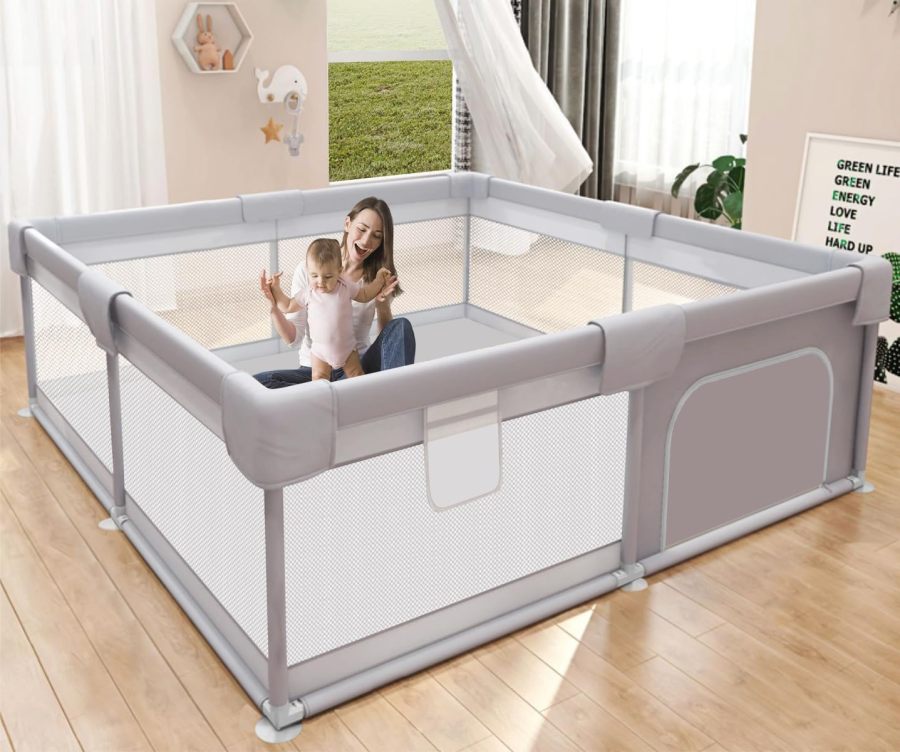
A baby playpen is a secure play area specifically designed for infants and toddlers, providing a confined yet spacious space for crawling, standing, and playing. Products in this category are primarily divided into lightweight, transparent mesh playpens; flexible plastic panel playpens often featuring activity panels; and aesthetically pleasing, sturdy wooden playpens. Their core function is to free up parents' hands, ensure child safety, and encourage independent exploration. The following table illustrates the key characteristics of consumer behavior in this category.
| Dimension | Segment | Description |
|---|---|---|
| Need Driver Type | Planned Purchase/Emergency-driven Purchase | Parents typically plan the purchase in advance before their baby starts crawling or standing to ensure activity safety. They may also make an emergency purchase due to a baby's sudden mobility, addressing an immediate supervision challenge. |
| Purchase Frequency | Low Frequency | Typically purchased once per family, or repurchased in small quantities as needed (e.g., to expand the area or add a portable model). Not a daily consumable. |
| Decision Complexity | Medium | Users need to consider multiple dimensions for decision-making, including safety, size, material, ease of use, portability, and value for money. |
| Price Sensitivity | Medium to High | Price is an important consideration, but within children's safety products, the trade-off between safety, functionality, and value for money is prioritized over low price alone. |
| Emotional Dependency | Medium | Primarily based on functional benefits (safety protection, supervision convenience), but the baby's comfort, developmental promotion, and parents' peace of mind also carry significant weight. |
II. User Personas & Usage Scenarios
2.1 Practical & Value-Conscious Parents
🎯 Focus on value for money, seeking a playpen that effectively frees up their hands and ensures child safety, without taking up too much space or being complex to install.
| Typical Usage Scenarios | Core Pain Points | Primary Purchase Drivers |
|---|---|---|
|
|
|
2.2 Modern Home Aesthetics Parents
🎯 Focus not only on the playpen's practicality but also on how well its appearance integrates with home decor, and its ease of storage and adaptation to different spaces.
| Typical Usage Scenarios | Core Pain Points | Primary Purchase Drivers |
|---|---|---|
|
|
|
III. User Needs Hierarchy (KANO Model)
3.1 Basic Needs (Must-Haves)
- Safety & Stability: The playpen structure must be sturdy, not prone to tipping or moving, ensuring the baby's safety while playing inside, with no sharp edges or pinching risks.
- Non-Toxic Materials: Product materials must meet safety standards (e.g., CPSC, ASTM certifications), free from harmful substances like BPA, ensuring the baby's health.
- Sufficient Space: The interior space should be spacious enough to meet the baby's needs for crawling, standing, toddling, and playing, without feeling cramped.
- Easy Observation: The design should ensure parents can clearly observe the baby's activities 360 degrees (e.g., breathable mesh or transparent panels), allowing constant monitoring.
3.2 Performance Needs (Linear Satisfiers)
- Easy Assembly: The installation process should be simple and quick, requiring no special tools, and can be completed by one person in a short time, saving parents' energy.
- Portable Storage: The product should have folding or disassembly functions for easy movement between rooms at home, storage, or carrying on outings, without taking up too much space.
- Easy to Clean: Playpen materials should be easy to wipe or wash, facilitating daily hygiene maintenance and keeping the baby's play environment clean.
- Durability: The product should withstand the baby's daily pushing, bumping, and climbing, not easily damaged or torn, with a relatively long service life.
- Gate Design: The playpen should have a convenient gate for adult entry/exit, equipped with a safety lock the child cannot open independently, enhancing convenience and safety.
3.3 Excitement Needs (Delighters)
- Included Play Mat: The playpen comes with a thick, non-slip, waterproof, and comfortable mat, eliminating the need for a separate purchase, providing a soft play foundation, and enhancing the overall experience.
- Integrated Toys: Activity panels feature educational, sensory toys (e.g., bead mazes, gears, mini soccer goals), increasing play fun and promoting early development.
- Adjustable Shape: Panels can be flexibly combined to adapt to different room layouts or form specific shapes (e.g., circle, rectangle), increasing spatial adaptability.
- Home Aesthetics: Product design integrates with modern home styles, using natural wood or minimalist color tones, enhancing product quality and making it a visual asset in the home.
3.4 Unmet Needs & Opportunities
- Play Mat Thickness & Slip Resistance: Most mesh playpens' included mats are too thin, offering poor cushioning, or the base lacks sufficient slip resistance, causing sliding. This can lead to potential injuries during play or overall instability of the playpen.
- Material Odor: Some products (especially plastic ones) may have noticeable odors when first unboxed, raising parental concerns about chemical composition and baby's health, impacting the initial use experience.
- Zipper/Connector Durability: Zippers on some mesh playpens are prone to tearing, or connectors on plastic/wooden playpens are not sturdy enough, becoming loose or breaking after prolonged use, directly affecting product lifespan and safety.
- True Portability: Although advertised as foldable, some products remain bulky when packed, or the assembly/disassembly process is still cumbersome, not suitable for frequent moving or outdoor use, failing to meet expectations.
IV. User Decision Drivers
4.1 Key Decision Factors
- Safety: Includes whether materials are non-toxic and harmless, structure is solid and stable, height is sufficient to prevent climbing, and whether there are anti-pinch designs, etc. This is the primary consideration for parents.
- Size & Space: Whether the interior area is sufficient for the baby to crawl, stand, toddle, and play, even accommodating a parent for interaction, and whether it matches the available home space.
- Ease of Use: How convenient and quick the product is to install and disassemble, and how smooth daily use is (e.g., adult entry/exit, cleaning).
- Material Durability: Whether the product material can withstand daily wear and tear and active play, resisting damage, deformation, or aging that could affect lifespan and safety.
4.2 Secondary Decision Factors
- Price/Value for Money: Whether the product price is reasonable and offers good value, considering both functionality and quality, provided core needs are met.
- Portability & Storage: Whether the product is easy to fold, lightweight, convenient to move between rooms at home or carry on outings, and compact when stored.
- Cleaning Convenience: Whether playpen materials are easy to wipe or wash, facilitating daily hygiene maintenance.
- Appearance & Home Compatibility: Whether the product design and color coordinate with home decor, avoiding visual disruption.
- Additional Features: Whether it includes a play mat, toys, or activity panels, providing extra value and interactivity.
V. Selling Points & Competitive Landscape
5.1 Selling Point Analysis
5.1.1 Standard Features (Points of Parity)
- Large Space: Commonly emphasizes capacity for multiple babies or a parent and baby to play together, providing ample activity area, e.g., 50x50 or 74x50 inches.
- Easy Assembly: Highlights no-tools-needed, simple and quick installation, often claiming completion within minutes, saving parents time.
- Safety Certifications: Widely claims compliance with major US safety certifications like CPSC, ASTM, and non-toxic materials (e.g., BPA-free) to alleviate safety concerns.
- 360-Degree View: Often uses breathable mesh or transparent panel designs for easy parental observation of the baby, providing peace of mind.
- Frees Parents' Hands: Emphasizes providing parents with safe, supervised free time to handle chores or rest.
5.1.2 Key Differentiators
- Included Play Mat/Toys: Some products additionally provide a play mat, ball pit, or activity rings, increasing product value and play fun.
- Adjustable/Multi-Shape: Modular panel playpens allow users to adjust the shape and size according to spatial needs, enhancing flexibility.
- Specific Materials: Emphasizes use of solid wood (e.g., New Zealand pine) or high-density polyethylene plastic, waterproof Oxford cloth, highlighting texture, eco-friendliness, and easy cleaning.
- Built-in Activity Panels: Some plastic or wooden playpens feature educational games, bead mazes, gears, or mini soccer goals to engage the baby.
5.1.3 Unique Selling Propositions (USPs)
- Wooden Playpen with Built-in Musical Toys: A few wooden playpens incorporate elements like drums or xylophones, offering unique early music exploration interaction.
- Integrated Thickened Cushioning Protection: Certain mesh playpens claim top connection points are covered with thickened foam or have extra cushioning sleeves at the base to reduce impact injuries.
- US-Made & Brand Heritage: A few brands emphasize products are made in the USA and have a long brand history to build higher trust and quality perception.
- External Storage Pockets: Designs storage pockets on the playpen's exterior for convenient placement of diapers, wipes, and other baby supplies.
5.2 Competitive Landscape
5.2.1 Market Maturity
The baby playpen market is at a medium-high maturity level. Basic product functions and main selling points (e.g., large space, easy assembly, safety) are highly homogenized. The market consists of three main material branches-mesh, plastic, and wood-each attracting different consumers through differentiated features. Price competition is fiercest in the mesh playpen segment, forcing brands to differentiate through detail optimization and added value.
5.2.2 Innovation Trends
Current innovation trends are shifting from pure functionality towards deeper user experience and added value. This includes providing more comfortable, safer play mats, integrating early education interactive elements to promote development, and emphasizing aesthetic design for better integration into modern home environments. Additionally, preference for natural, eco-friendly materials and pursuit of genuine portability are becoming new market drivers.
VI. Marketing Claims vs. Reality Check
The table below analyzes the gap between common marketing claims and actual user experiences in this category:
| Dimension | Marketing Claim | User Reality | Verdict |
|---|---|---|---|
| Bottom Suction Cups & Stability | Upgraded suction cups, firmly fixed to the ground, not easy to tip over, resistant to baby pushing. | Multiple product reviews indicate suction cup strength is insufficient, especially on smooth hardwood floors, leading to easy sliding. The playpen can be pushed or even lifted by the baby. | Sellers overstate the fixing capability of suction cups, failing to fully account for actual home environments and baby activity levels, causing a core safety promise to fall short in users' hands. |
| Included Play Mat Quality | Built-in thick, waterproof, non-slip play mat, creating a comfortable play area. | Multiple product reviews indicate the included mat is too thin, lacking cushioning and comfort, and may even slide, forcing users to purchase a thicker mat separately. | While sellers provide a mat to meet the user's 'all-in-one' need, its quality fails to meet expectations for comfort and safety. This added value becomes negligible, increasing hidden costs for the user. |
| Foldability/Portability | Lightweight and portable, easy to fold and store, fits in a car trunk, usable anytime, anywhere. | Some products remain bulky when folded, or the disassembly/assembly process is tedious and time-consuming, unsuitable for frequent movement or long-distance travel, creating a clear gap with 'portable' and 'quick-fold' claims. | Sellers equate 'detachable' or 'panel assembly' with 'portable and quick-fold,' overlooking the user's need for genuine lightness and rapid deployment, leading to poor experience in key usage scenarios. |
Key Takeaway: The market exhibits a tendency towards generalized feature stacking and exaggerated scenario-based experiences, particularly regarding portability, durability, and mat quality.
VII. Supply-Demand Misalignment Analysis
The table below highlights mismatches between seller focus and buyer priorities:
| Dimension | Seller Behavior | User Focus | Verdict |
|---|---|---|---|
| Bottom Cushioning Safety & Slip Resistance | Commonly emphasize large space and easy assembly. Some products include a thin mat or highlight anti-slip suction cups, but mention of actual cushioning effectiveness and suction cup durability is insufficient. | Users commonly complain mats are too thin, leading to potential falls; suction cups are ineffective on smooth floors; playpens slide easily. This is a core pain point not effectively addressed. | Sellers fail to understand the rigid user need for bottom cushioning safety, providing only a nominal filler. This creates a shortfall in the basic safety experience, requiring additional user investment to solve. |
| Durability of Key Components (Zippers/Connectors) | Sellers commonly emphasize overall 'sturdiness' and 'safety certifications,' but lack clear commitment regarding material and craftsmanship details for wear-prone parts like mesh zippers or plastic connectors. | User feedback indicates zippers are prone to damage, connectors become loose or break easily, causing product failure or safety hazards in the short term, severely impacting long-term experience. | While emphasizing safety at a macro level, sellers are collectively silent on key details that determine product lifespan and long-term reliability, failing to effectively address deep-seated user concerns about quality and durability. |
| Unboxing Odor | Sellers emphasize 'eco-friendly, non-toxic,' 'BPA-free,' but rarely proactively mention or address potential chemical odor issues for new products in actual descriptions or Q&A. | Multiple users complain about strong plastic or chemical odors upon unboxing, requiring extended airing out, raising deep concerns about material safety. | In the infant product category, any odor quickly triggers parental vigilance. Sellers' failure to proactively address this pain point creates a crack in user trust regarding 'non-toxic, eco-friendly' claims. |
Key Takeaway: While emphasizing large space and easy assembly, sellers collectively overlook or underestimate users' deep-seated needs for bottom cushioning safety, key component durability, and true portability.
VIII. Strategic Opportunities & Recommendations
8.1 High-Cushion, Anti-Slip Integrated Playpen
8.1.1 Target Audience & Pain Points
⚡️ Pain Points Addressed: Lack of bottom cushioning leads to potential baby injuries; poor suction cup fixation causes playpen sliding.
8.1.2 Action Plan
Redesign the bottom structure to integrate or mandatorily bundle at least a 1.5cm thick high-density EVA or XPE play mat, ensuring high rebound, waterproofing, and slip resistance. Optimize bottom suction cups using new silicone materials with increased surface area for stable performance on various floor types.
| Tech Complexity | Medium |
| Cost Impact | Medium Impact |
| Trade-off Warning | Mat integration may slightly increase product packaging volume and weight, but the enhanced user experience far outweighs this cost. |
| Price Band | Only viable above $59.99 (mesh) / $159.99 (plastic/wood) |
8.1.3 Marketing Strategy
Emphasize 'Built-in thick mat, softly cushions every tumble.' Use authoritative slip resistance test data and simulated baby play videos to showcase 'Stable as a rock, worry-free safety.' Highlight 'All-in-one solution, saves the hassle of extra shopping.'
8.2 Ultra-Durable & Warranty-Upgraded Playpen
8.2.1 Target Audience & Pain Points
⚡️ Pain Points Addressed: Concerns about zipper and fabric durability; connectors prone to damage; quality control and durability disputes.
8.2.2 Action Plan
Upgrade mesh playpens with high-denier tear-resistant Oxford cloth and YKK-level zippers. Use impact-resistant, wear-resistant HDPE for plastic playpens, optimizing connector snap designs and adding metal reinforcements. Employ stronger mortise and tenon joints for wooden playpens. Offer a 3-5 year limited warranty.
| Tech Complexity | Medium |
| Cost Impact | Medium Impact |
| Trade-off Warning | Sturdier materials may slightly increase product weight or manufacturing cost but significantly extend product lifespan. |
| Price Band | Only viable above $49.99 (mesh) / $129.99 (plastic/wood) |
8.2.3 Marketing Strategy
Emphasize 'Built to last, withstands years of use.' Showcase material tear resistance and connector load-bearing tests. Highlight 'Quality assurance, XX-year worry-free warranty.' Use comparison tests to demonstrate superior durability versus competitors.
8.3 Chemical-Odor-Free, Eco-Friendly Child Playpen
8.3.1 Target Audience & Pain Points
⚡️ Pain Points Addressed: Product has material odor, raising health concerns.
8.3.2 Action Plan
Strengthen material supplier audits in production, using food-grade PP/HDPE or natural pine wood. Implement mandatory pre-shipment airing processes. Use formaldehyde-free adhesives and eco-friendly dyes. Provide third-party TVOC/formaldehyde test reports.
| Tech Complexity | Low |
| Cost Impact | Low Impact |
| Trade-off Warning | May require longer production cycles (for airing out) or use of more expensive odorless additives, but has no physical side effects. |
| Price Band | Only viable above $45.99 (mesh) / $125.99 (plastic/wood) |
8.3.3 Marketing Strategy
Promote 'Pure and odorless, baby breathes healthy.' Emphasize 'Ready to use out of the box, no airing needed.' Strengthen eco-safe commitment with third-party certifications (e.g., GREENGUARD Gold).
8.4 Extremely Compact, Quick-Fold Portable Playpen
8.4.1 Target Audience & Pain Points
⚡️ Pain Points Addressed: Bulky even when folded, takes up storage space; inconvenient for quick storage, unsuitable for frequent movement.
8.4.2 Action Plan
Invest in R&D for patented folding mechanisms enabling one-handed, second-level folding, achieving a folded volume at least 30% smaller than existing products. Use lightweight, high-strength aluminum alloy frames or modular ultra-thin panels. Include a premium carry travel bag.
| Tech Complexity | High |
| Cost Impact | High Impact |
| Trade-off Warning | Extreme compact folding may impose some limitations on unfolded area and height, requiring a trade-off in dimensions. |
| Price Band | Only viable above $79.99 (mesh) / $189.99 (plastic) |
8.4.3 Marketing Strategy
Emphasize 'Folds in a second, ready to go.' Use comparison videos to showcase 'Extreme storage, space-saving.' Highlight 'Travel/visiting essential, baby's mobile playground.'