Amazon US Market Analysis: Smart Dog Training & GPS Tracking Collars Category
📊 Executive Summary
📈 Market Trends
Integration of Intelligence & Multi-Functionality, but User Experience Needs Improvement. The bark collar market is evolving towards multi-functionality and intelligence, integrating automatic bark control, remote training, GPS tracking, and health monitoring. Consumers strongly desire convenient, humane training methods but also have higher expectations for the actual performance of high-tech products (especially app stability, GPS accuracy, battery life), not just feature stacking.
⚡ Major Pain Points
False Triggers, App Failures, and Battery Anxiety are Core Flaws. There's a significant gap between marketing claims of 'smart anti-false trigger' technology and actual performance, especially in multi-dog households. Simultaneously, smart apps have unstable connections, GPS tracking is delayed/inaccurate, and mandatory monthly subscriptions add user burden. Additionally, inflated battery life claims and poor durability of low-end collar materials severely impact user trust and experience.
💡 Selection Opportunities
Deepen User Experience, Solidify Core Features, Offer Flexible Solutions. Market opportunities lie in building competitive advantage through: 1) Developing a Multi-Dog Household Precision Anti-False Trigger & Sync System to solve the core pain point; 2) Providing a Stable, Accurate, Flexible Subscription Smart GPS Tracking solution; 3) Customizing Strap Designs for Long-Haired/Small Dogs to improve comfort and training efficacy; 4) Integrating Positive Reinforcement Training Guidance to upgrade the product into a comprehensive behavior management tool. These opportunities address unmet user needs while avoiding existing product physical and commercial trade-offs, potentially standing out in a competitive market.
I. Analysis Overview
1.1 Introduction & Report Scope
This report analyzes the 'Bark Collars' category (Smart Dog Training & GPS Tracking Collars) within the Amazon US market, focusing on target user personas, core needs, decision drivers, market communication, and potential opportunities.
1.2 Category Snapshot
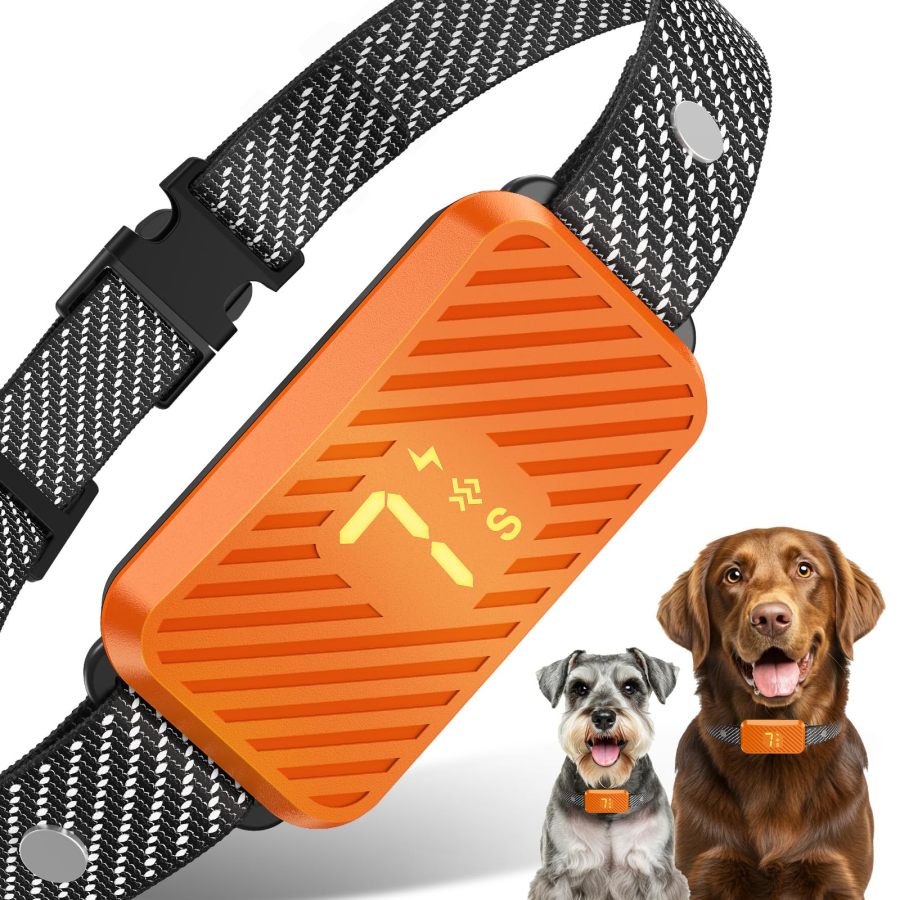
Smart Dog Training & GPS Tracking Collars represent a multi-functional pet wearable category designed to help pet owners address issues like excessive barking, unwanted behaviors, and ensure activity safety via GPS technology. Product functionality is increasingly integrated, evolving from basic bark control and remote training to combining real-time location tracking, virtual fencing, activity, and health data monitoring. This category merges three core functions: behavior correction, safety monitoring, and health management. The following table illustrates the key characteristics of consumer behavior in this category.
| Dimension | Segment | Description |
|---|---|---|
| Need Driver Type | Emergency-driven / Planned Purchase | Purchases are typically driven by the need to solve existing behavioral problems (e.g., excessive barking, running away) or as part of a long-term plan for prevention and enhanced training effectiveness. |
| Purchase Frequency | Low Frequency | Typically a one-time investment with the expectation of long-term use. Repurchase cycles are long unless the product breaks or new features are desired. |
| Decision Complexity | Moderately Complex | Consumers engage in in-depth comparisons of product safety, effectiveness, technical specs (e.g., GPS accuracy, battery life), ease of use, and price, making decisions carefully. |
| Price Sensitivity | Medium to High | Sensitivity is high for basic models, but users are willing to pay a premium for reliable performance and safety to solve core pain points (e.g., dog getting lost, persistent barking). |
| Emotional Dependency | High | Purchase decisions are heavily influenced by deep emotional attachment to the pet's health, safety, and well-being, with a strong preference for humane, non-harmful training methods. |
II. User Personas & Usage Scenarios
2.1 The Noise-Conscious Neighbor
🎯 Lives in apartments or townhouses, faces pressure from neighbor complaints due to a dog's excessive barking, and desires a quick, effective solution to restore peace and maintain harmonious relationships.
| Typical Usage Scenarios | Core Pain Points | Primary Purchase Drivers |
|---|---|---|
|
|
|
2.2 The Outdoor Adventurer & Multi-Dog Household
🎯 Owns multiple dogs, frequently engages in outdoor activities (parks, hiking, training), prioritizes comprehensive behavior training and safety during outings, and needs efficient, multi-functional training and tracking solutions.
| Typical Usage Scenarios | Core Pain Points | Primary Purchase Drivers |
|---|---|---|
|
|
|
2.3 The Tech-Savvy Pet Health Monitor
🎯 Beyond behavior training, is highly focused on the pet's daily health metrics, activity levels, and sleep patterns. Prefers using smart devices for data-driven management, enjoying the convenience and peace of mind technology provides.
| Typical Usage Scenarios | Core Pain Points | Primary Purchase Drivers |
|---|---|---|
|
|
|
III. User Needs Hierarchy (KANO Model)
3.1 Basic Needs (Must-Haves)
- Accurate Bark Detection: Accurately identifies the dog's own bark, avoiding false triggers from external noise or other dogs, ensuring fair training.
- Multiple Correction Modes: Includes at least two harmless correction modes (e.g., beep, vibration) to suit different dog sensitivities.
- Comfortable Fit: Made from skin-friendly, lightweight materials suitable for extended wear without causing skin irritation or movement hindrance.
- Long Battery Life: A single charge lasts at least several days to a week under normal use, minimizing frequent charging hassles.
- Easy to Operate: Setup and use are simple and intuitive, with clear instructions or guidance to lower the learning curve.
3.2 Performance Needs (Linear Satisfiers)
- Adjustable Sensitivity: Offers multiple sensitivity levels to adapt to different barking habits and environments for personalized training.
- Safety Protection Mechanisms: Includes auto-pause functions to prevent over-stimulation or continuous activation, protecting the dog from unnecessary punishment.
- All Breed Sizes: Adjustable sizing fits small to large dogs, reducing purchase barriers.
- Waterproof & Durable: Features high waterproof ratings (IP67/IP68), suitable for outdoor activities and various weather, extending product life.
- Remote Training Function: Includes a remote control for manual command training (beyond just bark control), increasing training flexibility.
3.3 Excitement Needs (Delighters)
- Smart AI Chip: Equipped with advanced AI chips for more precise identification of vocalizations (bark, whine, howl), further reducing false triggers and offering a refined training experience.
- App Control / Data Reports: Allows remote control via smartphone app, viewing usage history, battery status, and generating behavior reports for data-driven management and remote interaction.
- Real-Time GPS & Virtual Fence: Provides precise real-time location tracking and customizable virtual fences with escape alerts, offering ultimate peace of mind for pet safety.
- Health / Activity Monitoring: Tracks steps, activity levels, sleep patterns, and even vital signs like heart/respiration rate, offering comprehensive pet health insights.
- Multi-Dog Sync Training: A single remote or app can control multiple collars simultaneously, enabling independent or synchronized training, ideal for multi-dog households.
3.4 Unmet Needs & Opportunities
-
Anti-False Trigger & Sync for Multi-Dog Homes: In multi-dog households, one dog's bark can falsely trigger another's collar, causing confusion and discomfort; users desire precise identification of individual barks and independent/synchronized training capability.
User Reviews (VOC) when one barks the collar for the other one goes off which it states it shouldn't!!! // if you have multiple dogs and you have it on the bark collar setting, the other dogs' barks can set your dog's collar off. // any dog's bark sets it off.
-
Reliability & Compatibility of Smart App Features: Apps for most smart collars suffer from unstable connections, feature failures, or poor compatibility (especially post-Android updates), leading to a poor user experience.
User Reviews (VOC) the app doesn't work at all // Bluetooth stopped working with android update on all devices. // the app is useless and doesn't work 100% of the time.
-
Timeliness & Accuracy of GPS Tracking: Some GPS trackers have location delays or insufficient accuracy, especially in poor signal areas or complex terrain, impacting emergency response speed.
User Reviews (VOC) Collar didn't work as designed since there is a boundary delay // Bit of a wait when "lost dog" mode is activated. // delays in notifications.
-
Contact Effectiveness for Long-Haired or Special-Breed Dogs: For long-haired dogs, shock/vibration contacts may fail to reach the skin effectively, reducing training efficacy; for small or brachycephalic dogs, the collar body may be too bulky.
User Reviews (VOC) With the prongs removed- the device still works. My dogs neck is too short to b comfortable with prongs. // the rubber sheaths for the contact points have four little prongs on the end that caught my dog's fur.
-
Flexibility in Premium Feature Subscription Models: Advanced GPS and health monitoring features often require mandatory monthly/annual subscriptions; users desire more flexible short-term or pay-as-you-go options.
User Reviews (VOC) it makes you pay for at least one year at a time, not monthly // the license isn't great! We would like this product for 4 months of the year... But the license for the gps can only be paid yearly
-
Product Long-Term Durability & Quality Control: Some products have QC issues like batteries failing to hold charge within months, loose hardware screws, or easily damaged collar materials, undermining user trust and long-term use.
User Reviews (VOC) battery stopped holding charge after around 3 months of use // one of the hardware pieces (a screw that holds part of the collar together) came loose and fell out. // the cheaply made material of the collar did not hold up.
IV. User Decision Drivers
4.1 Key Decision Factors
- Immediate Bark Control/Training Effectiveness: Whether the product can immediately and effectively stop excessive barking or correct unwanted behavior is the primary purchase driver.
- Pet Safety & Humaneness: Ensuring the training process is harmless to the dog; non-shock or mild shock modes are prioritized to avoid over-stimulation and psychological distress.
- False Trigger Rate: Whether the product accurately identifies the dog's bark, avoiding false triggers from other sounds or movements, directly impacting training efficacy and pet comfort.
- Ease of Use & User-Friendliness: Whether setup and daily use are simple and intuitive, and if the remote/app interface is easy to understand and operate.
- Battery Life: How long a single charge lasts, meeting needs for daily training or extended outdoor use, avoiding frequent charging hassles.
4.2 Secondary Decision Factors
- Size & Wearing Comfort: Whether the collar is lightweight, fits well, uses skin-friendly materials, and adapts to different dog sizes and coat types for comfortable long-term wear.
- Waterproof & Durability: Whether it can withstand outdoor elements like rain, water play, and daily wear and tear, ensuring product longevity and reliability.
- Value for Money & Subscription Model: Whether the price is reasonable and offers good value; for smart features, whether subscription fees are transparent and flexible.
- Remote Control Range / Multi-Dog Compatibility: The effective remote control distance and ability to control multiple dogs simultaneously (for remote training collars), enhancing efficiency for multi-dog households.
- GPS Accuracy & Features: The real-time accuracy of GPS tracking and flexibility in setting virtual fences (for tracking collars), ensuring pet safety and preventing loss.
- Customer Service & Warranty: The timeliness and effectiveness of after-sales support, and the strength of warranty promises, impacting long-term user trust.
V. Selling Points & Competitive Landscape
5.1 Selling Point Analysis
5.1.1 Standard Features (Points of Parity)
- Humane & Effective/Safe Training: Emphasizes effective bark control via non-harmful methods (e.g., beep, vibration) or safe, adjustable shock modes.
- Multiple Training Modes: Offers combinations of beep, vibration, static stimulation modes, and multiple sensitivity levels to meet diverse training needs.
- All Breed Sizes: Adjustable collar fits small, medium, and large dogs (8-120lbs+), covering a broad user base.
- Waterproof Design: Highlights IP67/IP68 waterproof ratings, suitable for outdoor use and various weather conditions, expanding usage scenarios.
- Long Battery Life / Fast Charging: Battery life lasts 15-30 days with support for 2-hour fast charging, reducing charging frequency and enhancing convenience.
- Anti-False Trigger Technology: Uses smart detection chips/dual sensors to avoid false triggers from external noise or head movement, improving training precision.
5.1.2 Key Differentiators
- 2-in-1 Function (Bark Control + Training): Combines automatic bark control and remote training functions, offering more usage scenarios and flexibility.
- App Smart Control: Allows remote settings, mode switching, and data viewing via Bluetooth or smartphone app, enhancing the smart experience.
- GPS Tracking / Virtual Fence: Provides real-time location tracking, customizable safe zones, and escape alerts (primarily for GPS products), ensuring pet safety.
- Step/Activity/Health Monitoring: Tracks dog's steps, activity levels, sleep patterns, and even vital signs like heart/respiration rate, meeting scientific pet care needs.
- Color Display / LED Screen: Features an intuitive color LED screen on the collar or remote, displaying mode, battery status, etc., enhancing visual interaction.
5.1.3 Unique Selling Propositions (USPs)
- Dual-Band GPS / Multi-GNSS Connectivity: GPS trackers emphasize L1 & L5 dual-band GPS or connection to multiple global navigation satellite systems, improving positioning accuracy and anti-interference capability.
- Pet AI Assistant: The AI assistant mentioned by SATELLAI products, offering personalized training plans and problem-solving, enabling smarter interaction.
- Remote Dual-Dog Training: A single remote can simultaneously manage and train two dogs with independent control, especially efficient for multi-dog households.
5.2 Competitive Landscape
5.2.1 Market Maturity
The Smart Dog Training & GPS Tracking Collar market is maturing, with basic bark control/training features becoming highly commoditized. Brands compete primarily on price, design details, and additional smart features (e.g., app control, GPS tracking, health monitoring). High-end smart features are forming a new market segment but still face challenges in technical stability and cost.
5.2.2 Innovation Trends
Current innovation trends are evident in: Behavioral Data Management: Integrating apps to provide detailed behavior reports and training data visualization for scientific training. Multi-Function Integration: Combining bark control, remote training, GPS tracking, and health monitoring into a single device to meet one-stop user needs. AI Optimization: Using advanced AI algorithms to improve bark detection accuracy, reduce false triggers, and even offer personalized training advice. Convenient Interaction: Improving user interfaces (e.g., color screens), charging methods (magnetic, USB-C), and app user experience to lower the usage barrier.
VI. Marketing Claims vs. Reality Check
The table below analyzes the gap between common marketing claims and actual user experiences in this category:
| Dimension | Marketing Claim | User Reality | Verdict |
|---|---|---|---|
| Smart Bark Detection Accuracy | Uses advanced AI chips, dual detection, 100% prevents false triggers, accurately identifies the user's own dog's bark. | Users commonly report false triggers in multi-dog households, with external noise, or when the dog yawns; one dog's bark can trigger multiple collars. | Sellers overstate AI chip capabilities without sufficient testing in complex real-world scenarios, causing the core selling point to underdeliver. False trigger issues severely impact user experience and product trust. |
| Smart App Functionality & Stability | Smart app control, stable Bluetooth connection, real-time data display, personalized training, and behavior reports. | Multiple users report unreliable or completely failed Bluetooth connections; apps stop working after Android updates; interfaces are unintuitive; data updates are slow or missing. | Promised smart convenience becomes a frustrating experience in practice. Software quality and compatibility fail to support the hardware's selling points, leading to unmet user ROI expectations for premium smart features. |
| Battery Life & GPS Functionality | Ultra-long battery life (15-30 days or even 1 month), real-time, accurate GPS tracking. | For GPS tracking products with real-time tracking enabled, actual battery life falls far short of claims (often requiring daily charging). Some GPS has delays or fails in weak signal areas (indoors, underground). A physical trade-off exists between high refresh rate tracking and long battery life. | Sellers fail to honestly disclose the real impact of high-power functions on battery life, confusing lab data with real-world usage. This leads to serious user doubts about product reliability, especially regarding expectations for vital sign monitoring and real-time tracking. |
| Collar Material & Wearing Comfort | Skin-friendly, comfortable, suitable for all dog breeds, lightweight, no burden. | Some collars use cheap, easily worn materials with flimsy buckles, even chewable by dogs. For small or long-haired dogs, the collar body may be too bulky, contacts may fail to reach skin effectively, or may tangle fur. | Pursuing 'universality' and 'low cost' sacrifices comfort and training effectiveness for specific dog breeds. This results in vastly different experiences across user groups, failing to deliver on the 'perfect fit' promise. |
Key Takeaway: This category exhibits widespread parameter inflation and over-promotion of technology, especially regarding smart detection, battery life, and app functionality. A significant gap exists between marketing promises and actual user experience.
VII. Supply-Demand Misalignment Analysis
The table below highlights mismatches between seller focus and buyer priorities:
| Dimension | Seller Behavior | User Focus | Verdict |
|---|---|---|---|
| Real-World Accuracy of Smart Detection | Sellers commonly highlight 'AI smart chip,' 'dual detection,' '100% anti-false trigger' as core selling points. | User reviews frequently complain about false triggers in multi-dog environments, from ambient noise, or failure to detect specific low-pitched barks, finding AI claims mismatched with reality and unsatisfactory results. | Sellers over-market 'smart detection' technology without effectively solving the core user pain point in complex real-world scenarios, leading to a significant gap between user expectations and actual experience. |
| Real-World Reliability of Smart App & GPS Features | Premium products heavily promote app remote control, precise GPS tracking, health monitoring, etc., as justification for higher prices. | Users report unstable app connections, feature failures (especially post-Android updates), delayed/inaccurate GPS, and mandatory monthly subscriptions seen as an extra burden, not value-added. | Sellers 'paint a grand vision' for smart features but lack execution in software and hardware, failing to provide a reliable user experience while ignoring strong user demand for subscription fee flexibility. |
| Collar Long-Term Durability & Quality Control | Sellers generally emphasize 'waterproof & durable,' 'long battery life,' but rarely detail specific materials or offer long-term warranties. | User reviews mention batteries failing to charge within months, loose screws, easily damaged collar materials, leading to short product lifespan and user distrust in quality. | Sellers' durability claims are superficial; actual QC fails to keep up. Poor long-term reliability is a frequent negative feedback point, damaging brand reputation and user loyalty. |
| Remote vs. Collar Waterproof Rating Discrepancy | Commonly advertise collar as 'IP67 waterproof' but avoid mentioning remote waterproofing or explicitly state 'not waterproof'. | Users complain about non-waterproof remotes limiting training convenience in damp environments, finding the mismatch with the collar's rating reduces the overall worry-free outdoor experience. | This inconsistency limits the product's practicality in all-weather scenarios, reflecting a seller blind spot in not fully considering the user's integrated experience during product design. |
Key Takeaway: Sellers generally oversupply abstract concepts like 'humane & harmless' and 'AI smart anti-false trigger,' while collectively under-addressing or avoiding user core pain points like 'real-world effectiveness,' 'app stability/reliability,' and 'long-term cost of ownership,' leading to a severe supply-demand mismatch.
VIII. Strategic Opportunities & Recommendations
8.1 Multi-Dog Household Smart Anti-False Trigger & Sync Training System
8.1.1 Target Audience & Pain Points
⚡️ Pain Points Addressed: False trigger issues in multi-dog homes, single-dog training precision, complexity of managing multiple collars.
8.1.2 Action Plan
Develop AI chips with advanced voiceprint or biometric vibration pattern recognition to enable independent bark detection for multiple dogs. Design a master control unit (app or remote) that can connect to and independently control multiple collars, allowing personalized training modes for each dog. Consider adding an indicator showing which dog is barking in real-time.
| Tech Complexity | High |
| Cost Impact | High Impact |
| Trade-off Warning | Requires more complex voiceprint recognition chips and multi-channel communication modules, potentially slightly increasing collar size/weight, but can be minimized via design optimization. High software development cost. |
| Price Band | Only viable above $89.99 (single dog) / $159.99 (dual-dog kit) |
8.1.3 Marketing Strategy
Emphasize 'The Ultimate Solution for Multi-Dog Homes: End False Triggers, Train Each Dog Precisely'; showcase videos of multiple dogs wearing collars with precise identification and correction of a single dog's bark, highlighting 'smart, worry-free, customizable' features.
8.2 Reliable Smart App & GPS Tracking System (On-Demand Subscription)
8.2.1 Target Audience & Pain Points
⚡️ Pain Points Addressed: Unstable app connections, delayed/inaccurate GPS, high mandatory subscription fees.
8.2.2 Action Plan
Prioritize software development to ensure app stability, compatibility (especially post-Android updates), and user experience, offering a more intuitive interface and faster response. Upgrade GPS modules using multi-GNSS or dual-band GPS for improved accuracy and signal reception indoors/in complex environments. Introduce flexible subscription models (monthly/quarterly) or a hybrid model with basic tracking free and premium health/reporting features paid.
| Tech Complexity | Medium |
| Cost Impact | High Impact |
| Trade-off Warning | Upgrading GPS modules (e.g., dual-band) and optimizing battery capacity increases cost and device size; software development requires ongoing investment, but no major physical side effects. |
| Price Band | Only viable above $149.99 (device) + $5.99/month (on-demand subscription) |
8.2.3 Marketing Strategy
Highlight 'The App is No Longer Useless: Stable Connection, Precise Tracking for Every Adventure'; emphasize 'Pay-As-You-Go, No Bundling, Truly Pay for Your Peace of Mind'; provide third-party test reports verifying GPS accuracy and app stability, using user testimonials to showcase 'A Smart Pet Guardian You Can Truly Trust'.
8.3 Universal & Comfortable Contact/Strap System (Adapted for Long-Haired/Brachycephalic Dogs)
8.3.1 Target Audience & Pain Points
⚡️ Pain Points Addressed: Poor contact effectiveness for long-haired dogs, bulky/uncomfortable fit for small/brachycephalic dogs, irritating collar materials.
8.3.2 Action Plan
Design replaceable, diversified contact systems: provide longer, finer conductive probes for long-haired dogs to ensure effective fur penetration; offer shorter, wider skin-friendly contacts for short-haired dogs to increase surface area. Make the collar body smaller and lighter to reduce burden on small dogs. Offer various material options (breathable silicone, soft nylon) and widths, adding replaceable anti-chafe pads.
| Tech Complexity | Low |
| Cost Impact | Low Impact |
| Trade-off Warning | No significant physical side effects, primarily structural and material optimization. May slightly increase accessory variety or mold costs. |
| Price Band | Only viable above $29.99 |
8.3.3 Marketing Strategy
Emphasize 'Tailored for Your Dog: End Chafing, Comfortably Unnoticeable'; use close-up details and images of different breeds wearing the collar to show how the contact system perfectly adapts, avoiding skin irritation and fur tangling. Highlight 'Professional Design, Caring for Every Coat and Build'.
8.4 Bark Collar with Integrated Positive Reinforcement Training Guidance
8.4.1 Target Audience & Pain Points
⚡️ Pain Points Addressed: Users lack scientific training knowledge, view bark collars as punishment tools, desire more humane, effective training methods.
8.4.2 Action Plan
Integrate positive reinforcement training courses designed by professional trainers into the app, including video tutorials, training logs, and behavior tracking modules. Guide users on using the collar's beep/vibration as an auxiliary signal, combined with verbal praise, treats, etc., to encourage good behavior. Offer personalized training plans like a '30-Day Quiet Challenge'.
| Tech Complexity | Low |
| Cost Impact | Low Impact |
| Trade-off Warning | Primarily content and software integration costs, no additional hardware requirements. Must ensure content quality and professionalism. |
| Price Band | Only viable above $34.99 |
8.4.3 Marketing Strategy
Highlight 'More Than Bark Control: A Master in Canine Behavior Management'; emphasize 'Scientific Guidance, Happy Growth, Teaching Your Dog to Be Quiet Through Trust'; showcase user success stories demonstrating dogs' behavioral and emotional improvement through positive reinforcement, not just bark suppression.