Amazon US Market Analysis: Waterproof Phone Pouch Category
📊 Executive Summary
📈 Market Trends
Demand for water activities is surging, presenting huge potential for the waterproof phone pouch market, but homogenized competition and user experience gaps coexist. As outdoor recreation and travel become mainstream, consumer demand for protecting and using phones in waterside and underwater scenarios continues to grow. However, current market products are similar in functional claims, with widespread issues like unstable quality, inconvenient underwater operation, and poor case compatibility, leading to low user trust.
⚡ Major Pain Points
Core pain points center on waterproof reliability, underwater operation barriers, and product durability. Users are most worried about water damage to their phones, but existing products have inconsistent quality control, prone to leakage or breakage. Water pressure causes underwater touchscreen function to basically fail, greatly diminishing the photography experience. Additionally, difficulty fitting large phones with cases, uncomfortable lanyards, and phone overheating seriously impact user experience, becoming frequent complaints and reasons for returns.
💡 Selection Opportunities
Deepening quality, optimizing compatibility, and pragmatic communication are key to breaking through. Market opportunities lie in: 1. Enhancing product durability and quality control consistency, using more reliable materials and processes to build user trust; 2. Optimizing compatibility for large phones with cases, solving the pain point of users unwilling to remove their cases; 3. Improving lanyard comfort and versatility, enhancing wear experience and anti-loss functionality. For underwater touch control, adopt pragmatic marketing, acknowledge physical limitations, explore limited but reliable button interaction, and avoid over-promising. By addressing these core pain points, one can stand out in fierce competition and achieve sustainable growth.
I. Analysis Overview
1.1 Introduction & Report Scope
This report analyzes the 'Dry Bags' category (Waterproof Phone Pouches) on the Amazon US market, focusing on target user personas, core needs, decision drivers, market communication, and potential opportunities.
1.2 Category Snapshot
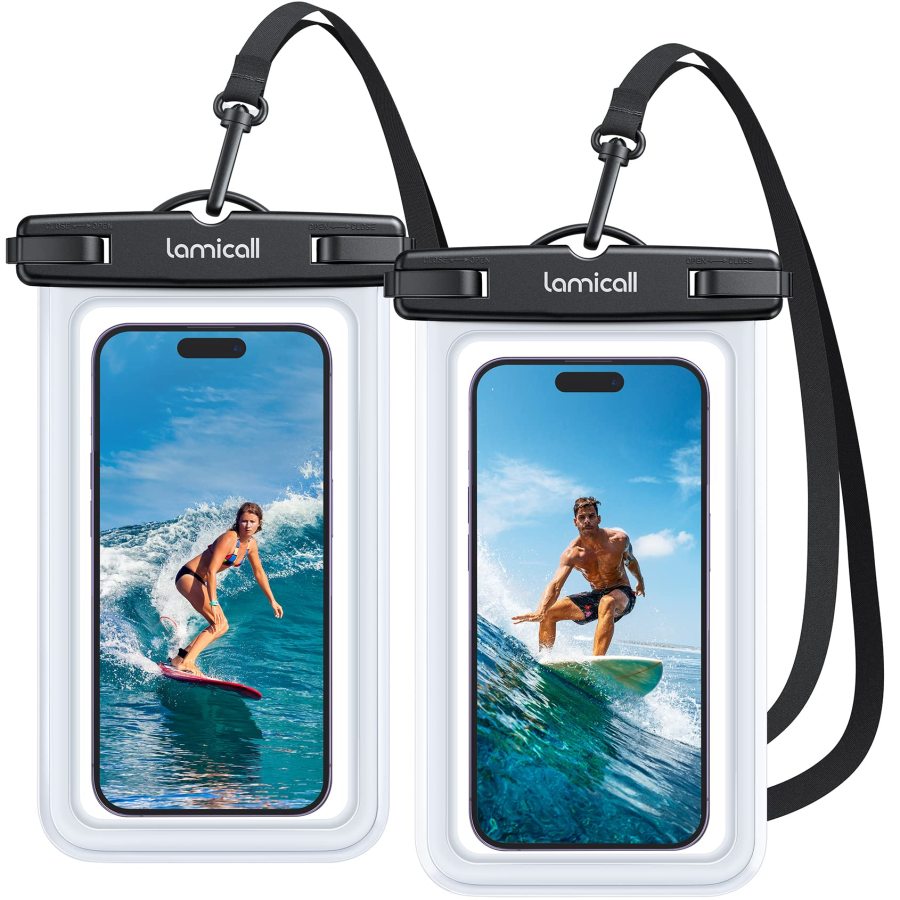
A waterproof phone pouch is a product specifically designed to protect smartphones from water, sand, snow, and dust. It is typically made of transparent waterproof materials like PVC or TPU, equipped with a sealing strip and lock, and includes a lanyard. Its primary function is to keep phones safe and dry in wet environments such as water activities (e.g., swimming, snorkeling, kayaking), beach vacations, or rainy days, while allowing users to perform touchscreen operations and take photos. This category is also commonly used to store small valuables like cash and cards. The following table illustrates the key characteristics of consumer behavior in this category.
| Dimension | Segment | Description |
|---|---|---|
| Need Driver Type | Planned Purchase / Emergency-driven Purchase | Purchases are often made in preparation for upcoming trips, vacations, or water activities, or in response to sudden rain or risk of device exposure to moisture. Multi-pack bundles are also commonly purchased as supplies for family or group outings. |
| Purchase Frequency | Low Frequency / Seasonal | Typically a one-time purchase, with demand spiking mainly before summer, holidays, or peak travel seasons. The repurchase cycle is long unless the product is damaged. |
| Decision Complexity | Relatively Simple | Consumers compare waterproof ratings, size compatibility, price, and reviews. However, due to the product's simple structure, the decision process usually does not involve complex research and leans more towards functional and practical evaluation. |
| Price Sensitivity | Medium-High | Price is an important decision factor, with users generally seeking high value for money. However, they are willing to pay a moderate premium for additional features (e.g., buoyancy, multi-functional storage) or higher reliability. |
| Emotional Dependency | Medium | Primarily provides the peace of mind of 'keeping the phone safe' and the emotional value of 'capturing beautiful moments,' rather than strong brand attachment or self-expression. |
II. User Personas & Usage Scenarios
2.1 Holiday Traveler / Water Activity Enthusiast
🎯 Plans to go to the beach, on a cruise, to a water park, or engage in activities like snorkeling or kayaking. Wants to ensure the safety of their phone and important documents while enjoying the fun, and be able to capture memorable moments at any time.
| Typical Usage Scenarios | Core Pain Points | Primary Purchase Drivers |
|---|---|---|
|
|
|
2.2 Daily Outdoor Pragmatist / Family User
🎯 Uses the product for daily commuting, outdoor hiking, taking kids to water parks, or on rainy days. Focuses on basic waterproof functionality, value for money, and durability. Desires simple and easy operation, suitable for the whole family to share.
| Typical Usage Scenarios | Core Pain Points | Primary Purchase Drivers |
|---|---|---|
|
|
|
III. User Needs Hierarchy (KANO Model)
3.1 Basic Needs (Must-Haves)
- IPX8/IP68 Waterproof Certification: Must meet the industry's highest waterproof and dustproof standards, ensuring the phone stays absolutely dry within specified depths and time limits. This is the core value and prerequisite for purchase.
- Reliable Sealing Mechanism: The lock or sealing strip must be tight, reliable, easy to operate, and consistently form an effective watertight barrier to prevent water, sand, and dust ingress.
- Compatibility with Mainstream Phone Sizes: Must accommodate the majority of mainstream smartphone sizes on the market, ensuring users don't have to worry about fit issues.
- Transparent Touchscreen Window: Must have clear transparent windows on both front and back to facilitate viewing the screen and using the camera.
- Included Lanyard: Provides a basic lanyard for users to hang the phone during activities, freeing their hands.
3.2 Performance Needs (Linear Satisfiers)
- Touchscreen Sensitivity on Water: Touchscreen operation should maintain high sensitivity on the water's surface or in dry environments, not hindering daily use, photography, or information checking.
- Compatibility with Phone Cases: Should easily accommodate phones with everyday protective cases, avoiding the hassle of users having to remove their case before each use, enhancing convenience.
- Clear Underwater Photo Quality: Photos and videos taken underwater should maintain relatively high clarity, without significant blurring or distortion, meeting users' desire to capture underwater scenery.
- Lanyard Comfort & Security: The lanyard material should be soft, width appropriate, comfortable for extended wear without chafing the neck. The connection buckle should be sturdy and reliable to prevent accidental phone drops.
- Overall Product Durability: Materials and craftsmanship should withstand repeated use and outdoor environmental challenges, resisting tearing, wear, or failure to ensure long-term protective capability.
3.3 Excitement Needs (Delighters)
- Buoyancy Design: Built-in buoyancy material allows the pouch to float automatically if the phone accidentally falls in water, preventing it from sinking and getting lost, providing an extra layer of security.
- Built-in Multi-functional Storage: Besides the phone, provides independent card slots or layered pockets to conveniently store cash, credit cards, IDs, etc., enabling multi-purpose use.
- Limited Underwater Touch Control: Through innovative design (e.g., physical buttons or specific area clicks), enables limited touchscreen operations underwater, like starting photo/video capture, rather than relying solely on side buttons.
- Anti-Condensation / Overheat Prevention Design: Effectively reduces internal fogging in environments with large temperature differences or direct sunlight, or aids phone heat dissipation, improving experience in extreme scenarios.
3.4 Unmet Needs & Opportunities
-
Underwater Touchscreen Failure/Sluggishness: Users widely report that once the phone is fully submerged, the touchscreen function completely fails. They can only rely on physical buttons for photos or videos, severely limiting the underwater interactive experience.
User Reviews (VOC) My only complaint is that the touch screen functions are not functional while under water. We took photos using the side buttons, but for videos, I would have to start the video above water, then submerge the phone while recording to capture the underwater videos. // Underwater it was hard to use the touchscreen. I had to use the buttons to take photos and start/stop video while underwater so its functionality was a bit flawed in that regard.
-
Poor Phone Case Compatibility: Despite claims of supporting phones with cases, the actual experience is poor for devices with thick or wallet-style cases. They are difficult to insert or may not seal completely, often forcing users to remove the case before each use.
User Reviews (VOC) I'm using an S23 Ultra with a rather slim case and it was a struggle to get in and just barely fit. // My iPhone max pro could not fit without removing my case.
-
Poor Lanyard Comfort & Durability: Users report that the included neck lanyard material or design is uncomfortable, potentially causing discomfort during prolonged wear; or the connection point is not sturdy, prone to breaking and causing phone loss.
User Reviews (VOC) I found the neck strap to be a bit uncomfortable to wear and ended to replacing it with a generic lanyard while on vacation. // the pouch is really waterproof but the cord is not dependable for its durability because it drops my phone in the middle of my swimming mablybe due tonthe current or waves in the sea.
-
Inconsistent Quality Control / Easy Damage: Issues like leakage, tearing, or lock breakage occur in individual units within multi-packs, causing waterproof failure and short product lifespan. The user experience feels like a 'blind box' gamble.
User Reviews (VOC) 1/2 of them broke. Got water inside // The plastic is made of what feels like a pool floatie. One of my kids accidentally tore the plastic while inserting their phone
-
Phone Overheating Risk: In the sealed environment, especially under direct sunlight or during prolonged use, phone heat dissipation is hindered, easily leading to overheating and automatic shutdown, affecting the user experience and potentially phone lifespan.
User Reviews (VOC) after a short time your phone over heats and the camera will not work. // My phone did get overheated in the pouch with the Texas sun, but I cooled it by submerging it into the river and that solved the problem.
-
Card Scanning Hindered: Some users point out that in scenarios like cruises, cruise cards or room keys may not be successfully scanned through the pouch, requiring them to be taken out, reducing convenience.
User Reviews (VOC) Also sometimes the cruise ship card would not scan through them.
IV. User Decision Drivers
4.1 Key Decision Factors
- Waterproof Reliability: This is the fundamental purpose of buying a waterproof phone pouch. Users are most concerned about whether the product can truly and effectively block water and sand to ensure phone safety. It is the 'deal-breaker' factor.
- Size Compatibility: Whether the product can fit their phone, especially with a protective case, directly impacts ease of use and the purchase decision. It is a core functional metric users focus on.
- Product Durability: Users expect the product to withstand outdoor environmental challenges, not be easily damaged or leak, providing long-term reliable protection to avoid phone damage due to quality issues.
- Touchscreen Fluency on Water: The sensitivity and smoothness of touchscreen operation on the water's surface or in dry environments directly determine the phone's usability and are key to users' evaluation of the product experience.
4.2 Secondary Decision Factors
- Underwater Photo Clarity: While ensuring waterproofing, users hope to take clear photos and videos underwater, which is an important factor in enhancing the product's added value.
- Lanyard Comfort & Security: The lanyard's material, length, and connection sturdiness affect comfort during prolonged wear and the security against phone loss. It's a detail that enhances the user experience.
- Buoyancy Design: Having buoyancy effectively prevents the phone from accidentally sinking, providing users with extra psychological security. It's a highlight of product differentiation.
- Additional Storage Function: Built-in card slots or multi-pocket design, convenient for carrying small items like cash and cards simultaneously, enhances the product's practicality and convenience.
- Value for Money: Especially for multi-pack bundles, users weigh the price per unit against the match of features and quality to determine if it's worth buying.
V. Selling Points & Competitive Landscape
5.1 Selling Point Analysis
5.1.1 Standard Features (Points of Parity)
- IPX8/IP68 Waterproof Certification: The highest waterproof rating emphasized by almost all products, a basic selling point for the category, meeting users' core need for device safety.
- Universal Size Compatibility: Widely claimed to be compatible with most mainstream smartphones on the market, addressing users' concerns about fit.
- Touchscreen-Friendly & Underwater Photography: Emphasizes the transparent window design, allowing users to operate the touchscreen, take photos, and record videos inside the pouch, enhancing usability.
- Suitable for Various Water Activities: Extensively lists scenarios like beach, swimming, snorkeling, kayaking, cruises, highlighting the product's versatility and practicality.
- Included Lanyard: A standard accessory, convenient for users to carry the phone hands-free.
5.1.2 Key Differentiators
- Buoyancy Design: Some products highlight their built-in buoyancy layer, which prevents the phone from sinking, providing extra anti-loss security. A common selling point for mid-to-high-end products.
- Built-in Card Slot / Layered Storage: A few products offer independent card slots or multi-pocket designs, convenient for storing the phone along with cards and cash, adding storage convenience.
- Multi-Pack Bundle Sales: Sold in bundles of 2, 4, 5, or even 100 pieces, emphasizing value for money and family/group sharing value.
- Reinforced Lock / Triple Seal: Some brands emphasize their lock design is more robust or uses multi-layer sealing technology to enhance the perception of waterproof reliability.
- Specific Material (TPU): A few brands emphasize the use of upgraded TPU material, claiming it is more wear-resistant, transparent, and offers better tactile feel.
5.1.3 Unique Selling Propositions (USPs)
- Underwater 'Ice Cube' Touch Button: The TORRAS brand claims its 'IceCube Air Button' design enables touch-click operations underwater, attempting to overcome the physical limitations water pressure imposes on touchscreens. This is a relatively unique innovation in the current market.
- Extra Large Capacity / Compatibility with Cased Phones: A few products (e.g., Rynapac 10-inch model) emphasize their extra-large internal space, easily accommodating large-screen phones with protective cases and other bulkier items, solving specific user pain points.
5.2 Competitive Landscape
5.2.1 Market Maturity
The waterproof phone pouch category has entered a mature stage, with core waterproof functionality being standard. Market competition is intense, product homogenization is severe, and price wars are evident. Most innovations focus on minor adjustments and combinations of existing features (e.g., adding buoyancy, card slots) rather than disruptive technological breakthroughs. User expectations for product reliability, compatibility, and actual experience are continuously rising.
5.2.2 Innovation Trends
Current innovation trends primarily revolve around enhancing user convenience during underwater and cased phone use. For example, buoyancy design and built-in card slots have become means of differentiation. A few brands attempt to break through the technical bottleneck of underwater touch control, but this is still in its early stages, with actual effectiveness yet to be verified. Future innovation may focus more on material durability, anti-condensation/heat dissipation performance, and smarter integrated features (without increasing complexity and cost).
VI. Marketing Claims vs. Reality Check
The table below analyzes the gap between common marketing claims and actual user experiences in this category:
| Dimension | Marketing Claim | User Reality | Verdict |
|---|---|---|---|
| Underwater Touchscreen Function | Touchscreen is sensitive, easy to operate underwater / Unimpeded underwater touch control | Users widely report that underwater, due to water pressure, the touchscreen basically fails. They can only rely on physical buttons for photos or videos. Even with 'innovative' designs, only limited clicking is possible, not smooth interaction. | A classic case of over-marketing that defies physical principles. The impact of water pressure on capacitive screens is a hard physical limitation. Sellers fail to fundamentally solve the problem but exaggerate claims, severely misleading user expectations. |
| Phone Case Compatibility | Universal size, supports phones with cases | Numerous user reports indicate that large-size phones (e.g., Pro Max, Ultra series) with thick cases are difficult to insert or remove, affecting touch control, or even require case removal for use, contradicting marketing claims. | In pursuit of 'one-size-fits-all' compatibility, sellers overlook the physical conflict caused by case thickness, leading to significant shortcomings in product usability and causing user inconvenience. |
| Product Durability & Quality Control | Sturdy and durable, high-quality materials / Military-grade quality | Issues like leakage, tearing, or lock breakage occur in individual units within multi-packs, resulting in short lifespan and inconsistent quality control. Users report materials feeling 'flimsy' and 'break easily'. | A typical case of sacrificing quality control under low-price competition. Sellers use multi-pack strategies to mask individual product quality defects, which is a fatal blow to user trust and severely impacts brand reputation. |
| Phone Overheating Risk | (Generally silent or downplayed) | The sealed pouch, under direct sunlight or during prolonged use, hinders phone heat dissipation, causing the phone to overheat and shut down, potentially affecting battery life. Some listings mention it but do not highlight it as a key point. | Sellers collectively avoid addressing the physical limitation of heat dissipation in a sealed environment, leading to compromised user experience in high-temperature scenarios and potentially affecting phone lifespan. This is a hidden functional defect. |
Key Takeaway: There is a widespread phenomenon of 'disconnect between marketing claims and user experience' in the market, especially regarding underwater touchscreen functionality and phone case compatibility. Sellers tend to over-promise, leading to significant gaps between user expectations and reality, damaging product credibility.
VII. Supply-Demand Misalignment Analysis
The table below highlights mismatches between seller focus and buyer priorities:
| Dimension | Seller Behavior | User Focus | Verdict |
|---|---|---|---|
| Underwater Touchscreen Operation | Widely market sensitive underwater touch control; a few attempt 'innovative' underwater click technology, but insufficient investment in actual effectiveness. | Users report underwater touchscreen is basically ineffective, operation is difficult, affecting the underwater photography experience and fun. | Sellers invest marketing resources in 'underwater touch control' but fail to fundamentally solve the physical limitation, leading to user experience gaps and forming ineffective internal competition, wasting marketing budgets. |
| Product Durability & Quality Control | Widely market 'high quality,' but actual products are prone to damage, leakage, with inconsistent quality control. Sellers collectively avoid addressing these core quality issues. | Users frequently complain about products being easily damaged, leaking, leading to phone damage, and lacking trust in quality. This is a core reason for negative reviews and returns. | Sellers are collectively silent on the most critical aspect of 'reliability,' underestimating users' rigid demand for product quality. This is a fatal shortcoming for brands building long-term trust, directly impacting repurchase rates. |
| Phone Case Compatibility | Widely claim 'universal size,' but do not optimize design or clearly communicate for the actual pain points of phones with cases. | Users complain that phones with cases are difficult to insert or remove, adding pre-use inconvenience, or even requiring case removal, affecting immediate usability. | Sellers fail to understand users' real-world scenario need of 'not wanting to remove the case,' leading to significant shortcomings in product usability, affecting purchase decisions, and missing out on some large-screen phone users. |
| Lanyard Comfort & Security | Generally provide a lanyard, but insufficient optimization of details like material, width, connection sturdiness, rarely mentioned in marketing. | Users report lanyards are uncomfortable (chafes neck) or insecure (prone to breaking), affecting long-term wear experience and the sense of security against phone loss. | Sellers treat the lanyard as a low-value accessory, overlooking its critical impact on user wear experience and device security, leading to missing details in user experience and affecting product reputation. |
Key Takeaway: Sellers generally over-rely on the basic concept of 'IPX8/IP68 waterproof' for marketing, but collectively overlook users' deeper pain points regarding 'underwater operation fluency,' 'convenience with phone cases,' and 'long-term product reliability.' This results in a severe disconnect between product functionality and user expectations.
VIII. Strategic Opportunities & Recommendations
8.1 Enhance Product Durability & Quality Control Consistency
8.1.1 Target Audience & Pain Points
⚡️ Pain Points Addressed: Occasional leakage fatal risk, insufficient long-term durability, extremely low quality control consistency.
8.1.2 Action Plan
Adopt more tear-resistant, anti-aging TPU composite materials. Optimize heat-sealing welding processes. Strengthen the lock structure (e.g., using metal or high-strength PC material, adding anti-misoperation design). Implement stricter production line quality control to ensure consistent waterproof performance across batches. Offer a longer warranty period (e.g., 2 years).
| Tech Complexity | Medium |
| Cost Impact | Medium Impact |
| Trade-off Warning | Using higher-quality materials and stricter processes may slightly increase unit cost but can significantly reduce return rates and negative reviews, enhancing brand reputation. |
| Price Band | Only viable above $12.99 |
8.1.3 Marketing Strategy
Emphasize 'Quality Promise, Leak-Proof Peace of Mind.' Use authoritative institution certifications (e.g., TUV, SGS) and real user extreme test videos (e.g., prolonged immersion, drop resistance) to highlight superior durability and reliability, alleviating user quality concerns.
8.2 Optimize Compatibility for Large Phones with Cases
8.2.1 Target Audience & Pain Points
⚡️ Pain Points Addressed: Limited compatibility for phones with cases, difficulty inserting/removing the phone.
8.2.2 Action Plan
Redesign the pouch's width and entry shape to easily accommodate large-screen phones with thick cases while maintaining seal integrity. Use more elastic and wear-resistant materials at the entry point to reduce friction. Clearly label in product descriptions: 'Compatible with the latest large-screen phones even with thick protective cases.'
| Tech Complexity | Low |
| Cost Impact | Low Impact |
| Trade-off Warning | Slightly increases overall product dimensions but significantly improves user experience and expands product applicability, with almost no negative impact. |
| Price Band | No Price Band Jump |
8.2.3 Marketing Strategy
Highlight 'Large Screen, With Case, Easy Compatibility, Say Goodbye to Removal Hassle.' Use image/video comparisons to demonstrate the easy insertion of a cased phone, eliminating user compatibility concerns. Emphasize 'Plug and Play, Seamlessly Integrate with Your Outdoor Life.'
8.3 Improve Lanyard Comfort & Versatility
8.3.1 Target Audience & Pain Points
⚡️ Pain Points Addressed: Subpar lanyard comfort, durability risk of the lanyard.
8.3.2 Action Plan
Upgrade lanyard material to soft, skin-friendly, moisture-wicking wide flat nylon webbing. Increase adjustable length range to allow for neck, crossbody, or waist wear. Optimize the connection buckle between the lanyard and pouch, using sturdier metal or high-strength plastic, and add a quick-release design for enhanced security.
| Tech Complexity | Low |
| Cost Impact | Low Impact |
| Trade-off Warning | Increases lanyard cost but can significantly boost user satisfaction and product practicality, with no apparent negative impact. |
| Price Band | No Price Band Jump |
8.3.3 Marketing Strategy
Emphasize 'Ergonomic Design, Comfortable for Long-Term Wear,' 'Multi-Scenario Wear, Hands-Free.' Use lifestyle imagery to showcase the comfort and convenience of different wearing methods. Highlight the sturdy connection design to alleviate user concerns about dropping and discomfort.
8.4 Pragmatic Underwater Photography Marketing, Explore Limited Interaction
8.4.1 Target Audience & Pain Points
⚡️ Pain Points Addressed: Underwater touchscreen failure/sluggishness, challenges with underwater photo clarity.
8.4.2 Action Plan
Acknowledge the physical limitations of underwater touchscreens and focus on optimizing the convenience of underwater photo/video capture via physical buttons (e.g., volume buttons). Consider integrating easily pressable physical buttons on the pouch side or designing magnetic operation points for easy underwater mode switching. Simultaneously, optimize the transparent film's anti-reflective and anti-condensation properties to ensure underwater shooting clarity. In marketing, clearly distinguish between on-water and underwater touch experience, positioning underwater functionality as 'limited but reliable button operation.'
| Tech Complexity | Medium |
| Cost Impact | Medium Impact |
| Trade-off Warning | May increase product structural complexity and cost but can provide a differentiated experience. Need to carefully balance functionality and price. |
| Price Band | Only viable above $19.99 |
8.4.3 Marketing Strategy
Highlight 'Underwater Button Direct Control, Easily Capture the Moment.' Use clear product demonstration videos to show specific operations achievable underwater (e.g., shutter, video start). Educate users about the physical limitations of underwater touchscreens, building a pragmatic and credible brand image, avoiding over-promises.