Amazon US Market Analysis: Neck-Worn Reading Lights Category
📊 Executive Summary
📈 Market Trends
Portability and versatility are core; user experience details are becoming key. The neck-worn reading light market is mature, with products generally offering hands-free operation, multi-brightness/color temperature, and flexible goosenecks. Current trends shift from basic feature competition to finer ergonomic design, smart experiences (e.g., battery display, auto-off timer), and deeper exploration of specific scenario needs. Gift attributes are increasingly significant, with consumers expecting more innovation and thoughtful design.
⚡ Major Pain Points
Exaggerated battery life, insufficient durability, and lying-down discomfort are major weaknesses. Users are generally skeptical of advertised ultra-long battery life, with actual high-brightness usage time far below expectations. Additionally, frequent issues like easily damaged flexible arms and rapid battery performance degradation occur. Meanwhile, insufficient comfort from neck back support in lying positions and the lowest brightness being too bright for some sensitive users are key factors affecting long-term satisfaction.
💡 Selection Opportunities
Focus on real battery life, improve durability, and refine comfort. Market opportunities lie in addressing product lifespan pain points through 'Long-Lifespan High-Flexibility' design, building trust with 'Precise Battery Display & Anti-Misactivation Lock,' and launching 'Lying-Down Optimized Ergonomic Neck Lights' to meet specific scenario needs. Additionally, 'Professional-Grade Dim Light Eye Protection' products can create differentiated competitive advantages in niche markets, enabling brand premium and growth.
I. Analysis Overview
1.1 Introduction & Report Scope
This report analyzes the 'Book Lights' category (neck-worn reading lights) within the Amazon US market, focusing on target user personas, core needs, decision drivers, market communication, and potential opportunities.
1.2 Category Snapshot
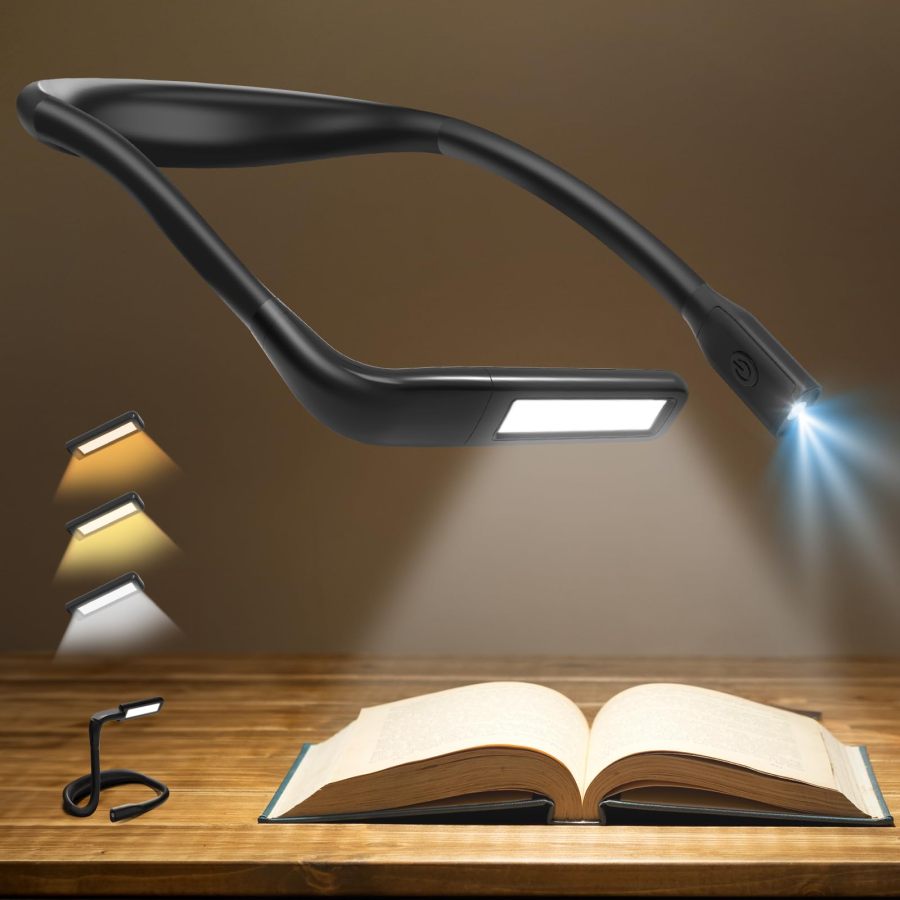
A neck-worn reading light is an innovative portable lighting device designed to provide hands-free, directional, and adjustable illumination. Its core function is to free up the user's hands, meeting the need for close-range activities like reading, crafts, or outdoor tasks in low-light conditions, at night, or when traditional light sources are inconvenient. These products typically feature rechargeable batteries, adjustable brightness/color temperature, and flexible goosenecks. The following table illustrates the key characteristics of consumer behavior in this category.
| Dimension | Segment | Description |
|---|---|---|
| Need Driver Type | Planned Purchase / Emergency-driven Purchase | Purchases often stem from anticipated needs for reading or crafts; they also serve as emergency lighting in sudden low-light situations. This gives the product value in both daily and specific scenarios. |
| Purchase Frequency | Low Frequency / Seasonal | As a durable personal electronics accessory, the usage cycle is long after a single purchase. However, demand as a gift increases significantly during holidays due to its novelty and practicality. |
| Decision Complexity | Medium | Consumers compare brightness, battery life, comfort, feature diversity (e.g., color temperature, timer), and price, requiring some information comparison to decide but not deep technical research. |
| Price Sensitivity | Medium | Price is an important consideration, but users place greater value on the practicality and quality of core functions like hands-free operation, eye protection, and battery life, willing to pay a reasonable premium for a good experience. |
| Emotional Dependency | Medium | The product provides not only basic functional lighting but also emotional value from hands-free convenience, peace of mind from not disturbing a partner, and improved focus, which holds a certain weight in the decision-making process. |
II. User Personas & Usage Scenarios
2.1 At-Home Nighttime Reader
🎯 Enjoys reading in bed or when family members are resting, seeking a private, undisturbed lighting experience.
| Typical Usage Scenarios | Core Pain Points | Primary Purchase Drivers |
|---|---|---|
|
|
|
2.2 Craftsperson / Detail Worker
🎯 Hobbyists engaged in knitting, crocheting, sewing, model building, or repairs requiring both hands and high lighting precision.
| Typical Usage Scenarios | Core Pain Points | Primary Purchase Drivers |
|---|---|---|
|
|
|
2.3 Outdoor / Emergency Lighting User
🎯 Individuals needing lightweight, multifunctional, hands-free lighting for outdoor activities or unexpected situations.
| Typical Usage Scenarios | Core Pain Points | Primary Purchase Drivers |
|---|---|---|
|
|
|
III. User Needs Hierarchy (KANO Model)
3.1 Basic Needs (Must-Haves)
- Basic Illumination: Provide sufficient light for reading or close-up tasks, ensuring the target area is clearly visible.
- Hands-Free Design: Hangs around the neck, freeing both hands for other activities, enhancing multitasking convenience.
- Rechargeable: Built-in battery charged via USB (preferably Type-C), eliminating frequent disposable battery changes-eco-friendly and economical.
- Lightweight: Product is light, comfortable to wear, and causes no neck strain during extended use.
- Flexible Gooseneck: The gooseneck must have good flexibility and shape memory, allowing easy adjustment of lighting angles and maintaining stability.
3.2 Performance Needs (Linear Satisfiers)
- Brightness Adjustment: Offer multiple brightness levels, seamlessly transitioning from dim night light to bright task light, adapting to different lighting environments and personal preferences.
- Color Temperature Adjustment: Provide warm, natural, and cool white light options to meet different visual comfort, focus, or task requirements.
- Long Battery Life: Provide several to tens of hours of continuous illumination at commonly used brightness levels, minimizing frequent charging hassles.
- Non-Disturbing to Others: Focused beam illuminates only the target area with minimal light spill, not affecting surrounding people resting or moving.
- Eye Protection Features: Flicker-free, filtered harmful blue light, soft and even illumination to reduce visual fatigue and damage.
- Ease of Use: Control buttons or touch areas are intuitive and easy to use, allowing quick mode switching or light adjustment with a low learning curve.
3.3 Excitement Needs (Delighters)
- Battery Level Display: Real-time display of remaining battery (e.g., percentage or multi-bar indicator), letting users monitor power to avoid sudden shutdowns.
- Auto-Off Timer: Set automatic shut-off after 15/30/60 minutes, ideal for bedtime reading, helping users fall asleep peacefully while saving power.
- Travel Lock: Equipped with a physical or electronic lock switch to prevent accidental activation in bags or luggage, preserving battery life and ensuring readiness.
- Included Storage Case: Comes with a dedicated portable hard-shell case (EVA Case) for easy transport and product protection, enhancing travel or outing convenience.
- Independent Light Head Control: Left and right light heads can be switched and brightness/color temperature adjusted independently, offering flexible lighting combinations, even using just one side.
3.4 Unmet Needs & Opportunities
-
Insufficient Product Durability: Some users report issues like loose gooseneck connections, broken flexible arms, or rapid battery degradation within 6-12 months, desiring longer lifespan and more stable quality.
User Reviews (VOC) They only last about six months, and then they start coming apart from you, bending limb // Lasted less than expected... One side is now 50% of its original brightness. OK until now. Expected longer life.
-
Poor Lying-Down Comfort: The neck back support design may be too thick or use insufficiently soft material for lying down, causing pressure or discomfort on the neck, affecting the long-term reading experience.
User Reviews (VOC) May be too thick at back of neck❓ While laying propped up in bed need adjusted to find the comfort spot. // I can't wear it around my neck when laying down.
-
Lowest Brightness Still Too Bright: For some light-sensitive users or in extremely dark environments, the lowest brightness setting on existing products may still be too bright, lacking a dimmer, more private lighting option.
User Reviews (VOC) My only gripe is that the lowest setting is still quite bright plus you have to have both sides on at once. // I am pretty sensitive to light, but I still managed to make using it comfortable by only using one light.
-
Opaque Battery Life Data: Sellers commonly advertise '80-hour' or '100-hour' ultra-long battery life without specifying brightness conditions, leading to actual runtime far below expectations during high-brightness use, creating a trust crisis.
User Reviews (VOC) I use the brightest setting and only get about four hours of time out of it before it dies, so I have to charge it every night. I'm not sure what the 80 hours are they're referring to but it definitely does not last that long even on the lowest setting.
-
Accidental Activation Drains Battery: Some products have overly sensitive or poorly placed power switches, easily turning on accidentally in bags, draining the battery and affecting next use.
User Reviews (VOC) make sure to store it somewhere it won't accidentally get switched on. // Went to use this on multiple occasions only to find it drained because it had accidentally been turned on while in my bag.
IV. User Decision Drivers
4.1 Key Decision Factors
- Wearing Comfort: Product weight, neck fit, and material (e.g., silicone) providing a seamless wearing experience, especially during extended use or posture changes.
- Lighting Quality & Effect: Whether light is sufficiently bright and precisely adjustable, with uniform, soft quality free from glare and flicker, directly impacting reading/work experience and eye health.
- Battery Life & Charging Efficiency: Whether battery life is genuinely long-lasting, with a convenient charging port (e.g., Type-C) and fast charging speed, reducing power anxiety during use.
- Light Adjustment Flexibility: Whether the gooseneck and light head can bend and position at multiple angles (e.g., 360°) for precise directional lighting to adapt to different scenarios and postures.
4.2 Secondary Decision Factors
- Versatility & Applicable Scenarios: Beyond reading, whether it effectively meets lighting needs for various scenarios like crafts, outdoor activities, and emergencies.
- Impact on Others: Whether the light is focused, illuminating only the target area, effectively preventing light spill from disturbing nearby resting or active people.
- Product Durability: Whether materials are sturdy and durable, the gooseneck's bending lifespan, and battery long-term stability, determining product lifespan.
- Additional Smart Features: Whether it includes innovative features like battery display, auto-off timer, travel lock, enhancing user convenience and peace of mind.
- Value for Money & Brand: Whether product price aligns with provided features, quality, and brand reputation, serving as the final decision benchmark.
V. Selling Points & Competitive Landscape
5.1 Selling Point Analysis
5.1.1 Standard Features (Points of Parity)
- Hands-Free Design: Nearly all products emphasize neck-worn design, freeing hands for reading, crafts, or outdoor activities.
- Multi-Brightness/Color Temp Adjustment: Generally provide 2-3 color temperature modes (warm, natural, cool white) and multiple brightness levels, meeting basic personalization needs.
- Flexible Adjustable Gooseneck: Products often use bendable flexible goosenecks (usually silicone-covered) for easy user adjustment of lighting angle and direction.
- Rechargeable with Long Battery: Built-in lithium battery, USB-charged (mostly Type-C), advertising runtime from several to tens of hours.
- Lightweight & Comfortable Wear: Emphasize product lightness and ergonomic neck design for long-term wearing comfort.
- Eye Protection & Flicker-Free: Commonly advertise using LED light sources for soft, flicker-free light to reduce eye strain.
- Multi-Scenario Applicability: Marketing copy typically lists various use scenarios like reading, knitting, camping, repairs, highlighting product versatility.
5.1.2 Key Differentiators
- Longer Battery Life Claims: Some products highlight 'theoretical' ultra-long battery life of 80 or even 100+ hours to attract users with high runtime demands.
- Independent Light Head Control: Some products offer independent on/off and brightness/color temperature adjustment for left and right light heads, increasing flexibility and 'partner-friendly' features.
- Specific Material/Ergonomic Optimization: Emphasize skin-friendly silicone, memory foam neck pads, or narrower neck designs to improve comfort in specific scenarios.
- High Color Rendering Index (CRI): A few products highlight CRI≥90 for truer color reproduction, appealing to detail-oriented craft or makeup users.
- Multiple Color Options: Offer more color choices (e.g., pink, olive green, gray) to meet different aesthetic preferences.
5.1.3 Unique Selling Propositions (USPs)
- Real-Time Battery Display: A few premium products integrate LED indicators or digital screens for real-time battery level display, enabling precise battery management.
- Auto-Off Timer Function: Some products feature 15/30/60-minute auto-shutoff, convenient for bedtime use.
- Travel Lock Function: Very few products offer physical or electronic locks to prevent accidental activation during transport, effectively saving battery.
- Included EVA Storage Case: Some products include a hard-shell EVA case, enhancing portability, protection, and gift value.
- Unique Beam Design: E.g., rectangular floodlight combined with circular spotlight, or 90° narrow beam, emphasizing more uniform, directional lighting effects.
5.2 Competitive Landscape
5.2.1 Market Maturity
The neck-worn reading light market has entered a mature stage. Core product functions (hands-free, rechargeable, adjustable light) are highly homogeneous, with little differentiation among brands on basic features. Competition mainly revolves around price, minor feature optimizations (e.g., adjustment sensitivity), additional functions (e.g., battery display, timer), and brand reputation. The overall market lacks disruptive blue ocean opportunities, relying primarily on product detail and user experience improvements to capture market share.
5.2.2 Innovation Trends
Current innovation trends focus on user experience detail improvements, smart features, and ergonomic optimization. Examples include more precise battery management (real-time display, travel lock), eye protection technology better aligned with physiological needs (lower brightness, more amber-like color temperature), and more durable, comfortable flexible goosenecks and neck support designs. Additionally, product packaging and value communication as a 'gift' are increasingly emphasized.
VI. Marketing Claims vs. Reality Check
The table below analyzes the gap between common marketing claims and actual user experiences in this category:
| Dimension | Marketing Claim | User Reality | Verdict |
|---|---|---|---|
| Battery Life | Claims of 80 or even 100-hour ultra-long battery life, lasting weeks on a single charge. | Users commonly report actual runtime of only 2-4 hours on high brightness, severely misaligned with advertised data. Battery life figures within listings are sometimes contradictory. | Typical use of lab-extreme (lowest brightness) data to mislead consumers, failing to deliver on the core promise of usage duration at high brightness, severely damaging user trust. |
| Product Durability | Uses high-quality silicone or sturdy materials, flexible arm withstands thousands of bends, long-lasting durability. | Multiple users report issues like loose gooseneck connections, internal wiring faults, brightness degradation, or product falling apart within 6-12 months. | To pursue cost and lightweight goals, actual materials and structural strength fail to support frequent bending and long-term use, leading to core component failure-a typical mismatch between materials and expected usage intensity. |
| Eye Protection Effectiveness | Professional eye-protection LEDs, blue light filtering, flicker-free, effectively reduce eye strain. | Most products fail to provide specific eye protection technical details (e.g., spectral reports) or third-party authoritative certifications. Users generally find the light soft but lack deeper perception or comparative evidence of eye protection. | 'Eye protection' has become a generic marketing term for the category but lacks actual technical support and verifiable differentiation, reduced to an unconvincing marketing gimmick. |
| Outdoor Water Resistance | Suitable for various scenarios like camping, night running, dog walking. | Product specifications clearly state 'Not Water Resistant' or offer only basic 'splash resistance.' Actual outdoor use, especially in damp or drizzly conditions, carries a risk of damage. | Marketing claims are disconnected from product physical attributes, ignoring the rigid need for water resistance in outdoor scenarios, limiting actual applicability and being misleading. |
Key Takeaway: The neck-worn reading light market is plagued by 'spec inflation' and 'experience exaggeration,' especially regarding battery life, durability, and eye protection features. Marketing promises significantly diverge from actual user experience and common sense.
VII. Supply-Demand Misalignment Analysis
The table below highlights mismatches between seller focus and buyer priorities:
| Dimension | Seller Behavior | User Focus | Verdict |
|---|---|---|---|
| Real Battery Life & Expectation Management | Battery life data in listings is confusing, commonly emphasizing '80+ hour' low-brightness runtime, deliberately avoiding the real shortcoming in high-brightness mode, lacking a unified, credible runtime standard. | Users strongly desire longer-lasting batteries; quick depletion on high brightness is a frequent complaint. Contradictory data causes confusion and concern, damaging trust. | Sellers fail to provide clear, consistent runtime expectations, leading to a lack of trust on a key user concern, a core cause of negative reviews and returns. |
| Neck Comfort When Lying Down | Commonly advertise 'ergonomic design' and 'comfortable wear' but rarely mention or optimize specific comfort issues with the neck back support in a lying position. | Users report the neck back part being too thick or insufficiently soft, causing strong pressure when reading lying down, requiring constant adjustment to find a comfortable spot. | Sellers generalize comfort under ideal conditions, overlooking users' deep need for wearing comfort in specific high-frequency scenarios (like lying down), creating a product experience blind spot. |
| Long-Term Product Durability & Warranty | Listings typically imply product sturdiness but rarely provide specific bend lifespan, drop test data, or generous warranty promises exceeding industry standards. | Users frequently report loose goosenecks, battery degradation, or even product failure within a short time, exposing quality risks and trust deficits in long-term use. | Sellers fail to take concrete action (e.g., publishing test data, offering strong warranties) to alleviate user concerns about product lifespan and quality, hindering reputation building. |
| Lower Brightness & Light-Sensitive Modes | Sellers commonly offer 3-9 brightness levels, but the lowest setting may still be too bright; few products provide extremely dim modes for light-sensitive individuals. | Some light-sensitive users find the current lowest brightness still too glaring, wishing for a softer, less disturbing dim option, even single-side lighting. | The market remains stuck in quantity competition for brightness adjustment, failing to deeply explore the niche needs of light-sensitive users, leaving some user experiences lacking. |
Key Takeaway: Sellers collectively remain silent or downplay high-frequency user pain points like real battery performance, lying-down comfort, and product durability, while oversupplying generic features like 'eye protection,' leading to a mismatch between supply and demand focus.
VIII. Strategic Opportunities & Recommendations
8.1 Long-Lifespan High-Flexibility Neck Light
8.1.1 Target Audience & Pain Points
⚡️ Pain Points Addressed: Insufficient product durability, prone to gooseneck connection damage.
8.1.2 Action Plan
Upgrade the internal gooseneck frame to high-resilience memory alloy or multi-strand steel wire structure. Use anti-aging, tear-resistant silicone. Reinforce connection points between light head and gooseneck, and gooseneck and neck body with internal ribs or metal sleeves for fatigue resistance. Offer a two-year warranty against non-human damage.
| Tech Complexity | Medium |
| Cost Impact | Medium Impact |
| Trade-off Warning | Using higher-quality memory alloy or high-resilience materials may slightly increase product weight (5-10 grams), requiring a balance with portability. |
| Price Band | Only viable above $19.99 |
8.1.3 Marketing Strategy
Emphasize 'Built to Last, Companion for Years'; showcase durability through 10,000-bend test videos; highlight 'Core Material Upgrade, Farewell to Short-Term Wear,' promise two-year worry-free replacement to build trust in brand quality.
8.2 Precise Battery Display & Anti-Misactivation Lock Neck Light
8.2.1 Target Audience & Pain Points
⚡️ Pain Points Addressed: Opaque battery life data, accidental activation drains battery.
8.2.2 Action Plan
Integrate a 4-bar LED or small digital battery display on a prominent part of the neck. Optimize power switch design with recessed buttons or add a physical slide lock/hold-for-3-seconds activation mechanism to completely prevent accidental activation.
| Tech Complexity | Low |
| Cost Impact | Low Impact |
| Trade-off Warning | Adding a micro-LED display or physical lock has minimal impact on product size and weight. |
| Price Band | Only viable above $14.99 |
8.2.3 Marketing Strategy
Highlight 'Precise Power Control, No More Surprise Blackouts'; emphasize 'Anti-Misactivation Lock, Carry with Confidence'; showcase battery display and anti-misactivation features in listing GIFs/videos to reinforce convenience and reliability.
8.3 Lying-Down Optimized Ergonomic Neck Light
8.3.1 Target Audience & Pain Points
⚡️ Pain Points Addressed: Poor lying-down comfort, strong neck pressure.
8.3.2 Action Plan
Redesign the neck back contact area with a flatter, softer memory foam-filled silicone pad that better conforms to cervical curves, reducing pressure when lying on the back or side. Use a ball joint at the gooseneck connection for wider adjustment range.
| Tech Complexity | Medium |
| Cost Impact | Medium Impact |
| Trade-off Warning | Optimizing the neck back structure may require new molds, potentially making the design slightly more complex or sacrificing some universality. |
| Price Band | Only viable above $16.99 |
8.3.3 Marketing Strategy
Emphasize 'Born for Lying Down, Seamless Comfortable Reading'; use comparison images showing neck pressure difference between traditional neck lights and this product in lying positions; highlight 'Professional Support, Read All Night Comfortably,' attracting users seeking ultimate comfort.
8.4 Professional-Grade Dim Light Eye Protection Reading Light
8.4.1 Target Audience & Pain Points
⚡️ Pain Points Addressed: Lowest brightness still too bright, lacking options for light-sensitive individuals.
8.4.2 Action Plan
Add at least two ultra-low brightness modes, with the lowest below 5 lumens. Introduce LEDs with a more amber-like wavelength (below 1800K) to minimize optic nerve stimulation. Provide an independent single-side light activation mode.
| Tech Complexity | Medium |
| Cost Impact | Low Impact |
| Trade-off Warning | May require specific wavelength LEDs or additional dimming modules, with limited cost impact and no significant side effects. |
| Price Band | Only viable above $22.99 |
8.4.3 Marketing Strategy
Highlight 'Designed for Light Sensitivity, Dim & Undisturbing, Gentle on Eyes'; showcase reading effects in ultra-dark environments with the dim mode; emphasize 'Perfect Bedtime Story Companion for Children, Protecting Young Eyes'; enhance trust through professional eye protection certifications.