Amazon US Market Analysis: Baby Rinse Cups Category
📊 Executive Summary
📈 Market Trends
Portability & Safety Are Mainstream, Aesthetic Design Drives Premium. The baby rinse cup market is maturing. Food-grade silicone and 'tear-free' claims are standard. Consumers increasingly care about product design aesthetics and brand story, driving the market towards differentiated products with high visual appeal and better user experience, while eco-friendly concepts are also beginning to influence purchase decisions.
⚡ Major Pain Points
Unstable Splash-Proof Effect, Mold Growth is a Persistent Issue. Despite widespread 'tear-free' claims, water splashing into eyes remains common in actual use, especially with active babies. Additionally, products are prone to mold in humid environments and have hard-to-clean spots, causing hygiene and maintenance headaches for parents. Initial material odor also undermines trust.
💡 Selection Opportunities
Deep Dive into Hygiene Pain Points, Precision Control for Experience Upgrade. Market opportunities lie in addressing the implicit user need for 'comprehensive mold/anti-bacterial protection' by developing the 'Ultimate Anti-Mold & Anti-Bacterial Modular Rinse Cup.' Simultaneously, enhance the stability of the core splash-proof function through 'Multi-Mode/Adaptive Water Flow Design' to suit different babies' needs. Combine with 'Cute & Fun Design with Healthy, Eco-Friendly Material' to create high-value-added products that blend function and aesthetics, meeting the diverse expectations of modern parents.
I. Analysis Overview
1.1 Introduction & Report Scope
This report analyzes the 'Bathroom Safety' category (Baby Rinse Cups) within the Amazon US market, focusing on target user personas, core needs, decision drivers, market communication, and potential opportunities.
1.2 Category Snapshot
A Baby Rinse Cup (or Baby Shampoo Rinser) is specifically designed for children's bath time. Its primary function is to precisely control water flow during hair washing or body rinsing to prevent water or soap from entering the baby's eyes and ears. Products in this category typically feature a cup or pitcher design with a handle, made primarily from food-grade silicone or safe plastic. They aim to provide a safe, comfortable, and easy-to-use bathing experience, with some products also incorporating aesthetic design and playful features. The following table illustrates the key characteristics of consumer behavior in this category.
| Dimension | Segment | Description |
|---|---|---|
| Need Driver Type | Planned Purchase / Emergency-driven Purchase | Parents typically purchase during the newborn preparation phase or seek a solution when the current bathing method causes baby discomfort. There is a strong demand for an immediate solution to the hair-washing pain point. |
| Purchase Frequency | Low Frequency | Typically a one-time purchase that can be used for several years, with a low repurchase rate unless replacement is needed due to product damage, loss, or functional upgrade. |
| Decision Complexity | Medium | Users will compare critical factors such as material safety, splash-proof effectiveness, ease of cleaning, capacity, and price but will not conduct in-depth technical research. |
| Price Sensitivity | Medium | Users are willing to pay a reasonable premium for products that effectively solve pain points (e.g., baby crying) and enhance safety, but still have basic price considerations. |
| Emotional Dependency | Medium-High | Directly linked to reducing parenting stress and ensuring the baby's comfort and sense of security during bath time, carrying significant emotional value and peace-of-mind drivers. |
II. User Personas & Usage Scenarios
2.1 Parents Focused on Baby Comfort & Safety
🎯 These parents prioritize their child's bathing experience. Their primary concern is water or shampoo getting into the child's eyes during hair washing, causing discomfort or crying, which can lead to bath-time resistance.
| Typical Usage Scenarios | Core Pain Points | Primary Purchase Drivers |
|---|---|---|
|
|
|
2.2 Modern Parents Seeking Quality & Aesthetics
🎯 Beyond practical function, these parents also value product material, design aesthetics, and durability. They want parenting products to blend into their home decor, reflecting lifestyle quality.
| Typical Usage Scenarios | Core Pain Points | Primary Purchase Drivers |
|---|---|---|
|
|
|
III. User Needs Hierarchy (KANO Model)
3.1 Basic Needs (Must-Haves)
- Effective Rinsing: The ability to hold water and effectively rinse shampoo and soap from the baby's hair and body. This is the most core and basic function of a rinse cup.
- Easy to Grip: Ergonomic handle design allows for a secure grip even with wet hands, ensuring control during pouring and preventing slippage.
- Sufficient Capacity: Holds enough water for one complete rinse, avoiding the need for frequent refills, improving bathing efficiency, and reducing interruptions.
3.2 Performance Needs (Linear Satisfiers)
- Soft Edge Design: A soft cup rim that conforms to the baby's forehead, effectively preventing water and soap from flowing into the eyes and ears, achieving a tear-free experience.
- Safe, Non-Toxic Material: Made from food-grade silicone, free from BPA/PVC/phthalates, ensuring safety upon contact with the baby and eliminating potential health risks.
- Durable & Drop-Resistant: The product is sturdy and durable, not easily broken, and can withstand being played with or dropped by the baby, extending its lifespan.
- Easy to Clean & Dry: Simple structure with no hard-to-reach spots, preventing grime buildup, easy to wash, and dries quickly to prevent mold, maintaining hygiene.
3.3 Excitement Needs (Delighters)
- Aesthetic Design: Attractive colors and shapes (e.g., whale, dinosaur, pastel colors) that can serve as bathroom decor, enhancing home aesthetics and visual pleasure.
- Multi-Function Water Flow: Offers multiple water flow modes (e.g., shower, waterfall) to suit different ages or preferences, increasing bath-time fun and personalized experience.
- Doubles as a Bath Toy: Made from soft, safe materials with a playful design, can serve as a companion during bath time, increasing interactivity and fun, reducing bath-time resistance.
3.4 Unmet Needs & Opportunities
-
Comprehensive Mold-Prevention Solution: Current market products still have mold issues. Users desire more thorough, long-lasting anti-mold/anti-bacterial technology to ensure hygiene and long-term use.
User Reviews (VOC) 部分用户反馈产品存在快速发霉问题,与部分宣称的"更防霉"相悖,长期卫生维护可能成为痛点.
-
More Precise Water Control & Head Fit: Despite splash-proof designs, some users report water can still accidentally splash into the eyes, especially with active babies, requiring finer water direction and better head contouring.
User Reviews (VOC) Effective, but not fool-proof. The spout is supposed to block water, but sometimes, if you don't angle it right, you'll have water running down that side, over the spout, straight into the kid's eyes. // a me non ha risolto il problema.. cioè l'acqua sugli occhi un po' va lo stesso perchè è talmente arrabbiato al solo pensiero dell'acqua in testa che non tiene la testa indietro tranquillo.
-
Odor-Free Material: Some products have an odor upon first use, affecting the user experience and trust in product safety, which is particularly sensitive for infant products.
User Reviews (VOC) 有用户反馈初次收到时存在轻微化学气味,虽可消散,但可能影响开箱初期印象.
-
Optimized Size for Different Age Groups: Some users feel the product size is too large for newborns or insufficient for older toddlers, hoping for better-sized options to provide the optimal user experience.
User Reviews (VOC) At first glance I thought that this rinser was way too big for my tiny baby. But that's the whole point of it. Since the rinser is big, it can hold more water and I can wash her hair in one go!
IV. User Decision Drivers
4.1 Key Decision Factors
- Splash-Proof Effectiveness: Whether it effectively prevents water and soap from entering the baby's eyes and ears is the user's primary purchase consideration, directly impacting the baby's bathing experience and mood.
- Material Safety & Softness: Whether it uses non-toxic, soft, food-grade materials to ensure safety and no irritation to the baby's skin and head is parents' top safety concern.
- Ease of Use & Grip: Whether it's easy to operate one-handed and if the handle is comfortable and secure determines convenience and control for parents during bath time, especially with wet hands.
4.2 Secondary Decision Factors
- Durability & Mold Resistance: Whether the product is sturdy and durable, and if it will develop mold, discolor, or deform after long-term use, affecting product lifespan and hygiene, is key for repurchase and word-of-mouth.
- Ease of Cleaning: Whether the product structure is easy to clean, has no hard-to-reach spots, and is dishwasher-safe determines daily maintenance convenience, reducing parents' household burden.
- Capacity & Size: Whether the capacity is sufficient and the size is suitable for the baby's use and bathroom storage, impacting bathing efficiency and bathroom tidiness.
- Appearance Design: Whether the product's color and shape are aesthetically pleasing, can blend into the bathroom environment, and enhance home quality and user mood, aligning with modern parents' aesthetic needs.
V. Selling Points & Competitive Landscape
5.1 Selling Point Analysis
5.1.1 Standard Features (Points of Parity)
- Simplifies Bathing Process: Commonly claimed to simplify baby bathing, helping parents rinse soap easily, improving efficiency, and reducing bath-time complexity.
- Food-Grade Silicone/Safe Material: Frequently emphasizes using 100% food-grade silicone or materials free from BPA/PVC/phthalates, safeguarding infant health.
- Comfortable Handle: Almost all products mention having an easy-to-grip handle, ensuring stability and convenience during pouring, preventing slippage.
- Gentle Rinsing/Tear-Free Experience: Achieves a tear-free bathing experience through controlled water flow or soft edge design, representing the category's core value proposition, reducing baby discomfort.
5.1.2 Key Differentiators
- Aesthetic Design/Soft Color Palette: Some brands (e.g., Mushie, Mintlyfe) focus on product appearance, using soft, modern colors and shapes that blend into home aesthetics.
- Splash-Proof Soft Rim: Some products (e.g., Munchkin, Skip Hop) specifically highlight a unique soft rim design that better conforms to the forehead, effectively blocking water and soap.
- Large Capacity: Some products emphasize their large capacity, aiming to reduce refill frequency, improve bathing efficiency, and suit rinsing long hair or older children.
- Easy to Clean/Dishwasher Safe: Promotes that the product is easy to hand-wash or is machine-washable, facilitating daily maintenance, reducing parent burden, and ensuring hygiene.
5.1.3 Unique Selling Propositions (USPs)
- Multi-Mode Water Flow: Frida Baby's rinse cup offers two water flow modes (shower and waterfall), adapting to different age needs. This is a unique selling point that enhances the user experience.
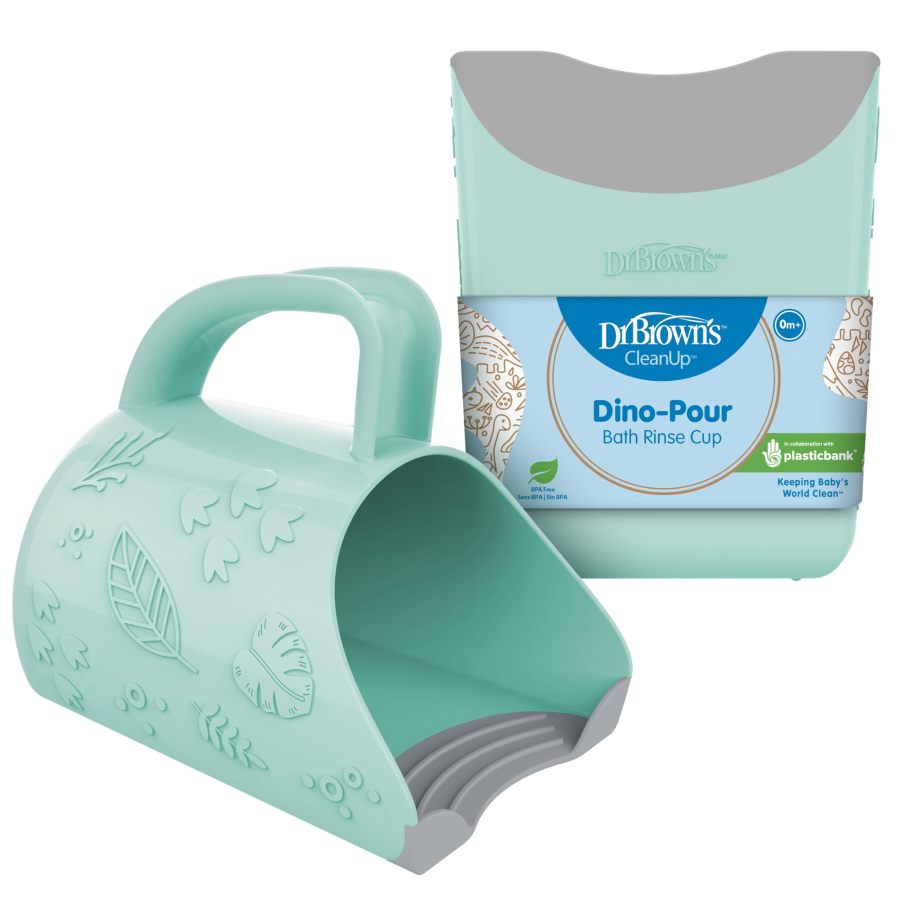
- Eco-Conscious Commitment: Dr. Brown's brand commitment to achieving 'Plastic Neutrality' through partnerships with environmental organizations reflects corporate social responsibility, attracting eco-conscious consumers.
- Unique Shape Design: Skip Hop's whale shape, Dr. Brown's dinosaur shape, and Munchkin's teardrop design add product fun and distinctiveness while maintaining functionality.
5.2 Competitive Landscape
5.2.1 Market Maturity
The baby rinse cup market is at a medium-high maturity stage. Core functions (rinsing, splash-proof) have become standard, and product homogenization is relatively high. The competitive focus has shifted from 'having the function' to 'how well it works' and 'how good it looks.' The market seeks differentiation through material upgrades (from hard plastic to silicone), design aesthetics (premium colors, minimalist shapes), and feature innovation (e.g., multi-mode water flow).
5.2.2 Innovation Trends
Current innovation trends are evident in several areas: First, material upgrades from traditional hard plastic to food-grade silicone to enhance softness, safety, and bump protection. Second, elevated design aesthetics, with product appearance and color increasingly focused on blending with modern home styles, pursuing simplicity and a premium feel. Third, refined water flow control, with some products beginning to offer multi-mode water flow or optimized drainage design to provide a more thorough tear-free experience. Fourth, extended brand value, such as incorporating eco-friendly concepts or forming product sets with other bath items to enhance brand premium.
VI. Marketing Claims vs. Reality Check
The table below analyzes the gap between common marketing claims and actual user experiences in this category:
| Dimension | Marketing Claim | User Reality | Verdict |
|---|---|---|---|
| Splash-Proof Effectiveness | Patented design achieves absolute 'tear-free' rinsing, ensuring not a single drop of water or soap escapes. | User feedback indicates that in actual use, especially with active babies or improper pouring angles, water can still enter the eyes from the sides or gaps. It is not 100% leak-proof in all scenarios. | Sellers oversimplify the complexity of real-world operation, presenting the splash-proof effect under ideal conditions as an absolute promise. Users expect reliable splash-proofing across various dynamic scenarios, not just under perfect operation. |
| Cleaning & Mold Prevention | Product is easy to clean, dishwasher safe, and maintains hygiene long-term. | Some silicone products (especially those with textures or complex structures) are noted by users to have water retention and mold issues, are difficult to dry thoroughly, affecting long-term hygiene. | The 'easy to clean' claim does not fully address the long-term hygiene pain point of 'mold prevention.' Sellers fail to provide effective anti-mold solutions or designs, leading to hygiene concerns for the product in humid environments over time. |
| Material Safety | 100% food-grade silicone, non-toxic, harmless, completely odor-free. | Some users report a slight chemical odor upon unboxing. Although it dissipates, for infant products, an initial odor raises parental concerns about product safety. | While the material itself is safe, the initial odor reflects potential issues in the manufacturing process or packaging/storage, creating a gap with the 'absolutely odor-free' claim and impacting the user's first impression of product purity. |
Key Takeaway: The baby rinse cup market exhibits widespread scenario-based exaggeration and ambiguous parameter claims, especially regarding promises of 'completely tear-free' and 'easy to clean,' which often fail to fully meet user expectations.
VII. Supply-Demand Misalignment Analysis
The table below highlights mismatches between seller focus and buyer priorities:
| Dimension | Seller Behavior | User Focus | Verdict |
|---|---|---|---|
| Stability of Complete Tear-Free Experience | Sellers commonly emphasize 'tear-free bathing,' 'controlled water flow,' positioning splash-proofing as a core selling point, but few products offer more refined splash-proof optimization for active babies or different head shapes. | Users strongly desire water to stay completely out of the eyes, but in practice, they still need to be very careful, and the effect is not fully reliable, perceiving marketing promises as exaggerated. | While sellers recognize 'tear-free' as a core need, they underestimate the complexity and challenge of achieving a 'completely tear-free' experience, failing to provide a sufficiently robust solution, leading to a user experience gap. |
| Mold/Anti-Bacterial Properties for Long-Term Use | Sellers commonly promote 'easy to clean,' 'food-grade silicone,' etc., but rarely mention or provide solutions for long-term mold/anti-bacterial properties in humid environments in product design or marketing. | Users mention in reviews that products are prone to mold, especially in seams or textured areas, increasing cleaning burden and hygiene concerns. | Sellers fail to fully identify and address the implicit yet critical user need for product hygiene in long-term use, especially in humid bathroom environments, causing product durability and health promises to fall short. |
| Size & Head Shape Adaptability | Most products use a one-size-fits-all design, marketed as suitable for all infants/toddlers, without offering differentiated sizes or adjustable solutions for newborns or older children. | Some users report the product is too large for newborns, making precise operation difficult; others feel the capacity is insufficient or the fit is poor for older toddlers. | Sellers adopt a 'one-size-fits-all' strategy in size design, failing to fully consider the diversity of infant head shapes and size needs at different growth stages, limiting the product's universality and optimal experience. |
Key Takeaway: Sellers have a supply gap regarding the critical needs of 'completely tear-free' and 'mold-proof hygiene,' while oversupplying on secondary pain points like design aesthetics, leading to a supply-demand mismatch.
VIII. Strategic Opportunities & Recommendations
8.1 Ultimate Anti-Mold & Anti-Bacterial Modular Rinse Cup
8.1.1 Target Audience & Pain Points
⚡️ Pain Points Addressed: Products are prone to mold, difficult to clean and maintain, posing long-term hygiene risks.
8.1.2 Action Plan
Adopt food-grade silicone infused with silver ions or other anti-bacterial agents. Design a modular structure with no hard-to-clean spots that is easy to fully disassemble for cleaning. Also, develop a storage base with ventilation holes to effectively promote air circulation, addressing water retention and mold at the source.
| Tech Complexity | Medium |
| Cost Impact | Medium Impact |
| Trade-off Warning | Using anti-bacterial silicone or adding a detachable structure would slightly increase production costs and mold complexity, but the user experience improvement is significant, with no obvious physical drawbacks. |
| Price Band | Only viable above $18.99 |
8.1.3 Marketing Strategy
Emphasize 'Anti-Bacterial Technology, Say Goodbye to Mold Worries'; highlight 'Fully Detachable for Cleaning, Health with No Blind Spots'; showcase authoritative anti-bacterial test reports to build trust, promoting the concept of 'Long-Term Cleanliness for Baby's Health.'
8.2 Multi-Mode/Adaptive Water Flow Splash-Proof Rinse Cup
8.2.1 Target Audience & Pain Points
⚡️ Pain Points Addressed: Imprecise water control, unstable splash-proof effect, water can still enter eyes when the baby is active.
8.2.2 Action Plan
Design a flexible spout with a sliding or press-to-adjust mechanism, offering water flow from a very gentle shower to a faster waterfall mode. Optimize the material and curvature of the cup rim to better adapt to different baby head shapes. Consider designing replaceable rim components to accommodate growth changes.
| Tech Complexity | Medium |
| Cost Impact | Medium Impact |
| Trade-off Warning | Adding an adjustable structure may make the product slightly heavier or more complex, but clever design can minimize the impact while enhancing the core functional experience. |
| Price Band | Only viable above $24.99 |
8.2.3 Marketing Strategy
Emphasize 'Customizable Water Flow, Precision Control of Every Drop'; highlight 'Truly Tear-Free, No Matter How Active the Baby'; demonstrate superior splash-proof performance through visual water flow demos and videos showing adaptation to different head shapes.
8.3 Cute & Fun Design with Healthy, Eco-Friendly Material Rinse Cup
8.3.1 Target Audience & Pain Points
⚡️ Pain Points Addressed: Baby resists bath time; product appearance is mediocre and lacks appeal; parents care about environmental impact and product safety.
8.3.2 Action Plan
Collaborate with IPs or develop original cute designs (e.g., sea creatures, forest animals). Use premium matte-finish food-grade silicone paired with Morandi or pastel color palettes. Use eco-friendly materials for packaging and clearly state product carbon footprint or recycling plans in the listing.
| Tech Complexity | Low |
| Cost Impact | Low Impact |
| Trade-off Warning | Primarily involves mold and material color choices, introducing no new physical constraints. Increased design costs can be covered by premium pricing. |
| Price Band | Only viable above $12.99 |
8.3.3 Marketing Strategy
Highlight 'Falling in Love with Bath Time Starts with Style'; emphasize 'Eco-Friendly Materials, Healthy & Cute'; convey the concept of 'Turning Bath Time into a Fun Playtime' through warm parent-child interaction imagery, and promote the brand's environmental responsibility.