Amazon US Market Analysis: Cordless Leaf Blowers Category
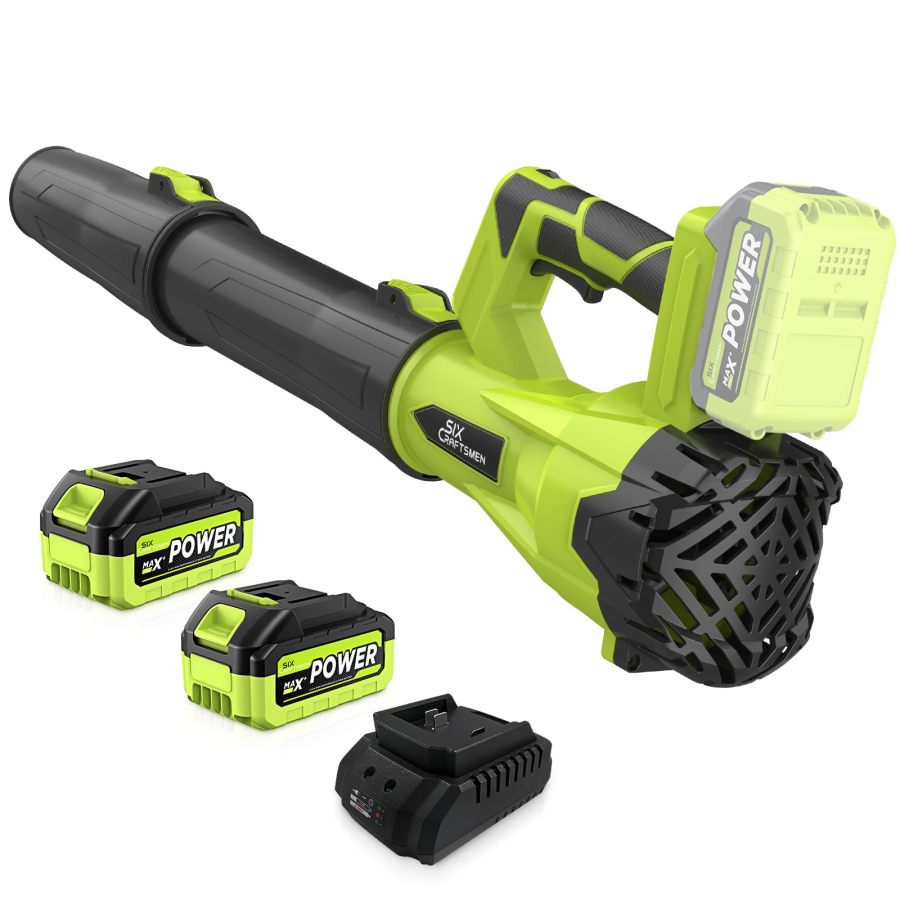
📊 Executive Summary
📈 Market Trends
Cordless and lightweight designs are the core drivers. Consumers universally seek freedom from power cords and reduced physical effort, fueling rapid growth in the handheld cordless leaf blower market. High-efficiency brushless motors and dual-battery systems have become standard for premium products to meet user demand for longer runtime and stronger power.
⚡ Major Pain Points
Battery runtime and reliability are the greatest pain points. Users complain that advertised battery life is severely exaggerated, with excessively short high-power mode operation and high failure rates for batteries/chargers, significantly impacting user experience and product trust. Additionally, most low-voltage products lack sufficient power for heavy-duty tasks like wet, heavy leaves.
💡 Selection Opportunities
Deepen focus on battery performance and niche scenarios. The core opportunity lies in improving real-world battery runtime and system reliability, rebuilding user trust through transparent communication. Simultaneously, products can be developed for niche scenarios like 'urban quiet cleaning,' while optimizing ergonomic design to enhance detailed user experience. For heavy users, high-voltage multi-function combos represent a new growth avenue.
I. Analysis Overview
1.1 Introduction & Report Scope
This report analyzes the 'Leaf Blowers' category (Cordless Leaf Blowers) on the Amazon US marketplace, focusing on target user personas, core needs, decision drivers, market communication, and potential opportunities.
1.2 Category Snapshot
Cordless leaf blowers are a significant segment within the garden power tools category, primarily used for clearing leaves, grass clippings, dust, and light debris from residential yards, driveways, patios, garages, and similar areas. Their core advantage lies in freedom from power cords, offering greater mobility and ease of operation. Market products are predominantly handheld, powered by rechargeable lithium-ion batteries, and feature multi-speed settings and lightweight designs to meet user demand for efficient, low-effort cleaning. The following table illustrates the key characteristics of consumer behavior in this category.
| Dimension | Segment | Description |
|---|---|---|
| Need Driver Type | Planned Purchase / Emergency-driven Purchase | Users have planned, regular needs for maintaining yard cleanliness, alongside immediate needs triggered by unexpected heavy leaf fall or post-lawn mowing cleanup. |
| Purchase Frequency | Low Frequency / Seasonal | As durable tools, purchase frequency is low, but there are significant seasonal purchase peaks during autumn leaf fall and spring garden cleanup. |
| Decision Complexity | Medium | Users evaluate multiple dimensions such as air power, battery runtime, weight, price, brand reputation, and ease of use, requiring comparison and assessment in the decision-making process. |
| Price Sensitivity | Medium to High | Price is an important consideration; users tend to seek value-for-money products but are also willing to pay a premium for better performance, longer runtime, and brand reliability. |
| Emotional Dependency | Low | The primary drivers are functionality and practicality. However, the product's ability to reduce effort, provide a sense of achievement from efficient cleaning, and maintain environmental harmony (low noise) can significantly enhance user satisfaction. |
II. User Personas & Usage Scenarios
2.1 Average Home Gardener
🎯 Homeowners with small to medium-sized yards who value a tidy home environment, prefer DIY gardening, and seek a balance between performance, convenience, and value.
| Typical Usage Scenarios | Core Pain Points | Primary Purchase Drivers |
|---|---|---|
|
|
|
2.2 Urban/Small-Space Light Cleaner
🎯 Users living in apartments, townhouses, or with small yards/patios, primarily performing small-scale, frequent light cleaning. They have high requirements for portability, low noise, and easy storage.
| Typical Usage Scenarios | Core Pain Points | Primary Purchase Drivers |
|---|---|---|
|
|
|
2.3 Performance-Driven Heavy User
🎯 Users with large properties or frequent high-intensity cleaning needs. They have extremely high demands for tool performance, runtime, and durability.
| Typical Usage Scenarios | Core Pain Points | Primary Purchase Drivers |
|---|---|---|
|
|
|
III. User Needs Hierarchy (KANO Model)
3.1 Basic Needs (Must-Haves)
- Effective Blowing: Capable of easily blowing away leaves, grass clippings, and dust from yards, driveways, and patios to complete basic cleaning tasks.
- Easy Startup: Simple, straightforward product activation with no complex steps; ready to use immediately.
- Safe and Reliable: Stable operation with no apparent safety hazards, providing peace of mind.
- Handheld Convenience: Product design suitable for one-handed holding and operation, meeting expected usage experience.
3.2 Performance Needs (Linear Satisfiers)
- Strong Air Power: High CFM and MPH ratings ensure fast, efficient cleaning for most common debris.
- Adequate Runtime: Battery lasts long enough in primary modes to complete typical tasks without frequent interruption.
- Lightweight Design: Moderate product weight reduces fatigue during prolonged one-handed use, enhancing comfort.
- Multi-Speed Settings: Adjustable air speed for different cleaning tasks and scenarios, providing greater flexibility.
- Ergonomic Design: Comfortable, non-slip handle with good grip, further reducing user fatigue.
3.3 Excitement Needs (Delighters)
- Dual-Battery System: Includes two batteries for alternating use, enabling seamless switching, significantly extending total work time, and reducing downtime.
- Low-Noise Operation: Operational noise controlled at low levels, not disturbing the user or neighbors, improving the usage environment.
- Fast Charging: Short battery charge time reduces waiting and increases tool availability.
- Universal Battery Compatibility: Battery is compatible with other tools from the same or specific brands, facilitating a user's tool ecosystem.
- Multi-Function Nozzle Attachments: Provision of different-shaped nozzles for specific or detailed cleaning scenarios (e.g., drying, concentrated blowing).
3.4 Unmet Needs & Opportunities
-
Actual Battery Runtime Falls Short of Claims: User feedback indicates actual battery life is far below advertised, especially in high-power mode, causing work interruptions.
User Reviews (VOC) Battery only lasted for 20 minutes. // It uses up the battery in a few minutes and lasts only about 15 minutes on medium speed.
-
High Failure Rate for Chargers/Batteries: Some users encounter issues with batteries not charging or charger malfunctions, severely impacting normal use and experience.
User Reviews (VOC) The battery was faulty. It not charge much. I returned it. // After just one use, the blower stopped charging.
-
Poor Performance on Heavy Wet Leaves/Gravel: For damp, heavy leaf piles or small gravel, some cordless blowers lack sufficient power for effective cleanup.
User Reviews (VOC) Not too powerful, will only move light dirt and dry leaves. // It struggles with gravel-sized objects.
-
Intake Vent Prone to Clogging with Clothing: Unreasonable design of the intake vent on some cordless blowers causes it to easily suck in clothing during use, affecting operational smoothness and efficiency.
User Reviews (VOC) While using it, the intake at the end of it kept sucking my thin shorts into it. // the INTAKE VENT is on the LEFT SIDE... it sometimes sucks your pants or jacket against the intake.
IV. User Decision Drivers
4.1 Key Decision Factors
- Blowing Performance: Air power (CFM/MPH) and volume directly determine the product's effectiveness in clearing different types and weights of debris, making it the primary purchase consideration.
- Convenience: Cordless operation, light product weight, ease of carrying, and one-handed use directly impact user experience and physical exertion.
- Battery Runtime & Charging: Single-use battery life, total work time (via dual batteries), and charging speed determine if users can complete tasks uninterrupted.
- Ease of Use: Simplicity of setup, intuitiveness of operation, and smooth startup affect the user's learning curve and willingness to use the product.
4.2 Secondary Decision Factors
- Price: Budget is a key factor in product comparison and final selection, provided core functions are met.
- Brand Reputation & After-Sales Service: User trust in well-known brands, along with expectations for warranty promises and customer service responsiveness, influences long-term confidence.
- Noise Level: A significant screening factor for users with special low-noise needs (e.g., urban residents, noise-sensitive individuals).
- Durability & Build Quality: Sturdiness of materials and overall craftsmanship affect user expectations for product lifespan and reliability.
- Versatility: Ability to use the product for tasks beyond leaf blowing (e.g., snow removal, car drying, tool cleaning) adds value and appeal.
V. Selling Points & Competitive Landscape
5.1 Selling Point Analysis
5.1.1 Standard Features (Points of Parity)
- Cordless/Battery Powered: Most products emphasize 'cordless' or 'battery powered,' highlighting the freedom of operation without cords.
- Lightweight Design: Widespread promotion of light product weight (typically 3-7 lbs), easy one-handed operation to reduce user fatigue.
- Multi-Speed Adjustable: Most products offer 2-6 speed settings to adapt to different cleaning needs, from gentle blowing to powerful clearing.
- Easy to Use/Assemble: Commonly promoted as simple to operate and quick to assemble, ready to use out of the box.
- Wide Range of Applications: Promoted for use in yards, patios, garages, sidewalks, cars, and various other outdoor/semi-outdoor spaces.
- Includes Battery & Charger: Except for bare-tool kits targeting users with existing tool platforms, most cordless leaf blowers are bundled with a battery and charger as a complete solution.
5.1.2 Key Differentiators
- Dual-Battery System: Some products highlight the inclusion of two batteries for alternating use, significantly extending total work time and alleviating range anxiety.
- Long Runtime: Specific claims of runtime minutes in high/low-speed modes (e.g., up to 60-120 minutes on low) used as a performance advantage.
- High Air Volume/Speed: Highlighting specific CFM and MPH figures (e.g., 560 CFM, 180 MPH, up to 280 MPH) to emphasize strong blowing capability.
- Brushless Motor: Some products mention using a 'brushless motor,' promoting higher efficiency, longer lifespan, and lower noise.
- Fast Charging: Promotion of short battery charge times (e.g., 1 hour) to reduce user wait time.
- Ergonomic Design: Emphasis on non-slip handles, balanced weight distribution, and even included shoulder straps to enhance comfort during prolonged use.
5.1.3 Unique Selling Propositions (USPs)
- Compatibility with Specific Brand Batteries: Brands like GARTOL promote battery compatibility with well-known power tool brands (e.g., Makita 18V) to attract users already invested in those platforms.
- Turbo Fan Technology: Brands like WORX emphasize aviation-inspired turbo technology to achieve super-strong airflow, highlighting technological leadership.
- Claims of Ultra-High Motor RPM: A few brands like Comchoi claim motor speeds as high as '900,000 RPM,' far exceeding industry norms, as an extreme performance selling point.
- Includes Noise-Reducing Earplugs: Brands like AceSky imply attention to noise control by including earplugs, offering a bundled solution.
5.2 Competitive Landscape
5.2.1 Market Maturity
The cordless leaf blower market has entered a moderately mature phase. Product features and specifications are becoming standardized, leading to significant homogenized competition. Numerous new brands are rapidly capturing market share by offering high value-for-money, bundling dual batteries, and emphasizing performance specs. Meanwhile, established brands like DEWALT and EGO maintain competitiveness in the premium segment through brand influence, mature product ecosystems, and technical expertise, offering more stable performance and reliable after-sales support.
5.2.2 Innovation Trends
Current innovation trends primarily revolve around enhancing core performance and optimizing user experience. Battery technology is advancing towards higher energy density, longer runtime (e.g., large capacity 2x5.0Ah batteries), and faster charging speeds. Brushless motors have become standard in mid-to-high-end cordless blowers, providing stronger power, higher efficiency, and longer lifespan. Lightweight and ergonomic design continues to be a focus to reduce user fatigue. Furthermore, battery platform universality (e.g., sharing batteries with other power tools) and multi-function accessories (e.g., nozzles for snow blowing, car drying, detailed cleaning) are key directions for brands seeking differentiation and increasing user stickiness.
VI. Marketing Claims vs. Reality Check
The table below analyzes the gap between common marketing claims and actual user experiences in this category:
| Dimension | Marketing Claim | User Reality | Verdict |
|---|---|---|---|
| Battery Runtime | Claims of 30+ minutes on high mode or several hours of total runtime. | Users widely report actual battery life under high-intensity use is far below advertised (commonly 10-20 minutes), causing work interruptions. | Typical misleading use of ideal-condition data; fails to deliver on the core promise of extended outdoor work, severely damaging user trust. |
| Performance on Heavy Debris | Claims of powerful airflow capable of easily handling various leaves, debris, and even snow. | Multiple users report poor effectiveness on damp, clumped leaf piles, small stones, or heavier debris, finding the product better suited for light cleaning. | Low-voltage battery platforms, under current technology and cost constraints, struggle to match the sustained thrust of gas or high-voltage corded motors. Seller overstatement of heavy-duty capability contradicts physical reality. |
| Battery & Charging System Reliability | Equipped with high-performance batteries and fast chargers, ensuring stability and durability. | Frequent occurrences of battery failures (not charging, not holding charge) or charger malfunctions, impacting out-of-the-box experience and long-term reliability. | Insufficient quality control for core components leads to critical defects early in the product's life, severely damaging brand reputation and user satisfaction. |
Key Takeaway: The market is rife with exaggerated claims and inflated specifications, particularly regarding core performance metrics like battery runtime and actual air power, leading to a significant gap with user expectations. Some products even suffer from fundamental quality defects.
VII. Supply-Demand Misalignment Analysis
The table below highlights mismatches between seller focus and buyer priorities:
| Dimension | Seller Behavior | User Focus | Verdict |
|---|---|---|---|
| Real Battery Runtime & Reliability | Sellers commonly emphasize dual batteries, large capacity, fast charging, but are vague or contradictory in listings about real runtime data in high-power modes. Insufficient after-sales response to battery failures. | Users are most concerned with how long the battery lasts under high-intensity work and the durability of the battery/charger. Frequent complaints about short runtime and battery failure are core pain points affecting the purchase experience. | Sellers fail to provide sufficiently transparent, truthful, and reliable solutions for the most critical 'battery anxiety' issue, leading to a severe mismatch between user expectations and actual experience. |
| Real-World Performance in Heavy-Duty Scenarios | Sellers commonly advertise high CFM/MPH numbers, implying strong cleaning capability, but fail to clearly define performance boundaries for light, medium, and heavy-duty tasks (especially wet leaves, gravel). | Users expect cordless blowers to handle most yard debris but discover insufficient power for wet, heavy leaves, forcing them to switch tools or spend more time. | Sellers over-package the 'powerful' attribute of low-voltage battery blowers, ignoring their physical limits, leading to user disappointment when tackling complex cleaning tasks. |
| Noise Control & User Experience | Some sellers mention low noise or include earplugs but have not developed or marketed 'extreme quietness' as a core selling point. | Despite being power tools, users still complain about noise levels, especially in residential areas, desiring quieter products to avoid disturbing neighbors. | The market fails to fully identify and meet the differentiated demand for 'low noise' among some users, missing the opportunity to build a unique competitive advantage through acoustic optimization. |
Key Takeaway: Sellers generally align with users on basic attributes like 'cordless convenience' and 'lightweight,' but there is a significant supply gap and over-promising regarding 'real-world performance' and 'core reliability.'
VIII. Strategic Opportunities & Recommendations
8.1 Launch High-Quality Long-Runtime Battery System
8.1.1 Target Audience & Pain Points
⚡️ Pain Points Addressed: Actual battery runtime falls short of claims; high failure rate for chargers/batteries; insufficient power for heavy-duty tasks.
8.1.2 Action Plan
Adopt higher-quality 2x4.0Ah or 2x5.0Ah branded cells, integrate a smart Battery Management System (BMS), and optimize power efficiency. Provide unified, transparent, third-party-verified runtime data for all speed settings and offer a 2+ year battery warranty.
| Tech Complexity | Medium |
| Cost Impact | High Impact |
| Trade-off Warning | Higher energy density battery packs may slightly increase product weight and volume but can be balanced through material and structural optimization. |
| Price Band | Only viable above $89.99 |
8.1.3 Marketing Strategy
Emphasize 'Real Runtime, No Fear of Challenges'; showcase persistent performance in high-power mode via real-world test videos; highlight the 'Quality Battery, Worry-Free' warranty promise.
8.2 Optimize Anti-Clog Intake Design & Ergonomics
8.2.1 Target Audience & Pain Points
⚡️ Pain Points Addressed: Intake vent prone to clogging with clothing; fatigue from prolonged use.
8.2.2 Action Plan
Redesign intake vent location or add a denser, easy-to-clean grill to prevent accidental clothing suction. Optimize handle grip angle, add soft-touch materials, and consider providing a simple shoulder strap.
| Tech Complexity | Low |
| Cost Impact | Low Impact |
| Trade-off Warning | No significant physical side effects; primarily involves mold and structural design optimization. |
| Price Band | Only viable above $39.99 |
8.2.3 Marketing Strategy
Highlight 'Victory in Details, Smooth Operation'; demonstrate anti-clog intake function via GIFs; emphasize the ergonomic advantage of 'Comfortable Grip, Easy Control.'
8.3 Launch 'Urban Quiet Master' Series
8.3.1 Target Audience & Pain Points
⚡️ Pain Points Addressed: Noise levels remain high; urban/small-space users have higher requirements for low noise.
8.3.2 Action Plan
Utilize brushless motors, optimize airflow duct and fan blade design, add sound-dampening materials to control noise levels below 65 dB. Offer a more compact, easily storable size.
| Tech Complexity | Medium |
| Cost Impact | Medium Impact |
| Trade-off Warning | Employing more complex airflow design and motor noise reduction tech may slightly increase product size/cost and potentially sacrifice some peak air power. |
| Price Band | Only viable above $59.99 |
8.3.3 Marketing Strategy
Emphasize 'Whisper Quiet, No Disturbance to Neighbors'; showcase usage in quiet environments; provide authoritative noise test reports comparing advantages over competitors.
8.4 Develop High-Voltage Multi-Function Blower/Vacuum/Mulcher Combo
8.4.1 Target Audience & Pain Points
⚡️ Pain Points Addressed: Poor performance on heavy wet leaves/gravel; lack of multi-function integrated tools.
8.4.2 Action Plan
Design a higher voltage platform (e.g., 40V/56V), equip a more powerful brushless motor, and provide blow/vacuum/mulch functions. Optimize conversion mechanisms and collection bag capacity for enhanced durability.
| Tech Complexity | High |
| Cost Impact | High Impact |
| Trade-off Warning | Integrating vacuum and mulching functions significantly increases product weight, size, complexity, reduces portability, and may raise the failure rate. |
| Price Band | Only viable above $149.99 |
8.4.3 Marketing Strategy
Highlight 'Professional-Grade Performance, All-in-One Garden Manager'; showcase powerful capability handling large volumes of wet leaves/gravel via video; emphasize the value of 'One Tool, Multiple Uses, Saves Effort and Hassle.'