Amazon US Market Analysis: Smart Sensor Trash Cans Category
📊 Executive Summary
📈 Market Trends
Portability and integration are mainstream, smart sensing is standard. The smart sensor trash can market is highly competitive, with products generally emphasizing lightweight, touch-free sensing, lidded odor control, etc. Consumer demand for seamless connectivity and multi-functional all-in-one solutions continues to grow, driving product evolution towards greater integration and intelligence.
⚡ Major Pain Points
Sensor failure and battery anxiety are critical flaws. Users commonly report insufficient stability of smart sensors, with significant gaps between performance and marketing claims. Additionally, short battery life and inconvenient replacement are core pain points. Fragile lid structures and operational noise also severely impact user experience and product reputation.
💡 Selection Opportunities
Deepen core pain points, solidify user experience. Market opportunities lie in addressing consumer trust crises regarding sensor system reliability and true battery life, e.g., developing a 'High-Reliability, Long-Lasting Smart Sensor System'. Simultaneously, build advantages in basic experience through 'Optimizing Size Visualization' and 'Enhancing Lid Durability & Quietness'. For the high-end market, explore 'Integrated Waste Management Solutions' for differentiation.
I. Analysis Overview
1.1 Introduction & Report Scope
This report analyzes the 'Wastebaskets' category (specifically smart sensor trash cans) in the Amazon US market, focusing on target user personas, core needs, decision factors, market communication, and potential opportunities.
1.2 Category Snapshot
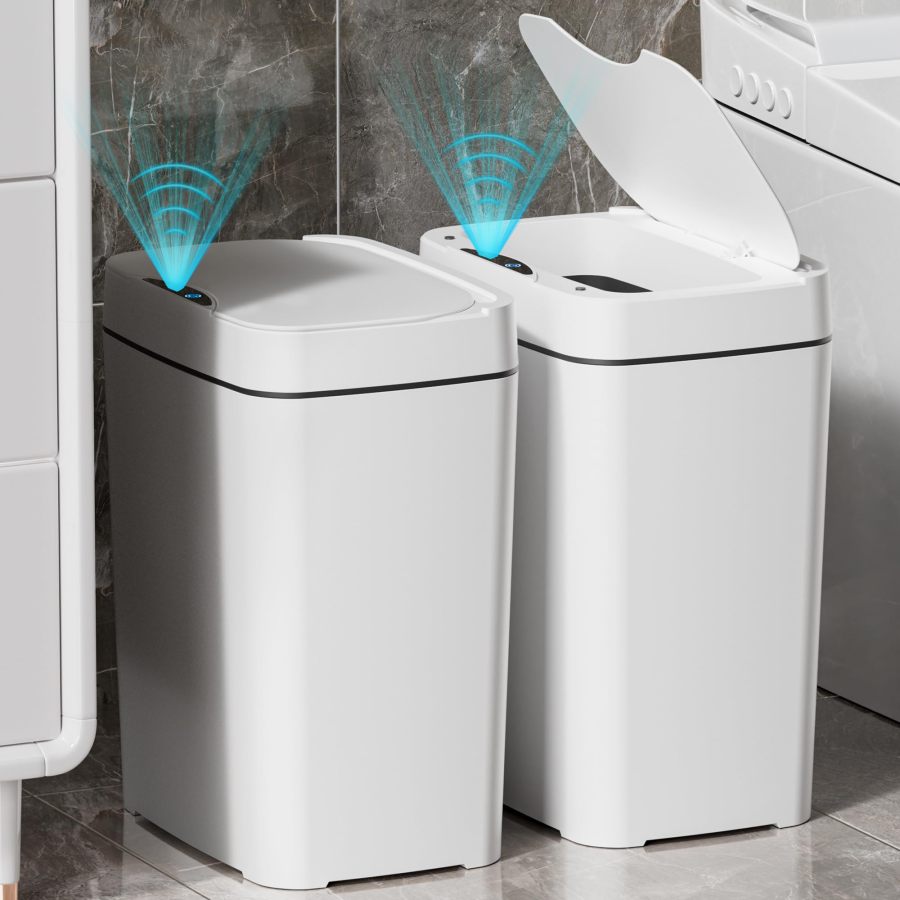
A smart sensor trash can is a household item that uses infrared or touch technology to enable automatic lid opening and closing, designed to provide a touch-free, hygienic waste disposal experience. These products are widely used in spaces like bathrooms, kitchens, offices, bedrooms, and RVs. Their core value lies in enhancing home convenience, maintaining environmental cleanliness, and effectively containing odors. The following table illustrates the key characteristics of consumer behavior in this category.
| Dimension | Segment | Description |
|---|---|---|
| Need Driver Type | Planned Purchase / Experience Upgrade | Users typically actively seek more hygienic and convenient waste disposal solutions or aim to solve pain points with existing trash cans (e.g., odors, pets getting into them). |
| Purchase Frequency | Low Frequency | As durable goods, they are usually purchased once every few years, but new demand may arise due to functional innovation, damage, or moving. |
| Decision Complexity | Medium | Consumers carefully compare factors such as sensor performance, size/capacity, material durability, power supply method, and price. |
| Price Sensitivity | Medium | Price is an important consideration, but users are willing to pay a reasonable premium for significant experience upgrades or solutions to core pain points. |
| Emotional Dependency | Medium | Primarily based on practical function and cleanliness experience, but modern design and touch-free features also contribute to a sense of pleasure and improved quality of life. |
II. User Personas & Usage Scenarios
2.1 Modern Households Focused on Home Hygiene
🎯 Concerned about family health, pursuing a sterile and tidy living environment, especially attentive to cleanliness in areas prone to bacteria like kitchens and bathrooms.
| Typical Usage Scenarios | Core Pain Points | Primary Purchase Drivers |
|---|---|---|
|
|
|
2.2 Pet Owners & Small Space Dwellers
🎯 Live in limited spaces or have curious pets at home, requiring a solution that saves space, effectively manages waste, and prevents pet access.
| Typical Usage Scenarios | Core Pain Points | Primary Purchase Drivers |
|---|---|---|
|
|
|
III. User Needs Hierarchy (KANO Model)
3.1 Basic Needs (Must-Haves)
- Basic Garbage Capacity: Capable of holding daily waste volume, avoiding overly frequent bag changes.
- Stable, Not Easily Tipped: The bin remains stable, not easily knocked over by bumps or pet activity, ensuring safety and tidiness.
- Easy to Clean & Maintain: Interior and exterior surfaces are easy to wipe clean, facilitating hygiene and reducing bacterial growth.
3.2 Performance Needs (Linear Satisfiers)
- Touch-Free Sensor Opening/Closing: Infrared sensor technology enables fast (0.1-0.3 seconds), accurate automatic opening/closing, significantly enhancing hygiene and convenience.
- Effective Odor Containment: Sealed lid effectively prevents garbage odor diffusion, maintaining fresh indoor air, especially in enclosed spaces.
- Quiet Slow-Close Mechanism: Lid opens and closes quietly and smoothly, avoiding disruptive noise and improving comfort.
- Long Battery Life: Long battery usage time reduces the hassle and cost of frequent replacements for the user.
- Hidden Liner Ring Design: Built-in ring or special design conceals the trash bag edge, keeping the bin's appearance neat and tidy.
3.3 Excitement Needs (Delighters)
- Smart Vacuum Compression: Automatic vacuum suction compresses the bag against the inner wall, maximizing capacity and enhancing odor containment.
- Multi-Mode Opening/Closing: Besides sensor mode, offers manual open, foot-pedal, etc., adapting to different situations, increasing flexibility.
- Rechargeable/AC Power: USB-C charging or included AC adapter eliminates the hassle of frequent battery changes, more eco-friendly and economical.
- Built-In Deodorizer Filter: Active odor management via replaceable activated carbon filters for long-lasting freshness.
- High-Quality Materials & Design: Use of sturdy stainless steel, antibacterial plastic, or designer composite materials enhances product texture and home aesthetics.
3.4 Unmet Needs & Opportunities
-
Sensor Stability & Lifespan: User feedback indicates sensors are either too sensitive (false triggers) or not sensitive enough, or stop working shortly after purchase, severely impacting experience.
User Reviews (VOC) The sensor works well but has other options also without having to use batteries. I could also use another one with a bag as a diaper pail by putting one in front of the other... // The lid opens and closes randomly whenever I walk by, which is both annoying and inconvenient.
-
Battery Compartment Design & Actual Runtime: Battery compartment located inside the bin is inconvenient to access and prone to contamination from garbage; batteries drain quickly. Need more convenient, longer-lasting power solutions and accurate runtime data.
User Reviews (VOC) The only drawback is that the battery compartment is located inside the trash can. While it's not a major issue, it can be a bit of a hassle if you are using this in a situation where the inside can get wet, or messy with food stuff, etc. It would be much more practical if the battery compartment were designed for easy access from the outside. // Need to be sold with a lifetime supply of batteries!
-
Lid Durability & Quiet Slow-Close: Plastic lids or hinges on some products are prone to damage, affecting overall lifespan; lid operation is noisy, contradicting quiet operation claims.
User Reviews (VOC) Customers report durability issues with the trash can, noting that it breaks after use, the hinges fail, and the lid is prone to breaking. // Loudly Slams open and Shut. Don't use after certain time it will wake people up.
-
Liner Bag Versatility & Fit: Users want bins compatible with various standard liner bags, not limited to specific brands/sizes, for added convenience, and bags should stay secure without slipping.
User Reviews (VOC) The 13-gallon trash bags (at least the ones I bought from Costco) won't fit the opening. That is, the 13-g trash bag is too small to cover the top opening of this 13-gallon trash can. When I forcefully tried to stretch a trash bag to cover the entire opening, the trash bag broke.
IV. User Decision Drivers
4.1 Key Decision Factors
- Sensor Sensitivity & Stability: Whether the sensor accurately and quickly responds to user intent, avoiding false triggers or non-response, is a key functional consideration for purchase.
- Capacity & Size Fit: Whether the bin's capacity meets daily household needs while its dimensions fit perfectly into the intended placement space (e.g., kitchen, bathroom).
- Odor Control Effectiveness: The lid's sealing ability to effectively contain garbage odors, maintaining a fresh home environment, is crucial for hygiene and comfort.
- Overall Product Durability: Long-term lifespan of the motor, lid hinges, and body material directly impacts product value and user satisfaction.
4.2 Secondary Decision Factors
- Appearance Design & Aesthetics: Whether the product complements home decor, enhancing space quality, making it not just functional but also decorative.
- Quietness of Operation: Whether the lid opens and closes quietly, especially important in bedrooms, offices, etc., affecting user experience.
- Battery Life & Power Supply Method: Frequency of battery changes, availability of rechargeable or plug-in options, affecting daily convenience and long-term cost.
- Price & Value for Money: Price acceptability given core functions and quality, and the additional value the product provides.
- Ease of Liner Bag Replacement: Convenience of installing and changing liner bags, presence of hidden design, impacting daily maintenance experience.
V. Selling Points & Competitive Landscape
5.1 Selling Point Analysis
5.1.1 Standard Features (Points of Parity)
- Smart Sensor/Touch-Free Operation: Most products emphasize infrared sensor technology for hygienic, convenient opening/closing, a core category selling point.
- Slim Design/Space Saving: Widely promoted compact size, especially suitable for narrow spaces like bathrooms, offices, bedrooms.
- Lidded Design/Odor Containment: Emphasizes lid sealing to effectively prevent odor diffusion, improving home environment.
- Easy to Clean: Often made of plastic or stainless steel with smooth surfaces, easy to wipe clean for simple maintenance.
5.1.2 Key Differentiators
- Quiet Slow-Close: Some products emphasize quiet, smooth lid operation to avoid noise and enhance comfort.
- Water/ Moisture Resistance: Targeting humid environments like bathrooms/kitchens, emphasizes IPX waterproof rating for product longevity and sensor reliability.
- Multiple Opening Modes: Besides sensor mode, offers manual always-open, foot-pedal options, increasing product flexibility.
- Material Upgrade/Anti-Fingerprint: Few products highlight premium stainless steel, anti-fingerprint coatings to enhance appearance and ease of care.
- Pet-Friendly/Anti-Tip: Some products promote designs that effectively deter pets from accessing trash, reducing cleaning burden.
5.1.3 Unique Selling Propositions (USPs)
- Liner Bag Vacuum Compression: Very few products feature automatic vacuum suction for better bag fit and space utilization.
- Rechargeable/AC Adapter: Offers USB charging or AC power options, aiming to reduce battery dependency for a more economical, eco-friendly solution.
- Built-In Deodorizer Filter: Provides active odor management via replaceable activated carbon filters for lasting freshness.
- Multi-Pack Sales: Sold in sets of 2 or 3, offering a complete solution for multi-room waste management, enhancing purchase value.
5.2 Competitive Landscape
5.2.1 Market Maturity
The smart sensor trash can category has entered maturity, with basic touch-free sensor opening/closing becoming standard. The market is highly competitive. Sellers are seeking differentiation through innovation and optimization in capacity, materials, design, power supply, and added features (e.g., deodorizing, vacuum compression, multi-mode operation) to meet more refined consumer needs and usage scenarios.
5.2.2 Innovation Trends
Future innovation trends will mainly manifest in: 1) Continued enhancement of sensor system intelligence and reliability, reducing false triggers and failure rates, and achieving longer battery life. 2) Diversification of power solutions, with rechargeable and AC power becoming mainstream, gradually replacing traditional batteries. 3) Functional integration, such as automatic bag tying, sterilization, smart reminders becoming more common. 4) Fusion of design aesthetics and eco-friendly concepts, with greater emphasis on material selection, color matching, and line design, making products practical and aesthetically pleasing components of smart homes.
VI. Marketing Claims vs. Reality Check
The table below analyzes the gap between common marketing claims and actual user experiences in this category:
| Dimension | Marketing Claim | User Reality | Verdict |
|---|---|---|---|
| Sensor Reliability/Durability | Advanced automatic sensor technology, flawless operation. | Users commonly report sensors malfunctioning, stopping work shortly after purchase, or lids being easily damaged. | Core smart functionality performs poorly in real-world scenarios, severely contradicting the promise of 'smart convenience,' damaging user trust. |
| Battery Life & Power Solutions | Long-lasting battery life, rechargeable/AC adapter included. | Most products require user-provided AA/D batteries and drain quickly; claims of rechargeability often require separate purchase of charging cable; AC adapter often needs to be bought separately. | Typical misleading use of ideal lab data or minimum brightness data; fails to deliver on core promises in real long-term usage scenarios, coupled with 'secondary cost' traps regarding power convenience, severely impacting user trust. |
| Product Quality/Material Feel | High-quality ABS material, sturdy and durable, anti-fingerprint stainless steel. | Some plastic products are described by users as 'cheap, flimsy plastic feel,' even 'arrived with dents/scratches'; stainless steel products also have issues like fingerprint retention or easy denting. | Clear gap exists between material choices constrained by cost and high-end marketing claims, affecting overall user perception of product quality. |
Key Takeaway: The market exhibits widespread parameter inflation and exaggeration of scenario-based experiences, especially regarding battery life and sensor stability.
VII. Supply-Demand Misalignment Analysis
The table below highlights mismatches between seller focus and buyer priorities:
| Dimension | Seller Behavior | User Focus | Verdict |
|---|---|---|---|
| Sensor Reliability/Lifespan | Generally emphasize 0.1-second fast opening, but few brands dare to promise long-term fault-free operation or offer extended warranties. | Users are most worried about sensors breaking, malfunctioning, frequently complaining about short-term failures leading to product abandonment. | Sellers prioritize marketing concepts over actual investment in durability, failing to address the core survival issue of smart trash cans as durable goods. |
| Battery Solution Convenience | Many products still rely on dry batteries (AA/C/D type), require user provision, few offer rechargeable or AC power options. | Users are generally tired of the hassle and cost of frequent battery changes, preferring built-in rechargeable or plug-in solutions. | The industry largely sticks to the lowest-cost dry battery solution, ignoring user demand for upgrades in eco-friendliness, convenience, and low maintenance costs. |
| Lid Durability & Quiet Slow-Close | Although some products advertise quiet slow-close, most sellers do not address or promise solutions for fragile lid structures and operational noise. | Users complain about lids being fragile, hinge failures, and annoying noise during operation, affecting home comfort. | Marketing copy fails to accurately reflect product shortcomings in core mechanical components, leading to unmet user expectations regarding durability and quiet operation. |
Key Takeaway: Sellers generally over-emphasize the 'speed' and 'gimmicks' of basic sensor functions, while collectively neglecting user's long-term concerns about 'stability,' 'battery life,' and 'durability' - the core pain points.
VIII. Strategic Opportunities & Recommendations
8.1 Truly High-Reliability, Long-Lasting Smart Sensor System
8.1.1 Target Audience & Pain Points
⚡️ Pain Points Addressed: Sensor stability & lifespan, battery life & power inconvenience.
8.1.2 Action Plan
Focus resources on R&D and adoption of high-quality, anti-interference infrared sensor modules, ensuring at least 2+ years of fault-free operation. Simultaneously, launch versions with built-in USB-C rechargeable batteries, or directly provide AC adapters. Clearly advertise long battery life (e.g., 'single charge lasts 6 months'), thoroughly resolving user anxiety about runtime and failure. Consider offering a 3-year warranty and proactively display product performance test reports on the product page.
| Tech Complexity | Medium |
| Cost Impact | Medium Impact |
| Trade-off Warning | No significant physical side effects, or slight increase in weight/size to accommodate larger battery. |
| Price Band | Only viable above $49.99 (small plastic capacity), or above $89.99 (stainless steel large capacity) |
8.1.3 Marketing Strategy
Emphasize 'Worry-Free Sensing for 5 Years, One Charge Lasts Half a Year'; build trust via third-party lab test reports and long-term user review videos; highlight 'Industry-Leading Warranty, Truly Hassle-Free'.
8.2 Optimize Size Visualization & Multi-Capacity Segmentation
8.2.1 Target Audience & Pain Points
⚡️ Pain Points Addressed: Perceived capacity/size discrepancy, low space utilization.
8.2.2 Action Plan
Offer more diverse capacities and sizes, e.g., 1.5-gallon desktop, 2.5-gallon ultra-slim, 4-gallon tall, etc. Ensure capacity labeling aligns with actual perception.
| Tech Complexity | Low |
| Cost Impact | Low Impact |
| Trade-off Warning | None. |
| Price Band | Only viable above $19.99 |
8.2.3 Marketing Strategy
Provide more concrete size information in listing images and A+ pages, e.g., add real photos or 3D renders in typical scenarios (next to toilet, under sink, under desk) with clear scale references. Emphasize 'Tailored for your small space, precise fit, seamlessly integrates, saves every inch, enhances style'; use AR features or size guides to help users visualize.
8.3 Enhance Lid Durability & Reduce Operational Noise
8.3.1 Target Audience & Pain Points
⚡️ Pain Points Addressed: Lid durability and noise issues.
8.3.2 Action Plan
Use tougher PC+ABS alloy or thickened plastic, reinforce hinge structure. Design multi-stage damping systems ensuring silent, bump-free lid operation throughout. Add manual/foot-pedal assisted opening as backup.
| Tech Complexity | Medium |
| Cost Impact | Medium Impact |
| Trade-off Warning | May slightly increase lid thickness or weight. |
| Price Band | Only viable above $29.99 (small capacity), or $59.99 (large capacity) |
8.3.3 Marketing Strategy
Emphasize 'Library-Quiet Operation, Uninterrupted Night Use'; highlight 'Million Open/Close Tests, Durable for a Decade'; showcase detailed videos of the slow-close process.
8.4 Premium Integrated Waste Management Solution
8.4.1 Target Audience & Pain Points
⚡️ Pain Points Addressed: Ultimate odor control, cumbersome bag changes, extreme hygiene needs.
8.4.2 Action Plan
Combine features like automatic bag tying, automatic bag replacement, UV sterilization, built-in activated carbon filter, App smart reminders. Develop proprietary liner bags, potentially with subscription service.
| Tech Complexity | High |
| Cost Impact | High Impact |
| Trade-off Warning | Increases product volume/weight, requires custom bags, higher recurring consumable costs. |
| Price Band | Only viable above $89.99 (small capacity), or $199.99 (large capacity) |
8.4.3 Marketing Strategy
Emphasize 'Your Private Cleanliness Butler, Solving All Trash Troubles at the Source'; highlight 'Luxury Smart Experience, Leading Future Lifestyle'; showcase the convenience of multi-functional integration.