Amazon US Market Analysis: Round Woven Placemats Category
📊 Executive Summary
📈 Market Trends
Natural woven trend and multi-functionality demand coexist. The round woven placemat market revolves around natural, handwoven selling points, with bohemian, rustic, and farmhouse styles being highly sought after. Consumers view them not only as table protection but also as home decor and multi-purpose items. Coordinated sets and bulk purchasing for large events are emerging trends.
⚡ Major Pain Points
Odor, shedding, and size mismatch are the three major flaws. Users commonly complain about strong initial odors from natural materials, fiber shedding, and inconvenient cleaning/maintenance. Many buyers also report actual sizes being smaller than expected, leading to poor compatibility with dinnerware. These issues significantly impact user experience and lead to returns or negative reviews.
💡 Selection Opportunities
Deepen user experience, focus on details and value. Market opportunities lie in solving odor and shedding issues through advanced material processing technology, and providing more precise size guides and multiple size options. Furthermore, creating themed coordinated solutions (e.g., placemats + coasters + napkin rings) and offering customized bulk purchasing services for large events will effectively enhance product premium and brand loyalty.
I. Analysis Overview
1.1 Introduction & Report Scope
This report analyzes the 'Place Mats' category (specifically round woven placemats) in the US Amazon market, focusing on target user personas, core needs, decision drivers, market communication, and potential opportunities.
1.2 Category Snapshot
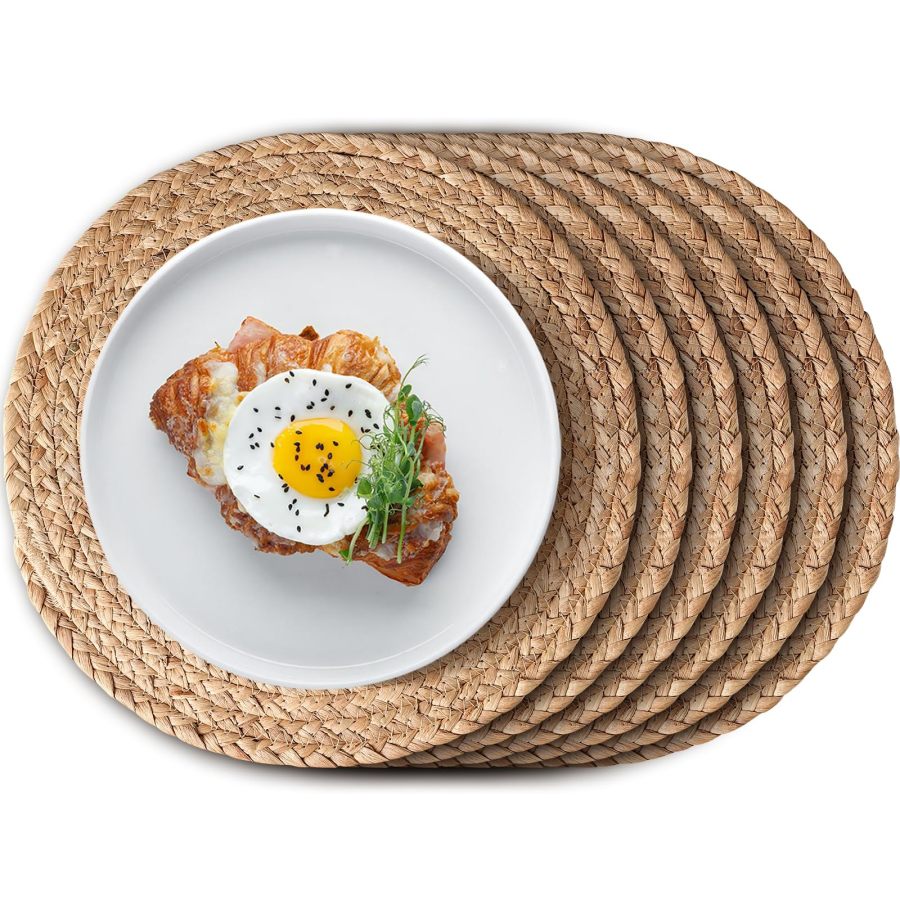
Round woven placemats are circular table accessories handcrafted from natural plant fibers (such as water hyacinth, jute, rattan, corn husks, etc.). Their primary function is to protect the table from hot plates, stains, and scratches, while also serving as decorative elements that add natural, bohemian, rustic, or farmhouse-style aesthetics to the dining environment. These products are typically sold in multi-piece sets, with common diameters of 12-14 inches, and can also function as plate chargers, trivets, or home decor. The following table illustrates the key characteristics of consumer behavior in this category.
| Dimension | Segment | Description |
|---|---|---|
| Need Driver Type | Planned Purchase / Impulsive Purchase | Users often purchase for planned home decor or event needs, but some are also driven by aesthetics for immediate styling upgrades. |
| Purchase Frequency | Low / Seasonal | As durable home goods, purchase frequency is low, but small peaks occur during specific holidays or seasonal decor updates. |
| Decision Complexity | Medium | Users need to weigh multiple dimensions: style, material, size, quality, price, and ease of cleaning. |
| Price Sensitivity | Medium | Price is an important consideration, but users are willing to pay a premium for superior design, materials, and quality. |
| Emotional Dependency | Medium | The product combines functionality and aesthetic value, significantly enhancing the dining atmosphere and home mood. |
II. User Personas & Usage Scenarios
2.1 Sophisticated Home Aesthetics Enthusiast
🎯 Focuses on the overall style and details of the home environment, enjoys enhancing life quality through natural, bohemian, or rustic-style decorative items.
| Typical Usage Scenarios | Core Pain Points | Primary Purchase Drivers |
|---|---|---|
|
|
|
2.2 Pragmatic Family User
🎯 Prioritizes product practicality, durability, and ease of cleaning, aiming to protect the table, simplify daily cleanup, while also considering a degree of aesthetics.
| Typical Usage Scenarios | Core Pain Points | Primary Purchase Drivers |
|---|---|---|
|
|
|
III. User Needs Hierarchy (KANO Model)
3.1 Basic Needs (Must-Haves)
- Table Protection: Effectively insulates heat, prevents scratches and stains; the fundamental function of a placemat.
- Flat & Stable: Lies flat on the table without curling, warping, or sliding, ensuring dinnerware stability.
- No Strong Odor: Product is free from pungent chemical or musty smells, ensuring comfortable use.
3.2 Performance Needs (Linear Satisfiers)
- Aesthetic Design: Features natural, rustic, bohemian, or farmhouse styles that enhance the overall table aesthetics.
- High Durability: Tightly woven, resistant to unraveling or shedding, suitable for long-term repeated use.
- Easy to Clean: Surface is easy to wipe; food debris does not get trapped easily, making maintenance convenient.
- Size Compatibility: Accommodates standard dinner plates well as a placemat or plate charger, with appropriate overhang.
3.3 Excitement Needs (Delighters)
- Multi-Functionality: Serves multiple purposes beyond a placemat, such as a trivet, decorative wall hanging, or plant pot coaster.
- Coordinated Sets: Offers matching accessories like coasters or napkin rings in the same style, enabling a cohesive table setting.
- Unique Design Details: Features like scalloped edges or special weaving patterns that add uniqueness and artistic appeal.
3.4 Unmet Needs & Opportunities
-
Thorough Cleaning Solution: Most products currently only recommend 'wipe with a damp cloth,' but deep cleaning woven materials or handling stubborn stains remains a pain point.
User Reviews (VOC) Tough to clean, but look great. These look nice and are good quality, but they smell if any food gets in the creases. They are hard to clean. I wipe them with dish soap and dry them in the sun often. // The only downside is that you can't wash them in the washing machine, but spills can be easily wiped off.
-
Odor Elimination Assurance: Many users complain about out-of-box odors. Sellers typically only suggest 'airing out.' Users desire more immediate, effective odor elimination methods or seller guarantees.
User Reviews (VOC) Stinky and ended up not using because of the smell. // smell like mold and corn // They have a strong, unpleasant odor. Stink! Returned these!
-
Precise Size Guidance: Despite labeled dimensions, users often find them 'smaller than expected' or 'barely adequate,' indicating a cognitive gap between product size description and actual plate compatibility.
User Reviews (VOC) Smaller then anticipated! Think about the size before ordering. They are quite small but work for my purpose at a lake house. Well made, just rather small. // These are really just too small to be a real dinner mat. As you can see, the nicer ceramic plates we have dwarf them, and even the smaller everyday plates still cover most of the mat. // Too small. Way smaller than expected, could only fit a small plate
-
Material Shedding Improvement: The issue of natural materials shedding fibers affects user experience. Tighter or reinforced weaving techniques are needed to reduce fiber shedding.
User Reviews (VOC) They shed a lot of small fibers with just light handling, and several were already fraying straight out of the package, which doesn't give me much confidence in their durability or their longevity. // Low quality but looks ok. Looks nice but not big and looses little parts constantly.
IV. User Decision Drivers
4.1 Key Decision Factors
- Aesthetics & Style Match: Whether the product complements the home decor style and enhances overall table aesthetics is the primary purchase driver.
- Product Quality & Durability: How tightly and solidly the item is woven, and its resistance to unraveling or wear, is key to assessing product value.
- Price & Value for Money: The ability to obtain a satisfactory quantity, size, and quality within budget influences the final purchase decision.
4.2 Secondary Decision Factors
- Size Compatibility: Whether the placemat effectively accommodates a standard dinner plate, with sufficient edge overhang to avoid a cramped feel.
- Ease of Cleaning: How convenient it is for daily wiping and maintenance, reducing cleaning burden.
- Odor & Shedding Issues: Whether the product has strong or persistent odors, and if natural materials easily shed fibers.
- Multi-Functionality: Whether it has other practical or decorative uses beyond being a placemat, adding value.
V. Selling Points & Competitive Landscape
5.1 Selling Point Analysis
5.1.1 Standard Features (Points of Parity)
- Natural Materials: Emphasizes 100% natural materials like water hyacinth, jute, rattan, wicker.
- Handwoven: Highlights the handmade craftsmanship and unique texture.
- Round Design: Core category feature, emphasizing its versatility.
- Heat-Resistant & Non-Slip: Protects the table, prevents hot plates from burning or dishes from sliding.
- Easy to Clean: Typically suggests wiping with a damp cloth or shaking off debris.
- Bohemian/Rustic Style: Emphasizes the specific decor style the product adds to the home.
- Multi-Purpose Use: Not just a placemat, but also a plate charger, trivet, decorative wall hanging, etc.
- Suitable for Various Occasions: Daily use, holidays, parties, weddings, etc.
5.1.2 Key Differentiators
- Variety in Set Quantities: Offers sets of 4, 6, 8, 10, 12, and even large packs of 40 pieces.
- Size Options: Provides different diameters from 12 inches to 13.8 inches to suit various needs.
- Special Edge Design: Features like scalloped edges to increase visual appeal.
- Included Accessories: Comes with matching coasters or napkin rings, offering a more complete solution.
- Eco-Friendly & Sustainable: Highlights the ecological friendliness of the materials.
5.1.3 Unique Selling Propositions (USPs)
- Non-Slip Backing Layer: A few products mention adding a non-slip treatment on the bottom for enhanced stability.
- Specific Origin Craftsmanship: Emphasizes 'Handmade in Vietnam,' highlighting origin-specific craft.
- Bulk Purchase Options: Offers very large sets (e.g., 40 pieces), targeting the events and wedding market.
5.2 Competitive Landscape
5.2.1 Market Maturity
Market maturity is medium-high. The product category is well-defined, with high homogenization in core features and promotional selling points. Competition primarily revolves around material details, weaving craftsmanship, set combinations, pricing strategies, and emphasis on specific styles (e.g., Boho/Farmhouse). Innovation mostly focuses on improving existing pain points or adding incremental value, rather than disruptive innovation.
5.2.2 Innovation Trends
Observed category innovation is primarily concentrated on offering more complete sets (e.g., placemats + coasters/napkin rings) and bulk/customized options for large events. Simultaneously, sellers are striving to improve weaving techniques to reduce the odor and shedding issues of natural materials and are beginning to explore more distinctive design details (like scalloped edges). Emphasizing eco-sustainability is also a rising trend.
VI. Marketing Claims vs. Reality Check
The table below analyzes the gap between common marketing claims and actual user experiences in this category:
| Dimension | Marketing Claim | User Reality | Verdict |
|---|---|---|---|
| Size Compatibility | Perfect size, fits standard dinner plates. | User feedback includes 'smaller than expected,' 'too small for actual placemats,' with some plates not being adequately supported. | Sellers are overly confident in size claims, failing to adequately consider the diversity of plate sizes and user expectations for table protection area, leading to a disconnect between marketing and actual experience. |
| Natural Material Odor | Natural herbal scent, dissipates with airing, which is normal. | User feedback includes 'intensely stinky,' 'smells like mold and corn,' 'smells so bad it makes me want to vomit,' with odor duration exceeding expectations. | Sellers downplay strong, persistent natural odors as normal, overlooking the significant impact on user unboxing experience and living environment, representing typical risk-averse marketing. |
| Material Shedding / Durability | Long-lasting, durable, reusable. | User feedback includes 'poorly stitched,' 'sheds many small fibers, unravels with light handling,' 'frayed right out of the box,' suggesting actual durability is lower than expected. | Sellers overstate the durability of natural woven goods, ignoring quality control challenges of handmade items and the inherent fragility of the materials, leading to inflated consumer expectations for product lifespan. |
Key Takeaway: The market exhibits widespread parameter inflation and exaggeration of scenario-based experiences, particularly regarding natural material properties and size compatibility.
VII. Supply-Demand Misalignment Analysis
The table below highlights mismatches between seller focus and buyer priorities:
| Dimension | Seller Behavior | User Focus | Verdict |
|---|---|---|---|
| Cleaning Convenience | Widely emphasizes 'easy to clean, wipe with a damp cloth,' but fails to provide effective solutions for woven crevices or stubborn stains, nor clearly defines the boundaries of 'easy cleaning.' | Users complain about 'hard to clean thoroughly, food gets stuck in the weave,' 'smells if food gets in the creases,' 'inconvenient that they can't be machine washed.' | Sellers oversimplify the cleaning and maintenance of natural woven materials, failing to deeply understand users' need for deep cleaning, resulting in a significant shortfall in daily practicality. |
| Material Odor & Shedding | Most products only briefly mention 'natural herbal scent, airs out,' or completely avoid discussing shedding, lacking proactive solutions or clear expectation management. | Users commonly report 'stinky,' 'smell like mold and corn,' 'sheds a lot,' with odors persisting for a long time, severely impacting willingness to use. | Sellers adopt an evasive attitude towards the inherent drawbacks of natural materials, failing to provide solutions or communicate effectively, leaving core user concerns about product health and cleanliness unaddressed. |
| True Applicability of Product Size | Commonly claims 'perfect size, fits standard dinner plates,' but lacks more specific size guides or multiple size options, overlooking the diversity of plate and table sizes. | User feedback like 'smaller than anticipated,' 'too small for actual placemats' indicates current sizes are insufficient for some dinnerware, failing to provide adequate edge support. | The seller's definition of 'standard' deviates from actual user needs. Failure to provide sufficiently diverse size options or clear compatibility guidance leads to poor post-purchase user experience. |
Key Takeaway: Sellers collectively remain silent or downplay core maintenance pain points related to natural materials (odor, shedding), while oversupplying low-value details, resulting in a supply-demand misalignment.
VIII. Strategic Opportunities & Recommendations
8.1 Technical Upgrade & Transparent Communication for Odor & Shedding Issues
8.1.1 Target Audience & Pain Points
⚡️ Pain Points Addressed: Material odor, material shedding.
8.1.2 Action Plan
Develop or adopt advanced deodorizing, anti-mold treatment processes for natural materials, and reinforce fibers with eco-friendly coatings to reduce shedding. Clearly promise 'professionally deodorized before shipping' in product descriptions and provide detailed odor elimination guides.
| Tech Complexity | Medium |
| Cost Impact | Medium Impact |
| Trade-off Warning | May slightly alter the tactile feel or visual sheen of the natural material, but the user experience improvement is more critical. |
| Price Band | Only viable above $19.99 |
8.1.3 Marketing Strategy
Emphasize 'Enjoy pure natural beauty, free from odor and hassle.' Leverage third-party certifications (e.g., SGS) and user test data to showcase product advantages in odor and shedding control, enhancing user peace of mind.
8.2 Provide More Precise Size Guides & Multi-Scenario Compatibility Solutions
8.2.1 Target Audience & Pain Points
⚡️ Pain Points Addressed: Size perception gap.
8.2.2 Action Plan
Launch placemat series with different diameters (e.g., 12", 13", 14", or larger) to accommodate various plate and table sizes.
| Tech Complexity | Low |
| Cost Impact | Low Impact |
| Trade-off Warning | None. |
| Price Band | Only viable above $14.99 |
8.2.3 Marketing Strategy
Provide clear size comparison charts on the product detail page, showing how different diameter placemats pair with standard dinner plates. Offer a 'Perfectly Match Your Table & Plates' buying guide.
8.3 Deep Dive into Natural Aesthetic Styles, Offering Themed Coordinated Solutions
8.3.1 Target Audience & Pain Points
⚡️ Pain Points Addressed: Lack of overall styling guidance, difficulty in creating table style.
8.3.2 Action Plan
Launch themed product series like 'Bohemian Rustic,' 'Farmhouse Charm,' or 'Coastal Breeze,' including placemats, coasters, napkin rings, table runners, etc.
| Tech Complexity | Low |
| Cost Impact | Low Impact |
| Trade-off Warning | None. |
| Price Band | Only viable above $24.99 |
8.3.3 Marketing Strategy
Create high-quality lifestyle imagery showcasing how the full set creates a specific style for a table or home ambiance. Provide a 'One-Stop Shop to Create Your Dream Table' style guide or lookbook.
8.4 Customized or Bulk Solutions for Large Events/Gatherings
8.4.1 Target Audience & Pain Points
⚡️ Pain Points Addressed: Inconvenient bulk purchasing, lack of personalized service.
8.4.2 Action Plan
Introduce tiered discounts for bulk purchases, or offer customized packaging/labeling services (e.g., printing names, event logos). Bundle-sell coordinating accessories like napkin rings or small card holders.
| Tech Complexity | Medium |
| Cost Impact | Low-Medium Impact |
| Trade-off Warning | None. |
| Price Band | Only viable above $3.99/piece |
8.4.3 Marketing Strategy
Target event planners, wedding couples, etc., specifically, highlighting advantages like 'Your Special Moment, Meticulously Accented by Us'-emphasizing 'one-stop shopping,' 'hassle-free,' and 'professional quality.'