Amazon US Market Analysis: Children's LCD Writing Tablets Category
📊 Executive Summary
📈 Market Trends
Portable screen-free entertainment is in demand, multi-packs become mainstream strategy. The Children's LCD Writing Tablet market is mature. Consumers value its lightweight, eco-friendly, blue-light-free features as an ideal alternative to traditional paper/pens and for reducing screen time. Multi-pack bundling has become mainstream to meet multi-child family or bulk gifting needs. Price competition is fierce, but attention to quality details is increasing.
⚡ Major Pain Points
Exaggerated brightness claims coexist with durability flaws. Users commonly complain product screen brightness and color are far inferior to promotional images, leading to poor real-world experience. Simultaneously, insufficient product durability and unstable quality control are high-frequency complaints, with high rates of early failure severely damaging purchase trust. Additionally, the stylus being easily lost with poor anti-loss design is an overlooked but core pain point affecting experience.
💡 Selection Opportunities
Deepen user experience, build quality trust. Market opportunities lie in: 1. Optimize screen visibility: Improve real brightness and contrast through tech upgrades, and honestly manage user expectations for non-backlit screens. 2. Enhance product durability: Use more robust materials and optimized structural design, implement strict QC, offer long-term warranties. 3. Innovate pen anti-loss & partial erase: Solve the pen loss pain point and explore partial erase to boost creative freedom. 4. Age-specific customization & education integration: Provide differentiated designs and learning content for different age groups to meet refined needs.
I. Analysis Overview
1.1 Introduction & Report Scope
This report analyzes the 'Doodle & Scribbler Boards' category (Children's LCD Writing Tablets) in the US Amazon marketplace, focusing on target user personas, core needs, decision drivers, market communication, and potential opportunities.
1.2 Category Snapshot
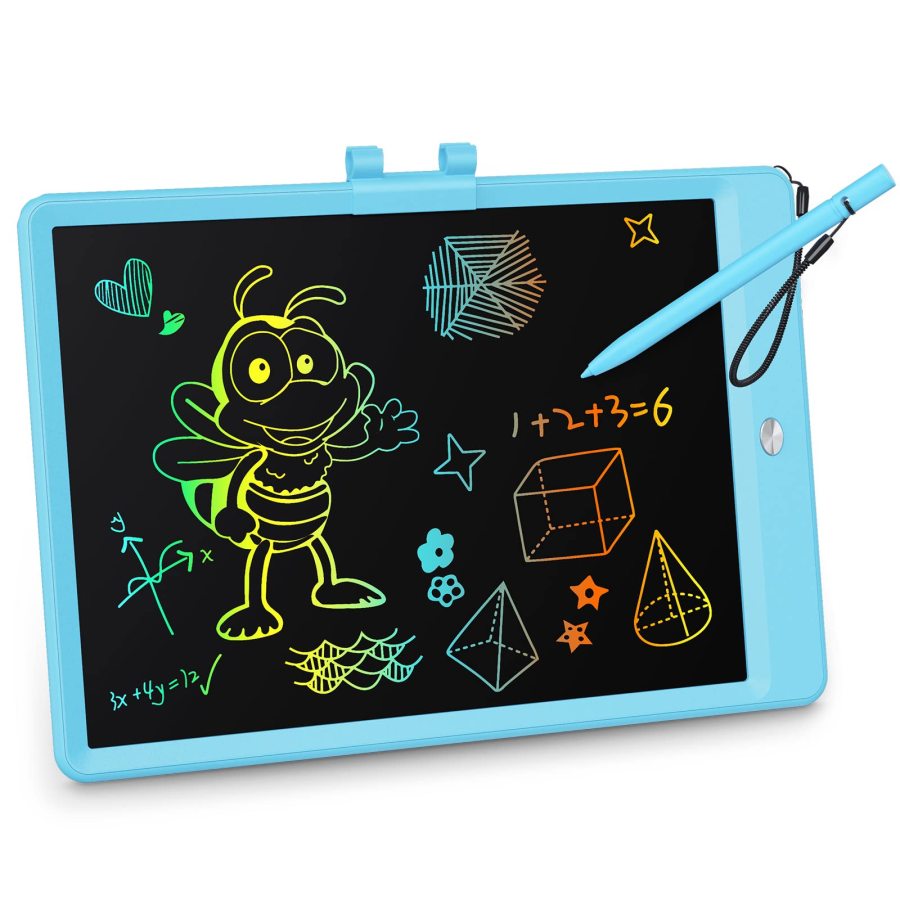
A Children's LCD Writing Tablet is an electronic drawing/writing device that uses pressure-sensitive technology and an LCD screen, allowing children to doodle and write repeatedly with a stylus and clear the content with one button. These products are typically thin, light, and portable, promoting paperless, eye-protecting, and multifunctional use. They are a popular choice to replace traditional paper and pens, reducing mess and screen time. The following table illustrates the key characteristics of consumer behavior in this category.
| Dimension | Segment | Description |
|---|---|---|
| Need Driver Type | Planned Purchase / Emergency-driven Purchase | Purchases are often tied to educational or gift-giving plans, and also serve as a practical tool for parents to alleviate the burden of childcare by solving the need for instant entertainment during travel. |
| Purchase Frequency | Low / Seasonal | Typically a one-time purchase, or bought as a gift or school supply during holidays or back-to-school seasons. Multi-packs are often used for gifting or multi-child families. |
| Decision Complexity | Medium | Parents compare price, screen performance, durability, and benefits for their child when making a purchase decision. They pay particular attention to the product's impact on their child's health. |
| Price Sensitivity | Medium-High | Price is an important consideration, especially for multi-pack products. Consumers seek high value for money but will not sacrifice basic quality for an excessively low price. |
| Emotional Dependency | Medium | The product combines practicality (learning, portability, no mess) with emotional value (stimulating creativity, children's enjoyment, parents' peace of mind). |
II. User Personas & Usage Scenarios
2.1 Education-Focused Young Parents
🎯 Seek screen-free toys that combine entertainment and education to cultivate their child's creativity, hand-eye coordination, and interest in learning.
| Typical Usage Scenarios | Core Pain Points | Primary Purchase Drivers |
|---|---|---|
|
|
|
2.2 Convenience-Seeking Traveling Families
🎯 Frequently travel with children and need lightweight, quiet, long-lasting entertainment tools to combat boredom or waiting during journeys.
| Typical Usage Scenarios | Core Pain Points | Primary Purchase Drivers |
|---|---|---|
|
|
|
2.3 Group Gift or Educational Institution Buyers
🎯 Need large quantities of cost-effective, child-appropriate gifts for party favors, classroom rewards, or teaching aids, requiring high value for money and broad applicability.
| Typical Usage Scenarios | Core Pain Points | Primary Purchase Drivers |
|---|---|---|
|
|
|
III. User Needs Hierarchy (KANO Model)
3.1 Basic Needs (Must-Haves)
- Smooth Writing: Clear lines, no lag, sensitive stylus response, providing a pen-on-paper writing experience to ensure immediacy in children's creation.
- One-Button Erase: Easily and quickly erase all screen content, allowing children to start new creations or practice anytime without complex operations.
- Sturdy & Durable: The product can withstand daily drops, squeezes, and bumps from children, is not easily damaged, extending its lifespan.
- Screen Lock: Prevents children from accidentally touching the erase button during creation, saving their 'masterpiece'.
3.2 Performance Needs (Linear Satisfiers)
- Color Screen Display: Lines appear in multiple colors or rainbow effects, increasing visual appeal and enhancing children's drawing pleasure.
- Eye Protection & No Blue Light: Uses non-self-illuminating technology to reduce eye strain and visual fatigue in children, giving parents peace of mind.
- Thin & Light Portability: Small size and light weight make it easy for children to carry, whether at home or on the go.
- Long Battery Life: Long-lasting built-in battery requires infrequent replacement or charging, reducing parental maintenance burden.
- Bundled Sales (Multi-Pack): Offers multi-unit sets to meet family or group sharing needs, enhancing product value for money and practicality.
3.3 Excitement Needs (Delighters)
- Special Shape Design: Unique shapes like dinosaurs or cartoon characters increase children's fondness and willingness to play, making it a more attractive toy.
- Variable Line Thickness: Adjusts line thickness based on pressure, adding expressive power to drawings, allowing for more depth and detail in creation.
- Includes Learning Templates/Tutorials: Provides drawing example booklets or digital templates to guide children in learning letters, numbers, or drawing skills, adding educational value.
3.4 Unmet Needs & Opportunities
-
Partial Erase Function: Current products mostly offer one-button full erase. Users wish for the ability to locally modify mistakes or adjust details instead of starting over each time.
User Reviews (VOC) My only gripe is that there is no way to erase within your image, so if you mess up on one little part, you either have to keep going or erase the entire picture you were working on.
-
Pen Easily Lost & Poor Anti-Loss Design: Many products lack an attached pen cord or have poorly designed pen holders; the stylus is easily lost, rendering the product unusable.
User Reviews (VOC) The only downside is the little "pen" isn't attached so it's easy to lose. // Pen is easy to lose.
-
Quality Control Stability & Durability: Some users report products being easily damaged or arriving defective, with inconsistent durability performance, lowering purchase trust.
User Reviews (VOC) Others report that it stops working within a week and breaks after a month. // It broke after just a few days and is very flimsy. // Unfortunately one of them didn't work and it was impossible to replace.
-
Screen Surface Easily Scratched: Despite claims of durability, user feedback indicates the screen surface is prone to scratches, affecting visual effect and product lifespan.
User Reviews (VOC) the surface scratched easily // there are scratch marks on the surface of the screen.
IV. User Decision Drivers
4.1 Key Decision Factors
- Value for Money: Consumers pay particular attention to the average price per unit in multi-packs, considering good value as a key driver, especially when purchasing in bulk for gifts or teaching tools.
- Portability & Ease of Use: Whether the product is lightweight and easy to operate directly impacts the purchase and daily user experience, especially whether children can use it independently.
- Entertainment & Learning Value: Whether it can hold children's attention for long periods and aid early education, writing, and drawing is a core consideration for parents.
- Eye Protection Effectiveness: Parents are highly concerned about the screen's impact on their child's vision, prioritizing products advertised as blue-light-free, radiation-free, and certified to ensure children's health.
4.2 Secondary Decision Factors
- Screen Clarity/Brightness: Whether the lines are bright enough and colors are vivid affects the visual experience and children's creative enjoyment. While not the primary factor, noticeable differences influence choice.
- Product Durability: The product's resistance to drops and damage determines its lifespan and purchase trust, especially crucial for active children as a guarantee for long-term use.
- Pen Anti-Loss Design: Whether the pen is easily lost and if there is a good storage solution. Though a small detail, once lost, the product's value plummets, affecting user experience.
- Appearance Design: Cartoon shapes, color variety, etc., attract children's interest, making them more willing to use and play with it.
V. Selling Points & Competitive Landscape
5.1 Selling Point Analysis
5.1.1 Standard Features (Points of Parity)
- Eye Protection Design: Commonly emphasize no blue light, no glare, aiming to protect children's vision and cater to parents' health concerns.
- Lightweight & Portable: Ultra-thin design, convenient for carrying outdoors, such as in cars or on planes, meeting travel entertainment needs.
- One-Button Erase: Simple operation, quick content erasure, convenient for children's repeated use.
- Reusable / Eco-Friendly: Replaces paper and pens, reducing paper waste and ink mess, aligning with eco-friendly concepts and parents' desire for cleanliness.
- Multifunctionality: Can be used for drawing, writing, doodling, learning, note-taking, etc., emphasizing its multi-scenario applicability.
- Ideal Gift: Marketed as a children's gift for various occasions like holidays, birthdays, or back-to-school.
5.1.2 Key Differentiators
- Color Screen: Lines appear in multiple colors, increasing visual appeal, differentiating from earlier black-and-white screen products.
- Screen Lock Function: Prevents accidental erasure, saves creative content, increases user control.
- Different Size Options: Offers various sizes like 8.5-inch, 10-inch, 12-inch, 16-inch to meet different age groups or usage needs.
- Multi-Pack Bundled Sales: 2-pack, 3-pack, 4-pack, even 20-pack, 24-pack, emphasizing high value for money and meeting group needs.
- Specific Age Range Recommendation: Targets children aged 3-8, some extending to 2-12 or adult use, segmenting the target audience.
- Special Shape Design: Shapes like dinosaurs or cartoons attract children's interest, increasing product fun.
5.1.3 Unique Selling Propositions (USPs)
- Extra Large Screen: Such as 16-inch large screen, providing a broader creative space as a product highlight.
- Includes Learning Samples: A few products include drawing example booklets to assist children's learning and inspire creativity.
- Lifetime Warranty Including Battery: Very few brands offer extended warranty services, even covering battery replacement, significantly enhancing purchase security.
- Pen Cord Anti-Loss Design: Some products come with an attached pen cord or more secure pen storage, solving a user pain point and improving convenience.
5.2 Competitive Landscape
5.2.1 Market Maturity
The Children's LCD Writing Tablet category has reached a medium-high maturity stage. Core functions like writing, erasing, and locking have become standard, leading to high product homogeneity. Market competition primarily revolves around price, multi-pack bundling strategies, and detailed differentiation (like size, appearance, pen anti-loss design, screen display effect). Consumers have basic product awareness but still expect quality details and innovation points, with relatively high price sensitivity.
5.2.2 Innovation Trends
Current category innovation trends are mainly reflected in product size expansion (towards larger screens for broader creative space), optimization of multi-pack combinations to meet bulk purchase needs, and detailed improvements addressing high-frequency user complaints like eye protection and anti-loss. Future potential directions include smarter partial erase functions or deeper integration with specific educational content (like interactive learning apps, smart pens). However, current market samples show no significant technological breakthroughs, still focusing on hardware function improvements.
VI. Marketing Claims vs. Reality Check
The table below analyzes the gap between common marketing claims and actual user experiences in this category:
| Dimension | Marketing Claim | User Reality | Verdict |
|---|---|---|---|
| Screen Brightness & Color Performance | Claims like 'vibrant color screen', 'brighter and clearer', 'vivid rainbow colors'. | Users commonly report actual screen brightness is dim, lines and colors are not vibrant, not matching promotional images, especially hard to see in low-light environments. | Sellers use retouched images and exaggerated language to mislead consumer expectations about the visual performance of non-backlit LCD screens, leading to a massive experience gap upon receipt, a classic case of over-marketing. |
| Product Durability | Claims like 'sturdy and drop-resistant', 'high-quality plastic', 'long-lasting durability'. | Numerous users report products are 'cheaply made', 'very fragile', 'broke within days or a month', with cases of DOA items, indicating poor quality control stability. | Sellers compromised on material and structural strength for cost but over-promised 'durability' in marketing, leading to failure to deliver on the most critical promise for a children's toy. |
| Stylus Anti-Loss Design | Claims like 'tight pen slot', 'includes anti-loss cord' or implies anti-loss design. | Users commonly complain the stylus is easily lost; some product pen slots are too loose, or cords are claimed but not included, causing significant inconvenience for young users. | Sellers showed insufficient design consideration or made false claims regarding the stylus anti-loss issue, ignoring the high-frequency pain point of children losing toy accessories, resulting in an inability to use the product consistently. |
Key Takeaway: The market suffers from widespread exaggeration regarding screen brightness and color performance, as well as mismatches between claimed and actual product durability, creating a significant gap between marketing and real-world experience.
VII. Supply-Demand Misalignment Analysis
The table below highlights mismatches between seller focus and buyer priorities:
| Dimension | Seller Behavior | User Focus | Verdict |
|---|---|---|---|
| Actual Screen Visibility | Sellers frequently emphasize 'color display', 'brighter and clearer' in listings, trying to attract with visual appeal. But they avoid mentioning the brightness limitations inherent to non-backlit LCD screens. | Users repeatedly complain 'screen isn't bright enough', 'colors are dull', feeling the actual effect is far inferior to promotional images, affecting user experience and learning motivation. | Sellers created unrealistic visual expectations through marketing, ignoring the inherent physical limitations of LCD technology regarding brightness. This led to a severe disconnect between user experience and promotion, a typical case of 'marketing first, experience second'. |
| Product Long-Term Durability | Sellers generally make vague claims about durability, like 'sturdy plastic', 'drop-resistant', but lack specific supporting data or long-term warranty commitments. | Negative feedback about products breaking within a short period (weeks to a month) is extremely common. Users have strong concerns about product quality and lifespan, a core reason for negative reviews and returns. | Sellers failed to provide stable quality and credible guarantees for durability-a core element of children's toys. This represents the category's biggest 'trust deficit' and 'survival threat'. |
| Stylus Anti-Loss Solution | Most sellers inadequately address the stylus anti-loss issue in design or fail to highlight it as a selling point. Even those with cords don't feature it prominently. | Users frequently report the stylus is easily lost, rendering the product unusable. They find designs without attached cords very inconvenient, even purchasing spare pens or DIY solutions. | Sellers overlooked the high-frequency pain point of 'accessory loss' in children's product usage, failing to provide effective solutions, leading to significantly compromised user experience in convenience. |
Key Takeaway: Sellers generally indulge in boasting about screen visual effects and versatility, yet collectively remain silent or downplay the core pain points users care most about: real durability, pen loss, and screen visibility. This creates a severe misalignment between supply and demand focus.
VIII. Strategic Opportunities & Recommendations
8.1 Optimize Screen Visibility & Manage User Expectations
8.1.1 Target Audience & Pain Points
⚡️ Pain Points Addressed: Insufficient screen brightness, dull color performance, mismatch with promotional images.
8.1.2 Action Plan
Adopt high-reflectivity polarizing film and optimize color filters to improve screen visibility and color contrast under normal ambient light. Enhance stylus tip design for thicker, more prominent lines. Consider adding a subtle ring of side-edge lighting in the product design to improve overall brightness perception without compromising eye protection.
| Tech Complexity | Medium |
| Cost Impact | Medium Impact |
| Trade-off Warning | Within existing LCD technology, achieving the brightness of self-illuminating tablets is impossible. Therefore, focus must be on optimizing reflectivity and color contrast, while clearly informing users of its non-backlit nature. |
| Price Band | Only viable above $16.99 |
8.1.3 Marketing Strategy
Emphasize 'Upgraded high-contrast color screen, lines clearly visible'. Use real-life videos and comparison images to clearly show the product's real performance under different lighting. Proactively state 'Non-backlit eye protection screen, clearer display with better light' to manage expectations.
8.2 Enhance Structural Durability & Quality Consistency
8.2.1 Target Audience & Pain Points
⚡️ Pain Points Addressed: Poor quality control stability and durability, products easily damaged, material feels cheap.
8.2.2 Action Plan
Select ABS plastic with higher strength and toughness. Optimize mold design, adding thickness or buffer structures at vulnerable points (like corners, battery cover). Implement stricter factory QC processes, conduct batch drop tests and button life tests to ensure product quality consistency.
| Tech Complexity | Low |
| Cost Impact | Medium Impact |
| Trade-off Warning | Using higher-quality ABS plastic or adding minor structural reinforcements internally may slightly increase product weight (5-10g) and thickness (0.5-1mm), but the impact on core portability is minimal. |
| Price Band | Only viable above $14.99 |
8.2.3 Marketing Strategy
Highlight 'Child-grade drop-resistant design, fearless of daily falls'. Provide durability test reports from authoritative institutions or videos of rigorous child-use testing. Promise longer warranty periods, e.g., 'Two-year free replacement' or 'Lifetime limited warranty', to build brand trust.
8.3 Integrate Anti-Loss Pen & Partial Erase Function
8.3.1 Target Audience & Pain Points
⚡️ Pain Points Addressed: Stylus easily lost, no partial erase function limiting creative freedom.
8.3.2 Action Plan
Design a pen slot with strong magnetic attachment or integrated spring lock to ensure the stylus is securely held, and include a replaceable anti-loss lanyard. For partial erase, explore more advanced pressure-sensitive area recognition technology, paired with an eraser function on the pen end or a dedicated erase area, enabling small-scale modifications.
| Tech Complexity | High |
| Cost Impact | High Impact |
| Trade-off Warning | Partial erase may require more complex screen technology or multi-function pen design, significantly increasing BOM cost and R&D difficulty. Anti-loss pen design is relatively easier but may add slight volume. |
| Price Band | Only viable above $24.99 |
8.3.3 Marketing Strategy
Emphasize 'Innovative anti-loss pen design, goodbye to accessory anxiety'. For partial erase, promote 'Detail modification, no need to start over', highlighting the product's significant improvement in creative and learning efficiency. Adopt a tone like 'Empowered by black tech, unleashing children's creative freedom'.
8.4 Customized Age-Specific Design & Learning Content Integration
8.4.1 Target Audience & Pain Points
⚡️ Pain Points Addressed: Products lack guidance, failing to meet the nuanced needs of specific age groups.
8.4.2 Action Plan
Design rounder, thicker, easier-to-grip, anti-swallow styluses for toddlers (1-3 years). Add erasable learning cards or simple built-in letter/number templates (via card slot) for school-age children. Partner with early education content providers to develop targeted learning materials.
| Tech Complexity | Low |
| Cost Impact | Low Impact |
| Trade-off Warning | Mainly adjustments in mold and content design, no significant physical side effects. Requires investment in market research and content development costs. |
| Price Band | Only viable above $12.99 |
8.4.3 Marketing Strategy
Targeted messaging: 'Age-specific customization, fun for every growth stage'. For toddlers, emphasize 'Safe enlightenment, easy for big and small hands'. For school-age, highlight 'Fun learning, reinforcing knowledge through play', providing expert recommendations or user cases for different age groups.