Amazon US Market Analysis: Luggage Scales Category
📊 Executive Summary
📈 Market Trends
Portability and practicality are the foundation; user experience details require deeper cultivation. The luggage scale market has matured. Lightweight, high precision, and readability are mainstream selling points. Current market innovation trends are mainly evident in energy solutions (e.g., battery-free tech) and multi-function integration. However, user demand for actual experience upgrades in core functionalities (like stability when weighing heavy items, battery reliability) is urgent.
⚡ Major Pain Points
Unstable weighing of heavy items and battery anxiety are core weaknesses. Users commonly report poor product stability, fluctuating readings, and hand fatigue when weighing heavy luggage. Frequent issues with short battery life or devices arriving dead also disrupt usage. Additionally, cheap-feeling materials and useless additional functions impact user trust and experience.
💡 Selection Opportunities
Start from core pain points to create an exceptionally reliable and worry-free experience. Opportunities lie in developing a 'Luggage Scale Optimized for Stable, Effortless Weighing of Heavy Items' to solve reading stability and hand fatigue issues, and launching an 'Innovative Energy Luggage Scale that Completely Eliminates Battery Anxiety' to provide an eco-friendly, worry-free power solution. Simultaneously, enhancing 'High-Quality Durability' and 'Multi-Scenario Professional Hook' designs will help products stand out in a homogeneous market and establish differentiated brand advantages.
I. Analysis Overview
1.1 Introduction & Report Scope
This report analyzes the 'Luggage Scales' category in the Amazon US market, focusing on target user personas, core needs, decision drivers, market communication, and potential opportunities.
1.2 Category Snapshot
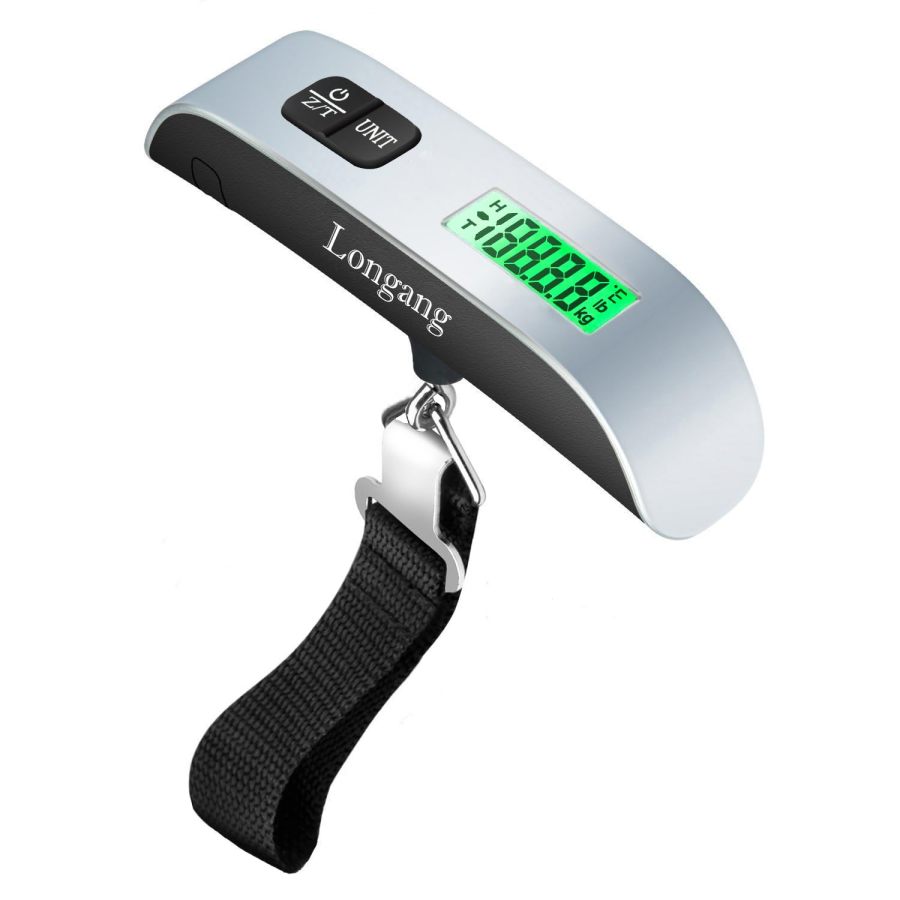
A luggage scale is a portable, handheld digital weighing device primarily used to accurately measure the weight of luggage, packages, or other items. Its core function is to help travelers avoid airline overweight baggage fees. Products in this category generally emphasize compact size, portability, ease of use, and clear readability. They typically feature an LCD backlit screen and multiple unit conversion functions. Some models integrate innovative designs such as a built-in tape measure, thermometer, or kinetic/battery-free power generation. The following table illustrates the key characteristics of consumer behavior in this category.
| Dimension | Segment | Description |
|---|---|---|
| Need Driver Type | Planned Purchase / Emergency-driven Purchase | Users typically purchase luggage scales in a planned manner before a trip or as an emergency purchase during travel when facing the risk of overweight baggage to avoid excess fees. |
| Purchase Frequency | Low Frequency | As a durable travel tool, it is not a consumable. A single purchase typically lasts for years, resulting in a long repurchase cycle. |
| Decision Complexity | Medium | Consumers compare factors like accuracy, portability, ease of use, price, and additional features but do not conduct deep technical research. |
| Price Sensitivity | Medium to High | Price is an important consideration. However, to avoid costly overweight fees, users are willing to pay a premium for higher reliability, stability, and a worry-free experience. |
| Emotional Dependency | Low | Primarily based on practical, problem-solving functionality. However, it offers some emotional value in terms of 'avoiding hassle' and 'peace of mind during travel.' |
II. User Personas & Usage Scenarios
2.1 Savvy Traveler
🎯 Individuals or families who frequently travel by air, are highly attentive to airline baggage weight limits, strive to avoid extra fees and airport inconveniences, and seek efficient, worry-free travel experiences.
| Typical Usage Scenarios | Core Pain Points | Primary Purchase Drivers |
|---|---|---|
|
|
|
2.2 Multi-Purpose Weigher
🎯 Users who require handheld scales not only for travel but also for scenarios like fishing, mailing packages, or weighing outdoor gear. They value the device's versatility, durability, and environmental adaptability.
| Typical Usage Scenarios | Core Pain Points | Primary Purchase Drivers |
|---|---|---|
|
|
|
III. User Needs Hierarchy (KANO Model)
3.1 Basic Needs (Must-Haves)
- Accurate Weighing: Provides stable, reliable weight readings with minimal error, closely matching official weighing results (e.g., at airports).
- Easy Operation: One-button on/off, unit switching, intuitive and easy to understand, requiring no complex learning to use.
- Compact & Portable: Small size and light weight, easy to carry personally or pack in luggage, not adding to travel burden.
- Unit Conversion: Supports switching between various internationally common units like pounds (lb) and kilograms (kg) to meet regional needs.
3.2 Performance Needs (Linear Satisfiers)
- High Weight Capacity: Supports a maximum capacity of 110 lbs / 50 kg, meeting the needs of most carry-on and checked luggage.
- Backlit Display: LCD screen with backlight function, allowing clear number reading in dim or bright light, improving usability.
- Data Lock: Automatically locks and displays the reading once the weight stabilizes, allowing users to view it after setting the item down, avoiding repeated lifting.
- Battery Indicator: Low battery reminder function ensures users replace or charge batteries promptly, avoiding the predicament of a dead battery at critical moments.
3.3 Excitement Needs (Delighters)
- No Battery Required: Utilizes kinetic energy generation or USB charging, completely eliminating reliance on traditional disposable batteries, offering greater environmental friendliness, convenience, and long-term peace of mind.
- Overweight Warning: Issues alerts via display color changes (e.g., yellow/red light) or sound when approaching or reaching the weight limit, allowing for early risk avoidance.
- Integrated Additional Functions: Built-in practical tools like a measuring tape or thermometer, adding product value and convenience for multi-scenario use.
- Comfortable Grip: Ergonomically designed handle, using materials like rubber coating, reducing fatigue and discomfort when lifting heavy items for extended periods.
3.4 Unmet Needs & Opportunities
-
Stability When Weighing Heavy Items: Users often struggle to keep the scale steady when weighing heavy luggage, leading to significant reading fluctuations and difficulty obtaining accurate data, while also experiencing hand fatigue quickly.
User Reviews (VOC) It's hard to hold a heavy bag steady enough for an accurate reading. // My hand gets tired quickly and the numbers jump around.
-
Battery Life Consistency & Reliability: Some products suffer from short battery life, insufficient battery charge upon arrival, or being dead on arrival, severely impacting the unboxing experience and continuity of use.
User Reviews (VOC) The battery died after only a few uses. // It came with a dead battery. // I wish I didn't have to worry about batteries at all.
-
Product Structure & Material Durability: Some users report products feeling cheap or failing after short-term use (e.g., hook bending, casing cracking), leading to quality concerns and loss of trust.
User Reviews (VOC) Feels flimsy, like it won't last. // Broke after just one trip. // The hook bent when weighing my suitcase.
-
Hook Versatility for Multi-Scenario Use: Beyond travel, more users desire stable and efficient use in scenarios like package mailing and outdoor adventures, demanding higher requirements for hook design (size, material) in terms of versatility and durability.
User Reviews (VOC) Good for luggage, but for fishing the hook is too small. // Needs to be more rugged for outdoor use.
IV. User Decision Drivers
4.1 Key Decision Factors
- Weighing Accuracy: The user's most critical concern, directly related to successfully avoiding overweight fees. The product must provide stable, reliable readings highly consistent with airport scale results.
- Ease of Use: Whether the operation is simple and intuitive, and if a reading can be obtained quickly (within 3-5 seconds), especially in rushed or inconvenient travel situations.
- Portability: Whether the product's size and weight are sufficiently small and light to easily fit into luggage or be carried personally, without adding to travel burden.
- Battery Reliability: Battery lifespan, inclusion of batteries, ease of replacement, and availability of battery-free solutions directly impact the user experience.
4.2 Secondary Decision Factors
- Product Durability & Quality Perception: Expectation that the product can withstand multiple trips and heavy weighing, is not easily damaged, and its appearance and materials do not feel cheap.
- Display Clarity: Whether the numbers on the display are large enough and clearly readable under various lighting conditions (bright light, dim). A backlight function is a plus.
- Price: As an auxiliary tool, users have a certain sensitivity to price but are willing to pay a reasonable premium for reliability, durability, and convenience.
- Grip Comfort: Hand comfort when lifting heavy items for extended periods, and whether the handle design is anti-slip and ergonomic.
V. Selling Points & Competitive Landscape
5.1 Selling Point Analysis
5.1.1 Standard Features (Points of Parity)
- Portable & Lightweight: Small product volume and light weight, easy to carry and store, emphasizing the 'travel essential' attribute.
- Precise Measurement: Widely claimed to provide high-precision measurement (e.g., 0.1 lb / 50g accuracy) to reduce error and avoid overweight fees.
- Easy to Read: Equipped with a backlit LCD large display, emphasizing clear, visible numbers adaptable to different lighting environments.
- Multi-Unit Conversion: Supports switching between various weighing units like pounds (lb), kilograms (kg), ounces (oz), and grams (g).
5.1.2 Key Differentiators
- Data Lock: Automatically locks the reading after stable weighing, allowing users to view it after setting the item down, enhancing convenience.
- Smart Power Saving: Auto-shutdown function extends battery life, coupled with low battery and overload indicators.
- Comfortable Handle: Uses rubber coating or ergonomic design to improve grip feel and reduce discomfort when weighing heavy items.
- Integrated Additional Functions: Built-in auxiliary tools like a tape measure or thermometer, providing multi-purpose value.
- Overweight Warning Function: Alerts users to overweight luggage via sound or screen color changes (e.g., yellow/red light), enabling proactive warning.
5.1.3 Unique Selling Propositions (USPs)
- No Battery Required (Kinetic Power Generation): Generates electricity through hand-cranking or pressing, completely solving battery issues, offering greater environmental friendliness and convenience, though currently less common.
5.2 Competitive Landscape
5.2.1 Market Maturity
The portable luggage scale market has entered a mature stage. Core functionalities like precise weighing, portability, and readability have become industry standards. Product homogeneity is relatively high. Competition primarily revolves around price, design details, and user experience optimization. Brand recognition influences sales to some extent, but emerging brands still have opportunities to break through via differentiated selling points and more reliable quality.
5.2.2 Innovation Trends
Current innovation trends are mainly evident in two areas: First, innovation in energy supply methods, such as battery-free kinetic power generation technology, to address user pain points regarding battery life and environmental concerns. Second, functional integration and optimization, for example, integrating and enhancing the practicality of travel-related auxiliary functions like tape measures and thermometers, along with smarter overweight warning mechanisms. Additionally, improving stability when weighing heavy items, grip comfort, and overall product durability are important development directions.
VI. Marketing Claims vs. Reality Check
The table below analyzes the gap between common marketing claims and actual user experiences in this category:
| Dimension | Marketing Claim | User Reality | Verdict |
|---|---|---|---|
| Battery Life & Reliability | Long-lasting battery life, built-in battery for extended use, includes batteries, ready to use out of the box without worry. | Users commonly report short battery life (some arrive with low charge or fail after just a few uses). Some products use non-standard button cells, making replacement inconvenient. Advertised long battery life is often theoretical or based on low-power standby data. | Sellers fail to fully understand users' rigid need for battery reliability, over-optimistically promoting features, leading users to face power anxiety at critical moments, severely damaging product trust. |
| Stability & Ease of Use When Weighing Heavy Items | High-precision sensors, comfortable to hold, easily weighs up to 110 lbs, with stable readings. | Users report difficulty keeping the device steady when weighing items over 40-50 lbs, significant reading fluctuations, and quick hand fatigue, preventing accurate and convenient weighing results. | The seller's claims of 'comfortable grip' and 'high precision' present a logical paradox in the core usage scenario of weighing heavy items, failing to address the physical challenges and experiential pain points of actual operation. |
| Product Material & Durability | Made with premium materials, sturdy and durable, built to last, a travel essential. | Some users report products feeling cheap and plastic, hooks bending after weighing heavy items, or devices failing after just a few uses, contradicting the 'sturdy and durable' marketing. | Sellers' material choices and structural designs fail to adequately match the proclaimed 'heavy load capacity' and 'long-term durability' scenarios, resulting in actual product quality that cannot support marketing promises, damaging brand image. |
| Practicality of Additional Functions | Built-in tape measure/thermometer, multi-purpose device, adds convenience to travel. | Some products have built-in tape measures made of thin, easily damaged material, or inaccurate thermometers, rendering the additional functions useless and failing to deliver expected value. | The design of additional functions is superficial, lacking deep insight into actual user needs and usage scenarios. BOM cost is invested without providing real value, representing typical ineffective internal competition. |
Key Takeaway: The market exhibits widespread parameter inflation and optimistic marketing tendencies, especially regarding battery life, stability when weighing heavy items, and material durability, showing a clear gap with actual user experience.
VII. Supply-Demand Misalignment Analysis
The table below highlights mismatches between seller focus and buyer priorities:
| Dimension | Seller Behavior | User Focus | Verdict |
|---|---|---|---|
| Stability When Weighing Heavy Items | Sellers commonly emphasize 'high precision' and 'comfortable handle' but rarely mention specific solutions for ensuring reading stability and reducing hand fatigue when users lift luggage over 50 lbs. | Users strongly complain about reading fluctuations and difficulty maintaining stability when weighing heavy items, along with quick hand fatigue, desiring a more stable and effortless weighing experience. | Sellers lack deep insight into the experiential details of the core usage scenario, causing the product to fail in delivering on its promise at the moment when 'reliability and effortlessness' are most needed. |
| Battery Life & Reliability | Sellers promote 'long battery life' and 'includes batteries' but generally avoid discussing real-world performance under intensive use or fail to provide easy-to-replace, standard battery solutions. | Users commonly encounter issues of short battery life or devices arriving dead, experiencing high anxiety about batteries failing at critical moments, craving more reliable or battery-free solutions. | Sellers fail to provide transparent and convincing solutions for the energy issue users worry about most, leading to a trust crisis and negative reviews. |
| Overall Product Durability | Sellers commonly market products as 'sturdy and durable,' but under BOM cost constraints, actual materials and craftsmanship often cannot support these claims, lacking specific durability validation or warranty commitments. | Users report products feeling cheap or failing in the short term (hook breakage, casing damage), questioning their long-term value. | Sellers' definition of 'durable' deviates from user expectations, overlooking users' core need for long-term product reliability, leading to declining brand trust. |
| Practicality of Additional Functions | Some sellers position 'built-in tape measure' or 'thermometer' as differentiation points but often fail to ensure their quality and practicality in design. | Users report poor quality of these additional functions (e.g., thin tape measure, inaccurate thermometer), low usage frequency, ultimately making them useless. | When piling on features, sellers fail to conduct user value validation and detail refinement, resulting in functions that exist but are useless, wasting BOM cost. |
Key Takeaway: Sellers generally over-supply on 'portability' and 'basic functions' but collectively remain silent or downplay core user pain points like 'stability when weighing heavy items' and 'battery reliability,' leading to a supply-demand mismatch.
VIII. Strategic Opportunities & Recommendations
8.1 Luggage Scale Optimized for Stable, Effortless Weighing of Heavy Items
8.1.1 Target Audience & Pain Points
⚡️ Pain Points Addressed: Insufficient stability when weighing heavy items, hand fatigue, fluctuating readings.
8.1.2 Action Plan
Design a wider, thicker, anti-slip, and more supportive ergonomic handle (e.g., T-shaped handle). Consider two-handed or multi-finger grip designs to distribute force. Optimize sensors and algorithms to quickly capture stable readings even with slight shaking or imperfect vertical lifting. Increase hook size and optimize structure to accommodate various luggage handles.
| Tech Complexity | Medium |
| Cost Impact | Medium Impact |
| Trade-off Warning | A wider, more ergonomic handle may slightly increase product volume or weight, requiring a balance with portability. |
| Price Band | Only viable above $14.99 |
8.1.3 Marketing Strategy
Emphasize 'Say goodbye to shaky hands, weigh with stability!' Use comparison videos to showcase reading stability and grip comfort with heavy items. Highlight the selling point of 'Effort-saving design, even women can easily weigh large luggage,' addressing deep-seated user pain points.
8.2 Innovative Energy Luggage Scale that Completely Eliminates Battery Anxiety
8.2.1 Target Audience & Pain Points
⚡️ Pain Points Addressed: Short battery life, arriving dead, inconvenient battery replacement, environmental concerns.
8.2.2 Action Plan
Optimize the kinetic power generation mechanism to improve efficiency and energy storage, ensuring short operation supports multiple weighings. Alternatively, introduce mainstream USB-C charging and built-in rechargeable lithium battery solutions, allowing users to use common charging devices. For traditional battery models, strictly use high-quality, well-known brand AAA batteries and include spares.
| Tech Complexity | Medium |
| Cost Impact | High Impact |
| Trade-off Warning | Kinetic power generation devices or built-in rechargeable batteries may slightly increase product size or cost, requiring clever integration in design. |
| Price Band | Only viable above $19.99 |
8.2.3 Marketing Strategy
Highlight 'Never lets you down! No more battery worries, weigh anytime, anywhere.' Emphasize 'Eco-friendly black tech, your luggage scale never runs out of power.' Use scenario-based demonstrations to showcase the convenience of not needing to find batteries, attracting users who pursue environmentalism and technology.
8.3 High-Quality, Durable Luggage Scale
8.3.1 Target Audience & Pain Points
⚡️ Pain Points Addressed: Cheap-feeling product materials, short-term damage, lack of durability assurance.
8.3.2 Action Plan
Select high-strength ABS engineering plastic, thickened stainless steel hooks, or alloy connectors to enhance overall impact resistance and load-bearing lifespan. Use finishes like matte or soft-touch coating to improve grip comfort and texture. Offer an industry-leading 2-3 year warranty and clearly display this on the product page.
| Tech Complexity | Low |
| Cost Impact | Medium Impact |
| Trade-off Warning | Using more robust materials will slightly increase unit cost, potentially requiring sacrificing some price sensitivity. |
| Price Band | Only viable above $16.99 |
8.3.3 Marketing Strategy
Emphasize 'Crafted quality, built to last.' Use videos of high-strength material and structural tests to demonstrate product resilience in extreme scenarios. Highlight the promise of 'Three-year warranty, worry-free travel' to build long-term user trust.
8.4 Multi-Scenario Professional Hook Luggage Scale
8.4.1 Target Audience & Pain Points
⚡️ Pain Points Addressed: Poor hook size versatility, unsuitable for multiple scenarios like fishing and packages, material lacks corrosion resistance.
8.4.2 Action Plan
Design replaceable or rotatable multi-functional hooks, providing different sizes and shapes of hook heads to accommodate luggage handles, fish mouths, package straps, etc. Upgrade hook material to 304 stainless steel or higher-grade anti-corrosion alloy to enhance outdoor durability.
| Tech Complexity | Low |
| Cost Impact | Low Impact |
| Trade-off Warning | Detachable or multi-functional hooks increase part count but do not affect core functionality. |
| Price Band | Only viable above $12.99 |
8.4.3 Marketing Strategy
Promote 'One scale, multiple uses, no hook worries.' Use scenario images to showcase the product's ease of use across luggage, fishing, packages, and other scenarios. Emphasize 'Professional-grade hooks, sturdy and corrosion-resistant, ready for any challenge' to attract niche market users.