Amazon US Market Analysis: Ice Cube Molds & Trays Category
📊 Executive Summary
📈 Market Trends
Silicone trays dominate, with demand for integration and differentiation coexisting. The Amazon US ice tray market is highly mature, with silicone becoming mainstream due to its easy release and safety. Consumer demand is strong for multi-functional, stackable designs with lids, while interest in unique ice shapes and integrated storage solutions is also growing. Summer and holidays are peak demand periods.
⚡ Major Pain Points
Marketing exaggeration and the gap with actual experience are the core issues. Core functions widely claimed by sellers, such as 'easy release' and 'lid seal for odor protection', are frequently contradicted by user feedback like 'difficult ice removal' and 'lids loosen/crack easily'. Some products even have 'chemical odor' problems, severely undermining consumer trust in material safety, leading to low user satisfaction and high return rates.
💡 Selection Opportunities
Focus on pain points, deliver on experience, build trust barriers. Market opportunities lie in innovatively solving the 'hard flaws' of existing products, rather than blindly adding features. For example: developing a reinforced seal lid with composite structure to eliminate spills and odor transfer; implementing an odor-free certification system to rebuild consumer trust in food-grade materials; and providing a scenario-based ice size product line to precisely match user needs through visual comparisons. Simultaneously, optimizing the overall durability of composite material trays will be a key direction for increasing brand premium.
I. Analysis Overview
1.1 Introduction & Report Scope
This report analyzes the 'Ice Cube Molds & Trays' category on the Amazon US market, focusing on target user personas, core needs, decision drivers, market communication, and potential opportunities.
1.2 Category Snapshot
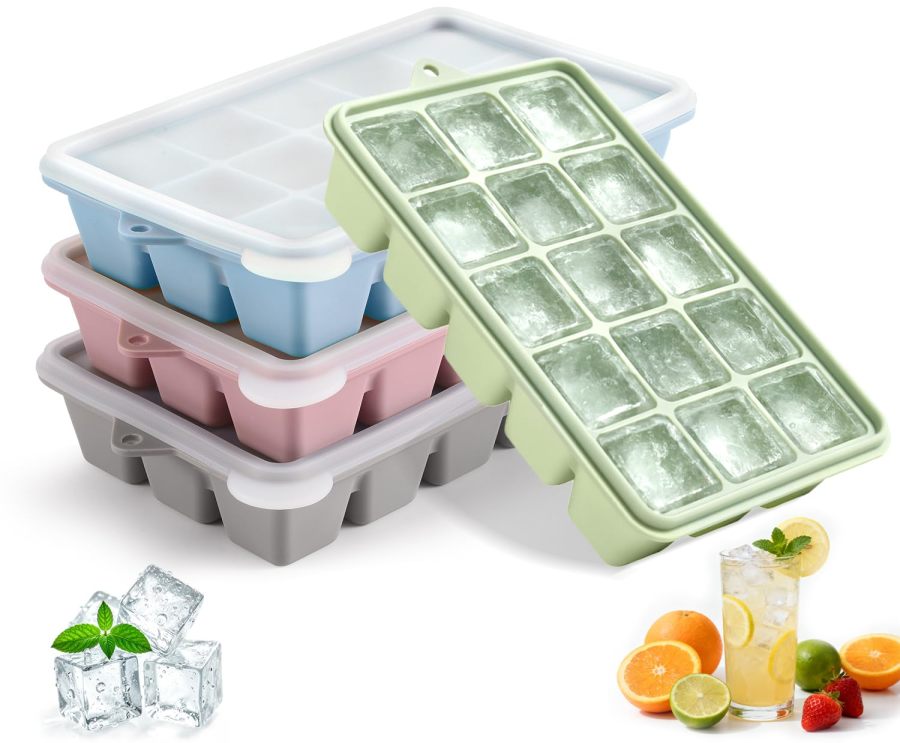
Ice cube molds and trays are practical kitchen tools used to freeze water or other liquids into ice cubes. The current market is dominated by food-grade silicone, with some products using composite materials of silicone and rigid plastic. Product forms have diversified from classic cubes to spherical, slender stick, honeycomb, and other novelty ice shapes. Many products come with spill-proof lids, stackable designs, and even include ice buckets and scoops, aiming to enhance user experience and freezer organization efficiency. The following table illustrates the key characteristics of consumer behavior in this category.
| Dimension | Segment | Description |
|---|---|---|
| Need Driver Type | Planned Purchase / Emergency-driven Purchase | Purchasing behavior is often driven by seasonal beverage needs, replacing broken trays, or the lack of a built-in ice maker (planned factors); it can also stem from immediate needs for impromptu gatherings or specialty drinks. |
| Purchase Frequency | Low Frequency / Seasonal | Ice cube trays are durable kitchenware, typically replaced every few years. However, demand sees significant spikes during summer heat or before holiday parties. |
| Decision Complexity | Medium | Consumers compare material (silicone/composite), ease of release, ice shape/size, presence of a lid, and set functionality, requiring a moderate time investment for evaluation. |
| Price Sensitivity | Medium | Price is an important consideration, but consumers are also willing to pay a certain premium for better release experience, food-grade materials, and practical additional features. |
| Emotional Dependency | Medium-Low | Primarily driven by functional utility, but aesthetically pleasing ice shapes and the ease of making ice cubes can provide additional pleasure and enhance perceived quality of life. |
II. User Personas & Usage Scenarios
2.1 Everyday Household User
🎯 General family members who prioritize practicality, ease of use, and hygiene, seeking reliable daily ice-making solutions.
| Typical Usage Scenarios | Core Pain Points | Primary Purchase Drivers |
|---|---|---|
|
|
|
2.2 Beverage Enthusiast / Party Host
🎯 Pursues high-quality drinking experiences, enjoys crafting specialty drinks, and values the aesthetic appeal and slow-melt properties of ice.
| Typical Usage Scenarios | Core Pain Points | Primary Purchase Drivers |
|---|---|---|
|
|
|
2.3 Efficient Freezer Manager
🎯 Uses ice trays as multi-purpose freezing tools for portioning and storing small food items, prioritizing food safety and time efficiency.
| Typical Usage Scenarios | Core Pain Points | Primary Purchase Drivers |
|---|---|---|
|
|
|
III. User Needs Hierarchy (KANO Model)
3.1 Basic Needs (Must-Haves)
- Safe & Non-Toxic: Products must be BPA-Free and use food-grade materials to ensure safety when in contact with food and beverages.
- Easy to Remove: Ice cubes should separate easily from the mold, avoiding strenuous effort, ice breakage, or tray damage.
- Sturdy & Durable: Products should withstand long-term freezing and repeated use without cracking, tearing, or deforming.
- No Chemical Odor: The tray itself should not have a plastic or chemical odor that could affect the pure taste of the ice.
3.2 Performance Needs (Linear Satisfiers)
- Spill-Proof Lid Design: Lids should effectively prevent spills when moving filled trays and block freezer odors, keeping ice fresh.
- Easy to Clean: Trays should be dishwasher-safe or easy to hand-wash, reducing daily cleaning hassle.
- Stackable Design: Trays should have good stackability to efficiently utilize limited freezer space and maintain organization.
- Appropriate Ice Cube Size: Ice cube size should fit common drink glasses and water bottle openings, avoiding inconvenience from being too large or small.
- Multi-Purpose Use: Beyond making ice, the product can be used for freezing baby food, juice, broth, sauces, etc., expanding its value.
3.3 Excitement Needs (Delighters)
- Unique Ice Cube Shapes: Offering novel and fun ice shapes like spheres, large cubes, slender sticks, honeycombs, etc., to add interest and aesthetic appeal to drinks.
- Integrated Storage Solution: Selling trays in sets with dedicated ice buckets and scoops, providing a complete and convenient solution from making to storing and serving ice.
- Composite Material Innovation: Designs like a rigid plastic frame combined with a soft silicone base, aiming to balance mold stability with easy ice release.
- Compact or Portable Design: Small, compact trays specifically designed for limited spaces like mini-fridges, dorm rooms, or RV travel.
3.4 Unmet Needs & Opportunities
-
Poor Lid Seal: Many users complain that lids do not seal completely or have unstable clips, easily falling off, leading to spills when filling or ice absorbing odors.
User Reviews (VOC) Customers have mixed opinions about the ice cube trays' lids, with some finding it a brilliant addition while others report that it doesn't stay on properly. // The lids snap on tight, so no more mystery meat flavor in my drinks. And the bin? It's like a cozy ice cube Airbnb. I open the freezer and feel like Elsa runs the joint.
-
Durability Concerns: Some users report that the silicone part tears easily, or the plastic frame and lid are prone to cracking after some use, affecting product lifespan.
User Reviews (VOC) Customers report significant durability issues with the ice cube trays, noting that they snap in half within a month of use and the silicone material tears around the rigid plastic. // Customers have mixed opinions about the ice cube trays' sturdiness, with some finding they hold up well and last all day, while others report they are super flimsy and the material tears easily.
-
New Product Odor: Some users report a strong chemical odor from new silicone trays that persists even after cleaning, raising food safety concerns.
User Reviews (VOC) Customers report that the ice cube trays have an awful smell. // Strong chemical smell won't go away even after cleaning. // I asked AI because I felt crazy, and it confirmed it is low grade silicone with fillers, and not safe for human consumption (the gasses can easily leach into your water/ice when freezing).
-
Spills When Filling & Moving: All-silicone trays become too soft and flexible when filled with water, easily deforming and spilling when being carried to the freezer, making the process inconvenient.
User Reviews (VOC) The flexible silicone makes it much easier to pop out the ice compared to traditional plastic trays. The lid is exactly what I wanted, keeping ice from absorbing any freezer odors. If they do take on a smell over time, I love that I can just bake them at 300 degrees for about 20 minutes, and they're fresh again since they're 100% silicone. The only drawback is that they are a more flexible silicone, making the trays harder to fill with water without spilling. // The silicone trays are really bendy so it is easy to get ice out of them. The problem is that it also makes it difficult to transfer liquids in them from the counter to the freezer.
-
Ice Release Falls Short of Expectations: Despite claims of easy release, in actual use, some trays or specific ice shapes still require forceful pushing to remove the ice.
User Reviews (VOC) Customers have mixed experiences with removing ice cubes from these trays, with some finding them easy to get out while others report difficulty. // If you are used to being able to twist the tray, so the ice cubes come out easily into a bowl, you will be sorely disappointed. You literally have to push each cube out by hand, which takes minutes.
IV. User Decision Drivers
4.1 Key Decision Factors
- Ice Release Experience: Whether ice cubes can be removed easily and intact from the mold is the most critical consideration for consumers, directly impacting user satisfaction.
- Material Safety & Odor: Being food-grade, BPA-Free, and the product itself being free of chemical odors are fundamental user requirements for health and hygiene.
- Lid for Spill-Proof & Odor Protection: Whether the lid effectively prevents spills when filling and blocks food odors from the freezer is a key function determining product practicality and ice taste.
4.2 Secondary Decision Factors
- Ice Cube Size & Shape: Choosing the appropriate ice size and unique shapes based on personal beverage habits (e.g., whiskey, coffee, water bottles) to enhance the drinking experience.
- Product Sturdiness & Durability: Desire for a long-lasting product that resists cracking and tearing, reducing replacement frequency and demonstrating product value.
- Freezer Space Utilization: Whether the tray is easy to stack and has a compact design to maximize savings on limited freezer space.
- Cleaning Convenience: Ease of cleaning, especially dishwasher safety, influences user willingness for daily maintenance.
- Set with Additional Features: Whether it includes extra accessories like an ice bucket and scoop, providing a more complete and convenient ice-making and storage solution.
V. Selling Points & Competitive Landscape
5.1 Selling Point Analysis
5.1.1 Standard Features (Points of Parity)
- Easy Release: Widely promoted as using a silicone base or flexible material to ensure ice pops out easily, no more twisting required.
- Lid Included: Commonly emphasizes the lid's spill-proof function, preventing water spills and ice from absorbing freezer odors.
- Stackable: Highlights the compact design, allowing secure stacking with the lid to save freezer space.
- BPA-Free & Food-Grade: Emphasizes material safety, meeting food contact standards for consumer peace of mind.
- Multi-Purpose: Marketed not just for ice, but also for freezing baby food, juice, sauces, etc., in various scenarios.
5.1.2 Key Differentiators
- Variety of Ice Sizes & Shapes: Offers multiple ice sizes (small cubes, large cubes) and shapes (square, round, hexagonal, stick) to meet different beverage needs.
- Easy to Clean / Dishwasher Safe: Highlights material properties that make cleaning easy, and most are dishwasher-safe, reducing cleaning burden.
- Set/Bundle Sales: Sold in sets with multiple trays, ice buckets, scoops, etc., providing a more comprehensive ice-making, storage, and serving experience.
- Fast Freezing: Some products claim their material or design helps speed up ice freezing time.
5.1.3 Unique Selling Propositions (USPs)
- Dual-Material Composite Design: e.g., rigid PP frame combined with a soft silicone base, aiming to balance mold stability with easy ice release, a standout innovation in the market.
- Specific Beverage Ice: e.g., 'slow-melt large cube' or 'ice sphere molds' for whiskey, or 'slender ice stick molds' for sports water bottles, targeting more precise use cases.
- Compact or Mini Size: Trays specifically designed for limited spaces like small fridges, dorms, RVs, emphasizing space adaptability.
5.2 Competitive Landscape
5.2.1 Market Maturity
The ice tray market maturity is Medium-High. Mainstream silicone trays have converged in function and material, leading to widespread product homogenization. However, consumers' consistently high demands for detailed experience (e.g., lid seal, ice size matching) leave room for micro-innovations in design and functionality.
5.2.2 Innovation Trends
Current innovation trends are mainly reflected in several areas: First, application of composite materials, combining rigid frames with soft silicone bases to improve overall stability and release experience. Second, bundled sales, providing one-stop solutions with trays, ice buckets, and scoops, simplifying user purchase and usage. Third, scenario-specific design, developing functional trays targeting specific needs like whiskey, sports bottles, and baby food to serve niche markets. Fourth, continued emphasis on health & safety (BPA-Free, food-grade silicone) and eco-friendly reusability, aligning with growing consumer health and environmental awareness.
VI. Marketing Claims vs. Reality Check
The table below analyzes the gap between common marketing claims and actual user experiences in this category:
| Dimension | Marketing Claim | User Reality | Verdict |
|---|---|---|---|
| Ease of Ice Removal | Claims 'easy release', ice twists or pops out with one press, saying goodbye to the effort of traditional trays. (From B0D6QVBSZP, B0BQFFL53T, B08B6DZMMQ, etc.) | Numerous user feedback reports actual difficulty removing ice, requiring forceful pushing of each cube, or even needing to wait for thawing or run under water. (VOC: Customers have mixed experiences with removing ice cubes from these trays, with some finding them easy to get out while others report difficulty.) | Typical false advertising, failing to deliver on the core functional selling point, severely impacting user experience. Sellers underestimate the challenge of ice adhesion to the mold in real-world use. |
| Lid Seal & Durability | Promotes 'lid for spill-proof and odor protection', lid fits tightly, ensuring pure ice. (From B0D6QVBSZP, B091MFVW9Y, B0BQFCD7L4, etc.) | Users commonly report lids don't seal well, detach easily, or the lid material is fragile and prone to cracking, significantly diminishing spill-proof and odor-blocking functionality. (VOC: Customers have mixed opinions about the ice cube tray's lid, with some finding it a brilliant addition while others report that it doesn't stay on properly. // Customers report significant durability issues with the ice cube trays, noting that they snap in half within a month of use and the silicone material tears around the rigid plastic.) | Lid design flaws or inappropriate material choice cause the core promised functions of spill-proofing and odor protection to fail, coupled with poor durability, representing a critical flaw in product reliability. |
| Material Safety & Odor | Emphasizes 'food-grade silicone', 'BPA-Free', 'odorless', ensuring safe use. (From B091MFVW9Y, B08B6DZMMQ, etc.) | Multiple product reviews frequently mention 'chemical odor', requiring special treatment to eliminate, with some users even doubting material purity and food safety. (VOC: Customers report that the ice cube trays have an awful smell. // Strong chemical smell won't go away even after cleaning. // I asked AI because I felt crazy, and it confirmed it is low grade silicone with fillers, and not safe for human consumption (the gasses can easily leach into your water/ice when freezing).) | A breakdown in the most basic trust regarding food safety. The odor issue directly challenges the authenticity of food-grade claims, severely impacting brand reputation and user health concerns. |
Key Takeaway: The ice tray market is rife with marketing exaggeration, especially regarding core functions like 'easy release' and 'lid seal'. There is a significant gap between claims and actual user experience, with some products even facing a trust crisis over material safety.
VII. Supply-Demand Misalignment Analysis
The table below highlights mismatches between seller focus and buyer priorities:
| Dimension | Seller Behavior | User Focus | Verdict |
|---|---|---|---|
| Structural Stability of Silicone Trays (Spills When Moving) | Sellers commonly promote 'soft silicone for easy release', but listings rarely mention or even ignore the structural stability issue when filling with water and carrying to the freezer. (From B0BQFCD7L4, B0DX6PP5RF, B086CBCVBH, etc.) | Users complain that all-silicone trays are 'too flexible', 'spill easily', and need extra support to move to the freezer steadily. (VOC: The only drawback is that they are a more flexible silicone, making the trays harder to fill with water without spilling. // The silicone trays are really bendy so it is easy to get ice out of them. The problem is that it also makes it difficult to transfer liquids in them from the counter to the freezer.) | Sellers overemphasize a single advantage (easy release) while collectively ignoring the operational pain point (difficulty moving) that arises from it, failing to provide a balanced solution. |
| Overall Durability of Composite Material Products | Some products use a silicone base + PP frame, claiming 'sturdy and durable', but generally lack assurance regarding the durability of 'composite material connection points' or the 'rigid plastic parts'. (From B0D6QVBSZP, B0DWK42K3Y, B08TQSYDYR, etc.) | Users frequently report PP lids cracking easily, plastic frames being fragile, and even silicone tearing at the connection with plastic, contradicting the 'durable' claim. (VOC: Customers have mixed experiences with the durability of the ice trays, with some finding them durable and lasting a long time, while others report that they break and crack easily, with one customer noting that the lids are particularly prone to breaking. // The silicone material tears around the rigid plastic.) | Sellers' 'sturdy and durable' claims for composite materials are disconnected from actual product quality, failing to address durability shortcomings at stress concentration points in composite structures, leading to user distrust in overall product lifespan. |
| Precise Matching of Ice Size to User Scenarios | Sellers often claim 'perfect size' or 'suitable for various drinks', but listings lack precise size comparisons and usage guidance for specific scenario adaptation. (From B091MFVW9Y, B08B6DZMMQ, B0DBQ64QMB, etc.) | User perceptions of ice size vary greatly; some find them 'too small' and melting quickly, others 'too large' and inconvenient to drink from, leading to mismatched expectations. (VOC: Customers have mixed opinions about the size of the ice cube trays, with some finding them perfect and convenient, while others note that they make very small cubes. // The trays are not as big as I expected them to be and are a bit difficult to get the ice out of.) | Sellers engage in 'feature creep' regarding ice size and shape variety but fail to effectively match it with actual user needs (especially for versatility, melt rate, and convenience), causing some features to be perceived as gimmicky and increasing return risk. |
Key Takeaway: Sellers in the ice tray category overemphasize 'surface innovations' like variety in ice size and shape, while collectively neglecting core pain points such as the structural stability of silicone trays when filling/moving and the overall durability of composite materials, leading to a misalignment between supply and demand focus.
VIII. Strategic Opportunities & Recommendations
8.1 Reinforced Seal Lid with Composite Structure
8.1.1 Target Audience & Pain Points
⚡️ Pain Points Addressed: Poor lid seal, easy to damage, spills when filling and moving.
8.1.2 Action Plan
Design a reinforced composite lid: main body made of sturdy food-grade PP, edges combined with a highly elastic silicone sealing strip, and integrated with easy-to-operate clips. Simultaneously, add a rigid support ring to the edges of the tray body (especially for silicone) to address the floppiness issue when filling and moving.
| Tech Complexity | Medium |
| Cost Impact | Medium Impact |
| Trade-off Warning | Slight increase in lid thickness may slightly increase overall weight, but the user experience improvement is significant. |
| Price Band | Only viable above $14.99 |
8.1.3 Marketing Strategy
Emphasize 'Upgraded Reinforced Seal Lid – Say Goodbye to Spills & Odors, Pure Ice, Worry-Free Freezer Organization!' Use demonstrations like inverted water tests, weight-bearing stacking, and close-ups of the lid-tray connection to highlight its reliability and innovation.
8.2 Odor-Free Certified Ice Trays
8.2.1 Target Audience & Pain Points
⚡️ Pain Points Addressed: Chemical odor in new products, user suspicion about material safety.
8.2.2 Action Plan
Control material quality from the source, ensuring 100% pure food-grade, odorless silicone is used, and strengthen pre-shipment deodorizing processes. Include detailed first-use deodorizing and cleaning instructions inside the packaging.
| Tech Complexity | Low |
| Cost Impact | Low Impact |
| Trade-off Warning | No significant physical side effects, primarily involves improving material purity and quality control standards. |
| Price Band | Only viable above $12.99 |
8.2.3 Marketing Strategy
Highlight 'Pure & Odor-Free, Healthy & Safe'; prominently display authoritative food-grade certifications (e.g., FDA, LFGB), promise the product is 'free of any fillers, passes strict odor tests'. Turn the potential odor issue into an opportunity to build trust.
8.3 Scenario-Based Ice Size Product Line
8.3.1 Target Audience & Pain Points
⚡️ Pain Points Addressed: Perceived ice size mismatch, not fitting specific glass/water bottle types.
8.3.2 Action Plan
Develop and clearly label a series of products with different ice sizes (e.g., small & fast-freezing, classic fit, slow-melt large, slender bottle sticks). In listings, besides precise dimensions, use scenario comparison images to visually demonstrate how the ice fits common glassware.
| Tech Complexity | Low |
| Cost Impact | Low Impact |
| Trade-off Warning | No significant physical side effects, mainly involves product line management and mold investment. |
| Price Band | Only viable above $9.99 (basic model) |
8.3.3 Marketing Strategy
Promote 'Customize the Perfect Ice for Every Drink!'; use real-life comparison images of ice with different vessels (glasses, tumblers, sports bottles) to emphasize precise fit, helping users eliminate purchase hesitation.
8.4 Durable Composite Material & Optimized Release
8.4.1 Target Audience & Pain Points
⚡️ Pain Points Addressed: Durability concerns, silicone-plastic composite structure prone to damage.
8.4.2 Action Plan
Optimize the bonding process for composite materials, especially at silicone-rigid plastic connection points, using overmolding or embedded structures to improve tear and crack resistance. Also, use higher-toughness food-grade PP for tray frames and lids to enhance overall durability.
| Tech Complexity | Medium |
| Cost Impact | Medium Impact |
| Trade-off Warning | May lead to slightly increased product weight or sacrifice of extreme softness, requiring a balance with release experience. |
| Price Band | Only viable above $17.99 |
8.4.3 Marketing Strategy
Emphasize 'Sturdy & Durable, Tear-Resistant Design'; use product detail shots, durability test videos, and user testimonials of long-term use without damage to build product trust and a high-quality image.