Amazon US Market Analysis: Automatic Pet Feeders Category
📊 Executive Summary
📈 Market Trends
Intelligence and convenience remain core, but reliability is severely tested. The automatic pet feeder market is maturing. Consumers have widespread demand for scheduled feeding, app remote control, large capacity, and food preservation. Advanced smart features like cameras, voice interaction, and multi-pet separate feeding are becoming new growth drivers. However, the market is plagued by over-marketing and insufficient feature stability, especially regarding WiFi connectivity and battery life, where user expectations significantly diverge from actual experience.
⚡ Major Pain Points
Unstable connections and inaccurate portions are the core critical flaws. User dissatisfaction centers on frequent Wi-Fi disconnections, complex app operations leading to remote control failure, and feeding portions not matching settings. Additionally, power cords easily damaged by pets, inaccurate low battery/low food alerts, and ineffective multi-pet feeding solutions are high-frequency complaints requiring urgent resolution. These issues severely undermine user trust in product reliability and intelligence.
💡 Selection Opportunities
Return to fundamentals, deliver 'True Intelligence' and 'True Reliability'. Market opportunities lie in addressing the core shortcomings of current products: 1. Enhance Wi-Fi connectivity and app operation stability & smoothness to create a worry-free smart experience; 2. Introduce micro-portion precision dispensing mechanisms to meet precision feeding and special dietary needs; 3. Strengthen product physical protection, such as chew-resistant cables and anti-tip features, to enhance durability and safety. For the high-end market, focus on AI-powered multi-pet personalized feeding recognition and management systems to fundamentally solve pain points for multi-pet households and achieve true competitive differentiation.
I. Analysis Overview
1.1 Introduction & Report Scope
This report analyzes the 'Automatic Feeder' category (automatic pet feeders) within the Amazon US market, focusing on target user personas, core needs, decision drivers, market communication, and potential opportunities.
1.2 Category Snapshot
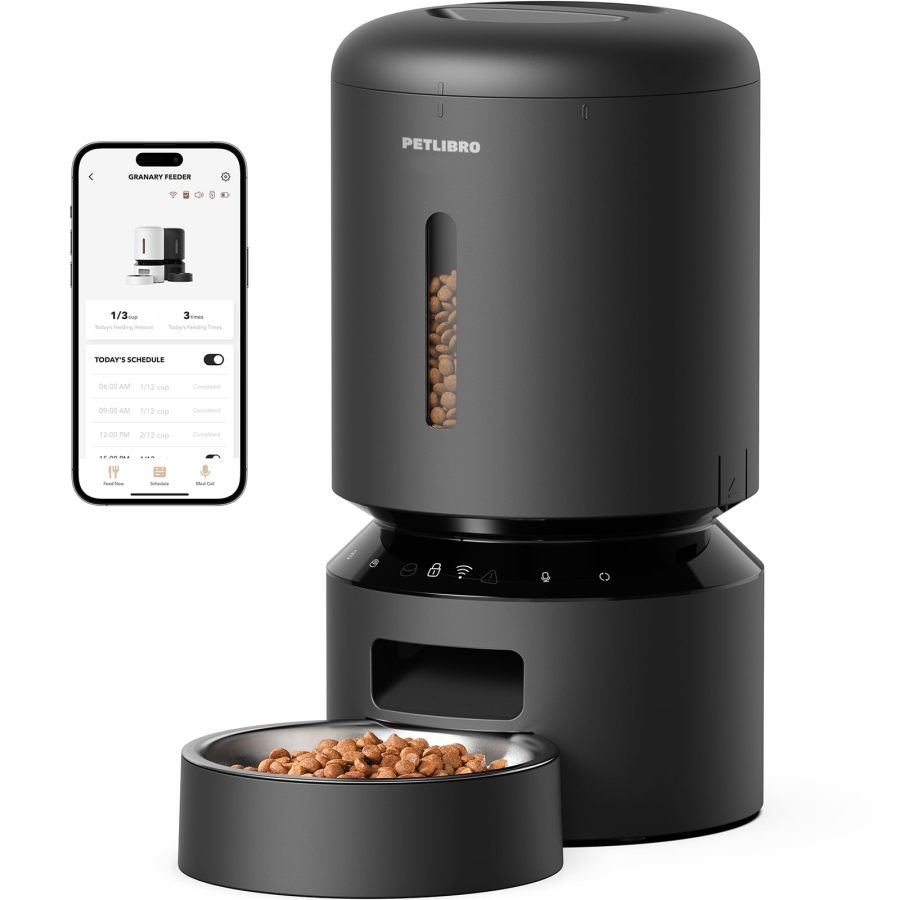
Automatic pet feeders are smart devices designed for household pets like cats and dogs, aiming to provide scheduled, portion-controlled dispensing of dry food. Their core functions include programmable feeding schedules, portion control, and food preservation. Market offerings range from basic models to Wi-Fi-enabled smart feeders, and advanced intelligent models featuring cameras, two-way audio, and even RFID multi-pet recognition. These cater to the refined pet care needs and convenient management sought by different pet owners. Such products significantly reduce the daily feeding burden on pet owners. The following table illustrates the key characteristics of consumer behavior in this category.
| Dimension | Segment | Description |
|---|---|---|
| Need Driver Type | Planned Purchase / Emergency-driven Purchase | Purchases are often planned in advance (e.g., for travel, establishing a feeding routine) or in response to emergencies (e.g., busy work schedules, power outages). |
| Purchase Frequency | Low Frequency | As durable goods, they are typically purchased every few years, mainly for upgrades or to replace a damaged product. |
| Decision Complexity | Medium / Moderately Complex | Users compare multiple features, brand reliability, smart connection stability, etc., conducting relatively in-depth research. |
| Price Sensitivity | Medium-High | Price is an important consideration, but for their pet's health and their own convenience, users are willing to pay a premium for high reliability and practical features. |
| Emotional Dependency | Medium-High | Pet welfare and the owner's peace of mind while away are the primary emotional drivers, alleviating the mental burden of daily care. |
II. User Personas & Usage Scenarios
2.1 Busy Pet Owner / Traveler
🎯 Works long hours or travels frequently, unable to feed their pet on time daily, and worries about their pet going hungry or having an irregular diet.
| Typical Usage Scenarios | Core Pain Points | Primary Purchase Drivers |
|---|---|---|
|
|
|
2.2 Precision Pet Care Owner
🎯 Values pet health and dietary habits, wants precise portion control for weight management, preventing digestive issues, or needs to feed multiple pets separately.
| Typical Usage Scenarios | Core Pain Points | Primary Purchase Drivers |
|---|---|---|
|
|
|
2.3 Tech-Savvy Pet Owner
🎯 Accustomed to using smart devices to manage life, seeks to remotely monitor pets through technology for a more convenient, interactive feeding experience.
| Typical Usage Scenarios | Core Pain Points | Primary Purchase Drivers |
|---|---|---|
|
|
|
III. User Needs Hierarchy (KANO Model)
3.1 Basic Needs (Must-Haves)
- Scheduled, Portion-Controlled Feeding: Core function: ensures pets eat on time and in designated portions, preventing hunger or overeating.
- Anti-Jam Mechanism: Prevents food blockages, ensuring smooth and consistent dispensing into the bowl.
- Dual Power Supply (AC + Battery Backup): Supports AC power and battery backup to handle power outages, ensuring no feeding interruptions.
- Ease of Operation: Device setup and daily operation are intuitive and easy to understand, requiring minimal learning.
- Easy to Clean: Removable components and bowl for easy cleaning, maintaining hygiene.
3.2 Performance Needs (Linear Satisfiers)
- Precise Portion Control: Offers finer portion adjustment options to meet the dietary needs of different pets (e.g., weight loss, puppies).
- Large Food Storage Capacity: A sufficiently large food hopper reduces refill frequency, ideal for multi-pet households or extended absences.
- Food Preservation: Maintains food dryness and freshness through sealed designs, built-in desiccant packs, etc.
- Smart App Remote Control: Allows setting feeding schedules, viewing feeding records, and manually triggering instant meals via a mobile app.
- Voice Interaction Feature: Allows recording the owner's voice to play during feeding, increasing the pet's sense of closeness and security.
3.3 Excitement Needs (Delighters)
- HD Camera & Two-Way Audio: Provides 1080P/2K HD video monitoring (with night vision) and supports two-way voice intercom for anytime interaction.
- Multi-Pet RFID Recognition / Separate Feeding: Identifies different pets via RFID tags, enabling personalized feeding or restricting specific pets from eating.
- Slow Feed Mode: Specifically designed for fast-eating pets, dispenses food in small amounts over multiple intervals to prevent choking, bloating, and obesity.
- Smart Fault Alerts: Real-time app notifications for low food, food jams, low battery, Wi-Fi disconnection, and other anomalies.
- 5G WiFi Support: Offers a more stable, faster Wi-Fi connection experience, reducing smart feature lag.
3.4 Unmet Needs & Opportunities
-
Wi-Fi Connection Stability & App Experience: Many users report frequent Wi-Fi disconnections or pairing difficulties, especially with limited smart functionality (e.g., camera) in battery mode, and non-intuitive app operation.
User Reviews (VOC) WiFi does not work // After two hours of trying to get it to connect to our WiFi // will not stay connected to the internet
-
Portion Calibration & Consistency: Some products have inconsistent actual portion sizes versus settings or batch-to-batch variations, especially for small portions.
User Reviews (VOC) The portion is less than the expected and sometimes it doesn't even been released on time! // portions were just too big. Not enough with 1 portion and too much with 2.
-
Power Cord Chew-Resistant Design: Active pets easily chew through or unplug power cords, causing device failure and posing safety risks.
User Reviews (VOC) my cats don't even have to put too much work into just hitting the machine and kibble comes out // a raccoon has tried to take ours 3 times already
-
Accuracy of Low Battery/Low Food Alerts: Smart alerts are not timely or accurate enough, preventing owners from replenishing food or charging in time.
User Reviews (VOC) It doesn't actually warn you when it's low...it warns you when it's empty but calls that low // the feeder didn't alert me it was out of food the other night
-
Depth & Reliability of Multi-Pet Feeding Solutions: Existing dual-bowl or RFID solutions still face issues like food competition or insensitive recognition in real multi-pet environments, with unsatisfactory results.
User Reviews (VOC) if one of the cats is sitting very close (but very close) to the sensor, the gate, and if it is not eating, another may come to take advantage // Not for multiple cats
IV. User Decision Drivers
4.1 Key Decision Factors
- Feeding Reliability & Accuracy: Whether the device consistently feeds on time without interruption, and if portion sizes are stable and precise, is the user's primary consideration.
- Ease of Operation: Whether the app or device operation is simple and intuitive, both for initial setup and daily use, ensuring a quick learning curve.
- Power Outage Endurance: Whether the battery backup effectively works during power outages, ensuring pets don't go hungry, providing peace of mind.
4.2 Secondary Decision Factors
- Food Storage Capacity: Determines refill frequency, an important auxiliary decision factor, especially for multi-pet households or frequent travelers.
- Cleaning Convenience: Whether the product is easy to disassemble and clean, maintaining food hygiene, influences daily maintenance willingness.
- Smart Remote Monitoring & Interaction: Features like cameras and two-way audio provide added value for remote care and emotional connection after basic needs are met.
- Multi-Pet Adaptability: Whether it effectively solves feeding conflicts and special needs among multiple pets is a differentiated need for multi-pet families.
- Product Durability & Safety: Device material and structural sturdiness, ability to withstand daily pet use and potential damage, affects long-term experience.
V. Selling Points & Competitive Landscape
5.1 Selling Point Analysis
5.1.1 Standard Features (Points of Parity)
- Scheduled, Portion-Controlled Feeding: Programmable daily meal counts and portion settings are the foundational selling points for all automatic feeders.
- Dual Power Mode (AC + Battery): Supports power adapter and battery backup, emphasizing prevention of feeding interruptions during outages, providing basic peace of mind.
- Large Food Storage Capacity: Commonly offers 4L-7L capacity, marketed as lasting several days to weeks, reducing refill frequency.
- Easy to Clean & Disassemble: Modular design, removable food bowl and hopper, emphasizing hygiene and convenience.
- Food Preservation: Sealed lid, built-in desiccant packs, etc., ensure dry food stays fresh and prevents moisture.
5.1.2 Key Differentiators
- App Smart Control: Remote feeding, schedule setting, and record viewing via mobile app enhance convenience.
- Voice Recording: Allows recording the owner's voice to call the pet during feeding, enhancing emotional connection.
- Anti-Jam Design: Optimized dispensing mechanism, using anti-jam structures to ensure smooth food distribution and reduce malfunctions.
- Stainless Steel Food Bowl: Provides a more hygienic eating experience, easy to clean, helps prevent pet chin acne.
- Anti-Tip Design: Weighted base, non-slip pads, or wall-mounting accessories prevent active pets from knocking over the device.
5.1.3 Unique Selling Propositions (USPs)
- HD Camera & Two-Way Audio: 1080P/2K resolution with night vision and two-way intercom for real-time remote monitoring and interaction.
- RFID Recognition / Multi-Pet Separate Feeding: Identifies different pets via collar tags, enabling personalized exclusive feeding, solving multi-pet food competition.
- 5G WiFi Support: Marketed as supporting 5GHz Wi-Fi for faster, more stable network connection, improving remote control experience.
- Slow Feed Mode: Dispenses food in small amounts over multiple intervals to help pets eat slowly, preventing choking, bloating, and obesity.
- Chew-Resistant Cable Design: Uses chew-resistant materials or hidden cables, improving safety and preventing pet damage.
5.2 Competitive Landscape
5.2.1 Market Maturity
The current automatic pet feeder market is at a medium-high level of maturity. Basic scheduled, portion-controlled feeding is widespread and highly homogeneous. Market competition is intensifying, with brands primarily seeking differentiation by enhancing smart features, providing more comprehensive multi-pet solutions, and optimizing user experience. As consumer focus on pet health and smart homes increases, product functionality is evolving from single-function feeding towards multi-functionality and interactivity.
5.2.2 Innovation Trends
Innovation trends are mainly reflected in: Intelligence (deepening app features, AI visual recognition, pet behavior analysis), Precision Feeding (slow feed, more accurate portion control, RFID personalized recognition), and Enhancing Product Durability & Safety (chew-resistant cables, vandal-proofing, more reliable anti-jam mechanisms). Future developments may include greater integration with pet health management ecosystems (e.g., smart water fountains, smart collars) to provide more comprehensive pet care solutions.
VI. Marketing Claims vs. Reality Check
The table below analyzes the gap between common marketing claims and actual user experiences in this category:
| Dimension | Marketing Claim | User Reality | Verdict |
|---|---|---|---|
| Battery Life & Battery Mode Functionality | 100-day long battery life, dual power guarantee, no worries about power outages. | Users commonly report actual battery life far below claims (e.g., 45 days/a few days), and in battery mode, app connectivity and smart features (like camera) fail, maintaining only basic feeding. | Sellers mislead consumers with ideal lab data or minimum load data, failing to clearly define functional limitations in battery mode, leading to a severe mismatch between user expectations and actual experience during emergencies. |
| Wi-Fi Connection Stability & App Operation | Stable 5G/2.4G dual-band WiFi connection, smart remote control via app, manage anytime, anywhere. | Multiple products are frequently criticized by users for unstable Wi-Fi connections, easy disconnections, difficult pairing, complex app operation, unintuitive portion settings, or requiring additional apps. | Sellers oversimplify the actual operational complexity and network environment challenges when promoting 'smart' and 'convenient' features, leading to a significant compromise in the core smart experience and damaging user trust. |
| Portion Accuracy & Anti-Pet 'Cheating' | Accurate portion control, prevents binge eating; sealed and theft-proof, prevents pet food theft. | Users report minimum portions are still too large or inconsistent, failing to meet precision feeding needs. Some products are easily knocked over, shaken to dispense food, or allow clever pets to reach into the dispensing chute with paws. | Product design fails to fully account for pet behavioral complexity (e.g., active food retrieval, destructive behavior), leading to design logic flaws in the core selling points of 'accurate control' and 'anti-theft,' directly impacting user health management goals and product safety. |
Key Takeaway: The market exhibits widespread tendencies of spec inflation and exaggerated scenario-based experiences, particularly regarding battery life, Wi-Fi connectivity, and portion accuracy.
VII. Supply-Demand Misalignment Analysis
The table below highlights mismatches between seller focus and buyer priorities:
| Dimension | Seller Behavior | User Focus | Verdict |
|---|---|---|---|
| Wi-Fi Connection Stability | Commonly claim support for 2.4G/5G dual-band or 'stable WiFi connection,' but rarely mention how stability is ensured in challenging network environments or provide clear solutions for connection issues in product descriptions. | Users are most concerned about 'whether it stays online without disconnecting,' frequently complaining about connection difficulties and random disconnections that render remote features useless. | Sellers present idealized network conditions as a selling point but fail to address the common connection problems users face in real home environments, leading users to question the core value of smart feeders. |
| Power Cord Safety & Durability | Commonly mention dual power backup for outages, but very few products highlight chew-resistant designs or reinforced measures for power cords in their listings. | Users report that active pets at home chew or unplug power cords, causing device failure and posing safety hazards, but few market solutions address this specifically. | Sellers focus on the functional presence of 'power backup' but overlook the potential damage risk to this critical component during daily use, affecting not only product reliability but also pet safety. |
| Accuracy of Low Battery/Low Food Alerts | Most products advertise smart alert features (e.g., low food, jam), but few clearly specify the exact threshold for 'low food' or the precision of these warnings. | Users complain that 'low food' alerts are actually 'empty' alerts, providing insufficient warning time, or the alerts themselves are inaccurate, leading to actual pet food deprivation. | Smart alerts are superficial, failing to truly address user 'anxiety' before pet food runs out, representing a failure of smart features at the user perception level. |
Key Takeaway: In the smart feeder market, sellers generally over-emphasize add-on features like 5G WiFi compatibility and built-in mirrors, while neglecting user core demands for fundamental reliability: Wi-Fi connection stability, actual portion accuracy, and power cord chew-resistance.
VIII. Strategic Opportunities & Recommendations
8.1 Stable Multi-Band WiFi & Enhanced App Experience
8.1.1 Target Audience & Pain Points
⚡️ Pain Points Addressed: Poor Wi-Fi connection stability, complex app operation, unreliable remote control.
8.1.2 Action Plan
Adopt high-performance dual-band WiFi modules, optimize firmware logic and app pairing process for fast, stable 2.4GHz/5GHz auto-switching. Simplify app interface, provide clear feeding schedule management, real-time status feedback, and smart fault diagnosis (including video tutorials).
| Tech Complexity | Medium |
| Cost Impact | Medium Impact |
| Trade-off Warning | No significant physical side effects, primarily optimizes software and communication modules. |
| Price Band | Only viable above $49.99 |
8.1.3 Marketing Strategy
Emphasize the ultimate stable experience of 'One-Click Connect, Never Drops'; showcase the app's clean, intuitive interface; promise 'Anytime, Anywhere, In-Control As If You Were There' worry-free remote feeding.
8.2 Micro-Portion Precision Control & Multi-Pellet Compatible Dispensing System
8.2.1 Target Audience & Pain Points
⚡️ Pain Points Addressed: Inaccurate portion calibration, difficulty controlling small portions, poor compatibility with large kibble.
8.2.2 Action Plan
Develop a new dual-layer rotor or weight-sensor dispensing mechanism to achieve precise 1-5 gram (or smaller) portion dispensing, compatible with different kibble sizes (5-20mm). Provide portion gram/cup-to-serving conversion tools and calibration guidance within the app.
| Tech Complexity | Medium |
| Cost Impact | Medium Impact |
| Trade-off Warning | May require more precise internal drive mechanisms or molds, does not affect appearance or size. |
| Price Band | Only viable above $59.99 |
8.2.3 Marketing Strategy
Position as 'Weight Management Expert, Precise Feeding for Every Gram'; emphasize 'No More Jams, Handles All Kibble Sizes'; showcase veterinarian recommendations, pet health improvement case studies.
8.3 Pet-Proof & Long-Lasting Power Integrated Design
8.3.1 Target Audience & Pain Points
⚡️ Pain Points Addressed: Power cords easily chewed through, device easily knocked over, short battery life with limited functionality.
8.3.2 Action Plan
Use a weighted, non-slip base and impact-resistant housing. Provide concealed, chew-resistant material power cords and include wall-mounting kits. Increase built-in battery capacity to at least 5000mAh, ensuring basic feeding and app connectivity (without camera) for at least 15 days during power outages.
| Tech Complexity | Low |
| Cost Impact | Medium Impact |
| Trade-off Warning | May increase product weight and cable material cost, but safety improvement is significant. |
| Price Band | Only viable above $39.99 |
8.3.3 Marketing Strategy
Emphasize 'The End of Pet Power Challenges'; highlight 'Indestructible, Safety Assured'; provide videos of durability tests under extreme conditions to demonstrate product reliability.
8.4 Intelligent Multi-Pet Precision Feeding & Behavior Analytics
8.4.1 Target Audience & Pain Points
⚡️ Pain Points Addressed: Food competition in multi-pet households, inability to personalize feeding, lack of behavioral data.
8.4.2 Action Plan
Develop a smarter RFID recognition system capable of reliably identifying multiple collars and performing targeted separate feeding. Integrate an AI vision module to assist in recognizing different pets (or serve as a backup without tags). Provide independent feeding reports and behavioral trend analysis (e.g., eating speed, frequency) for each pet on the app.
| Tech Complexity | High |
| Cost Impact | High Impact |
| Trade-off Warning | May require larger size to accommodate separation mechanisms or increase RFID reader costs. |
| Price Band | Only viable above $129.99 |
8.4.3 Marketing Strategy
Position as 'Multi-Pet Exclusive Nutritionist, AI Butler Makes Multi-Pet Care Easy'; emphasize 'Personalized Customization, No More Competition, Double the Health'; showcase health improvement data charts for each pet.