Amazon US Market Analysis: Outdoor Rechargeable Headlamp Category
📊 Executive Summary
📈 Market Trends
The outdoor rechargeable headlamp market is fiercely competitive, with products generally pursuing high lumens, multiple modes, and USB charging. Wide-angle COB lighting, USB-C ports, and gesture sensing are key innovation points, reflecting user demand for field of view, charging efficiency, and operational convenience. However, low-price competition leads to severe product homogenization, and user needs for high brightness, long runtime, and multi-functionality are not fully met.
⚡ Major Pain Points
Consumers commonly complain about mismatched advertised vs. actual battery life, with high brightness modes depleting power quickly. Charging ports (especially Micro USB) are fragile and prone to failure. Additionally, excessive lighting modes and inaccurate gesture sensing make operation complex, failing to truly enhance user experience and instead becoming pain points.
💡 Selection Opportunities
Market opportunities lie in: 1. Launching an 'Ultra-Light, High-Lumen, True-Runtime Headlamp' that provides reliable runtime data and lightweight design, solving the core trust crisis. 2. Creating a 'Reinforced USB-C Universal Fast-Charge Headlamp' to fundamentally address charging port durability. 3. Optimizing operational logic and smart sensing to achieve an 'Intuitive Operation & Accurate Sensing Headlamp,' turning functional innovation into real value.
I. Analysis Overview
1.1 Introduction & Report Scope
This report analyzes the 'Headlamps' category (outdoor rechargeable headlamps) within the Amazon US market, focusing on target user personas, core needs, decision drivers, market communication, and potential opportunities.
1.2 Category Snapshot
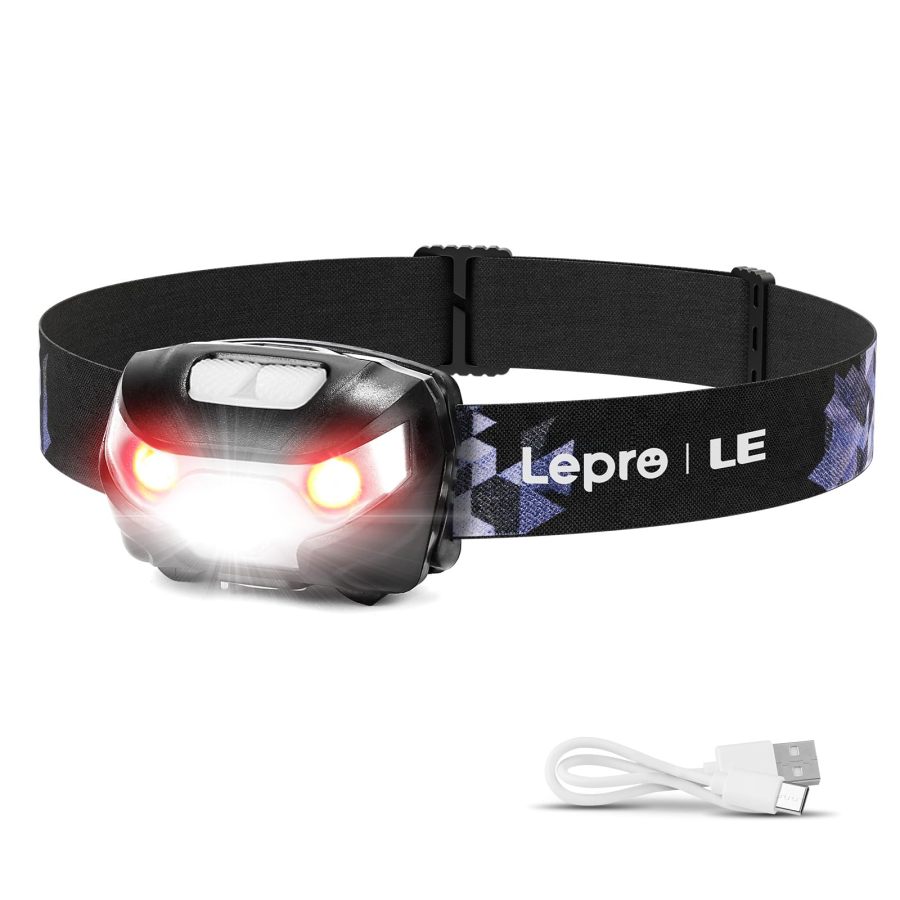
Outdoor rechargeable headlamps are portable devices that provide hands-free illumination for activities like hiking, camping, night running, and repairs. Their core function is to deliver a stable light source, freeing the user's hands. Mainstream products typically use LED light sources, emphasizing rechargeability, multiple modes, lightweight design, and waterproof features. Functions like motion sensing and wide-angle lighting are gradually being added to enhance user experience. The following table illustrates the key characteristics of consumer behavior in this category.
| Dimension | Segment | Description |
|---|---|---|
| Need Driver Type | Planned Purchase / Emergency-driven Purchase | Consumers typically purchase due to planned outdoor activities (e.g., camping, night running) or sudden lighting needs in daily life (e.g., power outages, repairs). |
| Purchase Frequency | Medium-Low | These products are generally durable and not high-frequency consumables. Purchases are more often for replacing old units, functional upgrades, or as backups/gifts. |
| Decision Complexity | Medium | Consumers compare brightness, battery life, waterproof rating, wearing comfort, and additional features (e.g., motion sensing, red light). The decision process requires some information gathering and evaluation. |
| Price Sensitivity | Medium-High | The market price range is wide. After basic lighting and battery life needs are met, consumers are relatively price-sensitive, especially when similar products offer comparable features. |
| Emotional Dependency | Medium-Low | The primary drivers are functionality and practicality, but reliability in outdoor adventures and emergencies can provide a strong sense of security and peace of mind. |
II. User Personas & Usage Scenarios
2.1 Outdoor Adventurer / Sports Enthusiast
🎯 Enthusiastic about various outdoor activities like night hiking, camping, and trail running. Has high requirements for headlamp performance, battery life, and reliability.
| Typical Usage Scenarios | Core Pain Points | Primary Purchase Drivers |
|---|---|---|
|
|
|
2.2 Home/Professional Repair Worker
🎯 Engages in DIY projects at home or professional tasks in garages, basements, construction sites, etc., requiring hands-free operation in poorly lit areas.
| Typical Usage Scenarios | Core Pain Points | Primary Purchase Drivers |
|---|---|---|
|
|
|
III. User Needs Hierarchy (KANO Model)
3.1 Basic Needs (Must-Haves)
- Sufficient Brightness: Provides the minimum level of light needed to illuminate a path ahead or a work area.
- Secure Fit: The headband does not slip easily and remains stable during normal activities without wobbling.
- Basic Water Resistance: Can withstand light rain or splashes, preventing damage from everyday use accidents.
- Rechargeable: Supports recharging, eliminating the need for frequent disposable battery replacement.
3.2 Performance Needs (Linear Satisfiers)
- Multiple Lighting Modes: Offers various white light brightness levels (high/medium/low), red light, and strobe/SOS modes to adapt to different scenario needs.
- Long Battery Life: Provides several hours or more of continuous illumination in commonly used modes, reducing charging frequency.
- Lightweight Design: Minimizes headlamp weight as much as possible while maintaining performance, enhancing wearing comfort.
- Tilt-Adjustable Lamp Head: The lamp head can be tilted at multiple angles to precisely illuminate the desired area.
- Durability & Drop Resistance: Robust product structure that can withstand a certain degree of drops and impacts.
3.3 Excitement Needs (Delighters)
- Wide-Angle COB Lighting: Provides 230° or wider uniform floodlight, achieving a panoramic, shadow-free view, especially suitable for close-up work.
- Gesture Sensing Switch: Controls on/off with a simple wave, offering ultimate convenience for contactless operation when hands are busy or dirty.
- USB-C Universal Charging: Adopts the more efficient and widespread USB-C interface, improving charging convenience and compatibility.
- Hybrid Power or Removable Battery: Supports switching between rechargeable and disposable batteries, or uses replaceable 18650 batteries, providing multiple power guarantees.
- Stepless Dimming / Memory Function: Allows precise brightness adjustment and remembers the last used mode, enhancing personalization and convenience.
3.4 Unmet Needs & Opportunities
-
Battery Capacity Exaggeration / Mismatched Battery Life: A significant gap exists between advertised battery capacity/runtime and actual performance, leaving users stranded during outdoor activities.
User Reviews (VOC) The batteries are rated 1200mah and not the 5000mah they are labeled. // Customers have mixed experiences with the headlamp's battery life, with some reporting it lasts for hours while others find it doesn't last as long as expected and needs frequent recharging.
-
Fragile, Easily Damaged Charging Port: Poorly constructed Micro USB or some Type-C ports are prone to loosening, detachment, or damage, preventing normal charging.
User Reviews (VOC) The USB port is flimsy and the cable has to be plugged in just right to get it to charge. // Customers have mixed experiences with the headlamp's charging port: while some appreciate the included USB charging cable, others report issues with the port breaking off or coming loose.
-
Complex Mode Switching Logic: The switching logic for multi-mode headlamps is not intuitive, requiring cycling through multiple modes to turn off or find the desired setting, degrading user experience.
User Reviews (VOC) I only wish there was just an on and off button, reason is I have to click high, low and flashing to get the light off every time I turn it off. I just want to turn it off with one click! // It has 6 modes on one button, so you have to do a lot of repeat clicking for some modes, and if you overshoot the one you want, it's frustrating to have to go through the entire cycle again.
-
Gesture Sensing False Triggers or Insensitivity: In practical use, the gesture sensing function is prone to false triggers (e.g., near obstacles) or lacks sensitivity, becoming a nuisance.
User Reviews (VOC) The motion sensor on off feature is clever, but not entirely practical for a lot of things. It triggers great with a hand wave, but it also triggers when you get your head close to a joist or a jackstand or anything else. // The motion sensor feature is mainly a gimmick... it's way too sensitive and keeps getting triggered if you're moving around or working with your hands in front of it, so it keeps turning on and off at unwanted times.
-
Overheating / Brightness Drop in High Mode: Some high-lumen headlamps generate noticeable heat in prolonged high-brightness mode, and may even automatically reduce brightness to protect the circuit, affecting use.
User Reviews (VOC) After using for a long period of time, I noticed a little heat on the front light band. Not unbearable. // It's also worth noting that due to overheating the headlamp will not remain at its 400 lumen mode - it'll stay there for about a minute before slowly reducing its output.
-
Insufficient Overall Product Durability: Some products have a short lifespan, experiencing sudden failure, broken lamp head brackets, or loss of headband elasticity.
User Reviews (VOC) The little apparatus that allows you to adjust where the light is aimed gets worn out fairly quickly, so the beam ends up pointing straight down. // Customers report negative experiences with the headlamp's lifespan, noting that it starts dimming quickly and breaks within a month of use.
IV. User Decision Drivers
4.1 Key Decision Factors
- Actual Brightness & Effective Range: Users care most about whether the headlamp provides sufficient illumination intensity and breadth to see road conditions or work details in the dark.
- Real-World Battery Life Duration: Crucial for actual user experience, especially in outdoor scenarios where timely charging is impossible. Users highly value sustained operation capability.
- Product Reliability & Durability: Expectation that the headlamp won't fail at critical moments and can withstand the rigors of outdoor environments (water, drops) and long-term use.
- Value for Money: After basic functional and performance needs are met, consumers seek reasonably priced, value-for-money products among numerous choices.
4.2 Secondary Decision Factors
- Wearing Comfort & Weight: High comfort requirements for prolonged wear. Lightweight and balanced design are pluses, avoiding head discomfort.
- Charging Port Type & Speed: Universal fast-charging interfaces like USB-C are preferred, enhancing charging convenience.
- Multi-Function Modes (Red Light, SOS): Meets specific scenario needs (e.g., night vision protection, emergency signaling), enhancing product versatility.
- Additional Smart Features (Gesture Sensing): Provides extra convenience when hands are busy, but only if the function is stable, reliable, and avoids false triggers.
- Brand Reputation & Warranty: Well-known brands or sellers offering good after-sales service effectively reduce purchase hesitation and build trust.
V. Selling Points & Competitive Landscape
5.1 Selling Point Analysis
5.1.1 Standard Features (Points of Parity)
- Super Bright LED: Almost all products highlight high lumen output as a core selling point, emphasizing powerful illumination.
- USB Rechargeable / Rechargeable: Built-in rechargeable battery and USB charging port are category standards, highlighting economy, eco-friendliness, and convenience.
- Multiple Mode Adjustments: Offers various modes like white light high/low, red light, strobe, SOS to address different lighting needs.
- IPX4/IPX5 Waterproof: Emphasizes basic waterproof rating, suitable for rainy or humid environments, boosting confidence for outdoor use.
- Lightweight & Adjustable Headband: Claims the product is lightweight with an adjustable headband to fit different users and provide comfortable wear.
5.1.2 Key Differentiators
- Wide-Angle COB Lighting: Provides 230° or wider floodlight via COB light strips, differentiating from traditional spotlight LEDs.
- Gesture Sensing: Serves as a convenient hands-free feature for quickly turning the headlamp on/off.
- Multi-Pack / Bundle: Bundles 2-3 headlamps for sale at a more attractive price for families or as backups.
- Focus Adjustment: Allows users to freely switch between spotlight and floodlight, offering more flexible lighting choices.
- Multi-Light Source Combination: E.g., main light + side light, or red/green light combined with white light, increasing functional diversity.
5.1.3 Unique Selling Propositions (USPs)
- Hybrid Power System: Supports compatibility with both rechargeable and disposable batteries, providing dual power assurance, e.g., some Energizer models.
- Detachable Flashlight + Magnetic Base: The light body can be detached from the headband for use as a handheld flashlight, often with an attached magnetic base, significantly expanding usage scenarios, e.g., Coast XPH30R.
- Built-in Replaceable 18650 Battery: Some brands (e.g., Blukar K9116) explicitly state the use of standard, user-replaceable 18650 batteries, facilitating upgrades or backups.
5.2 Competitive Landscape
5.2.1 Market Maturity
The outdoor rechargeable headlamp market is in a mature stage with numerous major players and highly overlapping product features. Brands seek differentiation by stacking brightness, emphasizing battery life, and introducing 'smart' features (e.g., gesture sensing) or multi-light sources (COB wide-angle). However, competition in the low-price segment is exceptionally fierce, leading to a significant gap between marketing claims and actual user experience for many products.
5.2.2 Innovation Trends
Current innovation trends are mainly reflected in: 1. Popularization & Optimization of Wide-Angle Lighting: Uniform, broad illumination from COB light strips is increasingly favored. 2. Charging Interface Upgrade: USB-C is gradually replacing Micro USB, improving user experience. 3. Iteration of Smart Sensing: Efforts to improve the accuracy and practicality of gesture sensing, reducing false triggers. 4. Lightweighting & Comfort Enhancement: Reducing head burden through material innovation and structural design, especially important for high-lumen products. 5. Flexible Power Solutions: Hybrid power or easily replaceable standard battery designs meet user needs for long runtime and emergency preparedness.
VI. Marketing Claims vs. Reality Check
The table below analyzes the gap between common marketing claims and actual user experiences in this category:
| Dimension | Marketing Claim | User Reality | Verdict |
|---|---|---|---|
| Battery Capacity & Runtime | Long-lasting battery life, built-in high-capacity battery (e.g., 5000mAh), high brightness for several hours, total runtime up to days. | User feedback indicates actual battery capacity is far lower than advertised (e.g., 1200mAh vs. 5000mAh); high-brightness mode runtime is only 20-60 minutes; some products automatically throttle brightness due to overheating in high mode. | Sellers commonly mislead consumers with data from ideal conditions or lowest brightness settings, failing to deliver on the core promise of long-lasting, high-intensity illumination crucial for outdoor users, severely damaging trust. |
| Charging Port Durability | USB-C fast, safe charging, easy and convenient. | Many products still use Micro USB. Whether Micro USB or some Type-C ports, users widely report fragility, looseness, and even failure to charge. | As a high-frequency interaction component, the charging port's design and material fail to withstand daily wear and tear, fundamentally challenging the product's long-term usability and delivering a poor user experience. |
| Operational Logic & Gesture Sensing | 8 modes, smart gesture sensing, hands-free. | Users complain about too many modes and complex switching (must cycle through all modes to turn off); gesture sensing is overly sensitive, prone to false triggers (e.g., turning on/off near obstacles) or insensitive, becoming a nuisance. | Feature stacking rather than experience optimization. 'Smart' sensing becomes a gimmick, and complex operation contradicts the intuitive, convenient needs of a headlamp as an outdoor tool. |
Key Takeaway: The market exhibits a widespread tendency for parameter inflation and scenario-based experience exaggeration, particularly regarding battery life, lumen values, and charging port durability.
VII. Supply-Demand Misalignment Analysis
The table below highlights mismatches between seller focus and buyer priorities:
| Dimension | Seller Behavior | User Focus | Verdict |
|---|---|---|---|
| Real Battery Life & Power Indicator | Widely advertise 'long battery life' but lack detailed data for different brightness modes. Few products offer precise power indicators; some even have exaggerated battery capacity. | Users care most about how long it lasts on high brightness, hate 'sudden death,' need clear battery status. Inconsistent data makes outdoor activity planning difficult. | Sellers fail to address the core functional pain point. Lack of transparency leads to a user trust crisis, a root cause of negative reviews and returns. |
| Charging Port Reliability | Promote the convenience of USB charging but commonly use Micro USB or fail to reinforce the design of USB-C ports, avoiding discussion of long-term port durability. | Users frequently report issues with loose or damaged charging ports, severely impacting normal product use. Non-universal charging cables also cause inconvenience. | Insufficient quality control over a key structural component leads users to repeatedly encounter problems with basic functionality, damaging brand reputation. |
| Operational Logic & Practicality of Gesture Sensing | Most products emphasize 'multiple modes' and 'gesture sensing' as core differentiation points. | Users complain about cumbersome mode switching and easily triggered gesture sensing, considering these features sometimes 'gimmicky' or even 'annoying,' preferring a simple, intuitive on/off switch. | Sellers blindly pursue feature stacking, overlooking users' fundamental need for operational simplicity and accuracy in real scenarios, leading to ineffective competition and degraded user experience. |
Key Takeaway: Sellers overemphasize lumen parameters and mode count, collectively neglecting user core pain points like transparency of real battery life, charging port reliability, and ease of mode switching, leading to a severe supply-demand mismatch.
VIII. Strategic Opportunities & Recommendations
8.1 Ultra-Light, High-Lumen, True-Runtime Headlamp
8.1.1 Target Audience & Pain Points
⚡️ Pain Points Addressed: Exaggerated battery life & range anxiety; Discomfort & weight burden; Insufficient or uneven beam.
8.1.2 Action Plan
Adopt higher energy-density batteries (e.g., customized polymer lithium batteries); optimize circuit design for efficiency; provide transparent, detailed runtime data for each brightness mode; use aerospace-grade aluminum alloy or high-strength carbon fiber composite materials to achieve ultimate lightweighting and robustness.
| Tech Complexity | Medium |
| Cost Impact | High Impact |
| Trade-off Warning | Increasing battery capacity and improving heat dissipation may slightly increase product volume or cost, requiring optimal structural design to balance lightweighting. |
| Price Band | Only viable above $29.99 |
8.1.3 Marketing Strategy
Emphasize 'Tested Runtime, No Exaggeration'; showcase real, sustained high-lumen performance through outdoor KOL test videos; highlight the 'Zero-Feel Wear, Challenge Limits' lightweight advantage and professional image.
8.2 Reinforced USB-C Universal Fast-Charge Headlamp
8.2.1 Target Audience & Pain Points
⚡️ Pain Points Addressed: Fragile, easily damaged charging port; Non-durable charging port; Outdated charging port technology.
8.2.2 Action Plan
Mandate the use of PD-compliant USB-C ports and reinforce the solder joints and surrounding structure; optimize the sealing and usability of the charging port dust/water cover; ensure compatibility with mainstream USB-C cables.
| Tech Complexity | Low |
| Cost Impact | Low Impact |
| Trade-off Warning | No significant physical side effects, primarily involves upgrading interface components and adjusting mold details. |
| Price Band | Only viable above $14.99 |
8.2.3 Marketing Strategy
Lead with 'Say Goodbye to Port Anxiety, Universal Fast Charging is More Reliable'; emphasize 'Built to Last, Withstands Frequent Plugging/Unplugging'; showcase details of the reinforced port design and dust/waterproof reliability.
8.3 Intuitive Operation & Accurate Sensing Headlamp
8.3.1 Target Audience & Pain Points
⚡️ Pain Points Addressed: Complex mode switching logic; Operational complexity; Gesture sensing false triggers or insensitivity.
8.3.2 Action Plan
Redesign operational logic for one-click on/off and quick access to common modes; optimize gesture sensing algorithms for higher accuracy and fewer false triggers, with an option to disable sensing via physical switch or long press. Consider physical dials or fewer mode combinations.
| Tech Complexity | Medium |
| Cost Impact | Medium Impact |
| Trade-off Warning | Optimizing sensing algorithms may require more complex sensors and processing chips, slightly increasing power consumption or cost; simplifying modes may sacrifice some niche functions. |
| Price Band | Only viable above $19.99 |
8.3.3 Marketing Strategy
Emphasize 'Smart Without the Hassle, More Intuitive Operation'; highlight the 'Wave to Activate, No More Fumbling' accurate sensing experience; demonstrate efficient, convenient operation through comparison videos.
8.4 Detachable Battery Pack Balanced-Weight Headlamp
8.4.1 Target Audience & Pain Points
⚡️ Pain Points Addressed: Heavy wearing sensation; Lack of top strap; Disagreement on comfort vs. weight perception.
8.4.2 Action Plan
Adopt a front-back detachable design, placing the battery pack at the rear to balance weight and reduce burden on the front light unit; battery pack compatible with standard 18650 batteries and USB-C charging; upgrade headband to a three-point fixation (add top strap) for enhanced stability and long-wear comfort.
| Tech Complexity | Medium |
| Cost Impact | Medium Impact |
| Trade-off Warning | Detachable design adds cables, potentially complicating overall waterproofing. Users need to adapt to wearing the battery pack on the back of the head. |
| Price Band | Only viable above $35.99 |
8.4.3 Marketing Strategy
Promote 'Front-Back Balanced Weight, Zero Burden for Long Wear'; highlight 'Professional-Grade Comfort, No More Head Pressure'; showcase the higher brightness and longer runtime enabled by the detachable design, targeting the professional market.