Amazon US Market Analysis: Children's Ski Balaclavas Category
📊 Executive Summary
📈 Market Trends
Portability and integration are mainstream, but personalized and functional needs are becoming prominent. The children's ski balaclava market has become homogeneous in basic warmth and windproof functions. However, consumers are demanding higher standards for product size precision, material performance (breathability, water resistance), and the integration of fun and safety, pushing the market towards more refined, high-value-added development.
⚡ Major Pain Points
Poor fit, insufficient warmth, and lack of water resistance. The user's most critical pain points are the 'one-size-fits-all' strategy leading to poor fit, affecting comfort and protection; followed by some products' actual warmth performance falling short of expectations, especially in extreme cold. Additionally, the lack of water-resistant/moisture-wicking function during snow activities and potential odor issues in new products also severely impact user experience.
💡 Selection Opportunities
Deeply address pain points, seek breakthrough with 'professional + fun'. Market opportunities lie in developing precise age-graded sizing for comfortable balaclavas to solve fit issues. Simultaneously, focus on high-efficiency water-resistant and breathable technology to provide more reliable protection for outdoor sports. Combine fun patterns with safety reflective design to increase children's willingness to wear and nighttime safety. Finally, introduce antibacterial, odor-resistant, and easy-to-clean materials to comprehensively enhance the product's long-term use value and hygiene assurance.
I. Analysis Overview
1.1 Introduction & Report Scope
This report analyzes the 'Neck Gaiters' category (children's ski balaclavas) in the Amazon US market, focusing on target user personas, core needs, decision drivers, market communication, and potential opportunities.
1.2 Category Snapshot
A children's ski balaclava is a winter protective head covering specifically designed for children, typically made from warm materials like fleece. It aims to fully cover and protect a child's head, face, neck, and ears from cold wind, low temperatures, and UV rays. These products are often multifunctional, suitable for various winter activities like skiing, snowboarding, cycling, and outdoor play. Their design emphasizes warmth, comfort, protection, and ease of wear. The following table illustrates the key characteristics of consumer behavior in this category.
| Dimension | Segment | Description |
|---|---|---|
| Need Driver Type | Planned Purchase / Emergency-driven Purchase | Purchases are typically driven by anticipated winter outdoor activities (skiing, playing in snow) and daily cold-weather preparation, or by emergency needs arising from sudden cold snaps. |
| Purchase Frequency | Low Frequency / Seasonal | Products are primarily purchased before or during the winter season. Repurchase cycles are typically annual, limited by children's growth rate and product wear and tear. |
| Decision Complexity | Medium | Parents need to make multi-dimensional comparisons, considering warmth, material comfort, size fit, breathability, and compatibility with helmets. |
| Price Sensitivity | Medium | Price is an important decision factor, but for their child's comfort and safety, parents are more willing to pay a reasonable premium for products with assured performance and quality. |
| Emotional Dependency | Medium | Functionality and practicality are the purchase foundation, but the product's appearance-whether it's cute and can motivate the child to wear it-significantly influences the final purchase decision. |
II. User Personas & Usage Scenarios
2.1 Outdoor Sports Enthusiast Families
🎯 Families living in areas with winter sports conditions, frequently participating in outdoor activities like skiing, snowboarding, and winter cycling. They have higher requirements for the professionalism, safety, comfort, and compatibility with sports equipment of children's gear.
| Typical Usage Scenarios | Core Pain Points | Primary Purchase Drivers |
|---|---|---|
|
|
|
2.2 Daily Commute & Play Parents
🎯 Parents living in cold regions seeking practical, warm, easy-to-wear protective gear that their children will willingly accept for daily school commutes and outdoor play.
| Typical Usage Scenarios | Core Pain Points | Primary Purchase Drivers |
|---|---|---|
|
|
|
III. User Needs Hierarchy (KANO Model)
3.1 Basic Needs (Must-Haves)
- Basic Warmth & Wind Protection: The product should effectively block cold wind, keep the head, face, and neck warm, and prevent frostbite.
- Soft, Skin-Friendly Material: The material must be soft and non-irritating to the skin, avoiding discomfort or allergic reactions in children.
- Secure Fit, Not Easily Slipping: The product should stay in place during the child's activities, not easily shifting or falling off.
- Easy for Children to Put On/Take Off: The design should be simple, allowing children to wear it independently, promoting autonomy.
3.2 Performance Needs (Linear Satisfiers)
- Multifunctional Wear: The product should support multiple wearing styles, such as a full balaclava, half-face mask, or neck gaiter, to adapt to different weather and scenarios.
- Helmet Compatibility: Ability to be worn comfortably as a liner under ski or bike helmets without adding pressure to the head.
- Good Breathability: Ensuring air permeability around the nose and mouth area while maintaining warmth, reducing stuffiness and goggle fogging.
- Size Adaptability: Providing size options suitable for different age groups of children, or having effective adjustable features.
- Durability & Easy Cleaning: The product material is wear-resistant, seams are strong, supports machine washing, and is resistant to deformation or fading.
3.3 Excitement Needs (Delighters)
- Fun Appearance Design: Featuring cartoon patterns, animal ears, or unique shapes to attract children and increase wearing enjoyment and willingness.
- Innovative Safety Features: Such as built-in LED lights, reflective strips, etc., enhancing fun while increasing safety for nighttime outdoor activities.
- Ultra-Thin & Highly Efficient Warmth: Ensuring excellent warmth while using lightweight, non-bulky materials for a barely-there wearing experience.
3.4 Unmet Needs & Opportunities
-
Precise Size Matching: 'One-size-fits-all' or broad age-range sizing leads to poor fit for many children, lacking truly precise and adaptable sizing.
User Reviews (VOC) My daughter loves it. A little big on my daughter but not too big on the size. // Customers have mixed experiences with how the balaclava fits, with some finding it great while others say it's too big.
-
Optimized Nose/Mouth Breathability/Anti-Fog: Existing vent designs are still insufficient to completely solve issues of goggle fogging, moisture around the nose/mouth, or breathing difficulty.
User Reviews (VOC) Only downside is no nose vents so condensation can build up inside when it's really cold out. // He did mention that a tiny bit of wind comes through around the mouth, but it's not enough to bother him.
-
Graded Warmth & Thickness Options: Users have conflicting needs regarding product thickness: it must handle extreme cold yet not be too thick to interfere with helmet wear. The market lacks clearly graded choices.
User Reviews (VOC) A little thinner than expected but it works to keep the face warm in freezing temperatures. // Not very thick material. Very thin fleece material, but will be fine for the warmer winter days. // My son would like it to be thicker so the wind wouldn't go through it as much.
-
Water-Resistant/Moisture-Wicking Performance: During snow play, the balaclava easily absorbs moisture and becomes cold, lacking effective water-resistant or moisture-wicking functionality.
User Reviews (VOC) They do soak up water fairly quickly. // It is worth mentioning that these are bot waterproof.
-
Material Odor & Antibacterial Properties: Some new products have a chemical odor, and prolonged wear can lead to bacterial growth and odor, lacking antibacterial treatment.
User Reviews (VOC) Very strong chemical smell. But its nice for snow or colder days for children. I washed it once and let it air dry chemical smell went away. // Wash before use though because they came with kind of a weird smell.
IV. User Decision Drivers
4.1 Key Decision Factors
- Actual Warmth Performance: Whether the product can effectively keep a child's head, face, and neck warm in cold, windy weather is the primary consideration for parents.
- Material Comfort: Whether the fabric is soft, skin-friendly, and non-itchy directly affects the child's willingness to wear it for extended periods, preventing discomfort.
- Product Fit: Whether the size fits the child's head circumference and age-neither too tight nor too loose-ensuring comfort and comprehensive protection.
- Comprehensive Coverage: Ability to fully cover ears, nose, mouth, and neck, avoiding exposure of key areas to the cold, providing seamless protection.
4.2 Secondary Decision Factors
- Breathability & Anti-Fog: Whether it allows for easy breathing while wearing, prevents goggle fogging and internal moisture buildup, affecting the experience.
- Helmet Compatibility: Whether it can be worn comfortably as a helmet liner, facilitating winter sports like skiing and cycling.
- Ease of Use & Durability: Whether it's easy for the child to put on/take off independently, and whether the product quality can withstand multiple washes and long-term use.
- Appearance Design: Whether colors, patterns, etc., appeal to the child, increasing their interest in wearing it and willingness for daily use.
- Value for Money: Whether the product price is reasonable and offers good value for money, especially for multi-packs, while meeting core needs.
V. Selling Points & Competitive Landscape
5.1 Selling Point Analysis
5.1.1 Standard Features (Points of Parity)
- Warm & Windproof: Using fleece or heavy-duty fleece fabric, commonly emphasizing comprehensive cold protection for the head, face, and neck.
- Multifunctional Wear: Widely promoted as usable in multiple ways: as a balaclava, face mask, neck gaiter, etc., to meet different scenario needs.
- Broad Age Applicability: Often labeled as 'One Size Fits Most' or with a wide age range (e.g., 'X-Y years'), implying strong universality.
- Suitable for Outdoor Sports: Emphasis on suitability for various winter activities like skiing, cycling, hiking, and outdoor play, highlighting its outdoor attributes.
5.1.2 Key Differentiators
- Specific Age-Range Sizing: Some products offer more segmented size choices (e.g., 2T-7T, 7T-12T), aiming for more precise fit.
- Nose/Mouth Breathability Design: Some products emphasize nose mesh or breathing vents, aiming to reduce stuffiness and goggle fogging, enhancing comfort.
- Double-Layer/Heavy-Duty Fleece: Promoting superior warmth performance to handle more severe cold weather, as a selling point for warmth.
- Adjustable Drawstring: Featuring a drawstring or buckle design, allowing users to adjust tightness based on face size, improving fit.
- Skin-Friendly & Anti-Static Material: Emphasizing soft, skin-friendly, anti-static fabric to enhance wearing comfort and reduce irritation.
5.1.3 Unique Selling Propositions (USPs)
- Built-in LED Safety Light: Incorporating lighting features to enhance safety for nighttime activities, adding a unique selling point and value (B0FN7PG7CF).
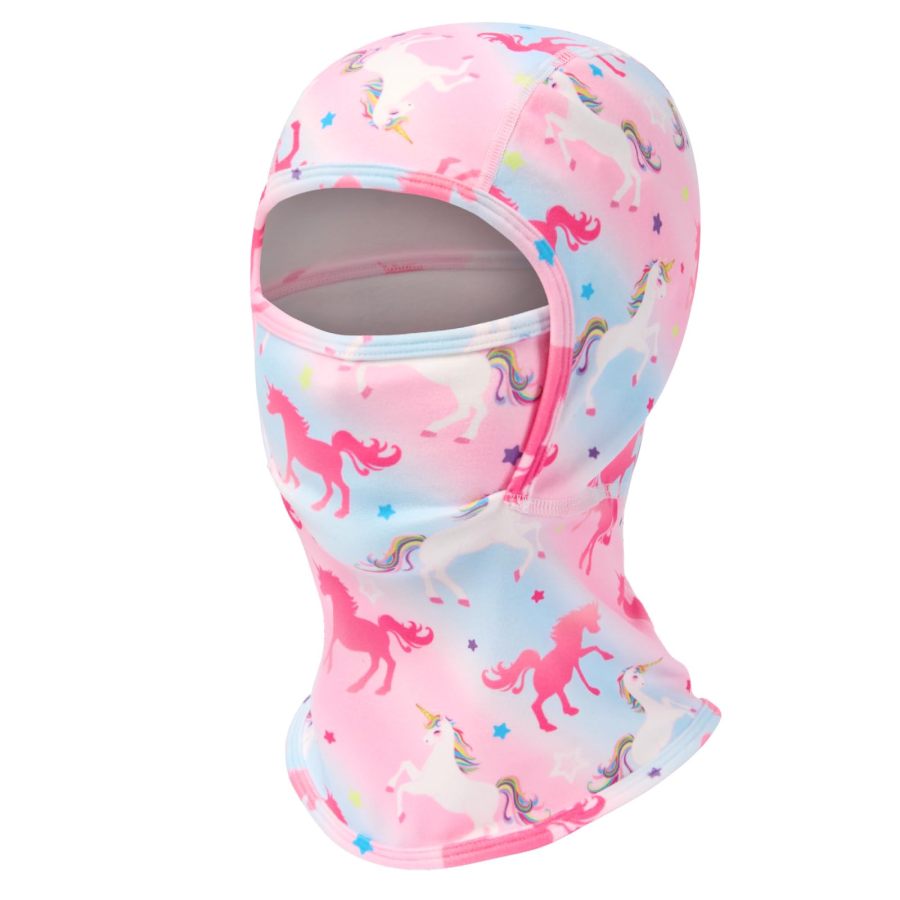
- Fun Cartoon/Animal Patterns: Such as dinosaurs, unicorns, camo, bear ears, etc., increasing children's appeal and product attractiveness (B0CHF4T4M5, B0FMNFCPXX).
- One-Piece Design: Emphasizing a single-piece structure to simplify the on/off process, making it easy for children to wear independently, reducing parent burden (B0FPL8M3XQ).
- Special Sewing Techniques: Such as 'four-needle six-thread' technology, promoting product durability and resistance to deformation, highlighting craftsmanship advantages (B0B7M8TJYW, B0B142H14W, B09D7HHM34).
5.2 Competitive Landscape
5.2.1 Market Maturity
The children's ski balaclava market is in a moderately mature stage. Core product functions (warmth, windproof, multifunctional) are becoming standardized, primarily using fleece fabric. Competition between brands mainly manifests in price, appearance design (patterns), subtle functional optimizations (e.g., adjustment cords, nose vents), and attempts to address the 'One Size' fit issue. The market hasn't seen disruptive innovation yet, but there is still room for progress in product details and user experience optimization.
5.2.2 Innovation Trends
Current market innovation trends focus on two main areas: first, detail optimization to enhance user experience, such as nose vent design, anti-fog treatment, more refined size grading, and more convenient on/off methods; second, increasing product appeal through fun design and multifunctional integration, for example, adding cartoon patterns, animal ears, or even incorporating innovative features like LED lighting to better cater to children's preferences and parents' safety considerations.
VI. Marketing Claims vs. Reality Check
The table below analyzes the gap between common marketing claims and actual user experiences in this category:
| Dimension | Marketing Claim | User Reality | Verdict |
|---|---|---|---|
| Size Adaptability | Commonly claims 'One Size Fits Most' or broad age applicability (e.g., 4-13 years), emphasizing 'good stretch, comfortable fit'. | User feedback shows huge size discrepancies-too large or too tight for some children, especially younger ones, leading to gaps around the ears or the balaclava riding up. | A typical low-cost solution, using vague size claims to cover as many users as possible, but sacrificing actual wearing comfort and protective effect. This is a core driver of negative reviews and returns. |
| Material Thickness & Warmth Performance | Commonly emphasizes 'thickened fleece', 'heavy-duty fleece' to ensure 'extreme warmth', resisting 'severe cold'. | Multiple users report products as 'too thin', 'not thick enough', requiring additional hats for warmth in extreme cold, not matching advertised expectations. | Using descriptive terms (like 'thickened') creates an illusion of high warmth, while actual product warmth capability in extreme cold is questionable. Overpromising leads to user experience gaps. |
| Nose/Mouth Breathability & Goggle Anti-Fog | Some products claim 'ventilation hole design', 'easy breathing', 'anti-goggle fog'. | Even with vents, users still report moisture, stuffiness around the nose/mouth, or persistent goggle fogging, with issues more pronounced in designs without vents. | Achieving efficient breathability and anti-fog while maintaining warmth is a technical challenge. Existing designs are mostly superficial optimizations, failing to fundamentally solve the core user need for breathing comfort and clear vision during high-intensity activities. |
| Washing & Maintenance Convenience | Some products advertise 'durable and easy to clean', 'Machine Wash'. | Some products clearly state 'Hand Wash Only', which is inconvenient for high-frequency use children's outdoor gear, contradicting the psychological expectation of 'easy care'. | Claiming the product is durable and easy to care for, yet requiring hand washing, is a clear disconnect from the practical need for frequent cleaning of children's outdoor items-a logical break between design and usage scenario. |
Key Takeaway: The market exhibits widespread parameter inflation and scenario-based experience exaggeration, especially regarding size applicability and material thickness, leading to a gap between consumer expectations and actual experience.
VII. Supply-Demand Misalignment Analysis
The table below highlights mismatches between seller focus and buyer priorities:
| Dimension | Seller Behavior | User Focus | Verdict |
|---|---|---|---|
| Size Fit & Precision | Commonly emphasizes 'One Size Fits Most', 'high elasticity', or provides broad age ranges (e.g., 4-13 years) to cover more users. | Numerous users complain about being 'too big', 'too small', 'doesn't fit', leading to discomfort and reduced protection, impacting purchase decisions and user experience. | Sellers attempt to reduce inventory and R&D costs through a one-size-fits-all strategy but ignore the objective fact of variations in children's head circumferences, causing a significant compromise in core comfort and functionality. |
| Water-Resistant/Moisture-Wicking Function | Commonly only emphasizes fleece's 'warmth' and 'softness', rarely or never mentioning the crucial 'water-resistant' or 'moisture-wicking' performance for snow play. | Users report products 'absorb water quickly', becoming wet and cold during snow play, reducing warmth and comfort. | Sellers fail to fully understand the real challenges of winter outdoor activities, collectively remaining silent on a core functional need (water resistance), missing the opportunity to provide users with more reliable protection. |
| Material Odor & Hygiene Considerations | Commonly advertises 'skin-friendly', 'soft', but rarely mentions odor control or antibacterial treatment, or lacks such information on product detail pages. | Some users complain about a 'chemical smell' in new products, or imply potential hygiene issues with prolonged wear (though not directly mentioning odor), affecting initial experience and long-term peace of mind. | While emphasizing comfort, sellers overlook common odor issues with new textiles and the daily hygiene needs of children's products, impacting the user's initial experience and long-term usage peace of mind. |
Key Takeaway: Sellers are overly optimistic about product size universality and commonly exaggerate actual warmth performance, while generally remaining silent on user needs for breathability/anti-fog and water resistance during high-intensity activities, leading to a supply-demand mismatch.
VIII. Strategic Opportunities & Recommendations
8.1 Precise Age-Graded Sizing System Children's Ski Balaclava
8.1.1 Target Audience & Pain Points
⚡️ Pain Points Addressed: Inconsistent size fit leading to discomfort, poor wind sealing, and compromised helmet compatibility.
8.1.2 Action Plan
Design 3-4 precise age/head circumference size tiers based on extensive children's head data; provide detailed measurement guides and size selectors, even consider AR try-on tools.
| Tech Complexity | Low |
| Cost Impact | Medium Impact |
| Trade-off Warning | No significant side effects; instead, it enhances user experience. |
| Price Band | Only viable above $16.99 |
8.1.3 Marketing Strategy
Emphasize 'Say goodbye to guesswork, winter protection tailored for your child'; use slogans like 'Professional fit for ultimate comfort', showcasing the difference between precise fit and generic sizing through comparison images.
8.2 High-Efficiency Water-Resistant/Breathable Ski Balaclava
8.2.1 Target Audience & Pain Points
⚡️ Pain Points Addressed: Prone to absorbing moisture and becoming cold during snow play; lacks effective water-resistant/moisture-wicking function; becomes stuffy inside after high-intensity activity.
8.2.2 Action Plan
Use fleece or composite fabrics with DWR (Durable Water Repellent) treatment to enhance water resistance; combine with nose/mouth mesh vents and efficient moisture-wicking design.
| Tech Complexity | Medium |
| Cost Impact | High Impact |
| Trade-off Warning | May slightly increase fabric stiffness or thickness, affecting ultimate softness. |
| Price Band | Only viable above $24.99 |
8.2.3 Marketing Strategy
Highlight 'Fear no snow, stay dry and warm all day'; demonstrate product performance in wet/cold environments through water splash test videos and snowfield comparison tests; emphasize 'Professional-grade protection lets kids play more freely'.
8.3 Fun Patterns & Safety Reflective Integrated Balaclava
8.3.1 Target Audience & Pain Points
⚡️ Pain Points Addressed: Children's unwillingness to wear dull styles; safety hazards during nighttime or low-visibility outdoor activities.
8.3.2 Action Plan
Develop more child-friendly cartoon patterns, animal shapes (e.g., 3D ears), and integrate high-visibility reflective strips (customizable shapes).
| Tech Complexity | Low |
| Cost Impact | Low Impact |
| Trade-off Warning | No significant side effects. |
| Price Band | Only viable above $14.99 |
8.3.3 Marketing Strategy
Emphasize 'Cool designs kids love; safety upgrade for parents' peace of mind'; showcase product's reflective effect in the dark and the appeal of different patterns.
8.4 Easy-Clean, Antibacterial, Odor-Resistant Children's Ski Balaclava
8.4.1 Target Audience & Pain Points
⚡️ Pain Points Addressed: Chemical odor in new products; prone to bacterial growth and odor after prolonged wear; inconvenient cleaning & maintenance (hand wash only).
8.4.2 Action Plan
Introduce certified antibacterial and odor-control treatment technologies; optimize fabric selection to ensure machine washability and quick-drying; strengthen pre-shipment odor checks and packaging.
| Tech Complexity | Medium |
| Cost Impact | Medium Impact |
| Trade-off Warning | Antibacterial treatment may have a minor impact on specific softness levels but improves the overall experience. |
| Price Band | Only viable above $14.99 |
8.4.3 Marketing Strategy
Promote 'Healthy protection, free from odor and bacteria'; emphasize 'Easy machine wash, worry-free care'; can showcase authoritative lab antibacterial test reports to build trust.