Amazon US Market Analysis: Home Security Cameras Category
📊 Executive Summary
📈 Market Trends
Smart and wireless features are mainstream; user experience is the key battleground. The home security camera market is evolving towards smarter (AI detection) and more convenient (wireless, solar, 4G) solutions. Consumer expectations for HD video, night vision, and smart home integration are rising, but the final decision hinges on actual product reliability and user experience rather than mere feature stacking.
⚡ Major Pain Points
Unstable connections and exaggerated battery life are the two major weaknesses. Common user feedback points to frequent Wi-Fi dropouts, laggy app operation, and slow response, severely impacting real-time monitoring reliability. Additionally, the large gap between marketed and actual battery life for wireless/solar cameras increases user maintenance burden. High AI false alarm rates and expensive 4G data plans also affect user satisfaction.
💡 Selection Opportunities
Deepen focus on stability and real-world experience to create worry-free security solutions. Market opportunities lie in: 1. Enhancing wireless connection stability and anti-interference capability to solve the user's core 'staying online' pain point. 2. Optimizing AI detection algorithms for ultra-low false alarm rates to build user trust in smart alerts. 3. Providing truly maintenance-free solar/battery power solutions to deliver on the 'worry-free deployment' promise. 4. Creating user-friendly apps and flexible storage management to improve overall ease of use and data security.
I. Analysis Overview
1.1 Introduction & Report Scope
This report analyzes the 'Security Cameras' category (home security cameras) in the US Amazon market, focusing on target user personas, core needs, decision factors, market communication, and potential opportunities.
1.2 Category Snapshot
A home security camera is a smart monitoring device designed to protect indoor and outdoor home security by providing features like live video, two-way audio, and motion detection. Product forms vary, including compact plug-in models, pan-and-tilt rotating models, wireless battery or solar-powered models, and standalone models supporting 4G cellular networks. Their core value lies in providing users with peace of mind, remote control capability, and real-time alerts. The following table illustrates the key characteristics of consumer behavior in this category.
| Dimension | Segment | Description |
|---|---|---|
| Need Driver Type | Planned Purchase/Emergency-driven Purchase | Purchases are typically driven by preventative security needs (e.g., theft prevention, caregiving) or emergency security requirements following an incident. Some purchases are also planned due to upgrading old equipment. |
| Purchase Frequency | Low Frequency/Medium Frequency | Typically durable consumer goods with long replacement cycles. However, with the maturation of smart home ecosystems and the need for multi-area coverage, additional or upgrade purchases may occur. |
| Decision Complexity | Relatively Complex | Consumers deeply compare factors such as video quality, connection stability, storage solutions and costs, smart features, ease of installation, and brand ecosystem. |
| Price Sensitivity | Medium | Users are willing to pay a premium for features and reliability that safeguard home security but still seek a balance between performance and price, showing sensitivity to long-term subscription fees. |
| Emotional Dependency | High | The product is directly related to family and property safety, primarily driven by deep emotional values such as 'peace of mind,' 'sense of control,' and 'family connection.' |
II. User Personas & Usage Scenarios
2.1 Cautious Home Manager
🎯 Focuses on family property and member safety, prefers comprehensive, highly reliable security solutions with controllable maintenance costs, and values privacy protection and data security.
| Typical Usage Scenarios | Core Pain Points | Primary Purchase Drivers |
|---|---|---|
|
|
|
2.2 Smart Caregiver (Young Parents / Pet Owners)
🎯 Uses smart cameras as auxiliary tools for remote monitoring of infants, pets, or elderly family members, valuing real-time interaction and ease of operation.
| Typical Usage Scenarios | Core Pain Points | Primary Purchase Drivers |
|---|---|---|
|
|
|
III. User Needs Hierarchy (KANO Model)
3.1 Basic Needs (Must-Haves)
- HD Video: Provides clear 1080p or higher resolution video to see key details, the foundation of security monitoring.
- Stable Connection: The camera must maintain a stable connection to home Wi-Fi or 4G network, without frequent dropouts, ensuring continuous real-time monitoring.
- Basic Night Vision: Ability to capture clear images in no-light or low-light conditions, ensuring uninterrupted nighttime monitoring.
- Motion Detection & Alerts: Accurately detects motion in the frame and promptly sends notifications to the user's phone, ensuring alert effectiveness.
3.2 Performance Needs (Linear Satisfiers)
- Two-Way Audio: Built-in microphone and speaker support real-time, clear voice conversation between the user and people/pets in the monitored area.
- Local/Cloud Storage Options: Supports Micro SD card local storage, while also offering cloud storage services (optional paid), meeting different user data retention needs.
- Wide Viewing Angle/Pan-Tilt Control: Provides wide field-of-view coverage or supports remote pan-tilt (horizontal/vertical rotation) control via a mobile app, reducing blind spots.
- Smart Human/Vehicle/Pet Detection: Uses AI algorithms to distinguish between different moving objects like people, vehicles, and pets, reducing false alarms and improving alert accuracy.
- Waterproof & Dustproof Design: Outdoor cameras require IP65 or higher waterproof and dustproof rating to withstand various harsh weather conditions.
3.3 Excitement Needs (Delighters)
- Full-Color Night Vision: Provides color video footage at night instead of traditional black-and-white infrared, offering more detail.
- Solar Power: Outdoor cameras equipped with solar panels enable wire-free, charge-free operation, providing 365-day uninterrupted power supply.
- 4G LTE Cellular Connectivity: Offers 4G network connectivity option for areas without Wi-Fi coverage, enabling standalone operation and expanding deployment scenarios.
- Smart Home Ecosystem Integration: Seamless compatibility with platforms like Alexa, Google Home, Apple HomeKit, enabling voice control and automation.
- Multi-Camera System Integration: Supports multiple cameras working together, managed through a single app for whole-home coverage without blind spots, potentially supporting local DVR/NVR.
3.4 Unmet Needs & Opportunities
- Insufficient Wireless Connection Stability: User feedback indicates frequent Wi-Fi disconnections, difficulty connecting, or weak signals, severely impacting reliability and real-time performance. Some models only supporting 2.4GHz Wi-Fi also limit performance in complex network environments.
- High False Alarm Rate for Smart Detection: Despite AI claims, users still complain about frequent motion detection false alarms (e.g., leaves, insects), leading to alert fatigue and reduced effectiveness.
- Battery Life Falls Short of Claims: Actual battery life for wireless or solar cameras often falls far below advertised claims, especially under high activity, low temperatures, or insufficient sunlight, requiring frequent charging, undermining the 'maintenance-free' experience.
- App Experience Lag or Feature Limitations: Users complain about slow live video loading, laggy operation, unresponsive remote control, or certain advanced features (e.g., person detection) requiring paid subscriptions for full use, creating an experience gap.
- High Cost or Network Limitations for 4G Cameras: Some 4G cameras require specific SIM cards or data plans with expensive fees and limited user choice; network signal stability might also be an issue in remote areas, reducing their scenario expansion value.
IV. User Decision Drivers
4.1 Key Decision Factors
- Video Clarity & Night Vision Performance: Whether the image is clear enough and effectively identifies targets (people, vehicles, objects) in total darkness or low light is the core criterion for assessing security capability.
- Stability & Reliability: Whether the camera operates consistently and stably without disconnecting, providing timely and accurate alerts and recording during critical moments (e.g., intrusion detection), is the most core value of a security device.
- Ease of Installation & Deployment Flexibility: Users expect quick and simple DIY installation (especially for wireless/solar products), avoiding complex wiring or dependence on power outlets, to adapt to different scenarios.
- Privacy & Data Security: Users care about where video data is stored, whether it's encrypted, risk of leakage, and product compliance with data protection regulations and privacy measures.
4.2 Secondary Decision Factors
- Battery Life (Wireless/Solar): For wireless and solar products, battery longevity directly impacts user experience and maintenance frequency, aiming to avoid frequent charging.
- App User Experience & Features: App smoothness, functionality, ease of use, and multi-user sharing support all affect daily satisfaction and can directly impact product ratings.
- Storage Solution & Long-Term Cost: Availability of free local storage options, and the cost, capacity, and features of cloud storage being reasonable and competitive, directly affect the user's long-term cost of ownership.
- Smart Integration Capability & Ecosystem: Seamless integration with smart home platforms like Alexa, Google Home, HomeKit for smarter automation is key to enhancing product value.
- Two-Way Audio Quality: Clear, fluent voice communication without significant delay or noise interference is crucial for remote interaction (e.g., caregiving, deterrence).
- Price & Brand Reputation: Once core functionality and reliability are met, price and the market reputation of well-known brands influence the final purchase decision and user trust.
V. Selling Points & Competitive Landscape
5.1 Selling Point Analysis
5.1.1 Standard Features (Points of Parity)
- 1080P/2K/4K HD Video: Most products emphasize high-resolution video recording capability for clear monitoring, commonly promoting 2K and above.
- Motion Detection & Alerts: Widely supports sending phone notifications upon detecting motion, a basic feature often combined with basic AI recognition.
- Two-Way Audio: Built-in microphone and speaker for remote intercom or deterring intruders, a standard feature for interactivity.
- Night Vision: All products have infrared night vision for nighttime monitoring; some upgrade to full-color night vision.
- Alexa/Google Home Support: Compatibility with mainstream smart speaker/display platforms for voice control and integration, a basic requirement for smart home products.
- Local SD Card Storage: Provides Micro SD card slot for local video saving, offering a no-monthly-fee or low-cost storage solution.
5.1.2 Key Differentiators
- AI Human/Vehicle/Pet Detection: Uses AI algorithms to distinguish different moving targets, reducing false alarms and improving alert accuracy, a mainstream smart upgrade direction.
- Full-Color Night Vision/Built-in Spotlight: Some models achieve full-color night monitoring via integrated white light, or automatically activate a spotlight upon motion detection for deterrence and illumination.
- Pan-Tilt Function: Indoor cameras commonly feature 360° horizontal rotation and vertical tilt, remotely controllable via app for wide-area coverage.
- Solar Power/Ultra-Long Battery Life: Outdoor wireless cameras emphasize ultra-long battery life (e.g., months to years) or include solar panels for continuous power, eliminating frequent charging hassles.
- IP65/IP67 Water & Dust Resistance: Outdoor cameras highlight durability in harsh weather for long-term stable operation.
- No Monthly Fee/Free Cloud Storage Trial: Some brands emphasize one-time purchase and local storage, or offer limited-time (e.g., 30-day) cloud storage trials to attract subscription-sensitive users.
5.1.3 Unique Selling Propositions (USPs)
- 4G LTE Cellular Connection: Products like the eufy Security 4G LTE Cam S330 and Assemer offer built-in SIM cards, operating on cellular networks without Wi-Fi, enabling monitoring in remote, network-less areas.
- Dual-Lens Design: Models like the eufy Security Floodlight Camera E340 and Assemer 4G LTE camera use dual lenses (wide-angle + telephoto or dual wide-angle) for different focal length coverage or multi-view monitoring.
- HomeKit Compatibility: The eufy Indoor Cam E30 explicitly mentions Apple HomeKit compatibility, offering convenience and privacy for Apple ecosystem users (despite HomeKit resolution limits).
- Dedicated Sync Module/HomeBase: Blink series relies on a Sync Module for centralized management and local storage; eufy also has HomeBase compatibility, building their own ecosystem for expandability.
- In-App Emergency Call/Dispatch: The ZKCAI Window Camera offers an in-app one-touch 911 call with location sending, enhancing emergency response, suitable for elderly or child monitoring.
5.2 Competitive Landscape
5.2.1 Market Maturity
The home security camera market has reached maturity, with highly homogenized basic features and intense competition. Mainstream brands like Blink, eufy, Tapo, Kasa Smart hold market share, competing through brand ecosystems, pricing strategies, and specific features (e.g., solar, pan-tilt). New entrants often focus on higher cost-effectiveness or breakthroughs in specific sub-features, but overall product innovation iteration is rapid, with consumers demanding increasingly higher product experience and reliability.
5.2.2 Innovation Trends
Innovation trends revolve around 'smarter,' 'worry-free,' and 'scenario expansion.' Smarter features include more accurate AI detection (human, vehicle, pet recognition), enhanced night vision (full-color), and broader smart home integration. Worry-free emphasizes wire-free (battery/solar), charge-free (solar), and more stable network connectivity (4G LTE). Scenario expansion involves extending traditional security cameras into more refined home life scenarios like pet monitoring, baby monitoring, and even elderly care.
VI. Marketing Claims vs. Reality Check
The table below analyzes the gap between common marketing claims and actual user experiences in this category:
| Dimension | Marketing Claim | User Reality | Verdict |
|---|---|---|---|
| Wireless Connection Stability | Stable Wi-Fi connection, real-time smooth monitoring, 70% more reliable. | Widespread user feedback across multiple products indicates frequent Wi-Fi disconnections, difficulty connecting, slow live video loading in apps, or delayed notifications, showing a significant gap from claimed reliability. | Sellers overstate connection performance under ideal conditions, failing to adequately address challenges in real-world complex home network environments, undermining the core security value and user trust. |
| Battery Life Promises | Two-year ultra-long battery life, 1-5 months worry-free use, 365-day continuous power supply. | Users widely report that actual battery life for wireless or solar cameras under high brightness, frequent triggers, or low temperatures falls far short of claims, requiring frequent charging, with solar panel effectiveness limited. | Typical use of lab-ideal or minimum-brightness data misleads consumers, failing to deliver on the core promise of long-term maintenance-free operation, leading to maintenance fatigue in actual use. |
| AI Detection Accuracy & False Alarm Rate | AI smart recognition, accurately distinguishes people/vehicles/pets, filters 98% of false alarms, goodbye to invalid alerts. | Even with claimed AI features, many users complain about frequent alarms triggered by wind moving grass, insects, or light changes, with false alarm rates still high and smart filtering ineffective. | A gap exists between the practical implementation of AI algorithms and user expectations of 'perfect recognition.' Marketing exaggerates the current technology's ability to avoid false alarms in complex environments, reducing user trust in smart security. |
| 4G Cellular Deployment & Cost | No Wi-Fi, no power, worry-free monitoring, supports all carriers. | Some 4G cameras require purchasing specific data plans with expensive fees; or only support built-in eSIMs preventing replacement, limiting user choice; signal coverage and stability may also be issues in remote areas. | Sellers cleverly sidestep the core cost and flexibility issues of cellular networks. While solving the no-Wi-Fi scenario, they introduce new barriers regarding long-term usage costs and network freedom, not truly 'worry-free.' |
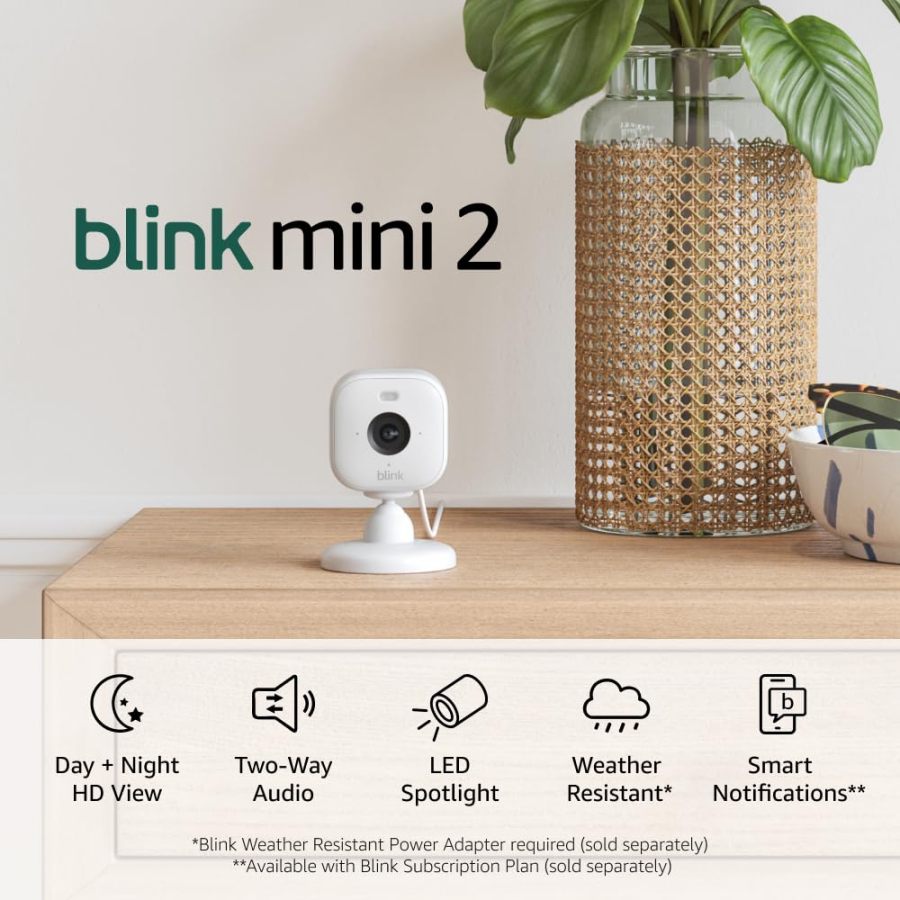
| Indoor/Outdoor Compatibility & Accessories | Indoor/outdoor universal, IP65 waterproof and dustproof. | Some products (e.g., Wyze Cam v4/Pan v3, Blink Mini 2), while advertised as indoor/outdoor universal, require purchasing additional waterproof power adapters for outdoor use, adding hidden costs and installation complexity. | Ambiguous marketing equates 'compatibility' with 'plug-and-play,' failing to clearly inform consumers about the full cost and necessary accessories for outdoor deployment, leading to mismatched user expectations versus actual investment. |
Key Takeaway: The market generally exhibits tendencies toward parameter inflation and exaggerated scenario-based experiences, particularly regarding wireless connection stability, battery life, AI detection accuracy, and long-term 4G network costs, where significant gaps exist between marketing claims and actual user experience.
VII. Supply-Demand Misalignment Analysis
The table below highlights mismatches between seller focus and buyer priorities:
| Dimension | Seller Behavior | User Focus | Verdict |
|---|---|---|---|
| Wireless Connection & Network Compatibility | Sellers generally emphasize 'easy installation,' 'wireless convenience,' but remain largely silent on the stability challenges in real complex home networks (especially when only supporting 2.4GHz Wi-Fi). | Users frequently complain about frequent Wi-Fi dropouts, difficulty connecting, and app lag. Their primary need is 'stable connection,' not just 'easy installation.' | Sellers generalize the convenience of connection under ideal conditions, overlooking the user's core need for network reliability, failing to provide truly 'worry-free connection,' a primary cause of negative reviews. |
| Real Battery Life & Maintenance Frequency | Sellers highlight '2-year battery life,' 'months of worry-free use,' but are vague in listings about real-life battery data under different brightness/trigger frequencies, or use ideal condition data misleadingly. | Users find battery drain far exceeds expectations in actual use, requiring frequent charging. Their expectation of 'low maintenance' is unmet, leading to dissatisfaction with inflated battery claims. | Sellers exaggerate battery performance for marketing appeal, failing to honestly communicate real-life limitations, resulting in failed expectation management that directly impacts product reputation and user loyalty. |
| AI Detection Accuracy & False Alarm Management | Sellers widely promote 'AI smart recognition,' 'person/vehicle detection' as upgrade highlights, but rarely detail how to effectively filter environmental interference or provide false alarm rate data. | The user's primary expectation from AI is 'no false alarms,' but real experience is plagued by frequent invalid alerts caused by insects, leaves, rain/snow, sometimes leading users to disable alerts entirely. | Sellers over-market the 'smart' concept but fail to fundamentally solve the user's most painful 'alert fatigue' problem, causing smart features to fail in enhancing user experience, potentially backfiring. |
| Long-Term Cloud Storage Costs & Local Storage Convenience | Sellers often emphasize 'no monthly fee' or 'local storage,' but bundle advanced AI features with cloud subscriptions, or offer poor local storage playback experience. | Users desire long-term use without extra costs but find many practical features require subscriptions, or local storage is inconvenient to manage, ultimately facing additional expenses contrary to 'no monthly fee' expectations. | Sellers introduce hidden costs in storage solutions, segmenting features to induce subscriptions. While offering choice, they fail to provide a truly worry-free and efficient free alternative. |
Key Takeaway: Sellers downplay or overstate core product pain points (like connection stability, real battery life, AI false alarms) while overemphasizing feature stacking and secondary selling points, leading to a misalignment between supply focus and user demand focus.
VIII. Strategic Opportunities & Recommendations
8.1 Ultra-Stable Dual-Band Wi-Fi Security Camera
8.1.1 Target Audience & Pain Points
⚡️ Pain Points Addressed: Insufficient wireless connection stability, app lag, slow response.
8.1.2 Action Plan
Adopt high-performance dual-band (2.4GHz/5GHz) Wi-Fi 6 modules, optimize antenna layout and signal processing algorithms to ensure stable connection and smooth transmission in complex network environments. Provide network diagnostic tools and optimization suggestions.
| Tech Complexity | Medium |
| Cost Impact | Medium Impact |
| Trade-off Warning | Upgrading Wi-Fi modules and optimizing antenna design might slightly increase product size or power consumption, but significantly improves user experience. |
| Price Band | Only viable above $34.99 |
8.1.3 Marketing Strategy
Emphasize 'Say goodbye to disconnections and lag, full-home signal coverage'; showcase connection stability advantages in different network environments via third-party lab test data comparisons; highlight 'Instant video loading, real-time control, never miss a moment.'
8.2 Smart AI Ultra-Low False Alarm Security System
8.2.1 Target Audience & Pain Points
⚡️ Pain Points Addressed: High false alarm rate for smart detection, alert fatigue.
8.2.2 Action Plan
Deeply optimize AI algorithms, utilize edge computing for ultra-low latency local processing, support human posture analysis, zone intrusion path analysis, specific sound recognition (glass break, baby cry, dog bark), and provide detailed scenario filtering settings. Product design must comply with FCC/CE and other relevant electronic product certifications.
| Tech Complexity | High |
| Cost Impact | High Impact |
| Trade-off Warning | Integrating more powerful AI chips may increase product cost and slightly raise power consumption, but significantly improves algorithm accuracy and local processing capability. |
| Price Band | Only viable above $59.99 |
8.2.3 Marketing Strategy
Highlight 'Refined through rigorous testing, solely for precision'; provide false alarm rate comparison reports from third-party testers and real complex scenario demo videos; emphasize 'Smart alerts, true peace of mind, so you're no longer bothered by insects and leaves.'
8.3 Truly Wireless Long-Lasting Solar Outdoor Camera
8.3.1 Target Audience & Pain Points
⚡️ Pain Points Addressed: Battery life falls short of claims, outdoor deployment relies on charging.
8.3.2 Action Plan
Use high-energy-density lithium batteries (e.g., 8000mAh+), optimize low-power standby modes. Standardize high-conversion-efficiency, weather-resistant external/integrated solar panels to ensure genuine 'perpetual power' under normal daylight. Clearly state real-life battery data under different brightness/trigger frequencies and solar charging efficiency charts in listings.
| Tech Complexity | Medium |
| Cost Impact | Medium Impact |
| Trade-off Warning | Increasing battery capacity or solar panel efficiency might slightly increase product thickness, weight, or solar panel size, requiring a balance between aesthetics and portability. |
| Price Band | Only viable above $79.99 |
8.3.3 Marketing Strategy
Emphasize 'Powered by the sun, unlimited power, one year without charging, truly wireless and worry-free'; provide real-world endurance test data under adverse weather (e.g., cloudy/rainy days); highlight 'Install once, protect continuously for 365 days.'
8.4 User-Friendly App & Flexible Storage Management
8.4.1 Target Audience & Pain Points
⚡️ Pain Points Addressed: App experience lag or feature limitations, high cloud storage costs or inconvenient local storage, privacy concerns.
8.4.2 Action Plan
Invest resources in optimizing the app's underlying architecture to ensure fast video loading and smooth remote control. Simplify UI/UX design, provide 'foolproof' installation guides and feature setup wizards, add quick access to commonly used features. Offer transparent cloud storage subscription options and pricing, and optimize the playback and management experience for local storage. Mandate inclusion of a physical privacy shutter.
| Tech Complexity | Low |
| Cost Impact | Low Impact |
| Trade-off Warning | No significant physical side effects; primarily involves optimizing software design and backend services. |
| Price Band | Only viable above $29.99 |
8.4.3 Marketing Strategy
Highlight 'App opens instantly, control at your fingertips, home security in your pocket'; emphasize 'Data encryption, privacy assured'; showcase app ease of use through UI/UX demo videos; stress the complete functionality and convenience of free local storage.