Amazon US Market Analysis: Portable Desktop Range Hoods Category
📊 Executive Summary
📈 Market Trends
Portability & Integration are mainstream, feature homogenization intensifies. Demand for portable desktop range hoods is strong, especially in small spaces and mobile cooking scenarios. Products commonly emphasize compactness, multi-layer filtration, multiple fan speeds, and low noise. However, innovation mostly focuses on user experience details (e.g., angle adjustment, self-cleaning), with few core technological breakthroughs, leading to significant homogenized competition.
⚡ Major Pain Points
Exaggerated battery life, noise, and safety are critical flaws. Users commonly criticize severe battery life underperformance in wireless products and high noise levels contradicting claims. More critically, some products exhibit material warping or melting under high heat, with ambiguous gas stove compatibility information, constituting serious safety hazards and a trust crisis. Additionally, the difficulty and cost of obtaining replacement filters are long-term pain points.
💡 Selection Opportunities
Return to core user needs, rebuild trust and value. The selection opportunity lies in addressing consumer concerns about product safety and true performance. Focus on developing products with 'long battery life and high-temperature resistance,' provide accurate noise/suction data, and establish a convenient filter ecosystem to build high-quality, high-trust products and create differentiation in the mid-to-high-end market.
I. Analysis Overview
1.1 Introduction & Report Scope
This report analyzes the 'Range Hoods' category (Portable Desktop Range Hoods) in the Amazon US market, focusing on target personas, core needs, decision factors, market communication, and potential opportunities.
1.2 Category Snapshot
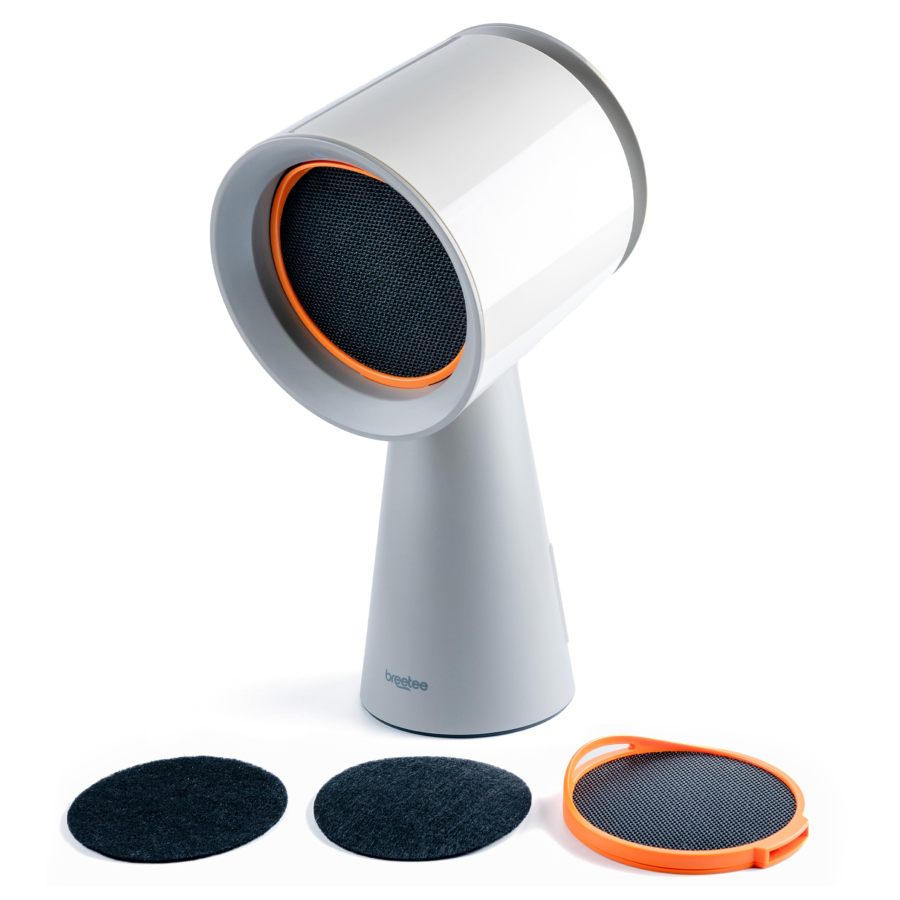
A portable desktop range hood is a compact smoke extraction device specifically designed for spaces without built-in ventilation or with poor ventilation. Its primary function is to capture cooking fumes and odors. It is typically small, easy to move, and widely used in small apartments, RVs, dormitories, and indoor grilling or hot pot scenarios. The following table illustrates the key characteristics of consumer behavior in this category.
| Dimension | Segment | Description |
|---|---|---|
| Need Driver Type | Planned Purchase / Emergency-driven Purchase | Purchases are primarily driven by existing environmental constraints (lack of a built-in range hood) or specific cooking activities (hot pot, grilling). |
| Purchase Frequency | Low Frequency | As a durable small appliance, purchase frequency is low, mainly consisting of one-time or replacement purchases. |
| Decision Complexity | Medium | Users compare multiple dimensions such as suction power, noise level, filtration system, portability, and ease of cleaning. |
| Price Sensitivity | Medium | Price is an important consideration, but users are willing to pay a reasonable premium for products that effectively solve their fume-related pain points. |
| Emotional Dependency | Low | Purchases are primarily driven by functionality and practicality, with low emotional connection. |
II. User Personas & Usage Scenarios
2.1 Urban Apartment Renters / Small Space Dwellers
🎯 Young professionals or small families living in space-constrained apartments or small homes that lack or have inadequate built-in range hoods.
| Typical Usage Scenarios | Core Pain Points | Primary Purchase Drivers |
|---|---|---|
|
|
|
2.2 Mobile Lifestyle Enthusiasts / Outdoor Cooking Enthusiasts
🎯 Individuals who frequently travel in RVs, camp, or engage in light outdoor cooking on balconies.
| Typical Usage Scenarios | Core Pain Points | Primary Purchase Drivers |
|---|---|---|
|
|
|
III. User Needs Hierarchy (KANO Model)
3.1 Basic Needs (Must-Haves)
- Effective Smoke & Odor Removal: The product's most core function; it must be able to capture cooking fumes and odors at a basic level, otherwise it loses its purpose.
- Easy Operation: One-touch start, simple and intuitive controls, requiring no complex setup-plug and play.
- Portability: Compact size, easy to move and place, adaptable to different cooking scenarios and storage needs.
3.2 Performance Needs (Linear Satisfiers)
- Strong Suction Power: Ability to quickly and efficiently handle varying concentrations of fumes and steam, especially for heavy-smoke cooking.
- Low-Noise Operation: Effective performance while maintaining low noise levels, not disrupting the cooking process or conversation.
- Multi-Layer Filtration System: Features multiple filter layers (e.g., activated carbon, aluminum alloy, polymer) for efficient grease capture and air purification.
- Easy Cleaning & Maintenance: Removable filters and grease cups for easy cleaning; some are dishwasher-safe, reducing maintenance burden.
- Multiple Fan Speed Settings: Offers 2-4 speed settings to adapt to different needs from light cooking to heavy fumes, providing more options.
3.3 Excitement Needs (Delighters)
- Wireless/Battery-Powered: Eliminates power cord constraints, offering ultimate mobility and expanding usage scenarios.
- Smart Angle/Height Adjustment: Allows flexible adjustment of the suction inlet angle and height to precisely target the smoke source, optimizing capture efficiency.
- Smart Cleaning Mode: Features one-touch self-cleaning functions (e.g., rinse, dry) to further simplify maintenance and save time.
- Integrated Lighting: Provides additional LED lighting for better visibility while cooking, enhancing operational convenience.
3.4 Unmet Needs & Opportunities
-
Filter Availability & Cost: Replacement filters are hard to find, have high long-term purchase costs, or have unclear lifespans, impacting long-term user experience.
User Reviews (VOC) Replacement filters are hard to find // Also, there is only 13 oil filters included, and not sure where and how to acquire more.
-
Battery Life Capability: Some battery-powered products have short runtimes, unable to support long or frequent cooking sessions, requiring frequent charging and diminishing the portability advantage.
User Reviews (VOC) So item does not hold a charge even after let charge overnight you get maybe 10 minutes of use time // Does not hold charge plus it doesn't do anything was more of clutter than help.
-
High-Temperature Resistance: Some product materials may warp or become damaged when exposed to high-temperature cooking, affecting lifespan and safety.
User Reviews (VOC) After using it a while, the fan is melting! // the outer "polymer filter" wrinkling from the heat... too distorted to go back in.
-
Ideal Balance of Suction & Noise: Users expect strong suction power while maintaining very low noise, not having to make significant compromises between the two-a balance current market products struggle to fully achieve.
User Reviews (VOC) This works well for my needs. It does pull in the smoke well. It is relatively loud but not that bad. // Very loud and vibrates around. Fan blows very hard, it is sturdy and works well.
-
Thorough Fume & Odor Elimination: Even with filtration systems, users desire more complete elimination of odor residue after heavy-smoke cooking, not just reduction.
User Reviews (VOC) It didn't really do as much for the odor in the house after cooking, but it wasn't as bad as it would've been without it. // The fan is not working. We have tried repositioning it and it seems to make our smoke alarms go off faster and longer.
IV. User Decision Drivers
4.1 Key Decision Factors
- Smoke & Odor Removal Effectiveness: The user's core consideration, directly related to cooking environment comfort and determining if the fume issue is effectively solved.
- Noise Level: Whether operation is quiet directly impacts user cooking experience and home tranquility, especially in small spaces.
- Portability & Ease of Use: Whether the product is lightweight, requires no complex installation, and has simple, intuitive operation directly affects convenience and daily usage willingness.
- Ease of Cleaning: Whether filters and grease cups are easy to remove and clean directly impacts long-term maintenance cost, hygiene, and product lifespan.
4.2 Secondary Decision Factors
- Price: Assuming core functions are met, product value-for-money is a key factor influencing the final purchase choice.
- Filtration System: Filter type, quantity, reusability, and the cost/availability of replacement filters impact long-term user experience.
- Brand Reputation & Customer Service: Especially in the small appliance sector, reliable after-sales service and quality assurance build user trust and reduce purchase concerns.
- Design & Size: Product aesthetics and whether it occupies excessive counter space affect overall home decor harmony.
- Power Source: Plug-in or battery-powered affects applicable scenarios and usage flexibility, e.g., suitability for outdoor use.
V. Selling Points & Competitive Landscape
5.1 Selling Point Analysis
5.1.1 Standard Features (Points of Parity)
- Portable Design: Products universally emphasize compactness, lightweight, and no installation required, suitable for various small spaces (apartments, RVs, dorms) and mobile scenarios.
- Multi-Layer Filtration: Widespread use of multi-layer filter combinations (e.g., activated carbon, aluminum alloy, polymer), emphasizing efficient capture of fumes, grease, and odors.
- Multiple Fan Speeds: Offers 2-3 (some have 4) adjustable speed settings to adapt to different cooking intensities and fume concentrations.
- Low-Noise Operation: Marketing claims noise levels below a certain decibel (e.g., 50-65dB), aiming to create a quiet cooking environment.
- Easy Cleaning & Maintenance: Emphasizes removable filters and grease cups for easy cleaning; some filters are reusable.
5.1.2 Key Differentiators
- Wireless/Battery-Powered: Some products support battery power or USB charging, increasing usage flexibility and scenario coverage, such as outdoor use.
- Adjustable Angle/Height: Allows users to adjust the suction angle or product height based on pot height and smoke source position, improving capture efficiency.
- Large-Capacity Grease Cup: Highlights a larger grease collection cup, reducing emptying frequency and enhancing convenience.
- Extra Filters Included: Bundles multiple replacement filters (e.g., activated carbon pads), extending the initial usage period and demonstrating value.
- Integrated LED Lighting: Some products feature built-in LED lights or ring lighting for additional cooking illumination.
5.1.3 Unique Selling Propositions (USPs)
- 125° Adjustable Rotation/Wall-Mount Design: A Unique Selling Point of Mity Rain, offering more flexible placement and smoke capture methods to adapt to different kitchen layouts.
- Scratch & Fingerprint-Resistant Surface: Some brands (e.g., Xmrtxx, TUCO) use matte or sandblasted finishes to enhance appearance, durability, and reduce daily marks.
- One-Touch Self-Cleaning Mode: Such as KefuJu's Smart Wash function, offering 90-second rinse + 5-minute drying to further simplify internal cleaning.
5.2 Competitive Landscape
5.2.1 Market Maturity
The portable desktop range hood niche is transitioning from growth to maturity. Market demand is clear, primarily focused on solving ventilation issues in small spaces without traditional hoods and meeting smoke extraction needs for indoor hot pot/grilling. Most products exhibit high convergence in core feature marketing (suction, noise, portability, filtration), indicating a degree of homogenized competition. However, brands still attempt differentiation through functional details (e.g., battery life, angle adjustment, filter design, added lighting) and user experience (ease of cleaning, materials). Overall, consumer expectations for product performance are rising; basic functionality is no longer sufficient, and users are more vigilant against 'overpromising' marketing claims.
5.2.2 Innovation Trends
Current innovation trends are mainly evident in: First, Wireless & Battery Technology Integration. Some products are experimenting with battery power to maximize 'portability' value, though runtime remains a challenge. Second, User-Friendly Feature Design. Features like smart angle/height adjustment and one-touch self-cleaning aim to further simplify use and maintenance. Third, Efficient & Eco-Friendly Filtration System Upgrades. Emphasis on multi-layer high-efficiency filters and reusable filters caters to consumer demand for air purification and eco-consciousness. Finally, Material & Durability Optimization. Design considerations are beginning to address material stability and long-term lifespan in high-temperature cooking environments, though there is still room for improvement.
VI. Marketing Claims vs. Reality Check
The table below analyzes the gap between common marketing claims and actual user experiences in this category:
| Dimension | Marketing Claim | User Reality | Verdict |
|---|---|---|---|
| Battery Life | Mity Rain claims 'fully charged for use anywhere' with runtime sufficient for daily cooking. SYBOYEGE claims USB fast charging, 90-minute long runtime, and a 2400mAh high-capacity battery. | Mity Rain user feedback indicates the battery lasts only about 10 minutes after a full charge, insufficient for normal cooking. SYBOYEGE's runtime is also limited for long or frequent cooking sessions. | Typical use of ideal test condition standby data or vague descriptions to mislead users about actual usage time, failing to deliver on the core promise of 'wireless freedom.' |
| Noise Level | Mity Rain claims 'ultra-quiet operation, as low as 1dB.' AAOBOSI claims '40-60dB low noise for quiet cooking time.' | Mity Rain users widely report actual noise is significant, severely contradicting the 1dB claim. Some AAOBOSI users report noticeable noise at the highest setting. Customer reviews for B0D5Y7GD5D and B0D5Y763HD also commonly note 'Effective but loud.' | Sellers exhibit severe mislabeling or exaggeration regarding noise control, failing to keep product noise within the user-acceptable 'quiet' range, impacting user experience. |
| High-Temperature Resistance/Material Stability | Products use 'premium ABS material,' 'corrosion-resistant coating,' etc., implying durability and reliability. | Empava (B0DT9B7SJ9) user feedback reports plastic parts 'melting' during use. TUCO (B0DCBM6PRT) has users reporting polymer filter 'deforming' under high heat. | In addressing the core need of withstanding kitchen heat, material choices for some products contradict basic physical principles, posing serious safety hazards and quality defects that risk user safety and property. |
| Suction & Odor Removal Effectiveness | Most products claim 'powerful suction,' 'efficiently removes fumes and odors,' some citing figures as high as 350 CFM or 600 CMPH. | KefuJu (B0FDQCW8JS) airflow displacement is only 1.6 CFM; user feedback states 'not great for cooking odors.' Breetee (B0DCGFL9L8) user says 'could be stronger.' FOHERE (B0DHVBZS6Y) user reports 'Doesn't work as well as I hoped. House still smells when cooking.' | Sellers commonly overpromise on suction and odor elimination. As portable recirculating devices, their performance has inherent limits and cannot fully match externally vented range hoods, leading to a severe mismatch between user expectations and actual results. |
| Gas Stove Compatibility | Widely marketed as suitable for 'all kitchens,' 'indoor grilling, hot pot,' implying universality. | KefuJu (B0FDQCW8JS) manual explicitly warns 'not for use with gas stoves.' Airthereal (B0DN1LV6TJ) also cautions 'Do not use near an open flame or gas stove.' AAOBOSI (B0DQGK45PK) also clearly states 'not suitable for gas stoves.' | Sellers generally obscure usage limitations in product claims, failing to provide clear warnings about gas stove incompatibility, creating user cognitive bias and safety risks. |
Key Takeaway: The market exhibits widespread parameter inflation and scenario-based experience exaggeration, particularly regarding battery life, noise levels, and smoke removal effectiveness.
VII. Supply-Demand Misalignment Analysis
The table below highlights mismatches between seller focus and buyer priorities:
| Dimension | Seller Behavior | User Focus | Verdict |
|---|---|---|---|
| True Battery Life & Promise Consistency | Mity Rain and other battery-powered products commonly market 'wireless portability,' 'long-lasting use,' but listings lack reliable runtime data across different modes, or data severely contradicts user feedback. | Users expect wireless devices to support a full cooking session but commonly complain about short runtimes and frequent charging needs, undermining the core portability advantage. | Sellers generally lack transparency and truthfulness on the core pain point of battery life, leading to post-purchase experience gaps and weakening the product's core value proposition. |
| Product Material Safety at High Temperatures | Sellers commonly promote durable materials but rarely mention heat resistance limits or safety guarantees in high-temperature cooking environments. | Users report plastic parts warping or melting under high heat, which is not just a quality issue but a critical safety concern. | In pursuit of low cost or appealing design, sellers ignore the fundamental safety baseline for kitchen appliances, collectively remaining silent on material stability under heat, demonstrating disregard for user health and safety. |
| Clear Gas Stove Compatibility & Warnings | Some products ambiguously imply suitability for 'all kitchens' in titles and bullet points, but only mention gas stove incompatibility in manuals or inconspicuous locations. | Most households still use gas stoves. Users assume compatibility by default; discovering incompatibility later feels misleading and increases safety concerns. | Sellers fail to prominently and clearly communicate critical safety limitations upfront, creating decision blind spots and potential hazards-a classic case of information asymmetry. |
| Long-Term Replacement Filter Supply & Cost | Some listings emphasize 'reusable filters' or 'includes multiple filters,' but generally lack clear guidance on long-term purchase channels, specific model numbers, pricing, and replacement cycles. | Users complain about difficulty finding replacement filters and high long-term costs, creating a hidden barrier to sustained use and impacting repurchase intent. | Sellers have a blind spot regarding the sustainability of post-'one-time-purchase' services, failing to build a complete consumables ecosystem, causing user inconvenience during long-term use. |
Key Takeaway: Sellers collectively remain silent or overpromise on key pain points like battery life, high-temperature resistance, and gas stove compatibility, while over-promoting low-value details, leading to a severe supply-demand mismatch.
VIII. Strategic Opportunities & Recommendations
8.1 Enhance Battery Life & Modular Power Design
8.1.1 Target Audience & Pain Points
⚡️ Pain Points Addressed: Insufficient battery life unable to support long cooking sessions; power flexibility needs improvement.
8.1.2 Action Plan
Adopt high-energy-density lithium batteries (e.g., 2500mAh+), optimize power management systems to achieve at least 1.5 hours at high power and 3+ hours at medium/low power. Consider modular battery design supporting fast charging or battery swapping. Some models could add a DC power port for vehicle power adapter compatibility.
| Tech Complexity | Medium |
| Cost Impact | Medium Impact |
| Trade-off Warning | Increasing battery capacity may slightly increase product volume or weight, requiring an optimal balance between portability and runtime. |
| Price Band | Only viable above $49.99 |
8.1.3 Marketing Strategy
Emphasize 'Say goodbye to battery anxiety, one charge for multiple meals'; showcase outdoor/RV cooking freedom through scenario-based imagery; highlight 'Long-lasting power, total freedom'; provide real-world runtime test data for different power modes to alleviate user concerns.
8.2 Strengthen Heat-Resistant Materials & Safety Certifications
8.2.1 Target Audience & Pain Points
⚡️ Pain Points Addressed: Product materials prone to warping or melting under high-temperature cooking, posing safety hazards.
8.2.2 Action Plan
Mandate the use of food-grade stainless steel, flame-retardant PC/ABS alloys, or glass-reinforced plastics for core heat-exposed components like the suction inlet, filter frame, and fan. All products must pass authoritative safety certifications (e.g., UL, ETL) and clearly display them in listings. Provide clear guidance or restrictions regarding gas stove compatibility.
| Tech Complexity | Medium |
| Cost Impact | High Impact |
| Trade-off Warning | Using higher-grade materials increases BOM cost and mold development difficulty but does not affect core functionality. |
| Price Band | Only viable above $59.99 |
8.2.3 Marketing Strategy
Highlight 'Forged Quality, Safety Assured'; emphasize 'Heat-resistant, warp-resistant'; display authoritative safety certification logos; provide scientific explanations and test data for heat-resistant materials; clearly list gas stove usage guidelines or restrictions to avoid misleading claims.
8.3 Optimize Suction-Noise Balance & Provide Verified dB/CFM Data
8.3.1 Target Audience & Pain Points
⚡️ Pain Points Addressed: Difficulty balancing suction and noise; users desire strong suction with low noise.
8.3.2 Action Plan
Adopt innovative centrifugal fans or brushless DC motors, optimize airflow duct and noise reduction structural design, aiming to keep noise below 45-50 dB at maximum suction. Provide verified third-party noise (dB) and suction (CFM) test data in listings with comparison charts.
| Tech Complexity | High |
| Cost Impact | Medium Impact |
| Trade-off Warning | High airflow and low noise present an engineering paradox, requiring precise trade-offs and innovation, potentially involving larger fan housings or more complex duct designs. |
| Price Band | Only viable above $79.99 |
8.3.3 Marketing Strategy
Emphasize 'Powerful Yet Peaceful, Smoke-Free & Undisturbed'; use data to compare noise and suction performance against competitors; highlight 'Patented Noise Reduction, Professional-Grade Fume Capture'; provide cooking scenario noise test videos to build trust.
8.4 Establish Convenient Filter Purchase & Smart Reminder System
8.4.1 Target Audience & Pain Points
⚡️ Pain Points Addressed: Replacement filters hard to find, with high long-term costs or unclear lifespans.
8.4.2 Action Plan
Include a QR code in packaging linking directly to the official filter purchase page. Offer various filter bundles with clear recommended replacement cycles. Consider adding a filter life indicator light or an app reminder feature.
| Tech Complexity | Low |
| Cost Impact | Low Impact |
| Trade-off Warning | No significant physical trade-offs, primarily involving supply chain management and software development. |
| Price Band | Only viable above $14.99 (filter bundle) |
8.4.3 Marketing Strategy
Highlight 'Consumables Worry-Free, Clean Performance Sustained'; emphasize 'Scan to Buy, Direct from Manufacturer'; offer convenience and discounts via subscription services to foster long-term user loyalty.