Amazon US Market Analysis: Soil Tester Category
📊 Executive Summary
📈 Market Trends
Portability and integration are mainstream, but a significant quality gap exists. The soil tester market is trending towards all-in-one features and digital displays to meet user demand for comprehensive data and convenience. However, feature stacking in low-priced products hasn't delivered real value, instead exposing core quality issues like accuracy and durability. The market is calling for genuine quality upgrades.
⚡ Major Pain Points
Multi-function 'inaccuracy' and probe 'lack of durability' are critical flaws. Users are widely skeptical of the measurement accuracy of additional functions like pH, light, and nutrients claimed by market products. Simultaneously, probes being prone to corrosion and damage, leading to short product lifespans, is the most concentrated pain point in user experience, severely impacting product reputation and trust.
💡 Selection Opportunities
Return to core value, precisely solve pain points. Market opportunities lie in developing a high-accuracy, durable multi-function tester to meet professional user needs; launching a long-lifespan, low-maintenance pure moisture meter for the mass market to address basic pain points. Simultaneously, exploring smart connected systems to enhance user experience, or providing customized solutions for specialized scenarios to win the market with differentiated strategies. All innovations must be built on a foundation of reliability.
I. Analysis Overview
1.1 Introduction & Report Scope
This report analyzes the 'Soil Meters' category (Soil Testers) on Amazon US, focusing on target user personas, core needs, decision drivers, market communication, and potential opportunities.
1.2 Category Snapshot
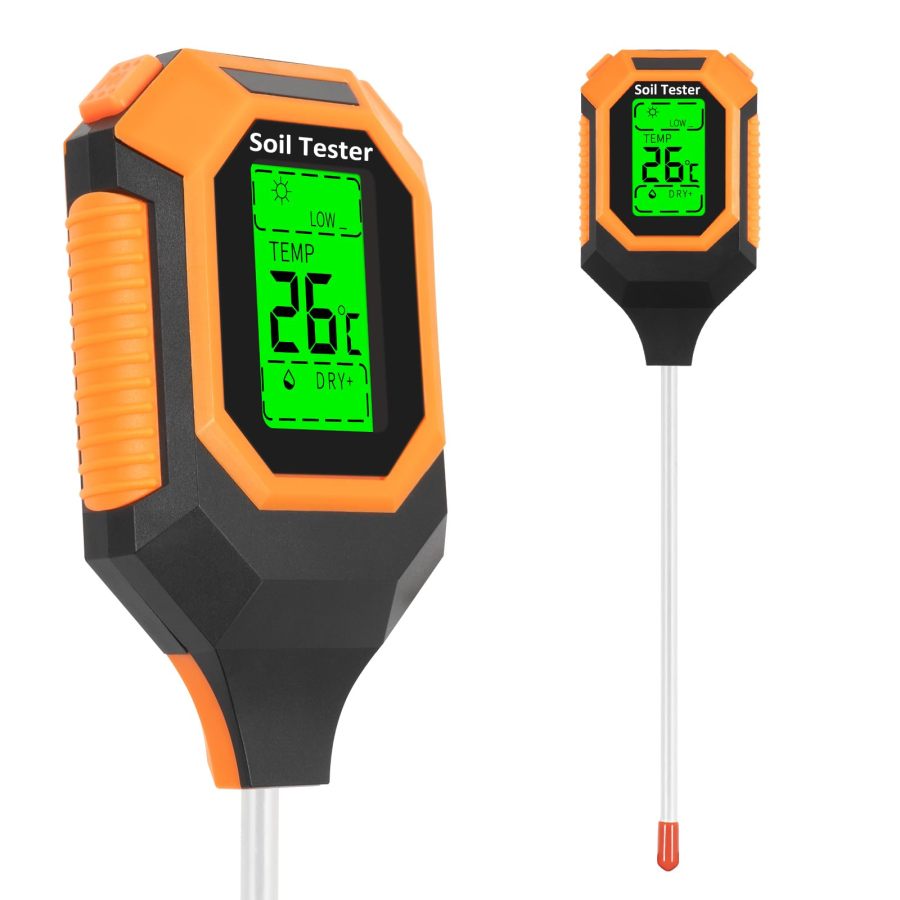
A soil tester (or soil meter) is a gardening tool used to measure key soil parameters such as moisture, pH, light intensity, fertility, and temperature. Its core function is to help users understand their plant's soil environment, enabling scientific watering, fertilizing, and light management to ensure healthy plant growth. Products in this category are primarily divided into analog, single-function moisture meters that require no batteries, and digital display meters that require batteries and integrate multiple functions (e.g., moisture, pH, light, temperature). The following table illustrates the key characteristics of consumer behavior in this category.
| Dimension | Segment | Description |
|---|---|---|
| Need Driver Type | Planned Purchase / Emergency-driven Purchase | Purchases typically stem from anticipated plant care needs or from seeking solutions due to poor plant health, with clear expectations for assessing soil conditions. |
| Purchase Frequency | Low | As a durable gardening tool, purchase frequency is low. Typically, one purchase lasts for a long time; it is not a fast-moving consumer good. |
| Decision Complexity | Medium | Consumers compare functional combinations (single vs. multi-function), display types, price, and accuracy, but do not conduct deep research. |
| Price Sensitivity | Medium | Price is an important consideration, but users are also willing to pay a reasonable premium for higher accuracy, more features, or convenience. |
| Emotional Dependency | Medium | The product is closely tied to the user's emotional connection with caring for plants, helping to avoid the frustration of plant death and bringing a sense of accomplishment. |
II. User Personas & Usage Scenarios
2.1 Urban Gardening Novice
🎯 Just starting with indoor potted plants or small balcony vegetables, lacks experience, and feels confused about plant watering and light needs.
| Typical Usage Scenarios | Core Pain Points | Primary Purchase Drivers |
|---|---|---|
|
|
|
2.2 Experienced Gardener & Small Farmer
🎯 Owns a large outdoor garden, vegetable plot, or small farm, grows various plants, pursues precise management and high crop yield.
| Typical Usage Scenarios | Core Pain Points | Primary Purchase Drivers |
|---|---|---|
|
|
|
III. User Needs Hierarchy (KANO Model)
3.1 Basic Needs (Must-Haves)
- Accurate Moisture Measurement: The product must reliably indicate soil moisture levels; this is the foundation of user purchase and trust. Its absence renders the product unusable.
- Easy Insertion & Removal: Probe design should allow easy insertion into various soils and clean removal without bringing out excessive soil or damaging plant roots, improving convenience.
- Clear & Intuitive Display: Whether analog dial or digital screen, readings must be immediately understandable without guesswork or complex interpretation, lowering the usage barrier.
- Simple Operation: Users expect a plug-and-play product requiring no complex setup or frequent calibration, embodying efficiency and peace of mind.
3.2 Performance Needs (Linear Satisfiers)
- Multi-Function Integration: Beyond moisture, capable of measuring pH, light, fertility, temperature, and other parameters, providing more comprehensive soil data to meet advanced needs.
- Fast Response: The probe provides stable readings within seconds of insertion, reducing wait time and improving efficiency.
- Good Durability: The probe should be corrosion-resistant, and the body sturdy, able to withstand repeated use and different soil conditions without easy damage, ensuring long-term use.
- Applicable to Various Scenarios: Can be used for indoor pots, outdoor gardens, farms, and other planting environments of different sizes and types, improving product versatility.
- Sufficiently Long Probe: Especially for large pots or outdoor planting, the probe needs to be long enough to detect moisture at deeper root levels, avoiding shallow misjudgments.
3.3 Excitement Needs (Delighters)
- Included Plant Care Guide: Comes with a manual for common plants or links to online resources, providing personalized watering, light, etc., advice, enhancing added value.
- Ergonomic Design: Features like a foldable/rotating dial head, allowing easy reading from different angles or low positions, improving comfort.
- Special Soil Issue Identification: Not only displays values but also provides hints or simple diagnoses for specific soil issues (e.g., hydrophobic soil), offering professional guidance.
- Digital Backlit Display: An LCD screen with backlight provides clear digital readings in dim or nighttime environments, facilitating nighttime operation.
3.4 Unmet Needs & Opportunities
-
pH & Light Measurement Accuracy: Users widely report that current products' pH and light readings are inaccurate or unstable, failing to serve as reliable references, leading to post-purchase disappointment.
User Reviews (VOC) pH readings seem off, they don't match my test strips. // The light sensor always shows very weak indoors, not sure if it's accurate.
-
Probe Susceptibility to Damage/Corrosion: Probes easily fail due to corrosion or physical damage in a short period, affecting product lifespan and user experience, reducing perceived value.
User Reviews (VOC) The probe rusted after a few months, and readings became inaccurate. // It bent when inserted into slightly hard soil, poor quality.
-
Poor Compatibility with Special Soil Types: Some products are not suitable for specific soil types like hard clay, sandy soil, or loose soil, limiting usage scenarios and causing poor experiences when misused.
User Reviews (VOC) It doesn't measure accurately in my sandy soil, feels useless. // Can't insert it into hard soil, afraid of breaking the probe.
-
Lack of Liquid Measurement Function: Although product descriptions clearly state soil-only use, some users still wish to measure pH/TDS of water or liquid fertilizer for more comprehensive care data.
User Reviews (VOC) Wish it could measure the pH of nutrient solution, that would be more convenient. // Want to know if my tap water is alkaline, but this can't do it.
-
Lack of Calibration or Troubleshooting Guidance: When product readings become inaccurate, users lack effective calibration methods or diagnostic support, leaving problems unresolved.
User Reviews (VOC) Readings are off, but the manual doesn't say how to calibrate. // The product broke, don't know if I should throw it away or if it can be fixed.
IV. User Decision Drivers
4.1 Key Decision Factors
- Ease of Use: Users prioritize simple operation, plug-and-play functionality, and no complex calibration. This directly determines the product's usability barrier and convenience, making it the primary purchase consideration.
- Core Function Effectiveness: Whether the product can effectively and accurately indicate watering needs, truly helping users solve the pain points of 'over-watering' or 'under-watering,' is the fundamental purpose of the purchase.
- Value for Money: Among products with similar features, price is a key consideration. Users expect the product to be worth the price and fit within their budget.
4.2 Secondary Decision Factors
- Accuracy: Especially for additional functions like pH and light, users have high expectations for reading accuracy. Even though current products often disappoint, this remains a key factor for comparison.
- Durability: Users want the product to last, not easily break or fail, avoiding the hassle and extra cost of frequent replacement, reflecting long-term value.
- Multi-Functionality: For users with broader care needs, integrating multiple measurement functions is a significant plus, simplifying tool management and providing more data dimensions.
- Display Clarity: Especially for digital displays, backlighting and font size directly impact readability, making consistent legibility across different lighting conditions an important consideration.
V. Selling Points & Competitive Landscape
5.1 Selling Point Analysis
5.1.1 Standard Features (Points of Parity)
- Moisture Measurement: All products emphasize the core soil moisture detection function to help users determine watering timing, which is the foundational feature of the category.
- Easy to Use: Commonly highlight 'plug-and-play,' 'no batteries required (for analog models),' 'simple and intuitive' operation, catering to general user needs.
- Prevents Over-Watering: Prominently feature solving the common user pain point of avoiding plant death from waterlogging, positioning it as a core benefit.
- Indoor & Outdoor Use: Promote the product's suitability for various scenarios like indoor pots, outdoor gardens, and farms, broadening the target audience.
5.1.2 Key Differentiators
- Multi-Functionality: Integrate measurement of multiple parameters like pH, light, fertility, temperature, providing more comprehensive soil information as a product upgrade direction.
- High Accuracy/Fast Response: Emphasize accurate readings and fast measurement speed to enhance user experience, though actual performance varies widely.
- Long Probe Design: Address large pots or deep soil with more effective measurement depth, meeting specific scenario needs.
- Single Probe Design: Highlight minimal damage to plant roots, a more gentle measurement approach, as a user-friendly feature.
5.1.3 Unique Selling Propositions (USPs)
- LCD Digital Backlit Display: Provide clear digital readings and nighttime visibility, common in mid-to-high-end products, enhancing tech appeal and usability.
- 90-Degree Rotating Dial Head: Unique ergonomic design allows easy reading from different angles, improving comfort.
- Included Care Guide/Sandpaper: Provide added value or maintenance accessories, enhancing user experience and product stickiness.
- 7-in-1 Multi-Function: Some products integrate more environmental parameters, like air temperature and humidity, attempting to create a more comprehensive plant management system.
5.2 Competitive Landscape
5.2.1 Market Maturity
The current soil tester market is in a mature stage, yet significant quality gaps and functional bottlenecks persist. The market is saturated with low-priced, functionally homogenous (mainly moisture measurement) entry-level products, leading to intense competition. Meanwhile, while multi-function products attempt differentiation by adding measurement dimensions (e.g., pH, light), widespread user feedback indicates that the accuracy and durability of these added functions are often subpar, revealing a disconnect between technology and user experience. This reflects both stable fulfillment of basic market needs and highlights significant room for premiumization, specialization, and reliability improvement.
5.2.2 Innovation Trends
Category innovation trends are shifting from single analog functions towards multi-function digital displays, especially represented by LCD backlit screens, aiming to provide clearer, more comprehensive data. Simultaneously, product functional integration is increasing, attempting to include more environmental parameters like air temperature and humidity, upgrading the product from a simple 'soil tester' to a 'plant health management system.' At the user experience level, ergonomic designs like rotating dial heads and value-added services like providing plant care guides also reflect brand efforts to enhance product practicality and user satisfaction. In the future, more intelligent data analysis and personalized recommendations will be an important development direction.
VI. Marketing Claims vs. Reality Check
The table below analyzes the gap between common marketing claims and actual user experiences in this category:
| Dimension | Marketing Claim | User Reality | Verdict |
|---|---|---|---|
| Multi-Function Measurement Accuracy (pH/Light/Nutrients) | 4-in-1/7-in-1 comprehensive and precise measurement of pH, light, nutrients, aiding in scientific plant maintenance. | Users widely report that pH and light readings are inaccurate, unstable, or completely ineffective. Nutrient measurement is vague and lacks specific standards, failing to serve as a reliable reference. | Sellers focus on feature quantity but fail to deliver reliable measurement quality, rendering multi-functionality a 'pseudo-need.' This severely erodes user trust and generates negative reviews. |
| Probe Durability & Corrosion Issues | Sturdy and durable, high-quality metal probe, suitable for long-term use. | Widespread user feedback indicates probes easily bend, corrode, or fail within a short period, especially in moist soil. Multiple products explicitly warn against leaving them in soil for extended periods. | Sellers overlook the physical limitations and material properties of prolonged use in wet soil environments, packaging short-term usable metal probes as 'durable,' leading to a severe mismatch between product lifespan and user expectations. |
| Media & Scenario Limitations | Widely applicable to various soils, suitable for indoor and outdoor use, a versatile tool for gardening enthusiasts. | Most products explicitly state or are reported by users as unsuitable for hard clay, sandy soil, loose soil, or liquids, limiting their universality. Inadequate user understanding leads to misuse and disappointment. | Marketing blurs product applicability boundaries, failing to adequately educate users or optimize for specific scenarios. This leads to user misjudgment of usage contexts, resulting in negative experiences and reduced product utility. |
Key Takeaway: The market exhibits widespread parameter inflation and feature stacking tendencies, especially regarding the accuracy of multi-function measurements and probe durability, where a significant gap exists between marketing claims and actual user experience.
VII. Supply-Demand Misalignment Analysis
The table below highlights mismatches between seller focus and buyer priorities:
| Dimension | Seller Behavior | User Focus | Verdict |
|---|---|---|---|
| True Accuracy of Multi-Function Measurements (pH/Light/Nutrients) | Sellers commonly emphasize the number of integrated functions like '4-in-1,' '7-in-1' as key listing selling points and differentiation. | Users widely report these additional functions have inaccurate or even useless readings, considering them 'gimmicks' or 'decorations' that provide no real value. | Sellers invest marketing in 'having' features but fail to refine 'usability,' leading to feature stacking rather than value accumulation, a perception strongly felt by users. |
| Product Probe & Overall Durability | Sellers commonly highlight short-term convenience from 'no batteries required' and 'plug-and-play,' but rarely mention probe material, corrosion resistance, or product longevity, often avoiding the topic. | Numerous users complain about probes corroding, bending, or overall product failure, with short lifespans becoming a core post-purchase pain point. | Sellers neglect users' deep-seated need for products that 'work reliably long-term,' overemphasizing short-term convenience. This creates a huge gap between user experience and expectations, damaging reputation and repurchase potential. |
| Applicable Soil Types & Media | Most listings claim 'indoor & outdoor use,' 'widely applicable,' yet bury disclaimers about unsuitability for hard clay, sandy soil, water, etc., in fine print or manuals, lacking transparency. | Users encounter problems when using products on various soils or attempting to measure liquids, feeling misled or disappointed, perceiving products as 'impractical' or 'deceptive.' | A discrepancy exists between marketing information and actual usage limitations. Failure to effectively set user expectations causes misunderstanding and negative experiences, harming brand trust. |
Key Takeaway: Sellers overemphasize feature stacking and low-cost convenience while neglecting users' fundamental demands for core function accuracy and probe durability, creating a significant supply-demand misalignment.
VIII. Strategic Opportunities & Recommendations
8.1 Professional-Grade High-Accuracy Durable Multi-Function Soil Tester
8.1.1 Target Audience & Pain Points
⚡️ Pain Points Addressed: Insufficient pH & light measurement accuracy, probe susceptibility to damage/corrosion.
8.1.2 Action Plan
Adopt higher-precision sensors and more stable calibration systems, especially for pH and light measurement. Upgrade probes to 316L surgical-grade stainless steel or more corrosion-resistant alloys. Optimize the probe-body connection structure and offer a longer warranty.
| Tech Complexity | Medium |
| Cost Impact | High Impact |
| Trade-off Warning | Improving sensor accuracy and using more corrosion-resistant materials will significantly increase BOM cost and may slightly increase product size, but with no apparent functional side effects. |
| Price Band | Only viable above $39.99 |
8.1.3 Marketing Strategy
Emphasize 'laboratory-grade accuracy,' 'professional gardener's choice,' 'ten-year quality guarantee.' Use comparison test videos to demonstrate stability and accuracy in complex soil environments, targeting users seeking the ultimate experience.
8.2 Long-Lifespan Low-Maintenance Pure Moisture Meter
8.2.1 Target Audience & Pain Points
⚡️ Pain Points Addressed: Probe susceptibility to damage/corrosion, short product lifespan.
8.2.2 Action Plan
Focus on improving the durability and corrosion resistance of the moisture measurement probe. Use high-quality stainless steel probes and optimize sealing and fixation processes. Clearly label durable materials and maintenance advice on packaging/manuals, e.g., 'Clean probe after each use to extend lifespan.'
| Tech Complexity | Low |
| Cost Impact | Low Impact |
| Trade-off Warning | Using more corrosion-resistant probe materials (e.g., specific stainless steel) and optimizing structural design has almost no physical side effects but slightly increases unit cost. |
| Price Band | Only viable above $9.99 |
8.2.3 Marketing Strategy
Highlight 'Say goodbye to frequent replacements, one lasts for years,' 'Anti-corrosion probe, stable and reliable.' Emphasize the 'worry-free gardening' concept, alleviating user concerns about product lifespan and building long-term trust.
8.3 Smart Connected Plant Health Management System
8.3.1 Target Audience & Pain Points
⚡️ Pain Points Addressed: Uncertain care approach, lack of systematic guidance, absence of calibration or troubleshooting guidance.
8.3.2 Action Plan
Develop a digital multi-function soil tester with Bluetooth or Wi-Fi connectivity for real-time data sync to a mobile app. The app should provide: historical data charts, plant species database, personalized watering/fertilizing/light reminders, AI-powered plant problem diagnosis, and solutions.
| Tech Complexity | High |
| Cost Impact | High Impact |
| Trade-off Warning | Adding Bluetooth/Wi-Fi modules, batteries, and more complex PCBs will significantly increase product size, weight, and cost. Requires companion app development and maintenance but enables more value-added services. |
| Price Band | Only viable above $49.99 |
8.3.3 Marketing Strategy
Emphasize 'Your personal plant AI butler,' 'One-click smart control, goodbye to care problems.' Use vivid app interface demos and user success stories to showcase its systematic, personalized care value.
8.4 Specialized Scenario Customized Testers
8.4.1 Target Audience & Pain Points
⚡️ Pain Points Addressed: Poor compatibility with special soil types, lack of liquid measurement function.
8.4.2 Action Plan
Develop product series optimized for specific media: e.g., offer slimmer probes resistant to hard soil insertion, or provide separate/integrated modules for measuring liquid pH/TDS for hydroponics. Clearly define target users and usage scenarios in product promotion.
| Tech Complexity | Low to Medium |
| Cost Impact | Medium Impact |
| Trade-off Warning | Optimizing probe design or materials for specific soil types (e.g., sandy, hard clay) or adding liquid measurement modules may involve trade-offs in general versatility but offers more focused functionality. |
| Price Band | Only viable above $18.99 |
8.4.3 Marketing Strategy
Highlight 'Succulent-specific, precise moisture control,' 'Hydroponics expert, pH at a glance.' Use clear scenario-based marketing to precisely reach niche but high-value market segments, establishing a professional image.