Amazon US Market Analysis: Pet Heating Pads Category
📊 Executive Summary
📈 Market Trends
Pet heating demand continues to grow, intelligence and safety become new focal points. The market is evolving from basic warmth towards greater emphasis on safety, comfort, and smart features. Electric heating pads remain mainstream, but plug-free self-warming products are also seeking technological breakthroughs.
⚡ Major Pain Points
Product reliability is a fatal flaw, safety promises are unfulfilled. Users commonly complain about short product lifespan, frequent failures, and even severe safety hazards like overheating and melting. Additionally, actual heating performance not matching marketing and the lack of replacement accessories also trouble consumers.
💡 Selection Opportunities
Deeply address core pain points to build trust barriers. Opportunities lie in developing 'Ultra-Durable & Highly Reliable' heating pads and launching an 'All-Weather Smart Constant-Temperature Outdoor' version for outdoor scenarios. Simultaneously, meet niche needs and enhance user experience and brand loyalty through a 'Personalized Cover Ecosystem' and 'Precise Low-Noise Self-Warming' products.
I. Analysis Overview
1.1 Introduction & Report Scope
This report analyzes the 'Bed Mats' category (pet heating pads) in the Amazon US market, focusing on target user personas, core needs, decision drivers, market communication, and potential opportunities.
1.2 Category Snapshot
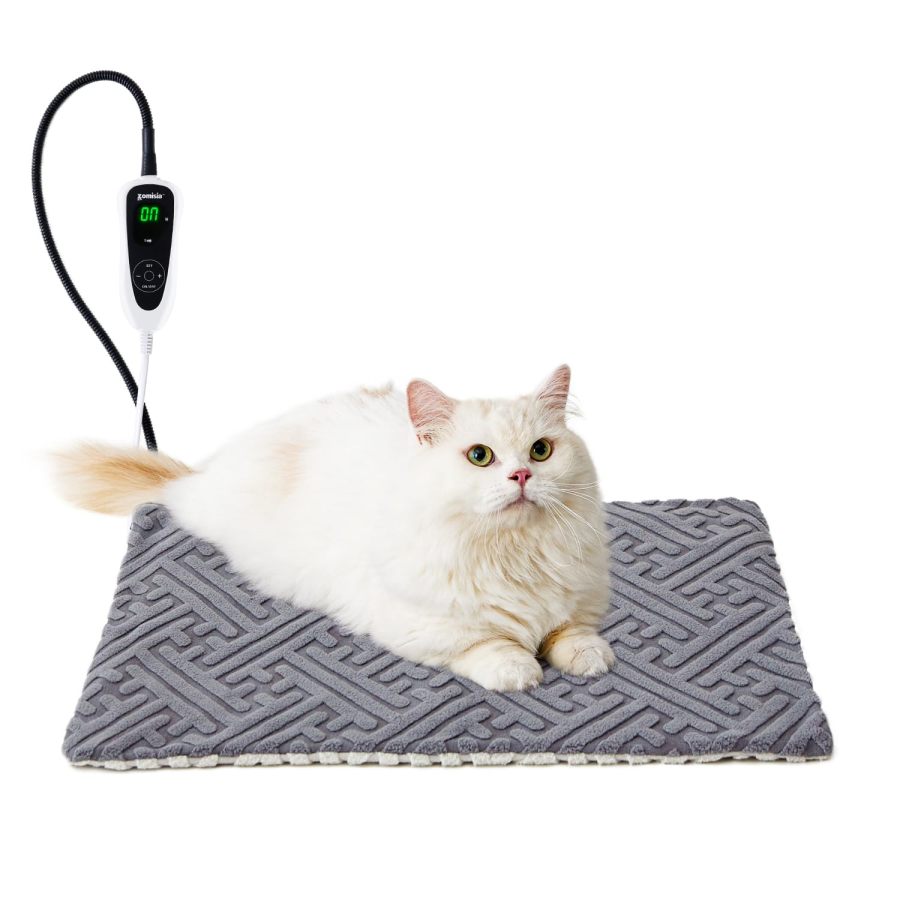
Pet heating pads are mats that provide additional warmth and comfort for pets, primarily used to help pets maintain body temperature in cold weather, alleviate joint pain, or provide constant warmth for young, sick, weak, or pregnant pets. The category mainly includes electric heating pads, with a few being self-warming pads that utilize the pet's own body heat, aiming to enhance the quality of pet rest. The following table illustrates the key characteristics of consumer behavior in this category.
| Dimension | Segment | Description |
|---|---|---|
| Need Driver Type | Planned Purchase / Emergency-driven Purchase | Users are mostly planned purchases, in preparation for winter or to care for special pets; however, there are also cases of emergency purchases for sick, weak, or newborn young animals. |
| Purchase Frequency | Low Frequency / Seasonal | Typically a one-time purchase, made during winter or when specific needs arise, with a long repurchase cycle, but may be replaced earlier due to product failure. |
| Decision Complexity | Medium | Purchase decisions require comprehensive consideration of multiple factors such as safety, heating effectiveness, durability, ease of cleaning, etc., involving significant cognitive resources. |
| Price Sensitivity | Medium-High | Users are willing to pay a certain amount for their pet's health and comfort but have expectations for product quality and lifespan; a high failure rate reduces their price acceptance. |
| Emotional Dependency | High | Purchase behavior is strongly driven by care for the pet and the need for health assurance; emotional value plays a significant role in decision-making. |
II. User Personas & Usage Scenarios
2.1 Meticulous Pet Caregiver
🎯 Owners of elderly, young, or sick/weak pets who have extremely high requirements for product safety, functional details, and comfort.
| Typical Usage Scenarios | Core Pain Points | Primary Purchase Drivers |
|---|---|---|
|
|
|
2.2 Outdoor/Stray Animal Guardian
🎯 Compassionate individuals who care for outdoor or semi-free-roaming animals (e.g., yard cats, stray cats/dogs), focusing on product durability, water resistance, and outdoor adaptability.
| Typical Usage Scenarios | Core Pain Points | Primary Purchase Drivers |
|---|---|---|
|
|
|
2.3 Convenience-Focused Modern Pet Owner
🎯 Busy pet owners seeking easy-to-use, easy-to-clean heating pads with smart features to simplify daily pet care.
| Typical Usage Scenarios | Core Pain Points | Primary Purchase Drivers |
|---|---|---|
|
|
|
III. User Needs Hierarchy (KANO Model)
3.1 Basic Needs (Must-Haves)
- Provide Stable Warmth: The heating pad must provide stable and continuous warmth to meet the pet's basic heating needs.
- Electrical Safety Certification: Products must have authoritative safety certifications like UL/MET, with overheat protection functions to ensure safe use.
- Chew-Resistant Cord: The power cord must have effective chew-resistant protection to prevent pet electrocution or product damage.
- Size Compatibility: Offer multiple size options to fit pets of different body sizes (young, small dogs, large cats, etc.).
3.2 Performance Needs (Linear Satisfiers)
- Multi-Level Temperature Adjustment: Provide multi-level temperature adjustment functions to meet personalized pet comfort and different ambient temperature needs.
- Flexible Timer Function: Have multiple auto-shutoff timer options (e.g., 4/8/12/24 hours) and an 'Always On' mode, increasing convenience.
- Easy Cleaning & Water Resistance: The pad body is water-resistant, and the cover is removable and machine-washable for easy daily cleaning and hygiene maintenance.
- Soft, Skin-Friendly Material: Surface materials (e.g., fleece, flannel) are soft and comfortable, enhancing the pet's lying experience.
- Even Heat Distribution: Heat is evenly distributed across the pad surface, avoiding localized overheating or cold spots.
3.3 Excitement Needs (Delighters)
- Pressure-Sensing Auto On/Off: Automatically starts heating when the pet lies down and turns off when the pet leaves, achieving smart energy saving and providing a delightful experience.
- All-Weather Outdoor Durability: The product can operate continuously, safely, and efficiently under extreme cold, damp, or stormy weather conditions.
- Smart Connectivity Control: Can be remotely monitored and controlled via a mobile app or smart home system, enhancing convenience and tech appeal.
- Noiseless Self-Warming: Self-warming pads provide effective warmth while completely eliminating any noise from internal material friction.
3.4 Unmet Needs & Opportunities
-
Product Long-Term Durability: Many users report products stop working, melt, or fail within months, urgently needing improvement in core component lifespan and stability.
User Reviews (VOC) "Stopped working after less than 3 months, barely used." // "Less than 4 weeks of use and the heating pad has started giving the 'ERR' message and shutting off."
-
Precise Constant Temperature & Burn Prevention: Some products fail to meet heating standards or have significant temperature fluctuations, unable to provide the stable and safe warmth pets need.
User Reviews (VOC) "It just doesn't get really warm. Warm yes, certainly not hot even on the highest setting." // "The default temperature is 120 degrees. I believe that is too hot for my dogs."
-
Separately Purchasable Replacement Covers: Users wish to be able to purchase additional replacement covers separately, facilitating daily rotation and washing, extending product life.
User Reviews (VOC) "My question is, since this is geared towards pets, why isn't a replacement cover offered? I need a second cover to use while one is in the wash." // "I'd also like to be able to order additional covers for the pad."
-
Eliminate Product Odor: Some products have a noticeable plastic or chemical odor, affecting pet willingness to use and user experience.
User Reviews (VOC) "The new plastic smell had all the cats avoiding it, but that went away in a couple days." // "it has a terrible chemical smell that doesnt go away even after few hours of heating in full power."
IV. User Decision Drivers
4.1 Key Decision Factors
- Product Safety: Users' primary concern is whether the product will overheat, short circuit, cause fire, or is safe and harmless for pets.
- Actual Heating Effectiveness: Whether the product can provide sufficient, even, stable warmth and achieve the advertised heating effect.
- Long-Term Durability: The product's service life, whether it is prone to damage or stops working, and can withstand daily pet use.
- Cleaning Convenience: Whether the cover is easy to remove and machine wash, and the pad body is easy to wipe, maintaining pet hygiene.
4.2 Secondary Decision Factors
- Temperature/Timer Precision: The range and precision of temperature adjustment and timer options to adapt to different scenarios and needs.
- Material Comfort: Whether the pad surface is soft and skin-friendly, providing a comfortable lying experience for the pet.
- Chew-Resistance Effectiveness: The actual effectiveness of the chew-resistant cord design in preventing pet damage.
- Cost-Effectiveness: Whether the product price is competitive while meeting core functions and safety requirements.
- Noise Level: The 'rustling' sound of self-warming pads or other potential product noise, which is sensitive to some pets or users.
V. Selling Points & Competitive Landscape
5.1 Selling Point Analysis
5.1.1 Standard Features (Points of Parity)
- Adjustable Temperature: Provides multi-level temperature settings to meet different pets' comfort needs.
- Timer Function: Features auto shutoff or multiple timer options for user convenience.
- Safety Protection: Emphasizes safety features like overheat protection, chew-resistant cords, multi-layer protective structures.
- Washable Cover: The cover is removable and machine-washable for easy daily cleaning and hygiene.
- Waterproof Design: The pad body has waterproof functionality for easy cleaning and handling accidents.
5.1.2 Key Differentiators
- Pressure-Sensing On/Off: Automatically heats when the pet lies down and stops when it leaves, achieving smart energy saving.
- Indoor/Outdoor Dual-Use: Markets the product as usable both indoors and in sheltered outdoor areas, expanding applicable scenarios.
- Size Diversity: Offers multiple sizes from small to extra-large, accommodating different body sizes and multi-pet households.
- Authoritative Safety Certification: Emphasizes third-party safety certifications like UL/MET to enhance product credibility.
5.1.3 Unique Selling Propositions (USPs)
- Self-Warming, No Electricity: No plug required; provides warmth by reflecting the pet's own body heat, focusing on safety and portability (only one product).
- USB Powered: Supports USB power, enhancing portability and usage flexibility, can be paired with power banks.
- Specific Pet Backpack Compatibility: Designed to perfectly fit the dimensions of specific brand pet backpacks, providing an integrated solution.
5.2 Competitive Landscape
5.2.1 Market Maturity
The market maturity of this category is at a medium-high level. Product functions (temperature adjustment, timer, safety protection) are relatively standardized, with most products offering similar core selling points, leading to serious homogenization in competition.
5.2.2 Innovation Trends
Smart features are the main trend, such as pressure-sensing auto on/off. The need for upgrading product durability and safety (e.g., fireproofing, short-circuit prevention) is increasingly prominent. Additionally, optimized designs for extreme outdoor environments, precise constant temperature functions for specific pets (e.g., young, sick pets), and accessory ecosystems (e.g., replaceable covers) will become future innovation directions.
VI. Marketing Claims vs. Reality Check
The table below analyzes the gap between common marketing claims and actual user experiences in this category:
| Dimension | Marketing Claim | User Reality | Verdict |
|---|---|---|---|
| Product Long-Term Durability / Functional Failure | "Sturdy and durable, long-lasting," "Multi-layer protective structure ensures product lifespan." | Numerous user reports of products stopping work, melting, or displaying 'ERR' errors within weeks to months, indicating functional failure. | A typical quality control and material selection issue, failing to deliver on the most basic 'durability' promise, severely damaging consumer trust, and a core defect of the category. |
| Actual Heating Effectiveness & Temperature Control | "Multi-level temperature adjustment, precise temperature control, provides comfortable warmth." | Many users report the highest setting is still not warm enough, or temperature fluctuates significantly, with localized overheating, far from the advertised precise control. | Sellers have shortcomings in temperature control technology, resulting in products failing to provide the promised stable, comfortable temperature in all scenarios, leading to poor user experience. |
| Effectiveness of Chew-Resistant Cord | "Steel wire chew-resistant cord, shockproof, ensures pet safety." | Users still report cords being chewed through by pets, or chew-resistant protection only covering part of the cable, leaving safety blind spots. | Sellers under-invest in chew-resistant design or are overly optimistic in marketing, failing to fully address the practical safety hazard of pets chewing cords. |
Key Takeaway: The market suffers from widespread parameter inflation and over-promising on core safety and durability, with feature stacking outweighing genuine pain point resolution.
VII. Supply-Demand Misalignment Analysis
The table below highlights mismatches between seller focus and buyer priorities:
| Dimension | Seller Behavior | User Focus | Verdict |
|---|---|---|---|
| Product Lifespan & Failure Rate | Sellers generally avoid addressing product lifespan and long-term reliability in listings, or only offer a standard '1-year warranty' without emphasizing durability design. | Users commonly complain about product failure within months, expressing disappointment and distrust over frequent malfunctions. | Sellers collectively ignore consumers' core need for long-term product value, leading to negative review accumulation, severely impacting brand reputation and repurchase rates. |
| True Adaptability for Outdoor Use Scenarios | Many products claim 'indoor/outdoor use' or 'waterproof' but do not provide sufficient detail or protection ratings to prove reliability under extreme outdoor conditions. | Users report insufficient heating outdoors or product failure in damp environments, perceiving outdoor performance as exaggerated. | Sellers market outdoor functionality to expand the market, but product design does not fully consider the complexity and harshness of outdoor environments, leading to unmet user expectations. |
| Availability of Replacement Covers | Almost all products offer removable, washable covers, but very few sellers offer the option to purchase replacement covers separately. | Users explicitly express the desire to purchase extra replacement covers for easy rotation during washing, extending product life and maintaining hygiene. | Sellers overlook users' need for convenience in daily maintenance of pet products; a low-cost accessory supply could significantly enhance user satisfaction. |
Key Takeaway: Sellers overemphasize the number of temperature settings and timer options but generally neglect consumers' top concerns about product long-term stable operation and actual heating effectiveness, creating a supply-demand mismatch.
VIII. Strategic Opportunities & Recommendations
8.1 Ultra-Durable & Highly Reliable Pet Heating Pad
8.1.1 Target Audience & Pain Points
⚡️ Pain Points Addressed: Poor product long-term durability, unstable core functionality, potential safety hazards.
8.1.2 Action Plan
Adopt higher-grade PTC heating materials or dual heating wire design to ensure even and stable heat generation, reducing localized overheating risk. Enhance waterproofing and moisture-proofing treatment for circuit boards, use high-grade flame-retardant materials for encapsulation, and introduce stricter aging tests and cycle life tests. Offer at least a 2 or 3-year warranty.
| Tech Complexity | Medium |
| Cost Impact | Medium Impact |
| Trade-off Warning | Minor material upgrades will not have significant physical side effects. |
| Price Band | Only viable above $29.99 |
8.1.3 Marketing Strategy
Emphasize 'Reject disposability, invest in lasting warmth for your beloved pet,' 'Say goodbye to frequent replacement hassles'; highlight 'Industry-leading warranty, a promise of confidence'; showcase product durability test videos in extreme environments (e.g., high temperature, high humidity).
8.2 All-Weather Smart Constant-Temperature Outdoor Heating Pad
8.2.1 Target Audience & Pain Points
⚡️ Pain Points Addressed: Poor weather resistance for outdoor use, cord safety, insufficient heating.
8.2.2 Action Plan
Design an integrated IP67-rated waterproof housing, use double-layered thickened chew-resistant metal conduit to ensure full-length cord protection from pad to plug. Integrate ambient temperature sensors for adaptive constant temperature in outdoor environments, enabling stable operation down to -20°C.
| Tech Complexity | High |
| Cost Impact | High Impact |
| Trade-off Warning | May slightly increase product thickness and weight, requiring stronger securing measures. |
| Price Band | Only viable above $49.99 |
8.2.3 Marketing Strategy
Highlight 'Designed for outdoors, fearless of snow, wind, and cold,' 'Providing a lifeline of warmth for stray animals'; showcase product testing footage in snow and rain; emphasize 'Professional-grade weather resistance, indestructible safety guarantee.'
8.3 Personalized Cover Ecosystem
8.3.1 Target Audience & Pain Points
⚡️ Pain Points Addressed: Lack of separately purchasable replacement covers, inconvenient cleaning and maintenance, odor issues.
8.3.2 Action Plan
Launch multiple replacement covers in various materials (e.g., antibacterial fleece, easy-wipe waterproof fabric), colors, and patterns, available for separate sale or bundled in sets. Ensure perfect fit and easy removal with the heating pad.
| Tech Complexity | Low |
| Cost Impact | Low Impact |
| Trade-off Warning | None. |
| Price Band | Viable below $9.99 |
8.3.3 Marketing Strategy
Emphasize 'Change and wash at will, your pet enjoys a fresh home every day,' 'Personalized styling, exclusive pet fashion'; highlight 'Antibacterial material, goodbye to odors'; encourage user sharing of styling ideas through community activities.
8.4 Precise Low-Noise Self-Warming Pet Pad
8.4.1 Target Audience & Pain Points
⚡️ Pain Points Addressed: Self-warming pad noise, insufficient warmth, thickness below expectations.
8.4.2 Action Plan
Develop using multi-layer vacuum microporous insulation or efficient infrared reflective materials to improve body heat capture and reflection efficiency, increase pad thickness, and use high-density silent filling to eliminate 'rustling' sounds.
| Tech Complexity | Medium |
| Cost Impact | Medium Impact |
| Trade-off Warning | Increased thickness may affect storage but is a plus for comfort. |
| Price Band | Only viable above $24.99 |
8.4.3 Marketing Strategy
Highlight 'Quietly enjoy warmth, plug-free black technology,' 'Farewell to rustling sounds, a new deep sleep experience'; provide thermal imaging comparison for warmth effectiveness; emphasize 'Eco-friendly, energy-saving, worry-free.'