Amazon US Market Analysis: Beeswax Food Preservation Products Category
📊 Executive Summary
📈 Market Trends
Growth driven by environmental and health trends, but competition is highly homogenized. The beeswax food preservation products market primarily benefits from consumer pursuit of sustainable lifestyles and plastic-free products. Current market products generally emphasize natural, reusable, and food-preserving attributes, leading to functional convergence and intensified price competition.
⚡ Major Pain Points
Adhesive degradation and usage restrictions are core pain points. Users commonly report that beeswax wrap tackiness diminishes over time, affecting preservation effectiveness and lifespan. Simultaneously, strict limitations on washing water temperature, heating methods (no microwave), and food types (no raw meat/hot food) significantly reduce daily convenience. Additionally, misconceptions about 'sealing' create user expectation gaps.
💡 Selection Opportunities
Deeply address user pain points with repairable and specialized solutions. Market opportunities lie in: First, launching 'repairable/re-activatable' products by including repair beeswax strips to solve lifespan pain points. Second, developing 'baking-specific' series to meet specialized professional needs. Third, managing user expectations and preventing misuse through 'clear and easy-to-understand usage education kits.' These strategies can effectively enhance user experience and product premium potential, rather than blindly piling on features.
I. Analysis Overview
1.1 Introduction & Report Scope
This report analyzes the 'Serving Dish Covers' category (Beeswax Food Preservation Products) within the US Amazon marketplace, focusing on target user personas, core needs, decision drivers, market communication, and potential opportunities.
1.2 Category Snapshot
Beeswax food preservation products (also known as beeswax wraps/bags/bowl covers) are reusable food storage items made from organic cotton cloth infused with natural ingredients like beeswax, jojoba oil, and tree resin. Their core function is to provide breathable, moldable wrapping or covering, effectively extending the freshness of foods like bread, fruits, vegetables, and leftovers. They serve as an eco-friendly alternative to traditional single-use plastic wraps and bags. The following table illustrates the key characteristics of consumer behavior in this category.
| Dimension | Segment | Description |
|---|---|---|
| Need Driver Type | Planned Purchase / Emergency-driven Purchase | Purchase behavior is driven either by long-term planning motivated by environmental values or by immediate needs to solve food preservation problems, such as in meal prep or baking scenarios. |
| Purchase Frequency | Medium to Low Frequency | Products are relatively durable, typically lasting for several months to a year. Repurchases are mainly due to wear and tear, loss, or desire for new designs. |
| Decision Complexity | Medium | Consumers rationally compare factors like material composition, preservation effectiveness, lifespan, cleaning/maintenance requirements, and price before making a choice. |
| Price Sensitivity | Medium | Target users accept a certain premium for environmental and health value but still consider long-term cost of ownership and price-performance ratio. |
| Emotional Dependency | High | Purchase behavior is strongly tied to users' environmental consciousness, healthy lifestyle aspirations, and preference for natural products, carrying significant emotional value and identity. |
II. User Personas & Usage Scenarios
2.1 Eco-Conscious Lifestylers
🎯 Prioritize health and environmental sustainability, actively seek non-toxic, plastic-free daily products, and pursue a minimalist, eco-friendly lifestyle.
| Typical Usage Scenarios | Core Pain Points | Primary Purchase Drivers |
|---|---|---|
|
|
|
2.2 Baking Enthusiasts
🎯 Passionate about homemade bread and baked goods, especially sourdough. Have professional requirements for fermentation and storage processes, pursuing natural ingredients and perfect final texture.
| Typical Usage Scenarios | Core Pain Points | Primary Purchase Drivers |
|---|---|---|
|
|
|
III. User Needs Hierarchy (KANO Model)
3.1 Basic Needs (Must-Haves)
- Effective Preservation: Significantly extends the freshness of foods like bread, fruits, vegetables, and leftovers, slowing spoilage and decay.
- Reusable: Replaces single-use plastic wraps/bags, enabling multiple uses, reducing daily waste, and embodying environmental value.
- Easy to Clean: Simple hand washing removes food residue, facilitating daily maintenance without adding to user burden.
- Safe & Non-Toxic: Made from natural beeswax, organic cotton, etc., free from harmful chemicals like BPA, ensuring food contact safety.
3.2 Performance Needs (Linear Satisfiers)
- Good Seal & Breathability: Effectively conforms to containers or food, creating a barrier while allowing food to 'breathe' appropriately, preventing excessive moisture or dryness.
- Multi-Size/Shape Adaptability: Fits different sized bowls, plates, and various food shapes (e.g., square sandwiches, irregular fruits), offering diverse options.
- Durable & Long-Lasting: Beeswax coating resists peeling, cotton fabric resists wear, withstands months to a year of repeated use and washing, providing long-term value.
- Easy to Mold: Softens quickly with hand warmth for easy wrapping and shaping, holds its shape firmly once cooled, improving operational convenience.
3.3 Excitement Needs (Delighters)
- Attractive Pattern Designs: Features appealing, stylish, or cute patterns and colors, adding aesthetic appeal and fun to the kitchen, enhancing user mood.
- Lifespan-Extending Accessories: Includes beeswax repair sticks or recoating tools, allowing users to self-repair and extend product lifespan, reducing waste.
- Convenient Storage: Product is foldable, comes with a dedicated storage pouch or box, saves kitchen space, and is easy to organize and store.
3.4 Unmet Needs & Opportunities
- Adhesive Degradation: The tackiness of the beeswax coating diminishes with repeated use and washing, affecting its sealing effectiveness and moldability. Users desire longer-lasting adhesion or repair solutions.
- Imperfect Airtightness: Despite some claims of 'sealing' effects, beeswax wraps are not completely airtight and are unsuitable for storing liquid foods or scenarios requiring absolute air exclusion, potentially leading to unmet user expectations.
-
Cleaning & Usage Restrictions: Can only be hand-washed with cold water and mild soap; not suitable for hot water, microwaves, dishwashers, or contact with raw meat/hot food. This limits convenience for users seeking ultimate ease and makes it difficult to thoroughly clean certain stains.
User Reviews (VOC) Pessimo Não segura carga e a luz é fraca, esperava mt mais
- Odor Retention & Transfer: Some users report a strong beeswax smell from the product itself, or that odors from certain foods (e.g., onions) can linger or transfer to other foods after prolonged wrapping, affecting the original food flavor.
IV. User Decision Drivers
4.1 Key Decision Factors
- Actual Preservation Effectiveness: Whether the product genuinely extends food freshness, prevents drying out or rapid spoilage, especially for bread and produce, is the core driver for purchase.
- Environmental Sustainability: Whether the product is truly plastic-free, biodegradable, and effectively replaces single-use plastics is a deal-breaker for environmentally conscious consumers.
- Ease of Use: How easy it is to wrap, mold, and conform to different containers/foods, and whether the cleaning process is simple and time-efficient, directly impacts daily user experience.
- Durability & Lifespan: Whether the product withstands repeated use and washing without damage, and whether the beeswax coating maintains its tackiness, relates to long-term value and price-performance ratio.
4.2 Secondary Decision Factors
- Size Variety: Whether multiple size combinations are offered to accommodate different food and container sizes, meeting diverse scenario needs and enhancing flexibility.
- Design Aesthetics: Whether the product's patterns, colors, and overall appearance are attractive, adding enjoyment to kitchen or on-the-go use, and reflecting personal taste.
- Price & Value: Whether the pricing is reasonable considering its environmental and reusable value, and if the long-term investment is cost-effective, influences the purchase decision.
- Odor Acceptability: Whether the product's inherent beeswax smell is pleasant and if it transfers to food, is a consideration for some sensitive users.
V. Selling Points & Competitive Landscape
5.1 Selling Point Analysis
5.1.1 Standard Features (Points of Parity)
- Reusable: Most products emphasize replacing single-use plastic wrap/bags, enabling recycling and reducing waste, aligning with eco-trends.
- Food Preservation: Commonly promoted as capable of extending the freshness of bread, fruits, vegetables, cheese, etc., as a core function.
- Natural Materials: Primarily made from natural ingredients like beeswax, organic cotton, jojoba oil, and resin, emphasizing safety and health attributes.
- Easy to Clean: Highlights that products are easy to hand wash with cold water and mild soap, facilitating daily maintenance, though maintenance details are often oversimplified.
5.1.2 Key Differentiators
- Specific Function/Purpose: Some products emphasize design for bread proofing/storage, or offer elastic styles for bowl covers, catering to niche needs.
- Multi-Size Sets: Offering combination packs with different sizes (e.g., S/M/L or XL bread bags) to meet multi-scenario needs and enhance purchase value.
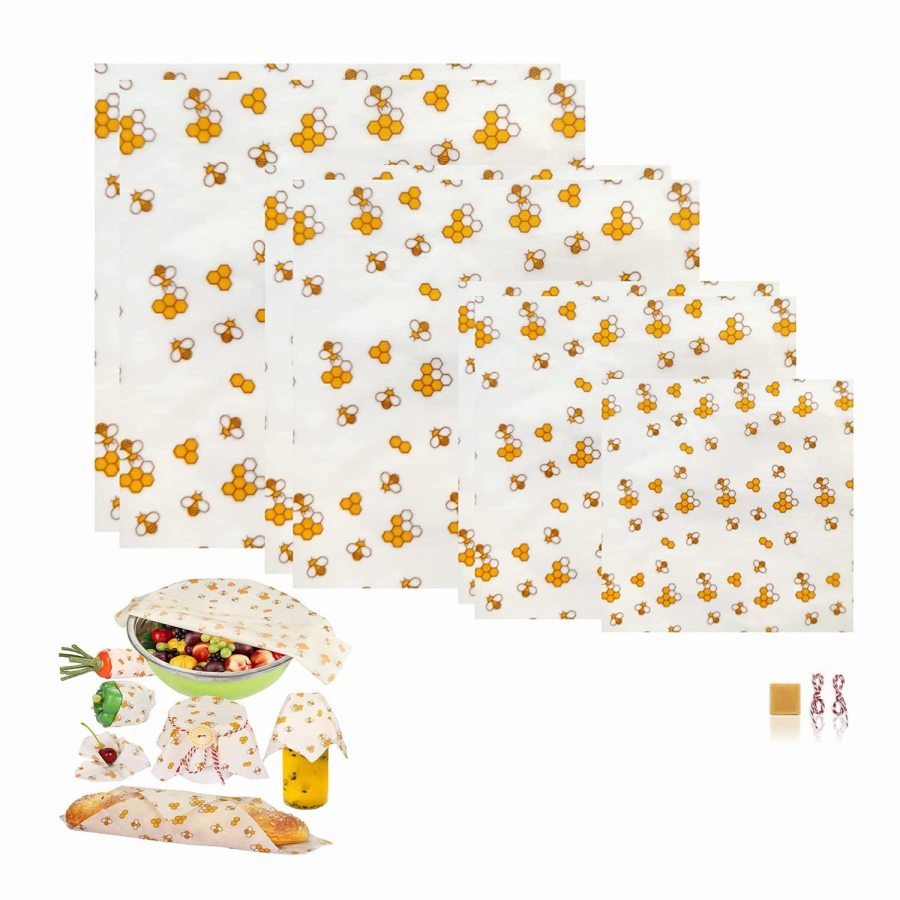
- Unique Designs/Patterns: Attracting consumers with exquisite, varied patterns (e.g., honeycomb, florals, cartoons, pink bows), enhancing visual experience and gifting appeal.
- Quality Certifications/Origin: Emphasizing organic cotton certification (GOTS), Made in USA, or BPA Free, etc., to build trust, especially for food safety-conscious users.
5.1.3 Unique Selling Propositions (USPs)
- Beeswax Repair Stick: Including a beeswax stick for users to self-repair or re-activate the tackiness of old wraps, extending product lifespan; offered by a few brands.
- Roll Format for Custom Sizing: Providing beeswax fabric in roll form, allowing users to cut to any desired size, increasing flexibility and solving specific size needs.
- Dedicated Fasteners/Closures: Such as bread bags with buttons, ties, or fold-over clasps, offering a more secure closure than simple folding, enhancing preservation.
5.2 Competitive Landscape
5.2.1 Market Maturity
The beeswax food preservation products market has entered a mature stage. Basic selling points like 'eco-friendly,' 'reusable,' and 'preservation' are now industry standards. Most sellers converge on these core values, but market competition is driving some brands to explore differentiation through more refined, value-added directions like 'specialized for baking,' 'design appeal,' 'custom sizing,' and 'providing repair solutions.' This trend indicates consumers have higher demands for product functionality and experience, shifting the market from 'availability' to 'usability' and 'durability.'
5.2.2 Innovation Trends
Current innovation trends manifest in several areas: First, product specialization, evolving from general-purpose wraps to specific-use items like bread bags and bowl covers to meet more granular needs. Second, enhancing user experience by providing accessories like beeswax repair sticks to extend product life and address consumer concerns about adhesive decline. Third, focusing on aesthetic value through richer patterns and colors, integrating eco-products into modern kitchen aesthetics. Fourth, improving convenience, for example, by launching customizable-size beeswax fabric rolls to increase usage flexibility.
VI. Marketing Claims vs. Reality Check
The table below analyzes the gap between common marketing claims and actual user experiences in this category:
| Dimension | Marketing Claim | User Reality | Verdict |
|---|---|---|---|
| Sealing | Claims of forming 'air tight seals' or a 'waterproof barrier' for lasting freshness. | Beeswax's natural property is 'breathable preservation,' allowing food to breathe naturally, unlike the complete airtightness of traditional plastic wrap. When users expect the same sealing effect as plastic for storing liquids or high-moisture foods, disappointment due to unmet expectations is common. | Sellers erroneously market beeswax's 'breathable preservation' characteristic as 'airtight sealing,' misleading user expectations about preservation scope and effectiveness, leading to experience gaps when storing liquids or foods requiring high sealing. |
| Cleaning & Maintenance Convenience | Widely claims products are 'Easy Clean,' requiring only cold water hand washing and mild soap. | Beeswax products have strict cleaning and usage limitations: no hot water, no dishwashers, no microwaves, not suitable for raw meat or hot food. These restrictions significantly increase daily hassle and maintenance costs, contradicting the simple 'easy clean' claim. | Sellers oversimplify the strict limitations of beeswax product cleaning and usage, overlooking modern consumers' high demands for kitchenware convenience. This information asymmetry increases user friction and operational barriers in daily maintenance. |
| Lifespan & Adhesive Strength | Promotes 'durable, reusable for up to a year' with strong beeswax coating adhesion. | The beeswax coating's tackiness naturally diminishes over time and with repeated washing. Some products may also have issues like overly thin coatings, easy wear, or staining. User feedback mentions insufficient or fast-declining adhesion, with actual lifespan potentially falling short of expectations. | Natural wear of the beeswax coating with use and washing is a physical limitation. However, sellers generally exaggerate its durability or fail to provide effective solutions (like repair sticks), leading to user skepticism about long-term value. |
Key Takeaway: The beeswax food preservation products market exhibits widespread parameter inflation and scenario-based experience exaggeration, particularly regarding 'sealing' claims and cleaning/maintenance convenience.
VII. Supply-Demand Misalignment Analysis
The table below highlights mismatches between seller focus and buyer priorities:
| Dimension | Seller Behavior | User Focus | Verdict |
|---|---|---|---|
| Post-Adhesive-Decline Solutions | Most sellers only emphasize 'lasts a year,' rarely providing practical solutions like beeswax repair sticks or clear adhesive maintenance guidelines, collectively ignoring the objective fact of natural beeswax coating wear. | Users complain about 'adhesion fading over time' and 'won't stick,' leading to shortened product lifespan. Lack of maintenance solutions reduces perceived value. | Sellers fail to translate product maintenance 'hard knowledge' into user-perceivable 'value-added services,' missing opportunities to extend product lifecycle and enhance user loyalty. |
| Clear Usage Scenarios & Limitation Education | Sellers generally promote versatility but lack clear guidance on critical restrictive scenarios like not for hot food, raw meat, microwaves, or dishwashers, even oversimplifying ease of cleaning. | Users experience product damage or food contamination from misuse, or feel inconvenienced by restrictions, leading to misaligned understanding of product functional boundaries. | Sellers inadequately educate users on correct usage boundaries, causing misalignment between user expectations and actual experience, damaging product reputation, and triggering unnecessary negative feedback. |
| Product Aesthetics & Personalization | Most products invest effort in pattern designs, launching various motifs (e.g., honeycomb, florals, cartoons, pink bows), attempting to attract users with 'beauty,' but often neglect core practical needs. | Aesthetics are secondary; users care more about practicality, preservation effectiveness, and durability. Acceptance of premium for fancy patterns is low, with functionality seen as key. | Sellers engage in excessive, ineffective competition on non-core aesthetic features while neglecting to improve core preservation performance and address actual pain points, representing low ROI marketing. |
Key Takeaway: Sellers collectively remain silent or downplay core pain points like adhesive degradation and cleaning restrictions, while over-supplying feature stacking and low-value details, creating a supply-demand mismatch. Sellers generally over-emphasize macro selling points like 'eco-friendly' and 'natural' but fail to deeply address and educate users on specific pain points like 'adhesive decline' and 'special cleaning requirements' in actual use.
VIII. Strategic Opportunities & Recommendations
8.1 Repairable/Re-Activatable Beeswax Wraps
8.1.1 Target Audience & Pain Points
⚡️ Pain Points Addressed: Adhesive degradation, limited product lifespan.
8.1.2 Action Plan
Include 1-2 small food-grade beeswax repair strips with the product, along with detailed illustrated/video tutorials guiding users on how to heat, repair, and re-coat at home to restore tackiness and significantly extend product lifespan.
| Tech Complexity | Low |
| Cost Impact | Medium Impact |
| Trade-off Warning | The additional included beeswax repair strip may slightly increase packaging volume, with no significant negative impact for users. |
| Price Band | Only viable above $19.99 |
8.1.3 Marketing Strategy
Emphasize core value of 'Sustainable Use, Beyond Just Eco-Friendly'; highlight user empowerment through 'DIY Repair, Rebirth'; use comparison videos showing adhesive difference before/after repair to reinforce long-term value.
8.2 Baking-Specific Beeswax Preservation Series
8.2.1 Target Audience & Pain Points
⚡️ Pain Points Addressed: Loss of bread texture, unsuitable traditional containers, difficulty finding natural preservation solutions for large baked goods.
8.2.2 Action Plan
Develop extra-large size (e.g., 15x20 inches+) beeswax bread bags with bellows or widened bottom designs to easily hold baguettes or multi-layer baked goods; design more elastic beeswax bowl covers that tightly fit various-sized fermentation bowls, emphasizing their 'breathability's' positive impact on dough proofing.
| Tech Complexity | Medium |
| Cost Impact | Medium Impact |
| Trade-off Warning | To accommodate large baked goods, product size will be larger, possibly slightly increasing storage space needs, but its professional value can offset this. |
| Price Band | Only viable above $24.99 |
8.2.3 Marketing Strategy
Position as 'The Artisan's Choice: Professional Natural Preservation for Your Baked Creations'; partner with renowned bakers or baking communities for promotion, highlight expertise in bread preservation and fermentation, emphasize natural materials' impact on bread flavor.
8.3 Clear & Easy-to-Understand Usage Education Kit
8.3.1 Target Audience & Pain Points
⚡️ Pain Points Addressed: Cleaning and usage restrictions, unmet expectations due to imperfect airtightness, odor retention and transfer.
8.3.2 Action Plan
Include an illustrated 'Beeswax Preservation Beginner's Guide' inside product packaging, clearly listing 'Recommended Uses,' 'Not Recommended Uses,' and 'Cleaning & Care Instructions,' e.g., recommended for bread, cheese; not for raw meat, hot food, juicy liquids. Can link to short video tutorials via QR code.
| Tech Complexity | Low |
| Cost Impact | Low Impact |
| Trade-off Warning | No significant physical side effects, primarily optimizing information presentation. |
| Price Band | Only viable above $14.99 |
8.3.3 Marketing Strategy
Emphasize 'Worry-Free Start, The Assured Choice'; transform complex restrictions into practical 'tips,' boosting user satisfaction through education, reducing negative reviews and returns from misuse. For example, use comparison graphics to show respective preservation advantages of beeswax vs. plastic wrap.
8.4 Antimicrobial & Odor-Neutralizing Beeswax Wraps
8.4.1 Target Audience & Pain Points
⚡️ Pain Points Addressed: Odor retention and transfer issues.
8.4.2 Action Plan
Incorporate food-grade natural odor-neutralizing ingredients into the beeswax formula, such as small amounts of activated charcoal powder (not affecting appearance), citronella or rosemary extract (ensuring odorless/mildly scented and harmless), to reduce inherent beeswax smell and food odor transfer potential. Provide third-party ingredient safety certification.
| Tech Complexity | Medium |
| Cost Impact | Medium Impact |
| Trade-off Warning | Adding natural odor neutralizers may slightly increase BOM cost and requires ensuring food-grade safety and non-toxicity to avoid new health concerns. |
| Price Band | Only viable above $22.99 |
8.4.3 Marketing Strategy
Highlight 'Pure Preservation, Farewell to Odors'; emphasize 'Natural Antimicrobial, No Flavor Cross-Contamination'; partner with third-party testing agencies to produce odor-neutralization effectiveness reports or antimicrobial test reports to enhance credibility.