Amazon US Market Analysis: Foam Acoustic Panels Category
📊 Executive Summary
📈 Market Trends
Intensified low-price competition, user pain points concentrated and unresolved. The foam acoustic panel market is maturing with severe product homogenization; low-priced self-adhesive models dominate. While consumers seek a blend of function and aesthetics, they demand higher installation convenience and wall protection. Industry innovation focuses on material details and installation optimization, but no disruptive solutions have emerged.
⚡ Major Pain Points
Adhesion failure and false advertising erode trust. Users widely report self-adhesive panels easily fall off or damage walls upon removal, making installation a core pain point. Concurrently, confusion between 'soundproofing' vs. 'sound absorption', and issues with product thickness and shape recovery severely mislead consumer expectations, causing numerous negative reviews and a trust crisis.
💡 Selection Opportunities
Deepen user experience, solidify core value. Market opportunities lie in solving consumer pain points like 'unstable adhesion', 'slow shape recovery', and 'misunderstood efficacy'. Recommended actions: develop innovative damage-free adhesive technology, educate the market through transparent acoustic efficacy communication, and optimize packaging to ensure product shape consistency. For the mid-to-high-end market, consider customizable thickness & density professional-grade panels to break through with high quality and precise solutions.
I. Analysis Overview
1.1 Introduction & Report Scope
This report analyzes the 'Acoustical Treatments' category (foam acoustic panels) in the US Amazon market, focusing on target user personas, core needs, decision factors, market communication, and potential opportunities.
1.2 Category Snapshot
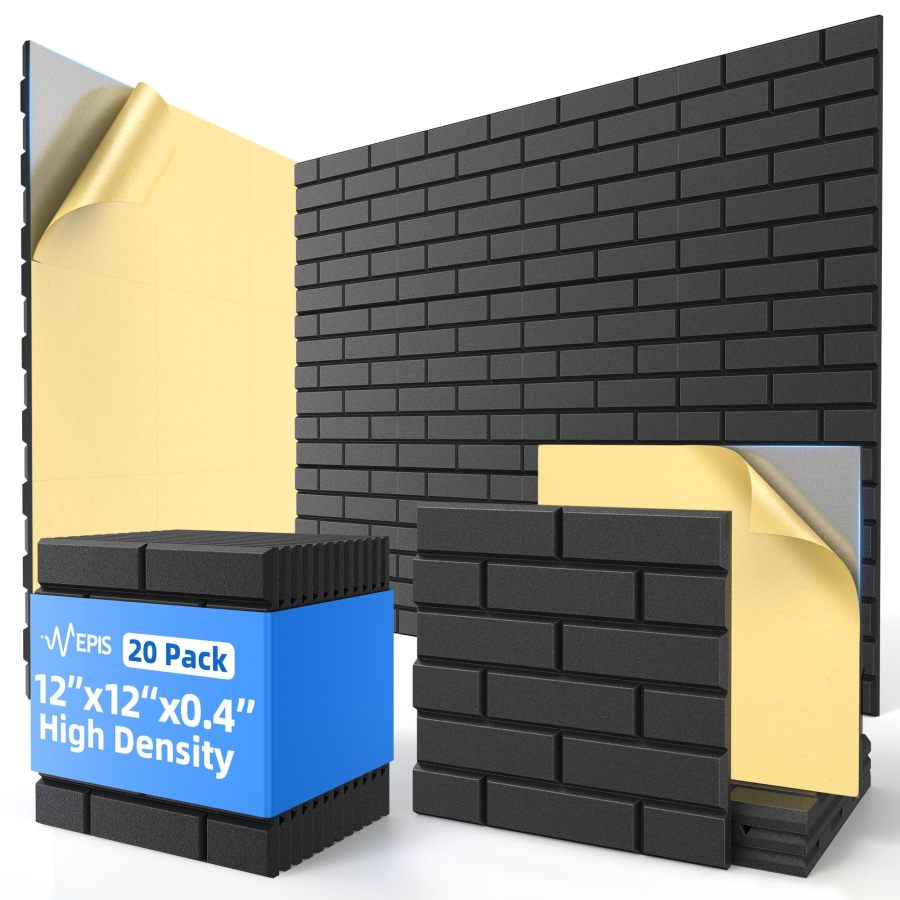
Foam acoustic panels are wall or ceiling coverings primarily made of polyurethane foam or polyester fiber. Their core function is to absorb sound waves within a room, reducing echo, reverberation, standing waves, and high-frequency noise, thereby improving indoor acoustics and enhancing sound clarity. Common product forms include panels in various shapes like pyramids, waves, hexagons, and bricks, with different thicknesses and adhesive options. This category aims to provide cost-effective acoustic optimization solutions for spaces such as home theaters, recording studios, gaming rooms, and offices. The following table illustrates the key characteristics of consumer behavior in this category.
| Dimension | Segment | Description |
|---|---|---|
| Need Driver Type | Planned Purchase / Emergency-driven Purchase | Purchases typically stem from anticipated content creation, home renovation needs, or sudden noise/echo issues, with clear expectations for improving the acoustic environment. |
| Purchase Frequency | Low Frequency | Typically a one-time purchase for acoustic treatment of a specific room or area, not a fast-moving consumer good, with a long repurchase cycle. |
| Decision Complexity | Medium | Consumers compare different products based on sound absorption effectiveness, ease of installation, aesthetics, material safety, and price, but do not conduct in-depth research. |
| Price Sensitivity | Medium to High | Price is an important consideration in the decision, but users are willing to pay a reasonable premium for significant acoustic improvement, convenient installation, and attractive design. |
| Emotional Dependency | Medium | The product satisfies the functional need for acoustic treatment while also providing emotional value and comfort from a 'quieter space' and a 'more professional environment'. |
II. User Personas & Usage Scenarios
2.1 Home AV Enthusiast / Gamer
🎯 Seeks a more immersive audio-visual experience in home theaters, gaming rooms, or streaming spaces, while also reducing sound leakage to the outside.
| Typical Usage Scenarios | Core Pain Points | Primary Purchase Drivers |
|---|---|---|
|
|
|
2.2 Remote Worker / Content Creator
🎯 Professionals working, studying, or creating (e.g., podcasts, music production, remote meetings) from home, with higher demands for sound environment quality.
| Typical Usage Scenarios | Core Pain Points | Primary Purchase Drivers |
|---|---|---|
|
|
|
2.3 Noise-Plagued Home Resident
🎯 Ordinary residents living in poorly insulated apartments or sensitive to environmental noise, seeking affordable noise management solutions.
| Typical Usage Scenarios | Core Pain Points | Primary Purchase Drivers |
|---|---|---|
|
|
|
III. User Needs Hierarchy (KANO Model)
3.1 Basic Needs (Must-Haves)
- Effective Sound Absorption / Echo Reduction: The product's most core function, considered a given by users. Its absence leads to a poor experience and is a prerequisite for purchase.
- Safe, Non-Toxic, Odorless: Due to long-term indoor use, users have basic health and safety requirements for materials; they should not emit irritating odors.
- Easy to Install & Cut: As a DIY product, users expect to complete installation independently and easily, and adjust shapes as needed.
3.2 Performance Needs (Linear Satisfiers)
- Quick Return to Original Shape: After vacuum compression packaging, users expect the product to expand quickly and completely to its preset thickness, minimizing wait time.
- Secure & Durable Adhesion: Whether self-adhesive or requiring separate glue, users demand that panels adhere firmly to walls or ceilings without falling off.
- Aesthetic Decorative Effect: Beyond functionality, users also expect panels to blend in with or enhance the room's overall aesthetics, not just be a utilitarian tool.
- Multiple Color / Shape Options: Meet users' personalized matching and design needs to create a unique space style.
- Flame Retardant Properties: An important added benefit for scenarios with higher safety requirements, like recording studios and home theaters.
3.3 Excitement Needs (Delighters)
- Damage-Free Removal Adhesive Technology: Adhesive provides a strong hold but can be removed without damaging walls or leaving residue. A huge delight for renters, significantly reducing usage concerns.
- Exceeding Soundproofing Expectations: If the product provides some degree of sound blocking (beyond pure acoustic treatment) on top of absorption, it would be an unexpected surprise, broadening application scenarios.
- Premium Customization / Artistic Design: Offering personalized pattern printing, designer collaborations, or panels that combine into unique art pieces, meeting the aesthetic needs of high-end users.
- Long-Term Durability & Easy Cleaning: Product resists deformation, aging, and mold over long-term use, with an easy-to-clean surface, reducing maintenance hassle.
3.4 Unmet Needs & Opportunities
-
Reliable & Easily Removable Adhesive Solution: Current market self-adhesive products have poor stickiness; non-self-adhesive products are cumbersome to install and may damage walls. There's a lack of a widely accepted, damage-free, and secure installation method.
User Reviews (VOC) They don't stick well. Had to use thumbtacks // adhesive is low quality // It takes off paint / leaves residue // Everything started falling off after a couple of days, the adhesive isn't good.
-
More Efficient & Effortless Expansion Recovery Mechanism: Users commonly complain that vacuum-compressed panels don't fully recover or require extra effort (like soaking, drying).
User Reviews (VOC) The panels I received, were dirty, had an odor and most were flat as a pancake. // About 12 of the pads never fully expanded after 2 days // they shrunk a bit again after applying them to my walls, and now there are highly visible gaps between each panel. // Half of them didn't inflate.
-
Clear Guidance on Sound Absorption vs. Soundproofing Effects: Consumers often mistake acoustic panels for soundproofing panels, leading to overly high expectations and disappointment, triggering negative reviews.
User Reviews (VOC) These are not "soundproof" panels. They don't block sound completely. // This is the equivalent of filling a room with any fabric no noise absorption whatsoever this only helps to reduce echo in empty spaces just that // Not meant to work miracles, but it certainly works the same or better than the generic foam "acoustic panels" with spikes.
-
Long-Term Durability Assurance: Some users worry about the long-term lifespan of foam materials, susceptibility to crumbling or aging, especially concerns about wall damage after removing self-adhesive products.
User Reviews (VOC) these are horrible.. they will shred in weeks.... // It was very hard to scrub it off after they had been there for a few months. // The foam is so flimsy it tears apart, leaving chunks stuck to the wall.
IV. User Decision Drivers
4.1 Key Decision Factors
- Sound Absorption Effectiveness: Users' primary concern, determining if the product effectively reduces echo, reverb, and improves indoor sound quality. A deal-breaker if absent.
- Adhesion Security: Whether the product adheres firmly without falling off is key to successful installation and long-term user experience, directly impacting satisfaction.
- Installation Convenience: Users prefer products with simple, time-saving installation processes, especially DIY users, lowering the barrier to entry.
- Product Size / Coverage Area: Users calculate required quantity and area based on actual space needs, influencing final purchase decisions and budget.
4.2 Secondary Decision Factors
- Price: An important consideration among functionally similar products, but not the sole deciding factor; users are willing to pay a premium for superior experience.
- Appearance Design / Color: Whether the product is aesthetically pleasing and matches room decor influences purchase intent and decorative effect.
- Material Safety / Odor: Users care about long-term health concerns and whether there's a pungent smell upon unboxing, affecting peace of mind during use.
- Expansion Recovery Speed & Consistency: Whether the product quickly and fully returns to its original shape after unboxing impacts initial user experience and installation efficiency.
- Material Thickness / Density: Users generally perceive greater thickness and density as indicators of better sound absorption, serving as an intuitive measure of product performance.
V. Selling Points & Competitive Landscape
5.1 Selling Point Analysis
5.1.1 Standard Features (Points of Parity)
- Professional Sound Absorption / Echo Elimination: Over 70% of products emphasize effective sound wave absorption, reducing echo, reverb, and standing waves as their core function.
- High-Density Material: Widely claimed to use high-density polyurethane foam or polyester fiber to enhance acoustic performance, a generally accepted performance metric.
- Easy Installation: Many products highlight lightweight, easy-to-cut properties and simple installation (self-adhesive or requiring glue), catering to DIY needs.
- Multi-Scenario Applicability: Broadly marketed as suitable for various environments like recording studios, home theaters, offices, and gaming rooms, expanding market reach.
- Eco-Friendly & Safe / Non-Toxic, Odorless: Commonly mentioned that materials are odorless, non-toxic, and environmentally friendly, addressing user safety concerns.
5.1.2 Key Differentiators
- Self-Adhesive Design: Approximately 20%-70% of products feature self-adhesive backing, marketed as requiring no extra tools for installation, offering higher convenience.
- Rapid Expansion Recovery: Some products emphasize recovering their original shape quickly (seconds to hours) after vacuum compression, saving user wait time.
- Flame Retardant Properties: Some products highlight flame-retardant features meeting safety standards, enhancing user security, especially in professional settings.
- Unique Design / Aesthetic Decoration: Various textures and geometric shapes like pyramids, waves, hexagons, and bricks emphasize decorative appeal, meeting personalized needs.
- Thickness Variations: Options like 1-inch, 2-inch, or 0.4-inch thickness imply different absorption effects, targeting varied needs.
5.1.3 Unique Selling Propositions (USPs)
- Professional Acoustic Metric NRC: A few brands specify acoustic performance data like Noise Reduction Coefficient (NRC) to demonstrate professionalism.
- Removable, Wall-Safe Adhesive: Very few products attempt to mention this selling point, but user feedback is generally poor. It hasn't become a true highlight and remains an unmet need.
- Included Installation Tools / Accessories: Some products include double-sided tape or instructions, but effectiveness varies and doesn't fully solve installation pain points.
5.2 Competitive Landscape
5.2.1 Market Maturity
Medium-High. Product functionality and design within the category are becoming homogenized. Innovation is mainly in material details and installation convenience. User pain points are concentrated and widespread, with no disruptive product yet emerging in the market.
5.2.2 Innovation Trends
The market is evolving from pure functionality to functionality combined with aesthetics, with more products emphasizing decorative appeal. Attention to installation convenience and damage-free removal continues to rise. Simultaneously, some brands are beginning to highlight higher density, superior acoustic performance, and eco-friendliness and safety.
VI. Marketing Claims vs. Reality Check
The table below analyzes the gap between common marketing claims and actual user experiences in this category:
| Dimension | Marketing Claim | User Reality | Verdict |
|---|---|---|---|
| Acoustic Effect Claims | Commonly claim 'Sound Proof', effectively blocking noise from entering or exiting. | User feedback indicates the primary function is 'Sound Absorption', reducing indoor echo and reverb, with minimal effect on blocking external noise, far from expectations. | Typical seller misleading consumers with inaccurate terminology, misrepresenting the panel's 'reduce indoor noise' function as 'block external noise'. This causes severe cognitive dissonance regarding the core function and is the root of trust erosion. |
| Installation Convenience & Adhesion Durability | Most self-adhesive products claim 'Hassle-Free Installation', 'Strong Self-Adhesive', or non-self-adhesive products claim 'Easy to Install' with included adhesive dots. | Numerous users complain that self-adhesive backing lacks strength, panels frequently fall off; included adhesive dots for non-self-adhesive products are ineffective, requiring purchase of stronger glue or thumbtacks. Removal often damages walls or leaves residue. | Sellers exaggerate claims in the core aspect most impacting user experience, failing to deliver the promised 'easy, worry-free' installation. Adhesion issues are the top cause of negative reviews and returns, directly eroding the product's value proposition. |
| Product Thickness & Shape Recovery | Claim 1-inch or 2-inch thickness and emphasize 'Rapid Expand & Recovery'. | Users widely report actual thickness is insufficient (e.g., 0.47 inches or thinner). After vacuum compression, many panels fail to fully expand, showing deformation, dents, or inconsistent sizes, requiring extra time and effort (like soaking, drying) to fix. | Sellers misreport or downplay critical physical parameters while failing to address deformation issues from packaging. This not only affects actual sound absorption but severely undermines user trust and unboxing experience. |
Key Takeaway: The current foam acoustic panel market is rife with misleading claims and inflated specifications, especially regarding the conflation of 'soundproofing' vs. 'sound absorption', adhesion effectiveness, and product thickness/recovery speed, which severely diverge from reality.
VII. Supply-Demand Misalignment Analysis
The table below highlights mismatches between seller focus and buyer priorities:
| Dimension | Seller Behavior | User Focus | Verdict |
|---|---|---|---|
| Installation Adhesion Reliability | Sellers generally emphasize 'self-adhesive design' or 'easy installation' but avoid discussing or over-promise on the actual effectiveness, durability of the adhesive, and its impact on walls upon removal. | Users care most about whether panels stay firmly attached and can be removed without damaging walls. Current solutions are largely ineffective, a major source of frequent negative feedback. | Sellers fail to provide effective solutions for users' core pain point of 'secure installation & damage-free removal', leading to significant frustration early in use and severely impacting long-term product value. |
| Acoustic Function Precision | Sellers commonly use the vague, even incorrect term 'Sound Proof', confusing it with 'Sound Absorption', leading consumers to have overly high expectations of product efficacy. | Users expect complete noise isolation when purchasing, but the product only reduces echo, causing a huge expectation gap and perceptions of the product being 'ineffective' or 'deceptive'. | This is typical information asymmetry. Sellers fail to proactively educate the market, instead using vague terminology for short-term sales, severely damaging long-term category health and consumer trust. |
| Product Shape Consistency & Thickness | Sellers claim 'high density', '2-inch thick', 'rapid recovery', but vacuum packaging often causes panel deformation or thickness shrinkage, with difficult recovery. | Users find panels flat, uneven, and unrecoverable upon receipt, wasting significant time and effort to fix, even affecting final installation and aesthetics, perceiving poor product quality. | The 'high quality' and 'convenient experience' promised by sellers are already compromised at the delivery stage. Defects in packaging and production force users to bear additional 'repair' costs, severely eroding brand credibility. |
Key Takeaway: Sellers in the foam acoustic panel category generally exhibit strategic neglect of core user pain points. They tend to pile on aesthetic designs or repeat basic function claims, while collectively remaining silent or under-delivering on critical experience aspects like adhesion reliability, accurate effect descriptions, and product shape consistency. This creates a severe supply-demand mismatch.
VIII. Strategic Opportunities & Recommendations
8.1 Innovative Damage-Free, Long-Lasting Adhesive Acoustic Panels
8.1.1 Target Audience & Pain Points
⚡️ Pain Points Addressed: Insufficient adhesion security, wall damage upon removal, poor installation convenience.
8.1.2 Action Plan
Invest in R&D or partner to develop new high-tack, damage-free adhesive technologies (e.g., micro-suction, heat-softenable adhesive). Ensure firm adhesion and residue-free removal. Include detailed installation/removal tutorials and test samples in packaging.
| Tech Complexity | Medium |
| Cost Impact | Medium Impact |
| Trade-off Warning | New adhesive may slightly increase panel back thickness or require more precise installation, but no significant negative physical impact. |
| Price Band | Only viable above $29.99 (for 12-pack, 1-inch thick product) |
8.1.3 Marketing Strategy
Emphasize 'Renter-Friendly, Worry-Free Installation, Mark-Free Removal'; showcase damage-free removal via comparison videos; highlight core value: 'One-time investment, lasting peace of mind, walls remain pristine'.
8.2 Transparent Acoustic Efficacy & User Education Acoustic Panels
8.2.1 Target Audience & Pain Points
⚡️ Pain Points Addressed: Consumer confusion between sound absorption and soundproofing, leading to expectation-reality gaps.
8.2.2 Action Plan
Clearly distinguish 'Sound Absorption' from 'Soundproofing' across all touchpoints: listing title, bullet points, A+ pages, packaging, and manuals. Use simple diagrams or explanatory text to illustrate how acoustic panels work and their actual effects.
| Tech Complexity | Low |
| Cost Impact | Low Impact |
| Trade-off Warning | No physical side effects, primarily involves information delivery and content optimization. |
| Price Band | Only viable above $14.99 |
8.2.3 Marketing Strategy
Create 'Acoustics Beginner's Guide'; add Q&A/FAQ sections in listings to address common misconceptions; promote 'Scientific Sound Absorption, Eliminate Echo, Enhance Sound Quality'; communicate the actual pain points solved and value delivered, avoiding exaggerated claims.
8.3 Rapid & Consistent Expansion High-Quality Acoustic Panels
8.3.1 Target Audience & Pain Points
⚡️ Pain Points Addressed: Panel deformation, slow, or incomplete recovery after vacuum compression, affecting user experience.
8.3.2 Action Plan
Optimize foam material formulation for better rebound and shape memory. Improve vacuum compression packaging to prevent excessive squeezing during shipping. Promise 'Ready-to-Use Out of Box, No Soaking/Waiting' and offer free replacement for incompletely recovered panels.
| Tech Complexity | Medium |
| Cost Impact | Medium Impact |
| Trade-off Warning | May require higher-quality foam materials or less compact packaging, slightly increasing product volume and logistics costs. |
| Price Band | Only viable above $24.99 (for 12-pack, 1-inch thick product) |
8.3.3 Marketing Strategy
Highlight 'Hassle-Free, Perfect Out of the Box'; use real-case videos showing rapid shape recovery; emphasize 'Quality Guaranteed, Consistent Shape', building consumer trust in product uniformity.
8.4 Customizable Thickness & Density Professional-Grade Acoustic Panels
8.4.1 Target Audience & Pain Points
⚡️ Pain Points Addressed: Limited low-frequency noise absorption with 1-inch thin panels; user skepticism about thickness/density.
8.4.2 Action Plan
Offer different thickness options (e.g., 2-inch, 3-inch) with lab-verified NRC data (especially for mid-low frequency absorption). Develop different density options for user customization based on specific acoustic needs.
| Tech Complexity | Medium |
| Cost Impact | High Impact |
| Trade-off Warning | Thicker panels significantly increase product volume and weight, impacting logistics costs and installation difficulty; higher-density materials are more expensive. |
| Price Band | Only viable above $49.99 (for 12-pack, 2-inch thick product) |
8.4.3 Marketing Strategy
Emphasize 'Professional Acoustic Customization, Precise Low-Frequency Control'; prove performance with NRC charts and acoustic analysis reports; target the high-end market, highlight 'Built for Professionals, Create Hall-of-Fame Sound'; offer scenario-based solutions like 'Low-Frequency Traps for Drum Rooms'.