Amazon US Market Analysis: Ergonomic Seat Cushions Category
📊 Executive Summary
📈 Market Trends
Portability and pressure relief are mainstream; user health awareness drives category development. The ergonomic seat cushion market is highly mature, with products generally emphasizing U-shaped pressure relief, memory foam filling, and multi-scenario use. Growing consumer concern about sedentary health issues drives the market towards more professional, refined ergonomic solutions. Brand competition focus is gradually shifting to material innovation and user experience details.
⚡ Major Pain Points
Cushion collapse and size mismatch are core complaints. Users commonly report cushions collapsing after short-term use, failing to provide lasting support. Secondly, product size mismatches actual chairs or user body types, causing sitting discomfort or even affecting driving safety. Ineffective cooling and initial odor are also frequent negative feedbacks. These issues directly impact user satisfaction and return rates.
💡 Selection Opportunities
Deepen quality details, provide customized solutions. Market opportunities lie in developing truly 'collapse-resistant' high-density memory foam products and providing precise 'multiple size/adaptive height' solutions to meet personalized needs. Simultaneously, make breakthroughs in 'cooling technology' to provide perceptible long-lasting coolness, and optimize foundational experiences like anti-slip and odor control. Establish consumer trust and brand differentiation through refined product power and genuine promises.
I. Analysis Overview
1.1 Introduction & Report Scope
This report analyzes the 'Back & Seat Cushions' category (Ergonomic Seat Cushions) in the Amazon US market, focusing on target user personas, core needs, decision drivers, market communication, and potential opportunities.
1.2 Category Snapshot
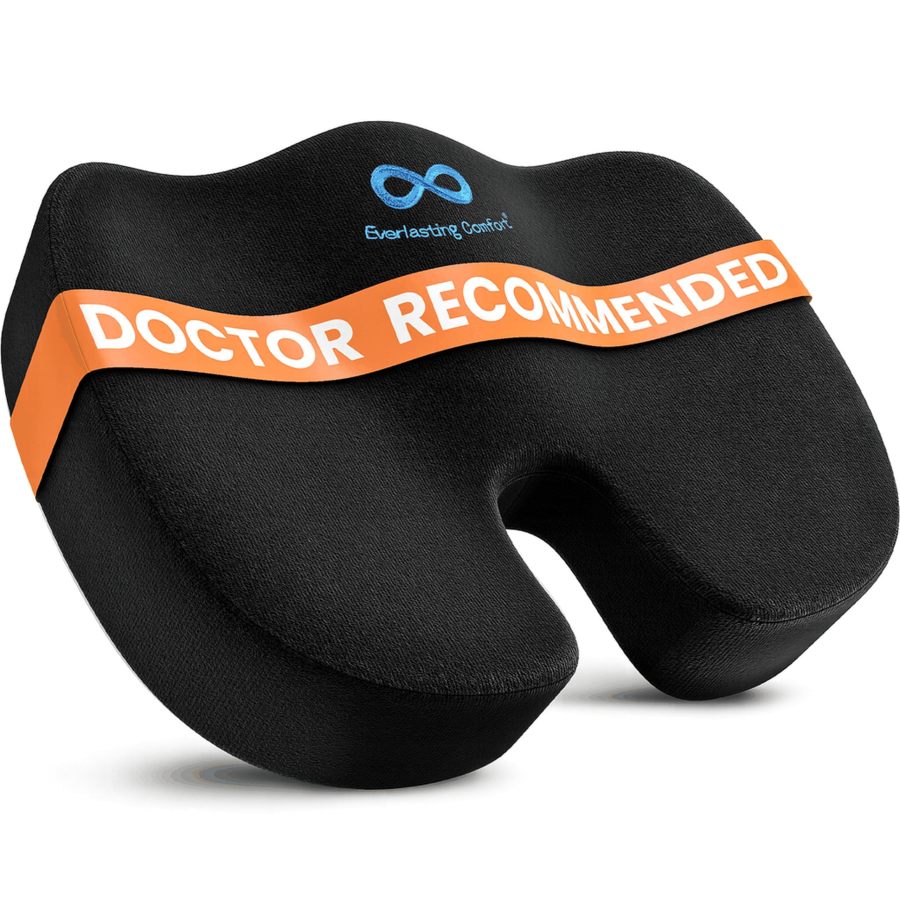
An ergonomic seat cushion is a product specifically designed to alleviate discomfort from prolonged sitting, improve posture, and provide targeted support for body parts such as the tailbone, sciatic nerve, and lower back. These products commonly use memory foam or incorporate gel technology, featuring U-shaped cutouts or hollow designs to evenly distribute pressure and reduce pain. They are widely used in various settings like offices, cars, wheelchairs, and homes to enhance comfort and health during long periods of sitting. The following table illustrates the key characteristics of consumer behavior in this category.
| Dimension | Segment | Description |
|---|---|---|
| Need Driver Type | Emergency-driven / Planned Purchase | Users seek immediate relief from existing pain (e.g., tailbone pain, sciatica) or purchase for preventing discomfort from prolonged sitting and improving long-term health, driven by both problem-solving and health planning. |
| Purchase Frequency | Low Frequency | As a durable consumer good, purchase frequency is low, typically expected to last from months to years, not a daily consumable. |
| Decision Complexity | Medium | Consumers compare materials (memory foam/gel), design (U-shaped/donut), pain relief effectiveness, comfort, size, reviews, and brand expertise, engaging in a moderate level of information gathering and evaluation. |
| Price Sensitivity | Medium | Users are willing to pay a reasonable premium for effective pain relief and high-quality products but still focus on value for money and whether the product delivers long-term value, not blindly pursuing high prices. |
| Emotional Dependency | Medium-High | The product directly impacts users' daily physical comfort and health. Users have a relatively high emotional dependency on products that solve their pain points and improve quality of life, placing high expectations on them. |
II. User Personas & Usage Scenarios
2.1 Sedentary Office Workers / Commuting Drivers
🎯 Individuals who sit for long hours daily on office chairs, computer chairs, or car seats, experiencing discomfort or pain in the lumbar, tailbone, or buttocks, seeking solutions to improve posture and alleviate fatigue.
| Typical Usage Scenarios | Core Pain Points | Primary Purchase Drivers |
|---|---|---|
|
|
|
2.2 Post-Surgery Recoverers / Pregnant & Postpartum Individuals
🎯 Individuals requiring special postural support and pressure relief due to specific medical conditions (e.g., tailbone injury, hemorrhoids, spinal issues) or physiological stages (e.g., pregnancy, postpartum recovery).
| Typical Usage Scenarios | Core Pain Points | Primary Purchase Drivers |
|---|---|---|
|
|
|
2.3 Elderly / Mobility-Impaired Individuals
🎯 Individuals who, due to age or limited mobility, spend long hours in wheelchairs, mobility scooters, or sitting at home, requiring extra support to prevent pressure sores, improve circulation, and enhance overall comfort.
| Typical Usage Scenarios | Core Pain Points | Primary Purchase Drivers |
|---|---|---|
|
|
|
III. User Needs Hierarchy (KANO Model)
3.1 Basic Needs (Must-Haves)
- Effective Pressure Relief: Ability to evenly distribute body weight, reducing localized pressure on sensitive areas like buttocks and tailbone, preventing worsened pain.
- Stable, Non-Slip Base: The cushion bottom has reliable non-slip functionality, ensuring it does not slide or shift on various seats, increasing safety.
- Material Safety: Product materials must be non-toxic, harmless, free of irritating chemical odors, and safe for human health, especially avoiding allergens.
- Durable, Non-Deforming: Core filling material (e.g., memory foam) should have good resilience and compression resistance, not easily collapsing with long-term use, maintaining support.
- Easy Cleaning & Maintenance: Cushion cover is easily removable, machine-washable, ensuring convenient daily cleaning, maintaining hygiene, and extending product life.
3.2 Performance Needs (Linear Satisfiers)
- Significant Pain Relief: Provide noticeable and lasting relief for sciatica, tailbone pain, lower back pain, hemorrhoids, etc., improving user quality of life.
- Posture Improvement: Ergonomic design effectively guides and supports the body, promoting proper spinal alignment, preventing health issues from poor posture.
- Comfort & Breathability: Provide soft, comfortable seating feel with good breathability, avoiding heat and sweat from prolonged sitting, especially in hot environments.
- Multi-Scenario Versatility: Suitable for various seat types like office, car, wheelchair, and home chairs, achieving multi-purpose use and enhancing convenience.
- Size Compatibility: Offer multiple size options or clear size guides to fit different user body types and various chairs, ensuring optimal comfort experience.
3.3 Excitement Needs (Delighters)
- Smart Temperature Control: Feature adaptive temperature regulation (e.g., active heating/cooling), providing ultimate warm-in-winter, cool-in-summer experience for different seasons and climates.
- Personalized Customization: Provide customized support zones based on user's precise body type, weight, or specific medical needs (e.g., post-surgery areas), such as adjustable fillings.
- Ultra-Portable Design: Easily foldable, compressible, or with a built-in compact storage bag, convenient for carrying and storage on the go, saving space, adapting to fast-paced life.
- Stylish Aesthetic Design: Offer diverse colors, textures, or unique shapes, making it not just a functional product but a fashionable accent for home/office environments, elevating personal taste.
3.4 Unmet Needs & Opportunities
-
Insufficient Size Accuracy: User feedback indicates discrepancies between actual and described sizes, or generic sizes failing to perfectly fit all chairs and body types, leading to unmet expectations post-purchase.
User Reviews (VOC) It is SMALL. Not designed for a full size man. // Item details specify sizing is 18.11"L x 14.17"W x 3.15"H but upon measuring myself its more like 17.25" x 13.25" x 2.375". I wish they would be more transparent about the sizing. // The cushion just barely fits under me from side-to-side. I suspect this cushion would be too narrow for anyone with a wider frame.
-
Long-Term Deformation/Collapse: Some high-density memory foam products show noticeable collapse and reduced support after a period of use, inconsistent with advertised durability, affecting product lifespan.
User Reviews (VOC) The cushion's shape retention is also mixed, with some saying it maintains its shape while others report it goes flat. // Yeah, like others, it flattened out (within a week or two) and is much harder as opposed to when it was new. // It's good. But there is a problem while sitting on it for 2 weeks it's getting thinner. Cushion is getting smaller.
-
Gel Cooling Effect Not Long-Lasting: The cooling effect advertised for gel cushions is often imperceptible or short-lived in actual use, failing to meet user expectations for long-lasting coolness.
User Reviews (VOC) The only downside, in my opinion, is the cooling factor (lack of). This is something I've had a really hard time finding. Lots of cushions, including this one, are advertised as having "cooling gel", yet barely feel cool, if at all. // In all honesty, I personally do not feel the coolness of the material. // I also learned that the cushion gets pretty firm in freezing temperatures.
-
Cushion Height Impact: The added height from the cushion causes some users to sit too high, affecting desk comfort or driving visibility, posing safety and convenience issues.
User Reviews (VOC) The initial height is the main problem. Even with my office chair lowered all the way, I could not comfortably fit my legs under my desk at first. // Too tall, this height was way too tall and I'm super short 5'1" - it is so hard to get into my seat and feels awkward on my legs because of how high I sit. When the sun visor is down I can't see well out of the front.
-
Initial Cushion Odor: A few products have noticeable odors upon unboxing, affecting initial use experience and raising concerns about material safety.
User Reviews (VOC) The cushion works great but smells terrible. I've done everything I can think of but it still smells.
-
Poor Anti-Slip Effect: Some cushions have ineffective non-slip bottom designs, easily sliding on smooth surfaces, requiring frequent user adjustments, affecting experience and sense of security.
User Reviews (VOC) Customers disagree on the slipperiness, with some reporting it stays in place while others mention it tends to slide out of position. // The issue is the bottom isn't grippy enough, so it can slide forward on my chair.
IV. User Decision Drivers
4.1 Key Decision Factors
- Actual Pain Relief Effectiveness: Users are most concerned with whether the cushion effectively relieves sciatica, tailbone pain, lower back discomfort, or hemorrhoid pain; this is the primary purchase driver.
- Long-Term Comfort: Whether the cushion supports prolonged sitting without causing numbness, stiffness, or new discomfort is key to measuring product value.
- Support & Anti-Deformation Capability: Whether the cushion provides sufficient and lasting support without collapsing over time directly impacts user evaluation of product durability.
- Product Material Quality: The density and resilience of memory foam, along with odor and safety/eco-friendliness, are foundational to comfort and health.
4.2 Secondary Decision Factors
- Multi-Function Versatility: Whether the cushion can be conveniently used in different scenarios like office, car, and home, enhancing its multi-purpose value.
- Breathability & Cooling Sensation: Especially in hot weather, whether the cushion stays cool and non-sweaty is an important factor in enhancing user experience.
- Easy Cleanability: Whether the cushion cover is easily removable and washable for convenient daily maintenance is a convenience consideration for users.
- Anti-Slip Stability: Whether the cushion stays stable and doesn't slide on various seat surfaces affects safety perception and convenience.
- Size & Height Compatibility: Whether the cushion size fits the user's body type and existing chair, and if the added height is appropriate, impacts posture and overall comfort.
- Brand Reputation & Professional Endorsement: Doctor recommendations, high ratings, or authoritative certifications increase purchase confidence, especially in health-related product categories.
- Price & Value for Money: Given core needs are met, whether the product price is reasonable and offers good value influences the final purchase decision.
V. Selling Points & Competitive Landscape
5.1 Selling Point Analysis
5.1.1 Standard Features (Points of Parity)
- Ergonomic Design: Commonly emphasize U-shaped grooves or hollow designs to relieve tailbone pressure, promote spinal alignment, and improve posture.
- Memory Foam Material: Serves as the core filling, providing comfortable support and conforming to body curves for pressure dispersion.
- Multi-Scenario Applicability: Widely advertised as suitable for various settings like office, car, wheelchair, gaming chair, and home, emphasizing versatility.
- Pain Relief: Commonly claim to relieve various sitting-related pains like tailbone pain, sciatica, lower back pain, hemorrhoids.
- Removable, Washable Cover: Facilitates daily cleaning and maintenance, improving hygiene and extending product lifespan.
- Non-Slip Bottom: Bottom typically features non-slip dots or material to ensure the cushion stays stable and doesn't slide during use.
5.1.2 Key Differentiators
- Gel-Enhanced/Cooling Effect: Some products add a gel layer, advertising breathability and cooling functions to address heat buildup from prolonged sitting.
- High-Density/Plush Design: Emphasize providing stronger, longer-lasting support, less prone to collapse, especially suitable for heavier users.
- Doctor Recommended/Orthopedic Expert Approved: Increase product credibility and medical attributes through professional endorsements, attracting users with specific needs.
- Portable Handle Design: Feature a handle on the side or front, allowing users to easily carry the cushion between locations.
- Targeted for Specific Groups/Problems: Provide more detailed solutions for groups like postpartum recoverers, hemorrhoid sufferers, heavier users, or shorter drivers.
- L-Shaped Integrated Design: Some products offer integrated lumbar and buttock support, aiming for more comprehensive comfort and posture correction.
5.1.3 Unique Selling Propositions (USPs)
- Includes Extra Replacement Cover: Provide a spare replacement cover, extending product lifespan and significantly enhancing cleaning convenience.
- Bamboo Charcoal/Activated Carbon Infused Memory Foam: Claim deodorizing and antibacterial functions, improving hygiene experience and addressing bacteria growth issues in memory foam.
- Ultra-Long Warranty/Refund Policy: Offer warranty promises far exceeding industry standards, like '999,999-Day Money-Back Guarantee,' to demonstrate brand confidence and build consumer trust.
- Patented Pressure Relief Technology: Emphasize uniqueness in pressure dispersion and support through patented technology, enhancing product technical barriers and professionalism.
5.2 Competitive Landscape
5.2.1 Market Maturity
The ergonomic seat cushion market has reached a mature stage, with main products highly homogeneous in basic functions (e.g., memory foam, U-shaped pressure relief). Brand competition is mainly reflected in material innovation (e.g., gel composites, bamboo charcoal infusion), design details (e.g., handles, non-slip), and marketing strategies (e.g., doctor recommendations, focusing on specific user groups), attempting to seek breakthroughs through micro-innovations.
5.2.2 Innovation Trends
Innovation trends manifest in two aspects: first, material and functional integration, such as combining memory foam with gel for both support and heat dissipation, or adding bamboo charcoal for odor and bacteria resistance; second, refinement of user experience details, like providing more convenient cleaning methods, better portability, and precise designs for specific body types or health conditions. Simultaneously, emphasizing the product's benefits for posture correction and long-term health has become a new communication focus. Additionally, some brands are exploring offering longer warranty periods to build consumer trust.
VI. Marketing Claims vs. Reality Check
The table below analyzes the gap between common marketing claims and actual user experiences in this category:
| Dimension | Marketing Claim | User Reality | Verdict |
|---|---|---|---|
| Cushion Thickness & Support Durability | Claim 4.7-inch thick memory foam, no deformation with prolonged sitting, provides exceptional lasting support, supports 8+ hours of comfort and maintains shape. | Customers widely report actual cushion thickness not meeting claims (e.g., user measurement shows only 3.25 inches), and significant thinning or collapse occurs after extended (even short-term) use, weakening support. | Sellers exaggerate data on core support metrics, and memory foam density or craftsmanship fails to deliver the 'lasting support' promise, representing typical over-marketing that severely impacts user trust and product actual value. |
| Gel Cooling Effect | Powerful cooling gel, instant cooling, long-lasting freshness, goodbye to stuffiness. | Numerous users report actual cooling effect is imperceptible or lasts only briefly, with some stating 'feel no coolness at all,' still feeling stuffy in hot environments. | Overstates the cooling effect of gel without active cooling technology, ignoring physical limitations of human body heat conduction, misleading consumer expectations for 'long-lasting coolness.' |
| Product Size Compatibility & Functional Completeness | Extra-large size, perfectly fits all chairs, and features portable handle design for easy carrying. | Users report cushion size being too large or small for some chairs, failing perfect fit, affecting comfort and functionality; more severely, some products lack the 'handle' function explicitly mentioned in advertising. | Sellers fail to provide precise size matching guides, and some advertised functions severely mismatch the physical product (missing handle), causing significant disconnect between user experience and expectations, damaging brand reputation. |
Key Takeaway: The market generally exhibits tendencies of parameter inflation and experience exaggeration, especially regarding memory foam thickness, long-term support effectiveness, and perceived gel cooling. Some product descriptions mismatch actual functions (e.g., handles), damaging consumer trust.
VII. Supply-Demand Misalignment Analysis
The table below highlights mismatches between seller focus and buyer priorities:
| Dimension | Seller Behavior | User Focus | Verdict |
|---|---|---|---|
| Size Compatibility & User Experience | Sellers generally provide generic sizes or vague size descriptions, lacking detailed compatibility guides for different body types and chairs or multiple size options. | Users commonly complain cushions are too large or small, affecting driving visibility or failing to fully support, causing discomfort and returns, urgently needing more precise size guidance and multiple size solutions. | Sellers fail to deeply understand users' real need for 'personalized fit,' treating size as secondary, leading to many users disappointed by 'poor fit,' increasing after-sales costs. |
| Actual Effectiveness of Gel Cooling | Most gel cushion products promote 'cooling/freshness' as a key selling point, heavily advertising its cooling effect to stand out in a homogeneous market. | Many users report minimal or non-lasting cooling effect in actual use, not achieving advertised 'goodbye to stuffiness' effect, considering the selling point exaggerated. | Sellers are overconfident or exaggerate in functional claims, not fully considering users' higher expectations for 'long-lasting coolness' in real scenarios, causing the selling point to backfire and erode brand trust. |
| Long-Term Deformation & Support Stability | Sellers generally emphasize 'high-density memory foam,' 'not easy to collapse,' but lack quantified promises or third-party verification on long-term deformation rates, making claims less convincing. | Many users report cushions thinning or collapsing after short-term use, starkly contrasting with advertising, expressing strong dissatisfaction with product lifespan and continuous support. | Sellers fail to deliver on the most core promise of 'durability' and 'lasting support,' leading to consumer trust erosion, directly impacting repurchase rates and brand reputation, a major source of negative reviews. |
Key Takeaway: While promoting core values like 'pain relief' and 'universal comfort,' sellers often overlook users' deep concerns about actual product size compatibility, long-term performance stability, and authenticity of cooling effects, leading to information asymmetry between supply and demand.
VIII. Strategic Opportunities & Recommendations
8.1 High-Performance Anti-Collapse Memory Foam Cushion
8.1.1 Target Audience & Pain Points
⚡️ Pain Points Addressed: Long-term deformation/collapse, poor support durability.
8.1.2 Action Plan
Develop new high-resilience, ultra-high-density (e.g., 80D or higher) memory foam, or adopt multi-layer composite support structures to ensure the core support layer resists collapse. Introduce third-party authoritative institutions like SGS for 'long-term load deformation testing,' quantifying the product's deformation rate under specific weight and usage cycles.
| Tech Complexity | Medium |
| Cost Impact | Medium Impact |
| Trade-off Warning | Using higher density memory foam may make the cushion initially feel slightly firmer, requiring short user adaptation, but won't affect long-term support effectiveness. |
| Price Band | Only viable above $29.99 |
8.1.3 Marketing Strategy
Emphasize 'Core Technology, Stays Firm for Long Sits, 5-Year Warranty.' Use comparison test videos to showcase superior compression resilience, building trust around 'one investment, lasting comfort.' Transparently display material and test data in the listing.
8.2 Precise Size Customization & Height-Adaptive Cushion
8.2.1 Target Audience & Pain Points
⚡️ Pain Points Addressed: Insufficient size accuracy, cushion height issues.
8.2.2 Action Plan
Provide up to 4-5 size options (S/M/L/XL), clearly indicating corresponding user weight/body type ranges and compatible chair types (e.g., sedan, SUV, office chair, wheelchair). Develop height-adjustable modular cushions (e.g., with addable/removable bottom pads) or provide detailed measurement guides and chair compatibility lists.
| Tech Complexity | Medium |
| Cost Impact | Medium Impact |
| Trade-off Warning | Offering multiple sizes increases inventory management complexity; adjustable height design may slightly increase product weight or mechanism complexity. |
| Price Band | Only viable above $34.99 |
8.2.3 Marketing Strategy
Highlight 'Custom-Like Fit, End Size Worries.' Showcase fitting effect images for different body types and various chairs, emphasizing the professional feel of 'tailored for your unique shape.' Explore using AR/VR technology for virtual try-on experiences.
8.3 True Long-Lasting Cooling & Breathable Cushion
8.3.1 Target Audience & Pain Points
⚡️ Pain Points Addressed: Gel cooling effect not long-lasting, potential heat dissipation issues.
8.3.2 Action Plan
Conduct in-depth R&D on innovative phase-change material gel layers to ensure long-lasting cooling effectiveness, not just brief initial coolness. Optimize internal ventilation channel design in the cushion, combined with high-molecular breathable mesh. Provide third-party lab data on 'continuous cooling curves,' not just instantaneous coolness.
| Tech Complexity | High |
| Cost Impact | High Impact |
| Trade-off Warning | In-depth R&D for new materials or integrating active cooling modules (e.g., micro-fans) is costly, and active cooling may increase product volume, weight, and noise. |
| Price Band | Only viable above $49.99 |
8.3.3 Marketing Strategy
Emphasize 'More Than a Moment of Cool, Long-Lasting Freshness Without Sweat.' Use scientific data and user test comparisons to prove its superior heat dissipation performance beyond traditional gel, positioning it as 'New Heights of Technological Comfort.'
8.4 Structured Anti-Slip Base & Brand Logo Optimization
8.4.1 Target Audience & Pain Points
⚡️ Pain Points Addressed: Poor anti-slip effect, initial cushion odor, uncomfortable brand logo placement.
8.4.2 Action Plan
Redesign the anti-slip bottom using full-coverage high-friction silicone or enhanced texture for grip, and conduct long-term friction tests to avoid staining. Optimize production processes to ensure materials are odor-free, or add activated charcoal packets to absorb odors. Position the brand logo on the side or back in a discreet location, enhancing overall product aesthetics.
| Tech Complexity | Low |
| Cost Impact | Low Impact |
| Trade-off Warning | No significant physical side effects; primarily optimizing structure and materials with minimal cost impact. |
| Price Band | Only viable above $14.99 |
8.4.3 Marketing Strategy
Highlight 'Details Define Quality, Secure & Stable Without Shifting.' Emphasize 'Odor-Free, Healthy Materials,' and the brand's pursuit of ultimate user experience and human-centric design, building user trust in product details.