Amazon US Market Analysis: Ice & Snow Grips Category
📊 Executive Summary
📈 Market Trends
Strong demand for portable crampons, but quality standards urgently need improvement. With increasing awareness of winter outdoor activity and daily commuting safety, the Ice & Snow Grips market continues to grow. Consumers generally seek lightweight, easy-to-use, and effectively anti-slip products. However, the market is highly homogenized; many low-price products emphasize durability and stability in marketing, but actual experience falls far short of expectations, leading to declining user trust.
⚡ Major Pain Points
Poor durability and insecure fit are the core pain points. Users are most dissatisfied with crampons' 'fragility,' such as studs easily falling off and rubber easily breaking, severely impacting product lifespan and safety. Next is 'insecure fit'-crampons easily slipping off or shifting during walking-and 'poor size compatibility' leading to uncomfortable wear, all directly impacting user confidence and experience.
💡 Selection Opportunities
Deepen focus on core safety, build high-quality differentiation barriers. The real market opportunity lies in solving users' fundamental need for product 'reliability.' Product selection is recommended to focus on developing: 1. Ultra-durable, anti-detachment stud crampons, using premium materials and reinforced processes to thoroughly solve breakage and stud detachment; 2. Self-adapting, secure-fit crampons, optimizing structure and strap design to ensure firm, non-shifting fit on various shoe types; 3. Full-foot balanced traction crampons, especially optimizing heel stud placement to enhance all-around anti-slip performance. Additionally, exploring night-safety reflective smart crampons can provide proactive safety added value in the high-price segment.
I. Analysis Overview
1.1 Introduction & Report Scope
This report analyzes the 'Ice & Snow Grips' category (Crampons) in the Amazon US market, focusing on target user personas, core needs, decision drivers, market communication, and potential opportunities.
1.2 Category Snapshot
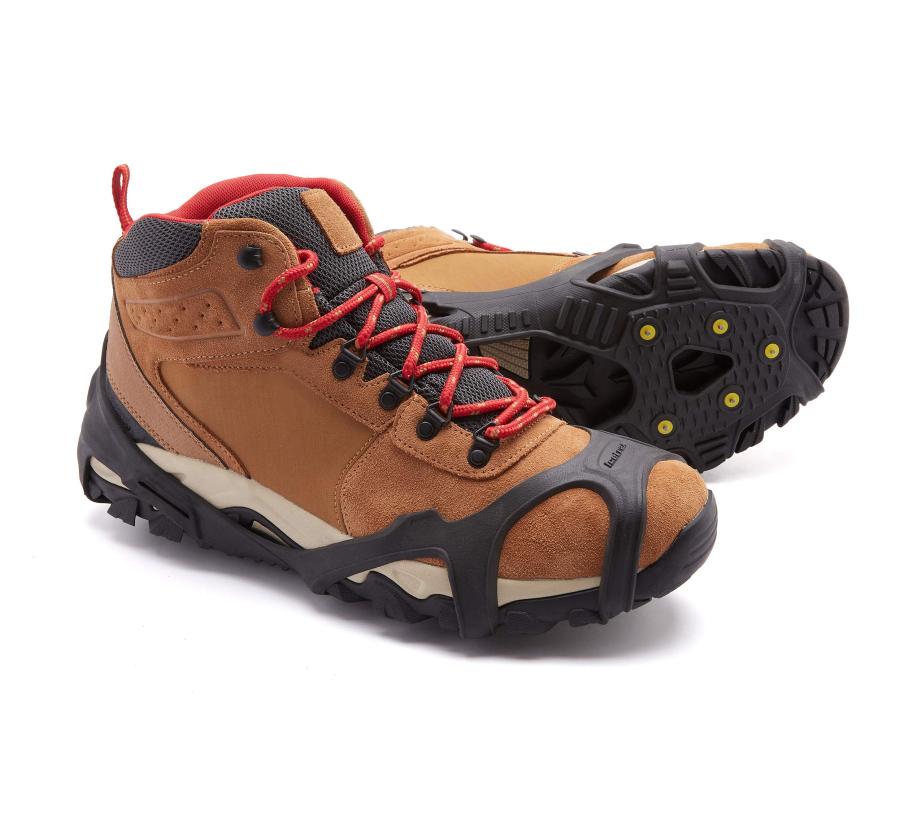
Ice & Snow Grips are anti-slip devices worn over shoes, designed to enhance user traction on ice, snow, and slippery surfaces to prevent falls. Products in this category primarily consist of a highly elastic rubber/silicone base with embedded metal (steel studs, tungsten studs, or steel coils) traction elements. They typically feature easy on/off application and are lightweight and portable, meeting anti-slip needs for various scenarios including daily winter commuting, outdoor activities, and responding to sudden icy weather. The following table illustrates the key characteristics of consumer behavior in this category.
| Dimension | Segment | Description |
|---|---|---|
| Need Driver Type | Emergency-driven / Planned Purchase | Purchases are often driven by immediate safety needs during sudden icy weather or by proactively seeking anti-slip solutions when planning winter outdoor activities. |
| Purchase Frequency | Low Frequency / Seasonal | The product replacement cycle is long, making it a durable good, but there are significant seasonal purchase peaks during winter (especially when icy weather is frequent). |
| Decision Complexity | Medium | Consumers compare product performance in areas like anti-slip effectiveness, durability, secure fit, and price, rather than making intuitive purchases. |
| Price Sensitivity | Medium to High | While price is an important consideration, users are willing to pay a reasonable premium for more reliable and durable products due to the involvement of personal safety. |
| Emotional Dependency | Medium | The primary drivers are functional safety assurance and the 'peace of mind' from avoiding falls, rather than pure emotional or social value. |
II. User Personas & Usage Scenarios
2.1 Daily Commuter & Lifestyle Protector
🎯 Resides in regions with frequent winter ice and snow, needing to ensure safe daily travel (commuting, walking the dog, getting mail, shoveling snow) and avoid the risk of falling and injury.
| Typical Usage Scenarios | Core Pain Points | Primary Purchase Drivers |
|---|---|---|
|
|
|
2.2 Winter Outdoor Sports Enthusiast
🎯 Passionate about winter outdoor activities like hiking, mountaineering, ice fishing, trail running, etc., requiring professional anti-slip gear to handle complex and variable icy terrain, pursuing superior traction, stability, and durability.
| Typical Usage Scenarios | Core Pain Points | Primary Purchase Drivers |
|---|---|---|
|
|
|
III. User Needs Hierarchy (KANO Model)
3.1 Basic Needs (Must-Haves)
- Effective Anti-Slip: Providing basic and reliable traction on icy surfaces to prevent user slips; this is the core value of the product.
- Easy to Put On/Take Off: Being able to install and remove conveniently and quickly, adapting to daily commuting or impromptu use scenarios, saving time and effort.
- Size Compatibility: Fitting common athletic shoes, casual shoes, or winter boots, reducing the risk of purchasing unsuitable products and the hassle of returns/exchanges.
3.2 Performance Needs (Linear Satisfiers)
- Long-lasting Durability: Rubber/silicone parts resist breaking; metal studs resist falling off or rapid wear, ensuring reliable use for one winter or longer.
- Secure Fit: Resists falling off or shifting during walking, running, or on complex terrain, providing continuous traction and ensuring safety.
- Full-Foot Traction: Providing effective traction on both the forefoot and heel, especially during descents and multi-directional movement, maintaining natural and stable gait.
- Low-Temperature Flexibility: Rubber or silicone material maintains elasticity in extreme cold (-40°F or lower), resisting brittleness and cracking, ensuring performance.
- Good Comfort: Wearing does not affect normal gait, with no significant foreign body sensation or pressure, ensuring comfort during prolonged use.
3.3 Excitement Needs (Delighters)
- Reflective Design: Integrating reflective elements into the product to increase visibility at night or in low-light conditions, enhancing proactive safety for outdoor activities.
- Replacement Stud Kit: Providing extra replacement studs, allowing users to easily replace worn or lost studs, extending product lifespan, and being more eco-friendly and economical.
- Dedicated Storage Pouch: Including a sturdy, durable storage bag for easy carrying, storage, and keeping clean, preventing dirt from getting on clothes or other items in a backpack.
3.4 Unmet Needs & Opportunities
-
Stud-to-Rubber Connection Reinforcement: A prevalent issue where studs detach from the rubber or the connection point breaks, severely impacting product lifespan and reliability as safety equipment.
User Reviews (VOC) Customers report durability issues with the traction cleats, noting that the rubber straps break and the cleats fall off. // Customers report that the cleats break at the very end.
-
Accurate Size Fit: Many users complain about size mismatches or difficulty fitting certain bulky boots, leading to insecure or uncomfortable wear, directly impacting anti-slip effectiveness and user experience.
User Reviews (VOC) Customers have mixed experiences with the cleats' sizing, with some reporting a great fit, particularly on hiking and trail shoes, while others find them too small for their boots and note that more size options are needed. // My US10.5 shoes were too big. The rubber couldn't hold on to my shoes and slipped off numerous times while walking.
-
Secure Fit Preventing Slippage: Numerous users report that products easily slip off or shift during walking or light activity; even straps don't fully solve the issue, posing safety risks and inconvenience.
User Reviews (VOC) Customers report significant issues with the cleats slipping off their shoes. // They don't stay on the shoes very well. When they stay on they work well but they were sliding off my shoes a lot while on an ice walk.
-
Heel Traction Optimization: Some products have poorly designed heel stud placement (too far forward or missing), causing users to risk slipping during descents or when shifting weight backward.
User Reviews (VOC) The heel spikes are way too far forward. If you are headed downhill on ice you want those as close to the heel as possible because that's where your pressure is. // On my tennis shoes, the back cleats didn't rest totally on my heal because of the arch on the shoe so I didn't try them out on the ice.
IV. User Decision Drivers
4.1 Key Decision Factors
- Actual Anti-Slip Effectiveness: The product's real traction performance and safety on ice, snow, and mixed surfaces, directly determining if users can walk safely; the core purchase driver.
- Secure Fit: Whether the crampons stay firmly in place on complex terrain or during prolonged use, resisting slipping off or sliding on the shoe, directly related to safety and user confidence.
- Product Durability: Rubber resists breaking; metal studs resist wear, rust, or falling off, ensuring the product withstands one or more winters, reducing the hassle of repeated purchases.
- Compatibility & Ease of Use: Whether it easily fits different shoe types (including bulky winter boots) and how simple and quick it is to put on/take off, determining the product's universality and daily convenience.
4.2 Secondary Decision Factors
- Cost Performance (Value for Money): Whether the product price is reasonable while meeting core functions and durability, providing a worthwhile purchase experience.
- Wearing Comfort: Comfort during prolonged wear, not affecting normal gait, with no significant foreign body sensation or pressure.
- Portability & Storage: Whether the product is lightweight, easy to fold and carry, and convenient to store when not in use, without taking up much space.
- Multi-Scenario Applicability: Beyond ice and snow, whether it can function on other slippery surfaces like mud, wet grass, or rocks, expanding the product's utility value.
V. Selling Points & Competitive Landscape
5.1 Selling Point Analysis
5.1.1 Standard Features (Points of Parity)
- Excellent Anti-Slip Traction: Most products emphasize effective traction on ice, snow, and various slippery terrains as the core safety selling point.
- Easy to Put On/Take Off: Widely promoted for convenient installation and removal, emphasizing a 'Slip-on' quick-use experience.
- Durable, Elastic Material: Extensive use of TPE or silicone materials, claiming cold resistance, high elasticity, and resistance to breakage to alleviate user quality concerns.
- Multiple Size Options: Offering S/M/L/XL sizes to fit different shoe types and populations, emphasizing broad compatibility.
- Lightweight & Portable: Highlighting compact size, light weight, easy folding, and fitting into a bag for convenient carrying and ready use.
5.1.2 Key Differentiators
- Varied Stud Count & Type: Ranging from 5 to 28 studs, including spiral steel coils, stainless steel studs, tungsten studs, etc., emphasizing enhanced traction through stud design.
- Additional Securing Straps: Some products add Velcro or extra straps, claiming to improve fit stability and prevent slippage during use.
- Lower Cold-Resistance Temperature: Claiming flexibility retention at -40°F or even -60°F, emphasizing reliability in extreme cold.
- Full-Foot Coverage Design: Emphasizing comprehensive anti-slip protection from forefoot to heel, providing more balanced traction distribution.
5.1.3 Unique Selling Propositions (USPs)
- Reflective Safety Design: Some products (e.g., ICETRAX) integrate reflective elements on the heel to improve visibility at night or in low-light conditions, enhancing safety.
- Square Chain Structure: Some SYOURSELF products use square chains instead of round ones, claiming their 90-degree edges provide better ice-biting power.
- Extra Replacement Stud Kit: A few products include spare replacement studs, allowing users to replace them easily, extending product lifespan.
5.2 Competitive Landscape
5.2.1 Market Maturity
The Ice & Snow Grips market has entered a mature phase with high product homogenization. Basic anti-slip function and ease of use have become standard, leading to competition focused mainly on price and brand recognition. Although some brands attempt differentiation through details like stud count and straps, widespread user pain points (durability, secure fit, size compatibility) remain unresolved, indicating market space for breakthrough through quality upgrades and deep experience optimization.
5.2.2 Innovation Trends
Current innovation trends mainly revolve around improving user experience details, such as enhancing actual stud durability and fixation methods (e.g., tungsten studs, anti-detachment washers), improving fit stability (multiple strap systems), and optimizing compatibility with different shoe types. Simultaneously, proactive safety features (e.g., reflective design) are emerging, hinting at potential directions for product smartification and added value. However, these innovations still need significant breakthroughs on core user pain points to truly form market competitiveness.
VI. Marketing Claims vs. Reality Check
The table below analyzes the gap between common marketing claims and actual user experiences in this category:
| Dimension | Marketing Claim | User Reality | Verdict |
|---|---|---|---|
| Durability | High-quality TPE/silicone, wear-resistant and tear-proof, sturdy and cold-resistant, can withstand harsh winter use multiple times. | Numerous user reports of rubber/silicone straps breaking or tearing after a few uses, steel studs falling off, product lifespan far below expectations, some even damaged during first use. | Sellers generally overpromise on product durability in harsh environments, failing to deliver on the core quality guarantee, leading directly to product failure at critical moments and severely damaging brand trust. |
| Secure Fit & Size Compatibility | Easy to put on/take off, comfortably fits various shoe types and sizes, even provides adjustable straps to ensure secure, non-slip fit. | Users commonly complain products easily slip off or shift shoes during walking or light activity; size recommendations don't match reality, especially for bulky boots or large sizes, leading to difficult or insecure fit. | While emphasizing wearing convenience, sellers overlook the practical challenges of physical fit between crampons and various shoe types, thicknesses, and user activity levels, resulting in design blind spots and misleading information regarding universality and stability. |
| Stud Placement & Traction Distribution | Provides 360-degree all-around traction, effective anti-slip on both forefoot and heel, handles various terrains. | Some products have heel studs placed too far forward or missing, causing users to risk slipping during descents or backward weight shifts; stud design tends to accumulate snow in pure snow, reducing traction. | Sellers claim all-around traction, but some product stud placement designs fail to fully consider ergonomics and actual gait (especially during descents), leading to imbalanced traction distribution in key scenarios, posing a potential safety hazard. |
Key Takeaway: There is a widespread phenomenon of severe disconnect between marketing claims and actual user experience in the market, especially regarding core durability and stability, where parameter inflation and optimism prevail.
VII. Supply-Demand Misalignment Analysis
The table below highlights mismatches between seller focus and buyer priorities:
| Dimension | Seller Behavior | User Focus | Verdict |
|---|---|---|---|
| Product Durability | Sellers commonly claim their products are 'durable,' 'sturdy,' 'tear-resistant' in listings, but mostly remain at material description level, lacking actual data or third-party verification. | The most concentrated negative user feedback is 'rubber breaks,' 'studs fall off,' even 'breaks after one or two uses,' expressing extreme dissatisfaction with product long-term reliability. | Sellers fail to deliver on the core safety promise of 'durability,' leading to widespread consumer skepticism about product quality, damaging brand reputation, and being a primary cause of negative reviews and returns. |
| Secure Fit | Sellers emphasize 'easy on/off,' 'fits various shoe types,' some products add straps but don't explain their securing principle and effectiveness in depth, still prioritizing convenience. | Users frequently complain crampons 'easily slip off,' 'shift while walking,' 'straps aren't secure or are too short,' believing products fail to provide continuous, stable protection during movement or on complex terrain. | Sellers oversimplify the physical fit and movement-based securing challenges between crampons and footwear, leading to product performance falling short of user expectations on the core safety need (not falling off). |
| Price vs. Quality Trade-off | Many products in the market enter at low prices, attracting buyers with 'multi-packs,' 'high cost-performance,' but generally fail to invest sufficiently in materials and craftsmanship. | While users care about price, for products involving personal safety, they prioritize quality and reliability more. Many are willing to pay a higher price for truly durable products rather than sacrificing safety for low cost. | Sellers overcompete in the low-price segment, leading to a widespread phenomenon of 'sacrificing quality for cost,' fundamentally conflicting with consumers' core demand for 'reliability' in winter safety equipment. |
Key Takeaway: There is a significant supply-demand misalignment in the crampons category among sellers: core safety and durability needs are downplayed, while surface features and low-price competition are oversupplied.
VIII. Strategic Opportunities & Recommendations
8.1 Ultra-Durable, Anti-Detachment Stud Crampons
8.1.1 Target Audience & Pain Points
⚡️ Pain Points Addressed: Stud-to-rubber connection reinforcement, balanced wear.
8.1.2 Action Plan
Adopt higher-strength, low-temperature-resistant composite silicone or TPE materials; redesign and reinforce stud embedding structure (e.g., integrated molding or secondary injection molding). Use more wear-resistant, corrosion-resistant 304 stainless steel or tungsten studs. Provide extra spare studs and simple replacement tools.
| Tech Complexity | Medium |
| Cost Impact | High Impact |
| Trade-off Warning | Using more robust, durable materials and more complex stud embedding processes may slightly increase product weight or rubber thickness, but is crucial for safety and lifespan. |
| Price Band | Only viable above $29.99 |
8.1.3 Marketing Strategy
Emphasize value proposition: 'One investment, years of peace of mind'; showcase 'no fear of breakage, studs stay secure' via authoritative third-party extreme environment test reports; highlight 'truly solves wear pain points, say goodbye to frequent replacements.'
8.2 Self-Adapting, Secure-Fit Crampons
8.2.1 Target Audience & Pain Points
⚡️ Pain Points Addressed: Accurate size fit, secure fit preventing slippage.
8.2.2 Action Plan
Develop new polymer materials with better elasticity and recovery; optimize the shoe cover's geometric structure to ensure tight fit on different toe and heel curvatures. Design a more ergonomic, multi-point load-bearing, easily adjustable strap system. Provide more detailed size selection guides and fitting advice.
| Tech Complexity | Medium |
| Cost Impact | Medium Impact |
| Trade-off Warning | May require more precise mold tooling or introduction of more material components, slightly increasing complexity but significantly enhancing user experience. |
| Price Band | Only viable above $19.99 |
8.2.3 Marketing Strategy
Highlight 'Custom-like fit, won't fall off during running/jumping'; showcase perfect fit effects on different shoe types (athletic shoes, winter boots); emphasize 'Say goodbye to slippage, step with confidence.'
8.3 Full-Foot Balanced Traction Crampons
8.3.1 Target Audience & Pain Points
⚡️ Pain Points Addressed: Heel traction optimization, full-foot traction.
8.3.2 Action Plan
Redesign crampon stud placement to ensure sufficient, effective, gait-friendly traction in the heel area, preventing backward slips. Consider increasing heel stud count or adjusting their aggressiveness. Also optimize stud design for snow shedding to ensure effective ice bite even in deep snow.
| Tech Complexity | Low |
| Cost Impact | Low Impact |
| Trade-off Warning | No significant physical side effects; mainly optimizes stud arrangement and count, may slightly increase material costs. |
| Price Band | Only viable above $14.99 |
8.3.3 Marketing Strategy
Emphasize 'Stable as a rock uphill and downhill, all-around, no-blind-spot anti-slip'; showcase forefoot vs. heel traction differences via comparison images; highlight 'Winter travel, say goodbye to worries.'
8.4 Night-Safety Reflective Smart Crampons
8.4.1 Target Audience & Pain Points
⚡️ Pain Points Addressed: Low visibility at night, lack of proactive safety alerts.
8.4.2 Action Plan
Strategically embed rechargeable high-brightness LED strips into the crampon rubber bands, supporting multiple flash modes to enhance 360-degree visibility. Consider integrating Bluetooth modules for smartphone App control of lights, battery monitoring, and anomaly alerts (e.g., detachment).
| Tech Complexity | High |
| Cost Impact | High Impact |
| Trade-off Warning | Integrating LED lights and batteries increases product volume, weight, production cost, and requires charging maintenance, potentially impacting some users' need for lightness. |
| Price Band | Only viable above $49.99 |
8.4.3 Marketing Strategy
Highlight 'Smart escort, worry-free night travel'; emphasize 'Technology illuminates safety, making every nighttime outing more reassuring'; showcase its striking visibility at dusk/night and multifunctional smart experience.