Amazon US Market Analysis: Pool Cues Category
📊 Executive Summary
📈 Market Trends
Entry-level cue stick market competition is fierce, with consumers increasingly demanding higher basic quality. Market products commonly appear in multi-piece sets, targeting home entertainment and beginner scenarios, emphasizing value for money and appearance design. Two-piece design is mainstream due to portability. However, as consumer experience grows, higher demands are placed on core functions (especially straightness) and durability, which traditional marketing tactics struggle to meet.
⚡ Major Pain Points
Cue warping is a fatal flaw; tip and joint quality urgently need improvement. Numerous users complain about cues arriving warped or deforming quickly, directly impacting shot accuracy, the top reason for product returns and negative reviews. Secondly, issues like unshaped tips prone to falling off/damage, loose joints, and peeling grip wraps severely degrade product experience and lifespan. Some sellers' confusing material information and weight mislabeling further erode consumer trust.
💡 Selection Opportunities
Focus on core quality, return to pragmatic marketing, build long-term trust. Market opportunities lie in: 1. Extremely solving the straightness issue through better wood treatment and quality control, offering a 'never warp' promise, which will be key to building a brand moat. 2. Improving tip and joint quality for 'out-of-box ready' use, reducing user post-purchase maintenance burden. 3. Ensuring complete transparency and consistency of all product information, eliminating material mislabeling, rebuilding consumer trust. Solid product power paired with honest marketing can stand out in a homogenized market and capture user mindshare.
I. Analysis Overview
1.1 Introduction & Report Scope
This report analyzes the 'Cue Sticks' category (pool cues) within the US Amazon marketplace, focusing on target user personas, core needs, decision drivers, market communication, and potential opportunities.
1.2 Category Snapshot
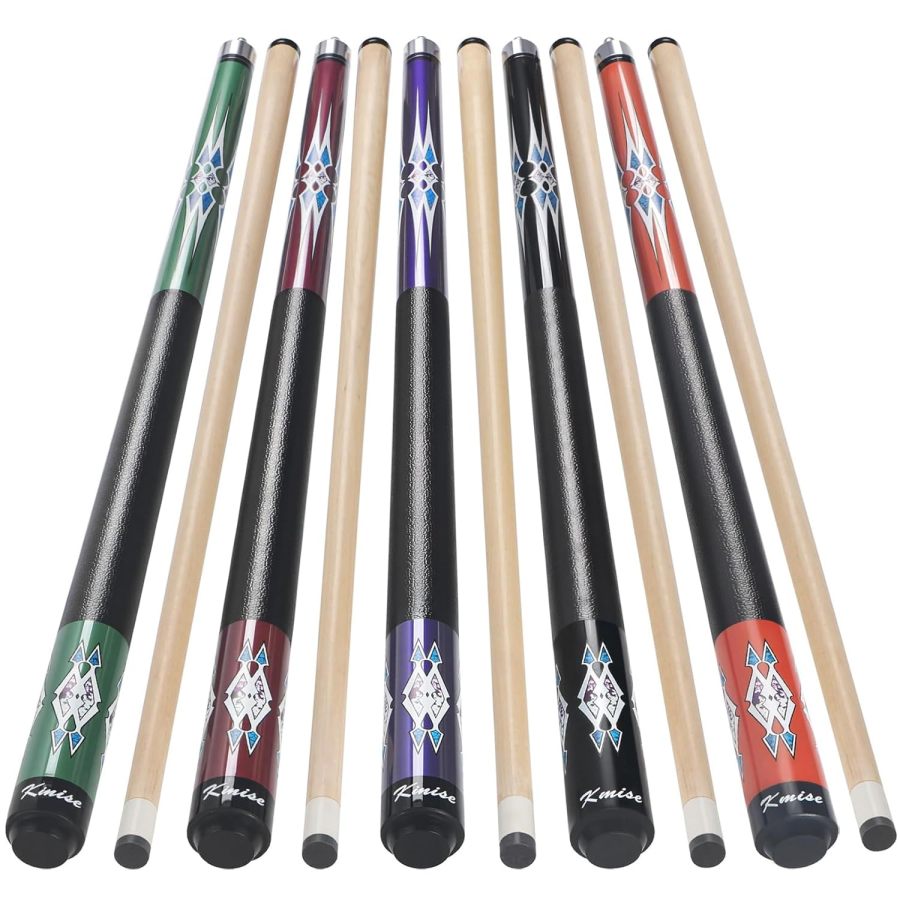
A cue stick is the essential tool for billiards/pool, primarily made of wood (e.g., maple, ash), typically at a standard 58-inch length, and fitted with a 13mm leather or fiber tip. They are commonly sold in sets of 2, 4, or 6 to meet the needs of home entertainment, bar use, or beginners. Product performance focuses on shot straightness, power transfer, and ball control, while also considering durability and aesthetic design. The following table illustrates the key characteristics of consumer behavior in this category.
| Dimension | Segment | Description |
|---|---|---|
| Need Driver Type | Planned Purchase / Gift-giving | Purchases are often driven by accessory needs after buying a pool table, upgrading existing cues, or as holiday gifts for friends and family, with clear expectations for basic functionality and durability. |
| Purchase Frequency | Low Frequency | As durable goods, typically purchased once. Repurchase is mainly driven by damage or upgrade needs, with no fixed repurchase cycle. |
| Decision Complexity | Medium | Consumers compare cue material, straightness, weight, set value for money, and review feedback, but do not conduct professional-level research. |
| Price Sensitivity | Medium-High | Consumers are price-sensitive and seek high value for money. However, they are willing to pay a reasonable premium for clear functional advantages (e.g., resistance to warping). |
| Emotional Dependency | Medium | Cue sticks carry satisfaction from entertainment, socializing, skill improvement, and personal taste, combining practical function with a certain level of emotional value. |
II. User Personas & Usage Scenarios
2.1 Home Entertainment/Party Host
🎯 Owns a home pool table and wants to provide enough good-quality cues for family and friends, valuing cost-effectiveness and shared multiplayer experiences.
| Typical Usage Scenarios | Core Pain Points | Primary Purchase Drivers |
|---|---|---|
|
|
|
2.2 Casual Player/Beginner Enthusiast
🎯 New to pool or plays infrequently, wants an entry-level cue set that provides basic accuracy, decent feel, and is affordable. May play at bars or friends' houses.
| Typical Usage Scenarios | Core Pain Points | Primary Purchase Drivers |
|---|---|---|
|
|
|
III. User Needs Hierarchy (KANO Model)
3.1 Basic Needs (Must-Haves)
- Cue Straightness: The cue must be perfectly straight, with no visible bending or deformation. This is the foundation for accurate shooting; otherwise, the product cannot function as a pool cue.
- Shot Stability & Power Transfer: The cue should be stable without wobbling during the shot, efficiently transferring power from the hand to the tip, ensuring controllable shot force and direction.
- Secure Tip Connection: The tip must be firmly attached to the shaft, not prone to loosening or falling off, reliably contacting the cue ball and effectively holding chalk.
- Standard Size & Weight: Cue length (e.g., 58 inches) and weight (e.g., 18-21 oz) should conform to general pool standards to suit most players' shooting habits.
3.2 Performance Needs (Linear Satisfiers)
- Good Feel & Balance: Comfortable grip, reasonable weight distribution, feeling smooth and easy to control during the stroke, not causing fatigue with prolonged use.
- Tip Grip & Ball Control: The tip effectively absorbs chalk and provides sufficient friction, helping players precisely control cue ball positioning and spin (English).
- Material Durability: Wood or composite materials resist impact, wear, and environmental changes from daily use, not prone to cracking or severe deformation, extending product life.
- Multiple Weight Options: Sets should provide cues of various weights to meet different players' strength preferences, shooting styles, or game needs.
3.3 Excitement Needs (Delighters)
- Elegant Appearance & Personalized Design: Cues feature unique finishes, patterns, or grip designs that express personality, enhance visual appeal, and make them stand out on the table.
- Two-Piece Portable Design: Cues can be quickly separated into two pieces for easy carrying and storage, especially suitable for users going to competitions or with limited home space.
- Complete Accessories: Including chalk, gloves, tip protectors, carrying cases, etc., providing a one-stop solution, reducing the hassle and cost of additional purchases.
- Adjustable Weight: Cue design allows players to fine-tune internal weight distribution based on personal preference for more refined shot power and feel control.
3.4 Unmet Needs & Opportunities
-
Shaft Prone to Warping/Deformation: Numerous user feedback indicates cues arrive warped or deform after short-term use, directly impacting shot accuracy and rendering them unusable.
User Reviews (VOC) within 5 usage the sticks are warped at the end. // multiple sticks being warped. // Showing some warping after being in the basement after 6 months.
-
Poor Tip Quality/Requires Additional Shaping: Most users report tips are not pre-shaped, with rough edges or irregular shapes affecting chalk hold and shot control; some even fall off or crack easily, requiring self-sanding.
User Reviews (VOC) The tips are decent, though they don’t grip the cue ball quite as much as I’d like. // tips are poorly shaped out of the box. // need a shaper for the tips because they are not perfect and don’t hold chalk
-
Loose/Damage-Prone Joint Connection: Some users report loose connection screws on two-piece cues, or poor precision in plastic connectors, leading to unstable connection after intense shots, affecting power transfer and feedback.
User Reviews (VOC) stick will not screw tight together anymore. // the screw is of very poor quality. Mating between the threads is extremely loose, very poor precision.
-
Poor Consistency Between Actual Weight & Label: Users commonly report significant discrepancies between actual cue weight and labeled weight, or uneven weight distribution within a set, preventing players from choosing the right weight based on expectations, affecting shot feel.
User Reviews (VOC) 18 oz stickers all 4 but actual weights 17.4 oz on 3 and 16 oz on 1. // The weight is heavier than advertised.
-
Conflicting/Contradictory Material Information: Listing descriptions about cue material are contradictory (e.g., claiming maple but specs say wool, or title says maple but bullet points say ash), causing user confusion about core material and damaging trust.
User Reviews (VOC) Listing宣称球杆主体采用枫木材质,然而产品规格参数中却明确标注“Material: Wool”(羊毛),这种核心材质信息的自相矛盾,对消费者构成严重的认知误导.
IV. User Decision Drivers
4.1 Key Decision Factors
- Cue Straightness: The core function of a pool cue. Straightness directly determines shot accuracy. This is the primary consideration for users; any warping can lead to returns.
- Durability & Structural Stability: Cues are not prone to deformation, breaking, and have secure joints, able to withstand daily use. This is users' assurance of long-term product value, especially important for sets.
- Shot Feel & Balance: Comfortable grip, appropriate weight, good balance directly affect stroke fluidity and control, determining the user's gaming experience.
- Value for Money: For the entry-level and home market, the balance between price and provided quality is key. Users expect a usable set at a reasonable price.
4.2 Secondary Decision Factors
- Tip Quality & Grip: Tips that effectively hold chalk and provide appropriate friction help with precise spin and control, enhancing the experience for intermediate players.
- Appearance Design & Color: Whether the cue's patterns, finish, and colors are attractive, match other equipment, and if cues within a set are easy to distinguish, influencing purchase decisions and user enjoyment.
- Grip Comfort & Non-slip Properties: Whether the grip material and texture are non-slip and sweat-absorbent, comfortable for prolonged holding, affecting shot stability and hand fatigue.
- Portability & Storage: Whether the two-piece design is easy to assemble/disassemble, carry, and store at home is a convenience factor considered by users.
- Completeness of Accessories: Whether chalk, gloves, protectors, or carrying cases are included can increase product value and save users the trouble of additional purchases.
V. Selling Points & Competitive Landscape
5.1 Selling Point Analysis
5.1.1 Standard Features (Points of Parity)
- Canadian Maple/Hardwood Material: Most products emphasize using Canadian maple or other hardwoods to promote cue sturdiness and resistance to warping, as a quality foundation.
- 58-inch Standard Length: All adult cues adopt the 58-inch standard length, ensuring compatibility with universal pool tables and player habits.
- 13mm Leather/Fiber Tip: Generally equipped with 13mm diameter tips, emphasizing basic ball grip and shot control, an industry-standard specification.
- Multiple Weight Options (18-21 oz): Set products commonly offer cues of different weights like 18, 19, 20, 21 oz to meet players with varying strength and preferences.
- Set Sales (2/4/5/6 pieces): The mainstream sales model, offering high value for money for home, bar, or multiplayer scenarios, providing a plug-and-play solution.
- Two-Piece Design: Most products adopt a two-piece design, emphasizing convenience for transportation, storage, and carrying, enhancing product practicality.
- Suitable for Home/Bar/Beginners: Generally positioned as home, bar, or beginner cues, emphasizing their versatility and high value for money.
5.1.2 Key Differentiators
- Elegant Appearance & Personalized Design: Some products use 3D printing, hand-painted patterns, multi-color finishes, or transparent wood grain veneers to emphasize unique visual appeal, enhancing product grade and personalization.
- Stainless Steel/Quick-Release Joint: Compared to traditional brass joints, some products emphasize stainless steel material or quick-connection technology to improve joint stability, durability, and power transfer efficiency.
- Irish Linen/Special Non-slip Grip: Some products use Irish linen, leather texture, or 3D lizard skin patterns for special grips, promoting their non-slip, sweat-absorbent, and comfortable feel, enhancing shot control.
- Included Accessories: Some sets include gloves, chalk, tip protectors, or carrying cases, increasing product added value and providing a more complete unboxing experience.
- Low Deflection Technology: A few products claim to use low-deflection shaft technology to reduce cue ball deflection, improving shot accuracy, attracting players with higher performance demands.
- Clear Weight Labeling: Emphasizing that each cue is clearly labeled with its weight for easy user selection and identification.
5.1.3 Unique Selling Propositions (USPs)
- High-Precision Stainless Steel Joint & Nano Coating: e.g., Some AKLOT products claim CNC-machined 304 stainless steel joints (±0.008mm tolerance) with PTFE nano-coating for anti-oxidation, emphasizing ultimate precision and durability.
- Pre-Shaped/Laminated Soft Tip: e.g., A few products like Pathline explicitly advertise tips as pre-shaped and pre-sanded, ready to use out of the box, saving users initial setup hassle.
- Adjustable/Removable Weight Bolt: Some AKLOT products offer removable weight bolts, allowing users to fine-tune cue weight as needed, adding personalization.
5.2 Competitive Landscape
5.2.1 Market Maturity
The cue stick category market is mature, especially in the entry-level and home segments, with highly homogenized product features and configurations. Competition mainly revolves around material claims, set value for money, and appearance design. However, due to consumers' rigid requirements for core performance (e.g., straightness) and the widespread quality issues of existing products, there remains significant opportunity for differentiation by solving these pain points.
5.2.2 Innovation Trends
Current innovation focuses on improving product basic reliability (e.g., sturdier joints, more warp-resistant shafts) and optimizing user experience details (e.g., out-of-the-box-ready tips, more comfortable grips). Additionally, some brands attempt to elevate product value by introducing professional-level technical concepts like 'low deflection,' though actual effects still need market validation. Long-term, solving product straightness and durability issues is the key driver for category upgrade.
VI. Marketing Claims vs. Reality Check
The table below analyzes the gap between common marketing claims and actual user experiences in this category:
| Dimension | Marketing Claim | User Reality | Verdict |
|---|---|---|---|
| Shaft Straightness & Durability | Made from Canadian 6A-grade maple/hardwood, exceptional strength & durability, warp-resistant, straight as an arrow. | Numerous user feedback reports cues arriving warped or deforming after short-term use, even breaking, severely contradicting claims of 'unparalleled strength & durability,' 'warp-resistant.' | Widespread issues likely from improper wood drying or storage, causing loss of the core function-straightness-violating basic physical properties of a pool cue, a fatal flaw for entry-level cues. Even claims of premium wood fail to overcome quality control challenges. |
| Tip Quality & Readiness-to-Use | 13mm leather tip, provides consistent grip & spin control, ready to use out of the box. | Most users report tips are not pre-shaped, with rough edges or irregular shapes affecting chalk hold and shot control, requiring self-sanding; some tips even fall off or crack easily, contradicting 'premium,' 'ready-to-use' claims. | As the core component for striking, tips leaving the factory unprepared and prone to damage directly result in a poor out-of-box experience. This is typical cost-cutting that neglects initial user experience, shifting extra work to consumers. |
| Conflicting/Exaggerated Material Information | Made from Canadian maple, premium hardwood shaft, high-end carbon fiber design. | Some Listings show significant contradictions in cue material descriptions across title, description, and specs (e.g., claiming maple but specs say wool, or title maple vs. bullet point ash), seriously misleading consumers. Also, 'carbon fiber design' often refers to decals, not actual material. | Contradictory information about the product's core material challenges consumer trust at the most basic level. This information chaos not only misguides purchase decisions but also damages long-term brand trust, reflecting severe deficiencies in supply chain source management and marketing copy review. |
| Joint & Grip Durability | Stainless steel seamless joint, 100% power transfer, 3x durability; Irish linen/3D non-slip grip, comfortable & long-lasting. | Users report loose connection screws, poor precision in plastic connectors, even unstable connection after intense shots; grip wraps loosen or peel off, showing clear gaps from claims of 'seamless,' '3x durable,' 'comfortable & long-lasting.' | Over-marketing joint and grip performance. Low-cost plastic or imprecise metal parts cannot withstand high-impact force. Meanwhile, grip material and craftsmanship fail to meet long-lasting durability standards, leading to declining shot stability and feel in the short term. |
Key Takeaway: The market is flooded with ambiguous material claims, exaggerated performance parameters, and widespread unstable quality control, especially regarding cue straightness and durability. A severe disconnect exists between marketing promises and actual user experience, creating a crisis of trust.
VII. Supply-Demand Misalignment Analysis
The table below highlights mismatches between seller focus and buyer priorities:
| Dimension | Seller Behavior | User Focus | Verdict |
|---|---|---|---|
| Cue Straightness & Stability | Commonly emphasize surface-level selling points like 'aesthetic design,' 'hand-painted patterns,' 'premium maple,' but remain collectively silent on high-frequency negative reviews about 'arriving warped' or 'deforming after use,' lacking substantive solutions or improvement communication. | "Cue is warped and unusable, this is basic!" "Bought several sets, all had bent ones, very disappointed." "Affects shot accuracy, completely unplayable." | In a category where the core function must be 'straight,' sellers fail to prioritize basic quality control as the highest priority, continuing to compete on non-core pain points. This is a typical strategic blind spot, directly hitting users' return threshold. |
| Tip Readiness-to-Use & Durability | Advertise 'leather tip,' 'professional quality,' but generally neglect pre-shaping treatment at the factory or providing sufficiently durable tips, shifting the hassle of later sanding and replacement to users. | "Need to shape the tip myself, troublesome, can't use directly." "Broke/fell off after a few uses, very annoying." "Need to buy extra tools for sanding, too inconvenient." | Sellers fail to provide a complete out-of-box experience for critical functional components, underestimating user demand for convenience. This approach not only affects initial use impression but also increases user dissatisfaction with the brand. |
| Long-Term Stability of Grip Wrap | Emphasize the feel and non-slip properties of 'Irish linen,' '3D texture' grips, but lack public response or solutions to durability issues like 'wrapping loosening,' 'peeling,' leading to declining user experience over time. | "Grip wrap loosens, affecting feel." "Started peeling after not long, looks cheap." "Good cue, but grip ruined, a shame." | While pursuing aesthetics and initial feel, sellers neglect the long-term durability of grips as high-frequency contact points, failing to balance design with practical usage scenarios, resulting in poor long-term user experience. |
| Material Information vs. Reality Consistency | Some Listings have contradictory material information in multiple places, e.g., title vs. specs mismatch, or use vague, exaggerated terms in descriptions, lacking transparent and consistent explanation of core materials. | "Advertised as maple, but specs say wool, confused about material." "Doesn't feel like real hardwood, performance differs from description." "These false claims make it hard to trust the brand." | Sellers lack rigor and transparency in product information disclosure. This supply-demand information asymmetry directly damages consumer trust and will severely impact brand reputation and repurchase intention in the long run. |
Key Takeaway: Sellers generally over-invest in cue appearance design and marketing concepts, collectively neglecting users' persistent pain points regarding core functional needs like 'straightness,' 'tip readiness-to-use,' and 'joint stability,' leading to a severe supply-demand misalignment.
VIII. Strategic Opportunities & Recommendations
8.1 Establish a 'Never Warp' Straightness Standard
8.1.1 Target Audience & Pain Points
⚡️ Pain Points Addressed: Shaft prone to warping/deformation, poor straightness stability.
8.1.2 Action Plan
Use ultra-high-grade (e.g., 5A+) kiln-dried maple or multi-layer carbon fiber composite materials, combined with advanced anti-deformation treatment processes. Ensure every cue passes strict roller straightness tests and provide a longer anti-warp warranty (e.g., 5 years).
| Tech Complexity | Medium |
| Cost Impact | High Impact |
| Trade-off Warning | Requires stricter wood selection, drying processes, and potentially multi-layer composite structures, increasing material and process costs, but no significant negative physical impact. |
| Price Band | Only viable above $79.99 |
8.1.3 Marketing Strategy
Emphasize the ultimate promise: 'We only sell straight cues!' Showcase authoritative straightness test reports or slow-motion shot videos. Highlight 'Precision stems from straightness, quality builds confidence.' Offer a 'warp-free or return' worry-free purchase experience.
8.2 Provide 'Out-of-Box Ready' High-Quality Tips
8.2.1 Target Audience & Pain Points
⚡️ Pain Points Addressed: Poor tip quality/requires additional shaping, prone to falling off.
8.2.2 Action Plan
Standardize using firmly bonded, medium-hardness, pre-shaped (e.g., mushroom shape) quality multi-layer leather tips, ensuring initial chalking treatment at the factory. Include 2-3 replacement tips and a simple replacement tool in sets.
| Tech Complexity | Low |
| Cost Impact | Low Impact |
| Trade-off Warning | Using better tips and adding a shaping step, cost increase is controllable and does not affect physical performance. |
| Price Band | No Price Band Jump |
8.2.3 Marketing Strategy
Highlight 'No sanding needed, ready to play!' 'Professional-grade tip for more accurate, stable shots.' Use close-up shots to showcase the tip's perfect curvature and even chalk hold. Promote 'Saving you time, maximizing your pool fun.'
8.3 Upgrade Joint & Grip for Long-Term Stable Feel
8.3.1 Target Audience & Pain Points
⚡️ Pain Points Addressed: Loose/damage-prone joint connection, grip wrap prone to loosening.
8.3.2 Action Plan
Use high-precision CNC-machined stainless steel quick-release joints to ensure seamless connection and secure locking, improving power transfer efficiency. Upgrade grips to high-density Irish linen or new anti-slip composite materials, using more secure winding techniques or one-piece molding to prevent loosening.
| Tech Complexity | Medium |
| Cost Impact | Medium Impact |
| Trade-off Warning | Upgrading to high-precision stainless steel joints and more durable grip materials slightly increases cost and weight, but is controllable and offers high perceived value. |
| Price Band | Only viable above $59.99 |
8.3.3 Marketing Strategy
Emphasize 'Precision joint, zero power loss,' 'Grip like a rock, durable and non-slip.' Use exploded diagrams and close-up videos to showcase the joint's fine craftsmanship and grip's durable material, conveying the brand philosophy 'Quality lies in the details.'
8.4 Achieve Complete Product Information Transparency & Consistency
8.4.1 Target Audience & Pain Points
⚡️ Pain Points Addressed: Conflicting material information, poor consistency between actual weight and label.
8.4.2 Action Plan
Establish strict product information verification mechanisms to ensure all Listing fields (title, bullet points, description, specs, attributes) are highly consistent regarding material, quantity, weight, color, and 100% match the physical product. For weight, label 'Actual weight may vary by ±X oz' to mitigate risk.
| Tech Complexity | Low |
| Cost Impact | Low Impact |
| Trade-off Warning | No physical cost impact, mainly internal process and integrity management. |
| Price Band | No Price Band Jump |
8.4.3 Marketing Strategy
Highlight 'Transparent information, what you see is what you get,' 'Reject false labeling, integrity builds brands.' Use detailed product images, videos, and authoritative test reports (e.g., wood composition analysis) to enhance product authenticity and build long-term consumer trust.