Amazon US Market Analysis: Infant Portable Clip-On High Chairs Category
📊 Executive Summary
📈 Market Trends
The portable clip-on high chair market is maturing, with consumers seeking functional and experiential upgrades. Lightweight, foldable, and easy-to-clean have become category standards. Core competition is shifting towards solving users' deep-seated pain points and providing more refined product experiences. Consumer demands for safety and convenience are increasing, especially in family outings and limited home space scenarios, with a clear preference for integrated solutions.
⚡ Major Pain Points
Limited tabletop compatibility and unstable harnesses are critical flaws; deep cleaning is a widely overlooked pain point. Users commonly report poor compatibility of existing products with special tables (e.g., with aprons, round), and time-consuming installation. Issues like easily loosening harnesses and baby forward sliding repeatedly occur, constituting serious safety hazards. Additionally, while marketed as easy to clean, products actually have many deep cleaning dead spots, fabrics trap grime and are hard to dry, significantly increasing parental burden.
💡 Selection Opportunities
Blue ocean opportunities lie in deeply addressing safety, compatibility, and ultimate ease of cleaning. We recommend developing a 'Universal Smart Self-Adjusting Clamping System' to solve tabletop compatibility and installation convenience pain points. Simultaneously, enhance baby posture comfort and mealtime cleanliness through an 'Ergonomic Anti-Slide Integrated Tray Chair', and address cleaning difficulties and product durability with an 'Ultimate Easy-Clean Long-Lasting Antimicrobial Fabric Solution'. By providing innovative experience upgrades while ensuring core safety, it's possible to break through homogeneous competition and gain market share.
I. Analysis Overview
1.1 Introduction & Report Scope
This report analyzes the 'Booster & Hook-On Seats' category (infant portable clip-on high chairs) in the Amazon US market, focusing on target user personas, core needs, decision drivers, market communication, and potential opportunities.
1.2 Category Snapshot
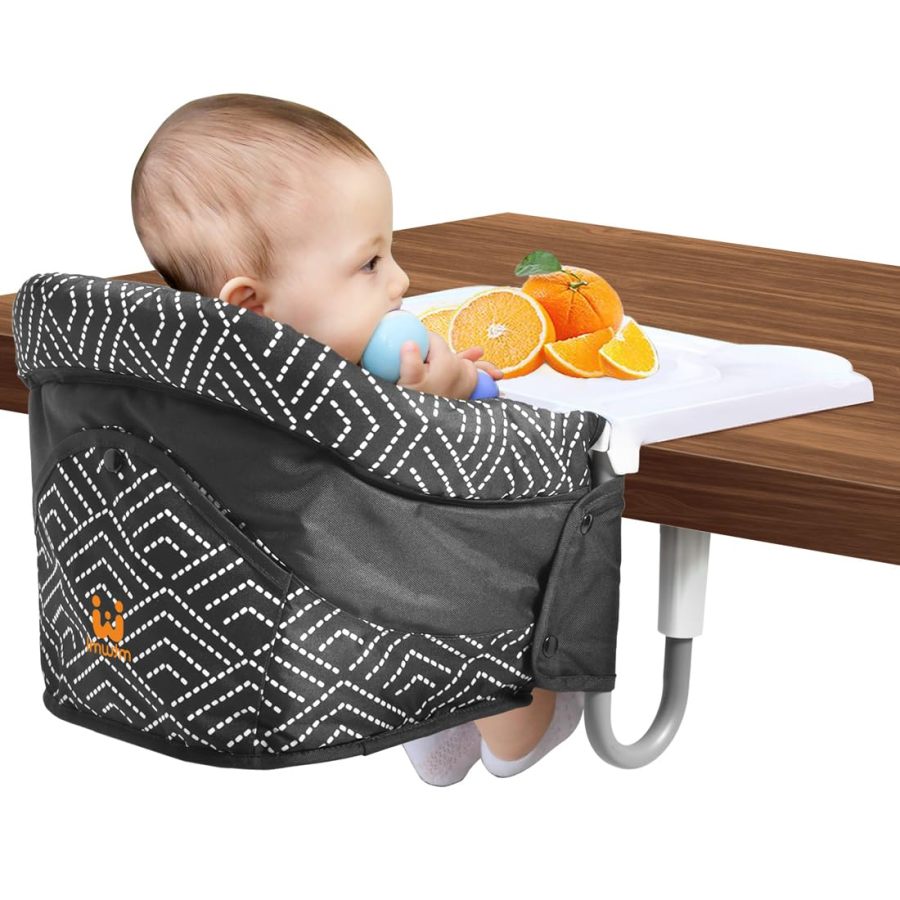
An infant portable clip-on high chair (also known as a hook-on high chair or tabletop high chair) is a feeding aid product designed for infants aged 6-36 months. It attaches to the edge of a dining table or counter via a clamp, allowing the baby to eat at the table with the family. These products are characterized by being lightweight, foldable, and easy to carry. They are widely used in daily home life, dining out, and travel scenarios, serving as a convenient alternative to traditional high chairs, especially for modern families with limited space. The following table illustrates the key characteristics of consumer behavior in this category.
| Dimension | Segment | Description |
|---|---|---|
| Need Driver Type | Planned Purchase / Emergency-driven Purchase | Purchases are typically driven by anticipated daily feeding needs (space-saving) and travel needs (trips, restaurants), with clear expectations for an immediate, portable seating solution. |
| Purchase Frequency | Low Frequency | As a durable good, its replacement cycle is typically long. It is mostly a one-time purchase or shared among family members, with no clear repurchase cycle. |
| Decision Complexity | Medium | Consumers will comprehensively compare multiple dimensions such as safety, stability, ease of use, cleaning convenience, and portability, but will not engage in overly in-depth technical research. |
| Price Sensitivity | Medium to High | Price is an important decision factor. However, as it involves infant safety, consumers are more inclined to pay a reasonable premium for reliability in safety and core functionality. |
| Emotional Dependency | Medium | The product primarily fulfills the functional feeding need, while also providing emotional value and self-satisfaction through 'baby joining family meals' and 'convenient, worry-free dining out'. |
II. User Personas & Usage Scenarios
2.1 Modern Urban Parents
🎯 Live in space-limited apartments, pursue efficient and convenient parenting methods, emphasize product portability and practicality, and often take their baby out for social activities or travel.
| Typical Usage Scenarios | Core Pain Points | Primary Purchase Drivers |
|---|---|---|
|
|
|
2.2 Grandparents / Extended Family Caregivers
🎯 Provide occasional care for grandchildren, requiring a convenient, space-saving temporary feeding solution, with high demands for product safety and operational simplicity.
| Typical Usage Scenarios | Core Pain Points | Primary Purchase Drivers |
|---|---|---|
|
|
|
III. User Needs Hierarchy (KANO Model)
3.1 Basic Needs (Must-Haves)
- Secure Attachment: The clamp must be strong and stable, securely gripping the tabletop to ensure the chair does not wobble or detach during use. This is a non-negotiable requirement.
- Weight Capacity: The product must safely support the weight of infants aged 6-36 months (typically recommended 33-37 lbs) and withstand stress testing without structural failure.
- Material Safety: All materials in contact with the baby must be non-toxic and harmless, free from harmful chemicals like BPA, lead, and phthalates, with authoritative certifications provided.
- Stability & Anti-Tip: The overall structural design must be stable, preventing the chair from tipping over due to uneven force or poor attachment when the baby moves in the seat.
3.2 Performance Needs (Linear Satisfiers)
- Portable & Foldable: The product needs to be lightweight, quickly and compactly foldable for storage, easy to carry and store, saving home space and travel burden.
- Easy Cleaning: The seat cover should be removable and machine washable, or the surface material should be easy to wipe, effectively handling post-meal messes and reducing parental cleaning burden.
- High Versatility: The clamp design should be compatible with most table types and thicknesses (e.g., 0.8-3.5 inches), reducing usage scenario limitations.
- Safety Harness System: Providing a 3-point or 5-point safety harness to effectively secure the baby, preventing standing, sliding, or accidental falls.
- Comfort: Padded seat and high backrest design provide good sitting posture support and a comfortable experience for extended meals, reducing fussiness.
3.3 Excitement Needs (Delighters)
- Integrated Tray: A detachable or integrated independent tray facilitates self-feeding, effectively reducing food spillage onto the table or floor, and is easy to clean.
- Additional Storage Pocket: A convenient storage pocket on the chair back or side for items like bibs, wipes, or small toys, essential for baby mealtime.
- Rapid Fastening System: Innovative clamp designs like one-pull or one-click release mechanisms significantly simplify installation steps, enabling near-instant operation, greatly enhancing convenience, especially in urgent or one-handed situations.
- Tabletop Scratch Protection: The clamp is equipped with ultra-soft non-slip pads or special rubber material to effectively protect the tabletop from scratches or marks, maintaining furniture integrity.
- Stylish Design: The product features a sleek, modern aesthetic with color schemes that align with home decor, seamlessly blending into the home environment rather than appearing as a bulky child item.
3.4 Unmet Needs & Opportunities
-
Tabletop Compatibility Limitations: Existing products have poor adaptability to special tabletops like those with aprons, round tables, or glass, or have insufficient clamp travel, preventing some users from using them.
User Reviews (VOC) It didn't fit on a table one time because the table had a lip. // Did not fit my table with an apron.
-
Forward Sliding / Crotch Dangle: Some seat designs cause unnatural sitting posture for the baby, leading to forward sliding or legs dangling, affecting comfort and safety during prolonged sitting.
User Reviews (VOC) The only thing i don't like is how he kind of dangles there he always slides forward somehow no matter how i adjust him all his weight is always at the front where his crotch is... // It's okay... the seat leans down and she ends up sliding forward which makes me super nervous
-
Tedious Deep Cleaning: Although marketed as easy to clean, harness crevices and clamp dead spots easily trap grime. Some seat pad fillings are difficult to wash and dry thoroughly, making deep cleaning time-consuming and challenging.
User Reviews (VOC) It is hard to spot clean. Have not done a full wash yet. My only issue is the tightening one of the sides is noticeably harder for some reason. // But, those same grooves create a nice grip and we never had problems with the chair sliding around. Which in my opinion is more important! The chair was comfortable for my daughter. Easy to adjust the straps and kept her in safe. Easy to pop on and off. Only con was it only lasted a year and I wish it lasted longer!
-
Loose Harness or Design Flaws: Some harness buckles loosen easily, or leg openings are too large, leading to poor securing and potential safety hazards, especially for active babies.
User Reviews (VOC) The buckles slide wayyyyy too easily, like are a safety risk. We love this chair, but I'm starting to hesitate putting my 12 month old in it, because the buckles straps loosen while he just sits there // My baby can almost all out of just 1 they are so large, there is no way for even a giagantic child to sit upright in them.
-
Time-Consuming Installation & Inconvenient Operation: The process of tightening or loosening the clamp can be cumbersome and time-consuming, especially when operating with one hand or in a hurry, undermining its portability advantage.
User Reviews (VOC) You really need a second person to put it on the table/take it off and put back in the bag if you don't want to be standing there for 5 minutes doing it yourself. Screwing on and off takes forever and is counterintuitive because left tightens and right loosens.
IV. User Decision Drivers
4.1 Key Decision Factors
- Safety & Stability: Whether the clamp is secure, the safety harness is reliable, and the overall structure is stable is the most critical, deal-breaking consideration for consumers in infant products, directly related to the baby's safety.
- Portability & Installation Ease: Whether the product is lightweight, easy to fold, and whether the installation/removal process is simple and quick directly impacts the frequency and convenience of use in daily home and travel scenarios.
- Cleaning Convenience: Whether the seat cover is removable and machine washable, whether the material is easy to wipe, and whether there are hard-to-clean spots directly relate to the ease of daily maintenance for parents and the hygiene of the baby's meals.
4.2 Secondary Decision Factors
- Tabletop Compatibility: Whether the product fits the table type and thickness at home, at restaurants, or at friends' houses is a key consideration for its universality, preventing post-purchase unusability.
- Baby Comfort: Seat cushion thickness, backrest height, ergonomic sitting posture, and the presence of a footrest affect the baby's experience and mood during long meals, thereby impacting feeding efficiency.
- Additional Features: Features like an integrated tray or storage pocket enhance the product's practicality and convenience, serving as important differentiators during consumer comparisons.
- Brand Reputation & Reviews: Especially for infant products, well-known brands and positive user reviews provide consumers with stronger trust and purchase confidence.
- Price: After meeting the above core and secondary needs, the product's value for money is a significant factor influencing the final purchase decision.
V. Selling Points & Competitive Landscape
5.1 Selling Point Analysis
5.1.1 Standard Features (Points of Parity)
- Portable & Foldable: Almost all products emphasize being lightweight, compactly foldable, and easy to carry, often including a storage bag, positioning this as the core selling point of this chair type.
- Easy Installation/Removal: Sellers commonly promote the product's installation process as simple and quick, saving parents time and highlighting its convenience.
- Easy Cleaning: Most products emphasize that the seat cover is removable and machine washable or that the surface is easy to wipe, reducing cleaning hassle.
- Safety Assurance: Common claims include safety harness (3-point or 5-point), sturdy clamp, stable support, etc., serving as the foundational guarantee of product reliability.
- Tabletop Adaptability: Most products highlight compatibility with various table thicknesses, claiming wide applicability.
5.1.2 Key Differentiators
- 5-Point Safety Harness: Compared to basic 3-point harnesses, this emphasizes more comprehensive securing and protection for the baby, serving as a safety upgrade point.
- Built-in Tray: Provides an independent eating area, facilitating self-feeding, easy to clean, and reducing mess on the table, serving as an important added benefit.
- Comfort Design: Enhancing the baby's sitting experience through padded seats, high backrests, ergonomic design, etc., to attract buyers focused on comfort.
- Safety Certifications: Mentioning authoritative safety certifications like CPC, ASTM serves as a trust endorsement, boosting consumer confidence, especially in the mother and baby product sector.
5.1.3 Unique Selling Propositions (USPs)
- Innovative Rapid Fastening System: Such as Chicco's 'One-Pull Tightening' or some products' one-click release, significantly simplifying installation steps for near-instant operation, creating a unique efficiency advantage.
- Specific High-Quality Materials: Claims like 600D Oxford cloth, high-strength aluminum alloy/steel, emphasizing material durability, quality feel, and eco-friendliness.
- Tabletop Scratch Protection: The clamp is equipped with soft pads or special rubber to effectively protect the tabletop from scratches or marks, providing extra peace of mind.
5.2 Competitive Landscape
5.2.1 Market Maturity
The infant portable clip-on high chair market has entered a mature stage. Products are highly homogeneous in core functions like portability, ease of use, safety, and easy cleaning. Competition among brands is fierce, mainly reflected in price, aesthetic design, minor feature optimizations, and brand premium. Leading brands seek differentiation by emphasizing higher-level safety certifications, more convenient installation/cleaning methods, and additional features (like trays, storage pockets), but overall innovation pace is relatively steady.
5.2.2 Innovation Trends
Current innovation trends are mainly reflected in details that enhance user experience, such as smarter, faster clamp designs, more thorough and convenient cleaning solutions (e.g., fully removable/washable fabrics and no-dead-spot designs), and optimizations in comfort and ergonomics (e.g., designs to prevent baby forward sliding, adding footrests). Simultaneously, material selection and structural robustness are continuously improved to enhance durability and safety, meeting consumers' growing demands for quality and security.
VI. Marketing Claims vs. Reality Check
The table below analyzes the gap between common marketing claims and actual user experiences in this category:
| Dimension | Marketing Claim | User Reality | Verdict |
|---|---|---|---|
| Tabletop Compatibility | Widely compatible with most table types, adaptable to a broad thickness range, easily handles various scenarios. | Listings often include many non-applicable scenarios (glass, tables with aprons, round, single-pedestal). User feedback indicates incompatibility with apron tables or special table shapes, leading to post-purchase unusability. | Sellers oversimplify compatibility claims, failing to adequately warn about limitations posed by complex tabletops, misleading consumer expectations of product universality and resulting in user scenario limitations. |
| Cleaning Convenience | Removable and machine washable, easy to wipe, effortlessly handles post-meal cleaning, maintaining cleanliness and hygiene. | User feedback indicates thorough cleaning (especially harness crevices, clamp dead spots) is time-consuming and difficult. Seat pad fillings are hard to dry and may clump. The cleaning process is far less effortless than advertised. | Sellers only emphasize surface washability but overlook the practical complexity of deep cleaning for infant products, failing to deliver on the core value of 'easy cleaning,' increasing parental burden. |
| Harness Stability & Baby Posture | 5-point safety harness, securely holds the baby, ensures safety and comfort, prevents standing or sliding. | Users commonly report harnesses easily loosen, buckles are not secure, and babies can even lift themselves or lean forward; some seat designs cause 'crotch dangle' or unnatural sitting posture. | For infant products, overstatement or design flaws in the safety harness are critical weaknesses. Sellers' safety promises fail verification in actual use, severely damaging consumer trust and posing potential safety risks. |
Key Takeaway: Marketing exhibits widespread parameter inflation and scenario-based experience exaggeration, particularly regarding tabletop compatibility, harness stability, and cleaning convenience, showing a significant gap with actual user experience.
VII. Supply-Demand Misalignment Analysis
The table below highlights mismatches between seller focus and buyer priorities:
| Dimension | Seller Behavior | User Focus | Verdict |
|---|---|---|---|
| Real Tabletop Compatibility Solutions | Generally promote 'wide compatibility' but rarely provide detailed adaptation solutions for special tables (e.g., with aprons, round, single-pedestal) or clear usage limitations and risk warnings. | Users complain the product doesn't fit their home dining tables or restaurant tables, leading to post-purchase unusability and poor experience. | Sellers market compatibility under ideal conditions but fail to provide practical engineering solutions covering more usage scenarios, creating a huge gap between user expectations and reality. |
| Convenience of Thorough Cleaning | Sellers generally emphasize surface cleaning advantages like 'machine washable' and 'easy to wipe' but lack effective solutions and communication regarding deep cleaning pain points for harness crevices, clamp interiors, and seat pad fillings. | User feedback indicates harnesses and crevices trap dirt, cleaning is tedious and time-consuming, seat pad interiors are hard to dry or clump, contradicting 'easy to clean' claims. | Sellers stop at marketing slogans like 'machine washable' for cleaning, overlooking the rigid demand for all-around, no-dead-spot hygiene in infant products, leading to increased user cleaning burden and hygiene anxiety. |
| Baby Posture Comfort & Secure Restraint | While sellers mention 'comfortable seat cushion' and '5-point harness,' they lack in-depth design optimization and clear solutions for issues like baby forward sliding, crotch dangle, easy harness loosening, and overly large leg openings. | Users complain about baby discomfort, 'crotch dangle,' harnesses easily loosening, affecting the baby's mealtime experience and parental trust in product safety. | Sellers insufficiently consider the nuanced needs for core baby comfort and safe posture, making 'comfort' claims superficial and even posing safety hazards, touching the core trust baseline of mother and baby products. |
Key Takeaway: Sellers over-competition on generic selling points like portability and easy installation, while collectively remaining silent or downplaying core pain points like deep cleaning, true compatibility, and child posture comfort/safety, leading to a misalignment between supply and demand focus.
VIII. Strategic Opportunities & Recommendations
8.1 Universal Smart Self-Adjusting Clamp Chair
8.1.1 Target Audience & Pain Points
⚡️ Pain Points Addressed: Tabletop compatibility limitations, time-consuming installation and inconvenient operation.
8.1.2 Action Plan
Develop a patented self-adjusting clamping mechanism that automatically identifies and tightens to table thickness, enabling one-click or one-pull rapid installation/release; design the clamp with multi-angle rotation to accommodate irregular tables (with aprons, round); equip with thicker, softer anti-slip, scratch-proof rubber pads for ultimate tabletop protection.
| Tech Complexity | Medium |
| Cost Impact | Medium Impact |
| Trade-off Warning | The innovative self-adjusting clamping mechanism may slightly increase product weight or packaging volume, requiring streamlined design to balance portability. |
| Price Band | Only viable above $49.99 |
8.1.3 Marketing Strategy
Emphasize 'Snap on in a second, fits all tables, end compatibility woes'; showcase installation demo videos on various table types (including user-pain-point round and apron tables), highlighting 'universality' and 'zero table damage' promise.
8.2 Ergonomic Anti-Slide Integrated Tray Chair
8.2.1 Target Audience & Pain Points
⚡️ Pain Points Addressed: Forward sliding / crotch dangle, food spillage, loose harness or design flaws.
8.2.2 Action Plan
Design a deep seat bucket conforming to baby ergonomics, providing better leg and hip support, completely eliminating 'crotch dangle' and forward sliding issues; integrate a detachable, seamless, high-lipped anti-spill tray to minimize food drop; add an adjustable height footrest to enhance baby comfort and stability during meals.
| Tech Complexity | Medium |
| Cost Impact | Medium Impact |
| Trade-off Warning | The integrated tray or footrest may increase folded thickness, requiring structural optimization to ensure compact storage. |
| Price Band | Only viable above $59.99 |
8.2.3 Marketing Strategy
Highlight 'Sits steady, eats happily, goodbye post-meal mess'; use scenes and videos of babies eating comfortably to emphasize the benefits of ergonomic design for baby development and mealtime focus, combined with the advantage of the easy-clean tray.
8.3 Ultimate Easy-Clean Long-Lasting Antimicrobial Portable Chair
8.3.1 Target Audience & Pain Points
⚡️ Pain Points Addressed: Tedious deep cleaning, insufficient material durability, difficult harness cleaning.
8.3.2 Action Plan
Adopt high-quality, stain-resistant, water-resistant, quick-drying, and antimicrobial fabrics (e.g., upgraded 600D Oxford cloth, or easier-to-wipe PU leather); redesign structure to allow the safety harness and all fabric components to be easily and completely removed for machine washing and drying without affecting installation stability; optimize seat pad filling to be quick-drying and non-clumping; reinforce stitching at key stress points to prevent tearing.
| Tech Complexity | Low |
| Cost Impact | Low Impact |
| Trade-off Warning | More durable materials may bring a slightly different feel but have no negative impact on core functionality. |
| Price Band | Only viable above $39.99 |
8.3.3 Marketing Strategy
Emphasize 'Snap off, wash clean, stays like new, antimicrobial for extra peace of mind'; demonstrate stain-resistance and easy-cleaning advantages through comparison tests, highlight the durability of high-quality materials, and provide clear disassembly and cleaning guides.
8.4 Reinforced Multi-Lock Safety System
8.4.1 Target Audience & Pain Points
⚡️ Pain Points Addressed: Loose harness or design flaws, child easily escaping.
8.4.2 Action Plan
Upgrade harness buckles with anti-loosening designs to ensure children cannot undo them themselves; optimize the harness adjustment mechanism to prevent slipping after adjustment; for younger infants, add adjustable soft padding in the leg openings to reduce slipping risk.
| Tech Complexity | Low |
| Cost Impact | Low Impact |
| Trade-off Warning | Sturdier buckles may slightly increase operation force, but the safety improvement value far outweighs this minor inconvenience. |
| Price Band | Only viable above $29.99 |
8.4.3 Marketing Strategy
Highlight 'Five-fold protection, unbreakable hold, baby safe, parent at ease'; emphasize the product passing third-party extreme safety tests, showcase real videos of the baby securely and safely in the chair, reinforcing the safety promise.