Amazon US Market Analysis: Outdoor Hydration Bladders Category
📊 Executive Summary
📈 Market Trends
The outdoor hydration bladder market is maturing, with portability and functional integration being mainstream. Consumers have high expectations for basic functions like drinking water safety, convenient hydration, and easy cleaning. Market competition is fierce, requiring brands to find differentiation amidst homogenization, especially in enhancing long-term user experience.
⚡ Major Pain Points
Leakage, odor, and cleaning difficulties are the core pain points. Despite widespread brand claims of being leak-proof and odor-free, user feedback reveals significant product defects in these key performance areas. Particularly problematic are mold issues caused by the inability to thoroughly dry the hose interior, and the difficulty of replacing easily damaged bite valves, severely impacting user health and product lifespan.
💡 Selection Opportunities
Deep dive into user maintenance pain points to achieve modular experience upgrades. Market opportunities lie in developing a 'Modular, Easy-to-Dry-and-Clean Hydration System' to completely solve hose drying and component replacement challenges. Simultaneously, building trust through a 'Truly Odor-Free, Long-Lasting Hydration Bladder' and optimizing 'Smart Capacity Marking & Anti-Sloshing Structure' to precisely meet users' core needs in real-world usage can help a brand stand out in a mature market and command a price premium.
I. Analysis Overview
1.1 Introduction & Report Scope
This report analyzes the 'Hydration Bladders/Reservoirs' category in the US Amazon market (outdoor water bladders), focusing on target user personas, core needs, decision factors, market communication, and potential opportunities.
1.2 Category Snapshot
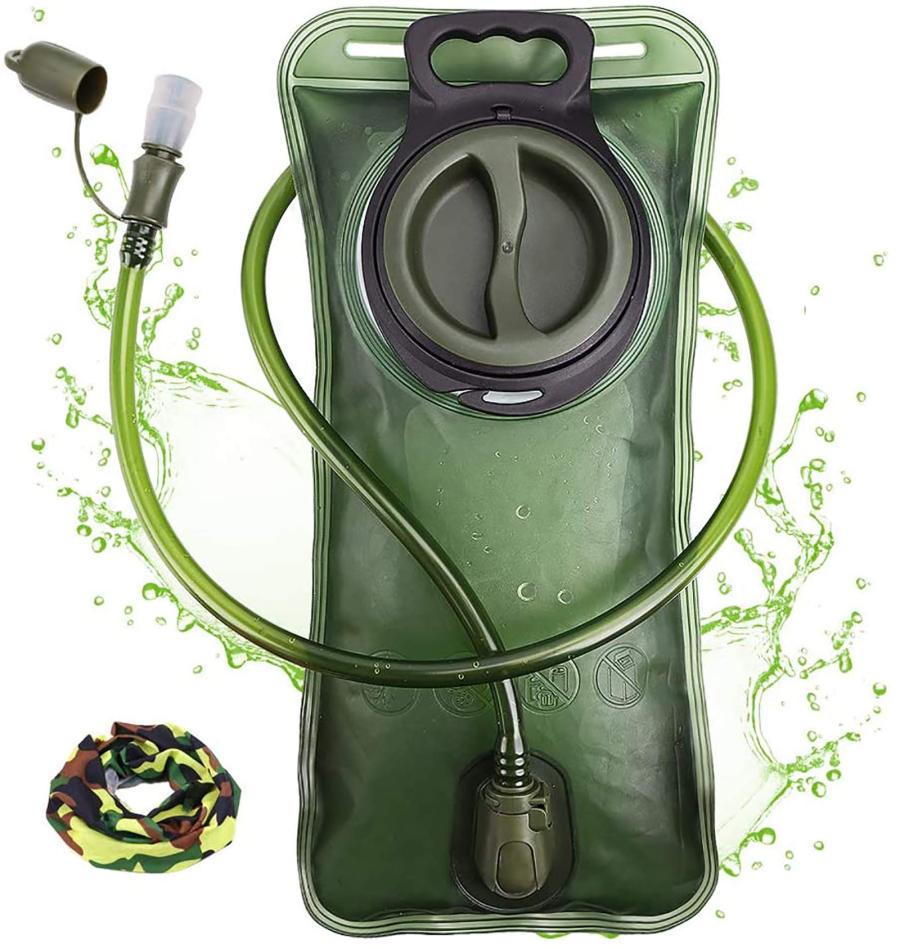
Outdoor hydration bladders/reservoirs are portable drinking systems designed specifically for outdoor activities, primarily consisting of a flexible water pouch, a connecting hose, and a bite valve. They are typically placed inside a backpack, allowing users to hydrate on the go during activities like hiking, cycling, and running without stopping. These products come in various capacities, ranging from 1.5L to 3L, aiming to provide a convenient, efficient, and safe outdoor hydration solution. The following table illustrates the key characteristics of consumer behavior in this category.
| Dimension | Segment | Description |
|---|---|---|
| Need Driver Type | Planned Purchase / Habitual Purchase | Users typically plan ahead for hydration needs during outdoor activities or purchase for regular exercise routines. However, they also hydrate impulsively due to immediate thirst during activities, forming a habitual hydration demand. |
| Purchase Frequency | Low Frequency | Purchases usually occur when outdoor activity needs arise or to replace old, worn-out, or underperforming bladders. The purchase cycle is long, as it is not a fast-moving consumer good. |
| Decision Complexity | Medium | Consumers compare multiple dimensions such as leak-proof performance, material safety, cleaning convenience, odor presence, and durability, but do not engage in deep technical research. |
| Price Sensitivity | Medium | Price is a significant consideration. The market offers both high-value and premium-branded products. Users are price-sensitive while ensuring basic functionality is met, but are also willing to pay a reasonable premium for reliability. |
| Emotional Dependency | Low | Driven primarily by functionality and practicality, with low emotional value. However, high-quality, worry-free reliability can foster a sense of security and brand trust. |
II. User Personas & Usage Scenarios
2.1 Core Outdoor Enthusiast
🎯 Actively participates in various outdoor sports like hiking, running, cycling, and camping. Has high and stringent demands for equipment performance, reliability, and hydration efficiency.
| Typical Usage Scenarios | Core Pain Points | Primary Purchase Drivers |
|---|---|---|
|
|
|
2.2 Price-Sensitive Casual Outdoor User
🎯 Occasionally participates in outdoor activities like day trips, music festivals, or casual cycling. Seeks products that meet functional standards at an affordable price.
| Typical Usage Scenarios | Core Pain Points | Primary Purchase Drivers |
|---|---|---|
|
|
|
III. User Needs Hierarchy (KANO Model)
3.1 Basic Needs (Must-Haves)
- Leak-Proof: The bladder body, bite valve, and connections must have reliable sealing to ensure no leakage under any position or pressure. This is the user's most fundamental, non-negotiable requirement.
- Safe and Non-Toxic: The bladder material must be food-grade, free from harmful substances like BPA, BPS, BPF, ensuring drinking water health and safety.
- Backpack Compatibility: The bladder's size and shape should fit well into mainstream outdoor backpacks with dedicated hydration sleeves or compartments for easy installation and carrying.
3.2 Performance Needs (Linear Satisfiers)
- Odor-Free: The bladder should not produce any plastic or chemical odor during use (including initial and long-term use), ensuring pure drinking water taste.
- Easy to Clean and Dry: Features like a wide opening and detachable hose enable users to thoroughly clean the bladder interior and hose, preventing mold and odor.
- Smooth Water Flow: A well-designed bite valve provides fast, stable water flow, allowing effortless drinking without disrupting the activity rhythm.
- Durable and Pressure-Resistant: The bladder material should be tough, abrasion-resistant, and puncture-resistant to withstand outdoor compression and friction, minimizing damage and extending product life.
- Quick Filling: A large opening design allows users to quickly add water and ice, saving time during replenishment.
3.3 Excitement Needs (Delighters)
- Insulated Hose: The hose or bladder features insulation to keep water cool in hot weather and prevent freezing in cold weather, enhancing drinking comfort.
- Internal Slosh Baffle: Internal or external structures (e.g., baffles, anchor points) effectively reduce discomfort from water sloshing when full, maintaining movement balance.
- Magnetic Attachment: The hose comes with a magnetic clip for easy attachment to backpack shoulder straps, preventing flapping and enabling quick access, freeing the hands.
- Quick-Disconnect with Auto-Shutoff: The hose-to-bladder connection uses a quick-disconnect design that automatically seals the bladder when the hose is removed, greatly facilitating filling and cleaning.
3.4 Unmet Needs & Opportunities
-
Complete Hose Drying Solution: Users commonly report that the long, narrow hose interior is difficult to dry completely, retaining moisture and promoting mold growth. There is a lack of a universal, simple, and effective cleaning and drying solution.
User Reviews (VOC) Cleaning the hose can be a challenge. // After 2 days still not dry inside // I cannot seem to get the inside of the tubing to dry completely. I've been hanging it in a dry area for several days, and it still has condensation inside.
-
Bite Valve Durability and Replaceability: As a component in direct contact with the mouth and frequently bitten, the bite valve is prone to damage and leakage from long-term use or aging. The market rarely offers standalone replacements or more durable designs.
User Reviews (VOC) The only problem I've had is with the rubber nipple. Unless it is removed after each use and cleaned mold will attack the rubber and will ruin it. // mouthpiece breaking early on. // The silicone you have to suck in is operated with your teeth. It did not last long at all.
-
Accuracy of Usable Capacity: Some users report the actual usable water volume is lower than the advertised capacity, especially when placed in a backpack and compressed, affecting hydration planning for outdoor activities.
User Reviews (VOC) the advertised 3-liter capacity is really misleading... you effectively lose about 500 ml on either end. That means you're really only getting 2 liters of usable water // doesn't hold a full 2L capacity.
-
Universal Hook Compatibility: Hanging hook designs inside backpacks vary greatly by brand. The bladder's own hanging loops don't always fit perfectly, causing the bladder to sink or shift inside the pack, impacting carrying comfort.
User Reviews (VOC) It won't hang on Osprey's little internal hook, so you'll lose that tidy anchor unless you rig something. // The strap attachments are pretty small and won't work for wider backpack straps.
IV. User Decision Drivers
4.1 Key Decision Factors
- Leak-Proof Performance: The core function of an outdoor hydration bladder, directly determining the safety of backpack contents and the reliability of outdoor hydration. If it leaks, the product's value drops to zero, causing significant inconvenience.
- Odor-Free: Severely impacts willingness to drink and health perception. A key factor affecting user experience; any odor raises doubts about material quality and safety.
- Easy to Clean and Dry: Directly relates to the bladder's hygiene, lifespan, and long-term maintenance cost. A crucial consideration for long-term healthy use, effectively preventing mold growth.
- Durability: As an outdoor product, users expect the bladder to withstand harsh environments and wear-and-tear from long-term use, avoiding frequent replacements and ensuring smooth journeys.
4.2 Secondary Decision Factors
- Water Flow Rate: Affects hydration efficiency and activity rhythm, especially for high-intensity athletes. A fast, smooth water flow experience is critical.
- Capacity Fit: Choosing the right capacity for different activity durations and intensities-ensuring sufficient supply while avoiding unnecessary weight burden.
- Brand Trust: Well-known outdoor brands typically offer higher quality assurance, performance expectations, and after-sales service promises, reducing purchase risk.
- Price: A key consideration when core needs are met, especially for replacement parts or non-professional users, where value for money is crucial.
V. Selling Points & Competitive Landscape
5.1 Selling Point Analysis
5.1.1 Standard Features (Points of Parity)
- Leak-Proof Design: Emphasizes good sealing and no leakage. A basic function promoted by most products to meet the most fundamental user requirement for reliability.
- BPA-Free / Food-Grade Material: Widely promoted as safe, non-toxic, and harmless, ensuring drinking water health. This is a basic industry entry standard and a common consumer concern.
- Wide Opening for Easy Cleaning/Filling: Makes it easy for users to add water, ice, and perform daily cleaning, addressing cleaning blind spots in traditional bladders and enhancing convenience.
- Suitable for Various Outdoor Activities: Highlights product versatility, covering scenarios like hiking, cycling, running, and camping to expand the target audience.
- High-Flow Bite Valve: Emphasizes drinking convenience, providing a fast, smooth water flow experience, especially suitable for uninterrupted hydration during activity.
5.1.2 Key Differentiators
- Quick-Disconnect Hose with Auto-Shutoff Valve: Allows easy separation of hose from bladder for cleaning and filling, with automatic leak prevention when disconnected, enhancing usability and maintenance efficiency.
- Insulated Hose: Maintains water temperature via an insulating sleeve, adapting to extreme climates for a more comfortable drinking experience-a trend in premium products.
- Durable, Pressure-Resistant Material: Uses TPU or other high-strength materials, emphasizing the product's abrasion and puncture resistance in outdoor environments, boosting reliability perception.
- Odor-Free / Pure Taste: Promotes materials that are odor-free, ensuring water quality is unaffected, improving the user's drinking experience-a core differentiator from cheap products.
- Broad Compatibility: Emphasizes that the bladder's size and design fit most hydration backpacks on the market, lowering the user's purchase barrier.
5.1.3 Unique Selling Propositions (USPs)
- Internal Slosh Baffle: Internal baffles inside the bladder reduce water sloshing and maintain a flat profile, enhancing movement comfort. Used by brands like Osprey and Water Buffalo.
- Magnetic Hose Attachment Clip: The hose comes with a magnetic clip for attachment to backpack shoulder straps, preventing hose flapping and enabling quick access. Common in premium brands.
- Included Cleaning Tools: Some products include extra cleaning brushes or kits, directly addressing user cleaning pain points and boosting purchase intent.
- Military-Grade Toughness/Material: Highlights product testing under extreme conditions, offering ultra-high strength and durability for harsh environments, e.g., HydraPak Force.
5.2 Competitive Landscape
5.2.1 Market Maturity
The outdoor hydration bladder market has entered a mature stage. Product functions are highly homogenized, with most brands promoting around core needs like 'leak-proof, easy to clean, odor-free, durable.' Consumers now have high expectations for these basic functions. Market competition is intense, with price wars common. Meanwhile, some brands seek differentiation through innovative features or premium materials.
5.2.2 Innovation Trends
Current innovation trends focus on solving user pain points, such as designs that are easier to clean and dry, and improving bite valve durability. Future developments may include modular, replaceable components to extend product lifecycle, or integration of smart technology like intelligent water temperature control and hydration reminders to enhance user experience. Additionally, stronger material toughness and more stable internal structures are gaining attention.
VI. Marketing Claims vs. Reality Check
The table below analyzes the gap between common marketing claims and actual user experiences in this category:
| Dimension | Marketing Claim | User Reality | Verdict |
|---|---|---|---|
| Leak-Proof Performance | Product claims include '100% leak-proof,' 'dual-seal technology,' 'pressure-tested,' promising no leakage under any circumstances. | Numerous user reviews point to issues like pinhole leaks, drip leaks from the bite valve, seepage at hose connections, or improper sealing, sometimes occurring on first use. | Sellers commonly overpromise on leak-proof performance. Actual quality control and design fail to meet standards in complex usage scenarios, turning the core selling point into a user experience 'disaster,' severely damaging product reputation and user trust. |
| Drinking Water Taste | Products are advertised as 'BPA-Free,' 'Taste-free,' 'odor-free,' promising pure drinking water without any plastic or chemical aftertaste. | High-frequency user feedback reports noticeable plastic, rubber, or chemical odors in new bladders, which are difficult to eliminate even after multiple washes or soaking, affecting drinking quality. | Despite claims of safe, non-toxic materials, some low-cost or poorly processed materials still release odors. This directly conflicts with the core 'odor-free' selling point, representing a shortfall in quality control and material selection. |
| Cleaning and Drying Convenience | Claims include 'large opening for easy cleaning,' 'detachable hose for easy washing,' implying the entire drinking system is simple to clean and maintain. | Users commonly report that while the bladder body is easy to clean, the long, narrow hose interior is extremely difficult to dry completely, leading to mold growth, odor retention, and even health concerns. | Sellers oversimplify the cleaning process in their marketing, overlooking the inherent difficulty of cleaning the hose as a component prone to harboring grime. They fail to provide a truly comprehensive, easy-to-clean-and-dry solution. |
Key Takeaway: The outdoor hydration bladder market shows a widespread tendency towards spec inflation and scenario-based experience exaggeration, especially regarding leak-proof performance and odor-free claims. There is a significant gap between user feedback and marketing promises.
VII. Supply-Demand Misalignment Analysis
The table below highlights mismatches between seller focus and buyer priorities:
| Dimension | Seller Behavior | User Focus | Verdict |
|---|---|---|---|
| Hose Interior Drying Problem | Sellers generally emphasize the large opening of the bladder body for easy cleaning but rarely offer innovative solutions or auxiliary tools for thoroughly drying the hose interior. | Users strongly complain that the hose interior is hard to dry completely, with retained moisture easily breeding mold and odor-a persistent hygiene pain point. | This is a classic case of 'tunnel vision' marketing. Sellers solve only part of the cleaning problem while neglecting users' higher demand for hygienic, dead-end-free maintenance of the entire drinking system. |
| Bite Valve Durability and Replacement Solution | Sellers commonly promote high-flow bite valves and leak-proof features but rarely mention the actual durability of the bite valve as a wear-and-tear part. They also seldom offer standalone replacement bite valves or hose accessories. | Users report that bite valves are prone to damage, leakage, or mold from long-term biting, aging, or accidents, forcing replacement of the entire hydration system and increasing costs. | The bite valve is a critical small component directly affecting the drinking experience and product lifespan. Sellers' failure to provide robust durability promises or modular replacement solutions increases users' hidden costs and waste. |
| Accuracy of Usable Capacity | Sellers often highlight the 'maximum physical capacity' (e.g., 3L) in listings. However, in real-world usage (e.g., placed in a compact backpack), the actual usable water volume may be lower. | Users complain that the actual fillable water volume doesn't reach the advertised capacity, especially during long outdoor trips, leading to discrepancies in hydration planning. | Sellers are overly optimistic in capacity claims, failing to fully consider the product's spatial constraints and deformation within an actual backpack environment, creating a gap between user expectations and real experience. |
Key Takeaway: The outdoor hydration bladder market shows a collective supply shortage on core reliability pain points, while some sellers overemphasize minor functional details in their marketing, failing to effectively address users' deeper needs.
VIII. Strategic Opportunities & Recommendations
8.1 Modular, Easy-to-Dry-and-Clean Hydration System
8.1.1 Target Audience & Pain Points
⚡️ Pain Points Addressed: Complete Hose Drying Solution // Bite Valve Durability and Replaceability // Easy to Clean and Dry.
8.1.2 Action Plan
Design a fully detachable drinking hose and bite valve, ensuring all components can be easily spread out to dry. Consider including a small, foldable hose drying rack and specialized cleaning brushes. The bladder body should feature a reversible design with an optimized internal support structure to accelerate drying.
| Tech Complexity | Medium |
| Cost Impact | Medium Impact |
| Trade-off Warning | Modular design may require more complex molds and connectors, slightly increasing initial costs but improving user satisfaction and long-term value. Total product weight may increase slightly. |
| Price Band | Only viable above $29.99 |
8.1.3 Marketing Strategy
Emphasize 'All-round, dead-end-free cleaning, goodbye to mold and odor.' Use visual videos to demonstrate hose disassembly and quick-drying convenience. Highlight 'Health and worry-free, ensuring every sip is fresh and pure, extending your outdoor gear's lifespan.'
8.2 Truly Odor-Free, Long-Lasting Hydration Bladder
8.2.1 Target Audience & Pain Points
⚡️ Pain Points Addressed: Drinking water has an odor.
8.2.2 Action Plan
Adopt specially treated medical-grade TPU or explore new polymer materials to ensure no odor release under various temperatures. Conduct multiple rounds of flushing and standing tests before leaving the factory. Obtain third-party certifications to guarantee odorlessness.
| Tech Complexity | Medium |
| Cost Impact | Medium Impact |
| Trade-off Warning | Using higher-grade, odorless materials will increase BOM cost, potentially preventing retention of current low price points, but will significantly enhance user experience and brand premium. |
| Price Band | Only viable above $24.99 |
8.2.3 Marketing Strategy
Highlight 'Truly pure, taste the natural water.' Use third-party lab odor-free test reports and user blind taste comparisons to reinforce the odorless advantage. Offer the convenience promise of 'No pre-treatment needed on first use, enjoy purity immediately.'
8.3 Smart Capacity Marking & Anti-Sloshing Structure
8.3.1 Target Audience & Pain Points
⚡️ Pain Points Addressed: Capacity Authenticity // Universal Hook Compatibility.
8.3.2 Action Plan
Clearly mark the 'Recommended Maximum Fill Capacity (when compatible with most backpacks)' on the bladder, along with precise volume indicators. Strengthen the internal baffle design to keep the bladder flat even when partially full. Also, develop multi-functional hanging points or universal hooks to improve compatibility with various backpacks, reducing bladder sinking or shifting inside the pack.
| Tech Complexity | Low |
| Cost Impact | Low Impact |
| Trade-off Warning | Internal baffles might slightly increase cleaning difficulty (solvable via Opportunity 1) or slightly reduce maximum fill speed, but the improvement to user experience is significant. |
| Price Band | Only viable above $18.99 |
8.3.3 Marketing Strategy
Emphasize 'True capacity, no more misleading specs' and 'Stable as a shadow, slosh-free movement.' Showcase actual loading effect images of the bladder in various backpacks and animated demonstrations of the bladder staying stable during movement, highlighting a burden-free exercise experience.
8.4 Enhanced Bite Valve Anti-Contamination & Easy Replacement Solution
8.4.1 Target Audience & Pain Points
⚡️ Pain Points Addressed: Bite Valve Durability and Replaceability // Drinking Water Hygiene.
8.4.2 Action Plan
Redesign the bite valve material and structure to improve tear and aging resistance, and include a more user-friendly, secure dust cover. Ensure the bite valve is available as a standalone accessory for purchase, with clear replacement guidance and purchase links on the product page.
| Tech Complexity | Low |
| Cost Impact | Low Impact |
| Trade-off Warning | Designing a more robust bite valve or adding a protective cover might slightly increase volume or cost but can significantly boost user satisfaction and product lifespan. |
| Price Band | Only viable above $14.99 |
8.4.3 Marketing Strategy
Highlight 'Upgraded bite valve durability for healthier, worry-free hydration.' Emphasize 'Dust protection, easy cleaning.' Promote the convenience and low-cost advantage of bite valve replacement, encouraging users to replace it regularly to ensure hygiene.