Amazon US Market Analysis: Ultra-Thin Wallet Tracker Cards Category
📊 Executive Summary
📈 Market Trends
The category is shifting from single-platform to dual-ecosystem compatibility, with wireless charging becoming standard, but market integrity is questionable. Growing consumer demand for 'seamless' anti-loss drives products toward extreme thinness. However, false or vague claims about core performance (e.g., loudness, battery life) are eroding user trust. Products offering genuine cross-platform seamless experience, stable, reliable performance, and delivering on promises will have stronger competitive advantages.
⚡ Major Pain Points
Core pain points center on the 'significant gap between promises and actual experience.' Specifically: ring volume is insufficient for effective finding in real scenarios; battery life doesn't match claims, and non-replaceability leads to product disposal; poor Android compatibility, unstable connections, and incomplete features; and marketing visuals vs. physical quality discrepancies causing user dissatisfaction. These issues severely impact user confidence in product reliability.
💡 Selection Opportunities
Opportunity lies in 'returning to the authenticity and completeness of user experience.' Product selection should focus on: 1. Enhancing alarm penetration in complex environments, supplemented by visual cues. Solve the pain point of difficult close-range finding. 2. Honestly disclosing battery life and providing sustainable maintenance solutions. Build brand trust, address product disposal. 3. Deeply optimizing Android platform integration, filling feature gaps. Expand user base, provide consistent experience. 4. Abandoning over-glossy renders, showcasing real materials and thickness. Avoid user psychological disappointment. 5. Exploring micro-innovations like NFC quick info exchange and UWB precision finding. Enhance recovery rates and premium user experience, but be mindful of cost-price balance.
I. Analysis Overview
1.1 Introduction & Report Scope
This report analyzes the 'Item Finders' category (Ultra-Thin Wallet Tracker Cards) within the US Amazon marketplace, focusing on target user personas, core needs, decision factors, market communication, and potential opportunities.
1.2 Category Snapshot
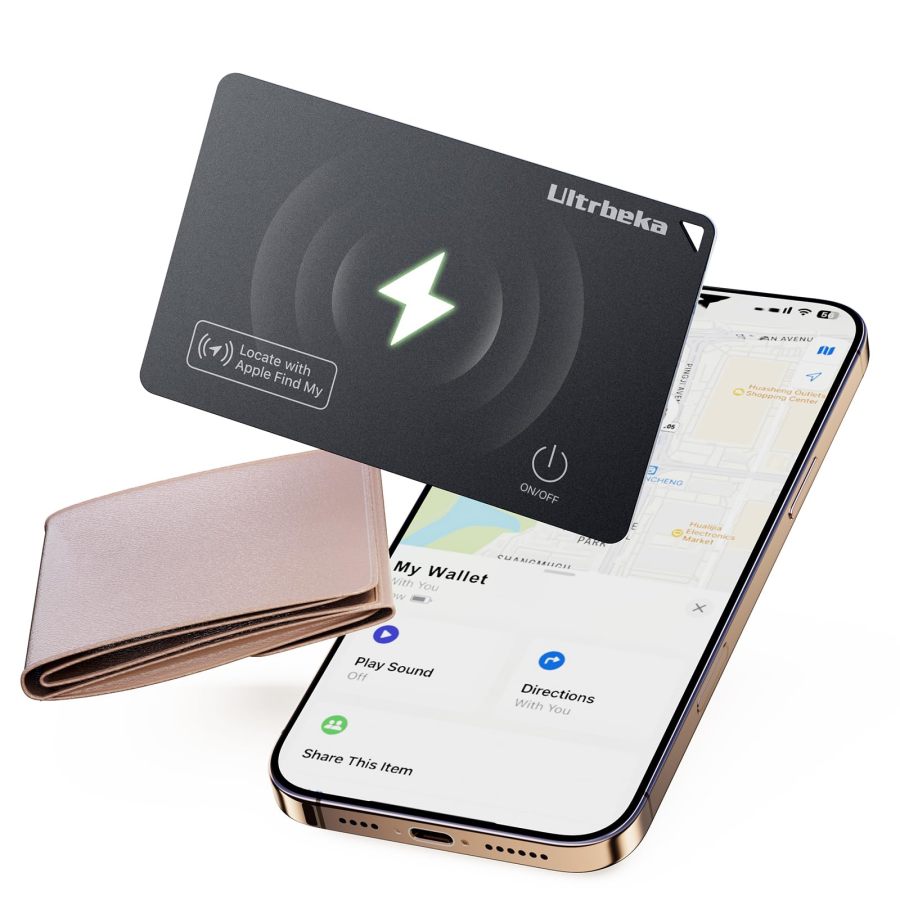
Ultra-thin wallet tracker cards are credit-card-sized smart anti-loss devices. They primarily connect to smartphones via Bluetooth and utilize the Apple 'Find My' network or Google 'Find Hub' network for location tracking. Their core function is to help users quickly locate easily misplaced items like wallets, passports, keys, and luggage. They typically feature ultra-thin designs, wireless charging, IP water/dust resistance, and separation alerts. These products aim to address the pain point of traditional trackers being bulky and inconvenient, offering a more seamless anti-loss experience. The following table illustrates the key characteristics of consumer behavior in this category.
| Dimension | Segment | Description |
|---|---|---|
| Need Driver Type | Planned Purchase/Emergency-driven Purchase | User purchases are primarily driven by two scenarios: proactive prevention of losing important items (Planned Purchase), and seeking a solution after experiencing the anxiety of losing something (Emergency-driven Purchase). The 'peace of mind' emphasized by the product aligns with these psychological needs. |
| Purchase Frequency | Low Frequency | These products are typically a one-time purchase, expected to last for years, resulting in low repurchase frequency unless the device breaks or is upgraded. Therefore, product durability is crucial. |
| Decision Complexity | Medium | Consumers compare key parameters like product thickness, compatibility, battery life, and water resistance, and consider price and brand reputation, but do not engage in deep technical research. |
| Price Sensitivity | Medium | Users are price-sensitive but place greater value on product reliability, convenience, and compatibility with their phone ecosystem, willing to pay a reasonable premium for peace of mind. |
| Emotional Dependency | Medium | The product primarily solves a functional problem (finding items), but the psychological value of 'anti-loss'-providing peace of mind, avoiding hassle, and preventing property loss-is also significant, especially in gift-giving scenarios. |
II. User Personas & Usage Scenarios
2.1 Forgetful Professional/Student
🎯 These users have busy work/study schedules and fast-paced lives, often misplacing or forgetting important items like wallets, keys, ID badges, and laptop bags at home, the office, or in public spaces.
| Typical Usage Scenarios | Core Pain Points | Primary Purchase Drivers |
|---|---|---|
|
|
|
2.2 Quality-Conscious Traveler
🎯 Values quality of life, frequently travels for business or leisure, has high demands for item security and portability, and wishes to easily manage and track passports, luggage, and valuable electronics while traveling.
| Typical Usage Scenarios | Core Pain Points | Primary Purchase Drivers |
|---|---|---|
|
|
|
III. User Needs Hierarchy (KANO Model)
3.1 Basic Needs (Must-Haves)
- Ultra-Thin Design: Must be thin enough to fit comfortably into a wallet card slot without adding noticeable bulk; otherwise, it compromises portability and immediately discourages users.
- Accurate Location Tracking: The ability to display the item's current location stably and accurately is the core function of a tracker. Inaccuracy renders it useless.
- Easy Pairing & Use: The device must pair quickly with a phone, with an intuitive operation flow requiring no complex setup or additional learning curve.
- Compatibility with Major Ecosystems: The product must integrate with the Apple Find My or Google Find Hub network, leveraging existing ecosystems rather than relying on niche apps.
3.2 Performance Needs (Linear Satisfiers)
- Loud Find Alert: Emits a sufficiently loud, penetrating sound for close-range location, enabling quick finding even when the item is obstructed.
- Long Battery Life: The battery should support months or even years of use, minimizing the hassle and anxiety of frequent charging or replacement.
- Water & Dust Resistance: Possesses a certain IP rating to withstand daily accidental splashes or environmental challenges during outdoor use, enhancing durability.
- Separation Alert: Automatically sends a notification when the item moves beyond a certain distance from the phone, helping users notice forgetfulness immediately and prevent loss.
3.3 Excitement Needs (Delighters)
- Wireless Charging: Supports Qi or other wireless charging standards, making charging as convenient as for a phone, further simplifying maintenance and enhancing tech appeal and eco-friendliness.
- Two-Way Finding: Not only can the phone find the tracker, but the tracker can also find the phone (even on silent), providing more comprehensive finding convenience.
- Multi-User Sharing: Supports sharing item locations with family members or trusted friends, facilitating co-monitoring, especially useful for shared household items or travel scenarios.
- High Physical Durability: Beyond basic water/dust resistance, it can withstand bending, scratches, and the compression/wear wallets endure during daily use.
3.4 Unmet Needs & Opportunities
-
Alarm Volume vs. Actual Perception Mismatch: Sellers claim high decibel levels, but user feedback indicates actual volume is low, making it hard to hear when the item is obstructed or in noisy environments, hindering quick location. Some feedback mentions volumes around 40dB, far below advertised levels.
User Reviews (VOC) Unfortunately, beep is very faint. It can't be heard when this is in my handbag. // Very easy to set up... a little quieter ping than I would like, but works well.
-
False Battery Life Claims & Non-Replaceable Batteries: Some products claim ultra-long battery life (5-10 years), but users report actual endurance is far below expectations or fails quickly. Many have non-replaceable built-in batteries, causing product disposal, contradicting eco-friendly messaging.
User Reviews (VOC) Died Right After The Return Window Closed // The product arrived with a damaged battery
-
Connection Stability & Pairing Difficulties: Some users experience connection issues during initial setup or daily use, with repeated failed attempts, or devices disconnecting after some time, impacting core functionality.
User Reviews (VOC) Doesn't Connect to my Device... "Yet" // The first card I received was very buggy, very difficult to turn on and nearly impossible to turn off.
-
Lack of UWB Precision Finding: Most products lack UWB (Ultra-Wideband) precision finding similar to Apple AirTag, forcing reliance on sound for approximate location in very close-range searches (e.g., under couch cushions), lacking intuitive directional guidance and reducing efficiency.
User Reviews (VOC) It does not support Precision Finding (UWB) // does not have tracking for find nearby(tracking by feet feature) feature
-
Missing or Inconvenient Multi-User Sharing: Some iOS-only trackers cannot easily implement multi-user sharing, limiting the convenience of family members jointly tracking shared items.
User Reviews (VOC) 接続はスムーズですが、複数スマホでの共有ができないのが惜しい
IV. User Decision Drivers
4.1 Key Decision Factors
- Compatibility with Phone Ecosystem: Users care most about whether the product integrates seamlessly into their existing phone ecosystem (Apple Find My or Google Find Hub), ensuring stable functionality and no extra learning curve. This is the prerequisite and foundation of trust for purchase.
- Thinness & Inconspicuous Carry: The tracker must be thin enough to fit comfortably in a wallet without bulging, meeting both the physical need for daily carry and aesthetic demands. Otherwise, even great features will be rejected.
- Finding Function Reliability & Loudness: The ability to accurately display location in critical moments and emit a sufficiently loud, perceptible alert at close range directly determines the product's utility and user confidence in recovering items.
- Battery Life & Maintenance Convenience: Users have high expectations for battery life, hoping the product works long-term without frequent intervention (charging/replacing batteries). This directly relates to the sustained effectiveness of the anti-loss function and is key to eliminating 'power-off anxiety'.
4.2 Secondary Decision Factors
- Wireless Charging Support: As an added convenience feature, it allows easy recharging using existing wireless chargers, enhancing the product's tech appeal and eco-friendly attributes, but is not a decisive factor.
- Water & Dust Resistance Rating: A higher IP rating increases product durability and peace of mind against daily accidents (splashes, rain) or outdoor use, serving as a bonus rather than a necessity.
- Separation Alert Function: Provides a warning mechanism, notifying users when they forget an item, helping prevent loss, adding a layer of psychological security, and improving user experience.
- Price & Value for Money: Once core needs are met, users compare prices across products to find the optimal purchase, making price an important but not primary consideration.
- Brand Trust & After-Sales Support: For electronics, users consider brand reputation and warranty services to address potential product quality issues and reduce purchase risk.
V. Selling Points & Competitive Landscape
5.1 Selling Point Analysis
5.1.1 Standard Features (Points of Parity)
- Ultra-Thin Card Design: All products emphasize their ultra-thin profile (0.06-0.1 inches), allowing easy placement in wallets, passport covers, etc., solving the bulkiness of traditional trackers. This is the category's core selling point.
- Apple Find My Compatibility: The vast majority of products highlight MFi certification and seamless integration with the Apple Find My network, requiring no third-party app, attracting Apple ecosystem users.
- Wireless Charging Support: Most products emphasize rechargeability and wireless charging, eliminating battery replacement hassle. Some also promote ultra-long battery life, enhancing convenience and eco-friendliness.
- Loud Buzzer for Finding: Commonly claim built-in 90-100dB or even higher speakers for close-range audible location, but actual effectiveness varies.
- IP67/IP68 Water & Dust Resistance: High IP ratings to withstand daily splashes, rain, and other accidents, improving product durability and broadening usage scenarios.
5.1.2 Key Differentiators
- Dual-Platform Compatibility (iOS & Android): Some products support both Apple Find My and Google Find Hub, targeting mixed-device households or cross-platform users, offering broader compatibility as a core differentiating advantage.
- Battery Life Solutions: Different brands choose from single-use batteries (claiming ultra-long life) to wireless charging (monthly endurance), catering to varying user preferences for maintenance convenience and eco-friendliness.
- SOS Emergency Feature: A few products like Tile Slim integrate an SOS function, allowing discreet distress alerts to contacts in emergencies, adding a safety value-add.
- Enhanced Gift Attribute: Some products' listings specifically emphasize their suitability as gifts for Valentine's Day, Christmas, etc., using emotional marketing to attract buyers and increase purchase rationale.
- Material & Durability Details: Some products mention carbon fiber composite materials, cold-press technology, etc., to emphasize quality and durability beyond ordinary plastic, even if the material is primarily plastic.
5.1.3 Unique Selling Propositions (USPs)
- Phone Reverse Charging Support: Very few products mention supporting phone reverse charging, further enhancing charging convenience and cutting-edge tech appeal as a technical highlight.
- Anti-RFID Shielding: Individual products emphasize working even inside RFID-blocking wallets, solving a specific pain point for users of such wallets and broadening applicable scenarios.
5.2 Competitive Landscape
5.2.1 Market Maturity
The ultra-thin wallet tracker card market has entered a mature stage with highly homogeneous product features. Most sellers compete around core selling points like 'ultra-thin, Find My/Find Hub compatible, wireless charging, high-decibel alarm, waterproof.' Leading brands have established some reputation. New entrants need to seek breakthroughs in cost control or micro-innovations. Market competition primarily focuses on price, battery life optimization, and specific ecosystem compatibility.
5.2.2 Innovation Trends
Current innovation trends are mainly in: 1. Cross-Platform Compatibility: Increasing products aim to support both Apple and Android ecosystems to expand user base. 2. Charging Convenience: Wireless charging is mainstream; some are exploring phone reverse charging. 3. Battery Life Challenges: Whether through non-replaceable ultra-long-life batteries or rechargeable monthly endurance, efforts are made to extend usage duration. 4. Added Safety Features: Such as SOS alerts, anti-theft camouflage, increasing product differentiation value. 5. Material & Feel: While ensuring ultra-thinness, attempts are made to enhance texture and durability through material innovation (e.g., carbon fiber composite).
VI. Marketing Claims vs. Reality Check
The table below analyzes the gap between common marketing claims and actual user experiences in this category:
| Dimension | Marketing Claim | User Reality | Verdict |
|---|---|---|---|
| Battery Life & Longevity | 5-10 year ultra-long battery life, no replacement/charging needed; single charge lasts 5-18 months. | Some non-replaceable battery products are reported by users to deplete and become useless within 3 months; rechargeable products often have actual endurance below claims, requiring more frequent charging. Claims of 5-10 years may result in only months or a year, with issues like 'damaged battery' upon arrival. | This is typical misleading of consumers with ideal lab data or vague statements, failing to deliver on long-term reliability promises, severely damaging user trust, and causing resource waste. |
| Alarm Volume & Finding Effectiveness | Extremely loud alarms up to 100dB or even 150dB+, audible even under heavy item coverage. | Users commonly report alarm volume as 'very faint' or 'not loud enough,' difficult to hear when items are under couch cushions, clothes, or inside bags. Actual finding effectiveness is far below expectations, with some products having no sound at all. | Limited by the ultra-thin form factor's constraints on speaker cavity design, high decibel claims are disconnected from actual sound pressure and penetration. This is over-marketing that defies physics, directly impacting the core finding function. |
| IP Water Resistance Rating & Claims | IP68 water/dust resistance, submersible in 1 meter of water for 30-60 minutes. | Some product listings claim IP68 in the title but show IP67 in product images/details, or promotional visuals don't show full submersion. This information inconsistency and visual misdirection easily create false expectations and psychological disappointment regarding actual protection capabilities. | Sellers contradict themselves on key parameters, using high-level numbers for marketing but failing to maintain rigorous consistency in information delivery, increasing user doubts about product reliability. |
Key Takeaway: The market exhibits widespread parameter inflation and scenario-based experience exaggeration, especially regarding battery life, alarm volume, and IP rating claims, leading to significant gaps between user expectations and actual experience.
VII. Supply-Demand Misalignment Analysis
The table below highlights mismatches between seller focus and buyer priorities:
| Dimension | Seller Behavior | User Focus | Verdict |
|---|---|---|---|
| Real Battery Life & Claim Consistency | Listing battery life data is chaotic, with contradictions between Bullet Points and Specifications. Sellers generally avoid highlighting real-world performance shortcomings in high-brightness modes, lacking a unified, credible endurance standard. | Users strongly desire longer-lasting batteries. Rapid battery drain in high-brightness mode is a frequent complaint. Data contradictions cause confusion and concern. | Sellers generally fail to provide clear, consistent endurance expectations, leading to a lack of user trust on a key pain point. This is a core reason for negative reviews and returns, reflecting neglect of long-term user experience. |
| Alarm Volume Effectiveness in Real Scenarios | Commonly emphasize high decibel numbers like '100dB' but rarely mention actual audibility and penetration when items are covered or in noisy environments-real finding scenarios. | Users complain the sound is too soft, unclear, lacks penetration, and fails to effectively guide location, rendering the 'ring to find' function useless at critical moments. | Sellers equate ideal-state parameters directly with user experience, ignoring acoustic physical limits and environmental attenuation's impact on volume. This is typical parameter self-indulgence rather than solving user pain points. |
| Cross-Platform Connection Stability & Feature Parity | Commonly promote 'dual-platform compatibility' or 'MFi-certified seamless integration,' but avoid or obfuscate issues like Android connection difficulties, instability, and iOS/Android feature differences (e.g., missing separation alerts). | Android users complain about connection difficulties and unstable pairing; iOS users also face pairing failures on specific models. Dual-platform users expect feature parity but experience significant gaps. | While expanding markets, sellers fail to sufficiently invest in solving technical adaptation and user experience optimization across different ecosystems, causing 'universal' promises to fall short in practice, losing potential users. |
Key Takeaway: Sellers collectively remain silent or downplay core pain points like battery life and alarm volume, while oversupplying feature stacking and low-value details, leading to supply-demand misalignment.
VIII. Strategic Opportunities & Recommendations
8.1 Genuine Long-Life, Maintainable Tracker Card
8.1.1 Target Audience & Pain Points
⚡️ Pain Points Addressed: False battery life claims and non-replaceable batteries, user doubts about long-term product reliability.
8.1.2 Action Plan
Adopt lithium polymer batteries with higher energy density and lower self-discharge rates, optimize power management ICs, aiming for real-world endurance of 12+ months per charge. Clearly state real endurance data (not theoretical standby time) in listings. Provide battery health monitoring and low-battery alerts. Consider designing a user-replaceable battery version or offering free battery replacement services.
| Tech Complexity | Medium |
| Cost Impact | Medium Impact |
| Trade-off Warning | Increasing battery capacity may slightly increase thickness or weight by 5-10 grams, requiring a balance with portability. A user-replaceable battery design might slightly compromise integrated waterproofing. |
| Price Band | Only viable above $24.99 |
8.1.3 Marketing Strategy
Emphasize 'Say goodbye to battery anxiety, one charge, one year of peace'; highlight 'Real Endurance, Officially Verified'; leverage eco-friendly replaceable/sustainable design to attract socially responsible consumers; provide user battery management tutorials to build trust.
8.2 Enhanced Alarm Penetration & Visual Aid
8.2.1 Target Audience & Pain Points
⚡️ Pain Points Addressed: Alarm volume is insufficient for effective finding in real scenarios, falling short of user expectations.
8.2.2 Action Plan
Optimize speaker cavity design and sound algorithms to improve penetration, ensuring clear audibility even under clothing or couch cushions. Integrate a small LED indicator that flashes during the alarm, providing visual assistance for faster location in noisy or low-visibility environments.
| Tech Complexity | Low |
| Cost Impact | Low Impact |
| Trade-off Warning | Optimizing the speaker cavity may slightly increase product thickness or structural complexity, but significantly improves core function experience. |
| Price Band | Only viable above $16.99 |
8.2.3 Marketing Strategy
Emphasize 'Penetrating finder sound, locate in one second without blind spots'; demonstrate through scenario videos the finding effectiveness of sound and light working together under couches, inside bags, etc.; highlight 'Home finding tool, end rummaging'.
8.3 Optimized Android Platform Connection & Feature Completeness
8.3.1 Target Audience & Pain Points
⚡️ Pain Points Addressed: Poor Android platform connection stability, pairing difficulties, and incomplete features (e.g., missing separation alerts).
8.3.2 Action Plan
Deeply optimize the Android app (or collaborate closely with Google Find Hub) and firmware to improve Bluetooth connection stability and pairing success rate. Strive to achieve key feature parity with iOS on Android, such as 'separation alert' and 'multi-user sharing.' Provide comprehensive Android user guides and troubleshooting support.
| Tech Complexity | Medium |
| Cost Impact | Low Impact |
| Trade-off Warning | Primarily software and firmware optimization, no significant physical side effects, but requires R&D resource investment. |
| Price Band | Only viable above $18.99 |
8.3.3 Marketing Strategy
Highlight 'Android-optimized, seamless Google Find Hub integration'; emphasize 'Android users can also enjoy proactive loss prevention alerts and stable connections like iOS'; release official Android app pairing and feature demo videos to build Android user trust.
8.4 Introduce UWB Precision Finding (Premium Line)
8.4.1 Target Audience & Pain Points
⚡️ Pain Points Addressed: Lack of UWB (Ultra-Wideband) precision finding, inferior close-range finding experience compared to AirTag.
8.4.2 Action Plan
Develop tracker cards integrating UWB chips, obtain Apple or Google UWB precision finding certification to achieve centimeter-level location and directional guidance. Must ensure integration and power consumption of the UWB module while maintaining the ultra-thin form factor.
| Tech Complexity | High |
| Cost Impact | High Impact |
| Trade-off Warning | UWB chips may impose higher demands on internal structure and battery life (power consumption), potentially slightly increasing thickness or affecting endurance. |
| Price Band | Only viable above $39.99 |
8.4.3 Marketing Strategy
Position as 'The AirTag Pro for your wallet,' emphasize 'Centimeter-level precision finding, clear directional guidance'; demonstrate advantages in complex indoor environments via AR demos or comparison videos; highlight 'Professional-grade anti-loss, powered by tech'.