Amazon US Market Analysis: Resistance Bands Category
📊 Executive Summary
📈 Market Trends
Portability and integration are mainstream; durability demands are escalating. The resistance band market is fiercely competitive, with products commonly emphasizing lightweight, versatility, multi-color temperature adjustments, etc. Consumer demand for the convenience of home fitness continues to grow, but expectations for product quality, especially connection point durability and actual resistance strength, are increasingly rising, shifting from pure price sensitivity to valuing actual results and safety.
⚡ Major Pain Points
Structural fragility and resistance overstatement are critical flaws. Pedal pullers commonly suffer from pull tubes easily breaking at connection points with handles/pedals, severely impacting user experience and safety. Simultaneously, resistance claims for many products deviate from actual user perception, failing to meet genuine training intensity needs. Non-universal pedal designs and lack of detailed training guidance are also frequent user complaints.
💡 Selection Opportunities
Deeply address core pain points, solidify user experience. Market opportunities lie in resolving the consumer trust crisis regarding product reliability and effectiveness. Prioritize developing pedal pullers with 'strengthened core connection durability' and optimize 'pedal ergonomic design' for better universality. Simultaneously, empower users by providing 'systematic online training guidance content', and develop 'anti-roll/anti-slip designs' for loop bands, establishing brand barriers in critical details.
I. Analysis Overview
1.1 Introduction & Report Scope
This report analyzes the 'Resistance Bands' category on the US Amazon marketplace, focusing on target user personas, core needs, decision drivers, market communication, and potential opportunities.
1.2 Category Snapshot
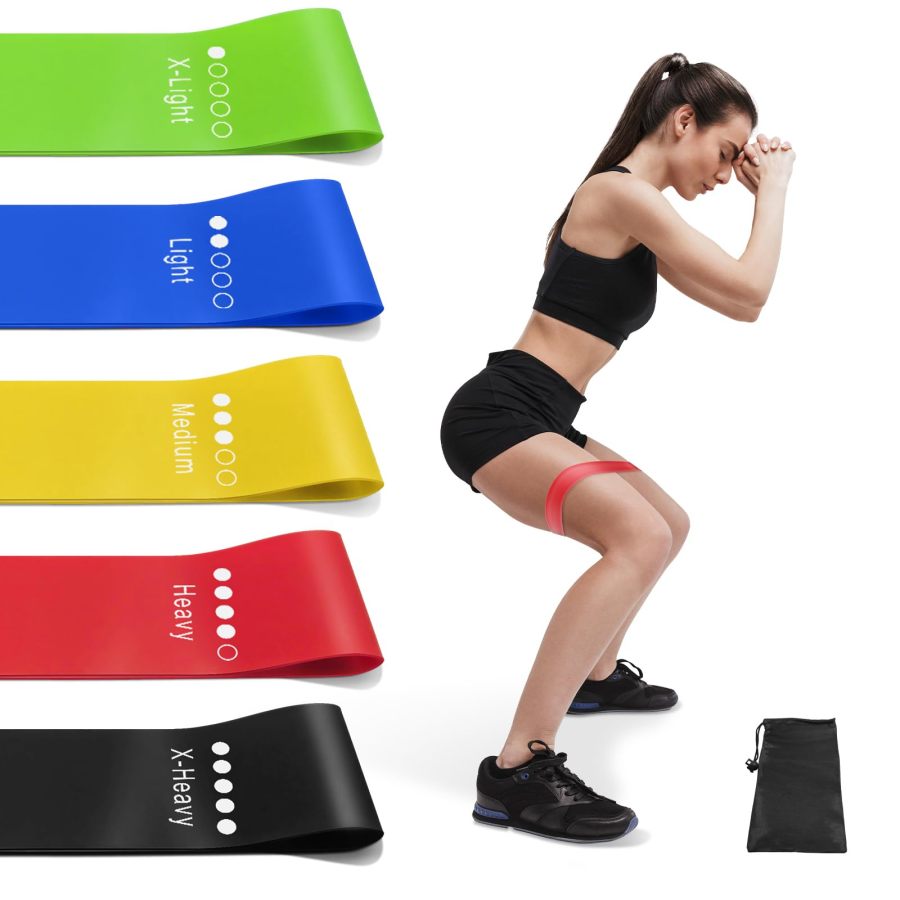
Resistance bands, also known as exercise bands or stretch bands, are versatile fitness tools that provide adjustable elastic resistance to assist users with strength training, body toning, flexibility stretching, or physical therapy. The category includes various forms. Among them, 'Pedal Pullers' have become a popular choice for full-body home workouts, especially for targeting the abdomen, waist, arms, and legs, due to their unique pedal design and multi-tube structure. The following table illustrates the key characteristics of consumer behavior in this category.
| Dimension | Segment | Description |
|---|---|---|
| Need Driver Type | Planned Purchase / Emergency-driven Purchase | Purchases are typically driven by planned fitness and body shaping goals, daily exercise routines, or physical therapy needs. Impulsive purchases are less common. |
| Purchase Frequency | Low / Medium | Usually a one-time purchase, but product fragility, insufficient resistance, or the need to upgrade intensity can lead to medium-frequency repurchases. |
| Decision Complexity | Medium | Requires consideration of resistance level, material, type, compatibility with usage scenarios, and product durability. |
| Price Sensitivity | Medium to High | Price is an important factor, but expectations for product safety, durability, and actual effectiveness are also high. Users are willing to pay a premium for better quality. |
| Emotional Dependency | Low | Primarily based on functional utility and fitness results, but there is some emotional value driven by themes like 'self-health management' and 'successful body shaping'. |
II. User Personas & Usage Scenarios
2.1 Home-based Light Fitness Enthusiast
🎯 Urban professionals or busy parents who prioritize health and body management but have limited time and space. They seek efficient and convenient home workout solutions.
| Typical Usage Scenarios | Core Pain Points | Primary Purchase Drivers |
|---|---|---|
|
|
|
2.2 Rehabilitation Therapy or Senior Users
🎯 Users engaged in gentle, low-impact exercises for injury recovery, post-surgery rehabilitation, or maintaining health and mobility. They have high requirements for safety and comfort.
| Typical Usage Scenarios | Core Pain Points | Primary Purchase Drivers |
|---|---|---|
|
|
|
III. User Needs Hierarchy (KANO Model)
3.1 Basic Needs (Must-Haves)
- Provides effective resistance: The core function of resistance bands. Must deliver sufficient and consistent elastic resistance to achieve workout results.
- Safe, non-toxic material: Especially for products in direct contact with skin, materials must be harmless to the human body, free of irritating odors, preferably with eco-friendly certifications.
- Portable & easy to store: Users expect bands to be lightweight, foldable, convenient for home use or travel, and not taking up extra space.
3.2 Performance Needs (Linear Satisfiers)
- Durable & resistant to snapping: Users expect bands (especially at connection points between tubes and handles/pedals) to withstand long-term high-intensity stretching without breaking or losing elasticity, avoiding mid-workout accidents.
- Comfortable & non-slip design: Handles, pedals, or band surfaces need to provide a comfortable grip and anti-slip effect, preventing slipping due to sweat, and enhancing training safety and experience.
- Versatile usage scenarios: Can be used for training multiple body parts and compatible with various exercise types (e.g., yoga, Pilates, strength training), meeting diverse needs.
- Diverse resistance levels: Offers multiple resistance levels or adjustable resistance to accommodate different fitness stages and muscle group needs, enabling progressive training.
3.3 Excitement Needs (Delighters)
- Accompanying training guidance: Provides clear graphic/video tutorials, detailed workout plans, guiding users on effective usage, even including advanced plans or targeted training programs.
- Innovative form/combination: Such as detachable designs, smart resistance adjustment, or innovative combinations with accessories like door anchors or wrist straps, enhancing convenience and training scope.
- Lifetime/long-term warranty: Offering extended warranty promises or hassle-free replacement services significantly boosts user trust and purchase confidence, reducing decision risk.
3.4 Unmet Needs & Opportunities
-
Pedal tube material prone to breakage: Especially for pedal pullers, users frequently report that the connection points between pull tubes and pedals/handles are prone to wear and breakage, severely impacting lifespan and safety.
User Reviews (VOC) The tubes snapped after a few uses. // The resistance bands broke off when I was doing sit-ups.
-
Insufficient pedal size universality: The pedal size on some pedal pullers is too small, potentially not fitting all foot shapes or use with shoes, causing foot discomfort or instability.
User Reviews (VOC) The foot pedals are too small for my feet, especially with shoes on. // My feet keep slipping off the pedal.
-
Discrepancy between advertised and actual resistance: Some products claim multiple resistance levels or specific poundage, but users perceive minimal difference, or the resistance doesn't match expectations, affecting perceived training effectiveness.
User Reviews (VOC) It says 40lbs but feels much lighter. // I can't tell the difference between the resistance levels.
-
Loop bands prone to rolling/slipping: Loop resistance bands commonly roll up, slip, or pinch skin during leg or arm exercises, disrupting workout flow and comfort.
User Reviews (VOC) The bands roll up constantly. // It pinches my skin.
-
Lack of detailed usage guidance: Some products lack detailed assembly or varied usage instructions, making it difficult for beginners to utilize their full functionality, even posing risks of incorrect use.
User Reviews (VOC) No clear instructions on how to use it for different exercises.
IV. User Decision Drivers
4.1 Key Decision Factors
- Product actual durability & safety: Users are most concerned about whether the product is prone to breakage (especially connection points on pedal pullers), if materials are safe and non-toxic, and if it can withstand long-term high-intensity use to avoid injury.
- Resistance effectiveness & intensity: Whether the resistance is sufficient, effectively stimulates target muscles, meets personal intensity needs, and the ease of resistance adjustment.
- Usage comfort: The anti-slip and softness of handles and pedals, whether they cause hand chafing or foot pressure, and the overall smoothness during use.
- Versatility & applicability: Whether it meets full-body, multi-part training needs and is suitable for different fitness levels (from beginners to rehab users).
4.2 Secondary Decision Factors
- Portability & storage convenience: Whether the product is lightweight, easy to carry and store, doesn't take up much space, and is suitable for home and travel use.
- Value for money: Whether the price matches product quality, features, and supporting services (e.g., tutorial guides), providing a cost-effective experience.
- Brand reputation & after-sales service: Whether the brand has a good reputation and provides effective customer service and warranty to address potential product issues.
- Aesthetic design & color: Whether the product appearance aligns with personal taste and color combinations are appealing. While not core, it influences purchase preference.
V. Selling Points & Competitive Landscape
5.1 Selling Point Analysis
5.1.1 Standard Features (Points of Parity)
- Versatile full-body training: Commonly emphasizes use for arms, abdomen, waist, legs, and other body parts for full-body toning.
- Home & portable: Highlights lightweight, space-saving features, suitable for home, office, or travel, enabling workouts anytime, anywhere.
- Different resistance levels: Promotes offering multiple resistance levels (distinguished by tube count or thickness) to suit different fitness levels from beginners to advanced users.
- Durable & highly elastic: Claims use of high-quality natural latex or TPE material, with good stretch resistance and anti-snap performance for long-lasting use.
- Comfortable & non-slip design: Handles often feature foam wrapping, pedals have anti-slip treatment, emphasizing comfortable grip and slip resistance.
5.1.2 Key Differentiators
- Specific fitness goal segmentation: Some products target specific purposes like pull-up assistance, postpartum recovery, physical therapy, or specific muscle group strengthening (e.g., abs, glutes, legs).
- Included accessories/sets: Comes with storage bags, door anchors, extra handles, ankle straps, or even additional mini loop bands, offering a more comprehensive solution.
- Tube count & structural innovation: E.g., 6-tube pedal design compared to 4 or 2 tubes, emphasizing higher strength and more uniform resistance; or highlighting detachable tubes for resistance adjustment.
- Material upgrade/odor-free: Emphasizes using 100% natural latex, odor-free latex, or TPE (latex-free) to attract users sensitive to materials.
- Annual upgrade labeling: Some product titles include phrases like '2025 Upgrade', '2023 New', implying product improvements and innovations.
5.1.3 Unique Selling Propositions (USPs)
- Replaces traditional equipment: Positions resistance bands as a solution to replace large traditional fitness equipment like dumbbells or rowing machines, further highlighting space and cost advantages.
- Includes detailed training guide/video: Beyond basic manuals, provides more detailed workout guides, exercise diagrams, or online video tutorials to help users maximize effectiveness.
- Design friendly to specific groups: For example, explicitly states suitability for postpartum recovery or senior use, highlighting gentleness and special applicability.
5.2 Competitive Landscape
5.2.1 Market Maturity
The resistance band category exhibits medium-to-high market maturity with intense competition. Basic loop bands are highly commoditized with fierce price competition. Pedal pullers, as a sub-segment, also show homogenization, with many sellers adopting similar designs and selling points. Market demand for portability and versatility is strong, but consumer expectations for product quality, especially durability, are increasingly rising.
5.2.2 Innovation Trends
Innovation trends are mainly reflected in product form diversification (e.g., multi-tube designs for resistance stability, adjustable tube count), continuous material optimization (pursuing greater durability, comfort, odorlessness, anti-slip), and bundling (providing more comprehensive fitness solutions). Additionally, more sellers are starting to focus on providing accompanying training content. The future may trend towards more personalized, intelligent training program integration and specialized designs for specific user groups (e.g., rehabilitation, advanced training).
VI. Marketing Claims vs. Reality Check
The table below analyzes the gap between common marketing claims and actual user experiences in this category:
| Dimension | Marketing Claim | User Reality | Verdict |
|---|---|---|---|
| Product durability & safety | Sturdy and durable, with anti-breakage design, can withstand long-term high-intensity use. | User feedback on multiple pedal pullers (e.g., B0FB3TW621, B0DCC9KXWT, B0F8QHK9DY) reports pull tubes snapping, pedal components loosening, or damage after several uses or weeks, severely contradicting the claims. | Sellers overpromise on product lifespan and safety, overlooking the actual stress on core connection points and materials, leading to a severe disconnect between consumer experience and expectations, posing safety risks. |
| Resistance level & effectiveness | Multiple resistance level options, suitable for all strength levels, provides effective full-body toning. | Some products (e.g., B0FB3TW621, B0C5D7C3SJ, B0DHXDLKR5) are reviewed by users as having severely insufficient resistance, unsuitable for adults or trained individuals, with even the highest level lacking challenge. | Sellers fail to accurately measure actual product resistance or fully consider the strength needs of target user groups, preventing the core fitness value from being realized. |
| Pedal design ergonomics | Ergonomic pedal provides a stable and comfortable workout experience, suitable for all users. | Some users report pedal size being too small for average adult feet, or unusable with shoes, affecting comfort and stability (e.g., B0DHXDLKR5). | Design lacks consideration for user group diversity. Generic claims fail to cover actual usage scenarios, limiting the experience for some users. |
Key Takeaway: The resistance band market exhibits widespread parameter inflation and scenario-based experience exaggeration, especially regarding the durability and resistance strength of pedal pullers.
VII. Supply-Demand Misalignment Analysis
The table below highlights mismatches between seller focus and buyer priorities:
| Dimension | Seller Behavior | User Focus | Verdict |
|---|---|---|---|
| Core structural durability | Sellers commonly emphasize 'high strength' and 'durability' in listings but lack specific descriptions or guarantees for reinforcing the most vulnerable connection points between pull tubes and handles/pedals. | Users are most worried about pull tubes snapping and causing injury, hoping products can be truly long-lasting and durable, especially at connection points. | Sellers fail to provide sufficient trust signals on the user's most sensitive and concerning pain points of safety and durability, causing a disconnect between perceived product quality and marketing claims. |
| Actual resistance strength & matching | Many products claim multi-tube designs or different resistance levels but lack clear, standardized quantitative metrics for specific poundage, and resistance overstatement is common. | Users complain about products having too little resistance to meet workout needs, or negligible differences between levels, hindering progressive training. | Sellers lack transparency and precision on core functional parameters, failing to match users' true expectations for effective training intensity, impacting perception of product effectiveness. |
| Accompanying training guidance content | Products often claim 'versatile, 30+ exercises' but only provide simple pictures or no guidance, failing to build systematic, user-friendly instructional resources. | Fitness beginners need detailed exercise instructions and training plans to fully utilize the product; otherwise, it easily becomes unused. | Sellers overstate the breadth of product functions while neglecting the 'usage barrier' users need to overcome to realize these functions, turning versatility into a marketing gimmick rather than actual value. |
Key Takeaway: Sellers commonly oversupply on non-core selling points like 'versatility' and 'portability', while collectively remaining silent or downplaying the most critical user pain points regarding 'durability', 'actual resistance', and 'usage comfort'.
VIII. Strategic Opportunities & Recommendations
8.1 Strengthen core connection durability of pedal pullers
8.1.1 Target Audience & Pain Points
⚡️ Pain Points Addressed: Pedal tube material prone to breakage
8.1.2 Action Plan
Adopt multi-layer composite tubing with integrated metal buckle design to reinforce connection points between pull tubes and handles/pedals. Upgrade pull tube material to TPE or natural latex with better fatigue resistance.
| Tech Complexity | Medium |
| Cost Impact | Medium Impact |
| Trade-off Warning | Stronger materials and structures may slightly increase product weight or volume, requiring a trade-off on portability. |
| Price Band | Only viable above $19.99 |
8.1.3 Marketing Strategy
Emphasize 'anti-break core technology', 'military-grade connection craftsmanship', 'passed XX thousand fatigue tests'; offer an extended warranty (e.g., two-year worry-free replacement), transforming durability into a brand trust barrier.
8.2 Optimize pedal design for better universality & comfort
8.2.1 Target Audience & Pain Points
⚡️ Pain Points Addressed: Insufficient pedal size universality
8.2.2 Action Plan
Design larger, wider pedal plates to accommodate different foot shapes and athletic shoes; use anti-slip, soft high-density EVA foam to enhance foot comfort.
| Tech Complexity | Low |
| Cost Impact | Low Impact |
| Trade-off Warning | Pedal plate may slightly increase overall product dimensions but has no negative impact on core functionality. |
| Price Band | Only viable above $14.99 |
8.2.3 Marketing Strategy
Highlight 'Large-size ergonomic pedal, stably fits all foot types'; showcase scenario images of users with different foot types wearing athletic shoes, emphasizing comfort and safety.
8.3 Provide systematic online training guidance content
8.3.1 Target Audience & Pain Points
⚡️ Pain Points Addressed: Lack of detailed usage guidance; a guidance vacuum exists between sellers' claims of product versatility and users' actual usage experience.
8.3.2 Action Plan
Develop an easily accessible online video tutorial library (accessible via QR code on the product), covering full-body workout plans from beginner to advanced levels, common mistake corrections, etc.
| Tech Complexity | Low |
| Cost Impact | Low Impact |
| Trade-off Warning | No significant physical side effects; primarily involves content creation and maintenance costs. |
| Price Band | Only viable above $16.99 |
8.3.3 Marketing Strategy
Promote 'Your personal fitness coach, always with you'; highlight systematic, scenario-based training guidance, empowering users to maximize product value and enhance fitness results and enjoyment.
8.4 Loop band anti-roll/anti-slip design
8.4.1 Target Audience & Pain Points
⚡️ Pain Points Addressed: Loop bands prone to rolling/slipping
8.4.2 Action Plan
Adopt a wider design (e.g., 2.5-3 inches) or blended fabric material, add anti-slip texture or silicone strips on the inner surface to effectively prevent rolling and slipping during exercise.
| Tech Complexity | Medium |
| Cost Impact | Medium Impact |
| Trade-off Warning | May slightly increase product thickness or sacrifice some extreme softness but can significantly improve usage comfort. |
| Price Band | Only viable above $12.99 |
8.4.3 Marketing Strategy
Emphasize 'Say goodbye to rolling and pinching, focus on every rep'; demonstrate anti-roll, anti-slip performance through comparative experiments, highlighting superior comfort and stability.