Amazon US Market Analysis: Smart Plugs Category
📊 Executive Summary
📈 Market Trends
The smart plug market is entering a phase of refined competition, with the Matter protocol becoming a new focal point. Consumer demand has shifted from basic remote control and timers to advanced functions like connection stability, multi-platform compatibility, and energy management. The introduction of the Matter protocol signals industry movement towards a more unified, local smart ecosystem, providing a new direction for product innovation.
⚡ Major Pain Points
Unstable connection is the core weakness; false 5GHz claims damage user trust. Widespread poor connection stability, frequent dropouts, or failure to auto-recover after outages severely impact user experience. False marketing by some sellers regarding 5GHz Wi-Fi compatibility exacerbates user skepticism about product quality and brand integrity, leading to setup frustrations and high return rates.
💡 Selection Opportunities
Deepen investment in stable dual-band Wi-Fi, popularize energy monitoring, embrace the new Matter standard. Market opportunities lie in developing smart plugs with truly stable dual-band Wi-Fi, thoroughly solving user pain points. Simultaneously, popularizing visualized energy monitoring meets users' practical needs for saving money. For forward-looking sellers, actively developing Matter-compatible products will win over the tech enthusiast market seeking ecosystem unification and local control.
I. Analysis Overview
1.1 Introduction & Report Scope
This report analyzes the 'Outlet Switches' category (smart plugs) within the Amazon US market, focusing on target user personas, core needs, decision factors, market communication, and potential opportunities.
1.2 Category Snapshot
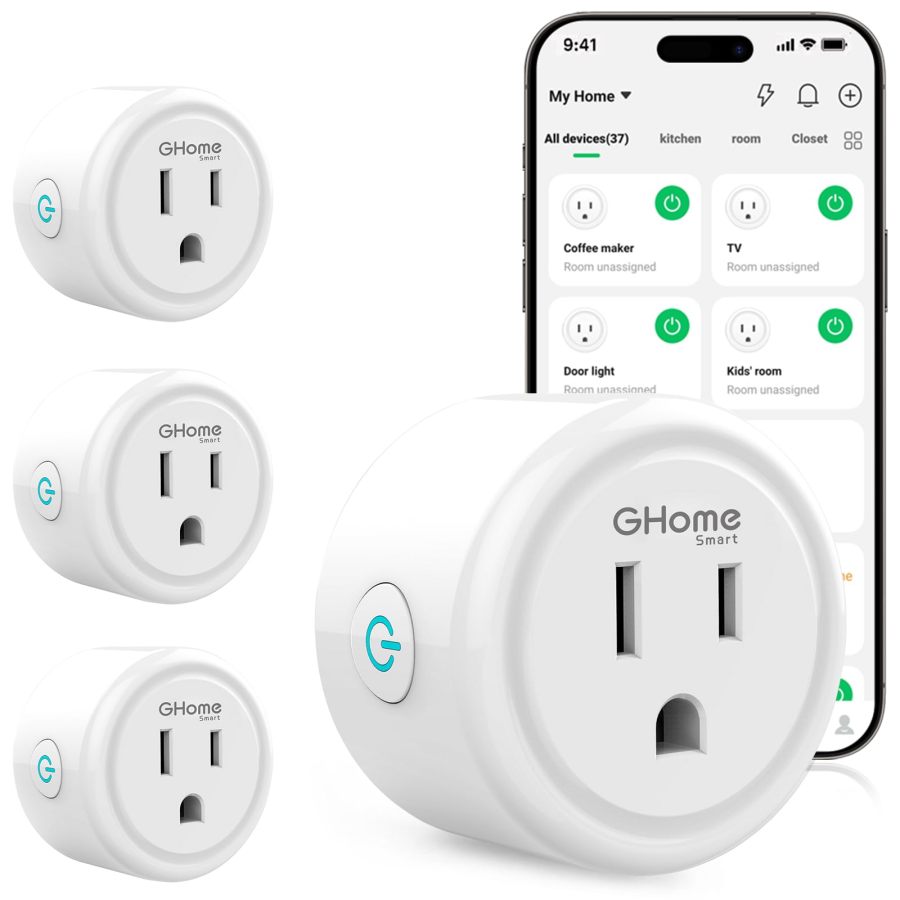
A smart plug is a device that connects via Wi-Fi or Bluetooth, allowing users to remotely control, schedule, and automate the power of ordinary appliances. These products are typically compact and can integrate seamlessly with smart speakers (e.g., Alexa, Google Home) without requiring an additional hub, making them entry-level products for building a smart home system. Common sub-types in the market include mini single-outlet, dual-outlet with independent control, and some models with energy monitoring capabilities. Recently, the introduction of the Matter protocol has become a new trend. The following table illustrates the key characteristics of consumer behavior in this category.
| Dimension | Segment | Description |
|---|---|---|
| Need Driver Type | Planned Purchase / Emergency-driven Purchase | Users typically purchase smart plugs based on the need for automated management or remote control of appliances, seeking convenience and efficiency in daily operations, but also for addressing unexpected scenarios (e.g., forgetting to turn off an appliance when leaving home). |
| Purchase Frequency | Medium-Low Frequency / Scalable | Consumers often purchase in multi-packs, primarily for initial setup or subsequent expansion of a smart home system, not as a high-frequency, fast-moving consumer good. |
| Decision Complexity | Medium | Consumers compare factors such as product compatibility, app experience, connection stability, size, and price, requiring some research and comparison. |
| Price Sensitivity | Medium to High | Price is a key decision factor, provided basic functionality and stability are met. Users are particularly inclined towards high-value multi-pack products. |
| Emotional Dependency | Medium to Low | Purchases are primarily based on functionality and practical value, but the convenience, peace of mind, and sense of control provided by smart automation significantly enhance user satisfaction. |
II. User Personas & Usage Scenarios
2.1 Convenience-Seeking Daily User
🎯 Aims to enhance daily convenience through simple smart devices, especially for controlling lights, fans, and other common appliances to reduce the hassle of manual operation.
| Typical Usage Scenarios | Core Pain Points | Primary Purchase Drivers |
|---|---|---|
|
|
|
2.2 Cost-Conscious Home Manager
🎯 Focuses on household energy consumption, aiming to precisely monitor appliance electricity usage through smart devices and optimize habits to save on utility bills, while also enhancing home safety.
| Typical Usage Scenarios | Core Pain Points | Primary Purchase Drivers |
|---|---|---|
|
|
|
2.3 Tech-Forward Smart Home Enthusiast
🎯 Has a deep understanding of smart home ecosystems, pursues seamless integration between devices and advanced features, and is particularly attentive to experience upgrades brought by emerging technology standards.
| Typical Usage Scenarios | Core Pain Points | Primary Purchase Drivers |
|---|---|---|
|
|
|
III. User Needs Hierarchy (KANO Model)
3.1 Basic Needs (Must-Haves)
- Remote on/off: The core function of controlling appliance power on/off from anywhere via a mobile app.
- Timer/schedule function: Presetting appliances to turn on/off at specific times for basic automation, eliminating manual intervention.
- Wi-Fi connection (2.4GHz): The device must connect stably to a home's 2.4GHz Wi-Fi network without requiring an additional smart hub, lowering the entry barrier.
- Basic safety certifications: Products must pass mainstream safety certifications like ETL, FCC, ensuring electrical safety and mitigating risks like fire or overload.
3.2 Performance Needs (Linear Satisfiers)
- Voice control compatibility: Seamless integration with mainstream smart speakers like Alexa and Google Home, supporting voice commands to enhance convenience and interactivity.
- Connection stability: Wi-Fi connection should not drop easily; device response should be fast without 'unresponsive' states, ensuring smooth and reliable use.
- Compact design: The plug should be small and not block adjacent outlets, optimizing space utilization and visual tidiness.
- App ease of use: App interface should be intuitive, setup process simple, supporting multi-device management and family member sharing.
- Multi-device group control: Ability to group multiple smart plugs for simultaneous control with one click or voice command, improving efficiency.
3.3 Excitement Needs (Delighters)
- Energy monitoring function: Real-time display of appliance power consumption, providing energy reports and cost estimates to help users save money and manage usage precisely.
- Dual-outlet independent control: A single physical outlet provides two independently controllable smart sockets, effectively expanding functionality and saving physical space.
- 5GHz Wi-Fi support: Compatibility with both 2.4GHz and 5GHz networks offers more flexible, stable connection options, adapting to newer router environments and reducing connection issues.
- Matter protocol compatibility: Support for the Matter standard enables seamless cross-brand, multi-ecosystem (Apple HomeKit, Alexa, Google Home, SmartThings) interoperability and local control.
- Offline operation capability: The device can still execute preset schedules or be controlled via a local network (e.g., Matter over Thread) when the home internet is disconnected, enhancing reliability.
3.4 Unmet Needs & Opportunities
-
Lack of long-term connection stability: Users complain about devices frequently disconnecting after some use, or failing to reconnect automatically after power/network outages, undermining the smart experience.
User Reviews (VOC) Customers report multiple connectivity issues with the smart plug, including losing connection once set up, random disconnections, and the device stopping communication. // After a brief power outage plug was no longer recognized. Took complete removal and complete reset and several attempts to set back up. This should not be the case.
-
Mismatch between 5GHz compatibility claims and reality: Some products claim to support 5GHz Wi-Fi in marketing, but the setup process is complex or it's impossible to connect, causing user frustration and even returns.
User Reviews (VOC) Not compatible with 5GHz WiFi. // There's literally no option in the app to even connect to a 5GHz network - it says right on the screen "Choose 2.4 GHz Wi-Fi network".
-
Fragmented multi-app management experience: Users need to download different apps for smart plugs from different brands, or app integration with smart speakers is insufficient, increasing management burden and learning curve.
User Reviews (VOC) I gave it 4 stars primarily because you have to download and use the Kasa TP-Link app. I would prefer a direct connection to Alexa or the Smart Life app. That way, I can manage all my plugs through a central app instead of needing multiple apps for different types of smart plugs.
-
Physical design details need optimization: Despite claims of being compact, many users report that products still block adjacent outlets in real-world use, or the manual on/off switch is poorly positioned and hard to operate.
User Reviews (VOC) The only downside is that they can't be placed next to each other on the same outlet, they are too big for that. // It was easy to connect, but the manual off/on switches are difficult to reach should you need to use them.
IV. User Decision Drivers
4.1 Key Decision Factors
- Connection stability: Whether the device can maintain a stable Wi-Fi connection without frequent dropouts is foundational for smooth use of smart features. Instability easily leads to returns or negative reviews.
- Setup ease: Whether the initial connection and smart speaker binding process is intuitive and quick, and whether the app is user-friendly, directly impacts the first-time user experience and successful onboarding.
- Voice control responsiveness: Smooth interaction and instant response with voice assistants like Alexa/Google Home is a key measure of the 'satisfaction' of the smart experience, determining if convenience is truly achieved.
- Safety and certifications: Whether the product has passed authoritative safety certifications like UL, ETL, FCC, and features overload protection, fire-resistant materials, etc., is a core concern for users powering high-wattage appliances or for long-term use.
4.2 Secondary Decision Factors
- Price/Value for money: Especially for multi-pack products, unit price and overall price advantage are key factors influencing bulk purchases and repurchases, but this must be built on reliable basic functionality.
- Brand reputation: Well-known brands (e.g., TP-Link Kasa, Amazon Basics) typically imply better quality assurance and comprehensive after-sales service, reducing user purchase hesitation and trust barriers.
- Physical design: Product size and compactness, whether it blocks adjacent outlets, and support for dual-outlet independent control affect the product's adaptability and ease of use in different scenarios.
- Additional features: Features like energy monitoring, offline control capability, 5GHz Wi-Fi compatibility, and Matter protocol support add value and attract users seeking a more advanced experience.
- App functionality: Whether the app offers rich features like timers, schedules, group control, and supports multi-platform integration (e.g., Apple HomeKit) influences the overall smart home system management experience.
V. Selling Points & Competitive Landscape
5.1 Selling Point Analysis
5.1.1 Standard Features (Points of Parity)
- Voice control: All products emphasize compatibility with Alexa and Google Home for hands-free voice operation, a universal selling point for smart plugs.
- App remote control: Controlling appliance power on/off anytime, anywhere via a mobile app to meet remote management needs when away from home.
- Timer and schedules: Setting automated on/off schedules for energy savings or scene automation, improving daily routines.
- No hub required: Products connect directly to Wi-Fi, simplifying setup and lowering the entry barrier, appealing to smart home beginners.
- 2.4GHz Wi-Fi: Universal support for 2.4GHz network connectivity ensures compatibility with most home routers, the mainstream market configuration.
5.1.2 Key Differentiators
- Compact/mini design: Some products emphasize small size to avoid blocking adjacent outlets, or use ultra-mini designs to optimize space utilization, enhancing competitiveness.
- Energy monitoring: Some products provide real-time appliance power consumption data, helping users understand and manage energy use, meeting energy-saving needs.
- Multi-outlet design: e.g., 2-in-1 dual-outlet smart plugs where each outlet can be controlled independently, effectively expanding functionality and saving physical space.
- 5GHz Wi-Fi support: A few products claim to support both 2.4GHz and 5GHz networks for faster, more stable connections, adapting to dual-band router environments.
- Bluetooth-assisted setup: Uses Bluetooth for quick device discovery and Wi-Fi configuration, simplifying initial setup steps and improving the user onboarding experience.
5.1.3 Unique Selling Propositions (USPs)
- Matter protocol compatibility: Brands like Linkind and GE Cync have introduced Matter protocol support, enabling cross-brand, local smart home interoperability, an emerging competitive advantage.
- Zero-touch setup (Alexa): Amazon's own brands emphasize an extremely simple, automatic pairing experience with Alexa, enhancing stickiness for Amazon ecosystem users, creating a unique advantage.
- In-wall smart outlet: The Kasa KP200 offers an in-wall design that replaces traditional outlets, pursuing a cleaner, more integrated smart control solution for specific renovation needs.
5.2 Competitive Landscape
5.2.1 Market Maturity
The smart plug market is relatively mature. Basic features like remote control, voice control, and timers have become standard, leading to significant product homogenization. Price competition is intense, especially among non-branded products, and market sensitivity to price is high.
5.2.2 Innovation Trends
Innovation trends are shifting from single functions to diversification and refinement, such as energy monitoring, dual-band Wi-Fi support, and the introduction of next-gen connectivity protocols like Matter, aiming to improve user experience and cross-platform compatibility while addressing traditional pain points. Additionally, product form factors are evolving towards more compact, integrated designs (e.g., dual-outlet, in-wall) to meet user demands for spatial aesthetics and practicality.
VI. Marketing Claims vs. Reality Check
The table below analyzes the gap between common marketing claims and actual user experiences in this category:
| Dimension | Marketing Claim | User Reality | Verdict |
|---|---|---|---|
| Wi-Fi band compatibility | Supports dual-band 5GHz and 2.4GHz Wi-Fi, say goodbye to connection troubles. | Some products claim to support 5GHz in titles or bullet points, but detail pages or user reviews clarify they only support 2.4GHz, or the app offers no 5GHz connection option. | A classic case of misleading marketing, exploiting user expectations of 5GHz performance without actual support, causing consumer confusion, connection obstacles, and damaging brand credibility. |
| Connection stability | Stable, fast connection, no worries about disconnections, always online. | Numerous user reports of devices frequently disconnecting, unstable connections, or failing to reconnect automatically after power/network outages, causing remote control and automation features to fail. | Seller promises regarding the reliability of this core function are severely misaligned with actual user experience. Failure to address the most fundamental pain point of smart plugs directly impacts product utility and user satisfaction. |
| Product size and outlet blockage | Compact/mini design, does not block adjacent outlets. | Despite marketing claims of being mini, many users report that product size still blocks adjacent outlets, especially on power strips or certain wall outlets, affecting space utilization. | Sellers failed to fully consider real-world usage scenario constraints in design, causing the 'compact' claim to fall short and not fully address user pain points regarding outlet space usage. |
Key Takeaway: The market exhibits widespread parameter inflation and exaggeration of scenario-based experiences, especially regarding Wi-Fi compatibility and connection stability. There is a significant gap between marketing claims and actual user experience.
VII. Supply-Demand Misalignment Analysis
The table below highlights mismatches between seller focus and buyer priorities:
| Dimension | Seller Behavior | User Focus | Verdict |
|---|---|---|---|
| Wi-Fi connection reliability | Commonly emphasize 'quick connection' and 'stable Wi-Fi' but lack detailed explanations in listings about connection guarantees and troubleshooting for complex real-world network environments. | Users care most about long-term connection stability and auto-recovery after disconnection, but frequently encounter device offline issues and connection difficulties. Seller promises are not fulfilled. | Sellers fail to directly address the smart plug's biggest weakness. There is a significant supply gap regarding the core user experience of 'being usable and staying connected'. |
| Truthfulness and transparency of 5GHz network support claims | Some brands include '5G' in titles or vaguely mention 'dual-band support' in selling points, but products only support 2.4GHz, leading to opaque information and user confusion. | Users desire faster 5GHz connections but find products either don't support it or setup is extremely complex, believing sellers mislead consumers with compatibility claims. | A classic case of using technical terms to create selling points without providing real value. This over-marketing damages consumer trust and creates numerous setup and compatibility issues. |
| Popularization of energy monitoring and Matter protocol | Most sellers still compete on basic features and fail to popularize functions with real user value like energy monitoring and Matter protocol as core selling points for energy savings and ecosystem unification. | Home managers desire energy monitoring to save on bills; tech enthusiasts anticipate the seamless cross-platform experience Matter promises. Market choices are limited and marketing is insufficient. | There is genuine market demand for value-added features, but sellers collectively fail to effectively identify and supply them, missing the opportunity to differentiate by offering higher-order value. |
Key Takeaway: Sellers collectively under-communicate or avoid core pain points like connection stability, while over-supplying feature bloat (e.g., gimmicky functions) and low-value details, leading to a mismatch between supply and demand.
VIII. Strategic Opportunities & Recommendations
8.1 True Dual-Band Wi-Fi & Smart Self-Recovery Smart Plug
8.1.1 Target Audience & Pain Points
⚡️ Pain Points Addressed: Lack of long-term connection stability; Mismatch between 5GHz compatibility claims and reality.
8.1.2 Action Plan
Adopt a true dual-band Wi-Fi module supporting 2.4GHz and 5GHz. Optimize firmware for intelligent band switching and auto-recovery after disconnection. The app must provide clear network status diagnostics and a one-click reconnect mechanism. All products must pass UL, FCC certifications and be clearly displayed in listings.
| Tech Complexity | Medium to High |
| Cost Impact | High Impact |
| Trade-off Warning | No significant physical side effects, mainly increases chip cost and R&D investment. |
| Price Band | Only viable above $29.99 (for a 2-pack) |
8.1.3 Marketing Strategy
Emphasize 'Say goodbye to disconnection worries, never goes offline' for ultimate stability. Use user testimonials and comparative test videos to highlight seamless connection in complex network environments. Clearly label 'True Dual-Band Wi-Fi, supports 2.4G/5G auto-switching'.
8.2 Visualized Energy Monitoring & Smart Energy-Saving Plug
8.2.1 Target Audience & Pain Points
⚡️ Pain Points Addressed: Lack of energy consumption data; Inefficient manual energy-saving efforts.
8.2.2 Action Plan
Integrate a high-precision power monitoring chip. The app interface should provide real-time and historical energy consumption graphs, supporting local electricity rate input for cost calculation. Add features that intelligently recommend energy-saving strategies based on consumption data (e.g., 'High TV standby power, suggest auto power-off after 10 PM').
| Tech Complexity | Medium |
| Cost Impact | Medium Impact |
| Trade-off Warning | No apparent physical side effects, mainly increases internal sensor and software development costs. |
| Price Band | Only viable above $19.99 (for a 2-pack) |
8.2.3 Marketing Strategy
Focus on 'See your monthly electricity savings, easily manage household bills'. Use app screenshots to showcase clear energy reports and savings suggestions, quantifying 'money saved' effects, e.g., 'Users save an average of X% on electricity monthly'.
8.3 Natively Matter-Compatible Universal Smart Plug
8.3.1 Target Audience & Pain Points
⚡️ Pain Points Addressed: Fragmented multi-app management experience; Compatibility barriers; Concerns over cloud service dependency.
8.3.2 Action Plan
Actively invest in Matter protocol R&D and certification to ensure products natively integrate with platforms like Apple HomeKit, Alexa, Google Home, SmartThings, enabling single-app management and local offline control. Prioritize optimizing the Matter pairing process, reducing dependency on additional hubs.
| Tech Complexity | Medium to High |
| Cost Impact | High Impact |
| Trade-off Warning | Requires ensuring chip support for Matter protocol; firmware development and certification cycle is longer. |
| Price Band | Only viable above $35.99 (for a 2-pack) |
8.3.3 Marketing Strategy
Emphasize 'The future is here, Matter unifies smart homes'. Highlight 'Cross-platform compatibility, say goodbye to app silos'. Promote 'Local control, more secure data' to attract premium users and tech enthusiasts seeking the ultimate experience. Create Matter integration demo videos.
8.4 Ultra-Compact, Non-Blocking, Dual-Outlet Independent Control Plug
8.4.1 Target Audience & Pain Points
⚡️ Pain Points Addressed: Physical design details need optimization; Occupies outlet space.
8.4.2 Action Plan
Achieve an extremely compact single or dual-outlet independent control design by optimizing internal PCB layout and using smaller components, ensuring it does not block adjacent outlets on any standard outlet or power strip. Dual-outlet designs should have reasonable spacing; physical buttons should be ergonomic, avoiding accidental presses and being easy to operate manually.
| Tech Complexity | Medium |
| Cost Impact | Medium Impact |
| Trade-off Warning | Extreme compactness may impose higher requirements on internal component layout and heat dissipation. |
| Price Band | Only viable above $24.99 (for a 2-pack) |
8.4.3 Marketing Strategy
Highlight 'The outlet space liberator, uncompromising refined living'. Showcase actual usage scenario images of the product not blocking outlets on power strips and wall outlets. Emphasize its mini advantage and clever design through size comparisons.