Amazon US Market Analysis: Starlink Antenna Protective Cases Category
📊 Executive Summary
📈 Market Trends
Strong demand for portable outdoor protection, but technical detail challenges are prominent. The Starlink antenna protective case market is developing rapidly, with sustained user demand for comprehensive device protection in harsh outdoor environments, especially in mobile scenarios like RVs and camping. The market widely adopts silicone materials and emphasizes compatibility and zero signal interference, but technological innovation has not fully resolved users' deeper pain points in extreme environments.
⚡ Major Pain Points
Overheating risk and accessory compatibility are core weaknesses. Despite cooling claims, dark silicone cases frequently cause device overheating under strong sunlight. Simultaneously, existing case designs often increase device volume, severely impacting compatibility with third-party brackets, storage boxes, etc., creating new usage obstacles for users. Additionally, the insufficient durability of portable handles/hooks on some cases poses potential safety hazards.
💡 Selection Opportunities
Deepen focus on cooling and compatibility to create differentiated high-value products. Market opportunities lie in developing a High-Performance Insulation/Active Cooling Protective Case to completely solve outdoor high-temperature overheating, meeting premium user needs. Simultaneously, launch a Modular Multi-Function Compatible Protection System, ensuring protection does not compromise the device's collaborative use with other accessories. Furthermore, enhancing detailed experience in portability and durability through a Reinforced Structure, Protected Port Case can establish unique brand advantages and user loyalty in a competitive market.
I. Analysis Overview
1.1 Introduction & Report Scope
This report analyzes the 'Satellite Dishes' category (Starlink antenna protective cases) within the Amazon US market, focusing on target user personas, core needs, decision factors, market communication, and potential opportunities.
1.2 Category Snapshot
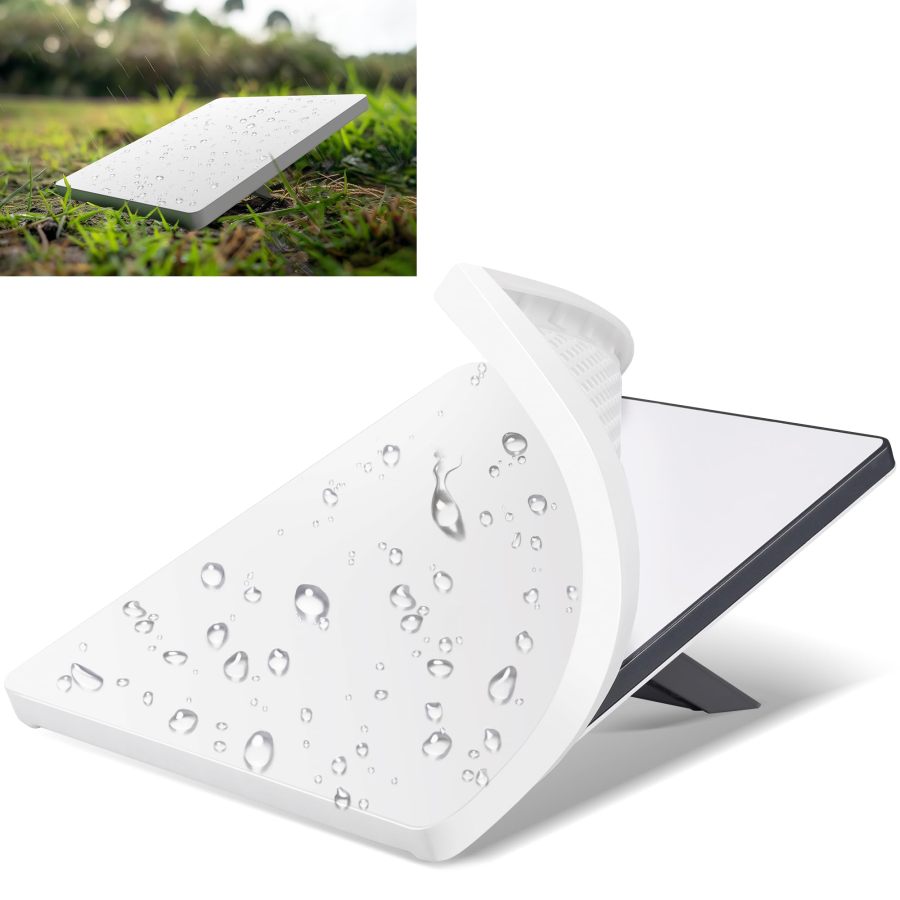
Starlink antenna protective cases are accessories specifically designed for SpaceX Starlink satellite internet terminals. Their primary function is to provide comprehensive physical protection for the expensive Starlink antenna against harsh weather, impacts, and daily wear and tear, while ensuring signal integrity. These products are primarily made of silicone, liquid silicone, or TPU, currently catering mainly to Starlink Gen 3 and Mini models, addressing the needs of both mobile outdoor and fixed installation scenarios. The following table illustrates the key characteristics of consumer behavior in this category.
| Dimension | Segment | Description |
|---|---|---|
| Need Driver Type | Planned Purchase / Emergency-driven Purchase | Users purchase primarily to prevent device damage in outdoor or mobile scenarios, ensure service continuity, or meet specific needs for sudden harsh environments, often involving premeditated preparation before travel. |
| Purchase Frequency | Low Frequency | Typically purchased alongside the Starlink device as a companion product. Once selected and meeting needs, repurchase intention is low in the short term unless the device is damaged or upgraded. |
| Decision Complexity | Medium | Consumers compare product compatibility with their antenna model, protective capabilities, impact on signal, heat dissipation design, and price, but do not engage in overly complex in-depth research. |
| Price Sensitivity | Medium | Given the high value of the Starlink device itself, users are willing to pay a reasonable premium for a reliable protection solution but still weigh the product's cost-effectiveness. |
| Emotional Dependency | Low to Medium | Purchase decisions are primarily based on practicality and functional value, but the 'peace of mind' and 'device aesthetics' provided by the product also offer certain emotional benefits. |
II. User Personas & Usage Scenarios
2.1 Mobile Outdoor Connectivity User
🎯 Individuals or families who frequently engage in RV travel, camping, hiking, or work in remote areas, highly dependent on Starlink for stable internet access.
| Typical Usage Scenarios | Core Pain Points | Primary Purchase Drivers |
|---|---|---|
|
|
|
2.2 Fixed Installation Home/Business User
🎯 Primarily uses Starlink at a fixed location like a home roof, seeking to protect the device from daily weather erosion and accidental damage to ensure long-term stable operation.
| Typical Usage Scenarios | Core Pain Points | Primary Purchase Drivers |
|---|---|---|
|
|
|
III. User Needs Hierarchy (KANO Model)
3.1 Basic Needs (Must-Haves)
- Perfect Fit: The case must precisely match the Starlink antenna model (Gen 3 or Mini), with no looseness or excessive tightness, ensuring secure installation without detachment.
- Zero Signal Interference: Using the case must not cause any negative impact on the Starlink antenna's signal reception or transmission, guaranteeing network performance and stability.
- Basic Scratch & Scuff Protection: Effectively preventing minor scratches and scuffs during daily use, handling, or installation, keeping the antenna surface intact and undamaged.
3.2 Performance Needs (Linear Satisfiers)
- Comprehensive Weather Resistance: Effectively resisting rain, snow, dust, sandstorms, hail, and UV rays, ensuring normal device operation in various harsh weather conditions and extending outdoor lifespan.
- Impact & Drop Resistance: Possessing certain cushioning and shock absorption capabilities to withstand damage from accidental drops or minor collisions, lowering repair costs.
- Good Heat Dissipation: Especially under prolonged sunlight or high temperatures, the case must ensure the device does not overheat, affecting performance or causing shutdown, guaranteeing stable operation.
- Easy Installation & Cleaning: Allowing users to install and remove quickly, without tools, with materials that are easy for daily cleaning and maintenance, reducing daily hassle.
- Long-Lasting Durability: Materials resistant to aging, discoloration, or deformation, maintaining protective effectiveness and appearance long-term, extending product lifespan, and meeting investment expectations.
3.3 Excitement Needs (Delighters)
- Integrated Portable Design: Features like attached high-strength handles, shoulder straps, or hooks that greatly facilitate outdoor carrying and mobile deployment, enhancing flexibility and convenience.
- Anti-Glare Function: Specifically for vehicle-mounted scenarios, effectively eliminating windshield glare, improving driving safety and comfort, reducing visual distraction, and increasing road safety.
- DIY Expansion Interfaces: Providing standardized interfaces like 1/4"-20 threaded holes, facilitating personalized installation and accessory expansion to meet custom needs in specific scenarios.
3.4 Unmet Needs & Opportunities
-
Effective High-Temperature Heat Dissipation: Users are highly concerned about black cases causing the Starlink Mini to overheat and shut down under strong sunlight, expecting more reliable heat dissipation solutions or light-colored/transparent material options, rather than misleading claims about passive cooling.
User Reviews (VOC) However it gets the starling too hot and it shuts down. It also bubbled up w the heat being in direct sun light. // This cover causes your mini to overheat! Warranty will not cover it.
-
Accessory Compatibility Without Compromise: Many cases increase the antenna's dimensions, affecting compatibility with existing third-party mounting brackets or custom storage boxes. Users desire solutions that don't interfere with other accessory use.
User Reviews (VOC) However it adds some size to the device so factor that in for your storage or case. // Protective cases and mounting hardware will not accept a Starlink mini that is using a cover like this.
-
Durable Portable Attachment Points: For cases with handles or hooks, users report that material strength is insufficient, potentially stretching, deforming, or tearing under prolonged load, compromising mobile carrying safety.
User Reviews (VOC) The handle could be just a little firmer/ stiffer, when picking up the silicone handle stretches a bit under the Mini's weight // Now I hope the eyes on top and bottom attachment points don't rip when attached to back pack, for example.
-
Integrated Port & Cable Protection: Users want the case to not only protect the main body but also effectively manage or protect cable ports, preventing dust and moisture ingress, and avoiding cable tangling or damage.
User Reviews (VOC) The only issue I have is the cover does get in the way of the removable hardware for connections. Have to move the cover when installing to a base holder.
IV. User Decision Drivers
4.1 Key Decision Factors
- Precise Compatibility: Whether the case perfectly matches the user's specific Starlink antenna model (Gen 3 or Mini) for a seamless fit is the primary condition for purchase.
- Zero Signal Degradation: Users are most worried the case might reduce network speed or stability. Ensuring signal strength and quality remain unaffected is a core guarantee, directly impacting service experience.
- Actual Protective Performance: Whether the case truly possesses the promised protective capabilities like waterproofing, drop/shock resistance, scratch resistance, hail protection, UV resistance, etc., is the fundamental need for protecting the expensive device.
- Installation Convenience: Users prefer products that can be installed and removed quickly and easily without tools, saving time and effort, especially in mobile usage scenarios.
4.2 Secondary Decision Factors
- Material Feel & Durability: Concerned about whether the silicone material is soft, skin-friendly, and whether it will age, discolor, or deform after long-term use (e.g., UV exposure), affecting product lifespan and appearance.
- Heat Dissipation Performance: Especially in high-temperature or prolonged sunlight environments, users will consider whether the case causes the device to overheat, affecting performance or even causing shutdown.
- Portability & Integration: For frequently mobile users, features like integrated handles, hooks, shoulder straps, and designs that facilitate easy storage increase appeal and enhance convenience.
- Appearance, Color & Design: Users consider whether the case color coordinates with their personal device, RV, or surroundings, and whether the design is aesthetically pleasing and meets personalized needs.
- Price Reasonableness: While meeting core functions and performance, price is an important consideration influencing the final purchase decision, with a pursuit of high cost-effectiveness.
V. Selling Points & Competitive Landscape
5.1 Selling Point Analysis
5.1.1 Standard Features (Points of Parity)
- Tailor-Made/Perfect Fit: Products commonly emphasize being designed specifically for Starlink Gen 3 or Mini models, ensuring precise dimensional and shape matching for seamless installation.
- All-Round Protection: Widely advertised as having comprehensive protective capabilities like waterproofing, dustproofing, scratch resistance, and impact resistance, aiming to defend against various external environmental threats and accidental damage.
- Zero Signal Interference: Emphasizing the use of non-conductive materials to ensure no impact on the Starlink antenna's signal reception and transmission performance, guaranteeing network connection quality.
- High-Quality Silicone Material: Highlighting silicone's flexibility, durability, comfortable feel, and easy-to-clean properties to enhance user experience and extend product lifespan.
- Easy Installation/Removal: Emphasizing the convenience of the installation and removal process, typically requiring no tools for quick operation, facilitating daily use.
5.1.2 Key Differentiators
- Enhanced Weather Resistance: Some products specifically emphasize features like hail resistance, UV resistance, and extreme temperature tolerance, aiming to tackle more challenging outdoor environments.
- Optimized Heat Dissipation Design: Promoting air circulation through honeycomb structures, internal air channels, or specific materials to help device cooling and prevent performance issues from overheating.
- Integrated Portability Features: Designs with integrated handles, hooks, or included shoulder straps that greatly facilitate outdoor mobility and device carrying, enhancing portability.
- Anti-Glare Solutions: Specifically for vehicle-mounted scenarios, providing anti-reflective stickers or dark materials to reduce windshield glare, improving driving safety and comfort.
- DIY Expandability: Providing interfaces like 1/4"-20 threaded holes, supporting user-customized installation and accessory expansion, increasing usage scenarios and flexibility.
5.1.3 Unique Selling Propositions (USPs)
- Included Anti-Glare Sticker: Some products additionally provide a front panel black sticker to further address glare issues during vehicle use, serving as a unique bundled selling point.
- Cable Management/Magnetic Cover: Integrated cable storage space or magnetic charging port cover designs that enhance overall tidiness and user experience through detailed considerations.
- Multiple Color Options: Offering more personalized color choices beyond common black, white, and gray, such as green, to meet differentiated aesthetic needs.
- Silicone Port Protection Plug: Including a silicone plug to seal the antenna port during transport or non-use, enhancing waterproof and dustproof effects, reflecting thoughtful product design.
5.2 Competitive Landscape
5.2.1 Market Maturity
The Starlink antenna protective case market is currently transitioning from mid-growth to maturity. Product functionality is highly homogeneous, with most sellers competing around basic protection and compatibility, primarily using silicone materials. While some brands have begun introducing differentiated selling points like portability, anti-glare, and heat dissipation designs, no clear industry standards or technological barriers have formed. The market still awaits deeper user need exploration and technological innovation to drive category evolution.
5.2.2 Innovation Trends
Current category innovation trends are clearly shifting from single passive physical protection towards multi-functional integration and experience optimization. For example, products are starting to incorporate high-strength handles, hooks, shoulder straps, or DIY mounting threaded interfaces to enhance convenience and flexibility for mobile use. Simultaneously, regarding environmental adaptability, thermal management (e.g., honeycomb structure cooling, using light-colored materials for heat resistance) and environmental integration (e.g., anti-glare stickers, multiple color options to reduce visual intrusion) have become new innovation directions, aiming to solve user pain points in specific scenarios and meet needs that combine personalization with practicality.
VI. Marketing Claims vs. Reality Check
The table below analyzes the gap between common marketing claims and actual user experiences in this category:
| Dimension | Marketing Claim | User Reality | Verdict |
|---|---|---|---|
| Heat Dissipation Performance | Unique hexagonal design/honeycomb structure accelerates airflow for efficient heat dissipation, preventing overheating. | Users widely report, especially with black silicone cases, that direct sunlight causes the Starlink Mini to overheat and shut down, with stickers even bubbling from heat. | Seller promotion of passive cooling designs is overly optimistic, failing to fundamentally address the physical limitation of dark silicone absorbing heat under strong outdoor sunlight, leading to a severe disconnect between core performance promises and actual experience. |
| Accessory Compatibility | Precise fit, lightweight design adds no extra bulk, does not affect use with other accessories. | Users report cases increase thickness, preventing the Starlink Mini from fitting into existing custom storage boxes or being incompatible with third-party mounting accessories like vehicle mounts or suction cup mounts. | Sellers over-focus on the case's standalone design, neglecting the disruptive impact of added bulk on the user's existing accessory ecosystem, creating new usage obstacles and failing to provide a seamless, compatible overall solution. |
| Protection Scope & Practicality | Provides comprehensive protection, includes anti-glare black sticker to enhance vehicle safety and aesthetics. | Black anti-glare stickers are prone to bubbling under direct sunlight, potentially causing overheating, and for the device's most critical signal transmission/reception surface, the case only offers a sticker, not physical protection. | Marketing promises of all-round protection and anti-glare design have physical flaws in practical application (e.g., sticker bubbling, overheating) and fail to effectively address the core pain point of protecting the signal surface; the design is superficial. |
Key Takeaway: The market exhibits widespread parameter inflation and scenario-based experience exaggeration, particularly regarding heat dissipation performance and accessory compatibility, where a significant gap exists between marketing claims and actual user experience.
VII. Supply-Demand Misalignment Analysis
The table below highlights mismatches between seller focus and buyer priorities:
| Dimension | Seller Behavior | User Focus | Verdict |
|---|---|---|---|
| Effective Heat Dissipation Solutions | Widely emphasize 'honeycomb structure' or 'accelerated airflow' cooling designs but rarely provide actual device operating temperature data or solutions under extreme heat. | Users strongly complain about black cases causing device overheating and shutdown, urgently needing products that can genuinely manage high temperatures effectively or offer light-colored/transparent, heat-optimized material choices. | Sellers remain at the level of promoting passive cooling concepts, failing to provide effective high-temperature heat dissipation solutions that meet actual user needs and pass basic physical scrutiny, leaving core user pain points unaddressed. |
| Third-Party Accessory Compatibility | Most sellers overlook in product promotion that cases may increase device dimensions, thereby affecting compatibility with various third-party brackets, storage bags, etc. | Users find that after purchasing a case, the device no longer fits into their original custom storage bag or mounts onto vehicle brackets, forcing frequent removal or abandonment of accessories, significantly degrading the user experience. | Sellers treat the protective case as an independent product, lacking understanding of the user's overall usage ecosystem, making product compatibility with the user's existing accessories a marketing blind spot and user experience pain point. |
| Durability of Portable Attachment Points | Some products promote 'portable design' with attached handles or hooks but fail to adequately consider the Starlink Mini's weight and outdoor usage intensity in material strength and structural design. | Users report silicone handles stretch when lifting the device, worrying about long-term use or accidental drops causing tears, raising safety concerns for mobile carrying. | While sellers provide convenience features, they fail to meet user expectations for high structural strength crucial for safely moving high-value devices; the detailed experience still needs improvement. |
Key Takeaway: Sellers collectively remain silent or downplay core pain points like outdoor overheating of Starlink antennas while oversupplying certain low-value details, resulting in a severe misalignment between supply and demand focus.
VIII. Strategic Opportunities & Recommendations
8.1 High-Performance Insulation/Active Cooling Protective Case
8.1.1 Target Audience & Pain Points
⚡️ Pain Points Addressed: Black cases causing device overheating under strong sunlight, affecting performance or causing shutdown.
8.1.2 Action Plan
Design using high-reflectivity white or light-colored composite materials instead of pure black silicone. Integrate micro, low-power, quiet smart fan modules internally, powered by a small solar panel on the case or a USB-C power bank, enabling intelligent temperature control. Design internal air circulation channels within the shell, combined with thermally conductive materials, to completely solve overheating issues.
| Tech Complexity | Medium |
| Cost Impact | High Impact |
| Trade-off Warning | Integrating active cooling modules (e.g., micro-fans) may slightly increase product thickness and weight; solar power requires stability assurance; internal batteries must comply with aviation transport safety standards. |
| Price Band | Only viable above $69.99 |
8.1.3 Marketing Strategy
Emphasize 'Fearless Heat, Uninterrupted Signal'; showcase third-party lab-certified heat dissipation efficiency reports and real-world test videos of stable operation under extreme heat; highlight selling points like 'Intelligent Temperature Control, Extends Starlink Lifespan,' precisely targeting premium users.
8.2 Modular Multi-Function Compatible Protection System
8.2.1 Target Audience & Pain Points
⚡️ Pain Points Addressed: Cases increasing device size, affecting compatibility with third-party brackets, storage boxes, etc.; lack of integrated portability and cable management.
8.2.2 Action Plan
Design a base protective case ensuring extreme thinness without significantly increasing volume. Integrate universal 1/4"-20 threaded holes and detachable magnetic attachment points around the shell for seamless connection to various vehicle suction mounts, tripods, or custom brackets. Simultaneously, cleverly design a bottom magnetic-closure cable storage compartment and a multi-function handle/shoulder strap, forming a complete plug-and-play, go-anywhere mobile solution.
| Tech Complexity | Medium |
| Cost Impact | Medium Impact |
| Trade-off Warning | Modular design may require more complex molds and higher precision, but overall size increase can be controlled reasonably; the value of enhanced compatibility far outweighs this cost. |
| Price Band | Only viable above $34.99 |
8.2.3 Marketing Strategy
Highlight 'One Case, Multiple Uses, Seamless Expansion'; demonstrate real-life compatibility with different brand brackets and storage bags; emphasize 'Futuristic Modular Design, Fulfills All Your Outdoor Imagination,' solving user accessory compatibility pain points.
8.3 Reinforced Structure, Protected Port Case
8.3.1 Target Audience & Pain Points
⚡️ Pain Points Addressed: Silicone handles/hooks have insufficient load-bearing capacity and are prone to deformation; cable ports are vulnerable to dust/moisture, and cases may hinder cable connection.
8.3.2 Action Plan
Incorporate high-strength polycarbonate (PC) skeleton inside handles and hooks, maintaining silicone appearance and feel while dramatically improving load-bearing and tear resistance. Design flip-open or slide-open dust/waterproof caps for cable ports, ensuring protection without hindering plugging/unplugging. Optimize internal cable routing channels to prevent tangling.
| Tech Complexity | Low |
| Cost Impact | Low Impact |
| Trade-off Warning | Integrating structural reinforcement may reduce flexibility in localized areas of the silicone shell but can significantly enhance lifespan and safety. |
| Price Band | Only viable above $19.99 |
8.3.3 Marketing Strategy
Emphasize 'Structurally Reinforced, Unafraid of Pulling'; highlight 'All-Round Dust & Waterproof, Worry-Free Ports'; provide load test data and usage scenario close-ups to build user confidence in product reliability.