Amazon US Market Analysis: Portable Voice Amplifiers Category
📊 Executive Summary
📈 Market Trends
Steady demand for portable amplification, with wireless and smart features as new trends. The portable voice amplifier market is highly competitive, with basic amplification, portability, and long battery life now standard. User demand for wireless freedom, clearer sound (especially in noisy environments), device durability, and intelligent multi-function integration is growing, driving the market towards more refined and specialized development.
⚡ Major Pain Points
Exaggerated battery life, inflated power claims, and insufficient durability are critical flaws. Users are generally skeptical of sellers' claims about battery life and power output, with a significant gap between actual experience and marketing. Additionally, the fragility of microphone cables and overall product construction leads to high failure rates. Sound quality is prone to distortion and feedback at high volumes. These are core reasons for low satisfaction and high return rates.
💡 Selection Opportunities
Deeply address core pain points, solidify user experience and product integrity. Market opportunities lie in developing a High-Fidelity Professional-Grade Feedback-Free Amplifier to improve sound stability and feedback suppression. Simultaneously, launch a Rugged Modular Wireless Microphone System to solve battery life and durability issues with wireless microphones. For niche scenarios, consider an Outdoor High-Brightness Screen & Multi-Function Integrated Amplifier. More importantly, all products should adopt a Transparent Specification & Consistent Communication Strategy to rebuild user trust and avoid disappointment and negative reviews caused by over-marketing.
I. Analysis Overview
1.1 Introduction & Report Scope
This report analyzes the 'Power Amplifiers' category (portable voice amplifiers) within the Amazon US market, focusing on target user personas, core needs, decision factors, market communication, and potential opportunities.
1.2 Category Snapshot
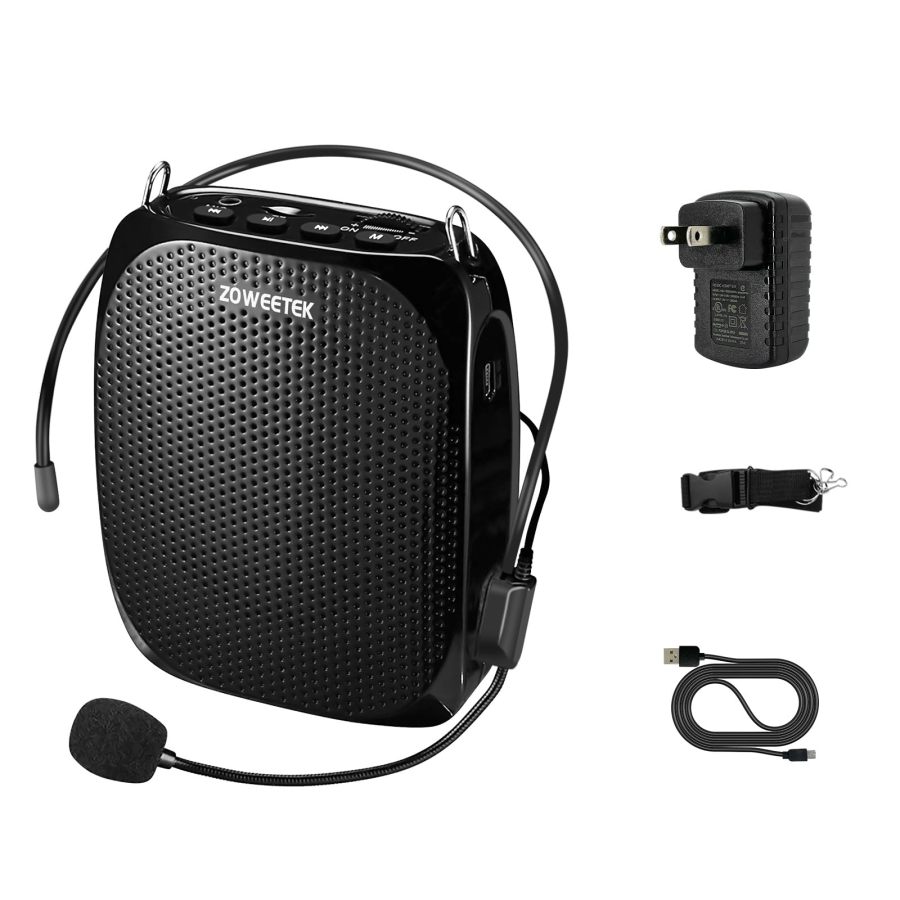
A portable voice amplifier is a lightweight, integrated device combining a microphone and a speaker. Its primary purpose is to amplify a speaker's voice, ensuring clarity in settings like classrooms, outdoors, meetings, or training sessions, while simultaneously reducing vocal strain. These products typically feature headset or ear-hook microphones, support wired or wireless connectivity, and include built-in batteries for mobile use, catering to voice amplification needs in professional scenarios such as education, tour guiding, and fitness instruction. The following table illustrates the key characteristics of consumer behavior in this category.
| Dimension | Segment | Description |
|---|---|---|
| Need Driver Type | Planned Purchase/Emergency-driven Purchase | Purchases typically stem from anticipated needs for teaching, explanation, or demonstration, or arise urgently from situations like vocal discomfort requiring immediate amplification assistance. |
| Purchase Frequency | Low Frequency / Medium-Low Frequency | As a durable tool, purchase frequency is low, primarily occurring when equipment breaks, requires functional upgrades, or new job demands arise. |
| Decision Complexity | Medium | Consumers compare multiple dimensions like sound quality, battery life, portability, wireless capability, power, and price, but do not engage in deep technical research. |
| Price Sensitivity | Medium | Price is an important decision factor, but users are willing to pay a reasonable premium if the product offers significant advantages in sound quality, durability, and convenience. |
| Emotional Dependency | Medium | The product primarily solves issues of vocal fatigue and sound projection. However, the confidence, professional image, and sense of security from smooth communication it provides also hold certain emotional value. |
II. User Personas & Usage Scenarios
2.1 Vocal Health-Conscious Educators
🎯 Professionals engaged in long-term occupations requiring loud speaking, such as teaching and training, who are particularly concerned about vocal health and wish to convey information effortlessly in noisy environments.
| Typical Usage Scenarios | Core Pain Points | Primary Purchase Drivers |
|---|---|---|
|
|
|
2.2 Mobile Professional Guides
🎯 Professionals like tour guides, museum docents, and fitness instructors who need to move continuously while clearly addressing large groups.
| Typical Usage Scenarios | Core Pain Points | Primary Purchase Drivers |
|---|---|---|
|
|
|
III. User Needs Hierarchy (KANO Model)
3.1 Basic Needs (Must-Haves)
- Voice Amplification: Core functionality. Ensures voice is significantly louder, allowing listeners to hear effortlessly and reducing the speaker's vocal strain.
- Clarity: Amplified sound must be clear and intelligible, without noticeable fuzziness, tremolo, or mechanical artifacts, ensuring accurate information delivery.
- Wearing Comfort: The microphone and main amplifier unit should be comfortable for extended wear, lightweight, and unobtrusive, allowing the user to focus on their work.
- Battery Life: A single charge should meet the usage needs of a typical workday (e.g., 8-12 hours), avoiding mid-session power loss.
- Ease of Use: Plug-and-play or quick pairing, simple and intuitive volume control, no complex setup required, lowering the learning curve.
3.2 Performance Needs (Linear Satisfiers)
- Sound Fidelity: Natural, undistorted sound without a mechanical or metallic quality, striving to reproduce the authentic human voice for an enhanced listening experience.
- Feedback Suppression: Effectively inhibits acoustic feedback between the microphone and speaker, preventing harsh squealing and improving professional image.
- Wireless Connectivity: Supports Bluetooth or other wireless connections, offering greater mobility flexibility, especially for scenarios requiring movement (for wireless models).
- Coverage Range: Meets amplification needs for medium-sized indoor spaces (50-180 people) or certain outdoor areas, ensuring back-row listeners can hear clearly.
- Multi-Function Playback: Supports TF card/USB, AUX input for playing background music or recordings, adding to the device's utility and appeal.
3.3 Excitement Needs (Delighters)
- AI Noise Reduction: Significantly reduces background noise in chaotic environments, accentuating the human voice for a purer auditory experience and enhanced professionalism.
- TWS Stereo Pairing: Supports interconnecting two amplifiers to create a stereo effect, expanding coverage range and sound quality, suitable for large events.
- Stylish & Personalized Design: Features like pearl chains, unique color schemes, compact and refined aesthetics to meet user demands for beauty and individuality, boosting product appeal.
- SOS Emergency Alert: One-touch emergency alarm function providing safety assurance for outdoor activities or emergencies, increasing peace of mind.
- Water & Dust Resistance: Offers additional protection ratings (e.g., IPX6) for outdoor or special work environments, ensuring device reliability under harsh conditions.
3.4 Unmet Needs & Opportunities
-
Microphone Durability: User feedback indicates headset microphone materials are fragile and prone to damage, especially at connection points, affecting long-term product reliability. A more robust structure is needed.
User Reviews (VOC) Came apart almost as soon as I opened it up. // The wireless headset is nice but there is no swivel or way to pack it so the headband doesn't break.
-
Wireless Microphone Battery Life: The battery life of some wireless microphones is shorter than the main amplifier unit, causing inconvenience with frequent charging or worry about power loss at critical moments.
User Reviews (VOC) the Bluetooth headset battery doesn't last long. // the witless headset battery is quite a bit smaller and wouldn't fit my needs as well.
-
Sound Quality Stability at High Volume: Sound is prone to distortion, echo, or feedback at high volume levels, affecting sound purity and listener experience, especially in noisy environments.
User Reviews (VOC) Distorts a bit when turned up. // you cannot turn the sound all the way up without a horrible screeching sound. // if the mic gets too close to the speaker you will get some feedback
-
Overall Product Quality & Durability: Some users perceive product materials or workmanship as cheap, expecting higher quality and longer lifespan, particularly for vulnerable components like connectors and clips.
User Reviews (VOC) The mic doesn't seem durable, but it can hold up well if you take care of it. // This little microphone and speaker work pretty well as basic megaphone type device. The sound isn't outstanding but I didn't expect it to be. I do feel that the entire product seems poorly constructed and I would expect that if it ever ever suffered the slightest bit of trauma it would break horribly. I don't think it would survive many drops.
-
Outdoor Display Visibility: Under strong outdoor sunlight, the LED displays on some products are insufficiently bright, making it difficult to see battery status or operating modes, hindering ease of operation.
User Reviews (VOC) The display is very dim and pretty much impossible to see outside in the sun.
IV. User Decision Drivers
4.1 Key Decision Factors
- Sound Clarity & Volume: The most fundamental and core user need. Determines if the product can effectively perform its amplification task, directly impacting communication efficiency and listener comprehension.
- No Feedback & No Distortion: Directly affects user experience and professional image. A core criterion for judging product quality. Harsh feedback and distortion quickly lead to negative feedback.
- Battery Life: Relates to product reliability in long-duration work scenarios. A hard requirement before purchase, eliminating user anxiety about mid-session power loss.
- Wearing Comfort & Portability: Influences user willingness for prolonged use. Comfort of headset/ear-hook microphones, in particular, determines daily user experience and work efficiency.
- Ease of Operation: Users want a device that works out of the box. Complex setup and connection steps reduce satisfaction and increase the time and effort required to get started.
4.2 Secondary Decision Factors
- Wireless Connection Stability: Given the prevalence of wired products, the reliability of wireless connections becomes an advanced consideration, enhancing mobility but not at the cost of stability.
- Product Durability & Quality: Impacts the long-term value of the product. Users are particularly concerned about vulnerable parts (e.g., microphone cables, clips), which are a threshold for building brand trust.
- Price & Value for Money: Once core needs are met, users compare prices, but it's not the sole deciding factor. Greater emphasis is placed on the overall value derived from features and quality.
- Multi-Function Versatility: Features like music playback, recording, FM radio add extra value, enhancing product appeal in diverse scenarios.
- Brand Reputation & After-Sales Service: Especially for professional use, users tend to favor brands with a good reputation and warranty, providing peace of mind and long-term service assurance.
V. Selling Points & Competitive Landscape
5.1 Selling Point Analysis
5.1.1 Standard Features (Points of Parity)
- Voice Amplification/Vocal Protection: The product's most core function. Alleviates user vocal fatigue and ensures clear information delivery, widely applicable for teaching, presentations, etc.
- Portable/Lightweight Design: Emphasizes the product's small size and light weight for easy carrying and extended wear, meeting mobile usage needs.
- Long-Lasting Battery: Built-in rechargeable battery meets all-day usage needs, reducing charging anxiety. Often claims 8-15 hours of battery life.
- Multi-Scenario Applicability: Highlights suitability for various professional and everyday scenarios like teachers, tour guides, coaches, meetings, broadening the target audience.
- Ease of Use: Plug-and-play, one-touch pairing, simple and convenient operation, no complex setup required, lowering the user barrier.
5.1.2 Key Differentiators
- Wireless Microphone/Bluetooth Connectivity: Offers freedom of movement without cable constraints. Some products support Bluetooth audio playback, enhancing interactivity.
- Output Power & Coverage Area: Specifies different power levels like 10W, 15W, 20W, 30W, and coverage area (e.g., 10000 sq ft) or audience size (e.g., 180 people) to attract customers with high-volume needs.
- Multimedia Playback Function: Supports TF card, USB flash drive, AUX input, etc., for playing background music or instructional audio, enhancing product versatility.
- Feedback Suppression Technology: Emphasizes the use of frequency shifting technology or intelligent algorithms to suppress feedback, improving user experience as a selling point for sound quality assurance.
5.1.3 Unique Selling Propositions (USPs)
- AI Noise Reduction: Intelligently optimizes the human voice in noisy environments for purer sound quality, positioned as a premium audio feature.
- TWS Stereo Pairing: Supports wireless pairing of two amplifiers for stereo sound or expanded coverage, suitable for specific large events.
- Special Wearable Design: Features like pearl chain decoration, unique color schemes, multi-functional wearing methods (neck strap, waist clip, back clip), emphasizing fashion and personalization.
- Emergency Alert Function (SOS): Adds safety value for outdoor use with a one-touch distress call feature, positioned as an added benefit for outdoor-specific models.
- Waterproof Function: Highlights device water resistance (e.g., IPX6), suitable for complex outdoor environments, enhancing product reliability.
5.2 Competitive Landscape
5.2.1 Market Maturity
The portable voice amplifier market has reached a medium level of maturity. Basic features like voice amplification, portability, and battery life are now standard, leading to significant product homogenization. Current competition primarily revolves around incremental technological upgrades (e.g., transition from wired to wireless) and iterations in power, multimedia playback, and differentiated design. Truly disruptive innovations that solve users' deeper pain points remain relatively scarce. The market calls for more profound innovation to meet increasingly sophisticated user needs.
5.2.2 Innovation Trends
Current innovation trends in this category are evident in several areas: First, the further proliferation of wireless technology, as users crave greater freedom of movement. Second, intelligent features, such as AI noise reduction aimed at improving sound purity in complex environments. Third, multi-function integration, like TWS stereo pairing, SOS emergency alerts, FM radio, transforming the product into a more comprehensive tool. Finally, personalized aesthetic design and optimization of wearing comfort to meet the preferences and usage habits of different user groups.
VI. Marketing Claims vs. Reality Check
The table below analyzes the gap between common marketing claims and actual user experiences in this category:
| Dimension | Marketing Claim | User Reality | Verdict |
|---|---|---|---|
| Power Output & Coverage Range | Claims of 30W high power, covering 20000 sq ft / classrooms of 180 people, with strong, distortion-free sound. | Some product bullet points claim 10W/15W, but specifications show only 5W output. User teardowns reveal speakers rated at only 5W. The high power claimed for low-priced, small-volume products is physically difficult to achieve with high-fidelity sound. User feedback indicates distortion or insufficient volume at high settings. | A classic case of misleading consumers with ideal lab data or inflated power parameters. Fails to deliver on the core promise for extended creative or meeting scenarios, severely impacting user trust and bordering on false advertising. |
| Battery Life Performance | Claims of 12-15 hours or even a week of ultra-long battery life, eliminating power anxiety and meeting all-day use. | Users commonly report actual battery life is far lower than claimed (often just a few hours) under high brightness or wireless microphone mode. Some products develop charging issues within months. Battery data within listings is often self-contradictory. | Sellers substitute actual usage time with minimum power consumption or ideal state data, leading to a severe mismatch between consumer expectations and real-world experience. This is a frequent cause of negative reviews and returns. |
| Microphone & Product Durability | Uses durable materials, robust and wear-resistant design, providing professional and reliable amplification. | User feedback describes headset microphone parts as 'fragile,' with some products 'falling apart as soon as opened.' Belt clips are prone to breakage. Some products fail within months or up to three years. Battery longevity also poses reliability risks. | Sellers cut corners on key accessories and overall product materials, resulting in poor durability of core components. This severely impacts product lifecycle and long-term user value, representing a high-return-rate 'danger zone.' |
Key Takeaway: The market exhibits a widespread tendency towards parameter inflation and exaggerated scenario-based benefits, particularly regarding battery life, power output, and core component durability. A significant gap exists between marketing promises and actual user experience.
VII. Supply-Demand Misalignment Analysis
The table below highlights mismatches between seller focus and buyer priorities:
| Dimension | Seller Behavior | User Focus | Verdict |
|---|---|---|---|
| Realistic & Reliable Durability Commitment | Commonly promotes 'durable materials,' 'reliable quality,' but lacks specific supporting evidence or extended warranties. Product structure design does not reinforce vulnerable points. | Extensive user feedback on microphones being easily damaged, products failing quickly, feeling cheap/plastic, and belt clips being fragile. These are key pain points affecting long-term use and trust. | Sellers lack substantive commitments and solutions for users' primary concerns about 'long-term value' and 'quality reliability,' leading to poor product reputation and difficulty in building brand trust. |
| Sound Fidelity & Feedback Suppression at High Volume | Commonly claims 'clear, distortion-free,' 'no noise, no distortion,' 'effective feedback suppression,' but fails to provide solutions for sound quality assurance and feedback inhibition at maximum volume or in specific scenarios (e.g., dynamic movement). | Users frequently complain about distortion at high volume, harsh feedback, muffled sound, echo, especially when the microphone is near the speaker or during rapid movement, severely impacting actual experience. | Sellers are overconfident about core sound quality experience, overlooking users' rigid demand for 'truly usable' clear sound and 'effectively avoiding feedback.' This has become a high-frequency cause of negative reviews and returns. |
| Authenticity & Consistency of Core Specifications | Some products have contradictory key specifications (battery capacity, power output) between listing bullet points and technical specs. Some have been found by users via teardowns to have inflated power ratings. Fails to provide transparent, accurate product information. | Users are confused by inconsistent product information and skeptical about the truthfulness of power, battery life claims, believing 'low-priced products are often overstated.' This creates a high trust barrier during purchase decisions. | Sellers perform poorly on the most basic level of specification integrity. This information asymmetry not only misleads consumers but also severely erodes brand credibility, hindering users' accurate assessment of product performance. |
Key Takeaway: Sellers generally focus on basic features and superficial selling point accumulation. However, there is a collective silence or downplaying regarding users' deeper pain points like actual sound quality, core component durability, and product information consistency, leading to a supply-demand mismatch.
VIII. Strategic Opportunities & Recommendations
8.1 High-Fidelity Professional-Grade Feedback-Free Amplifier
8.1.1 Target Audience & Pain Points
⚡️ Pain Points Addressed: Volume control precision / Distortion at high volume, No feedback & No distortion.
8.1.2 Action Plan
Utilize professional-grade high-sensitivity dynamic or electret condenser microphones. Integrate advanced Digital Signal Processing (DSP) and adaptive feedback suppression algorithms to ensure no feedback or distortion even at high volumes and in complex environments. Optimize speaker chamber and crossover design to enhance full-range sound quality. Design a more precise, seamless stepless volume control knob to avoid sudden jumps.
| Tech Complexity | Medium |
| Cost Impact | Medium Impact |
| Trade-off Warning | Requires more precise acoustic chamber design and components, potentially slightly increasing size and weight, but can be balanced through optimized structure. |
| Price Band | Only viable above $49.99 |
8.1.3 Marketing Strategy
Emphasize 'Theater-grade high-fidelity sound, goodbye to harsh feedback.' Showcase its superior performance in noisy environments through professional acoustic test reports and comparative demo videos. Offer a 'Professional Sound, Clear Delivery' promise to build trust in professional fields.
8.2 Rugged Modular Wireless Microphone System
8.2.1 Target Audience & Pain Points
⚡️ Pain Points Addressed: Microphone durability, Insufficient wireless microphone battery life, Overall product quality & durability.
8.2.2 Action Plan
Develop a wireless microphone with battery life matching the main unit (at least 8-10 hours). Use tougher, more tensile-resistant cables and connectors. Employ memory alloy or skin-friendly silicone for ear-hook/headset microphones, with flexible adjustment to fit different head shapes, ensuring long-term comfort and stability. Consider offering a portable charging case or magnetic charging interface for convenient microphone top-ups.
| Tech Complexity | Medium |
| Cost Impact | Medium Impact |
| Trade-off Warning | The microphone's built-in battery may slightly increase volume and weight, but can be optimized for wearability through ergonomic design. Some metal reinforcements may add slight weight. |
| Price Band | Only viable above $39.99 |
8.2.3 Marketing Strategy
Highlight 'All-day wireless freedom, microphone power that keeps up.' Emphasize 'Military-grade quality, built to last.' Build long-term user trust in product quality through drop-test videos and extended warranties (e.g., 2-year warranty). Showcase its seamless experience in various mobile scenarios.
8.3 Outdoor High-Brightness Screen & Multi-Function Integrated Amplifier
8.3.1 Target Audience & Pain Points
⚡️ Pain Points Addressed: Poor outdoor display visibility, Lack of specific outdoor functions.
8.3.2 Action Plan
Integrate IPX6/7 waterproof and dustproof rating. Equip with a high-brightness, high-contrast color display, ensuring clear visibility under strong outdoor sunlight. Add SOS emergency alert, dynamic ambient noise adjustment, and GPS module to enhance outdoor safety and convenience. Optimize microphone wind noise suppression for clear outdoor voice. Provide Type-C fast charging to reduce outdoor charging time.
| Tech Complexity | Medium |
| Cost Impact | High Impact |
| Trade-off Warning | High-brightness display increases power consumption, requiring balance with main battery capacity. IPX6/7 waterproof design may slightly increase product volume and sealing complexity. |
| Price Band | Only viable above $79.99 |
8.3.3 Marketing Strategy
Highlight 'All-weather outdoor companion, fearless of elements, ensuring safety.' Showcase its reliability and professionalism in outdoor scenarios through extreme environment testing and KOL collaborations. Emphasize its unique value in specific scenarios like wilderness exploration and water sports.
8.4 Transparent Specification & Consistent Communication Strategy
8.4.1 Target Audience & Pain Points
⚡️ Pain Points Addressed: Authenticity & consistency of core specifications.
8.4.2 Action Plan
Establish a strict product information verification process to ensure all data (battery capacity, power output, etc.) in listing bullet points, descriptions, and specifications are completely consistent and truthful. Avoid using vague or exaggerated 'lab data.' Provide real performance metrics under standard testing conditions (e.g., battery life at different volume levels).
| Tech Complexity | Low |
| Cost Impact | Low Impact |
| Trade-off Warning | No physical side effects. Primarily involves changes to marketing strategy and internal quality control. |
| Price Band | Any price point |
8.4.3 Marketing Strategy
Emphasize 'Genuine materials, no inflated specs.' Display clear, consistent performance charts and data in listings. Build brand integrity and transparency through third-party certifications. Avoid over-promising marketing language, focusing on the product's actual value.