Amazon US Market Analysis: Wireless Electric Multi-Purpose Scissors Category
📊 Executive Summary
📈 Market Trends
Portability and efficiency are core demands; charging technology and cutting depth are competitive battlegrounds. Demand for wireless electric multi-purpose scissors on Amazon US is strong, with consumers seeking lightweight, effortless tools that efficiently handle various materials. The market is evolving from purely functional pursuit to deeper user experience upgrades, especially with higher expectations for modern charging interfaces and actual cutting performance on thick/hard materials.
⚡ Major Pain Points
Exaggerated battery life and difficult cutting are user hard-hits. Seller claims of battery life severely mismatch user reality, with rapid drain under high load. Products generally lack power and are prone to jamming when cutting thick cardboard, carpet, etc., creating a huge gap with the 'like butter' marketing promise. Additionally, outdated charging ports and non-user-friendly safety lock designs are widely criticized.
💡 Selection Opportunities
Deep cultivation in 'heavy-duty cutting' and 'user experience upgrade' are key breakthroughs. Market opportunities lie in developing a truly efficient 'extreme heavy-duty cutting tool' for thick/hard materials, and comprehensively upgrading to USB-C universal fast charging with intelligent battery display. Simultaneously, optimize safety lock design for 'one-handed intelligent safety operation,' and provide a 'full lifecycle blade management solution.' Building brand barriers in details to address core user pain points enables differentiated competition.
I. Analysis Overview
1.1 Introduction & Report Scope
This report analyzes the 'Shears' category (Wireless Electric Multi-Purpose Scissors) within the Amazon US market, focusing on target user personas, core needs, decision drivers, market communication, and potential opportunities.
1.2 Category Snapshot
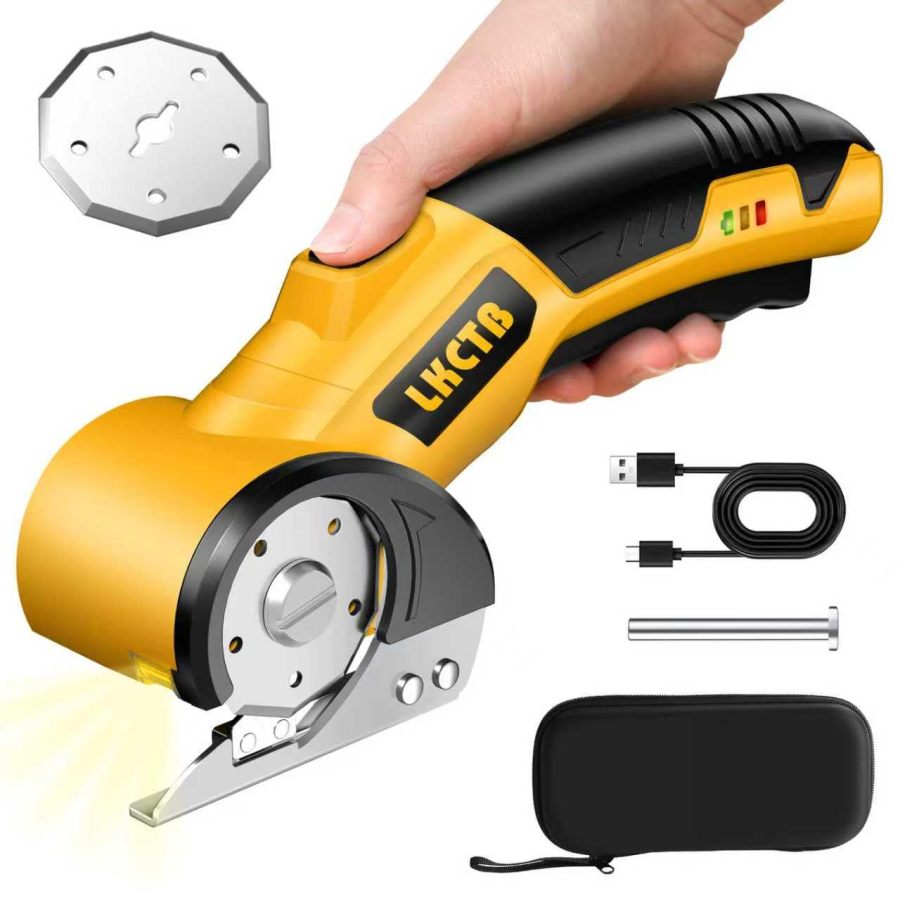
Wireless Electric Multi-Purpose Scissors are portable electric cutting tools, primarily using rotating or reciprocating blades powered by electricity to achieve fast and effortless cutting of various materials (such as cardboard, fabric, leather, plastic, carpet, etc.). They aim to replace traditional manual scissors or utility knives, addressing pain points like hand fatigue, inefficiency, and safety hazards. They are widely used in household chores, DIY projects, logistics/warehousing, and light industrial scenarios. The following table illustrates the key characteristics of consumer behavior in this category.
| Dimension | Segment | Description |
|---|---|---|
| Need Driver Type | Emergency-driven / Planned Purchase | Purchases are often driven by sudden daily needs (e.g., a large number of packages to unpack) but also include planned needs for home organization, DIY, or crafting projects, with clear expectations for efficient cutting. |
| Purchase Frequency | Low Frequency | As durable household or work tools, purchase frequency is typically low. Consumers use them over long periods, unless driven by product failure or functional upgrades. |
| Decision Complexity | Medium | Consumers compare product performance (cutting power, battery life), ease of use, safety features, price, and user reviews, requiring some information gathering and comparison before making a purchase decision. |
| Price Sensitivity | Medium to High | Price is an important consideration. However, users are willing to pay a reasonable premium for products that significantly improve cutting efficiency, reduce hand strain, and ensure safety, offering a better experience. |
| Emotional Dependency | Medium | The product primarily fulfills functional cutting needs. However, the effort-saving, efficient, and safe experience it provides can significantly reduce users' physical burden and psychological stress, generating strong emotional value and a sense of security. |
II. User Personas & Usage Scenarios
2.1 Online Shopping Enthusiast / Home Organizer
🎯 Frequently receives packages, finds handling large volumes of cardboard boxes troublesome, and seeks time-saving, effortless, convenient, and safe tools for opening and breaking down boxes.
| Typical Usage Scenarios | Core Pain Points | Primary Purchase Drivers |
|---|---|---|
|
|
|
2.2 DIY Enthusiast / Crafter
🎯 Frequently engages in crafting, repair, or small home improvement projects, requiring precise, multi-functional electric cutting tools to improve project quality and creative efficiency.
| Typical Usage Scenarios | Core Pain Points | Primary Purchase Drivers |
|---|---|---|
|
|
|
2.3 Seniors / Individuals with Hand Discomfort
🎯 Due to aging or conditions like arthritis, hand strength has diminished, making traditional cutting tools difficult to use. They seek alternatives that reduce physical burden and ensure safe operation.
| Typical Usage Scenarios | Core Pain Points | Primary Purchase Drivers |
|---|---|---|
|
|
|
III. User Needs Hierarchy (KANO Model)
3.1 Basic Needs (Must-Haves)
- Strong Cutting Power: The tool must easily cut through all claimed materials (e.g., cardboard, fabric, leather). Failure to perform this basic task leads to user returns.
- Safety Lock Mechanism: Equipped with a reliable, easy-to-use safety lock to prevent accidental activation, ensuring user and child safety - a fundamental requirement for electric tools.
- Wireless Portability: Built-in battery, no power cord restrictions, allowing free operation in different locations - a core reason users choose electric scissors.
- Blade Sharpness: Blades must be sufficiently sharp to ensure smooth, non-stuttering cuts. Otherwise, the user experience is significantly compromised.
3.2 Performance Needs (Linear Satisfiers)
- Long Battery Life: A single charge supports extended work sessions (e.g., completing a large unpacking task or DIY project), avoiding frequent charging interruptions and improving efficiency.
- Ergonomic Design: Comfortable grip and rational design to minimize hand fatigue and discomfort during prolonged use, especially crucial for users with pre-existing hand conditions.
- Included Spare Blades: Providing extra blades extends the product's overall lifespan, eliminating the need for users to purchase and wait for replacements, enhancing unboxing satisfaction.
- Built-in LED Work Light: Provides illumination in low-light conditions, improving cutting precision and safety, especially when used in dim storage rooms or warehouses.
3.3 Excitement Needs (Delighters)
- USB-C Charging Port: Adopting the universal USB-C port, compatible with most modern electronic devices (e.g., smartphones, tablets), making charging more convenient and faster, reducing cable clutter.
- Self-Sharpening Blade System: Blades automatically maintain sharpness during use, eliminating the hassle of manual sharpening, ensuring consistently smooth cuts and reducing maintenance costs.
- Visual Battery/Speed Display: LED screen displays real-time battery level or cutting speed, giving users clear visibility of tool status for better work planning and avoiding sudden power loss.
- Dedicated Storage Case/Bag: Including a high-quality, well-designed storage case or bag for convenient storage and portability of the tool and its accessories, maintaining tidiness and enhancing product premium feel.
3.4 Unmet Needs & Opportunities
-
Insufficient Stability Cutting Thick/Hard Materials: Some user feedback indicates that cutting thick cardboard, multi-layer fabric, or carpet still requires significant force, is prone to jamming, or fails to cut through completely, creating a gap between actual experience and marketing claims.
User Reviews (VOC) I got this in the hope that it would help me cut up my cardboard for recycling easier. For thinner pieces it definitely helps but when we get up to thicker pieces, I have to use a lot of force which is not easy for me as I am disabled, I still think it's a good product. It just doesn't do everything I want to. // It has a regular brushed motor which explains why the output power is so low.
-
Battery Life and Performance Degradation Issues: Some products have unstable battery life, with issues like not holding a charge or depleting quickly. Users also report motor performance decline after prolonged use, affecting cutting efficiency and product lifespan.
User Reviews (VOC) Customers have mixed experiences with the scissors' battery life, with some reporting it lasts long between charges and comes with a good initial charge, while others complain that it won't hold a charge anymore. // The motor always struggled to turn, even without anything under the blade. Because something was impeding the motor, the battery wouldn't last more than two or three minutes.
-
Charging Port and Charger Compatibility Issues: Many products still use outdated Micro USB ports, and some are picky about chargers, causing charging inconvenience or incompatibility. Users generally expect USB-C ports.
User Reviews (VOC) My only gripe is it is usb micro and not usb c. But usb is still nice because I don't have to keep a special charger around. That was one of my main reasons for buying this brand. // I am taking a star off because frankly there is no excuse in the year 2026 to use an a/c adapter from the 1980s. This thing is so obsolete. Why isn't this usb-c like Ryobi and others?
-
Poor Safety Lock Operation Experience: Some safety lock designs require two-handed operation or feel unnatural, actually increasing operational inconvenience, reducing user experience, and even causing confusion.
User Reviews (VOC) The lockout button should be on top of the handle. Once you get the hang of it, works great. // You have to press the safety button, and the main button at the same time for it to start. The safety button is awkwardly placed, so I can't hit both buttons with the same hand, and have to use both hands to start it.
IV. User Decision Drivers
4.1 Key Decision Factors
- Cutting Capability and Efficiency: Whether it can quickly, cleanly, and without jamming cut through various claimed materials, especially thick cardboard and fabric, is the primary consideration for users, directly impacting user experience and task completion.
- Safety and Ease of Use: Reliability of the safety lock, intuitive operation, and ability to start easily with one hand are the foundation for user confidence, especially for families and individuals with hand discomfort.
- Hand Comfort and Effort Reduction: Ergonomic grip and low-vibration design that effectively reduce hand fatigue and joint strain during prolonged use are key to enhancing user satisfaction.
- Battery Life and Charging Convenience: As wireless tools, actual battery runtime, charging speed, and port universality directly determine work continuity and convenience, making them core factors affecting the experience of heavy users.
4.2 Secondary Decision Factors
- Blade Durability and Replacement Cost: Blade material (e.g., tungsten steel, titanium coating), self-sharpening systems, and the number of spare blades affect long-term cost and performance stability, factors users consider when evaluating product value for money.
- Completeness of Product Accessories: Whether a storage bag, spare blades, charging cable, cleaning tools, etc., are included enhances the out-of-the-box experience and tool management, reducing the hassle of additional purchases for users.
- Brand Trust and After-Sales Service: For electric tools, users tend to prefer brands with a good reputation and value comprehensive after-sales guarantees to reduce purchase risk.
- Price: Given that core functions and performance are met, whether the product price is reasonable and offers good value for money is an important factor influencing the final decision, especially in the mid-to-low price segments.
- Additional Features: Features like LED work lights, battery display screens, multiple speed settings, etc., are value-adds that enhance the sophistication of the user experience but are not core drivers.
V. Selling Points & Competitive Landscape
5.1 Selling Point Analysis
5.1.1 Standard Features (Points of Parity)
- Wireless Electric Design: Highlights cordless operation, freedom of movement, and being more effortless and efficient than manual tools - the foundational selling point for this product type.
- Multi-Material Cutting Ability: Claims to cut various materials like cardboard, fabric, leather, plastic, carpet, emphasizing versatility to attract a broad user base.
- Safety Lock Feature: Widely emphasizes having a safety lock switch to prevent accidental activation, ensuring safe use - a marketing consensus for electric tools.
- Lightweight and Ergonomic Grip: Product is lightweight with an ergonomically designed handle, aiming to reduce hand fatigue and improve operational comfort.
- Included Spare Blades: Most products include extra blades to extend tool lifespan and provide sustained performance, lowering user's long-term costs.
5.1.2 Key Differentiators
- Long-Lasting Battery and Fast Charging: Emphasizes long runtime from large capacity batteries (e.g., 2000-3500mAh) and fast charging capabilities to alleviate user battery anxiety.
- LED Work Light / Battery Indicator: Built-in LED light to illuminate the cutting line, or multi-color LED/screen to display real-time battery level, improving visibility and status monitoring, adding a sense of technology.
- Blade Material and Self-Sharpening System: Promotes use of high-carbon steel, tungsten steel, or titanium-coated blades; some products claim self-sharpening features to maintain sharpness, emphasizing durability.
- Included Storage Case/Bag: Providing a custom storage case or pouch for organizing and carrying the tool and accessories, enhancing product completeness and perceived value.
5.1.3 Unique Selling Propositions (USPs)
- High-Efficiency Brushless Motor: A few products (e.g., B0FQBR49WD) emphasize using a brushless motor for lower noise, stronger, and more durable performance as a technological advantage.
- Multi-Speed Adjustment and LED Display: Very few high-end products (e.g., B0DGQ6QJ59) offer multi-speed adjustment and an LED screen to intuitively display battery and speed, enhancing professional feel and controllability.
- USB-C Universal Charging: Some emerging products (e.g., B0FY4SLKGG, B0FMXZY2RX, B0FB8VGGG2) adopt the Type-C port, aligning with mainstream industry trends for a more modern charging experience.
- Specific Cutting Technique Tips: Individual products (e.g., B0DPCFJ3F2) provide specific operational advice like 'cut at a 30° angle' in instructions to address jamming with certain materials, demonstrating attention to detail.
5.2 Competitive Landscape
5.2.1 Market Maturity
Medium to High Level. The wireless electric multi-purpose scissors market is in a rapid development phase with numerous brands, and product function homogenization is becoming increasingly evident. Both mainstream and emerging brands compete on features, performance, and price. Consumers have basic awareness of such tools but are still seeking more reliable, efficient, and personalized solutions. The market features a competitive landscape with leading brands (e.g., WORX) and numerous small-to-medium brands, with intense price competition.
5.2.2 Innovation Trends
Innovation trends primarily focus on addressing core user experience pain points: 1. Charging Interface Modernization: A comprehensive upgrade from Micro USB to Type-C for faster charging speeds and stronger universality. 2. Performance Visualization and Smart Features: Using LED displays to intuitively show battery level, speed, and other information, enhancing user control over tool status. 3. Deep Optimization of Cutting Efficiency and Material Compatibility: Developing more powerful motors (e.g., brushless motors), optimizing blade design (e.g., titanium coating, specific tooth patterns) to ensure efficient, stable performance when cutting heavy materials and reduce jamming. 4. Refinement of Safety and Ergonomics: Improving safety lock operation logic to be more intuitive, while seeking ultimate comfort in handle material and shape to accommodate different hand sizes.
VI. Marketing Claims vs. Reality Check
The table below analyzes the gap between common marketing claims and actual user experiences in this category:
| Dimension | Marketing Claim | User Reality | Verdict |
|---|---|---|---|
| Battery Life | Claims like 'lasts for months on a single charge,' 'continuous operation for 5-12 hours,' or even '4+ hours of constant use.' | Users commonly report actual runtime under high brightness or high load is far below claims (often 20-80 minutes), with some products having batteries that won't hold a charge or deplete quickly. | Typical use of ideal lab standby data or minimum brightness data to mislead consumers, failing to deliver on the core promise of long runtime for creation or meeting scenarios, severely impacting user trust. |
| Cutting Performance and Material Compatibility | Commonly claims 'cuts through thick cardboard, carpet, leather like butter' and 'easily penetrates 6mm material.' | User feedback indicates that cutting thicker cardboard, multi-layer fabric, or carpet still requires significant force, is prone to jamming, and some products even struggle with standard Amazon boxes, showing a gap between actual performance and claims. | Sellers over-generalize 'multi-functional cutting' capability without clearly defining the actual performance limits for materials of varying thickness and hardness, leading to unmet user expectations for the core function. |
| Charging Interface and Technology | Claims 'USB charging,' 'Type-C charging,' implying it's a modern, convenient charging method. | Many products still use outdated Micro USB ports. A few claim Type-C but don't include a charger. Some products claim brushless motors but are actually brushed, severely misaligned with current mainstream device charging habits and technological understanding. | Sellers are evasive about charging technology, using the broad term 'USB' to mask technological backwardness, increasing user charging inconvenience, and failing to deliver the convenience expected of a modern tool. |
| Safety Lock Design and Operation | Universally emphasizes 'safety lock prevents accidental activation,' ensuring family safety. | Some users report safety lock designs are not user-friendly, requiring two-handed operation or unnatural button positions, actually increasing operational complexity and inconvenience, with some users even feeling less safe compared to competitors. | The safety feature design fails to fully consider ergonomics and user habits. The intended safety benefit, due to design flaws, becomes a user pain point and a source of safety concern. |
Key Takeaway: The market is generally characterized by parameter inflation, performance exaggeration, and technological lag, especially regarding battery life, heavy-duty cutting capability, and charging interfaces, leading to significant gaps between user reality and marketing promises.
VII. Supply-Demand Misalignment Analysis
The table below highlights mismatches between seller focus and buyer priorities:
| Dimension | Seller Behavior | User Focus | Verdict |
|---|---|---|---|
| Actual Battery Life vs. Claim Consistency | Battery life data in listings is chaotic, with bullet points and specifications contradicting each other. Sellers generally avoid addressing the real shortcoming under high-load conditions, lacking a unified, credible runtime standard. | Users strongly desire longer battery life. Rapid power drain under high brightness/load is a frequent complaint. Contradictory data causes confusion and concern. | Sellers generally fail to provide clear, consistent runtime expectations, leading to a lack of trust on a key user concern, a core reason for negative reviews and returns. |
| Actual Cutting Performance on Thick/Hard Materials | Commonly emphasizes 'powerful cutting of multiple materials' but rarely mentions specific performance guarantees or solutions for heavy-duty scenarios like thick cardboard or multi-layer carpet, being overly optimistic about generalizability claims. | Users complain about thick cardboard not being cut easily, requiring significant force, and frequent jamming - key pain points affecting work efficiency and product trust. | Sellers generalize selling points based on ideal conditions, overlooking users' core demand for robust cutting performance in complex, variable scenarios, resulting in insufficient reliability of the core function. |
| Charging Interface Modernization | Most products still use Micro USB ports. Some claim Type-C but don't provide an adapter. Sellers generally ignore users' strong demand for universal fast-charging ports. | Users generally expect USB-C ports, complaining that Micro USB is outdated and inconvenient, incompatible with the existing electronics charging ecosystem, adding friction to use. | Sellers have failed to keep pace with charging technology, overlooking consumers' widespread need for convenient, universal charging experiences, causing products to lag behind market expectations in detailed experience. |
Key Takeaway: Sellers collectively remain silent or evasive on core user pain points like battery life and heavy-duty cutting, while oversupplying on the breadth of 'multi-material compatibility,' leading to supply-demand misalignment where core user needs are not precisely addressed.
VIII. Strategic Opportunities & Recommendations
8.1 Professional-Grade Deconstruction Tool with Extreme Heavy-Duty Cutting Performance
8.1.1 Target Audience & Pain Points
⚡️ Pain Points Addressed: Insufficient stability cutting thick/hard materials; Battery life and performance degradation issues.
8.1.2 Action Plan
Adopt high-torque brushless motor and high-hardness tungsten steel alloy blades. Optimize blade geometry to ensure minimal effort, fast, and clean cutting of multi-layer thick cardboard, hard plastic packaging, and thick carpet. Integrate an intelligent load-sensing system to automatically adjust power when encountering resistance. Increase battery capacity to 3000mAh+ and support fast charging.
| Tech Complexity | High |
| Cost Impact | High Impact |
| Trade-off Warning | High-performance motor and larger battery may lead to slightly increased weight or size, requiring a trade-off on portability. |
| Price Band | Only viable above $49.99 |
8.1.3 Marketing Strategy
Emphasize 'Hardcore Cutting, Straight Through!'; Provide real test videos cutting super-thick corrugated boxes, high-density carpet, quantifying performance advantages. Highlight 'Say goodbye to sore hands, goodbye to jams, effortlessly break down mountains of packages!'
8.2 One-Handed Intelligent Safety Operation Electric Scissors
8.2.1 Target Audience & Pain Points
⚡️ Pain Points Addressed: Poor safety lock operation experience; Seniors / Individuals with hand discomfort find operation difficult.
8.2.2 Action Plan
Design an ergonomic, large-sized safety slide/push button that can be easily deactivated and activated with one hand, with clear visual or tactile feedback for lock/unlock status (e.g., red/green indicator). Ensure easy access in various grip positions without hindering cutting. Integrate features like 'accidental press protection mode' or 'child safety lock.'
| Tech Complexity | Medium |
| Cost Impact | Low Impact |
| Trade-off Warning | No significant physical side effects. Primarily optimizes structure and materials, may slightly adjust handle dimensions. |
| Price Band | Only viable above $24.99 |
8.2.3 Marketing Strategy
Highlight 'Activate with a Touch, Safety in Your Control'; Demonstrate smooth one-handed operation in videos, emphasize 'Easy for seniors and kids to use, greater peace of mind for family safety.'
8.3 USB-C Universal Fast Charging & Intelligent Battery Display
8.3.1 Target Audience & Pain Points
⚡️ Pain Points Addressed: Charging port and charger compatibility issues; Battery life and performance degradation issues; Lack of real-time battery awareness.
8.3.2 Action Plan
Comprehensively adopt USB-C charging ports across all product lines, support PD (Power Delivery) fast charging protocol, aiming for 80% charge within 1 hour. Integrate a high-precision battery management system, displaying precise battery percentage or segment status via LED screen or multi-color LED lights.
| Tech Complexity | Low |
| Cost Impact | Low Impact |
| Trade-off Warning | No significant physical side effects. Primarily upgrades components, charging circuit board design may need slight adjustment. |
| Price Band | Only viable above $29.99 |
8.3.3 Marketing Strategy
Emphasize 'Say Goodbye to Cluttered Cables, One USB-C for Everything!'; Show scenarios sharing charging cables with smartphones, tablets, etc.; Highlight 'Real-time battery visibility, work progress fully under control.'
8.4 Full Lifecycle Blade Management & Multi-Type Blade Heads
8.4.1 Target Audience & Pain Points
⚡️ Pain Points Addressed: Insufficient blade replacement convenience and universality; Insufficient stability cutting thick/hard materials.
8.4.2 Action Plan
Develop a user-friendly, modular, and easily replaceable blade system. Provide blade sets with various materials (e.g., ceramic, high-carbon steel, tungsten coating) and types (standard cut, serrated cut, wave cut) to meet different material and scenario needs. Create detailed graphic and video replacement tutorials and establish official blade sales channels.
| Tech Complexity | Medium |
| Cost Impact | Medium Impact |
| Trade-off Warning | Adding blade types and replacement mechanisms may slightly increase mold costs or product complexity, but value benefit is significant. |
| Price Band | Only viable above $35.99 |
8.4.3 Marketing Strategy
Highlight 'One Tool, Multiple Capabilities, Blades Change at Will'; Showcase performance advantages of different blades on specific materials; Emphasize 'From buying a tool to using it, full lifecycle service for worry-free convenience.'