Amazon US Market Analysis: Furniture Leg Protectors Category
📊 Executive Summary
📈 Market Trends
Floor protection is a rigid demand, integrated design becomes mainstream. Demand for furniture leg protectors is strong, with core needs centered on preventing floor scratches and reducing noise. The silicone-and-felt integrated design has become the mainstream solution addressing traditional adhesive pad pain points. Consumer focus on installation convenience and material safety continues to rise.
⚡ Major Pain Points
Poor durability and inadequate compatibility are critical flaws. Current products commonly suffer from durability issues like easy silicone tearing and fast felt wear, severely contradicting sellers' 'long-lasting durability' claims, leading to poor user experience. Additionally, insufficient compatibility for irregular/angled furniture legs and the felt bottom's tendency to attract dust and hair are also high-frequency user complaints.
💡 Selection Opportunities
Deepen quality focus and address refined needs. Selection opportunities lie in resolving the user 'trust crisis' regarding the product's core value by developing super-wear, high-toughness integrated leg protectors with long-term warranties. Simultaneously, precisely capture segmented needs by launching solutions for irregular/angled legs, and address daily cleaning pain points by developing easy-clean, dust & hair resistant premium protectors, enhancing product added value and differentiated competitiveness.
I. Analysis Overview
1.1 Introduction & Report Scope
This report analyzes the 'Furniture Pads' category (furniture leg protectors) in the US Amazon market, focusing on target user personas, core needs, decision drivers, market communication, and potential opportunities.
1.2 Category Snapshot
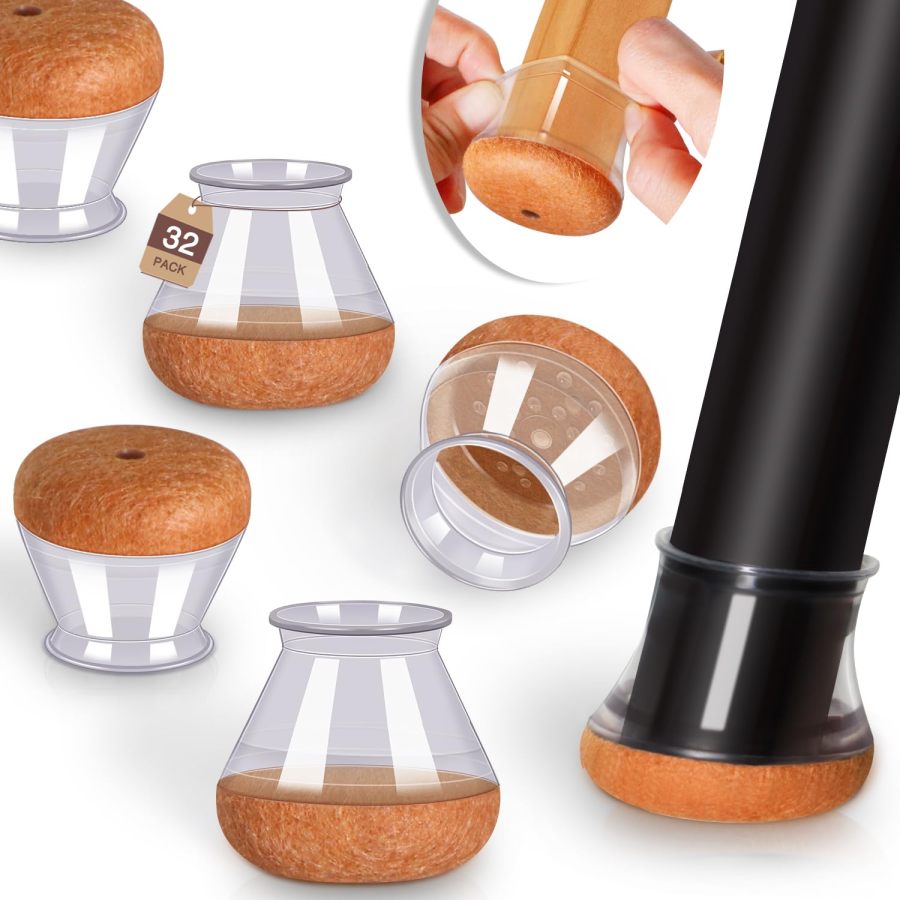
Furniture leg protectors (also known as chair leg caps or furniture cups) are household accessories designed primarily to fit over the bottom of furniture legs. Their main purpose is to prevent furniture from scratching hard floors (such as hardwood, tile, or laminate) during movement, while also significantly reducing friction and the resulting harsh noise. These products commonly utilize a silicone-and-felt combination, offering a variety of shapes (round, square, rectangular) and sizes to accommodate different furniture leg types. The following table illustrates the key characteristics of consumer behavior in this category.
| Dimension | Segment | Description |
|---|---|---|
| Need Driver Type | Emergency-driven / Planned Purchase | Users often seek solutions urgently upon discovering floor damage or annoying furniture noise. There is also planned demand for preventive purchases after home renovation or buying new furniture. |
| Purchase Frequency | Medium / Low Frequency | Purchases typically occur when existing pads fail, wear out, or after moving. It is not a high-frequency repeat purchase category, but poor quality can shorten the repurchase cycle. |
| Decision Complexity | Medium | Users need to carefully compare size, shape, material, ease of installation, and durability to ensure a perfect match with their furniture and flooring. |
| Price Sensitivity | Medium-High | Consumers value actual performance and lifespan, willing to pay a reasonable premium for reliable protection, but still engage in price comparisons among similar products. |
| Emotional Dependency | Low | The primary drivers are practical functionality, such as protecting the home and enhancing a quiet experience, with relatively low emotional added value. |
II. User Personas & Usage Scenarios
2.1 Home-Conscious Maintainer
🎯 Values quality of life, has high standards for home environment details, is unwilling to see scratched floors, and is annoyed by furniture movement noise.
| Typical Usage Scenarios | Core Pain Points | Primary Purchase Drivers |
|---|---|---|
|
|
|
2.2 Value-Conscious Pragmatist
🎯 Focuses on product functionality and cost-effectiveness, seeks durable, highly compatible products to avoid the hassle of repurchasing and reinstalling.
| Typical Usage Scenarios | Core Pain Points | Primary Purchase Drivers |
|---|---|---|
|
|
|
III. User Needs Hierarchy (KANO Model)
3.1 Basic Needs (Must-Haves)
- Floor Scratch Prevention: Pads must effectively isolate furniture legs from hard floors, preventing any form of scratching, wear, or indentations.
- Secure, Non-Slip Fit: Pads should fit snugly around furniture legs, ensuring they do not loosen or slip off during daily use and movement.
- Size Compatibility: Products must offer multiple size options covering round, square, and even some irregularly shaped furniture legs.
- Safe, Non-Toxic Materials: Made from eco-friendly, non-toxic silicone or TPE materials, posing no health risks to family members or pets.
3.2 Performance Needs (Linear Satisfiers)
- Quiet, Smooth Movement: Enables furniture to move quietly and smoothly, avoiding harsh noise or sticking sensations.
- Easy Installation: Can be easily slipped on and secured by hand without tools or additional glue.
- Durable, Tear-Resistant: Silicone or felt components should have good toughness and wear resistance, able to withstand long-term daily use without damage.
- Easy to Clean: Pads can be conveniently removed for cleaning, keeping bottoms clean and not attracting excessive dust or pet hair.
- Aesthetically Invisible: Transparent or color-matched designs make pads less noticeable, not affecting the original aesthetic of the furniture.
3.3 Excitement Needs (Delighters)
- Integrated Silicone & Felt: Felt pad and silicone sleeve are seamlessly integrated, completely solving the pain point of traditional adhesive felt pads falling off or leaving residue.
- 360° Full Coverage: Protects not just the bottom but also the sides of furniture legs, handling tilting or irregular pressure.
- Multi-Scenario Versatility: Products perform perfectly on indoor hardwood, tile, etc., while also adapting to outdoor environments, resisting moisture and rust.
3.4 Unmet Needs & Opportunities
-
Extended Lifespan & Durability: Users widely report products experiencing silicone tearing, felt wear, or even detachment in a short time, failing to meet long-term usage expectations.
User Reviews (VOC) However, the durability needs improvement. I haven't even had them for two months and the silicone is already starting to tear. // Customers report durability issues with the floor protectors, noting that they tear within days of use, break during installation, and lose their integrity over time.
-
Precise Fit for Irregular/Angled Legs: Despite claims of universal sizing, users face challenges with compatibility for irregularly shaped or angled furniture legs during actual purchase and installation, often encountering poor fit or difficulty slipping on.
User Reviews (VOC) These were a bit too tight and small for this. I could have forced it but it would be awkward. So I put these on dining room chairs instead. So perhaps I wouldn't recommend these for chair legs that sit at a bit of an angle. // I did measure but honestly I did not measure very precise and it cost me.
-
Dust & Pet Hair Resistance: The felt material on the bottom easily attracts dust and pet hair, increasing daily cleaning and maintenance burden.
User Reviews (VOC) I have a German Shepherd who sheds like crazy. The felt on these catch the hair so I often have to turn the chairs over to vacuum the hair off of the sliders.
-
Ultimate Invisibility & Aesthetics: Transparent silicone products may not appear invisible enough on dark furniture, or some users seek a more integrated visual effect that blends with the furniture.
User Reviews (VOC) The clear color is more of a white on dark colored surfaces. // They're not super fancy looking, but for protecting the floor they do exactly what they should.
IV. User Decision Drivers
4.1 Key Decision Factors
- Effective Scratch & Damage Prevention: Whether the product can truly prevent furniture legs from scratching or damaging the floor is the primary consideration in the purchase decision.
- Secure, Non-Slip Fit: Pads must fit tightly around furniture legs, ensuring they do not fall off or shift during daily pushing/pulling and under weight.
- Size & Shape Match: Finding the exact size and shape that matches one's furniture legs is key to determining if installation and use are possible.
- Smooth, Quiet Movement: Whether furniture can be moved smoothly without sticking or harsh noise.
4.2 Secondary Decision Factors
- Product Durability: Expectation that the product lasts a long time, is not prone to wear, tearing, or loss of elasticity, avoiding frequent replacement.
- Ease of Installation: Preference for simple, slip-on installation methods that require no tools or glue.
- Aesthetic Invisibility: Desire for pads to be as transparent or color-matched as possible, not affecting the overall furniture aesthetic.
- Ease of Cleaning & Maintenance: Features like being removable for washing and not attracting dust or pet hair increase user satisfaction.
V. Selling Points & Competitive Landscape
5.1 Selling Point Analysis
5.1.1 Standard Features (Points of Parity)
- Floor Protection: Commonly emphasizes effective protection of hardwood, tile, laminate floors, etc., from scratches and wear.
- Noise & Vibration Reduction: Reduces friction noise from moving furniture, providing a quiet home environment.
- Easy Installation: Convenience of slipping on and using without tools or glue.
- Integrated Silicone & Felt: Emphasizes combining the snug fit of silicone with the sliding ability of felt, and that the felt is less likely to fall off.
- Wide Applicability: Suitable for various furniture types like dining chairs, stools, tables.
5.1.2 Key Differentiators
- Material Upgrades & Thickening: Some products promote using higher-quality silicone materials or thickening the silicone layer to 2mm to enhance durability and elasticity.
- Multiple Sizes & Shapes Available: Offers various sizes and shapes (round, square, rectangular) to fit a wider range of furniture legs.
- Washable & Reusable: Highlights the product's eco-friendly and economical attributes, allowing users to maintain and use them long-term.
- Transparent or Dark Color Designs: Offers transparent colors for an invisible look or options like black, brown to match dark furniture.
5.1.3 Unique Selling Propositions (USPs)
- 360° Full Coverage Design: Some products claim to provide 360-degree, no-dead-angle protection for furniture legs, handling friction from various angles.
- Special Fit for Angled Legs: A few products mention good compatibility for tilted or irregular furniture legs, addressing specific pain points.
- Combination of Grip & Easy Slide: Some products attempt to balance grip and easy sliding, allowing furniture to stay in place yet move smoothly.
5.2 Competitive Landscape
5.2.1 Market Maturity
The furniture leg protector market is highly mature, with product forms and core functions becoming standardized. Mainstream products all promote basic selling points around floor protection, noise reduction, and easy installation. Competition between brands is mainly reflected in subtle material upgrades, size coverage, and solving traditional adhesive pad pain points (e.g., integrated design). The market suffers from severe homogenization and intense price competition.
5.2.2 Innovation Trends
Current innovation trends primarily focus on optimizing the existing product structure, especially the combination method of silicone and felt, aiming to improve felt pad adhesion and silicone sleeve tear resistance. Additionally, products are evolving towards broader compatibility with furniture leg shapes and sizes. In the future, addressing long-term product durability, more convenient cleaning/maintenance functions, and segmented needs in aesthetics and special scenarios (e.g., outdoor use) will be important innovation directions.
VI. Marketing Claims vs. Reality Check
The table below analyzes the gap between common marketing claims and actual user experiences in this category:
| Dimension | Marketing Claim | User Reality | Verdict |
|---|---|---|---|
| Durability & Lifespan | Premium silicone + thickened anti-slip pad, long-lasting durability; inner wall thickened to 2mm, not easy to tear. | Users widely report products experiencing silicone tearing or felt wear within 1-2 months, far from the claimed 'long-lasting durability'. | A significant gap exists between material cost control and consumer expectations for durability. Marketing claims fail to deliver on basic promises, severely impacting user trust. |
| Size Compatibility & Universality | Widely compatible with any size and shape; elastic fit for various chair leg shapes. | User feedback indicates poor fit for certain small/slender legs, irregular or angled legs, with difficult installation or oversized appearance, affecting aesthetics and function. | Sellers oversimplify the complexity of furniture leg shapes and sizes, promoting ideal-state universality as an absolute advantage. This leads to user difficulties during actual installation, creating a significant experience gap. |
| Stability of Felt Pad & Silicone Integration | 360° fully enclosed one-piece felt pad, never falls off; felt and silicone integrated, no glue or nails needed. | Users still report felt pads separating or bottom wearing out too quickly after some use, not completely solving the detachment problem. | Despite claims of integrated design, actual bonding technology or material wear resistance is insufficient, failing to completely solve the persistent issue of traditional felt pads falling off, disappointing consumer expectations. |
Key Takeaway: The market exhibits a widespread tendency for functional exaggeration and durability misrepresentation, especially regarding material strength and universal compatibility.
VII. Supply-Demand Misalignment Analysis
The table below highlights mismatches between seller focus and buyer priorities:
| Dimension | Seller Behavior | User Focus | Verdict |
|---|---|---|---|
| Long-Term Durability | Commonly emphasize 'premium materials', 'thick', or 'long-lasting durability' in listings, but lack specific wear data or long-term warranty commitments. | 'Tore within two months', 'Broke after a few weeks', 'Need frequent replacement, wasting money' – users complain loudly about short product lifespan. | Sellers fail to provide substantive solutions for the product's most core aspect – 'durability' – instead using vague claims to gloss over the issue. This is the root cause of the category's trust crisis. |
| Precise Fit for Irregular/Angled Furniture Legs | Commonly promote 'fits various shapes', 'wide size range', but rarely offer special designs or detailed solutions for irregular or angled legs. Product descriptions are often overly idealized. | 'Not very suitable for angled chair legs', 'Too large for small chair legs', 'The measured size wasn't completely accurate either' – users complain about fit problems. | Sellers are overly optimistic about universality, failing to deeply understand the practical installation and usage challenges posed by irregular furniture legs. This leads to compromised user experience and a lack of precise solutions. |
| Dust/Pet Hair Resistance & Easy Cleanability | Almost all products use felt bottoms, but very few mention how to address the issue of felt easily attracting dust and hair, let alone proactive anti-static or easy-clean designs. | 'Felt easily picks up pet hair and dust', 'Need to flip them over often to clean' – daily maintenance annoyances remain unresolved. | Sellers have a blind spot in addressing product maintenance pain points, failing to translate the user expectation of 'easy cleaning' into a concrete product advantage that enhances daily use value. |
Key Takeaway: Sellers overemphasize basic function promotion and installation convenience, collectively neglecting users' core demands for long-term product durability and complex scenario compatibility.
VIII. Strategic Opportunities & Recommendations
8.1 Super-Wear, High-Toughness Integrated Leg Protectors
8.1.1 Target Audience & Pain Points
⚡️ Pain Points Addressed: Silicone tears easily, felt wears out quickly, product lifespan is short.
8.1.2 Action Plan
Adopt new polymer composite silicone or TPE materials to enhance tear resistance and wear resistance. Optimize the fusion process between felt and silicone. Conduct rigorous lab wear tests, pressure tests, and offer a five or even ten-year warranty.
| Tech Complexity | Medium |
| Cost Impact | Medium Impact |
| Trade-off Warning | New composite materials may slightly increase product hardness or thickness, but this has no negative impact on user experience and may even improve feel. |
| Price Band | Only viable above $19.99 |
8.1.3 Marketing Strategy
Emphasize 'Ten-year lifespan, one purchase, worry-free protection'; showcase super wear/tear resistance through comparison test videos; highlight the core value: 'Say goodbye to frequent replacements, save money and hassle'.
8.2 Precision Fit Solutions for Irregular/Angled Legs
8.2.1 Target Audience & Pain Points
⚡️ Pain Points Addressed: Sizing is imprecise, installation for irregular/angled legs is difficult or unstable.
8.2.2 Action Plan
Develop silicone materials with greater elasticity range and stronger extensibility. Introduce modular, interchangeable bottom pad designs for common irregular/angled legs in the market. Provide an online AR measurement tool or detailed fit guidance charts.
| Tech Complexity | Medium |
| Cost Impact | Medium Impact |
| Trade-off Warning | Enhancing extreme elasticity may sacrifice some silicone wall thickness, requiring a balance with durability. Offering more size segments increases SKU management complexity. |
| Price Band | Only viable above $18.99 |
8.2.3 Marketing Strategy
Promote 'Tailor-made fit, perfect coverage with no dead angles'; showcase product images/videos of perfect fit on various unusual chair legs; emphasize 'Say goodbye to sizing woes, fit every chair in your home'.
8.3 Easy-Clean, Dust & Hair Resistant Premium Protectors
8.3.1 Target Audience & Pain Points
⚡️ Pain Points Addressed: Felt easily attracts dust and hair, increasing daily cleaning and maintenance burden.
8.3.2 Action Plan
Add anti-static, hydrophobic coatings to the felt bottom or silicone surface to reduce dust and pet hair attraction. Alternatively, use special short-pile, dense, non-staining felt materials. Emphasize the product's washable and quick-drying properties.
| Tech Complexity | Low |
| Cost Impact | Low Impact |
| Trade-off Warning | Anti-static coating or special fiber felt may slightly increase cost, but has no negative physical impact. |
| Price Band | Only viable above $14.99 |
8.3.3 Marketing Strategy
Highlight 'Pet-friendly, clean and worry-free'; showcase the product's advantage of not attracting hair and dust through comparison videos; emphasize 'Washable and fast-drying, easy to maintain, keeping your home fresh'.
8.4 Ultimate Invisible Aesthetic Leg Protectors
8.4.1 Target Audience & Pain Points
⚡️ Pain Points Addressed: Transparent silicone appearance is not invisible enough, affecting overall furniture aesthetics.
8.4.2 Action Plan
Use silicone materials with higher light transmittance and better resistance to yellowing. Design thinner walls and more conforming structures to minimize visual presence. Consider offering more semi-transparent or matte colors matching mainstream furniture finishes.
| Tech Complexity | Low |
| Cost Impact | Low Impact |
| Trade-off Warning | Pursuing ultimate transparency may require higher material purity, potentially increasing cost or sacrificing some toughness, requiring balance. |
| Price Band | Only viable above $15.99 |
8.4.3 Marketing Strategy
Emphasize 'Invisible guardian, blends into your home'; showcase beautiful visuals of the product seamlessly integrating with furniture; highlight 'Doesn't steal the spotlight, just quietly protects your beauty'.